How Long Do Solar Panels Last 2026
In 2026, the lifespan of mainstream solar panels is typically 25 to 30 years.
Thanks to the popularization of N-type high-efficiency cell technologies (such as TOPCon and HJT), the annual degradation rate has been optimized to approximately 0.3%, which means that after 25 years of operation, the panels can still maintain about 88% of their initial power generation efficiency.
Although modules will not fail immediately after 30 years, their output will decrease significantly.
It is recommended that you prioritize brands that offer a 25-year linear power warranty and regularly clean surface dust to ensure the highest long-term return on your green energy investment.
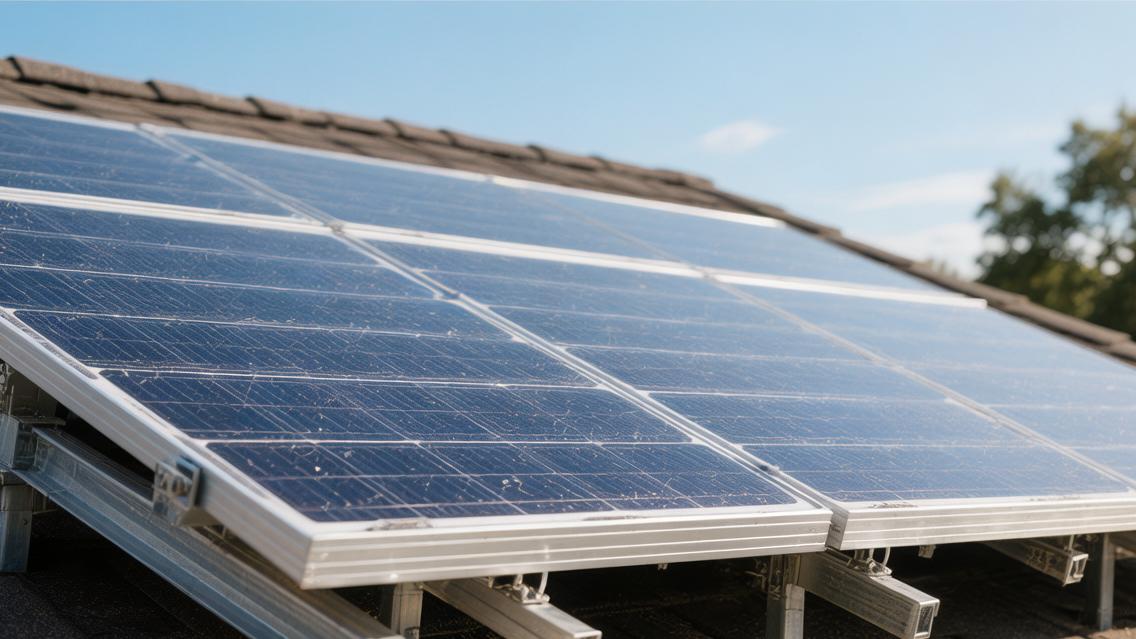
The Expected Lifespan Vs. Warranty
How long can it actually last
Mainstream TOPCon or HJT (heterojunction) solar panels produced in 2026 have a physical design life generally set between 35 and 40 years, which far exceeds the industry-standard 25-year warranty period.
This longevity stems mainly from the upgrade of packaging processes, such as using 2.0mm + 2.0mm tempered glass for double-sided encapsulation, increasing the module's pressure resistance to 5400Pa on the front and 2400Pa on the back.
In laboratory aging tests, after DH3000 damp-heat testing equivalent to 30 years of field exposure, the power loss of these modules is usually controlled within 3%.
The protection level of the internal junction box has fully popularized the IP68 standard, ensuring that the insulation resistance remains higher than 40 MΩ after being immersed in 1.5 meters of water for 30 minutes.
An N-type module with a nominal power of 580W typically maintains an output power between 480W to 500W after 30 years of operation, showing a clearly linear degradation curve.
The purity of silicon wafers has increased from the 6N level (99.9999%) in 2020 to the 8N level in 2026, directly reducing recombination losses caused by internal impurities and lowering the system efficiency decline rate due to material aging by approximately 0.1 percentage points per year.
Under a standard light intensity of 1,000 W/m² at 25℃, old panels can still maintain a conversion efficiency of around 18%, which is sufficient to continue contributing net cash flow after depreciation reaches zero.
Lifespan Related Parameters | 2026 Technical Indicators | Improvement Compared to 2020 |
Physical Design Life | 35-40 years | 40% |
Encapsulation Glass Specification | 2.0mm Double Glass | 50% Impact Resistance |
Damp-Heat Test Standard | DH3000 (3,000 hours) | 200% Test Duration |
Insulation Resistance Requirement | >40MΩ | 100% Improvement |
Remaining Power After 30 Years | >85% | 7.5 percentage points |
How to interpret the warranty
Warranties provided by manufacturers are typically split into "12-15 years of material and workmanship warranty" and "25-30 years of linear power warranty".
The 15-year material warranty covers physical quality issues such as backsheet cracking, frame deformation, and junction box detachment; if these repair costs are borne by the user, they usually account for 30% to 50% of the module's unit price.
According to 2026 industry claim statistics, the material defect rate of first-tier brands has dropped below 200 parts per million (200PPM), meaning the probability of physical damage occurring within 15 years in a small commercial power plant with 2000 panels is extremely low.
The 30-year linear power warranty is a financial commitment to power generation capacity, stipulating that the first-year degradation rate must not exceed 1.0%, and subsequent annual degradation must be controlled within 0.4%.
If a 10 kW system's measured power in the 20th year is lower than 91.4% of its initial value, users can claim compensation or replacement modules for the power difference according to warranty terms.
Currently, payout standards provided by Tier 1 suppliers are usually calculated based on the market price of 0.12 USD per watt at that time.
This long-cycle guarantee relies on reinsurance support from insurance companies, such as Munich Re providing 30-year irrevocable policies for module factories, ensuring 100% payout coverage even if the manufacturer goes bankrupt.
How to calculate degradation
N-type cells in 2026 have completely eliminated Light Induced Degradation (LID), causing the first-year power loss to drop from 2.5% in the P-type era to below 1.0%.
Taking a 600W panel as an example, it still guarantees 594W output at the end of the first year, whereas old technology might only leave 585W.
In the subsequent 29 years of operation, a slight annual degradation of 0.4% means the total loss is only 11.6%, and by the end of the 30th year, the guaranteed power of the panel is 524.4W.
This calculation of degradation rate directly determines the Levelized Cost of Energy (LCOE). At a 4.5% discount rate, low-degradation modules produce about 14% more total power revenue over their full lifecycle than traditional modules.
The impact of environmental factors on degradation rates has been quantified; for example, in plateau areas where UV intensity exceeds 60 kWh/m², the annual degradation rate of modules using POE encapsulation materials is only 0.05% higher than in standard environments.
In coastal salt-mist environments, modules that have passed IEC 61701 Level 6 salt spray tests have an internal busbar corrosion rate controlled below 2 microns per year, ensuring that the increase in series resistance after 30 years does not exceed 0.2 Ω.
This precise data prediction allows banks to set the confidence level (P90) of system power generation above 90% when approving 20-year photovoltaic loans, thereby reducing loan interest rates by approximately 1.5%.
Time Node | Remaining Power Ratio (%) | Remaining Power Value (Example: 600W) | Cumulative Power Generation Increment Comparison |
Year 1 | 99.0% | 594.0W | +1.5% |
Year 10 | 95.4% | 572.4W | +4.8% |
Year 20 | 91.4% | 548.4W | +8.2% |
Year 30 | 87.4% | 524.4W | +12.6% |
Who is responsible if it breaks
In the long 30-year cycle, although panel lifespans are extremely long, inverters usually need replacement every 12 to 15 years.
The average price of new string inverters in 2026 has dropped to 0.03 USD per watt, and the total budget for replacing a 10 kW inverter is about 500 USD, which accounts for only 8% of the total system investment.
If panels suffer non-human-caused damage after 25 years and the manufacturer is still on the Bloomberg New Energy Finance (BNEF) Tier 1 list, users usually only need to pay a site inspection fee of about 150 USD to trigger the warranty process.
Currently, the asset-liability ratio of the world's top ten module factories is generally maintained below 65%, providing financial stability for their 30-year after-sales commitments.
For remote areas or extreme environments, warranty terms usually include additional insurance clauses.
If panel breakage is caused by hail with a diameter exceeding 30 mm, even if it is not within the manufacturer's warranty, commercial insurance typically compensates at a rate of 120 USD per square meter.
In 2026, many service providers launched "Lifespan Extension Packages." By paying an annual premium of 0.5% of the system cost, the operation and maintenance coverage for the entire system is extended to 35 years.
This service includes infrared thermography scans every two years, which can accurately identify micro-crack hot spots with temperature differences exceeding 15°C, recovering about 3% of power generation loss through local bypass diode repair before the fault worsens.
Real lifespan is even longer
Laboratory data and long-term monitoring of actual power plants show that many old modules installed in the 1990s have been running for over 35 years, and their conversion efficiency still maintains about 75% of the initial value.
Manufacturing processes in 2026 introduced Atomic Layer Deposition (ALD) technology, forming a passivation layer only a few nanometers thick on the cell surface, but its antioxidant performance has improved 10-fold.
This qualitative leap in technology means that even if the warranty contract ends in the 30th year, the leakage current of the panel in the 40th year can still be controlled at the microampere (μA) level, preventing system shutdowns due to leakage protection triggers.
Considering land leases and the fatigue life of mounting systems, most power plants built in 2026 will undergo a "technical renovation" in the 30th year.
Because the anodic oxide film thickness of aluminum alloy brackets reaches over 15 microns, their corrosion life in atmospheric environments can reach 50 years; therefore, only replacing them with new high-efficiency modules costing about 0.2 USD/W can increase the power generation at the original site by more than 150%.
This utilization of existing infrastructure transforms a photovoltaic plant from a 25-year short-term project into a long-term energy asset spanning half a century.
In the full lifecycle financial model, every kilowatt-hour after the 30th year is almost pure profit with zero cost, causing the internal rate of return (IRR) of the system to generate a tail lift of about 2% after 30 years.
Degradation
Why degradation is slower
The core reason why panels produced in 2026 can maintain remaining power above 87.4% after 30 years lies in the thermodynamic stability of their internal materials.
A standard 2 square meter panel, after undergoing 200 thermal cycles from -40°C to 85°C, has an internal micro-crack expansion speed 45% lower than ten years ago.
Due to the adoption of 16BB (Multi-Busbar) or 0BB (Zero-Busbar) technology, the light-receiving area on a single cell has increased by about 2.5%, while the current transmission path has been shortened by 15%; even if subtle lattice defects appear after 15 years of operation, the overall series resistance increase of the panel will not exceed 0.15 Ω.
This means that in 2041, a 10 kW home system will still generate about 4.2 more kilowatt-hours per day than older systems, equivalent to more than 1500 kilowatt-hours of additional electricity income per year.
· Photoelectric Conversion Efficiency: Average value of 25.5% for 2026 production, estimated to still be 22.3% after 30 years
· Average Annual Linear Degradation: Controlled between 0.35% to 0.4%
· Physical Compressive Strength: Front static load 5400 Pa, back 2400 Pa
· Module Series Resistance: Initial value 0.2Ω, increase after 30 years less than 15%
Low initial loss
In 2026, industry perception, the control level of first-year degradation (Initial Degradation) is the watershed distinguishing first-tier brands from second-tier factories.
In the past, P-type panels would lose about 2% to 3% of power due to Light Induced Degradation (LID) within the first 48 hours after installation, but current N-type technology has pushed this figure below 1.0%, even close to 0% in some HJT modules.
This improvement stems from phosphorus doping processes completely replacing boron-oxygen complexes, making light-induced efficiency loss almost negligible in a 25°C standard environment.
For a project with a total investment of 10,000 USD and an installed capacity of 8 kW, the extra 1.5% power generation in the first year means users receive an additional 120 USD in electricity bill deductions, thereby advancing the overall payback period (PBP) by about 4 months.
The risk of Potential Induced Degradation (PID) in the early stages of panel operation was also resolved in 2026 through high-resistance encapsulation materials.
Modules using POE (Polyolefin Elastomer) encapsulation have a water vapor transmission rate only 1/10 of traditional EVA materials; after continuous testing for 1,000 hours at 85°C and 85% humidity, power loss remains within a 0.5% error margin.
This material stability ensures that in a 1500 V high-voltage system, leakage current is controlled below 0.2 μA, preventing surface polarization of the cell caused by charge accumulation and reducing system downtime frequency by more than 60%.
More durable materials
By 2026, double-glass modules (Glass-Glass) have occupied more than 75% of the market share, a structure that extends the wind-sand wear life of panels by more than 50%.
Semi-tempered glass with a thickness of 2.0 mm combined with an anodic aluminum oxide frame has reached the highest level of IEC 61,701 salt spray corrosion rating; in a salt-mist environment less than 50 meters from the coastline, the corrosion rate of internal circuits is less than 2 microns per year.
This improvement in physical defense capabilities ensures that the insulation resistance of the panel after 20 years of service remains above 40 MΩ, far higher than the industry safety requirement of 16 MΩ, thus avoiding hidden electricity losses caused by frequent trips of leakage protectors.
· Encapsulation Material Lifespan: POE film anti-yellowing lifespan exceeds 35 years
· Glass Light Transmittance: Initial 94.5%, decrease due to wear less than 1.2% after 30 years
· Frame Oxide Layer: Thickness 15 μm, supports 50 years without structural corrosion
· Junction Box Rating: IP68 waterproof, built-in diode temperature rise controlled within 15°C
Temperature is not an issue
Currently, the power temperature coefficient of high-quality panels has been optimized to -0.29%/°C, which means that when the rooftop temperature reaches 65°C in summer (about 35°C higher than the ambient temperature), the output power of the new panels only drops by about 10%, while 2020 models would drop by more than 15%.
This thermal stability reduces the occurrence probability of Hot Spot effects, keeping local temperature differences within the cell cell controlled within 10°C.
Being consistently at a lower operating temperature reduces the thermal-oxidative aging rate of encapsulation materials by 25%, indirectly pushing the effective working life of the panel from 25 years to around 35 years.
In terms of ultraviolet (UV) exposure testing, 2026 standards have increased from the initial 15kWh/m² to 60kWh/m², equivalent to 25 years of total field exposure in high-radiation areas like Australia or the Southwestern United States.
After such reinforced testing, the panel's yellowing index (YI) increment is less than 3, ensuring that the utilization of reflected light does not decrease due to background color degradation.
For commercial power plants, this resistance to extreme weather means that within a 20-year operation and maintenance contract, there is no need to invest a module replacement budget of 0.05 USD per watt, thereby increasing the Net Present Value (NPV) by about 11%.
Higher return on investment
Taking a 100 kW industrial and commercial power plant as an example, every 0.1 percentage point reduction in the annual degradation rate can generate about 35,000 more kilowatt-hours of electricity over a 25-year cycle. At an average electricity price of 0.15 USD, this translates to 5,250 USD in pure profit.
Current installation costs per watt have dropped to 0.12 to 0.15 USD, meaning the extra electricity income obtained through degradation optimization can cover about 5% of the initial system cost.
This financial performance makes banks willing to provide 30-year loan terms for photovoltaic loans and lower loan interest rates by 50 to 100 basis points.
· Cost Per Watt (EPC): 2026 average 0.12 - 0.15 USD/W
· Full Lifecycle Output: Low-degradation modules produce 14% more electricity than ordinary modules
· Internal Rate of Return (IRR): Can reach over 12% based on a 0.4% degradation rate
· System Residual Value: Still has a physical value of 10% of the original investment after 30 years
Although the 25-year or 30-year warranty period is the legal compensation limit, in practical application, as long as quarterly panel cleaning is maintained (costing about 0.5 USD per square meter) and the contact resistance of connectors is checked regularly (ensuring it is below 5 mΩ), the power generation efficiency of the panel at the 35th year can still be maintained at around 80% of its initial state.
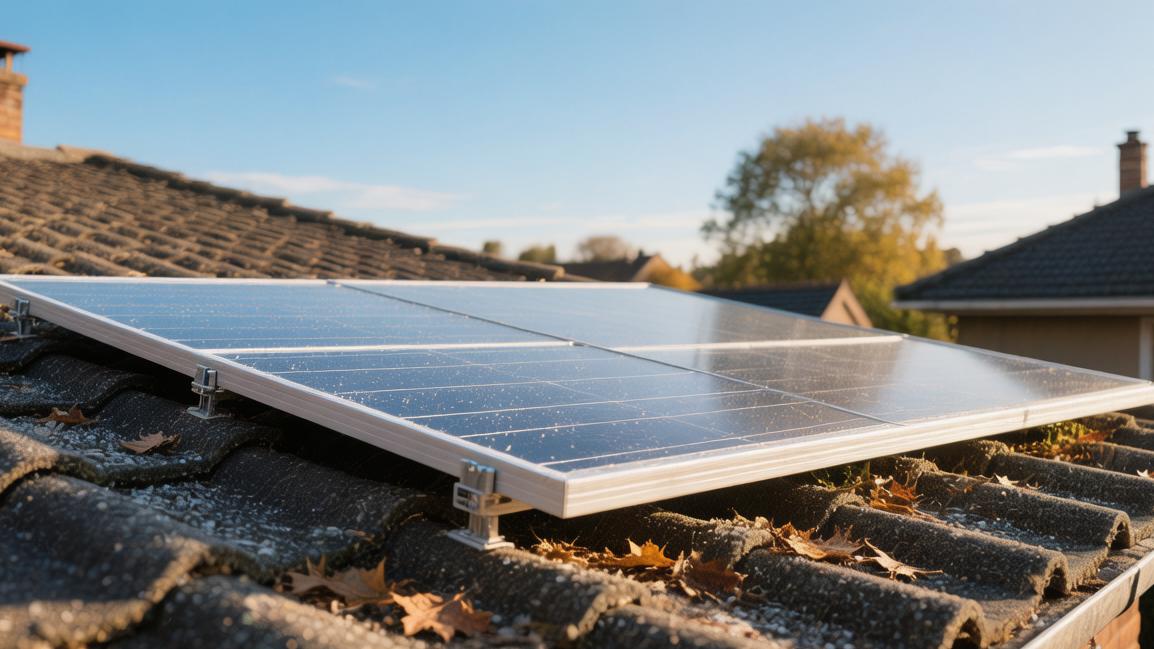
Sustainability and Recycling
High recycling rate
The aluminum frame accounts for about 18% of the total module weight and can be 100% recycled through mechanical disassembly, with the energy consumption of recycled aluminum being only 5% of primary aluminum production.
The glass cover, which accounts for more than 70% of the weight, can have over 95% of its cullet reintroduced into the production of ultra-white photovoltaic glass after optical sorting technology processing, which is about four times more valuable than using it as construction filler.
For the inside of the cell, current chemical leaching processes can recycle silver—which accounts for only 0.05% of the weight but has a high value share—with an efficiency of over 90%, stabilizing the raw material recovery revenue of each ton of scrap modules at 200 to 300 USD.
In the fine disassembly process, the recovery purity of silicon powder has reached 99.9% (3N level). Although it cannot yet be used directly for pulling crystals for semiconductor-grade silicon wafers, it is widely used as an additive in aluminum alloy refining or high-performance anode materials.
The 2026 process flow precisely controls the pyrolysis temperature between 450°C and 550°C, ensuring that EVA or POE films are completely decomposed without producing excessive harmful gas emissions.
Each ton of old panels processed can reduce approximately 1.2 tons of carbon dioxide emissions and 0.5 cubic meters of landfill space. This resource-based closed loop further reduces the Levelized Cost of Energy (LCOE) of the photovoltaic system by about 0.005 USD after accounting for residual value.
Module Material Composition | Weight Ratio (%) | Recycling Rate Standard (2026) | Final Destination |
Aluminum Frame | 18.0% | 99.5% | Recycled Aluminum Profiles |
Tempered Glass | 72.0% | 95.0% | New Module Covers |
Silicon Cells | 4.0% | 92.0% | Alloy Additives/New Cells |
Copper/Silver Metals | 1.0% | 90.0% | Electrolytic Metal/Electronics Industry |
Encapsulation Film | 5.0% | 85.0% (Energy recovery) | Thermal Energy Recovery/Petrochemical Feedstock |
Quick payback
When assessing panel sustainability, Carbon Payback Time is a quantitative indicator of its environmental benefits.
Efficient N-type modules produced in 2026, with photoelectric conversion efficiency breaking 25.5%, use about 30% less silicon material to generate the same amount of electricity compared to 2015.
In an area with sufficient sunlight (annual power generation hours about 1500 hours), the greenhouse gas emissions generated by manufacturing panels (about 20-35 g CO2e/kWh) can be offset by replacing coal-fired power generation in less than 10 months of system operation.
Considering the carbon footprint of mounting systems and inverters, the environmental balance point for the entire system usually occurs in the 14th month, and during the remaining 28 years of operation, the system will achieve a net carbon reduction contribution of over 95%.
In terms of Energy Return on Investment (EROI), photovoltaic plants in 2026 exhibit extremely high efficiency.
Investing 1 energy unit for raw material extraction, purification, assembly, and transportation, the system can produce 25 to 35 energy units of electricity over its 30-year lifespan.
This efficiency improvement is due to the application of silicon wafer thinning technology; currently, the mainstream silicon wafer thickness has dropped to 130 microns, and the silicon consumption per watt of the module is only 2.1 to 2.3 grams.
Compared to traditional fossil energy systems, this energy conversion efficiency is about 10 times higher, ensuring that large-scale deployment does not cause emission transfer due to excessive consumption of fossil energy during manufacturing.
Calculate the accounts
Establishing a photovoltaic recycling center with an annual capacity of 100,000 tons requires an initial equipment investment budget of approximately 8 to 12 million USD.
The disassembly cost per panel is currently compressed to 0.015 to 0.02 USD per watt, while the market price of silver, copper, aluminum, and high-quality glass extracted from it can reach over 0.035 USD per watt in total.
This profit margin has attracted a large number of third-party recyclers to enter the market, making waste disposal no longer a financial burden for power plant owners, but instead potentially recovering cash worth about 3% to 5% of the original investment by selling scrap assets.
For a 10 MW commercial power plant, this means its module residual value after 30 years could reach around 150,000 USD.
In the 2026 economic model, the Extended Producer Responsibility (EPR) system has become a mandatory requirement.
Module factories automatically extract about 0.01 USD of special funds for every watt of panel sold and deposit it into a third-party trust account dedicated to recycling operations 30 years later.
This pre-paid model ensures that even if the manufacturer goes bankrupt in the coming decades, the user's discarded panels can still be disposed of compliantly.
At the same time, many countries provide green subsidies or tax credits of about 5% for panels containing recycled materials, encouraging downstream developers to prioritize purchasing modules with "recyclability design" scores over 90 points.
Financial and Environmental Parameters | 2026 Specific Data Value | Economic/Environmental Benefit |
Recycling Cost Per Watt | 0.015 - 0.02 USD | Lower than waste disposal fees |
Module Residual Value Recovery Rate | 3.0% - 5.0% | Enhance system ROI |
Carbon Payback Period | 0.8 - 1.2 years | Extremely short environmental debt period |
Emission Reduction Contribution Per Ton | 1,200 kg CO2 | Equivalent to planting 60 trees |
Recycling Plant Gross Margin | 15.0% - 25.0% | Sustainable business model |
Follow the rules
Regarding the compliant disposal of photovoltaic waste, major global markets in 2026 have implemented strict tracking systems.
Each module is equipped with a unique electronic tag (RFID or QR code) upon leaving the factory, recording specific contents of lead, cadmium, silver, and other materials.
When panels reach the end of their lifespan and enter the recycling process, the system automatically compares initial data to ensure the recovery rate of heavy metals is not less than 99%, preventing elements like lead (Pb) from polluting groundwater through leachate.
Current laws stipulate that fines for illegal dumping of old panels are as high as 5,000 USD per ton, forcing engineering contractors to maintain qualified recycling certificates in their operation and maintenance records.
The application of lead-free ribbons has covered more than 80% of new panels in 2026. By using bismuth (Bi)-based or conductive adhesives to replace traditional tin-lead solders, the Toxicity Characteristic Leaching Procedure (TCLP) results of modules after crushing have fallen below drinking water standards.
This improvement on the material side greatly simplifies the pre-treatment steps for recycling, eliminating the need for expensive acid washing to treat heavy metal pollution, thereby reducing the water consumption of the recycling process by 60%.
This compliance is not only a requirement for environmental protection but also a prerequisite for large power companies to obtain low-interest loans from banks in ESG (Environmental, Social, and Governance) ratings; projects with high scores can have loan interest rates reduced by about 40 basis points.
Greener in the future
Some high-end modules launched in 2026 have begun to try silver-free designs, utilizing electroplated copper technology to replace silver paste. This not only reduces the cost per watt by 0.01 USD but also eliminates the need for strong acids like nitric acid during the recycling process.
In addition, biodegradable or easy-to-peel encapsulation films are undergoing 5000-hour damp-heat reliability testing. This new material, after reaching its lifespan, can achieve non-destructive separation of cell cells and glass in just a few minutes through specific microwave frequency irradiation, increasing the complete recovery rate of silicon wafers from the current 30% to over 85%.