How Efficient Are Solar Panels
The conversion efficiency of mainstream residential solar panels on the market today is typically between 15% to 22%.
Panels using advanced N-type monocrystalline silicon technology (such as TOPCon or HJT) have seen their actual efficiency steadily surpass 23%, meaning they can directly convert about one-fifth of received sunlight into electrical energy.
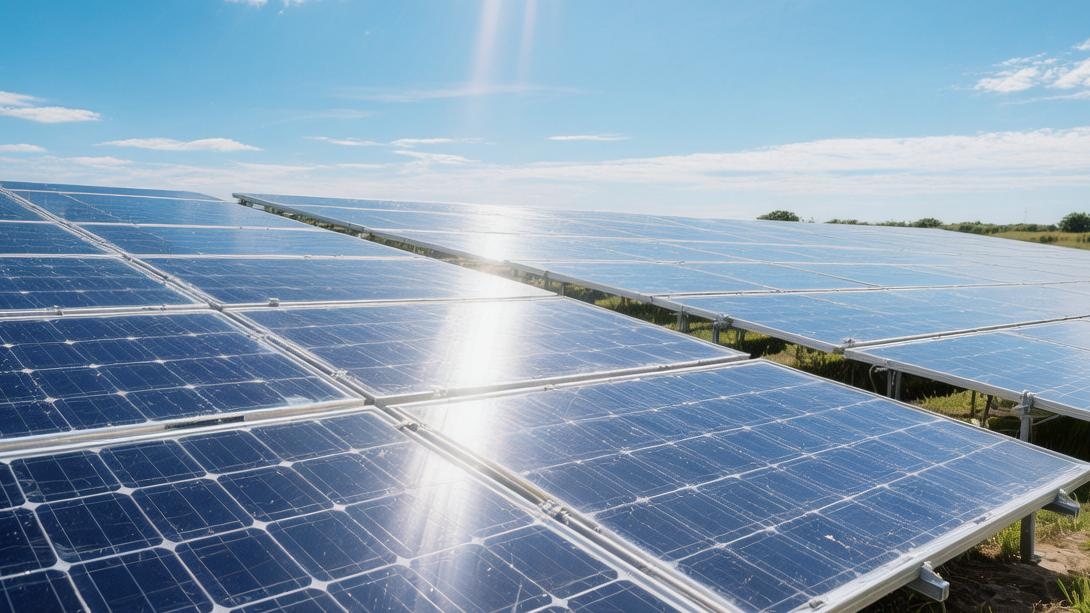
Efficiency by Panel Type
Choosing Monocrystalline
Monocrystalline silicon solar panels are currently the most efficient mainstream products on the market, with photoelectric conversion rates typically stable within the 20% to 23.8% range.
These panels are produced using the Czochralski process, requiring silicon purity of over 99.9999%, and laboratory conversion efficiency records for single cells have approached the theoretical limit of 26.7%.
In practical applications, a standard-sized 1722 mm x 1,134 mm monocrystalline module typically has a rated power ranging from 400 W to 450 W.
The temperature coefficient of monocrystalline silicon performs excellently, usually around -0.35%/℃, which means that when the ambient temperature rises from 25℃ to 45℃, its power generation only drops by about 7%.
Regarding space occupancy, due to its high energy density, installing a 10 kW (kW) residential system only requires about 45 m² of roof area.
The physical lifespan of these panels generally exceeds 30 years, with the first-year power degradation rate controlled within 2%, and subsequent annual linear degradation at approximately 0.55%, ensuring long-term high-yield output.
· Monocrystalline silicon modules output approximately 210 W to 230 W per square meter, 15% higher than traditional models.
· The electron-hole recombination rate of these panels is extremely low, with internal resistance loss controlled below 3%.
· The low-light response speed of monocrystalline modules is 12% faster than other types, maintaining about 15% of rated output in cloudy environments.
· The Energy Return on Investment (EROI) required to manufacture monocrystalline silicon is about 25:1, meaning it can offset production energy consumption after 1.2 years of operation.
Looking at Polycrystalline
Polycrystalline silicon solar panels have lower conversion efficiencies, typically maintained at 15% to 17.5%, due to relatively simple manufacturing processes.
These cells consist of multiple silicon grains with varying crystal orientations; due to the higher concentration of impurities at grain boundaries, photon-excited electrons are more likely to undergo recombination losses during movement, with carrier lifetimes only one-tenth that of monocrystalline silicon.
The temperature coefficient of polycrystalline panels is usually around -0.45%/℃, making their power generation performance in tropical regions about 5% to 8% lower than monocrystalline silicon.
While the per-watt procurement price is about 10% to 15% cheaper than monocrystalline, their low efficiency requires roughly 20% more cost for aluminum alloy brackets and PV cabling for a system of the same power.
Currently, the average annual degradation rate of polycrystalline silicon modules is about 0.7%, and the remaining power after 25 years is usually only around 80% of the initial value, resulting in no significant advantage in Levelized Cost of Energy (LCOE) over its full lifecycle.
· Under low to medium irradiance of 500 W/㎡, the conversion efficiency of polycrystalline modules drops rapidly below 12%.
· Due to the blue appearance color difference, the light absorption rate of polycrystalline panels is about 3.5 percentage points lower than that of black monocrystalline panels.
· Installing a 10 kW polycrystalline system typically requires more than 65 m², occupying 20 m² more area than a monocrystalline solution.
· Encapsulation costs for this product account for over 40% of the total price, offsetting some of the dividends brought by low silicon material prices.
Using Thin Film
Thin-film solar cells, represented by Cadmium Telluride (CdTe) and Copper Indium Gallium Selenide (CIGS), have commercial efficiencies ranging from 11% to 16%.
These panels are extremely thin, with the light-absorbing layer being only about 2 microns thick, one-hundredth that of crystalline silicon cells; thus, the weight per square meter can be reduced to below 2 kg.
CdTe panels perform excellently in high-temperature environments, with a temperature coefficient of only -0.21%/℃; in desert regions where temperatures exceed 40℃, their power generation per unit installed capacity is about 10% higher than crystalline silicon.
Additionally, thin-film cells have a wider spectral response range, working 30 to 45 minutes longer than crystalline silicon panels during low-light periods at sunrise and sunset.
Despite per-watt costs dropping below 0.3 USD in some large-scale projects, their low energy density makes them unsuitable for residential users with limited roof space.
· The light transmittance of thin-film modules can be adjusted between 10% and 50%, often used in Building Integrated Photovoltaics (BIPV) projects.
· These cells have low sensitivity to shading; partial shading of 10% of the area only leads to approximately 12% power loss.
· CIGS flexible modules have a bending radius of up to 50 mm, allowing them to be pasted directly onto curved roofs.
· The energy payback cycle of CdTe modules is only 0.6 years, making them the solar technology with the smallest environmental impact.
Switching to N-type
N-type cell technologies (such as TOPCon and HJT) represent the current technical height of the industry, with mass-produced module efficiencies entering the era of 22.5% to 25.5%.
Unlike traditional P-type cells, N-type cells use phosphorus as a dopant, completely solving the Light-Induced Degradation (LID) problem, with first-year degradation rates as low as 1.0%.
Among them, Heterojunction (HJT) cells combine the advantages of crystalline silicon and thin-film technologies, with average mass-production efficiency reaching 25.2% and bifaciality exceeding 90%.
This means that in environments with grass reflection, the rear can contribute an additional 15% to 25% of power generation.
While the per-watt price of N-type modules is about 0.05 to 0.08 USD higher than standard monocrystalline, their longer warranty (30 years) and lower annual degradation (0.4%) result in a total lifecycle power generation about 12.5% higher than ordinary modules.
· The open-circuit voltage (Voc) of TOPCon cells has surpassed 730 mV, about 30 mV higher than traditional cells.
· The HJT cell processing steps are only four, half of traditional processes, reducing the probability of mechanical damage.
· N-type modules have a low-light power gain of about 5%, with more stable power output at dawn and dusk.
· Over a 30-year operating period, the cumulative return of an N-type system is on average 25,000 USD higher than a P-type system (taking a 100 kW system as an example).
Considering Bifacial
Bifacial solar panels receive light from both front and back sides simultaneously, with integrated efficiencies 10% to 30% higher than monofacial modules.
These modules typically use 2.0mm + 2.0mm semi-tempered glass encapsulation, weighing about 15% more than monofacial modules but with a 20% increase in wind pressure resistance.
Bifaciality is a key parameter; monocrystalline bifacial modules typically have bifaciality between 70% and 80%, while HJT modules can reach 95%.
In snowy environments, where the reflectivity of snow is as high as 80%, the rear gain of bifacial modules can even temporarily boost total power by more than 35%.
Although bifacial modules require higher-density brackets and specific installation heights (over 0.5 meters from the ground), the resulting IRR (Internal Rate of Return) increase is typically between 2% and 4%, making them the preferred choice for large ground-mounted power stations.
· On white gravel roads, the rear power gain of bifacial modules stabilizes around 12% to 15%.
· Bifacial glass encapsulation improves the water resistance of modules by 100%, effectively preventing Potential Induced Degradation (PID).
· The expected 25-year total power generation of these panels is about 2,400 kWh/kW higher than the monofacial version.
· Increasing the installation height from 0.2 meters to 1 meter can increase rear light absorption efficiency by about 8 percentage points.
Shade & Dirt
Shading Power Loss
In a standard 72-cell module, cells are usually divided into three independent physical series strings, each consisting of 24 cells and equipped with a bypass diode.
When 10% of the area of a single cell is shaded by tree shadows or antennas, the internal resistance of that cell spikes instantly, forcing the current of the entire string of 24 cells to flow through the bypass diode, directly causing the output power of the whole panel to drop by approximately 33.3%.
Even if shading only 3% of the total panel area, if this 3% shadow spans all three cell strings, the power drop of the whole panel could reach a staggering 90% or more.
In an environment with an average irradiance of 800 W/㎡, a wire shadow only 2 cm wide can drop the real-time power of a 400 W panel to around 260 W.
Due to voltage mismatch caused by shadows, the Maximum Power Point Tracking (MPPT) efficiency of solar inverters drops from 99% to below 92%.
Long-term exposure to local shading of more than 15% causes the EVA encapsulation material of the cells to yellow due to high temperatures, leading to a permanent 2% to 5% drop in transmittance.
In micro-inverter systems, power loss caused by shading can be reduced by about 15% to 20% compared to string inverter systems, but the cost per micro-inverter is about 0.15 USD/W higher.
Reduced Efficiency from Dust
In arid regions, dust accumulation of over 5 grams per square meter of panel surface results in a photoelectric conversion efficiency drop of about 25% to 30%.
These micron-sized particles change the refraction path of incident light, reducing the transmittance of visible light with wavelengths between 400 nm and 700 nm by more than 15%.
If the dust contains high concentrations of calcium and magnesium ions, under the influence of morning dew, this dust forms a hard calcified layer with adhesion reaching 10 N/cm², ordinary rainfall can only wash away about 40% of the surface dust.
Sulfur dioxide emissions around industrial areas acidify dust, causing microscopic corrosion on the panel glass surface with a depth of about 0.5 microns, increasing diffuse reflection loss by 5%.
Experimental data shows that when the panel tilt is less than 15 degrees, the dust accumulation rate is 2.2 times higher than panels with a 45-degree tilt due to gravitational sedimentation.
In coastal salt spray areas with salinity exceeding 100 mg/L, salt crystallization causes the insulation resistance of panels to drop from 3000 MΩ to below 500 MΩ.
Performing simple surface dusting every two weeks can increase the system's annual cumulative power generation income by 8% to 12%, offsetting about 3% of maintenance labor costs.
Local Heating
When solar panels are partially shaded by bird droppings, leaves, or tape, the shaded cell changes from a "power source" to a "load," consuming electricity produced by other cells and converting it into heat energy—this is the dangerous hot spot effect.
Under standard irradiance of 1,000 W/㎡, the center temperature of a completely shaded cell can soar from 45℃ to over 120℃ within 5 minutes, far exceeding the 105℃ endurance limit of backsheet materials.
This extreme temperature difference not only creates local thermal stress causing glass to burst, but also causes fatigue failure in the soldering layer at the damaged point, shortening the expected lifespan of the panel from 25 years to less than 10 years.
For every 10℃ increase in the temperature of a hot spot area, the semiconductor performance of the silicon wafer at that point undergoes irreversible physical decline, with the annual degradation rate increasing by 0.8%.
Detected by infrared thermal imagers, the panel temperature difference in qualified systems is usually less than 5℃, while panels with hot spots often have temperature differences exceeding 35℃.
The pH value of acidic substances in bird droppings is usually between 3.5 and 4.5; long-term coverage will corrode the anti-reflection coating, which is only 100 nm thick.
Modules using half-cell technology reduce internal resistance loss by 75% due to halved operating current, keeping the maximum hot spot temperature about 15℃ to 20℃ lower than full-cell modules.
Snow Removal Costs
In cold regions, the impact of snowfall on efficiency is characterized by an "all or nothing" effect; even a 1 cm thick layer of snow, with opacity exceeding 95%, will drop panel current output to zero.
The weight of snow is also a non-negligible load parameter; the density of fresh snow is about 100 kg/m³, while snow that re-freezes after melting can reach a density of 800 kg/m³.
If the structural strength design margin of the roof bracket is less than 50%, an accumulation of over 30 cm of wet snow may lead to permanent torsional deformation of the aluminum alloy frame and increase the internal micro-crack rate of cells by more than 15%.
Panels with self-cleaning hydrophobic coatings allow snow to slide off more than 3 times faster than ordinary panels when the slope is greater than 30 degrees.
Using the cell's own reverse current heating function for snow removal consumes about 5% of the system's daily power generation but can shorten downtime by 40%.
In high-latitude regions of North America, annual average power generation loss due to winter snow accumulation typically ranges from 3% to 10%.
If the snow pressure on a single 2 m² panel exceeds 5400 Pascals, the micro-crack length in the internal silicon wafers will expand at a rate of 0.2 mm per year.
Cleaning Returns
O&M investment targeting shading and dirt has clear marginal economic effects; it is generally recommended to initiate manual intervention when system power generation efficiency falls below 90% of the rated value.
Currently, the unit price for professional PV cleaning services is between 0.05 and 0.15 RMB per watt; for a 10 kW (kW) residential system, a single cleaning costs about 500 to 1,000 RMB.
If cleaning can restore power plant efficiency from 82% to 96%, for a system with an annual power generation of 15,000 kWh, it can create approximately 1,200 RMB in additional electricity revenue per year.
This means that in industrial areas with heavy dust pollution, the dynamic payback period for performing deep cleaning twice a year is typically less than 14 months.
Using deionized water to clean panels avoids mineral spots on the surface, improving light transmittance by about 1.5%.
The unit cost of fully automatic cleaning robots is about 15,000 to 30,000 RMB, with a single robot capable of processing approximately 500 m² of panel area per hour.
For commercial rooftop projects, installing online monitoring sensors (priced at about 300 USD) can compare light intensity and output ratios in real-time, reducing blind cleaning by 15%.
By optimizing the height of surrounding vegetation so that its shadow at noon on the winter solstice is more than 2 meters from the panel edge, about 5% of the system's annual power generation loss can be recovered.
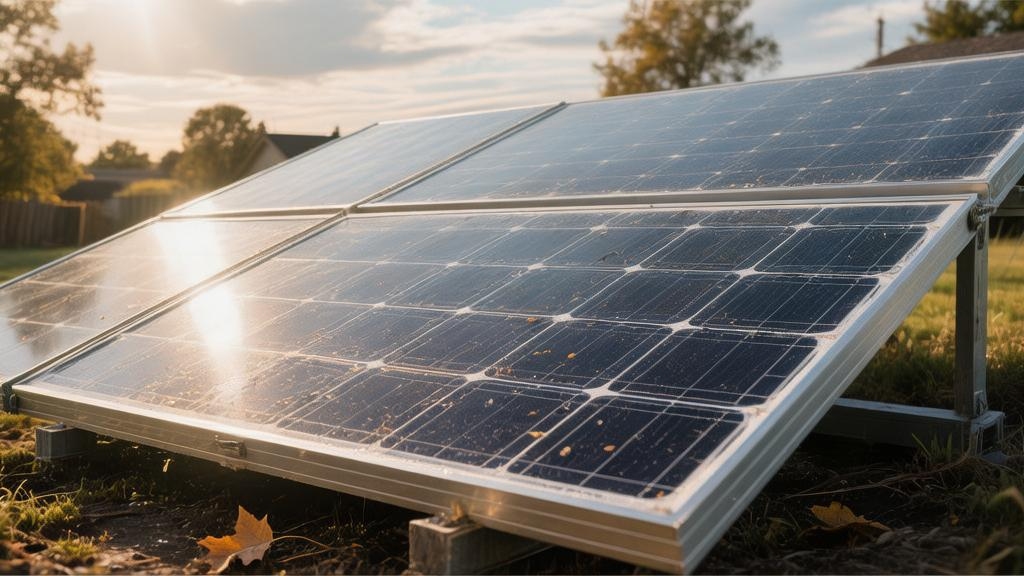
Angle
Aiming at the Sun
When sunlight hits the cell surface vertically at 90 degrees, reflectivity is lowest, and absorbed photon energy can reach the standard test intensity of 1,000 W/m².
Once the angle of incidence deviates from the vertical direction by 15 degrees, the irradiance received by the panel drops by about 3.4%;
If the deviation reaches 30 degrees, energy loss spikes to 13.4%;
When the angle of incidence is 60 degrees, power generation efficiency is directly halved, leaving only 50% of the rated power.
This loss is not only due to the reduction in projected area but also because the reflection loss on the glass surface increases exponentially as the angle increases.
After the angle of incidence exceeds 60 degrees, the reflectivity of the glass rapidly increases from about 4% to over 20%, meaning a large number of photons are wasted before they even contact the silicon wafer.
In regions at 40 degrees north latitude, the solar altitude at noon in summer is about 73.5 degrees, where near-horizontal installation works best;
By the winter solstice, the noon altitude is only 26.5 degrees, and the panel needs to be tilted at about 60 degrees to face the sun directly.
If a year-round fixed installation is used with the angle set to match the local latitude (i.e., 40 degrees), although about 95% of the theoretical maximum total electricity can be obtained annually, during the winter months when demand is highest, power generation may be 15% to 20% lower than the optimized angle.
To balance this seasonal fluctuation, commercial power plants typically increase the angle by an additional 10 to 15 degrees based on winter peak loads, trading some summer surplus power for an 8% increase in winter returns.
Following the Direction
In the Northern Hemisphere, true south (180-degree azimuth) is the best solution for capturing full-day light, but in actual installations, panels often pivot due to roof structures or shading constraints.
Experimental data shows that if a panel deviates from true south to the east or west by 15 degrees, annual total power generation will decrease by about 1.5% to 3%; if the deviation reaches 45 degrees (i.e., southwest or southeast), the total power generation loss expands to 8% to 12%.
Notably, installing toward the southwest holds higher commercial value in some regions, as 2 PM to 5 PM is often the peak period for summer electricity usage; during this time, the output power of southwest-facing panels is about 15% to 25% higher than south-facing ones, matching the high returns of tiered electricity prices more effectively.
When installing on east-west roofs, if forced to choose east or west-facing installations, the annual average power generation of the system is typically only 75% to 80% of the south-facing option.
For such projects, designers usually need to increase installed capacity by an extra 25% (i.e., increasing from 4000 W to 5000 W) to offset the power gap caused by the poor azimuth.
Additionally, azimuth deviation affects inverter startup time; east-facing panels can reach startup power around 6 AM but decay rapidly after 3 PM;
West-facing panels only begin working at full load after 10 AM, with their power generation cycle continuing until sunset.
Adjusting the Slope
Flat-lay installation with an angle of less than 10 degrees saves bracket costs but leads to a 3-fold increase in dust accumulation rate, and rainwater leaves a mineral scale about 1-2 mm thick on the bottom edge of the panel after evaporation.
Research indicates that increasing the angle to over 15 degrees can improve the natural runoff rate of snow and dust by over 60% through gravity, recovering about 5% of long-term power loss.
Furthermore, tilted installation creates a natural chimney effect on the back of the panel; increased air velocity can reduce cell operating temperature by 3℃ to 5℃, which directly brings a real-time power gain of 1.2% to 2% based on a temperature coefficient of -0.4%/℃.
Deviation Angle (Degrees) | Cosine Energy Gain (%) | Glass Reflection Loss (%) | Integrated Efficiency Output (%) |
0 (Vertical Incidence) | 100% | ~4.1% | 95.9% |
15 | 96.6% | ~4.5% | 92.1% |
30 | 86.6% | ~5.8% | 80.8% |
45 | 70.7% | ~9.2% | 61.5% |
60 | 50.0% | ~21.5% | 28.5% |
Tracking the Light
To eliminate efficiency bottlenecks caused by fixed angles, automatic tracking systems (Trackers) have become standard configurations for large-scale projects.
Single-axis tracking systems can drive panels to rotate from east to west along a north-south axis, increasing the light acceptance angle in the morning and evening from 15 degrees to nearly 90 degrees.
These systems typically increase initial investment costs by about 10% to 15% (an increase of about 0.08 to 0.12 USD per watt), but their annual power generation gain in sunny areas can reach 25% to 30%.
This means that a project that would have taken 8 years to recoup costs can have its payback period shortened to around 6.5 years with single-axis tracking, and the system's Internal Rate of Return (IRR) can typically increase by 2.5 percentage points.
Dual-axis tracking systems can adjust both azimuth and tilt simultaneously, ensuring the panel maintains zero-degree deviation from the sun's rays at all times.
While this complex mechanical structure generates about 1% to 2% of its own energy consumption and increases equipment and maintenance budgets by about 0.2 USD per watt, its power generation gain in polar or high-latitude regions can reach up to 40% or more.
For systems using bifacial cell technology, trackers can improve the reception efficiency of scattered light on the rear by about 15%, reducing the Levelized Cost of Energy (LCOE) of the entire power station by about 10% to 15%.