How Much Does 1 Solar Panel Generate a Day
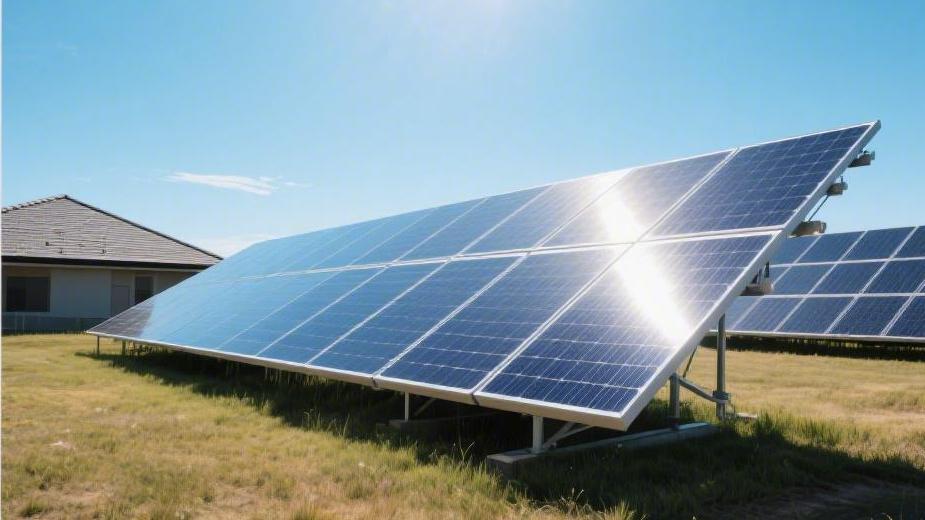
A 400-watt solar panel, under an average of five hours of effective sunlight per day, after deducting a 20% system loss, generates about 1.6 kilowatt-hours (kWh) of electricity daily.
This value is affected by latitude, tilt angle, and weather conditions, and can reach over 2 kWh in areas with abundant sunlight.
How to Calculate Your Output
Evaluating the true power generation output of a solar panel requires establishing a mathematical calculation model that includes factory electrical parameters, geographical and climatic characteristics, physical line impedance, and thermodynamic variables.
Under Standard Test Conditions (STC), the solar radiation intensity received by the panel is strictly set to 1000 watts per square meter, the air mass is set to AM1.5, and the internal physical operating temperature of the cells is kept constant at 25 degrees Celsius.
Find the True Wattage
Read the factory nameplate attached to the back of the panel; the nominal direct current (DC) power of 400 watts only represents the ultimate output peak in a windless, constant-temperature laboratory environment. When running on a real roof in California, the reference baseline needs to be switched to PVUSA Test Conditions (PTC). The PTC model raises the outdoor ambient temperature to 20 degrees Celsius and introduces a gentle breeze with an airflow speed of 1 meter per second, resulting in the PTC-measured rated power usually dropping by 10% to 12% compared to the STC power.
For a monocrystalline silicon panel printed with 400 watts, the PTC power data usually fluctuates in the range of 352 watts to 360 watts. Checking the electrical specification sheet in the panel's manual, the open-circuit voltage (Voc) is calibrated around 37.1 volts, the short-circuit current (Isc) reaches 13.7 amps, the maximum power point voltage (Vmp) is 31 volts, and the maximum power point current (Imp) is 12.9 amps. Applying physical formulas, 31 volts multiplied by 12.9 amps equals 399.9 watts.
Calculate Sunlight Hours
One Peak Sun Hour (PSH) equals the solar radiation energy of 1000 watt-hours accumulated on a one-square-meter area of the panel. The annual average PSH in Phoenix, Arizona, is as high as 5.7 hours per day, while the single-day PSH in Nevada during the summer can soar to 7.5 hours per day. In contrast, the annual average PSH in Seattle, Washington, is only 3.2 hours per day, and the single-day PSH during the rainy season can drop to as low as 1.5 hours per day. Azimuth and tilt angles also dominate the probability of photon reception.
In the Northern Hemisphere, installing the panel facing due south (compass azimuth 180 degrees) captures 100% of the designed solar radiation. Restricted by the roof layout to only face east (azimuth 90 degrees) or west (azimuth 270 degrees) during construction, the total annual solar radiation reception will sharply decrease by 15% to 20% proportionally.
Power generation is maximized when the installation tilt angle is set to the local latitude value. For example, the latitude coordinate of Los Angeles is 34 degrees; fixing the metal bracket tilt angle at 34 degrees maximizes the solar energy captured throughout the year. Adopting a flat installation (0-degree tilt angle) will cause a 10% to 12% loss in total annual power generation.
Deduct Power Losses
To accurately calculate the final value converted from direct current (DC) to alternating current (AC) usable by wall outlets in your home, you must multiply by a system Derate Factor in the formula. Constrained by the physical properties of hardware modules, various power loss data present a superposition state:
l String inverters have an AC/DC conversion efficiency of 96% to 98%, while microinverters usually fluctuate between 95% and 97%. The AC/DC conversion process causes about 3% to 5% of energy loss.
l When the total length of the laid DC pure copper wires (such as AWG 10 specification) exceeds 15 meters, the voltage drop generated by the wire resistance will consume 1.5% to 2% of the power.
l In arid regions with little rain, like Texas, accumulated dust, pollen, and bird droppings on the glass surface form a physical shielding layer, resulting in a 2% to 5% soiling loss.
l During the transmission of AC wiring from the exterior wall inverter to the indoor main distribution panel, another 1% of line impedance loss occurs.
Multiplying all individual hardware loss percentages together, the comprehensive derate factor for a standard American home rooftop grid-tied PV system usually falls between 82% and 84%. Multiplying the 400-watt panel by Phoenix's 5.7 hours of PSH per day, and then by the 84% derate factor, the true AC power recorded in the meter box is 1915 watt-hours (or 1.91 kWh).
Account for Temperature Degradation
Silicon-based semiconductor transistor materials have obvious negative temperature characteristics; high-temperature environments trigger a sharp decline in the open-circuit voltage metric. Checking the "maximum power temperature coefficient" (Pmax) in the panel specification sheet, the values for modern N-type monocrystalline silicon panels generally range between -0.25%/°C and -0.35%/°C.
The baseline operating temperature set by the STC standard is 25 degrees Celsius. The ambient temperature in Las Vegas, Nevada, at 1 PM in July, is as high as 40 degrees Celsius, and a black asphalt shingle roof that has absorbed a massive amount of infrared heat is usually 15 degrees Celsius hotter than the air temperature. At this time, the true physical contact temperature of the panel cells will soar to 55 degrees Celsius. Subtracting the baseline 25 degrees Celsius from 55 degrees Celsius results in a temperature difference of 30 degrees Celsius.
Multiplying 30 degrees Celsius by the 0.35% temperature coefficient yields a high-temperature power loss rate of 10.5%. A panel nominally rated at 400 watts will only have a true peak output power of 358 watts on a hot summer afternoon.
Calculate the Aging Rate
Within the first 365 days after installation, Light-Induced Degradation (LID) causes a permanent 1.5% to 2% drop in the PV panel's output capability. After surviving the severe degradation period of the first year, the panel enters a long-term stable aging cycle, where the annual decline slope of the rated power remains constant between 0.4% and 0.5%.
By the 10th year of operation, the entire panel can still maintain 94.5% to 95% of its initial factory power. When the 25-year product warranty period expires, top-tier panel manufacturers on the market contractually guarantee a remaining output power of no less than 84.8% to 86%.
Stretching the time span to calculate the total lifecycle returns, a panel producing an average of 1.91 kWh per day on day one will see its total daily output shrink to 1.87 kWh in the 5th calendar year. By the 25th calendar year, the ultimate daily production capacity will irreversibly decline to around 1.62 kWh.
Real-World Usage
The 1.6 kWh (1600 watt-hours) of AC power generated daily by a 400-watt solar panel needs to be placed into specific physical power terminals and American household energy consumption scenarios to quantify its true operational load and economic value.
Translating abstract kilowatt-hour data into minutes of home appliance operation, lithium cell charge/discharge depth percentages, electric vehicle driving miles, and cent fluctuations on a grid net metering bill can precisely map the physical energy flow trajectory of a single module over a 24-hour cycle.
What Appliances Can It Run?
For an American-style double-door refrigerator with an ice maker, the compressor's rated power is between 150 watts and 200 watts, but the compressor only needs to run 8 to 10 hours a day to maintain a refrigerator compartment temperature of 38 degrees Fahrenheit (3.3 degrees Celsius). 1600 watt-hours of electricity can keep this refrigerator, which consumes about 1.2 kWh/day, running continuously for over 32 hours.
Switching to the scenario of heating appliances, a 1200-watt drip coffee maker takes 8 minutes to heat 1 liter of cold water to 200 degrees Fahrenheit, consuming about 160 watt-hours of electricity. The daily output of a single panel is enough for this coffee maker to execute 10 complete brewing cycles continuously.
If plugged into a high-power 4500-watt, 240-volt electric clothes dryer, 1.6 kWh of electricity will be completely depleted in 21 minutes under a full load. For whole-house lighting systems, a standard A19 specification LED bulb operates at 9 watts and emits 800 lumens of luminous flux. A total capacity of 1600 watt-hours can keep 10 bulbs of the same specification lit simultaneously for over 17.7 hours.
"During peak usage times, setting a 1500-watt portable space heater to its highest setting will drain 1.6 kWh of electricity in just 64 minutes of full-load heating. Conversely, switching to a 35-watt DC variable frequency bedroom ceiling fan, the same 1.6 kWh can sustain its highest speed for a continuous 45.7 hours. The extreme difference in their power consumption rates is as high as 42 times."
Charging Batteries
Taking a wall-mounted Tesla Powerwall 3 Lithium Iron Phosphate (LiFePO4) cell with a nominal capacity of 13.5 kWh as an example, its system rated voltage is set in the 48-volt range. The 1.6 kWh of electricity generated by a single 400-watt panel in 5 hours of effective sunlight, in a theoretical state without any losses, can fill 11.85% of the cell's total capacity.
Because current has physical impedance during bidirectional flow, round-trip efficiency is typically rated at 89% to 90%. When 1600 watt-hours of AC power is converted to DC via the internal inverter and stored in the cells, about 10% of the energy dissipates as thermal radiation, meaning the actual chemically available energy stored is 1440 watt-hours (1.44 kWh).
When the ambient operating temperature of the cell pack drops below the freezing point of 32 degrees Fahrenheit (0 degrees Celsius), the movement rate of lithium ions in the electrolyte plummets precipitously. The system's built-in thermal management module will forcefully appropriate about 300 watt-hours of the power generated by the panel to heat the cell pack, causing the effective power stored during that cycle to sharply drop to under 1100 watt-hours.
"For a home energy storage cell with a rated capacity of 13.5 kWh and Depth of Discharge (DoD) set at 100%, if it relies entirely on a single 400-watt panel producing an average of 1.44 kWh of effective stored energy daily for recharging, the physical time required to charge the cell from 0% to a fully charged state will exceed 9.3 calendar days."
How Far Can It Drive a Car?
A Tesla Model 3 Long Range equipped with an 82 kWh ternary lithium cell pack has an average energy consumption metric under EPA testing conditions of 250 watt-hours per mile (i.e., 4 miles per kWh). If the 1.6 kWh of electricity generated daily by a single panel is injected into the vehicle's cell pack via a 120-volt/12-amp Level 1 portable charging cord connected to a NEMA 5-15 outlet, after deducting the approximately 11% conversion impedance and line heating loss of the On-board Charger, the actual net power entering the vehicle's cell is 1.424 kWh.
Applying the 250 watt-hours per mile energy consumption formula, 1.424 kWh of net power can add 5.69 miles (about 9.15 kilometers) of physical driving range to the vehicle.
In a flat highway environment at 70 degrees Fahrenheit (21 degrees Celsius), cruising at 65 miles per hour, the vehicle's motor will consume about 270 watt-hours of electricity per minute. The 1.424 kWh of net electricity painstakingly accumulated by a single panel all day will be entirely zeroed out after 5.2 minutes of highway driving.
"If connected to a 240-volt/48-amp Level 2 Home Charger, the equipment's hourly output power reaches 11.5 kilowatts. The 1.6 kWh of electricity accumulated by a single panel over 24 hours would be instantly extracted by high-voltage current within the first 8.3 minutes of plugging in the charging handle, after which the charging system would automatically begin purchasing massive amounts of electricity from the utility grid."
Offsetting Energy Bills
Under the NEM 3.0 Net Billing tariff structure implemented in California, the export rate for sending energy back to the grid exhibits severe hourly volatility.
Between 12 PM and 2 PM on the sunniest spring days in April, when the grid is oversupplied due to a flood of solar energy, the purchase price for a single kilowatt-hour will drop below $0.04. The 0.8 kWh of electricity produced and fully exported by a single panel operating at full load during this period will only earn a $0.032 bill credit. Moving into the hot summer month of August, between 6 PM and 8 PM, the California grid load climbs to its annual peak, and the export compensation rate for a single kilowatt-hour will soar to an average of over $2.80.
If paired with a home energy storage cell, reversing the 1.44 kWh of net power stored by a single panel during the day into the grid at full power at 7 PM can generate a lucrative $4.03 bill deduction in just two hours. Alternatively, adopting a "self-consumption" strategy, where the 1.6 kWh produced by the panel directly powers home AC and lighting, eliminates the need to buy equivalent peak-hour high-priced electricity from the grid (e.g., $0.45 per kWh), objectively intercepting $0.72 of cash outflow for the household that day.
How Much Money Does It Save
Calculating the economic return generated by a 400-watt solar panel over its 25-year life cycle requires establishing a financial discount model that includes Capital Expenditure (CAPEX), annual Operating Expense (OPEX), federal and state Investment Tax Credits (ITC), local utility electricity price inflation rates, and the physical degradation curve of the panel.
Placing the 1.6 kWh of AC electricity produced daily into the retail electricity price matrix across various U.S. states reveals a highly dispersed geographical variance in the cash flow it generates.
Calculating the Bill
Extrapolating from an average daily generation of 1.6 kWh, a single panel can cumulatively output 584 kWh over 365 calendar days. Substituting these 584 kilowatt-hours into the fixed residential rate standard of $0.28 per kWh in the Boston, Massachusetts area, the module can offset $163.52 in electricity expenses in its first year.
If the same panel is moved to Washington State, where electricity is cheap (benefiting from large-scale hydroelectric facilities, the average rate there is only $0.11 per kWh), the physical electricity generated in the first year is exactly the same, but the on-paper savings shrink significantly to $64.24.
Electricity prices have a long-term cyclical upward trend. Statistics from the U.S. Energy Information Administration (EIA) show that the Compound Annual Growth Rate (CAGR) of national residential retail electricity prices has remained in the 3.2% to 4.5% range over the past decade.
Introducing a 3.5% electricity price inflation rate and an annual 0.5% power degradation rate for the monocrystalline silicon panel into a compound interest formula, while the panel in Massachusetts sees its power generation drop to 572 kWh in year 5, its savings for that year actually climb to $188.76 due to electricity prices rising to $0.33/kWh.
Due to the aging of the IGBT modules inside the inverter and soiling losses caused by dust accumulation (about 3%), the actual usable output of the panel in year 10 will drop to around 555 kWh.
According to the Net Present Value (NPV) financial calculation method, setting a discount rate of 5%, and operating within an optimal working temperature range of 75 degrees Fahrenheit (23.8 degrees Celsius), the cost of grid electricity purchases intercepted cumulatively by this panel over the first 120 months exceeds $2,100.
If the user signs a Time-Of-Use (TOU) contract, during the peak usage hours of 4 PM to 9 PM in summer, the peak rate of California's Pacific Gas and Electric Company (PG&E) skyrockets to $0.55 per kWh.
The last 0.2 kWh of electricity output by the panel between 4 PM and 5 PM before sunset can offset $0.11 of the bill in just one hour. At this time, the economic weight of every watt-hour is 2.2 times that of the off-peak period at 7 AM ($0.25/kWh).
Claiming Tax Credits
Converting physical hardware into book assets requires an accurate calculation of the sunk costs of initial procurement and installation. Currently, the U.S. residential PV market offers all-inclusive turnkey projects (including roof surveying, permit applications, bracket fixing, wiring, and grid-tie testing), with the median installed price per watt falling between $2.90 and $3.30.
The total out-of-pocket expense for a 400-watt panel, including parts and labor, is about $1,200. Until 2032, the U.S. federal government offers a Solar Investment Tax Credit (ITC) of up to 30%.
After submitting IRS Form 5,695 in April of the following year, the $1,200 book expense can generate an equivalent deduction of $360 in federal personal income tax, smoothly bringing the net acquisition cost of a single panel down to $840.
Various state-level incentive policies can further lower the median hardware cost.
Taking New York State as an example, the New York State Energy Research and Development Authority (NYSERDA) provides a direct cash rebate of $0.20 per watt through the Megawatt Block program.
A 400-watt panel can instantly receive an $80 installation subsidy. The New York State Department of Taxation and Finance also provides an additional 25% state tax credit (capped at $5,000).
Deducting the $360 federal credit, the $80 NYSERDA rebate, and the state tax credit ($280 calculated based on the $1,120 post-rebate amount), the initial $1,200 capital expenditure is drastically compressed to $480.
With the unit price of a microinverter hardware boasting a 25-year nominal lifespan at about $150, plus the panel's own procurement price of $180, this final net cost of $480 is extremely close to the baseline of the factory BOM (Bill of Materials).
Payback Period
Dividing the ultimate net cost of $480 by New York State's annual average electricity bill savings of $135 yields an investment payback period of just 3.55 years.
Even in Texas, which has no additional state-level subsidies, relying solely on the 30% federal ITC brings the cost down to $840. Facing the Dallas area's cheap electricity price of $0.14 (saving $81.76 in the first year), the capital payback period for the panel extends to 10.27 years.
On the distribution map of the financial Internal Rate of Return (IRR), the IRR value in California can often break through 18%. In contrast, in North Dakota, due to short sunshine hours and cheap electricity prices, the IRR drops below 5%, approaching the benchmark yield of risk-free treasury bonds.
The following table demonstrates the cash flow variation parameters for a single 400-watt panel over 25 years under a model of the U.S. average electricity price ($0.16/kWh, annual inflation 3.5%, first-year net cost $840, annual physical degradation 0.5%):
Operational Year | Physical Annual Generation (kWh) | Forecasted Electricity Price ($/kWh) | Annual Electricity Savings ($) | Cumulative Savings ($) | Net Cash Flow / Return ($) |
Year 1 | 584.0 | 0.160 | 93.44 | 93.44 | -746.56 |
Year 5 | 572.4 | 0.183 | 104.74 | 490.85 | -349.15 |
Year 10 | 558.2 | 0.218 | 121.68 | 1064.50 | +224.50 |
Year 15 | 544.4 | 0.259 | 140.99 | 1731.35 | +891.35 |
Year 25 | 517.8 | 0.365 | 188.99 | 3405.60 | +2565.60 |
Selling Power Back to the Grid
In regions where NEM 3.0 or similar Net Billing agreements are in effect, if the electrons produced by the panel are not consumed by household loads in a timely manner, they are pushed into the public high-voltage transmission grid.
Utility companies no longer use a 1:1 retail price for kilowatt-hour credits but instead use an "Avoided Cost Rate" based on the wholesale market to calculate commissions.
Arizona's Salt River Project (SRP) sets the purchase price for excess solar energy on non-summer mornings at $0.028 per kWh. The 0.5 kWh of spillover electricity produced by the panel at 9 AM only generates a tiny $0.014 liability credit on the meter bill.
Installing a home energy storage system (such as a 10 kWh lithium cell with 90% charge/discharge efficiency) to intercept this cheap energy becomes the best financial intervention to adjust the yield curve.
In Massachusetts' ConnectedSolutions Virtual Power Plant (VPP) program, the utility company will requisition power from home batteries during extreme heat waves in the summer.
The 1.5 kWh of effective AC power ordinarily stored in the cell pack by a single panel can be sold back to the grid at a premium of up to $1.50 per kWh during system dispatch. A single dispatch cycle generates a net cash return of $2.25.
Assuming it is called upon by the grid 30 to 40 times each summer, the storage discharge action attached to a single panel can earn an additional $67.5 to $90 in subsidy income annually, converting what might have been lost wind and solar curtailment rates into tangible monetary purchasing power.