What Affects ROI from Solar Energy in Aquaculture | 3 Factors
The first is initial cost and policy subsidies. Although the system installation fee is approximately $1.5/watt, utilizing the government clean energy tax credit of up to 30% can significantly shorten the payback period;
Second is power consumption and generation efficiency. High-power equipment such as aerators in aquaculture farms, if matched with sufficient sunlight, usually pays back in 5 to 7 years, saving over 70% of electricity bills annually thereafter;
Third is equipment maintenance and service life. Given the humid aquatic environment, IP68-rated corrosion-resistant photovoltaic modules must be used and cleaned regularly, which ensures stable operation of the system for over 25 years, thereby maximizing long-term returns.
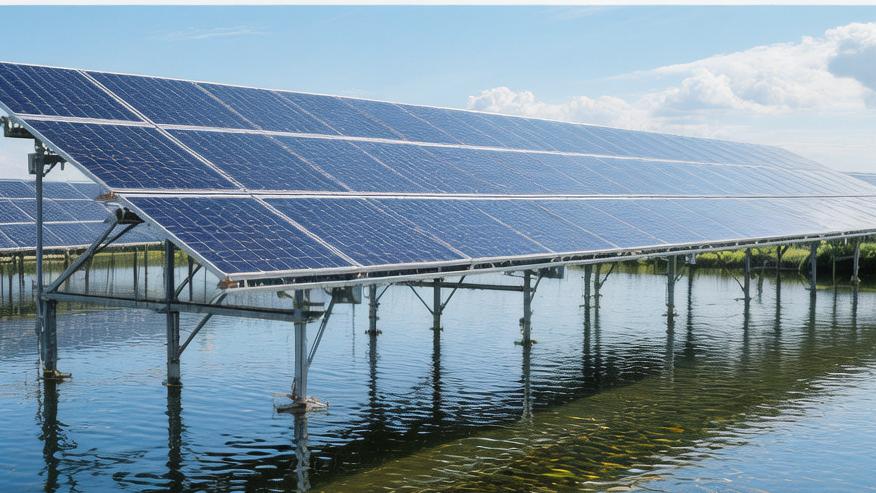
Initial Investment and Setup
Surveying Underwater Topography
The pre-construction underwater topography survey requires the use of a multi-beam echo sounder with an accuracy of 0.05 meters to scan the bottom of the pond. The scanning fee for a single 50-hectare water surface fluctuates between $4,500 and $6,000.
Sediment sampling tubes must be driven to a depth of 3 to 5 meters to test soil bearing capacity parameters and the baseline shear strength indicator of 15 kPa.
· If the silt layer thickness exceeds 1.2 meters, the piling depth of each column must be increased by an additional 2.5 meters, raising the overall foundation engineering cost by 18% to 22%.
· Water salinity testing instruments must continuously record chloride ion concentrations for 14 days. When the concentration exceeds 15000 ppm, the anti-corrosion coating thickness standard must be raised from 85 microns to 120 microns, increasing the anti-corrosion treatment cost per ton of steel by $150.
Construction team mobilization fees are calculated based on equipment tonnage. A 50-ton piling barge has a daily rental of $1,200. Completing the construction of approximately 300 columns for a 1 MW capacity usually takes 8 to 10 days.
Cabling and Pipelines
The procurement budget for DC and AC cables accounts for 11% to 14% of the initial hardware investment of the system.
The floating PV system uses specialized underwater tinned copper core cables with AD8-level waterproof certification. The unit price of photovoltaic DC cables with a cross-sectional area of 4 square millimeters fluctuates around $1.5/meter.
Considering a 10% water surface routing redundancy, a 5 MW array procures DC cables up to 45000 meters long, with a total cable weight exceeding 2,800 kg.
· If the AC cable transmission distance from the inverter to the step-up transformer exceeds 500 meters, the voltage drop will break the standard limit of 3%.
· In this case, the cable cross-sectional area needs to be expanded to 185 square millimeters, and the cable procurement unit price soars to $18/meter, increasing the AC segment wiring budget per megawatt by nearly $35,000.
When protecting cables in pipes, the compressive strength index of HDPE corrugated conduits must be higher than 1250 Newtons. The price of a single 6-meter standard pipe is about $8.5, and a 10 MW project requires approximately 6000 pipes.
Piling and Rack Mounting
The material weight distribution of the water-based mounting system is between 0.035 kg and 0.045 kg per watt, using prestressed high-strength concrete pipe piles with a diameter of 300 mm and a wall thickness of 10 mm as support units.
The ex-factory price of a 12-meter pipe pile is approximately $220. Arranged with a 5-meter by 5-meter column span, 400 foundation piles are driven per hectare of water, bringing the pipe pile material budget per hectare to $88,000.
· The impact energy of the hydraulic pile driver is set in the range of 40 kJ to 60 kJ to ensure that the final penetration of the pipe pile is less than 5 mm/blow.
· This penetration indicator meets the stress standard for resisting a 35 m/s limit wind speed over a 25-year service cycle.
The aluminum alloy main beams installed at the top of the pipe piles have a tensile strength of 260 MPa. The procurement price for extruded aluminum profiles is $3,200 per ton. After including a 3% processing loss rate, the material expenditure for the mounting skeleton of a single megawatt project fluctuates between $65,000 and $75,000.
Energy Efficiency and System Performance
Utilizing Water Reflection
The rear side of bifacial power generation modules uses high-transmittance semi-tempered glass with a thickness of 2.0 mm, maintaining light transmittance in the 92% to 94% range.
The albedo of the water surface to solar radiation is between 0.05 and 0.10, which is lower than the 0.20 albedo of dry land.
When the mounting height above the water reaches 1.8 meters and the module tilt angle is set to 15 to 20 degrees, the scattered light intensity received by the back side is 8% to 12% of the front side irradiance.
A 550-watt module with a bifacial coefficient calibrated at 75% can provide an additional power compensation of 30 to 45 watts on the rear side under the condition of 1,000 W/m² front irradiance at noon.
Calculating the total annual power generation of a 10 MW array, the bifacial gain can increase the actual power output by 4.5% to 6.2%, increasing the output by approximately 750,000 kWh annually.
Increasing the spacing between modules to 6.5 meters reduces the overall shadow shielding rate of the array to below 3%.
The photovoltaic radiation intensity transmitted to the lower water surface is maintained between 300 W/m² and 450 W/m², keeping the oxygen production rate of phytoplankton within the water body at a safe threshold of 2 to 4 mg per liter of water.
For a shrimp pond with an aquaculture yield of 15000 kg per hectare, the survival rate is maintained in the normal range of 85% due to the preservation of light transmittance, resulting in no additional economic loss.
Water Cooling and Temperature Reduction
For every 1°C increase in the temperature of the photovoltaic silicon wafer, its output power attenuates by 0.35%, and the open-circuit voltage drops by 0.28% accordingly.
The high specific heat capacity of the water surface, combined with heat absorption through water evaporation, makes the air temperature 2 meters above the water 3.5°C to 4.8°C lower than that of land at the same latitude during a 35°C summer noon.
The operating temperature of the module backsheet is suppressed to between 46°C and 49°C, which is far lower than the 55°C to 62°C extremes common in land arrays.
Calculating the operation data for a 1 MW capacity from June to August, the temperature reduction yields a power generation recovery of 2.5% to 3.8%, corresponding to approximately 18000 extra kWh generated within 90 days.
Ambient relative humidity remains high at 75% to 88% year-round, resulting in a 5% increase in the heat exchange efficiency of the inverter casing.
In windless weather, the junction temperature of the Insulated Gate Bipolar Transistor (IGBT) modules inside naturally cooled inverters is maintained below 85°C, with the probability of thermal overload derating during the lifespan being lower than 0.5%.
A light breeze sweeping across the water brings a flow field of 2 m/s to 4 m/s, carrying away a heat flux of 15 W/m² to 25 W/m² from the module surface.
AC Power Conversion
The system DC/AC ratio is set at 1.25 to 1, with an input string total DC nominal capacity of 12.5 MW connected to an inverter cluster with a rated output power of 10 MW.
When the light intensity exceeds 850 W/m², the inverter enters power-limited operation.
There are about 220 hours in the peak-shaving phase throughout the year, with the proportion of DC power discarded due to "curtailment" controlled between 1.2% and 1.8%.
Each 250 kW string inverter has 12 built-in Multi-Maximum Power Point Tracking (MPPT) channels. The static tracking accuracy of MPPT is as high as 99.9%, and the dynamic tracking accuracy is no less than 99.5%.
Facing micro-oscillations in module tilt angles caused by water waves, independent MPPT channels compress the power loss rate caused by local mismatch to a tiny magnitude of 0.4%.
The European weighted efficiency of the inverter at a 20% load rate reaches 98.4%, and the maximum conversion efficiency at full load touches 99.0%.
In the process of converting DC to 380V AC, only about 1% thermal dissipation is generated.
For every 10,000 kWh sent out, the absolute energy evaporation at the inverter end does not exceed 120 kWh.
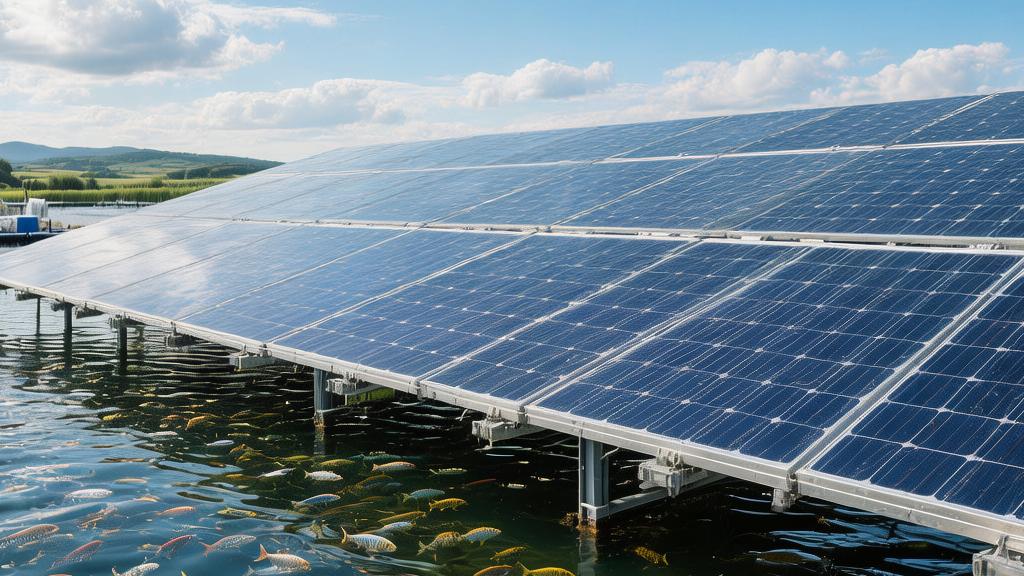
Incentives and Subsidies
Tax Credits for Savings
The initial Investment Tax Credit (ITC) ratio granted by the tax bureau for floating PV systems remains at a baseline of 30% of the total construction cost year-round.
If the weight proportion of domestically manufactured materials in the procured inverters and PV modules exceeds 40%, the tax credit ratio will increase by an additional 10%.
Taking a 2.5 MW project with a construction cost of $2.5 million as an example, a maximum credit rate of 40% can legally wipe out $1 million in tax liability from the company's taxable income within the first tax year after the project is connected to the grid.
When the tax bureau processes this $1 million credit application, it usually requires an account review cycle of 120 to 180 days. Large projects with a capacity of over 1 MW face a financial audit probability of only 0.5%, with error tolerance strictly limited to within 1.5% of the total declared amount.
If the project company's pre-tax profit for the year is only $600,000, the remaining $400,000 in credit is allowed to be carried forward for 20 fiscal years.
The discount rate in the cross-period financial model is calculated at 6.5%, and the net present value (NPV) of the carry-forward amount is approximately $328,000.
Accounting for Depreciation
Photovoltaic fixed assets in aquaculture farms are eligible for a 5-year accelerated depreciation financial calendar.
In bookkeeping, the $2.5 million equipment procurement does not need to be spread over its 25-year physical life. Instead, it is rapidly depreciated at fixed ratios of 20% in the first year, 32% in the second year, 19.2% in the third year, 11.52% in the fourth and fifth years each, and 5.76% in the sixth year.
In a fiscal environment with a corporate income tax rate of 21%, the $800,000 book depreciation in the second year alone allows the project owner to pay $168,000 less in cash taxes.
Large initial book losses effectively offset the operating income generated from electricity sales and aquaculture harvests, forcing the project's Internal Rate of Return (IRR) data up by 1.8% to 2.4%.
In the financial projection table, the absolute tax exemption bonus of $525,000 brought by accelerated depreciation is fully realized within the first 60 months of the project. The free cash flow in the corporate bank account increases by an average of $8,750 per month, and the capital turnover speed increases by 18%.
Selling Green Certificates
For every 1,000 kWh of clean AC power sent to the grid, the system backend automatically generates 1 micro Renewable Energy Certificate (REC) with a unique code.
A 2 MW floating PV array, calculated based on an average annual full-load equivalent generation of 1400 hours, issues a total of 2800 RECs annually.
The spot price of a single REC in the open trading market fluctuates violently between highs and lows of $15 to $45 year-round. The historical price standard deviation is as high as $8.50, showing obvious seasonal periodicity.
To avoid the price falling below the minimum profit line of $18, the project owner usually signs a 36-month forward power purchase agreement with high-energy-consuming enterprises, anchoring the delivery price of each certificate at $28.
A single bulk transaction requires paying a commission of $0.50 per certificate to the energy broker and a 2.5% channel fee on the total transaction value to the trading platform.
After deducting various friction costs, the 2800 RECs inject a pure cash income of $76,300 into the farmer's account annually, pushing the overall investment payback period forward by another 4 months.
Obtaining Low-Interest Loans
The annual nominal interest rate for conventional commercial working capital loans generally hovers around 6.8%, while specialized green loans for floating PV that meet ESG assessment standards can obtain a preferential approval rate of 4.2%.
The absolute interest rate spread between the two financing schemes is 2.6%. For a project with a total investment of $3 million and a loan-to-value ratio set at 80%, the $2.4 million principal is repaid in 180 equal monthly installments over 15 years.
The green loan causes the total monthly principal and interest payment to plummet from $21,250 to $17,900, reducing monthly cash expenditure by $3,350.
Over the 180-month repayment cycle, the total interest expenditure is compressed from $1.42 million to $0.82 million, cutting financing costs by $600,000.
The project's Debt Service Coverage Ratio (DSCR) has steadily climbed from the borderline of 1.15 to a safe range of 1.35, and the probability of default has dropped below 0.02%.