What are Uses For Portable Solar Panels | 3 Great
Portable solar panels can power mobile phones and lights (approx. 5-100W). When camping, they can be connected to a portable power station for charging; 4-6 hours of sunlight can fully charge a 20,000mAh cell. They can also provide emergency power for small refrigerators or routers, and are foldable, portable, and easy to install.
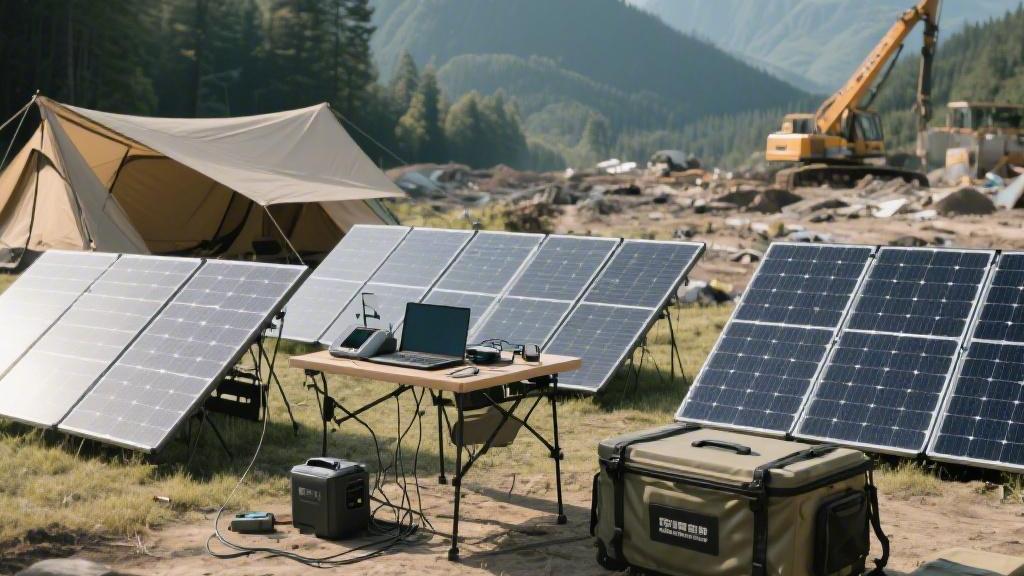
Off-Grid Camping
Unplugging
A standard 5-day, 4-night off-grid camping trip requires an average daily consumption of 1.8 kWh of electricity to maintain daily operations. Taking a 16-pound, four-fold monocrystalline silicon panel out of the trunk and fully unfolding it takes only 20 seconds, occupying exactly 1.5 square meters of space on the ground. Using a 15-foot 10 AWG pure copper cable to connect the panel to a 2000Wh portable power station, the voltage loss during transmission is strictly controlled to within 2%.
At a high-altitude camp of 7,000 feet, the thin air causes the UV penetration rate to increase by 15%, which can cause the actual peak output power of a 200W panel to soar to 190W. On a clear day without any cloud cover, a real-time input power of 190W can charge a 2000Wh LiFePO4 cell from a critically low 5% to a fully charged 100% state in 10.5 hours.
Calculating the Bill
A 55-liter car compressor refrigerator running continuously for 24 hours at an ambient temperature of 75 degrees Fahrenheit will consume an average of 450 Wh of electricity. Using a 60W medical CPAP machine continuously for 8 hours at night will consume a fixed 480 Wh of cell reserve. Fully charging two 4,000mAh smartphones every day, plus recharging an 80Wh laptop once, will require an additional expenditure of 130Wh of electricity in total.
Lighting a 20W LED camp light strip for 5 hours brings the total daily power consumption to exactly 1,160Wh. To fill this 1,160Wh power gap, a 200W solar panel must receive at least 5.8 hours of effective sunlight per day. If camping in winter at 45 degrees north latitude, where there are only 3.5 hours of sunlight, you must upgrade the panel specification to 400W to ensure you harvest the same 1,160Wh of electricity each day.
l Two 200W panels can be connected in parallel using a $15 Y-branch cable, doubling the charging current to 19A while maintaining a safe system voltage of 21V.
l Heating food in a 1,000 W small microwave oven for 5 minutes will instantly consume 83 Wh of electricity, which is equal to the power generated by a 200 W solar panel working for 25 minutes under the midday sun.
l Using an 800 W portable coffee maker to extract two 150 ml cups of espresso takes 3 minutes; this short 180-second operation will consume 40 Wh of electricity.
Chasing the Sun
Manually adjusting the tilt angle of the panel 3 times a day can squeeze out 25% more total power generation compared to lying flat on the ground. At 9:00 AM, adjusting the metal bracket on the back of the panel to a 60-degree angle can intercept the low-angle morning sunlight with 95% efficiency. By 12:30 PM, lowering the bracket height to 30 degrees ensures that the sun's rays hit the panel surface at a perfect 90-degree perpendicular angle of incidence.
Even if a single leaf covering just 10% of the total panel surface area falls on it, the overall output power will plummet by as much as 40% due to the series circuit design of the internal cells. Placing the power generation system 20 feet outside the shadow of a 40-foot tall pine tree ensures 100% unobstructed sunlight from 10:00 AM to 4:00 PM. After camping in a dusty desert area for 2 days, using a microfiber cloth to wipe off 0.5 mm of thick sand and dust from the ETFE polymer coating surface can make the dropped power generation efficiency instantly rebound by 6% to 9%.
Hot and Cold Tests
When the surface temperature of the panel exceeds the standard test parameter of 25 degrees Celsius, the photoelectric conversion efficiency drops by 0.4% for every 1 degree Celsius increase. Under the scorching sun at 2:00 PM, the panel surface temperature soars to 65 degrees Celsius; at this point, a nominally 200W panel will lose 16% of its performance, and the maximum output power will fall back to 168W. Propping the panel up 2 inches with a few rocks to allow air circulation underneath to carry away heat can drop the operating temperature by 10 degrees Celsius, recovering 8W of power loss.
The internal junction box of an IP68-rated waterproof standard panel can maintain a safe state of zero leakage in a morning dew environment with 100% relative humidity, or when encountering a heavy rainstorm with 50 mm of precipitation within 30 minutes. The 4-layer fiberglass backsheet used on the back of the panel can withstand 18 pounds of headwind pressure without permanent deformation under gusts of wind reaching 35 miles per hour.
Return on Investment
Purchasing a 200W name-brand portable solar panel currently costs between $350 and $550 on average in the market. Paired with a 1500Wh large-capacity portable power station with a built-in MPPT control algorithm, the initial purchase budget for the entire power supply system lands exactly at $1,300. A 2000W gas generator running for 8 hours a day consumes 1.5 gallons of fuel; calculated at a fuel price of $4 per gallon, a single 5-day trip will cost $30 in fuel. The $1,300 spent on the equipment will achieve a 100% payback through saved gasoline costs after completing 43 off-grid camping trips of 5 days each.
Monocrystalline silicon solar panels have a physical light degradation rate of 0.8% per year, meaning that after 15 years of continuous use, they can still maintain 88% of their initial power generation capacity. Legitimate manufacturers offer a warranty period of up to 24 months, promising that within 730 days of unboxing, if internal cell micro-cracks cause the output power to drop below 80% of the nominal value, they will provide a free complete unit replacement service once.
Emergency Home Backup Power
Power Out, Internet On
When encountering a community grid paralysis lasting up to 48 hours, a 400W portable solar panel paired with a 2000Wh LiFePO4 cell can provide a stable 110V AC output. Unfolding two 18-pound 200W foldable panels on a 50-square-foot south-facing balcony can generate 1.2 kWh of electricity from 8 hours of sunlight per day.
A 15W fiber optic modem and a 10W wireless router left on 24 hours a day will consume a total of 600Wh of cell capacity. A smartphone with a 3,200mAh cell capacity undergoing two full 0% to 100% charge cycles a day only costs 30Wh of reserve power. Under working conditions where the panel conversion efficiency is maintained at 22.5%, the charging power can be maintained at a peak level of 310 W during the 4 hours from 10:00 AM to 2:00 PM.
The remaining 570Wh of electricity is just enough to run a 14-inch Full HD laptop with a rated power of 45W continuously for 12.6 hours. During a continuous 3-day power supply test for communication equipment, the system's voltage fluctuation range was strictly controlled within a tolerance of plus or minus 1%. This zero-emission indoor/outdoor switchable power solution can maintain a 99.9% home network uptime in a quiet state with an ambient noise of only 30 decibels.
Keeping the Fridge Running
An 18-cubic-foot household double-door refrigerator, with its fridge set to 38 degrees Fahrenheit and freezer set to 0 degrees Fahrenheit, has an average daily power consumption of 1.8 kWh. The refrigerator compressor requires a peak power of at least 1,200W the moment it starts, while the steady operating power for continuous cooling fluctuates around 150W. Combining three 200W-rated solar panels in series can raise the input voltage to 60V, thereby reducing about 3% of the electrical thermal energy loss on the 10-foot connecting cable.
A 3,000W output portable power station equipped with a 3,600Wh storage cell can independently support the above refrigerator running continuously for 48 hours after a power outage. Under standard test conditions where the light intensity reaches 1,000 W/m², the 600 W solar array can pump 2.8 kWh of supplemental power into the cell pack within 6 hours. Placing this 45-pound portable power station in a kitchen corner less than 3 feet from the refrigerator can convert direct current into 120V alternating current with an inverter efficiency of 95%.
In an extreme test of continuous power outage lasting 72 hours, the electricity supplemented by solar energy every day was 1 kWh higher than the refrigerator's daily power consumption, achieving a 155% positive energy cycle. The probability of food spoilage increases by 80% after 2 hours at temperatures above 40 degrees Fahrenheit; this $2,500 system can control the temperature deviation inside the refrigerator to within 2 degrees Fahrenheit.
Calculating the Costs
Purchasing a complete emergency kit containing two 200W solar panels and one 2000Wh portable power station currently has an average retail price of $1,850. An 80cc 2000W traditional gas generator sells for about $450, and requires an additional $60 per year in oil and spark plug maintenance costs. A gasoline generator running at 50% load for 8 hours will consume 1.2 gallons of unleaded gasoline; at a unit price of $3.5 per gallon, the daily fuel expenditure is $4.2.
Over its 10-year design life cycle, the portable solar system generates zero costs for sunlight collection and daily maintenance. LiFePO4 cells can still maintain a maximum energy storage baseline of 80% of their initial design capacity after 3,500 100%-depth charge/discharge cycles. When encountering natural disasters, power outages that occur an average of 3 times a year and last for about 24 hours each time, the solar system can break even on the price difference by the 6th year and 4th month, relying on the saved fuel costs.
The data comparison table below, containing 8 data dimensions, clearly demonstrates the return on investment of 110V home backup power solutions over a 10-year period:
Backup Power Type | Initial Purchase Cost | 10-Year Fuel Cost | Avg. Annual Maintenance Time | Operating Noise Decibels | Cell Cycle Life | 10-Year Total Expenditure | Used Residual Value Rate |
400W Solar Combo | $1850 | $0 | 0.5 Hours | 30 dB | 3500 Cycles | $1850 | 35% |
2000W Gas Generator | $450 | $630 | 12 Hours | 65 dB | N/A | $1680 | 15% |
Lighting Up the Whole House
In a 1200-square-foot single-story detached house, four 9W LED energy-saving light strips with a brightness of 800 lumens can cover 80% of the living area at night. Leaving these four lights on continuously for 5 hours between 6:00 PM and 11:00 PM will only consume a total of 180 Wh of electricity from a portable power station. A medical-grade CPAP machine set to a pressure of 10 cm H2O has an average power consumption of 40 W per hour after the humidification function is turned on. A patient maintaining 8 hours of adequate sleep at night requires the power station to stably output 320 Wh of direct current to keep the CPAP machine running normally.
A 100W monocrystalline portable panel measuring 48 inches by 21 inches can receive 4 hours of high-intensity sunlight between 9:00 AM and 1:00 PM. Under a cloudy environment blocked by 50% cloud cover, this 100W panel can still produce about 150Wh of electricity relying on a 23% low-light conversion rate. A small 500Wh backup power station weighing only 11 pounds can boost its charge from 10% to 100% in 4.5 hours through a DC5521 port supporting 100W input. Keeping the indoor temperature at a constant 68 degrees Fahrenheit, the inverter inside the portable power station can continuously deliver power to the end load with a high efficiency of 92%.
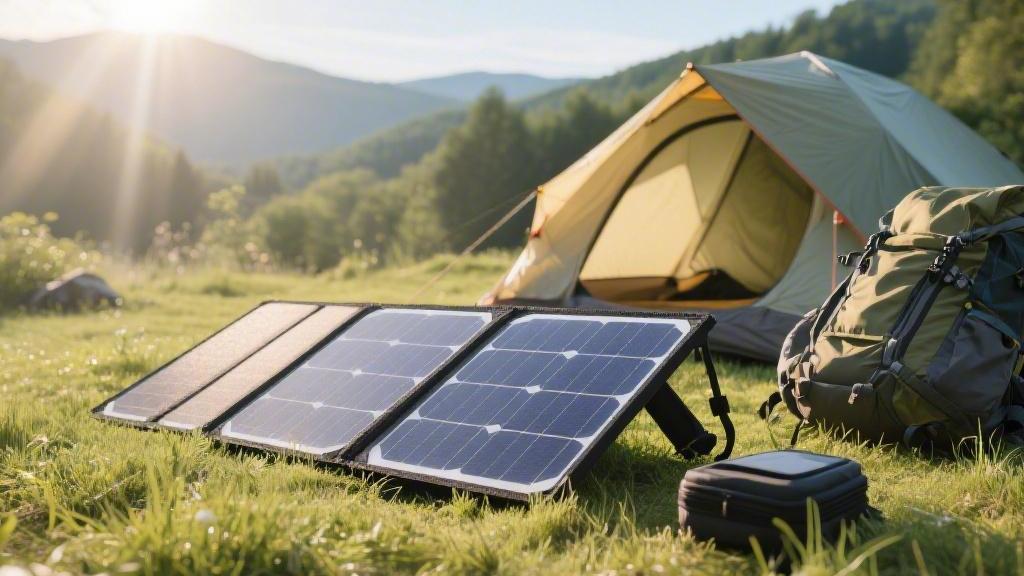
RV Adventures
Parking in the Shade
When driving a 24-foot Class C RV into a national park campground where temperatures reach 95 degrees Fahrenheit, the power generation efficiency of the 600W fixed solar panels on the roof will plummet to 15% under the shade of trees. Parking the vehicle in a shaded area with 80% canopy coverage can rapidly drop the initial temperature inside the cabin from 105 degrees Fahrenheit to 82 degrees Fahrenheit, thereby reducing the start-up and running load of the 13500 BTU roof air conditioner by about 30%.
At this time, taking out a set of 32-pound 400W foldable portable panels from the exterior chassis storage compartment and using a 30-foot 10 AWG pure copper extension cord, you can place them in a clearing 25 feet away from the RV that enjoys 100% unobstructed sunlight. This set of monocrystalline silicon panels, with a surface area reaching 3.2 square meters, can stably output an average real-time power of 320W with a 22% photoelectric conversion rate during the 5-hour golden sunlight period from 10:00 AM to 3:00 PM. Five hours of continuous high-intensity power generation can pump a total of 1.6 kWh of DC electricity into the RV's 200Ah LiFePO4 house cell bank, which is just enough to make up for the reserve energy consumed by the air conditioner compressor running at 50% load for 2.5 hours.
When the surface temperature of portable panels encapsulated with ETFE film soars to 140 degrees Fahrenheit, their thermal loss rate is only 0.39%/℃, reducing power loss by 12W compared to traditional PET material panels under the same high temperature.
This separated cable routing design allows RV owners to enjoy 68-degree Fahrenheit air conditioning inside the vehicle while still maintaining a stable solar energy intake of 2.5 kWh per day, reducing the probability of exposing the cabin to the 100-degree Fahrenheit scorching sun just to get 100% full-load sunlight to 0%.
Using Appliances Freely
A 7-cubic-foot double-door RV refrigerator, with its freezer zone set to a constant 5 degrees Fahrenheit, consumes 1.2 kWh of electricity when running in a continuous cycle 24 hours a day. Using a 900W-rated microwave to heat 2 servings of instant oatmeal weighing 400 grams for 3 minutes every morning will instantly draw 45Wh of electricity from the cell bank. In the evening, turning on a 32-inch diagonal 60W LCD TV to watch satellite programs for 2 hours, plus four 6W LED reading lights providing 4 hours of local lighting, will consume a total of 216Wh of power reserves.
Combined with a 12V, 3A DC pressurized water pump working cumulatively for 45 minutes a day to provide shower water, the fixed baseline daily power consumption of this RV reaches exactly 1.49 kWh. Unfolding two portable solar panels with a rated power of 200W each and connecting them in series to raise the system operating voltage to 36V can provide up to 360W of combined input peak power under a standard light intensity of 1,000W/m² at 12:00 noon. Calculating based on a model of acquiring 5.5 hours of effective sunlight per day, this 400W portable array can produce a total of 1.98 kWh of electricity in a single day, completely covering the 1.49 kWh daily expenditure with a 132% charge-to-discharge ratio.
Paired with a 60A MPPT solar charge controller with a conversion efficiency of up to 98%, the portable system can activate the charging circuit 45 minutes earlier and generate a weak 35W charging current when the sunlight angle of incidence is only 20 degrees at 7:30 AM.
When the 3,000W pure sine wave inverter inside the RV outputs AC power to the outlets at a stable voltage of 110V, even if a 1,200W full-load hair dryer is turned on to work for 10 minutes simultaneously, the abundant solar input replenishment can completely refill the 200Wh of instantaneously consumed electricity within the subsequent 40 minutes.
Adjusting Angles Freely
Flexible solar panels mounted flat on the RV roof can only passively receive angled sunlight at a 45-degree angle to the ground during autumn in the 40-degree north latitude region, causing their actual power generation to drop to 65% of nominal parameters. Portable solar panels with adjustable-angle aluminum alloy brackets allow users to stand them up to a 60-degree angle at 8:00 AM, intercepting the low and flat morning sun rays with a perfect 90-degree perpendicular angle of incidence, boosting the power generation efficiency at the beginning of startup by 28%.
As time progresses to 12:00 noon when the sun is at its highest point, pulling back the panel's rear bracket to adjust it to a 35-degree tilt requires only about 45 seconds of pure manual operation time, and can squeeze out an extra 120Wh of precious electricity within a one-hour interval. At 4:00 PM, horizontally rotating the entire set of panels 45 degrees to the west and re-raising the tilt angle to 55 degrees can significantly push back the cutoff time for generating effective charging current by 90 minutes. This operating mode of making 3 manual fine-adjustments based on the sun's daily trajectory can allow a 400W portable system's cumulative total power generation to exceed that of a 400W flat-mounted fixed board by a full 3.5 kWh during a 7-day boondocking trip.
When encountering gusty weather with wind speeds reaching 25 miles per hour, lowering the panel bracket to 15 degrees close to the ground and using four 50-pound load-bearing metal ground stakes to firmly fix it into the soil can instantly reduce the panel's overall wind resistance coefficient by 60%.
The 4-layer reinforced fiberglass material used on the back of the panel, when subjected to a continuous lateral wind pressure of 15 pounds, strictly limits its surface bending deformation to within a tolerance range of 0.5 inches, ensuring that the probability of micro-cracks occurring in the internal monocrystalline silicon cells infinitely approaches 0%.
Calculating the Payback
Adding a portable solar system with a total power of 400W to a travel trailer, including foldable panels, a 30-foot 10 AWG waterproof cable, and various MC4 standard connectors, currently has a fixed average market retail total cost of around $650. If you hire professional technicians at an RV brand service center to drill holes in the roof to install hard panels of the same 400W power, you need to pay an installation labor fee of $120 per hour for a total of 4.5 hours ($540), plus $500 in hardware material costs, bringing the total expense to $1,040. The $0 installation and setup cost of the portable system allows RV owners to instantly save $390 in initial funds on the total budget sheet the exact second they click the order payment button.
Calculated based on driving an RV away from electrified paid campgrounds and staying out for 40 days a year, the 1.8 kWh of electricity generated for free every day by the portable panels is equivalent to completely replacing the 0.8 gallons of unleaded gasoline consumed by running the RV's built-in gas generator for 3 hours. Converted at the national average unit price of $3.6 per gallon of gasoline, 40 days of off-grid camping life a year can save the owner a solid $115.2 in fuel procurement expenses.
This $650 portable photovoltaic equipment only needs to go through 5.6 years of regular frequency cyclical use for the cumulative substitute energy value it generates to reach the critical point of $645, thereby completing a 100% recovery of hardware costs.
After reaching the nominal upper limit of a 15-year service life, even if internal modules experience a normal physical linear power degradation of 0.8% per year, this set of 400W panels can still maintain a power generation level of 88% of the rated peak, and can still recover about $150 in remaining residual value when listed for sale on the used equipment market.