Where We Get the Silicon That Powers Our Solar Panels
Silicon is the core material for solar panels, primarily sourced from quartz sand (SiO₂).
More than 90% of global solar-grade silicon is refined from quartz sand. It is first reduced to metallurgical grade silicon (purity approx. 98%) in an electric arc furnace at about 2000°C, then purified to polysilicon with a purity of over 99.9999% through the Siemens process.
Currently, China, Germany, and the United States are the main producing countries, with China's polysilicon output accounting for about 80% of the global total.
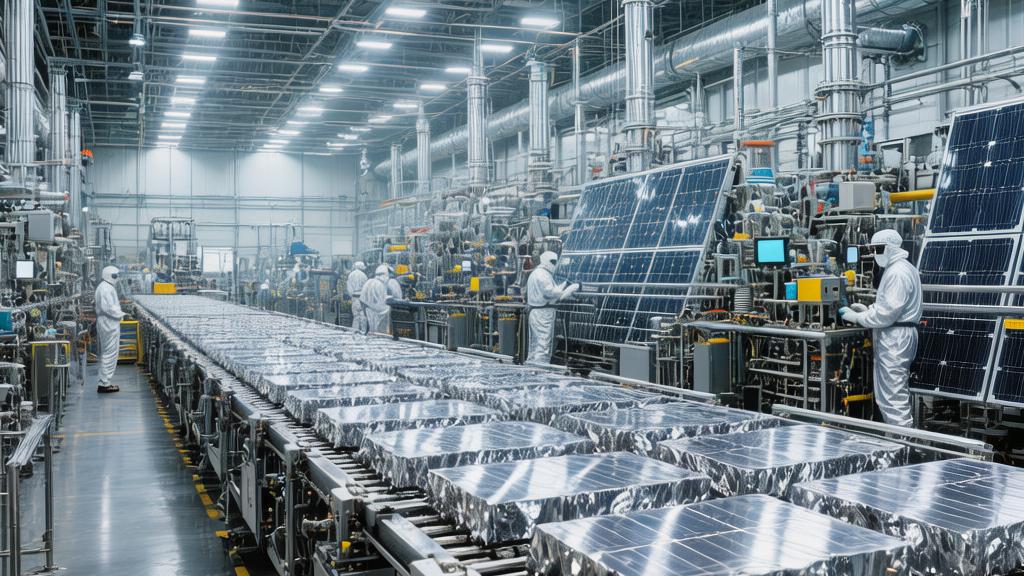
From Ore to Element
Ore Sourcing
The starting point for silicon materials used in the global photovoltaic industry is quartz ore. The main module of the ore is silicon dioxide (SiO₂). High-quality ore typically has a silicon dioxide content between 98.5%-99.8%, with impurities mainly including iron (Fe), aluminum (Al), calcium (Ca), and titanium (Ti).
Silicon elements account for about 27.7% of the earth's crust by mass, which translates to nearly 28%-30% by volume. This means every 1,000 kg of rock contains an average of over 270 kg of silicon element.
However, the proportion of high-purity quartz ore that can be directly used for industrial silicon smelting is not high. In most mining areas, ore meeting industrial silicon standards usually accounts for only 8%-15% of total reserves.
A medium-sized mine with an annual output of 500,000 tons of quartz ore typically needs to mine about 650,000-750,000 tons of raw ore. After screening, crushing, and washing, approximately 400,000-500,000 tons of qualified ore material are finally obtained.
The ore block size is usually controlled between 30-80 mm. This size range helps maintain stable gas channels in the smelting furnace charge layer.
If the ore size is below 10 mm, the furnace charge permeability will drop by about 25%-35%, which significantly reduces smelting efficiency.
The average density of quartz ore is about 2.6 tons/m³. The common mining depth for open-pit mines is between 15 m to 90 m.
Large-scale mines typically have a daily mining volume between 3000-8000 tons. Transport vehicles are mostly 40-ton or 90-ton class mining trucks.
The distance from the mining area to the smelter is mostly within the range of 120-600 km. The average transportation cost is about 0.6-1.2 Yuan/ton/km. Based on a 300 km transport distance, the transportation cost per ton of ore is approximately 180-360 Yuan.
Transformation in the Furnace
Submerged arc furnaces are high-energy-consuming equipment. Common furnace types have power ratings between 25 MW to 45 MW. Large smelters are usually equipped with 6-12 electric furnaces.
The temperature inside the furnace is maintained in the range of 1800°C to 2000°C. This temperature range allows the silicon dioxide and carbon materials to undergo a reduction reaction, generating silicon and carbon monoxide gas.
To produce 1 ton of industrial silicon, an average of about 2.7 tons of quartz ore and 1.4 tons of carbon materials (including charcoal, petroleum coke, or low-ash coal) are required.
The fixed carbon content of carbon materials typically needs to reach 85%-92%, with ash content below 8%; otherwise, the metallic impurity content in the silicon will increase.
Electricity is the highest cost item in industrial silicon production. Producing 1 ton of industrial silicon requires an average power consumption between 11,000 to 13,500 kWh.
If the electricity price is calculated at 0.06 USD/kWh, the electricity cost is approximately 660 to 810 USD/ton of silicon.
In major global industrial silicon production regions, electricity costs typically account for 38%-46% of the total production cost.
A 33 MW submerged arc furnace can produce approximately 75 tons of industrial silicon per day. With an annual operation time of about 330 days, the annual output is about 24,000 to 26,000 tons.
Industrial silicon purity is generally 98%-99.3%, where iron content is about 0.2%-0.6%, aluminum content is about 0.1%-0.3%, and calcium content is about 0.05%-0.15%.
Secondary Purification
The purity of solar-grade polysilicon typically reaches over 99.9999% (6N grade), which means the impurity concentration is below 1 ppm.
The mainstream production method is the modified Siemens process. In the first reaction step, industrial silicon reacts with hydrogen chloride at a temperature of about 300°C to generate trichlorosilane gas.
The reaction efficiency is usually between 85%-90%. The resulting gas mixture contains various chlorosilane compounds, with trichlorosilane content at about 60%-70%.
This is followed by distillation separation through multi-stage rectification columns.
Industrial-scale units are usually configured with 8-12 stages of distillation columns, with column heights of about 20-40 meters, which can reduce the impurity content to below 0.1 ppm.
The purified trichlorosilane enters the deposition reactor, where it decomposes and deposits onto the surface of silicon seed rods at temperatures between 1100°C and 1150°C, gradually forming polysilicon rods.
A single deposition furnace can typically produce 4-6 tons of polysilicon, with a deposition cycle of about 90-120 hours.
Producing one ton of polysilicon requires an average of about 1.15 tons of industrial silicon and 65,000 to 80,000 kWh of electricity.
In modern factories, approximately 35%-45% of the reaction heat can be recovered through thermal energy recovery systems, increasing overall energy utilization efficiency by about 20%-25%.
Global polysilicon capacity reached approximately 1.5 million tons/year in 2024, of which about 85%-90% is used for photovoltaic module manufacturing.
The density of polysilicon granules or chunks is about 2.33 tons/m³. The weight of a single piece of polysilicon is usually between 5-20 kg. These materials are then sent to crystal pulling factories for further processing into monocrystalline silicon ingots.
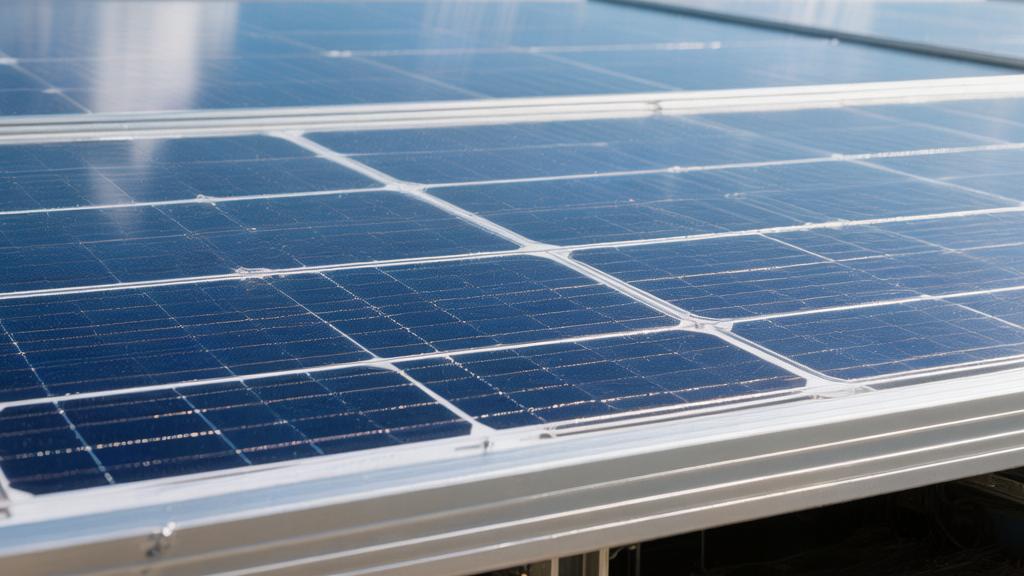
Metallurgical grade silicon
Charge Preparation
Industrial silicon production begins with the furnace charge ratio. The raw material combination usually consists of three parts: quartz ore, carbon materials, and wood chips.
The silicon dioxide content in quartz ore is generally required to be between 98.5%-99.6%, with iron impurity content controlled within the 0.02%-0.05% range; otherwise, it will lead to an increase in iron content in the finished silicon, reducing subsequent purification efficiency.
Carbon material sources usually include charcoal, petroleum coke, and low-ash coke, with fixed carbon content generally in the 85%-92% range and ash content kept within 5%-8%.
For every 1 ton of industrial silicon produced, a common charge ratio is 2.6-2.8 tons of quartz ore, 1.3-1.5 tons of carbon materials, and 0.2-0.3 tons of wood chips or shavings.
The role of wood chips is to maintain the porosity of the charge layer. The bulk density of the charge is usually maintained between 1.4-1.7 tons/m³, which ensures that carbon monoxide gas can be smoothly discharged from the charge.
If the charge compaction is too high, the gas flow rate will drop by about 20%-30%, and the furnace temperature distribution will show significant fluctuations.
Before entering the electric furnace, the charge needs to undergo size screening. The particle size of quartz ore is generally controlled at 30-80 mm, and the particle size of carbon materials is controlled at 10-40 mm.
This particle size combination maintains the average porosity of the charge layer between 32%-38%.
When the porosity is lower than 25%, the gas pressure inside the furnace will rise above 6-8 kPa, which can easily lead to charge collapse or material splashing.
Electric Furnace Reaction
The equipment used for industrial silicon production is a submerged arc furnace, with single-unit power typically between 25 MW to 45 MW.
The furnace body diameter is generally in the 10-15 meter range. The number of electrodes is 3 graphite electrodes, each with a diameter of about 1.1-1.4 meters. The current per electrode can reach 70,000-120,000 amperes.
The temperature distribution inside the furnace shows a clear layered structure. The temperature in the area around the electrodes usually reaches 1900°C to 2100°C, while the temperature of the upper charge layer is about 800°C to 1200°C.
Under high-temperature conditions, silicon dioxide and carbon undergo a reduction reaction to produce silicon and carbon monoxide gas.
The large amount of gas generated during the reaction flows upward, with a gas flow rate typically between 4,000-7,000 m³/hour.
A 30 MW submerged arc furnace has an average daily output of about 70-85 tons of industrial silicon.
Based on a 330-day operation cycle per year, the annual output is approximately 23,000-28,000 tons.
When the industrial silicon liquid at the bottom of the furnace reaches about 1600°C, it gathers and is periodically tapped. Each tapping volume is usually between 8-15 tons, with a tapping cycle of about once every 2-4 hours.
Electricity consumption is the primary energy input during the production process. The average power consumption per ton of industrial silicon is about 11,000-13,500 kWh.
If the electricity price is 0.05 USD/kWh, the electricity cost is approximately 550-675 USD/ton.
In the total cost structure of industrial silicon, electricity costs account for about 40%-48%.
Composition Control
Common industrial silicon grades include 553, 441, and 3303, where the numbers represent the upper limits of iron, aluminum, and calcium impurity content.
For example, grade 553 means the iron content does not exceed 0.5%, the aluminum content does not exceed 0.5%, and the calcium content does not exceed 0.3%.
The photovoltaic industry usually uses grade 3303 or higher grade industrial silicon before entering the purification stage.
This grade has an iron content of about 0.3%, an aluminum content of about 0.3%, and a calcium content of about 0.03%.
In modern smelters, by optimizing the charge ratio and furnace temperature control, impurity content fluctuations can be controlled within a range of ±0.02%.
If the temperature under the electrode is lower than 1800°C, the reduction reaction efficiency will drop by about 15%-20%.
If the temperature exceeds 2100°C, some impurity elements in the quartz ore will enter the silicon liquid more easily, leading to an increase in iron content of about 0.05%-0.08%.
The density of industrial silicon is about 2.33 tons/m³, and the melting point is about 1414°C.
The liquid silicon after tapping is usually poured into molds for cooling. The ingot size is generally 30-60 kg/piece. Large smelters produce between 1200-2000 ingots per day.
Production Scale
Global industrial silicon output in 2024 was approximately 3.8 million to 4.1 million tons.
Of this, about 40%-45% is used for photovoltaic polysilicon production, about 30%-35% is used in the silicone chemical industry, and the remainder is used for aluminum alloys and electronic materials.
A smelter with an annual output of 50,000 tons of industrial silicon typically needs to be equipped with 6 to 8 submerged arc furnaces.
The total plant's annual electricity consumption is about 600 million to 700 million kWh, equivalent to the annual residential electricity consumption of a city with 200,000 people.
At the price peak in 2022, industrial silicon prices once reached about 3,500 USD/ton.
After supply increased, the average price range in 2024 was about 1,400 to 1,800 USD/ton.
The overall conversion efficiency from ore to industrial silicon is usually between 65%-72%.
That is, for every 100 tons of quartz ore raw material input, approximately 26-28 tons of industrial silicon can ultimately be obtained.
Siemens Process
Gas Generation First
A common route involves reacting industrial silicon with hydrogen chloride gas to generate trichlorosilane. The reaction temperature is usually maintained between 280°C to 320°C, and the reaction pressure is about 0.2 to 0.4 MPa.
Before entering the reactor, industrial silicon is crushed to a particle size of 1 to 5 mm. Smaller particles provide a larger contact area, which can increase the reaction rate by about 18% to 25%.
In continuous reaction equipment, about 800 to 1,500 kg of industrial silicon is processed per hour, with a hydrogen chloride gas flow rate of about 1,200 to 2,200 m³/hour.
The trichlorosilane content in the generated gas mixture is typically between 65% to 75%, with by-products including silicon tetrachloride and a small amount of dichlorosilane.
After the reaction is complete, unreacted hydrogen chloride is recovered and recycled back into the reactor, with a cycle rate usually reaching 90% to 95%.
Raw material conversion efficiency generally stays within the 88% to 92% range, meaning for every 1 ton of industrial silicon input, approximately 3.2 to 3.5 tons of chlorosilane gas mixture are generated, containing about 2.2 to 2.5 tons of trichlorosilane.
Distillation Separation
Industrial units are typically configured with 8 to 12 stages of rectification columns, with column heights of about 20 to 40 meters and single column diameters generally between 1.5 to 3 meters.
The boiling point of trichlorosilane is about 31.8°C, and that of silicon tetrachloride is about 57.6°C. This temperature difference allows for high-purity grading through distillation separation.
The interior of the distillation column usually uses stainless steel packing or tray structures. The specific surface area of the packing is about 250 to 350 m²/m³, which improves gas-liquid contact efficiency.
After multi-stage distillation, trichlorosilane purity can reach over 99.999%, with impurity concentrations usually below 0.1 ppm.
The following table shows the material distribution ratio at typical distillation stages:
Material Type | Content Range | Processing Method |
Trichlorosilane | 60%–70% | Enter deposition reaction |
Silicon tetrachloride | 20%–25% | Recycle and reuse |
Dichlorosilane | 3%–6% | Secondary separation |
Other Impurities | <1% | Exclude from system |
In large polysilicon factories, the distillation system processes a gas volume typically reaching 150 to 300 tons per day. The electricity consumption of the rectification column system is about 2000 to 3500 kWh/day.
Silicon Deposition Growth
The purified trichlorosilane is sent to the deposition reactor.
Thin silicon seed rods are installed inside the reactor as deposition substrates, with seed rod diameters typically 6 to 10 mm.
The reactor temperature is maintained between 1100°C and 1150°C. Under high-temperature conditions, trichlorosilane undergoes decomposition, and silicon atoms deposit on the surface of the seed rods, gradually growing into polysilicon rods.
The deposition reaction time is generally between 90 to 120 hours.
In a standard deposition cycle, each reactor can generate about 4 to 6 tons of polysilicon.
Electricity consumption during the deposition process is about 8,000 to 10,000 kWh, mainly used for heating and gas circulation.
After deposition is complete, the polysilicon rod diameter usually reaches 140 to 180 mm, the length is about 1.8 to 2.3 meters, and the weight of a single silicon rod is between 150 to 250 kg.
Typical production parameters for the reactor are as follows:
Parameter | Value Range |
Reaction Temperature | 1100–1150°C |
Deposition Cycle | 90–120 hours |
Single Reactor Output | 4–6 tons |
Electricity Consumption | 8000–10000 kWh |
Silicon Rod Diameter | 140–180 mm |
The by-product generated during the deposition phase is primarily hydrogen chloride gas, which is recovered and returned to the front-end reaction system. The recycling ratio usually reaches 85% to 92%.
Energy Consumption
In modern factories, the total electricity consumption for producing 1 ton of polysilicon is approximately between 60,000 to 80,000 kWh.
By recovering reaction heat through heat exchange systems, energy consumption can be reduced by about 15% to 20%.
A factory with an annual output of 30,000 tons of polysilicon has an annual electricity demand typically between 1.8 billion to 2.2 billion kWh.
Based on an average electricity price of 0.06 USD/kWh, the electricity cost is approximately 110 million to 130 million USD/year.
The production process also requires a certain amount of hydrogen and chlorine gas. Typical consumption data are as follows:
Raw Material | Consumption per Ton of Polysilicon |
Industrial Silicon | 1.1–1.2 tons |
Hydrogen | 60–80 kg |
Chlorine | 80–120 kg |
Electricity | 60,000–80,000 kWh |
Energy costs typically account for 35% to 45% of the total production cost of polysilicon.
Equipment investment also accounts for a large proportion. The investment scale for a complete 30,000-ton class polysilicon production line is usually between 1.2 billion to 1.6 billion USD.
Purity Level
The purity of polysilicon obtained through the deposition reaction usually reaches over 99.9999% (6N grade).
The concentration of impurity elements is generally below 1 ppm, with iron and aluminum content typically below 0.1 ppm.
In high-end photovoltaic materials, some manufacturers further control impurity concentrations to the 0.01 ppm level.
The density of polysilicon chunks is about 2.33 tons/m³, and the particle size is generally between 20 to 80 mm.
Each ton of polysilicon can manufacture about 450,000 to 500,000 pieces of 182 mm silicon wafers, which will eventually enter the photovoltaic cell production line.
With the expansion of equipment scale and improvements in energy efficiency, the unit energy consumption of new polysilicon production lines has dropped from 120,000 kWh/ton in the early stages to about 65,000 kWh/ton, an efficiency improvement of nearly 45%.