How Many Silicon Cells Are in a Solar Panel?
A common solar panel usually consists of 60 or 72 silicon cells.
Each cell measures approximately 156 mm × 156 mm or 182 mm × 182 mm, and a single cell can generate about 4–6 watts of power under standard test conditions.
For example, a 60-cell module typically has a power rating of around 350W, while a 72-cell module can reach 400–550W.
The Classic Standards
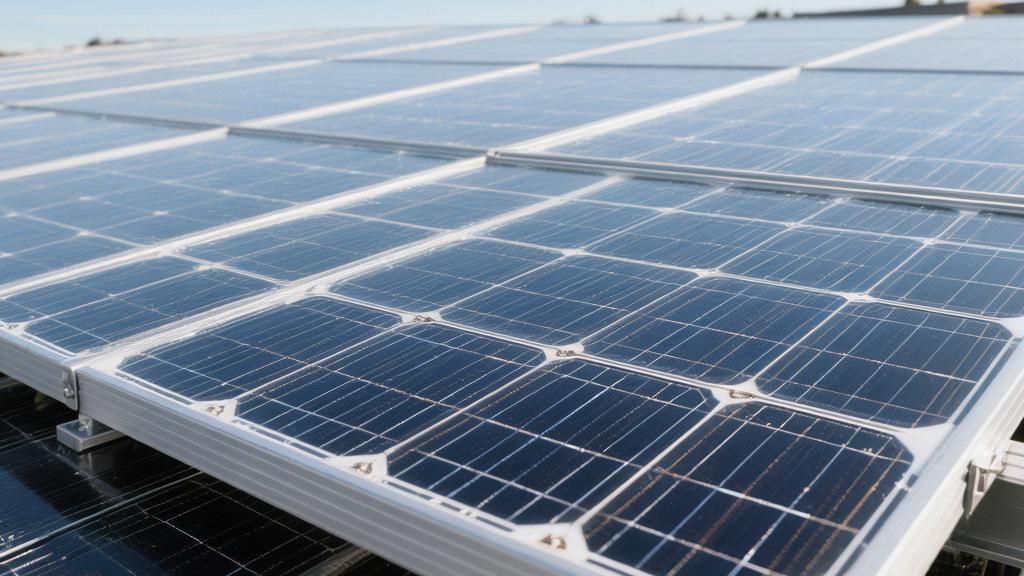
Between 2005 and 2018, early solar modules formed a relatively stable structural standard in the industry. The most common configurations were the 60 full-cell structure and the 72 full-cell structure.
These two specifications typically use cell sizes of 156 mm × 156 mm (6 inches), with a single-cell area of about 243 square centimeters, a weight of about 12 grams, and a thickness typically around 180 microns.
Under 1,000 W per square meter irradiance and 25℃ standard test conditions, a single 6-inch monocrystalline silicon cell usually produces 4.2 W to 4.8 W, with a voltage of about 0.55 V to 0.62 V and an operating current generally between 8 A and 9 A.
60-cell modules were the most common specification for residential rooftops at that time.
A 60-cell module typically uses a layout of 6 columns × 10 rows, for a total of 60 cells. The module dimensions are usually around 1650mm × 992mm × 35mm, and the weight is generally 18 kg to 20 kg.
Around 2015, the rated power of such modules was generally between 250W and 285W, with module efficiency of about 15.5% to 17.2%.
Under the same area conditions, the power density per square meter was about 155 W to 170 W.
72-cell modules are a larger version and are typically used for commercial rooftops or ground power stations.
72-cell modules adopt a 6 columns × 12 rows structure, with a total of 72 cells.
The module length is usually 1956 mm to 2000 mm, the width about 992 mm to 1000 mm, the thickness 35 mm to 40 mm, and the total module weight is about 22 kg to 25 kg.
The rated power of a single module is generally 300W to 330W, with an efficiency range of 16% to 18%.
Since the number of cells increases by 20%, the output voltage also increases, with operating voltage typically between 37V and 39V, and maximum current around 8A to 9A.
In traditional modules, cells are connected using copper ribbons with widths of 1.5 mm to 2 mm. Each module usually requires 90 to 120 soldering points.
The cells are connected in series to form three circuit strings, each typically containing 20 or 24 cells.
The back of the module is equipped with 3 bypass diodes, each with a rated current of 15A to 20A. Their function is to reduce power loss during partial shading and prevent localized overheating when module temperature exceeds 85℃.
In classic structures, the encapsulation materials inside the module usually use two layers of EVA film, each with a thickness of 0.45 mm, giving a total encapsulation thickness of about 0.9 mm.
The lamination temperature is generally 145℃ to 155℃, with lamination time of 12 minutes to 18 minutes.
The glass layer typically uses 3.2 mm low-iron tempered glass, with light transmittance of 91% to 93%, capable of withstanding impacts from 25 mm diameter hail at 23 m per second.
The module frame uses 6063-T5 aluminum alloy, with an anodized layer thickness of about 10 microns to 15 microns, providing corrosion resistance for about 25 years.
The electrical parameters of 60-cell and 72-cell modules differ significantly. The maximum power voltage of a 60-cell module is typically 30V to 32V, and the open-circuit voltage is 37V to 40V.
The maximum power voltage of a 72-cell module is generally 36V to 38V, and the open-circuit voltage is 45V to 48V.
When the ambient temperature rises from 25℃ to 45℃, module power typically decreases by about 10% to 12%, and voltage drops by approximately 0.35% per degree Celsius.
In terms of installation, 60-cell modules have a length of about 1.65 meters, making them more suitable for residential projects with rooftop areas of 20 square meters to 40 square meters.
A 5kW residential solar system using 270W modules typically requires about 19 to 20 modules, with a total of about 1200 cells.
If using 72-cell 320W modules, the same capacity system would require about 16 modules, with a total of 1152 cells.
In terms of cost, in the global market around 2017, 60-cell modules generally cost 0.45 USD per watt to 0.60 USD per watt.
72-cell modules, due to their larger size, were typically priced at 0.42 USD per watt to 0.55 USD per watt.
Transportation costs are usually calculated based on module area. A 40-foot container can hold about 720 units of 60-cell modules or 620 units of 72-cell modules.
The transport weight is typically between 18 tons and 22 tons.
Long-term operational data also shows that classic structure modules have an average power degradation rate of about 0.7% per year over a 25-year service life.
The first-year degradation is usually 2.5% to 3%, followed by annual degradation of about 0.5% to 0.7%.
In regions with typical sunlight of 1500 hours per year, a 270W module can generate about 360kWh to 410kWh annually.
Under the same conditions, a 320W module produces about 430kWh to 480kWh per year.
After 2018, with the widespread adoption of half-cut technology, 182mm cells, and 210mm cells, the traditional 60-cell and 72-cell full-cell structures gradually declined. However, this classic structure still exists in many older systems, early rooftop projects, and some small solar power plants.
Between 2010 and 2018, the cumulative global installed photovoltaic capacity exceeded 400 GW, of which more than 70% of modules used the 60-cell or 72-cell full-cell structure.
Half-Cut Cell Technology
In traditional modules, a full silicon cell typically measures 156mm, 166mm, 182mm, or 210mm. Half-cut technology uses laser cutting equipment to divide one cell into two identical half cells.
For example, a 182 mm cell after cutting still has a width of 182 mm, while its height becomes approximately 91 mm.
The cutting process uses an infrared laser system with a power of about 30 W to 60 W, with cutting speeds of about 200 mm per second to 400 mm per second, and the splitting time for a full cell typically 0.2 seconds to 0.4 seconds.
After cutting, the number of cells doubles. For example, a traditional 60-cell module becomes a 120 half-cell module.
A traditional 72-cell module becomes a 144 half-cell module.
In electrical structure, the module is divided into upper and lower circuit arrays, each typically containing 60 or 72 half cells.
The upper and lower arrays maintain stable current through 3 to 6 bypass diodes.
The most obvious change of half-cell technology is the reduction in current. Traditional full cells operate at currents of about 9A to 11A under standard illumination.
In a half-cell structure, each cell area decreases by 50%, and the operating current drops to about 4.5A to 5.5A.
The reduction in current significantly reduces internal conductor losses.
Conductor loss is proportional to the square of the current. When the current is halved, line losses typically decrease by 70% to 75%.
This change can increase module power by about 5W to 15W, with efficiency improving by about 0.3% to 0.8%.
In actual module design, half-cell structures usually adopt a 6-column cell layout.
Taking a 144 half-cell module as an example, the internal structure forms 12 cell arrays, each column containing 12 cells.
The module dimensions are typically 2,278mm to 2,285mm in length, 1,130mm to 1,135mm in width, and 35mm in thickness. The total module weight is about 27 kg to 32 kg.
Under 1,000 W per square meter irradiance and 25℃ ambient temperature, the rated power of a 144 half-cell module is typically 500 W to 600 W, with module efficiency between 20.5% and 22.8%.
The temperature coefficient of silicon cells is typically about −0.34% per degree Celsius to −0.38% per degree Celsius.
When the module temperature rises from 25℃ to 45℃, power output usually decreases by 7% to 8%.
Due to lower current, half-cell modules typically reduce internal temperature rise by 2℃ to 3℃, reducing additional long-term losses by about 1% to 2%.
The internal welding structure of modules also changes. Traditional modules typically require 90 to 120 solder joints.
Because the number of cells doubles, half-cell modules usually require 180 to 220 solder joints.
The ribbon material is typically tin-plated copper ribbon, with thickness 0.2mm to 0.35mm and width 1.5mm to 2mm.
Most connections use multi-busbar technology, increasing the number of busbars from the traditional 5 busbars to 9 or 12 busbars.
With more busbars, current distribution becomes more uniform and local resistance decreases by about 3% to 5%.
If 20% of the module area is shaded, a traditional full-cell module may experience a power loss of about 30% to 40%.
Because the upper and lower arrays operate independently, half-cell modules usually limit the power loss to about 15% to 20%.
Laser cutting equipment typically costs 250000 USD to 400000 USD per production line, with processing speeds of about 6000 cells per hour to 8000 cells per hour.
Module production cost increases by about 0.005 USD per watt to 0.008 USD per watt. However, since module power increases by 5W to 15W, the manufacturing cost per watt usually decreases by about 2% to 4%.
In large photovoltaic power plant projects, half-cell modules typically produce about 2% to 3% more electricity annually than traditional modules.
For example, a 100MW ground power plant using 550W half-cell modules in regions with 1600 hours of annual sunlight can generate about 176GWh to 182GWh annually.
If traditional full-cell modules are used, total generation is usually reduced by about 3GWh to 5GWh.
Half-cell modules are typically designed for a lifespan of 25 years to 30 years.
The power degradation curve usually shows a first-year decline of 2% to 2.5%, followed by annual degradation of about 0.45% to 0.55%.
At the end of a 25-year operating cycle, the remaining power output usually remains at 84% to 88%.
This lifespan is similar to traditional full-cell modules, but due to lower current and lower temperature, half-cell modules reduce thermal stress at solder joints by about 10% to 15%.
How to Choose
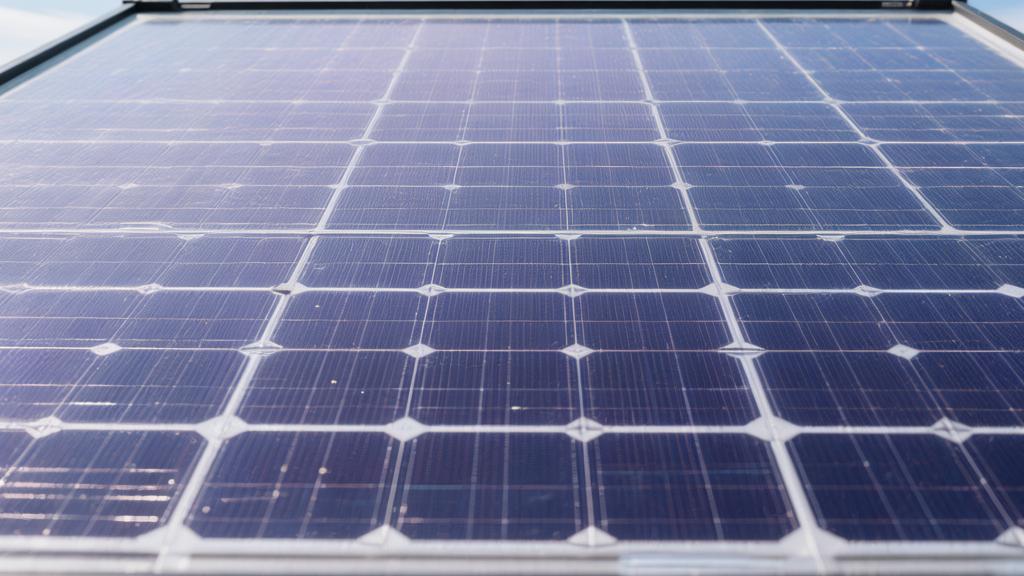
When choosing solar panels, the number of silicon cells is only one parameter. It is also necessary to consider module power, area, weight, voltage, current, efficiency, price, and available rooftop space.
In practical installation projects, system capacity is usually planned according to 3 kW, 5 kW, 8 kW, and 10 kW, and different capacities affect the number of modules, total cells, and system cost.
Modern modules usually have power ratings between 400W and 600W.
If the cell size is 182 mm, a 144 half-cell module usually produces 530 W to 580 W.
If the cell size is 210 mm, module power usually ranges from 580 W to 700 W, with efficiency typically between 20.5% and 23%.
With the same rooftop area, high-power modules can reduce installation quantity by about 10% to 25%.
Roof area is an important factor in determining module specifications. Residential rooftops usually have usable areas of 20 square meters to 60 square meters.
Solar modules typically occupy 2.0 square meters to 2.6 square meters per module.
If installing a 5 kW system, using 550 W modules requires about 9 to 10 modules, covering a total area of about 20 square meters to 25 square meters.
If using 420W modules, about 12 to 13 modules are required, covering about 24 square meters to 32 square meters.
The common parameters of modules with different cell quantities are as follows:
Module Structure | Cell Count | Typical Power | Module Size | Module Weight | Power Density |
Full Cell Structure | 60 | 250W to 285W | 1650mm × 992mm | 18 kg to 20 kg | 155 W/㎡ to 170W/㎡ |
Full Cell Structure | 72 | 300W to 330W | 2000mm × 1000mm | 22 kg to 25 kg | 160 W/㎡ to 180W/㎡ |
Half-Cell Structure | 120 | 380W to 420W | 1760mm × 1040mm | 21 kg to 24 kg | 185 W/㎡ to 200W/㎡ |
Half-Cell Structure | 144 | 500W to 600W | 2279mm × 1134mm | 27 kg to 32 kg | 205 W/㎡ to 220W/㎡ |
Roof load-bearing capacity also needs to be calculated. Typical roof structures usually support about 20 kg per square meter to 40 kg per square meter.
A 550W module weighs about 30 kg and occupies about 2.6 square meters, resulting in an average load of about 11 kg per square meter to 13 kg per square meter.
If installing 10 modules, the total system weight is about 300 kg to 320 kg. Including mounting structures adds about 80 kg to 120 kg, bringing the total system weight to about 380 kg to 440 kg.
Module voltage parameters must match the inverter.
The maximum power voltage of a 144-cell module is typically 40V to 42V, with open-circuit voltage about 49V to 52V.
If 10 modules are connected in series, the total voltage is about 400 V to 420 V. Most residential inverters have input voltage ranges of 120 V to 550 V, so connecting 8 to 12 modules in series is a common design.
The approximate market prices around 2026 are as follows:
Module Power | Price per Watt | Price per Module |
420W | 0.13 USD to 0.16 USD | 55 USD to 67 USD |
500W | 0.11 USD to 0.14 USD | 55 USD to 70 USD |
550W | 0.10 USD to 0.13 USD | 55 USD to 72 USD |
600W | 0.10 USD to 0.12 USD | 60 USD to 72 USD |
When installing a 5 kW system, using 550 W modules, the module cost is usually about 500 USD to 700 USD.
If including the inverter, mounting structures, cables, and installation costs, the total system cost is typically about 4500 USD to 7500 USD.
Power generation capacity mainly depends on local annual sunlight hours. Assuming effective annual sunlight of 1500 hours to 1800 hours, a 5kW system typically generates about 7,500kWh to 9,000kWh per year.
If electricity costs 0.15 USD per kWh, the annual electricity value is about 1125 USD to 1350 USD. The investment payback period is typically 4 years to 7 years.
Module lifespan is typically 25 years to 30 years. The first-year power degradation is usually 2% to 2.5%, followed by annual degradation of about 0.45% to 0.55%.
At the end of a 25-year service period, module output power usually remains at about 82% to 88%. If the initial system capacity is 5 kW, the effective capacity after 25 years will typically still be around 4.1 kW to 4.4 kW.
Transportation and installation also affect selection. A 40-foot container can usually hold about 620 to 720 modules.
If module length exceeds 2.3 meters, transportation efficiency may decrease by about 10% to 15%.
During installation, two installers typically need about 8 minutes to 12 minutes to secure one module.
Installing a 10-module system usually takes about 2 hours to 3 hours to complete the module installation portion.
In rooftop projects, higher-power modules can reduce the number of installations.
For example, a 550W module system usually uses about 3 to 4 fewer modules than a 420W module system.
The number of mounting brackets is reduced by about 20% to 30%, and installation time decreases by about 30 minutes to 60 minutes.
The total wiring length of the system is typically reduced by about 8 meters to 15 meters, reducing cable costs by about 20 USD to 40 USD.