What Is the Main Material Used in Solar Panels?
The core material of solar panels is high-purity crystalline silicon with a purity of up to 99.9999%, accounting for over 95% of the market share.
Production requires manufacturing silicon wafers through a crystal pulling process, followed by diffusion doping to form a P-N junction, achieving a photoelectric conversion efficiency of approximately 22%.
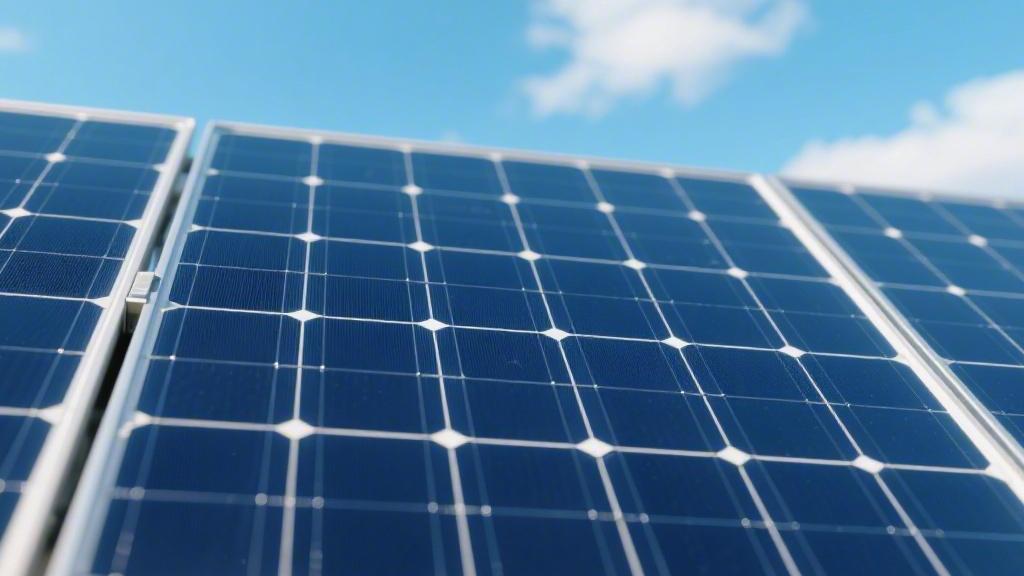
Monocrystalline / Polycrystalline Silicon
How Monocrystalline is Made
A monocrystalline silicon ingot, with a diameter between 200 mm and 300 mm, is slowly pulled upward at a rate of 1 mm to 2 mm per minute. The natural cooling time for an entire ingot lasts between 48 and 72 hours, with the final cylindrical shape typically reaching about 2 meters in length and weighing between 100 kg and 200 kg. All silicon atoms inside are arranged in a highly consistent diamond lattice structure, with dislocation density strictly controlled to below 100 per square centimeter.
The long silicon ingots are subsequently sliced by diamond wires into thin wafers with a thickness of 130 to 150 microns. To maximize the cross-sectional area of the cylinder while fitting into standard-sized frames, the four corners of the wafer are physically trimmed, forming a quasi-square monocrystalline silicon wafer with a diagonal length of 210 mm or 182 mm.
When sunlight hits this pure black surface, photons penetrate the 1.12 eV bandgap and excite free electrons. The current laboratory record for monocrystalline silicon photoelectric conversion efficiency is 26.81%, while the efficiency of commercial PV modules in large-scale mass production remains stable between 22% and 24.5%. The internal resistivity of the silicon wafer is precisely controlled through doping within a range of 0.5 Ω·cm to 1.5 Ω·cm. For every square meter of physical panel area, a monocrystalline panel can generate a peak DC power of 200 to 225 watts.
Assembling Polycrystalline Panels
A directional solidification system loads silicon scraps into a square quartz ceramic crucible, heating it to 1500°C until completely melted. The liquid silicon is then slowly cooled and crystallized from the bottom upward at a rate of 0.5°C to 1°C per minute. The resulting polycrystalline silicon ingot is a massive cube measuring 1,000 mm by 1,000 mm with a height of approximately 400 mm, with the total weight of a single block usually ranging from 800 kg to 1200 kg.
Crystals grow independently in different regions, physically forming thousands of tiny monocrystalline grains; the physical interface between these grains is called a grain boundary. A high concentration of dangling bonds and impurity atoms exists at these grain boundaries, causing the survival lifetime of internal minority carriers to shorten to 1–10 microseconds, significantly lower than the 100–200 microseconds found in monocrystalline silicon.
The resulting perfectly square blue wafers have a thickness of approximately 160 to 180 microns, with a surface texture resembling ice flowers or crushed glass due to diffuse reflection. The photoelectric conversion efficiency of mass-produced polycrystalline solar panels peaks at around 19.5% to 20.5%. The actual power generation per square meter is roughly between 170 and 185 watts. Shorter manufacturing cycles and lower energy consumption make the manufacturing cost per watt for polycrystalline panels $0.01 to $0.02 cheaper than monocrystalline panels.
Heat Sensitivity
The rated power of a solar panel under Standard Test Conditions (STC) is measured at a constant cell temperature of 25°C. In actual outdoor operation under direct sun, the local temperature of the cells often soars to 60°C or 65°C. For every 1°C increase in the panel surface temperature, the output electrical power decreases by a fixed percentage; this physical degradation index is known in specification sheets as the Power Temperature Coefficient.
· The power temperature coefficient of monocrystalline panels typically fluctuates between -0.30%/°C and -0.35%/°C.
· The power temperature coefficient of polycrystalline panels fluctuates between -0.38%/°C and -0.45%/°C.
· Assuming an outdoor ambient temperature of 40°C at noon in summer, with no wind, the internal operating temperature of the panel reaches 65°C, creating a 40°C temperature difference from the 25°C STC standard.
· For a module with a factory-rated power of 400W, a monocrystalline panel will lose about 12% to 14% of its power at high temperatures, with a real-time output of 344W to 352W.
· A polycrystalline panel under the same heat will lose 15.2% to 18% of its power, leaving a real-time output of only 328W to 339W.
When Light Hits
Within the first few days to months of a panel being exposed to outdoor sunlight, residual boron and oxygen atoms inside the silicon wafer combine under light excitation to form boron-oxygen complexes. These complexes trap free electrons, causing an irreversible physical decline in initial generation efficiency, defined by the industry as Light-Induced Degradation (LID).
· The first-year LID rate for P-type monocrystalline panels is regulated to be within 2%, while the linear annual degradation rate from year 2 to year 25 is maintained between 0.45% and 0.55%.
· After 25 years of continuous full-load operation, a standard monocrystalline panel can still maintain over 84.8% of its initial factory-rated power.
· Monocrystalline panels using new Gallium-doping technology can force the initial first-year degradation rate down to below 1%.
· Polycrystalline panels contain more internal impurities, with a first-year physical degradation rate usually reaching 2.5%, followed by an average annual degradation rate of about 0.7%.
· By the end of the 25-year design lifespan, the maximum remaining power output of a polycrystalline panel typically stays within the 80% to 80.7% range.
Doing the Math
The total budget for purchasing and installing a photovoltaic system includes not only the procurement cost of the modules themselves but also the Balance of System (BOS) costs, including inverters, aluminum mounting brackets, pure copper cables, and certified electrician labor. Currently, the international ocean freight wholesale price for monocrystalline modules fluctuates between $0.12 and $0.15 per watt, while the customs clearance price for polycrystalline modules is around $0.10 to $0.12 per watt.
· Assume a grid-tied solar system is installed on a detached residential project with an effective rooftop area of 50 square meters.
· Using monocrystalline modules with 22% conversion efficiency, the 50-square-meter space can be fully covered by a system with a total capacity of 11 kW, with a module procurement budget of approximately $1,320 to $1,650.
· The average annual power generation of a monocrystalline system in its first year can reach 15,000 to 16,500 kWh, with an overall investment payback period usually between 6 and 7 years.
· Using polycrystalline modules with 19% conversion efficiency, the same 50-square-meter space—limited by the power-per-panel area—can only accommodate a system with a total capacity of 9.5 kW, with a module procurement budget of approximately $950 to $1,140.
· The average annual generation for the polycrystalline system in the first year is between 12,900 and 14,200 kWh, with the initial module cost reduced by about $400.
· Due to the insufficient power density per unit area, generating the same amount of electricity requires 15% more rooftop space and 15% more metal brackets and cables. When calculating the Levelized Cost of Energy (LCOE) for the whole system, polycrystalline is 3% to 5% higher than monocrystalline, stretching the actual payback period to 7.5 to 9 years.
Glass and EVA Encapsulant
The standard physical thickness of glass for monofacial modules is set at 3.2 mm, while the glass thickness for bifacial modules is usually around 2.0 mm. Standard architectural glass has an iron oxide concentration of over 1000 ppm, which gives it a greenish edge and absorbs solar photons; PV-specific low-iron glass strictly suppresses the internal iron oxide concentration to below 120 ppm.
A large-format solar module with physical dimensions of 2,278 mm by 1,134 mm has a total weight of 27.5 kg to 28.5 kg, with the absolute physical weight of the front and back glass accounting for 70% to 75%. Tempering treatments increase the compressive stress on the glass surface to over 90 MPa, while internal tensile stress is maintained at around 45 MPa. When struck by a hailstone with a diameter of 25 mm and a mass of 227 grams at a speed of 23 meters per second, no microcracks will be generated on the panel surface.
Light Intake
Bare patterned glass without surface treatment has a maximum physical transmittance of approximately 91.5% for sunlight with wavelengths between 380 nm and 1100 nm. Of the remaining 8.5%, about 4% to 5% of photons are reflected back into the atmosphere at the physical interface of glass and air, and the other 3.5% to 4% are naturally absorbed by the atomic structure of the glass. Factories apply a 100 nm to 150 nm thick porous silica anti-reflective (AR) coating on the outward-facing side of the panel glass, significantly reducing the surface physical refractive index from 1.52 to about 1.30.
With the addition of an anti-reflective coating, the absolute transmittance of the PV glass in the visible light spectrum is forced upward to between 93.5% and 94.2%. Under the same solar radiation intensity, the additional 2% to 2.5% transmittance allows a panel with a 400W rated power to output an extra 8 to 10 watts of real-time DC power. Over a 25-year cycle of continuous exposure, the cumulative power generation increases by over 450 kWh.
The Sandwich Encapsulant
Silicon wafers, with a thickness of only 130 to 150 microns, are extremely fragile and must be tightly wrapped on both sides with a layer of ethylene-vinyl acetate (EVA) film with a physical thickness of 0.45 mm to 0.60 mm. EVA hot-melt adhesive exists as a semi-transparent solid film at a room temperature of 25°C. Vacuum laminators on the assembly line pump the pressure in the operation chamber to below 10 Pascals and heat it to a constant temperature range of 145°C to 155°C.
The EVA resin begins to melt physically in the high-temperature environment, completely filling the gaps between the outer tempered glass, the central silicon wafer, and the bottom backsheet. The physical process of heat cross-linking lasts for 15 to 22 minutes. The peroxide cross-linking agent added to the material undergoes an irreversible chemical reaction, causing the long EVA molecular chains to form a three-dimensional network structure. The cross-linking degree must be precisely controlled within a narrow range of 75% to 85%. If the cross-linking degree is below 70%, the film will undergo physical creep or even melt and liquefy under the high-temperature exposure of 85°C in summer; if it is above 90%, the polymer material becomes exceptionally rigid, completely losing its elasticity to buffer the physical stress of the silicon wafer's thermal expansion and contraction.
UV Sensitivity
Panels endure intense solar ultraviolet radiation outdoors every day, where high-energy photons with wavelengths between 280 nm and 380 nm continuously sever the polymer chemical bonds within the EVA material. After 10 to 15 years of all-weather outdoor exposure, the antioxidants and UV absorbers pre-added to the EVA film are completely exhausted. The broken polymers generate chromophores, causing the originally highly transparent internal film to undergo visible yellowing or even browning. Consequently, the material transmittance drops by 3% to 5%, preventing the underlying monocrystalline silicon wafers from receiving sufficient photon bombardment.
In a harsh "Double 85" standard test environment (85% relative humidity and 85°C internal operating temperature), water vapor molecules penetrate the backsheet and infiltrate the EVA layer at a physical rate of 0.1 to 0.5 grams per square meter per day. Moisture reacts chemically with the EVA polymer in a hydrolysis reaction, slowly releasing free acetic acid with a pH value of 3 to 4.
Tear Strength
According to the international testing requirements of IEC 61215, the physical peel strength between the EVA film and the front patterned glass must be greater than 50 Newtons per centimeter (N/cm), and the peel strength between the film and the rear fluoropolymer backsheet must be greater than 40 N/cm. The procurement unit price of EVA material per square meter fluctuates between $0.8 and $1.2, accounting for 4% to 6% of the total material procurement budget for a single panel.
To fundamentally solve the irreversible corrosion problem caused by free acetic acid, large-scale bifacial double-glass module production lines have begun to widely adopt Polyolefin Elastomer (POE) film as a replacement for traditional EVA formulas. The standard Moisture Vapor Transmission Rate (MVTR) of POE film is as low as 0.03 grams per square meter per day, less than one-tenth that of EVA. POE polymer materials maintain an extremely high flexibility with a tensile break rate of over 500% even under extreme cold physical freezing tests at -40°C. The international market price for raw POE materials is typically 20% to 30% more expensive than standard high-transparency EVA, forcing the manufacturing cost of a single 400W PV panel up by $1.5 to $2.5.
Aluminum Frame
Choosing the Aluminum Alloy
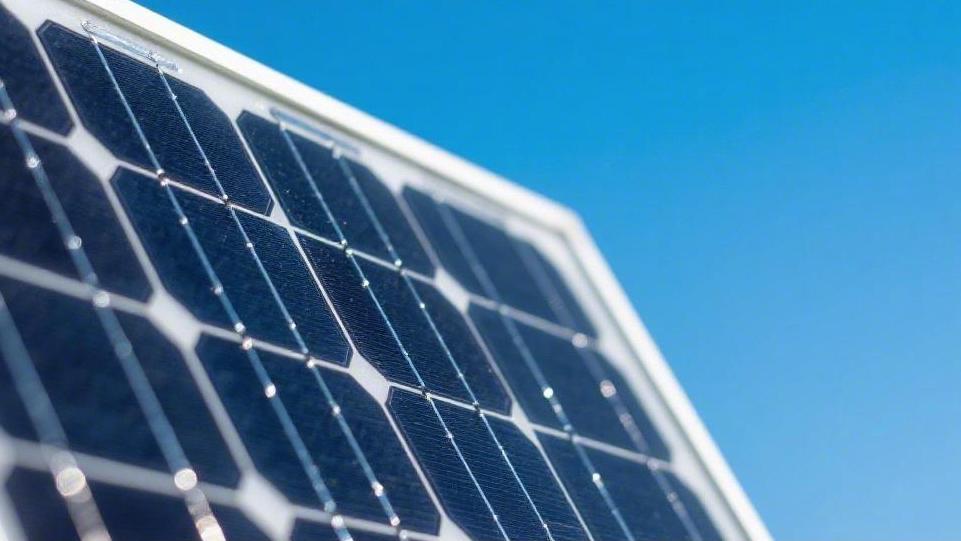
The external frame of photovoltaic modules typically uses 6063-T5 or 6005-T6 extruded aluminum alloy profiles.
The weight percentage of magnesium in this metallic material is strictly controlled between 0.45% and 0.9%, while the silicon concentration is maintained within the range of 0.2% to 0.6%.
A physical density of 2.7 g/cm³ allows the weight of a complete frame suitable for a two-square-meter solar panel to remain between 2.5 kg and 3.0 kg.
Industrial extruders apply a pressure typically ranging from 1500 to 2500 tons on the aluminum billets, forcing the metal through specialized dies at a high temperature of 500°C to produce long profiles with a cross-sectional width of 30 mm or 35 mm.
The processing plant then sends the profiles into an aging furnace, where they are baked continuously for 2 to 6 hours in a constant environment of 175°C to 195°C to complete the T5 or T6 level heat treatment process.
After physical quenching, the lower limit for the mechanical tensile strength of the aluminum alloy is forced upward to over 160 MPa, and the yield strength parameter must be greater than 110 MPa.
In tensile test samples, the elongation percentage of the metal before physical fracture must remain stable within the range of 8% to 10%.
Surface Chemical Treatment
Freshly extruded silver-white bare aluminum, when exposed to air with a relative humidity exceeding 60%, will generate a natural oxide film only 0.005 microns thick within 0.01 seconds.
Factories submerge the cut aluminum profiles into an electrolytic tank containing 15% to 20% dilute sulfuric acid, applying 10 to 20 volts of DC current for 30 to 50 minutes.
The current passes through the electrolyte, electrochemically generating a dense artificial aluminum oxide protective layer with a thickness of 15 microns (i.e., 0.015 mm) on the surface of the positive-electrode aluminum profile.
Frame samples with this artificial oxide film, after being sprayed continuously for 480 hours in a salt spray test chamber at a constant 35°C with a 5% sodium chloride solution, must have a surface corrosion area ratio strictly less than 0.1%.
If the installation environment is in a coastal area with high salt spray concentrations, customers usually need to pay an extra budget of $0.5 to $0.8 per module to upgrade the physical thickness of the anodic oxide film to 20 or even 25 microns.
The surface of the oxide layer also contains as many as 1011 tiny pores per square micron. Factories submerge the profiles in boiling water at 95°C to 100°C or a dichromate solution for 10 to 20 minutes to seal these pores, reducing the porosity to below 1%.
The treated frame surface can long resist corrosion from acid rain with a pH between 4 and 9 or industrial weakly alkaline gases, with a physical protection lifespan rated at 25 to 30 years.
Load Bearing Capacity
The external metal frame, in conjunction with 3.2 mm thick tempered glass, must withstand a front-side static snow load pressure of 5400 Pascals per square meter.
This pressure value, when converted to physical weight, is equivalent to an average snow load of 550 kg accumulated on every square meter of the panel's front surface.
The back of the frame must also resist a wind load negative pressure of 2400 Pascals per square meter, equivalent to resisting the physical pulling force of wind speeds reaching 35 meters per second (i.e., a Category 12 hurricane).
The frame height of current mainstream modules has been significantly reduced from 40 mm five years ago to 30 mm today, with the overall thickness specification usually set between 1.2 mm and 1.5 mm.
The reduction in physical size has decreased the aluminum consumption per frame by about 15% to 20%, resulting in a manufacturing cost budget reduction of $0.8 to $1.2 per panel.
To compensate for the decline in the section modulus caused by the reduced cross-section, the hole spacing of the mounting holes on the back of the frame has been precisely adjusted to standard intervals of 400 mm to 800 mm.
Installation workers use M8 stainless steel bolts with a diameter of 8 mm through the frame mounting holes, applying a tightening torque of 16 N·m to 20 N·m to ensure the mechanical fixation deviation of the overall system is less than 2 mm.
After undergoing 200 cycles of high and low temperature testing from -40°C to +85°C, the physical deflection deformation of the frame's long side must be controlled within 1% of the total length (i.e., 11 mm to 22 mm).
Gluing and Assembly
Four aluminum alloy profiles cut to specific lengths are mechanically crimped and fixed at the four right-angled corners using aluminum internal corner keys with a thickness of 1.5 mm to 2.0 mm.
Punching machines apply an instantaneous physical impact force of 15 kN to 25 kN at the corner keys, ensuring that the dimensional error at the profile joints is strictly less than 0.5 mm.
Between the glass and the 15 mm to 20 mm deep U-shaped groove of the frame, an automatic gluing machine evenly applies a single-module room-temperature vulcanized (RTV) silicone sealant with a width of 6 mm to 8 mm.
Each solar panel with an area of about 2 square meters requires 250 ml to 300 ml of liquid silicone in the four-sided frame grooves.
This polymer sealant will fully cure after being placed in a workshop at 50% relative humidity and 25°C for 24 to 48 hours, with the skin-over time controlled within 10 to 30 minutes.
The cured silicone sealant has an elongation at break of over 300% and a shear bonding strength index between 1.5 MPa and 2.5 MPa, providing an insulation volume resistivity as high as 1014 Ω·cm.
The metal frame must have grounding mounting holes with a diameter of 4 mm. During construction, a bare copper wire with a cross-sectional area of no less than 4 mm² must be fixed to the frame via a grounding clip.
The grounding physical resistance parameter of the entire system loop must be measured by a multimeter to be less than 1 Ohm, ensuring that the panel can quickly discharge the charge when struck by a peak lightning current of 100 kA.