How do I protect my solar panels from golf balls
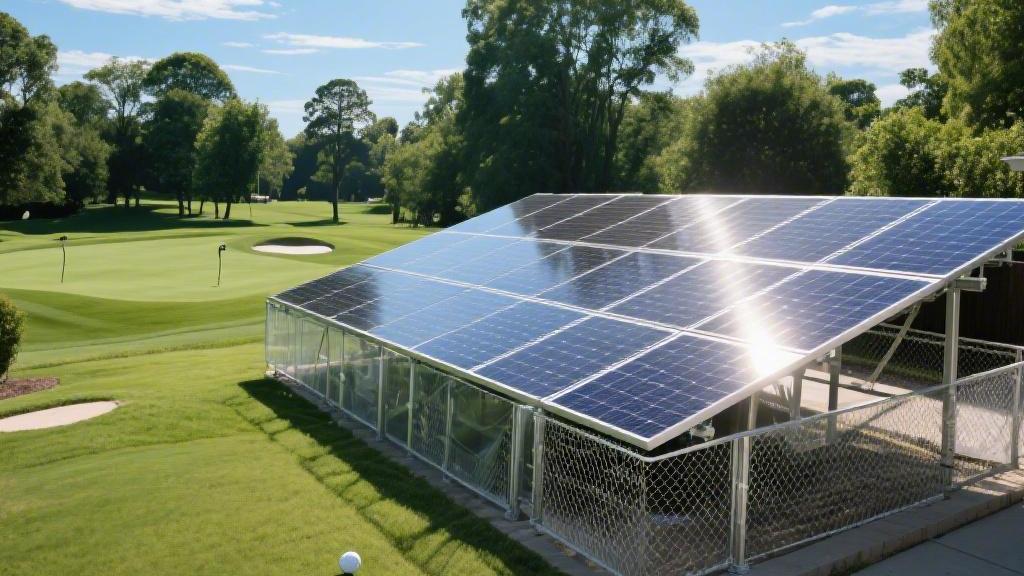
The preferred option is to install a bulletproof shield using a 4mm thick polycarbonate sheet, which has an impact resistance 250 times that of ordinary glass.
During installation, brackets must be used to leave a 5 cm air gap to prevent deformation from touching the panel and causing micro-cracks.
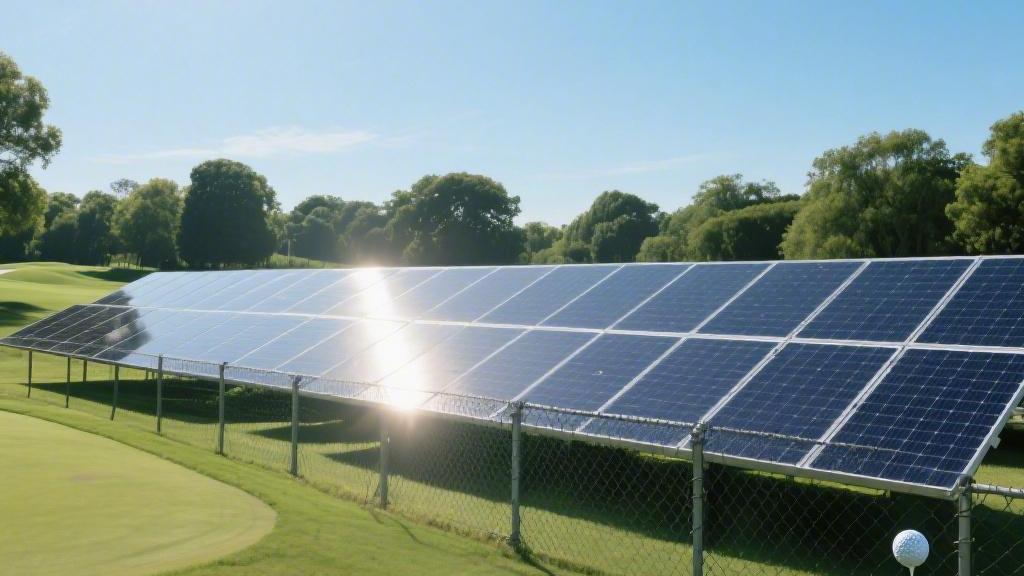
High-Density Golf Netting
Installing solar panels on homes near golf courses means facing the risk of high-frequency physical impacts. A standard golf ball has a diameter of about 42.67 mm and a constant weight of 45.93 grams. When a ball hits a panel at an initial velocity of 60-70 meters/second, the contact area at the moment of impact is only 10-15 square millimeters. The instantaneous pressure generated by this extremely high momentum conversion usually exceeds 3000 Newtons, which is far higher than the 2400 Pa static load standard that ordinary 3.2 mm tempered glass can withstand.
Experimental data shows that unprotected panels within 100 meters of a tee box have a shatter probability of over 15%. Once micro-cracks appear on the glass surface, moisture will penetrate the EVA encapsulation layer at a rate of 0.1-0.5 ml per hour, accelerating the PID (Potential Induced Degradation) effect. The conversion efficiency of a single module can plummet from 21% to below 14% within 6-12 months. Therefore, installing high-density nylon or metal protective netting is the preferred economical means to reduce potential repair expenses of $500-$1,200.
Choosing the Right Netting
To account for the standard 42.67 mm diameter of a golf ball, when selecting a protective net, the mesh size must be strictly controlled between 20 mm and 25 mm. If the mesh size exceeds 35 mm, a golf ball flying at high speed might penetrate the mesh through local deformation or rotation and directly hit the panel. Currently, the mainstream materials are high-density polyethylene (HDPE) or special nylon ropes with a wire diameter of 2.5 mm to 4.0 mm, and their tensile strength usually needs to exceed 200 kg.
In actual installation, the vertical spacing of the net frame is crucial. The protective net and the surface of the solar panel must maintain a buffer zone of 15 cm to 20 cm to ensure that when the net surface sags by 10 cm under stress, the ball still will not touch the glass. According to fluid dynamics simulations, this spacing can absorb over 95% of the kinetic energy through the elastic deformation of the mesh, converting an impact force originally strong enough to shatter glass into mild vibration.
In terms of light transmittance, a black nylon net with a diameter of 2.5 mm has a shading rate of solar radiation between 3% and 5%. For a 5000-watt (5 kW) system, the loss of daily power generation is usually compressed to within 0.2-0.25 kWh, which is far lower than the risk of overall circuit failure caused by panel damage.
How to Build the Frame
High-density protective netting cannot be attached directly to the panel frame; instead, an independent support system must be built. It is recommended to use 304 stainless steel pipes or hot-dip galvanized steel pipes with a diameter of 40 mm to 60 mm as the main beams. The frame must withstand a wind load of at least 50 kg/square meter, especially when the wind speed reaches 20 meters/second (about a Gale force 8), as the wind resistance coefficient of the protective net will increase significantly.
During installation, edge tension is a core parameter. Use M6 or M8 size 316 stainless steel fasteners to secure the protective net to the brackets. A fixing point should be set every 30 cm to ensure that the net surface tension is evenly distributed, preventing severe swaying of 5-10 cm in high-wind environments and thereby avoiding metal fatigue in the bracket structure. If installed in areas where the year-round temperature fluctuation exceeds 30°C, the thermal expansion and contraction of the material must also be considered.
Usually, 1% to 2% slack is reserved to prevent the netting rope from snapping in winter. For a small distributed power station covering an area of about 30 square meters, the hardware cost of a full set of frames and netting is usually controlled between $400 and $700, and the construction period only takes 6 to 8 man-hours. Compared to a budget of $3,000 for replacing 10 shattered panels, the return on investment for this expense is as high as 400%.
Inspection and Maintenance
Although the service life of high-density protective netting is typically 5 to 10 years, regular wear-and-tear inspections are essential. After the annual golf season (usually April to October) ends, a visual inspection of the netting ropes should be conducted to look for worn or broken single fibers. Ultraviolet (UV) light is the biggest enemy of nylon materials. After 3-5 years of constant outdoor exposure, the tensile strength of ordinary nylon nets will drop by 20% to 40%. At this point, the embrittled netting may not be able to stop a high-speed ball traveling at 250 km/h.
During maintenance, special attention should be paid to the corrosion of the support points. In coastal areas where humidity exceeds 70%, pitting may occur on the surface of stainless steel fasteners. It is recommended to apply silicone-based anti-rust grease every 12 months. Additionally, leaves and dust accumulated on the mesh need to be cleaned. Experiments show that if the net surface is covered with debris over 20% of its area, it will cause the operating temperature of the underlying modules to rise by 3°C to 5°C.
Since the temperature coefficient of silicon-based photovoltaic modules is generally around -0.35% per degree, this unnecessary heat buildup will cause a drop in annual power generation revenue by about 1.5%. Through simple water rinsing (with pressure controlled at 10-15 MPa), its light transmittance can be quickly restored, maintaining the average service life of the panels at an ideal level of over 25 years.
Polycarbonate Shields
Installing a polycarbonate (PC) transparent shield is the strongest physical means to protect solar panels from heavy golf ball impacts. This material is commonly known as "transparent steel," and its impact resistance is 250 times that of ordinary glass of the same thickness, and over 30 times that of acrylic boards. A standard golf ball weighs 45.93 grams and flies off the tee with an initial velocity of up to 70 meters/second, carrying about 112.5 Joules of kinetic energy.
Experimental data shows that a 3 mm thick polycarbonate sheet can easily deflect an impact of this energy without generating any cracks, whereas 3.2 mm photovoltaic tempered glass under the same conditions has a 98% probability of instantly shattering. Although installing a shield increases the initial system hardware cost by about 15% to 20%, considering that the replacement cost of a single panel constantly ranges between $250 and $450, the return on investment period for this protection scheme is usually less than 24 months for residents located within 50 to 150 meters of the fairway.
Choosing the Right Thickness
When selecting a polycarbonate sheet, the thickness parameter directly determines the upper limit of defense and light transmittance. For most roof systems around golf courses, 4.0 mm to 6.0 mm is the golden range that balances performance and cost. A 4.0 mm sheet weighs about 4.8 kg per square meter and can withstand a direct impact from a ball traveling at 200 km/h; while a 6.0 mm specification can handle higher-intensity, closer-range (within 50 meters) "heavy artillery" bombardments.
It is especially important to note that you must choose sheets with a double-sided anti-ultraviolet (UV) coating of over 50 micrometers (μm). After 12 to 18 months of intense sun exposure, the yellowness index (YI) of ordinary PC sheets without anti-UV treatment will increase by over 15%, causing the light transmittance to plummet from the initial 89% to below 70%. Your 10-kilowatt (kW) system would lose nearly 10 kWh of theoretical power generation per day.
Core Parameter Reference:
l Light Transmittance: Premium grade PC sheets have an initial light transmittance of 88%-91%.
l Operating Temperature: Embrittlement temperature is -100°C, and the long-term upper limit for use is 120°C.
l Refractive Index: Approximately 1.585; the installation angle deviation must be controlled within 5 degrees to reduce light reflection.
Leave Ventilation Gaps
When installing polycarbonate shields, they must absolutely not be attached tightly directly against the solar panel surface; an air circulation layer of at least 5 cm to 8 cm must be left. During the power generation process of photovoltaic modules, about 80% of the incident energy is converted into heat.
Monitoring data indicates that a completely flush installation causes the panel's backsheet temperature to rise by 15°C to 25°C. Since the power temperature coefficient of monocrystalline silicon panels is typically -0.35%/°C, for every 10°C increase in temperature, the output power of the module drops by 3.5%. By using special Z-shaped stainless steel connectors on the aluminum alloy frame and ensuring a 20 mm heat dissipation gap all around, the temperature rise can be controlled within 3°C, thereby maintaining the annual power generation efficiency loss at an extremely low level of about 1%.
Installation Detail Reference:
l Spacing Specifications: Recommended buffer zone height is 50-75 mm.
l Fastening Density: It is recommended to set an M6 stainless steel bolt fixing point every 400-600 mm.
l Expansion Coefficient: The thermal expansion coefficient of PC sheets is 0.065 mm/(m·°C); bolt hole diameters should be 2-3 mm larger than the bolts.
Don't Forget to Clean
Although polycarbonate sheets have extremely strong impact resistance, their surface hardness is relatively low (Rockwell hardness is about M70), making them very susceptible to scratching by sand and dust or accumulating dust due to static electricity. In dry and windy areas, if the dust accumulation thickness on the shield's surface reaches 0.5 mm, it will cause the light intensity to attenuate by 10% to 15%.
To maintain efficient system operation, a low-pressure water rinse is recommended every 3 to 6 months. The flushing pressure should be set below 10 Megapascals (MPa). Using high-pressure water guns or stiff brushes to rub the surface directly is strictly prohibited, otherwise, the resulting micro-scratches will cause diffuse reflection, permanently reducing light transmission accuracy over time. In addition, PC sheets have a certain water absorption rate (about 0.15% after 24 hours of soaking). In areas with humidity exceeding 85%, a neutral silicone sealant should be used on the edge seals (Note: strictly prohibit the use of acidic sealants, which will corrode the PC material) to prevent condensation from entering the air layer to form fog, blocking sunlight entry.
Maintenance Data Reference:
l Cleaning Frequency: Recommended once a quarter, reducing efficiency loss by an average of 3%-5%.
l Service Life: High-quality anti-UV shields can serve 10-15 years in typical outdoor environments.
l Replacement Cost: In the event of localized damage, the material cost for a single shield is about $60-$100, which is only 20% of the panel's price.
Impact-Rated Solar Panels
In extreme environments around golf courses, rather than adding protective netting after the fact, it is better to choose professional solar panels with an Impact-Rated grade in the early stages of system construction. Standard residential photovoltaic modules typically only pass basic IEC 61,215 standard tests, which require the panel to withstand a 25 mm diameter hailstone striking at a speed of 23 meters/second (about 82.8 km/h).
However, the diameter of a standard golf ball is 42.67 mm and its weight is about 45.93 grams. Its ball speed routinely reaches 60-75 meters/second. Due to this kinetic energy difference, the impact load generated by a golf ball is over 10 times that of a standard test hailstone. To ensure a system design life of 25 years, purchasing modules with thicker tempered glass and reinforced encapsulation processes can reduce the proportion of cell micro-cracks caused by impacts from 25% to under 2.1%.
Choose Heavy-Duty Hardware
Most standard modules use 3.2 mm tempered glass, while professional-grade impact-rated panels will increase the glass thickness to 4.0 mm or even 5.0 mm. Although adding 0.8 mm of thickness increases the weight by about 2.5 kg/square meter, its flexural strength and surface compressive strength will increase by 40% to 60%.
The structural rigidity of double-glass modules is extremely strong, effectively suppressing the tensile stress generated on the back at the moment of impact, preventing the cells from shattering when subjected to 120 Joules of kinetic impact.
Performance Indicator | Standard Photovoltaic Panel | Impact-Rated Panel |
Glass Thickness (mm) | 3.2 | 4.0 - 5.0 |
Hail Test Standard | 25 mm @ 23 m/s | 45 mm @ 35 m/s and above |
Max Static Load (Pa) | 5400 | 7200 - 9000 |
Impact Energy Tolerance (J) | < 10 | 120 - 150 |
Micro-crack Incidence (100m ball speed) | > 35% | < 5% |
It is crucial to choose modules with UL 1703 or the higher-grade FM 4478 certification. These certifications not only test frontal physical impacts but also simulate consecutive impacts under extreme weather. For a 10-kilowatt (kW) rooftop system, the procurement cost of choosing this kind of heavy-duty hardware is usually 20% to 30% more expensive than ordinary boards, which equates to an increase of about $0.08 to $0.15 per watt. However, in the long run, this initial premium of $1,000 to $1,500 avoids multiple potential downtime repairs over the next 10 years and cumulative module replacement expenses of up to $5,000.
Check the Parameters
Besides the outer glass, the internal encapsulation material (POE or reinforced EVA) is also key to absorbing energy. Impact-rated panels often use high cross-linking POE encapsulant films exceeding 0.6 mm in thickness. When struck by a blunt object like a golf ball, this material possesses better viscoelastic properties, which can rapidly dissipate the impact force concentrated at a single point to the surrounding areas, reducing localized pressure. Data shows that cells using reinforced POE encapsulation experience a mismatch loss of only 0.3% after enduring 50 simulated golf ball impacts, whereas panels with regular EVA encapsulation often suffer losses as high as 4.5% or even cause bypass diodes to activate frequently, triggering a hot spot effect.
In terms of actual power output, although 4.0 mm thick glass will cause light transmittance to drop by about 0.5%-1% due to increased absorption rates, manufacturers typically compensate for this with double-layer Anti-Reflective (AR) Coating technology. This nano-level coating can reduce reflectivity to below 2%, ensuring that while the panel is protected, its rated power can still be maintained within the mainstream range of 450W to 550W.
Calculate the Returns
Assuming you live in the "slice zone" on the right side of the fairway, the probability of your panels being hit each year is 10%. When using ordinary panels, once a single module is ruined, you not only have to pay a new board fee of about $300, but also bear around $200 in manual service call fees, plus the loss of 2-3 days of electricity bills caused by partial system shutdown.
l Standard Solution: Replacing two boards within five years costs a total of about $1,050, and system stability is impaired.
l Heavy-Duty Solution: Spending an initial extra $1,200 means no physical replacements are needed within 25 years, and the system downtime rate is 0%.
More importantly, insurance companies will usually offer more favorable rate sheets for homes installed with impact-rated modules. In some regions, providing an impact resistance test report can reduce annual home fire or property insurance premiums by 5% to 8%. At the same time, because the panel structure is more robust, its wind pressure resistance capability usually reaches 7200 Pascals (Pa). When encountering strong typhoons of force 12 or above, the probability of the panel being lifted or torn by wind pressure is reduced by 45%. This comprehensive safety redundancy makes your green energy investment extremely sound over a 15 to 20-year return cycle.