Will Solar Panels Get Smaller in the Future | 3 Change
No. First, perovskite tandem technology will increase module efficiency from 23% to over 30%, increasing power by nearly 30% for the same area;
Second, thin-film technology reduces thickness to the micrometer level, reducing weight by 90%;
ly, full Back Contact (BC) technology eliminates front grid lines, increasing the light-receiving area.
It is recommended to prioritize large-size silicon wafer models of 182mm/210mm to achieve a better cost per watt.
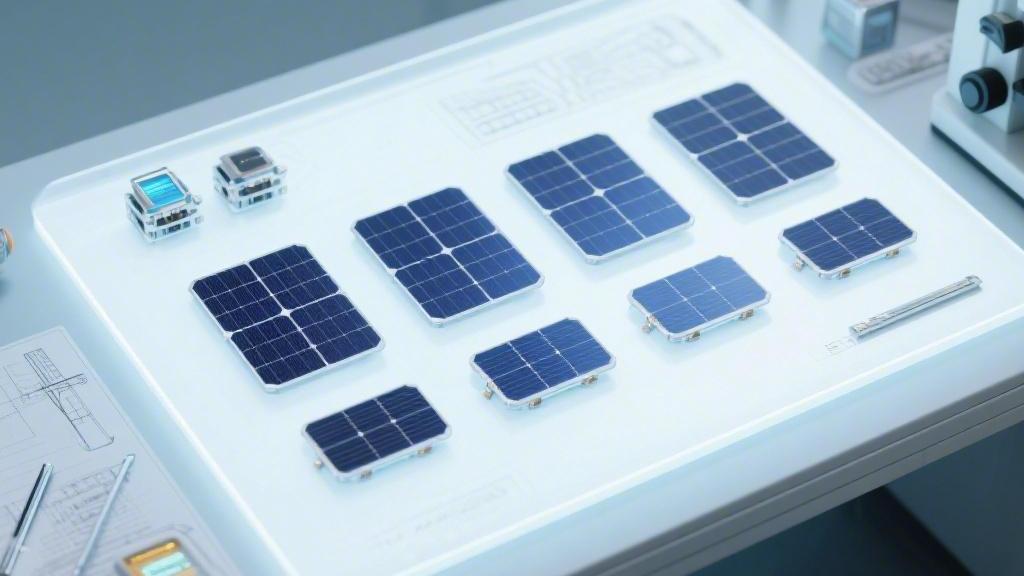
Invisible Solar
Becoming Transparent
Current transparent solar cells mainly utilize organic photovoltaics (OPV) or perovskite materials, selectively absorbing ultraviolet and infrared light while allowing visible light in the 400 nm to 700 nm band to pass through. In laboratories, the average visible light transmittance (AVT) of these cells can reach between 60% and 80%, making their visual effect almost identical to ordinary window glass. Although the current conversion efficiency is around 10% to 15%, lower than the 25% of traditional monocrystalline silicon, their application scenarios have expanded from rooftops to the glass curtain walls of entire buildings.
l Balance between transmittance and efficiency: A typical semi-transparent perovskite cell can maintain a stable efficiency of about 18.1% with 30% transmittance; when transmittance is raised above 50%, the efficiency remains around 12%.
l Material parameters: Using an active layer only a few hundred nanometers thick, paired with transparent conductive electrodes like indium tin oxide (ITO), keeps the total thickness of the cell layer under 1 micrometer, making its weight almost negligible.
l Spectral utilization: This technology can capture about 40% of near-infrared light energy and convert it into electricity, while blocking heat from entering the room, thereby reducing building air conditioning loads by 20% to 30%.
Hidden in Windows
Applying this invisible technology to building windows is known as Luminescent Solar Concentrators (LSC). It does not require covering the entire glass with cell cells; instead, tiny strip-shaped cells are embedded at the edges of the glass. The glass itself is coated with a layer of fluorescent materials or quantum dots, which absorb sunlight, redirect it, and conduct it to the edges of the glass.
l Installation density: In a standard office building, the glass area is typically 10 to 20 times the roof area. Even if the efficiency is only half that of silicon panels, its total power generation can be compensated by the massive surface area.
l Cost structure: The manufacturing cost per square meter of transparent solar windows is estimated to be $150 to $200 higher than ordinary double-layer tempered glass. Considering the saved electricity bills and carbon reduction subsidies, the static investment payback period is usually between 6 and 8 years.
l Performance degradation: The design life of this integrated system is synchronized with the building, generally requiring that power generation performance drops by no more than 20% of its initial value over a 25-year operating cycle.
Like Paint
Breakthroughs in quantum dot technology have turned solar energy collection into a "spraying" process. These semiconductor particles, with diameters between 2 and 10 nanometers, can be adjusted in size to absorb specific wavelengths of light. By mixing quantum dots into special paint and spraying it directly onto car exteriors, streetlight poles, or phone back covers, these surfaces can be equipped with power-generating capabilities.
l Light absorption capacity: The light absorption coefficient of quantum dot coatings is 10 to 50 times higher than that of traditional silicon materials, allowing highly efficient photoelectric conversion within extremely thin coatings (about 200 nanometers).
l Multiple exciton generation: Theoretically, one high-energy photon hitting a quantum dot can generate two or more electrons, bringing the theoretical limit efficiency of quantum dot cells to around 45%.
l Environmental adaptability: This coating performs better in low-light conditions (such as cloudy days or indoor lighting) than crystalline silicon cells, maintaining over 70% of its rated low-light power generation efficiency.
Worn on the Body
By wrapping photovoltaic active materials around stainless steel wire or polymer fibers, power-generating wires with a diameter of only 0.1 mm to 0.5 mm have been developed. These wires can be woven like ordinary cotton or polyester threads to make self-powering clothing, backpacks, or tents.
l Mechanical strength: After more than 1,000 180° bending tests, the photoelectric conversion efficiency retention rate of these photovoltaic fibers still exceeds 95%, meeting the requirements of daily wearing and washing.
l Power density: A standard-sized self-powering jacket with an effective light-receiving area of 0.5 square meters can generate about 5W to 10W of power under standard sunlight, enough to continuously power a smartwatch, Bluetooth earphones, or sensors.
l Weight advantage: Compared to traditional portable power banks, flexible photovoltaic fabric systems with the same energy storage capacity weigh over 60% less, greatly enhancing the convenience of outdoor work or hiking.
Calculating the Economics
Although the cost per watt at the current laboratory stage is higher than that of mass-produced crystalline silicon cells, the "space value-add" it brings is enormous. Traditional photovoltaics require additional land or roof space, while invisible solar energy utilizes existing idle surfaces.
l Auxiliary material savings: The invisible integration solution eliminates expensive aluminum alloy brackets, counterweights, and cumbersome roof reinforcement projects, which account for 15% to 25% of the total budget in large photovoltaic projects.
l Maintenance frequency: Because it is integrated into building facades or inside products, invisible solar energy suffers less from wind and dust pollution. By using photocatalytic self-cleaning coatings (like titanium dioxide), annual maintenance costs can be kept within 0.5% of the initial investment.
l Comprehensive benefits: Taking a 5 kW residential transparent window system as an example, in addition to the benefit of generating about 6,000 kWh of electricity annually, its thermal insulation performance can reduce the maximum indoor temperature in summer by 3°C to 5°C, further decreasing air conditioning electricity expenses.
Foldable Thin-film
Unlike the traditional silicon crystal panels of the past that required reinforced concrete brackets and weighed over 20 kg, the thickness of this thin-film cell is usually reduced to between 1 mm and 3 mm, and it can even be easily rolled up or folded like a piece of A4 paper. The technical logic lies in abandoning bulky tempered glass encapsulation and instead using high-transmittance polymers like polyimide (PI) or ethylene tetrafluoroethylene (ETFE) as the substrate.
This material substitution not only drastically reduces the weight to 0.8 kg to 1.5 kg per square meter, but also gives the modules extremely high weather resistance and toughness. Globally, whether for extreme wilderness exploration, temporary power supply in disaster relief, or power supplementation for RV travel, this lightweight, highly flexible energy solution is showing amazing growth potential, with its compound annual growth rate (CAGR) exceeding 15.2%.
Truly Foldable
Traditional monocrystalline silicon cells will undergo brittle fracture when the bending radius is less than 200 mm, while thin-film cells based on copper indium gallium selenide (CIGS) or cadmium telluride (CdTe) technologies can achieve a bending radius of 25 mm or even less without generating any micro-cracks. Power generation equipment can be like a foldable screen smartphone; through precisely designed flexible connection points, several square meters of light-gathering area can be condensed into the volume of a laptop bag.
l Bending endurance life: High-quality flexible CIGS modules, after undergoing 10,000 repeated 180° folding tests, can keep their photoelectric conversion efficiency degradation rate within 3%.
l Light absorption efficiency parameters: Although the thin-film layer is only 1μm to 2μm thick, its light absorption coefficient is nearly 100 times higher than that of silicon materials, allowing it to absorb more than 90% of incident light.
l Low-light performance: In low-light environments like early mornings, evenings, or cloudy days, thin-film cells have a wider spectral response range, making their actual power generation efficiency 10% to 15% higher than traditional crystalline silicon panels.
Uncompromised Performance
The power density per unit area of current commercialized flexible thin-film modules has broken through 150 W/μm². This efficiency improvement is mainly attributed to multi-junction stacking technology, which involves stacking multiple layers of semiconductor materials that absorb different light spectra on the same substrate, capturing high-energy blue-violet light and low-energy infrared light simultaneously.
Key Data Reference:
l Power-to-weight ratio: Traditional glass modules are about 20 W/kg, while high-end flexible thin-film modules can reach over 500 W/kg, an increase of a full 25 times.
l Temperature coefficient: Traditional panels lose about 0.4% in power for every 1°C increase in temperature, while thin-film modules drop only about 0.2%. In a high-temperature environment of 60°C, the actual output power is 8% higher.
l Conversion efficiency: The efficiency of commercial flexible CIGS modules is between 16% and 19%, and the highest laboratory record has exceeded 22.6%, approaching the commercial level of crystalline silicon cells.
Take It Anywhere
A traditional photovoltaic system that provides 200 W of power, complete with an aluminum frame and glass, typically weighs over 15 kg and is too bulky to fit into a regular private car's trunk. In contrast, an equivalent power system using folded thin-film technology has folded dimensions of only 50 cm x 40 cm x 5 cm and a total weight of less than 4 kg.
l Installation cost comparison: Labor and bracket costs for traditional rooftop projects account for 30% to 35% of the total budget; folding modules usually feature a "plug-and-play" design, fixed with magnets or hooks, meaning installation costs are virtually zero.
l Logistics costs: Because the volume is compressed by more than 80%, under the same container loading capacity, the transportation unit price for folding modules is only about 20% of traditional modules.
l Effective working hours: Users can adjust the orientation of the folding panels at any time according to the angle of the sun. Through manual "sun tracking," the all-day effective power generation time is extended by 1.5 to 2 hours compared to fixed installations.
Calculating Cost-Effectiveness
From the perspective of long-term economics, foldable thin-film cells exhibit superior marginal cost-benefit. Although their initial purchase price per watt may be about 20% more expensive than mass-produced monocrystalline silicon panels, their comprehensive return on investment is higher in specific mobile application scenarios. For example, in remote areas lacking power infrastructure, the deployment cycle of these modules is measured in "minutes," enabling the rapid establishment of a 12V or 24V off-grid power supply system to guarantee operation for communication equipment and lighting.
l Investment payback period: Taking a 400W folding system as an example, assuming an average daily generation of 1.8 kWh, in an area where electricity costs about $0.4/kWh, it can save around $260 annually. Deducting the equipment cost of roughly $750, breaking even takes less than 3 years.
l Durability performance: Modern encapsulation processes (such as using Teflon ETFE coatings) ensure that the modules have extremely strong UV resistance, with a design life generally reaching 15 years, and a guaranteed power degradation rate of no more than 10% over 10 years.
l Damage resistance: Because there is no glass cover plate, these modules do not fear hail strikes or severe vibrations. Even if localized scratches appear on the surface, the remaining parts can still work normally, without causing a large-area "hot spot effect" that leads to total failure, as seen in crystalline silicon cells.
Attachable Anywhere
It can seamlessly fit on curved roofs, cylindrical utility poles, and even irregular tent surfaces. Currently, many automakers are trying to directly integrate this flexible thin-film into hoods and roofs. This integration has almost zero impact on vehicle wind resistance, while continuously recharging lead-acid or power batteries during parking sun exposure.
l Automotive-grade range extension: A flexible system integrated into the roof of an electric vehicle, assuming an effective area of 1.2μm², can add 12 km to 20 km of range to the vehicle daily. For short-distance commuters, this can reduce charging frequency by about 30%.
l Extreme environment adaptability: In extremely cold, high-altitude regions above 4,500 m, because the internal stress of thin-film cells is extremely low, they resist the physical damage caused by thermal expansion and contraction much better than crystalline silicon panels, lowering the overall equipment failure rate by 40%.
l Customized specifications: Manufacturers can customize special specs ranging from 50μm to 500μm in thickness according to demand, and even achieve a certain degree of light transmittance to use them as building sunshades.
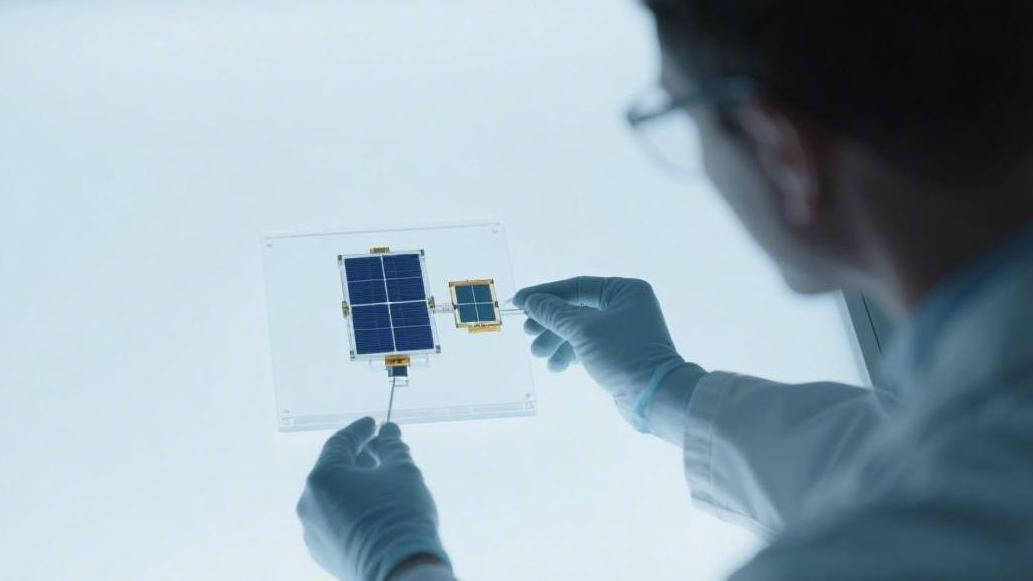
High-Density Cells
Squeezing Out More Power
In the past, cell surfaces had thick silver main grid lines that blocked about 2% to 3.5% of incoming light. Today's SMBB (Super Multi-Busbar) technology slims the grid lines down to under 0.1 millimeters and increases their number to 16 or even 20. This not only reduces the shaded area but also shortens the current transmission path.
Electrical performance parameters comparison:
Parameter Indicator | Traditional 5BB Cell | New SMBB Cell | Improvement/Change |
Number of Busbars | 5 | 16-20 | Over 3 times |
Shading Area Ratio | 3.2% | 1.1% | Reduced by 65% |
Internal Resistance Loss | 1.8W | 0.6W | Reduced by 66% |
CTM Power Gain | Baseline | +1.5% | Significant improvement |
Single-cell Current Density | 40 mA/cm² | 42.5 mA/cm² | 6% gain |
This design dramatically reduces the internal resistance loss of the cell. According to Joule's law, electric current passing through a resistor generates heat, and the high-density arrangement shortens the resistance distance, making the degradation of the module's power generation performance in high-temperature exposure environments above 50°C about 15% slower than older models. For users, over the 25-year warranty period, high-density cells can produce 8,000 to 15,000 more kilowatt-hours of electricity.
Shingled Assembly
Shingling technology is currently the recognized high-density solution. It cuts a whole cell into 5 to 6 narrow strips and uses conductive adhesive instead of traditional soldering ribbons for overlapping bonding. This method completely eliminates the approximately 2-millimeter inter-cell gaps found in traditional modules.
l Increased light-receiving area: The light-receiving area of shingled modules accounts for more than 94%, whereas conventionally laid modules only hit 89% to 91%.
l Enhanced anti-cracking ability: Conductive adhesive has a good flexible cushioning effect. When enduring a 2400Pa wind load or 5400Pa snow load test, the probability of micro-cracks in shingled cells is 70% lower than that of traditional rigid soldering.
l Hot spot suppression: Due to the parallel structure, when 5% of the area is locally shaded by leaves or bird droppings, traditional modules might lose more than 30% of their power, while high-density shingled modules only lose about 10% of their power.
The most direct benefit of this assembly method is its "seamless aesthetic" appearance. From a distance, the whole board is completely black and integrated, with no ugly soldering ribbons or reflective lines. This makes solar panels highly acceptable on villa roofs or high-end commercial facades.
Drastic Size Changes
The previously industry-standard M2 (156 mm) specification has long been obsolete, and now the M10 (182 mm) and G12 (210 mm) large-size silicon wafers have become mainstream.
By increasing the physical dimensions of the silicon wafer within the same area, the proportion of frames and encapsulation materials is reduced:
l Encapsulation efficiency: Modules using 210mm silicon wafers achieve a module area utilization rate of 98.2%, far higher than the 92.5% of the 156mm era.
l Single-panel power density: Under the standard size of 1.1 meters wide and 2 meters long, the power of high-density modules has leaped from 350W to between 550W and 600W.
l Reduced cost per watt: Because the usage of frames, backsheets, and glass did not scale proportionally with power, the material cost per watt has dropped by 8% to 12%.
Lasting Longer
l By adopting double-glass symmetrical encapsulation and POE film, the water vapor transmission rate inside the cell drops to nearly 0 grams/square meter/day.
l Degradation rate: The first-year degradation of N-type high-density cells is controlled to within 1%, and the average annual degradation rate over the subsequent 30 years is only 0.4%.
l Mechanical strength: The 2.0mm double-sided tempered glass, paired with high-density arrangement, allows the module to withstand frontal impacts from 35mm diameter hail hitting at 100 kilometers/hour.
l Weather resistance: The number of test cycles in harsh environments like salt spray and ammonia gas has increased from the standard 2 to more than 6.
Accurate Cost Savings
Because the power of each panel is greater, an entire 5 kW residential system might only need 8 to 10 panels instead of the past 15.
l Bracket savings: The number of fasteners like rails and briquettes has been reduced by about 35%, directly saving about $150 to $300 in material costs.
l Construction fees: Installers' working-at-height time is cut by 40%. Calculated at a labor cost of $50 per hour, the total installation cost can be reduced by more than $200.
l Cable loss: The cable length on the DC side is shortened, and voltage loss (I²R) is reduced by 2%, allowing for an additional recovery of about 100 kWh of power loss annually.