Which is best on-grid or off-grid solar system
For maximizing ROI, choose an on-grid system; you save 40% on cell costs, achieve an energy recovery rate of over 95%, and can sell excess electricity back to the grid.
Off-grid systems require 1.5 times the energy storage capacity and are best suited for areas without grid access.
During operation, the inverter phases must be strictly synchronized.
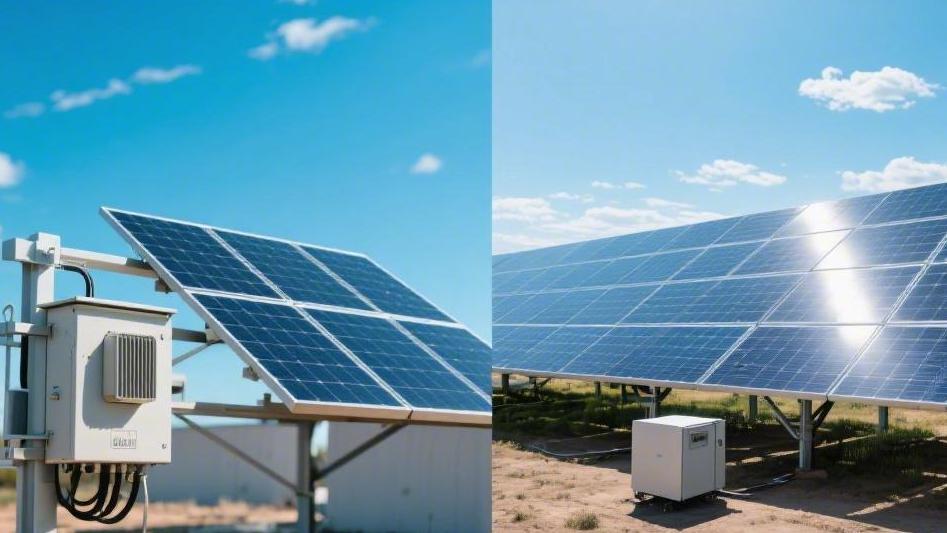
Energy Independence
For a household with an average daily power consumption of 20 kWh to go completely off-grid, the off-grid system's design redundancy must exceed 150% to cope with the extreme scenario of 3 consecutive rainy days. You will need to install at least an 8 kW photovoltaic (PV) array (approximately 15 pieces of 550 W monocrystalline silicon modules, totaling an area of about 35 square meters), paired with a 48 V 400 Ah lithium iron phosphate (LiFePO4) cell system (providing about 20 kWh of energy storage capacity).
Currently, mainstream LiFePO4 batteries offer a cycle life of about 6,000 cycles at an 80% depth of discharge (DOD), which translates to a lifespan of 12 to 15 years. In contrast, traditional lead-acid batteries only offer 500 to 800 cycles. Although their initial purchase price is 60% lower than lithium batteries, their energy density is merely 30-50Wh/kg, and the voltage drops significantly during high-current discharges. Consequently, the actual amortized cost per kilowatt-hour is actually 40% higher than that of lithium batteries.
· Peak Load Matching: Off-grid systems must be able to withstand instantaneous startup currents. For example, the transient power draw of a 1.5-horsepower air conditioner during startup can reach 3,500 W.
· Self-Discharge and Losses: In standby mode, an off-grid inverter's own no-load loss is approximately 30-50W.
· Charge Controller (MPPT): To maximize the utilization of solar energy, the tracking efficiency of the MPPT controller must be over 99%. In low-temperature environments, the open-circuit voltage (Voc) of solar panels will increase by about 10%-15%.
In an off-grid state, since there is no power grid acting as an infinite load to absorb excess electricity, the controller will force the solar panels into a power-limited operation state once the batteries are fully charged. This leads to a loss of about 20% in potential power generation. To improve resource utilization, many advanced users install automatic load diversion devices.
When the cell level exceeds 95%, the system automatically turns on electric water heaters or irrigation water pumps, converting surplus DC energy into stored thermal or mechanical energy, thereby increasing the system's comprehensive efficiency from 70% to around 85%.
Maintenance & Complexity
Who Keeps an Eye on It?
The complexity of maintaining an off-grid power supply system is about three times higher than that of a standard on-grid system. On-grid systems are almost synonymous with "zero maintenance"—you only need to clean the dust from the surface of the solar panels every 6 months to ensure light transmittance remains above 95%.
If the panel tilt angle is greater than 15°, rain will automatically wash away 80% of pollutants, typically keeping the annual power generation loss under 3%. However, the logic behind an off-grid system is completely different; it operates as a precise internal closed-loop consisting of the PV array, charge controller, cell bank, and inverter.
Core Parameter Monitoring: Off-grid users must monitor the "Midpoint Voltage" of the cell bank, where the normal deviation should be less than 2%. Once the voltage difference of a single cell exceeds 0.1 V, the system requires an 8-12 hour equalization charge. This forcibly levels the state of charge across all cells by raising the charging voltage (usually to over 14.4V).
The Cell Lifespan Ledger
Seventy percent of an off-grid system's complexity is concentrated in cell management, which directly determines your operations and maintenance budget for the next decade. Although LiFePO4 batteries advertise a 6,000-cycle lifespan, this relies on strict temperature control. For every 10°C increase in ambient temperature, the internal chemical degradation rate of the cell doubles. If the cell cabinet remains in a 40°C high-temperature environment year-round, its actual service life will plummet from 15 years down to 7-8 years. For users relying on lead-acid gel batteries, the maintenance workload doubles again.
Because lead-acid batteries suffer from the "sulfation effect," if the depth of discharge (DOD) frequently exceeds 50%, or if they are left in a depleted state for more than 48 hours, irreversible lead sulfate crystals will form on the plates, causing a permanent capacity drop of over 20%. You must manually check fluid levels monthly (for flooded types) and record the open-circuit voltage (OCV) of each cell. This high-density data logging is essential to identify and remove a failing cell before it triggers the "barrel effect" (weakest link) and causes the premature failure of the entire cell bank—an asset worth tens of thousands of dollars.
Capacity Loss Calculation: After 3 years of operation, the actual usable capacity of a rated 20kWh cell bank often degrades to about 85%. Your "rainy day backup duration" will shrink from the originally planned 48 hours to 40 hours. You must readjust your usage schedules for high-power appliances based on this 15% variable.
How to Fix It When It Breaks
They typically feature a single input and output port. If the grid malfunctions or the equipment itself is damaged, the system automatically disconnects and displays an error code. Conversely, an off-grid system is a multi-node network; fault localization usually requires troubleshooting 3 to 5 different hardware modules to find the root cause.
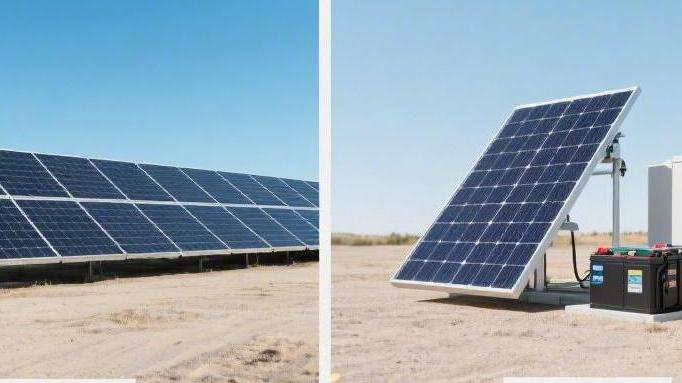
Environmental Constraints
At the Mercy of the Weather
Under Standard Test Conditions (STC), the nominal power of PV modules is based on a light intensity of 1000 watts per square meter and an ambient temperature of 25°C. However, for every 1°C increase in temperature within the actual installation environment, the power generation efficiency of monocrystalline silicon panels decreases by about 0.4% to 0.5%.
In tropical regions, when the roof temperature soars to 65°C, the actual output power of a nominal 550 W panel will shrink to about 460 W. This 16% reduction in power must be offset during the initial design phase by increasing the number of modules.
During consecutive rainy days or under partial shading, the output of the PV array can plummet by more than 80%. If 10% of your roof area is shaded by trees or chimneys, the current of the entire string could drop by 30% to 50% despite the intervention of bypass diodes. While on-grid users only have to accept slightly lower financial returns on their monthly electric bill, off-grid users face the real risk of the cell bank voltage dropping below the 44V protection threshold, resulting in a complete whole-house blackout.
The table below illustrates the specific impact of different environmental variables on the average daily power generation of a 10 kW system:
Environmental Factor | Ideal Conditions (5 hours of sunlight) | Mild Impact (Thin clouds / High temp) | Severely Restricted (Heavy rain / Heavy shading) |
Average Daily Power Generation | 50 kWh | 35 - 40 kWh | 5 - 10 kWh |
Conversion Efficiency Coefficient | 100% | 70% - 80% | 10% - 20% |
System Operating Status | Batteries fully charged / Excess to grid | Sustaining basic loads | Consuming stored power / Shutdown |
Maintenance Intervention Required | None | Monitor temperature | Start backup generator |
Batteries Fear Cold and Heat
The optimal operating temperature range for LiFePO4 batteries is between 15°C and 30°C. When the ambient temperature drops below 0°C, the activity of lithium ions drops significantly, shrinking the releasable capacity by about 20%. If the temperature further drops to -20°C, the cell cannot be charged at all. Forced intervention by the charge controller at this point will trigger lithium dendrite growth, resulting in an irreversible 30% loss in lifespan or even internal short circuits.
A 5,000W on-grid inverter typically faces thermal management pressures of around 50°C when operating at full load. If installed in an enclosed space or under direct sunlight, the inverter will automatically trigger "Derating," limiting its output to between 60% and 70% to prevent damage to core electronic modules. Over the system's 20-year lifecycle, this accumulated power generation loss caused by poor heat dissipation could result in an economic loss of over $1,000.
Installation Environment Empirical Data Reference: In coastal areas with high salt mist, the corrosion rate of aluminum PV frames is about 0.01 mm per year. If C5-grade anti-corrosion coated mounts are not used, the structural safety of the system will decrease by 25% after 5 to 8 years. In high-altitude regions, the thin air leads to reduced heat dissipation efficiency; therefore, the inverter's rated output power must be derated by 5% for every 1,000 meters of elevation increase.
When selecting an off-grid configuration, you must reverse-engineer the required Ampere-hours (Ah) of the cell bank based on the "longest consecutive cloudy/rainy days" extracted from local meteorological statistics over the past 30 years. If that figure is 5 days, your total required cell capacity (kWh) must reach 3 to 4 times your daily power consumption to provide a 20% safety margin and account for 15% natural degradation loss.