Can i power my hot tub with solar panels
A standard hot tub consumes approximately 5-10 kWh per day. To achieve complete off-grid operation, you typically need to install 6 to 10 high-efficiency 400W monocrystalline silicon solar panels.
Since heating demand is highest at night and during winter, you must be equipped with at least a 10-15 kWh energy storage cell pack (such as LiFePO4) to ensure continuous constant temperature.
Although the initial investment is high (approx. $5,000 - $10,000), considering long-term electricity savings and environmental benefits, combining a hybrid inverter with grid access is currently the most stable and highest-return solution.
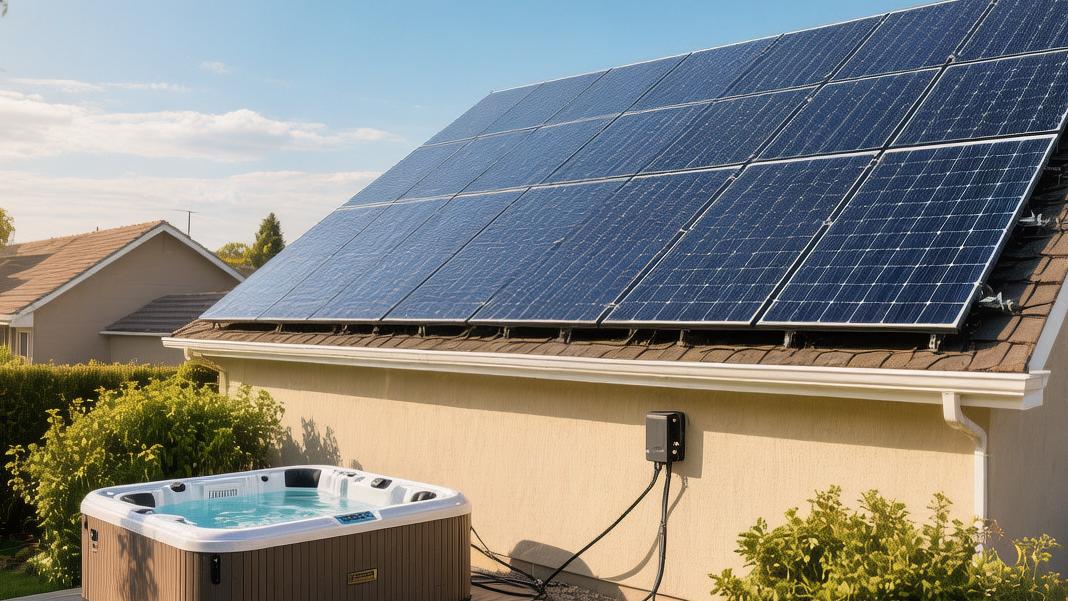
Feasibility Assessment
Is it actually feasible
Over 85% of high-end hot tubs on the market use 240V AC power, typically requiring a dedicated 50A or 60A circuit breaker.
This means when the heater is working at full load (usually 5.5 kW) and two 2 HP (approx. 1.5 kW each) jet pumps are running simultaneously, the instantaneous total power can surge to 8.5 kW or even over 10 kW.
If you plan to run completely off-grid, your solar inverter's rated output power must reach 12 kW or more to withstand the surge current when the motors start.
For 120 V "plug-and-play" hot tubs, although the power drops to around 1.5 kW, the heating efficiency is only 25% of a 240 V model. Raising 1500 liters of water by 10°C might take over 15 hours, which places extremely high demands on the continuous power supply capability of the PV system.
Do the power ratings match?
The heating module is the bulk of the power consumption, usually accounting for 70% to 80% of electricity expenses.
Load Module | Rated Power (kW) | Avg. Daily Runtime (h) | Daily Consumption (kWh) |
5.5 kW Heater | 5.5 | 1.5 - 2.5 (Maintenance Mode) | 8.25 - 13.75 |
2HP Circulation Pump | 1.5 | 0.5 (Massage Mode) | 0.75 |
Low-power Filter Pump | 0.25 | 8 (Water Circulation) | 2.0 |
Control Circuit & Lighting | 0.05 | 24 | 1.2 |
Total Estimate | - | - | 12.2 - 17.7 |
To cover an average daily consumption of around 15kWh, considering that the actual conversion efficiency of monocrystalline solar panels in real-world environments is about 18% to 22%, and there is a 10% thermal loss during the DC-AC conversion in the inverter, you need to install at least a 5kW PV array.
If each panel is 400W, and the actual output is affected by angle, dust, and temperature (output drops by about 0.4% for every 1°C rise), you will need more than 15 panels to charge enough power for a day within four hours of peak sunlight.
What is the conversion rate
The DC power generated by the PV array enters the cell through the MPPT controller and is then output as 240 V AC through the inverter. The overall efficiency of this full path is usually only 75% to 82%.
On rainy days, the output power of solar panels can plummet to 5% to 15% of the rated value. This means if you don't connect to the grid and rely solely on solar energy, you must configure a very large cell array.
Based on a 15kWh daily consumption, to prevent deep discharge from affecting lithium cell life (it is recommended to keep the depth of discharge at 80%), you need at least 20kWh of storage capacity.
Currently, a mainstream 48V 100Ah LiFePO4 cell has a single-unit energy of 4.8 kWh. You would need at least four to five such cell packs in parallel to keep the hot tub running for 24 hours without sunlight.
Is there enough sunlight
If the average annual sunshine hours in your area are less than 3.5 hours, the investment recovery period for solar power will extend to over 12 years.
1. Irradiation Intensity: Under standard test conditions, it is 1,000 W/m², but in actual installations, if the panel orientation deviates by more than 15 degrees, the output power will drop by 8% to 12%.
2. Shading Impact: Even if only 10% of the area is shaded by trees or utility poles, the current of the entire array can drop by more than 30% due to the series effect of the modules.
3. Seasonal Fluctuations: In winter, sunshine hours shorten and the solar altitude angle decreases. Combined with low temperatures increasing hot tub heat loss (heat loss is proportional to temperature difference), winter power consumption is often 2 to 3 times that of summer, while solar output is at its annual low. This inverse supply-demand gap is the most difficult problem to solve when assessing feasibility.
Can the wiring handle it
Running a 240 V hot tub requires using 6 AWG or 8 AWG copper core wire to carry 50 A current and keep the voltage drop within 3%.
On the PV side, if a series solution is used, the DC bus voltage can be as high as 400V to 600V, requiring professional DC circuit breakers and lightning arresters.
Inverter selection is crucial; it must support frequency tracking and pure sine wave output because the internal electronic controllers and variable frequency pumps of the hot tub are very sensitive to Total Harmonic Distortion (THD). If THD exceeds 5%, the lifespan of electronic modules can be shortened by over 40%.
Furthermore, since hot tubs involve contact between water and electricity, the system must be installed with a Class A Ground Fault Circuit Interrupter (GFCI), with a trip current set at 5 mA to ensure safety during solar power mode.
Space Required
Where to put the panels
Current mainstream 450W to 550W monocrystalline modules typically have a single-unit size between 1.9 and 2.2 square meters (specs approx. 2278mm x 1134mm).
If you intend to power a hot tub with 15 kWh daily consumption, based on 4.5 standard peak sun hours, you need to install at least 12 to 15 panels.
This means your roof or ground must provide at least 30 to 35 square meters of net space.
This doesn't include the gaps between panels (usually 20 mm row spacing for thermal expansion) and maintenance aisles (a recommended 50 cm edge width).
If you have a pitched roof, you also need to consider orientation loss. A deviation of 30 degrees from true south (Northern Hemisphere) will result in a 5% to 10% drop in generation efficiency. To compensate for this, you may need an additional two panels, increasing the space requirement to over 40 square meters.
Key Data Reference:
· Single Panel Area: 2.1 m² (using a 500W module as an example)
· Total System Capacity: 6 kW - 7.5 kW (covering tub and losses)
· Net Space Requirement: 32 m² - 45 m²
· Wind Load Redundancy: Array edges must withstand 2400 Pa to 5400 Pa of wind pressure
Where to put the batteries
A 20kWh LiFePO4 cell system capable of supporting overnight hot tub operation typically consists of 4 to 5 rack-mounted 4.8kWh modules.
If installed in a standard 19-inch cabinet, these modules occupy about 0.5 square meters of floor space but will reach a height of over 1.2 meters.
Considering that batteries generate heat during charging and discharging, you must leave at least 30 cm of airflow space around the cabinet, totaling about 1.5 square meters of indoor or semi-outdoor space.
The installation environment's temperature significantly impacts cell life. Studies show that for every 10°C increase in ambient temperature, the degradation rate of lithium batteries increases by about 20%.
Therefore, this space must be kept between 15°C and 25°C, and humidity must not exceed 60%, otherwise, circuit boards are prone to mold or short circuits in high-voltage environments.
Where to put the equipment
An 8 kW or 12 kW hybrid inverter usually weighs between 30 kg and 50 kg, with dimensions of approx. 600 mm x 450 mm x 250 mm.
Because the inverter contains high-power transistors and cooling fans, it generates 45 to 55 decibels of noise during operation, so it is not recommended for installation outside a bedroom wall.
It needs to be mounted on a load-bearing solid wall capable of supporting at least 100 kg, with 500 mm of clearance on both sides for heat dissipation.
If you choose to install the inverter and the distribution box (containing GFCI, DC switches, and AC breakers) together, this "power zone" requires at least two square meters of wall area.
All conduit runs (usually using 25 mm or 32 mm diameter flame-retardant conduit) will also occupy wall and floor space.
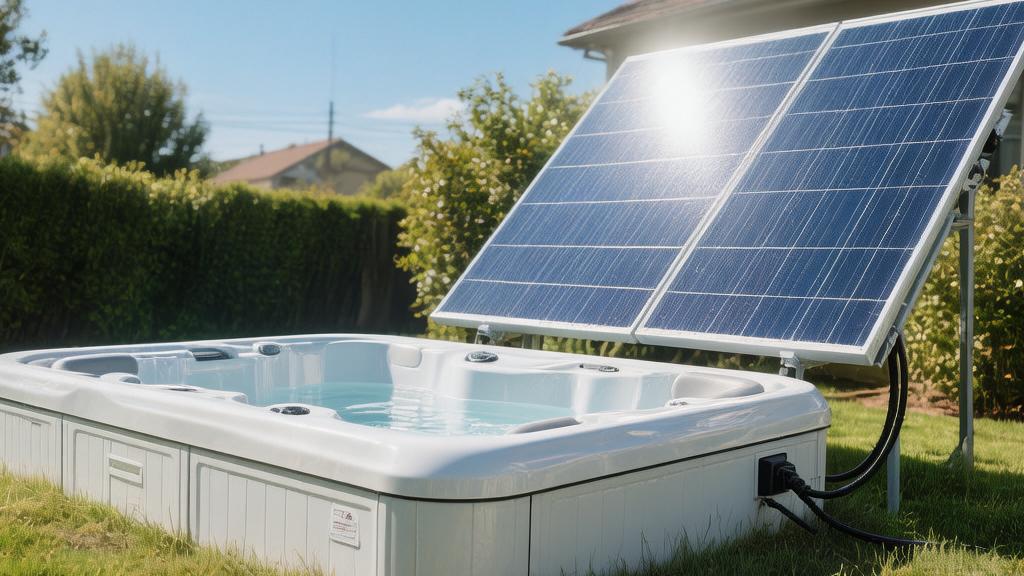
Maintenance
Clean the panels
In dry or dusty areas, a 1mm layer of dust on the panel surface can reduce power generation by 15% to 20%.
If birds frequent your installation area, local shading from bird droppings not only creates a "hot spot effect," causing local temperatures to surge above 80°C, but can also permanently damage the physical structure of monocrystalline silicon cells.
It is recommended to perform a deep cleaning every 3 to 6 months.
Cleaning must be done in the early morning or evening when panel temperatures are low. It is strictly forbidden to spray cold water at noon under direct sunlight, as 60°C tempered glass can easily shatter upon contact with cold water.
Cleaning tools should be soft brushes used with deionized water. Avoid detergents containing abrasives, as any tiny scratches will increase solar reflectance, leading to a 2% to 5% long-term output loss.
For panels installed at an angle of less than 15 degrees, rain is unlikely to wash away dust at the bottom, so "mud ridges" at the frame must be manually cleared.
Cell Management
While most BMS (Cell Management Systems) automatically balance cell voltages, you should still check the voltage difference between modules via an App monthly to see if it exceeds 30 mV.
If the voltage difference is too large, it indicates an issue with cell consistency, which can lead to a more than 10% drop in overall system capacity.
Ambient temperature is the number one killer of cell life. When ambient temperature exceeds 35°C, the cycle life of lithium batteries decays at a rate of 15% per year.
Conversely, if winter temperatures drop below 0°C, charging efficiency plummets. Forcing high-current charging can cause lithium dendrite growth, increasing the risk of short circuits.
For off-grid systems, it is recommended to set the Depth of Discharge (DoD) within 80%. That is, for a 20kWh cell, stop heating the tub when 4kWh remains. This can increase cycle life from 3000 to over 6000 times, extending cell service from 5 years to over 10 years.
Maintenance Item | Frequency | Key Parameter/Indicator | Expected Benefit/Risk |
Panel Dusting | 90 - 120 days | Light Transmittance Recovery | Increase generation by 10% - 20% |
Terminal Tightening | 365 days | Torque 10 - 12 Nm | Prevent fire, reduce contact resistance |
Cell Voltage Check | 30 days | Voltage Diff < 0.03V | Extend cell life by 3 - 5 years |
Inverter Filter | 180 days | Inlet Air Speed > 2 m/s | Lower internal temperature by 5°C - 10°C |
Tub Heater Descaling | 180 days | Current Change < 5% | Save 15% operating energy |
Equipment Inspection
An 8 kW inverter generates about 400 W of heat at full load. If the vents are clogged with dust, the lifespan of internal electrolytic capacitors halves for every 10°C increase in temperature.
After the system has been running for six months, you should use an infrared thermal imager to scan all DC connectors (MC4) and AC circuit breakers.
Normal operating temperature should not exceed ambient temperature by more than 20°C. If a connector is found to exceed 70°C, it indicates a poor connection or loose crimp, which leads to 3% energy loss as heat and can even cause a fire.
Additionally, inverter firmware should be updated every year. Manufacturers usually optimize algorithms to improve MPPT (Maximum Power Point Tracking) efficiency by 0.5% to 1.2%.