Are Solar Panels More Efficient than Fossil Fuels
Solar conversion efficiency is around 20%, lower than the 33%-60% levels of fossil fuels, but the cost of energy acquisition is zero.
Maintaining panels with a south-facing orientation and monthly dusting can significantly improve actual photoelectric conversion efficiency.
Thermodynamic Efficiency
Still Boiling Water
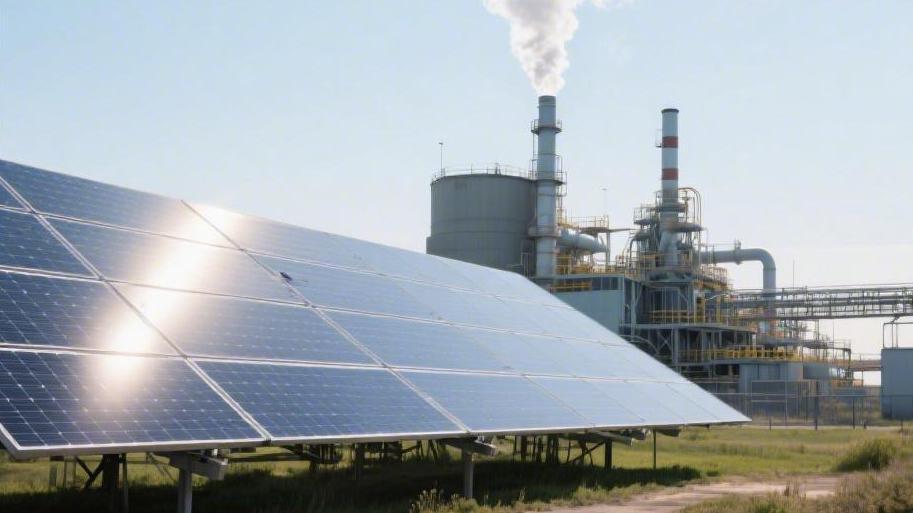
A supercritical coal-fired unit operating at a steam temperature of 560°C and a condenser temperature of 30°C has a theoretical maximum efficiency limited by the temperature difference; its actual operating heat rate is typically between 9,000 and 10,000 kJ/kWh. This means that 55% to 65% of the fuel's chemical energy is discharged into the atmosphere or cooling water as waste heat during the boiler combustion and condensation stages.
Even for the most advanced Combined Cycle Gas Turbines (CCGT), which run a primary gas turbine at 1500°C and recover waste heat to drive a secondary steam turbine, the comprehensive thermal efficiency only reaches a physical ceiling of 62%. Such units consume an average of approximately 0.2 cubic meters of natural gas per kilowatt-hour, and 2% to 3% of the energy in the fuel supply chain is lost to pipeline pressure maintenance and pumping.
The Sunlight Limit
Single-junction crystalline silicon cells are restricted by a bandgap of 1.12 eV, locking their Shockley-Queisser limit efficiency at 33.7%. This means near-infrared photons with energy lower than the 1100 nm wavelength cannot be effectively absorbed, while short-wave photons with energy higher than this threshold generate excess heat during conversion. This "thermalization loss" accounts for 33% to 38% of the total incident solar radiation.
Currently, mass-produced N-type TOPCon modules have efficiencies ranging from 22.5% to 24.5%, with individual module power exceeding 600 W. Under a standard radiation intensity of 1,000 W per square meter, these panels produce about 230 Wh of effective electricity per hour without any mechanical wear.
Wasted Heat
A coal-fired power plant with a nominal capacity of 1,000 MW requires 5% to 9% of its total power generation to run internal induction fans, feed pumps, and desulfurization/denitrification systems, causing the effective power delivered to the grid to drop to around 910 MW.
In contrast, the station service power consumption of a photovoltaic plant is extremely low, with the self-consumption of inverters and monitoring systems typically accounting for less than 0.5% of total generation. However, solar systems face an efficiency penalty due to temperature: for every 1°C increase in cell temperature, output power decreases linearly by about 0.35%. When module temperatures reach 65°C at noon in summer, the generation efficiency drops by about 14% relative to the standard 25°C environment. This thermodynamic sensitivity is the primary reason why a 15% to 20% DC-to-AC ratio margin must be reserved in system design.
Which is More Cost-Effective?
Under 2024 production processes, the Energy Payback Time (EPBT) for solar systems in regions with 1,500 annual sunlight hours is approximately 0.9 to 1.3 years. This means that over a 25-year service cycle, it generates a net benefit of more than 20 times the energy used to manufacture it. While the EROI of traditional coal power once reached 30:1, the global average has slipped to near 10:1 as shallow coal seams are depleted and mining difficulty increases.
Thermal power systems must maintain a 24-hour continuous fuel logistics chain; the transportation cost of coal is approximately 0.08 RMB per ton per 100 kilometers. This hidden mechanical energy loss accounts for 8% to 12% of the total energy budget, whereas solar energy acquisition incurs almost no such logistics load.
Grid Leakage
Fossil fuel power generation often relies on large centralized plants. High-voltage transmission lines result in 4% to 7% power loss due to resistive heating over hundreds of kilometers. Because distributed solar systems are deployed on the user side, their transmission paths are usually less than 1 kilometer, keeping line loss rates within 1.5%. On the distribution side, no-load and load losses of transformers typically occupy 2% of the total electricity.
With an inverter conversion efficiency of 98.5%, the local consumption model of solar can reduce the grid's reactive power compensation pressure by about 50%, thereby improving the overall efficiency of the distribution network.
Fuel Procurement vs. "Free" Fuel
Sunlight Costs Nothing
Under Standard Test Conditions (STC), every square meter of a solar module receives 1,000 W of instantaneous power. In regions with 1,200 to 2,200 annual sunlight hours, each kilowatt (kWp) of installed capacity produces 1,100 to 1,800 kWh of electricity per year. This means a 550W monocrystalline silicon module can cumulatively capture and convert approximately 15,000 units of electricity over its 25-year design life, with a marginal cost of zero for the "fuel."
In comparison, a coal-fired unit with 40% efficiency consumes about 320 grams of standard coal per kWh generated. Producing the same 15,000 units of electricity would require 4.8 tons of coal, the calorific value of which fluctuates between 5,000 and 7,000 kcal/kg, directly affecting the stability of energy output.
The Cost of Moving Coal
Mining one ton of thermal coal from an open-pit mine consumes about 2 to 5 liters of diesel. During railway or sea transport over 500 to 1,500 kilometers, the energy consumption of the transport equipment itself accounts for 3% to 5% of the fuel's total energy content. For natural gas power stations, pressure losses in long-distance pipelines consume about 0.5% of the volume per 100 kilometers.
If considering the Liquefied Natural Gas (LNG) model, the liquefaction process at -162°C and the subsequent regasification lose 10% to 15% of the initial energy. Solar systems achieve "local collection and local conversion." Aside from the 1.2-year Energy Payback Time (EPBT) during the manufacturing stage, the subsequent 20+ years of operation are completely decoupled from fuel logistics, avoiding risks of power interruption due to logistics delays or rising transport costs.
Statistics show that fuel procurement and logistics costs typically account for over 60% of the Levelized Cost of Electricity (LCOE) for coal-fired plants. When coal prices rise from $100 to $150 per ton, the cost per unit of electricity for a thermal plant immediately surges by about 50%. In sharp contrast, the weight of fuel costs in solar LCOE is always 0%, with 90% of its total costs fixed the moment equipment installation is completed.
Price Volatility
Take natural gas as an example: between 2021 and 2023, benchmark natural gas prices in some regions fluctuated by more than 500%, causing the electricity budget for gas generators to skyrocket from $0.05 to over $0.25. This uncertainty forces fossil fuel plants to maintain large hedging teams, adding about 1% to 2% to financial operating expenses. Because the "fuel" for solar systems is supplied for free by the sun, the volatility of generation costs depends only on annual meteorological radiation variances of approximately ±3%. In a 10MW solar project, this extremely low price sensitivity allows the Internal Rate of Return (IRR) to stabilize between 8% and 12%, with prediction errors usually kept within 5%.
Extraction Losses
The EROI of fossil fuels is continuously declining due to resource depletion. In the early 20th century, the EROI of coal was as high as 80:1, but the global average has now dropped to 10:1 to 18:1. This means for every 10 units of energy extracted, 1 unit must first be invested in exploration and mining. In the past decade, solar manufacturing energy consumption has dropped by more than 40% due to silicon wafer thinning (from 180 μm to 130 μm) and the popularization of diamond wire cutting.
The EROI of advanced solar systems has reached 20:1 to 30:1, and this ratio improves by about 4% for every 1% increase in module conversion efficiency. Over a full lifecycle, a 100 kW commercial rooftop solar system can produce nearly 25% more net usable energy than a gas generator of equivalent power because it does not continuously consume energy to "acquire energy."
Subsequent Expenditures
In regions with carbon trading systems, coal power generation must pay a carbon tax of $50 to $100 for every ton of CO2 produced (roughly 1,000 kWh of generation). This adds an "implicit fuel cost" of $0.05 to $0.1 per kWh. Additionally, thermal plants require significant water resources, consuming an average of 1.5 to 2.5 liters per kWh for cooling and dusting, which increases operating costs by about 3% in arid regions. Solar modules consume almost zero water during operation; the only expenditure is cleaning the panels 2 to 4 times a year, costing only about 0.5% of annual revenue.
In a typical 25-year operating cycle model, a 50MW fossil fuel plant needs to pay over $400 million in cumulative fuel costs, while the expenditure for a solar plant of the same scale is 0. Even accounting for a 5% budget for replacing inverters after 10 to 15 years, the comprehensive economic efficiency of solar is still over 40% higher than that of fossil fuels.
EROI
Calculating Clearly
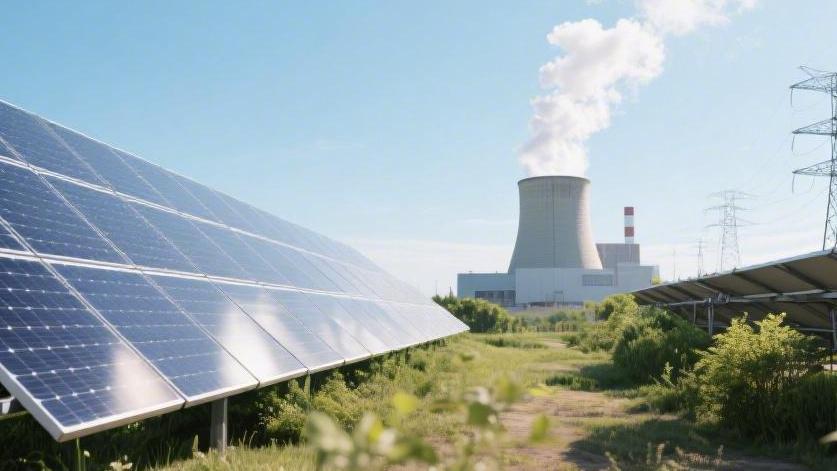
Currently, the average EROI for global oil extraction has fallen from 100:1 a century ago to between 10:1 and 15:1, while unconventional energy like shale oil has an EROI of only 5:1. This means for every 100 Megajoules (MJ) of crude oil energy extracted, 10 to 20 MJ must be consumed for drilling, fracturing, and pumping. In contrast, the EROI performance of monocrystalline solar systems has improved by about 300% over the past 10 years.
According to the latest academic assessments, modern solar systems installed in average sunlight regions typically have a lifecycle EROI between 20:1 and 35:1. As module efficiency has risen from 18% to over 23%, and wafer thickness has decreased from 180μm to 130μm, the energy required to manufacture each watt of a module has dropped to about 2.5 to 3 kWh. This means a solar plant "earns back" the energy used to create it in about 1.2 years, and every kWh produced during the remaining 23.8 years of its life is net energy gain.
Energy Type | Mid-20th Century EROI | 2024 Average EROI | Energy Payback Time (Years) |
Conventional Oil | 100:1 | 12:1 - 18:1 | N/A (Continuous consumption) |
Thermal Coal | 80:1 | 20:1 - 25:1 | N/A (Continuous consumption) |
Shale Gas | N/A | 5:1 - 10:1 | N/A (Continuous consumption) |
Mono-Si PV (PERC/TOPCon) | 5:1 | 25:1 - 35:1 | 0.9 - 1.5 |
Wind Power | 18:1 | 30:1 - 45:1 | 0.5 - 0.8 |
It used to be great
In the early days of the oil industry, high reservoir pressure allowed crude oil to spout out naturally, resulting in extremely low energy input. Now, more than 60% of global production relies on secondary or tertiary recovery techniques, requiring the injection of high-pressure water, CO2, or chemicals, which consume about 15% of the total energy output.
Among the coal currently mined, the proportion of lignite and sub-bituminous coal is increasing annually; their calorific value is only 60% to 70% of standard coal (29.3 MJ/kg), yet the mechanical energy required to mine and transport this "low-quality" energy remains roughly the same. If accounting for the desulfurization and denitrification units added to thermal plants to meet environmental standards, these stages consume an additional 3% to 8% of the generator's electricity output. This increasing self-consumption causes the net energy output efficiency of fossil fuel systems to decrease at a rate of about 0.5% per year.
Manufacturing Costs
Using the Siemens process to produce high-purity electronic-grade polysilicon requires 45 to 60 kWh per kilogram. However, with the popularization of diamond wire cutting, wafer yield has improved by 20%, and silicon consumption per wafer has dropped from 4.5 grams to about 2.8 grams.
Beyond silicon, the frames (aluminum) and racks (steel) of solar systems are also major energy consumers. Producing one ton of primary aluminum requires about 13,500 kWh, meaning aluminum frames account for 15% to 20% of the total embodied energy of a solar module.
If recycled aluminum or high-strength steel alternatives are used, the system's EROI can improve by another 5%. In logistics, although modules may travel 15,000 kilometers via ocean freight, the energy consumption per watt is negligible—less than 1% of the system's total energy input. Over a 25-year cycle, solar systems exhibit energy stability far exceeding fossil fuels because they avoid long and energy-intensive fuel supply chains.
Who Lasts Longer?
The warranty periods for tier-one solar brands have generally extended to 25–30 years, with degradation rates controlled at 1.5% in the first year and approximately 0.4% annually thereafter. This means that in the 25th year, modules still maintain 88.9% of their initial power. This long-term, low-maintenance operation pushes EROI to new heights.
In contrast, while the physical lifespan of a thermal power plant can reach 30 to 40 years, its efficient operation depends on frequent parts replacement. Turbine blades and boiler tubes undergo creep and wear in high-temperature, high-pressure environments; major overhauls every 3 to 5 years require significant amounts of specialized steel and human energy.
If these maintenance inputs are converted into energy consumption, the lifecycle net energy output of thermal systems is actually 10% lower than the book value. More importantly, while fossil fuel systems consume non-renewable energy with every kWh generated, solar systems utilize constant celestial radiation of 1,361 W per square meter—a fundamental difference that places the two in different dimensions of long-term efficiency competition.
Storage Addition
If a solar plant is configured with a 4-hour Lithium Cell Energy Storage System (BESS), the EROI of the entire system drops significantly. Manufacturing 1 kWh of lithium cell capacity requires approximately 60 to 100 kWh of energy.
Including the 10% to 15% round-trip loss during storage cycles, the EROI of solar-plus-storage is diluted from 30:1 to around 10:1 to 15:1. Although this value is lower, it remains comparable to current oil production efficiency and is much higher than biomass (usually less than 5:1). With the commercialization of long-life, low-energy manufacturing technologies like sodium-ion or flow batteries, the negative impact of storage on solar EROI is expected to decrease by 30% within the next five years.