Can solar panels be moved from one house to another
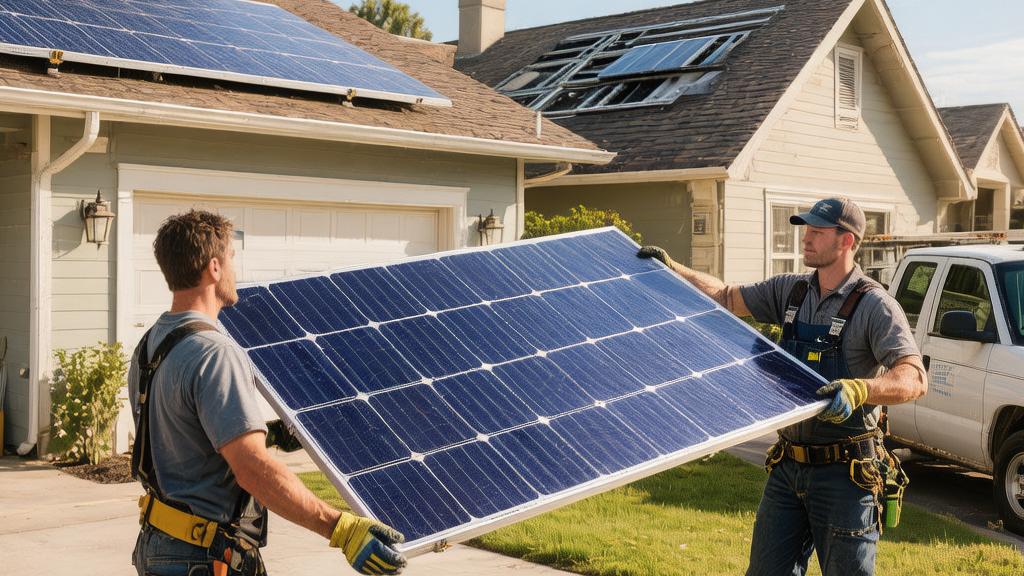
Solar panels can be dismantled and relocated to a new site, but this is usually not the best economic choice.
From a technical standpoint, a professional team needs to carefully remove the modules, mounting brackets, and the inverter.
The relocation cost typically ranges between $2,000 to $5,000, which accounts for nearly 20%-40% of the installation cost of a new system.
Home Value
Value Increase
According to Zillow's cross-year statistics of millions of property transaction records across the United States, homes with photovoltaic systems sell for an average of 4.1% more than comparable homes without such systems.
For a single-family home valued at $600,000, a solar system can bring a book value appreciation of approximately $24,600.
In high-price areas such as California and New Jersey, where electricity prices exceed $0.25/kWh, this premium can even reach 5.4%.
Research from the Lawrence Berkeley National Laboratory (LBNL) indicates that buyers are willing to pay an additional $4,000 to $5,000 for every 1 kW of installed capacity.
If your roof is equipped with an 8 kW system, the appraised value of this asset in a property valuation report typically falls around $32,000, which almost covers the net initial installation cost for most homeowners after deducting the 30% Federal Investment Tax Credit (ITC).
· Value increase range per 1 kW of installed capacity: $4,020 - $5,911.
· High premium area ratio: The average premium in 15 major cities in California is over $18,000.
· Home turnover speed: Homes with solar panels stay on the market (DOM) for 20% less time than ordinary homes, closing 15 to 25 days faster on average.
· Energy cost offset rate: Systems that cover more than 85% of household electricity demand have the highest asset conversion rate.
Buyer Perspective
A survey report from the National Association of Home Builders (NAHB) shows that over 60% of homebuyers consider energy efficiency to be a "very important" screening criterion.
A solar system that saves an average of $150 per month in electricity can save a new landlord a cumulative $36,000 over a 20-year remaining lifespan. This cash flow effectively offsets the interest expenses caused by a 0.5% to 1% increase in mortgage rates.
Since residential systems under 10 kW are typically exempt from property tax increases (a policy in over 30 states), buyers enjoy the benefits of asset appreciation without increasing holding costs.
Surveys show that millennial buyers between the ages of 25 and 45 have an acceptance rate of over 82% for Tier 1 brand modules (such as Jinko, Longi, Canadian Solar) with 25-year warranties.
· Potential reduction in electricity expenses: Average monthly bill reduction of 70% - 95%.
· Buyer interest: 80% of homebuyers want homes equipped with energy-saving facilities.
· Long-term financial benefits: Estimated electricity savings of $30,000 - $50,000 over 25 years.
· Inflation hedge: Electricity prices typically grow at an annual rate of 2.5% - 5%; solar power locks in electricity costs.
Appraisal Standards
Professional real estate appraisers no longer look only at how much you spent on equipment when calculating solar value; instead, they use the more professional Income Approach.
They usually refer to the "Green Addendum" provided by the Appraisal Institute and use the Discounted Cash Flow (DCF) analysis method for calculations.
The logic is to discount the projected electricity earnings over the next 20 years into current cash value at a discount rate of 5% to 7%.
If a 6 kW system generates 9,000 kWh per year and the local commercial electricity price is $0.20, the annual revenue is $1,800.
After deducting a 1% annual module power degradation and a reserve of approximately $2,000 for inverter replacement (usually occurring in years 12-15), the Net Present Value (NPV) of this system will be precisely fixed between $18,000 and $22,000.
· Discount rate constant: 5% - 6% (depending on local economic fluctuations).
· Remaining system lifespan calculation: 30-year design life minus years of use.
· Asset depreciation rate: Linear depreciation of approximately 3.5% - 5% per year.
· Appraisal report correction: Adjust power generation efficiency weight based on roof orientation (180 degrees true south is best), with weight coefficients between 0.8 and 1.1.
Tech Age
Aging Panels
Mainstream modules installed between 2010 and 2015 were mostly Polycrystalline, with a single-module power output of only 240W to 270W and conversion efficiencies generally below 15.5%.
In contrast, N-type monocrystalline TOPCon modules mainstream in the 2024 market have reached single-module power outputs of 450W to 550W, with laboratory efficiencies exceeding 25% and commercial efficiencies stable above 22.5%.
This means that if you relocate a 6 kW system from 10 years ago, you need approximately 45 square meters of roof space, whereas using the latest technology requires only 28 square meters to achieve the same power.
More importantly, the linear power degradation rate of old modules is typically 0.7% to 1% per year. After 10 years of use, the actual output capacity is only about 90% of the initial state.
Combined with a 1% to 3% risk of micro-cracks during transportation, the Levelized Cost of Energy (LCOE) of the old system will be much higher than that of a new system.
Technical Parameter Comparison: 2015 modules weighed about 19 kg and produced approximately 155 W per square meter; 2024 modules weigh about 22 kg but can produce over 220 W per square meter. Moving old panels means you pay the same labor cost but only take away 70% of the power generation capacity.
Inverter Lifespan
The design life of string inverters is generally between 10 and 12 years. If you relocate a system that has already been running for 7 to 8 years, it means you will face equipment replacement costs of approximately $1,500 to $2,500 within 2 to 4 years after moving to the new home.
Furthermore, older inverters lack modern Module-Level Power Electronics (MLPE) functions and cannot manage the output of each panel independently like current microinverters or power optimizers.
During the relocation process, the DC wiring terminals and cooling fans of old equipment, having run at temperatures above 60 degrees Celsius for many years, have plastic brittleness rates as high as 40% or more, resulting in a very high probability of physical damage during disassembly.
Current top-tier brands (such as Enphase or SolarEdge) provide 25-year warranties on new equipment, whereas moving old equipment leaves you in a warranty vacuum where any circuit board failure requires full out-of-pocket repair costs.
· Equipment replacement cost: New inverters account for about 10% - 15% of the total system cost.
· Conversion loss: The weighted efficiency (CEC Efficiency) of older inverter models is about 95%, while new models have reached over 98.5%.
· Communication protocols: Older devices usually only support 2G/3G signal monitoring; in the current 5G/WiFi 6 environment, data collection often fails.
Interface Aging
As the standard connector for photovoltaic modules, the compression set of the internal sealing rings of MC4 connectors increases significantly after 5 years of outdoor exposure, leading to a drop in waterproof rating from IP68 to IP65 or lower.
During relocation, technicians need to plug and unplug these aged connectors dozens of times, which increases contact resistance—usually from an initial 0.5 milliohms to over 2 milliohms—thereby triggering local hot spots or even arc fire risks.
Additionally, the photovoltaic DC cables used 10 years ago (usually 12 AWG or 10 AWG) have Cross-Linked Polyethylene (XLPE) insulation layers that see a 30% decrease in bending modulus under long-term UV exposure, making the insulation prone to cracking when re-laid.
Statistics show that old systems installed a second time have a shutdown frequency due to electrical connection failures 4.5 times higher than new systems in the first year of operation.
Material Property Degradation Data: After cumulative UV radiation reaches 2000 kWh/m², the Yellowness Index (YI) of the backsheet increases by 15 units. Physical impacts during relocation can easily lead to backsheet lamination failure, causing the insulation resistance of the modules to drop below the safety limit of 40MΩ.
Specification Incompatibility
Solar panel sizes before 2018 were mostly 1650mm × 990mm, whereas current racking systems and clamps are designed for wider, thicker 182mm or 210mm large-wafer modules.
Relocating an old system often means you cannot directly purchase standard accessories and must pay a premium of approximately 20% to find rails or custom adapters compatible with old specifications.
At the same time, the building codes at the new home location may have been updated. For example, the requirements for edge wind load on the array may have increased from 120 mph to 140 mph. The frame strength of old modules and old-style hooks may not pass current mechanical load tests (which usually require a positive pressure of 5400 Pa).
· Bracket compatibility cost: Finding special clamps for old panels may increase procurement costs by $300 - $500.
· Roof load changes: Old systems weigh about 85 kg per kilowatt (including brackets), while new systems can drop to 65 kg/kW through high power density.
· Fire setback distances: The 3-foot fire walkway required by new regulations may prevent old, large-area, low-efficiency arrays from being fully arranged on the new roof, resulting in an installed capacity loss of 15% - 20%.
Permits
Restarting the Process
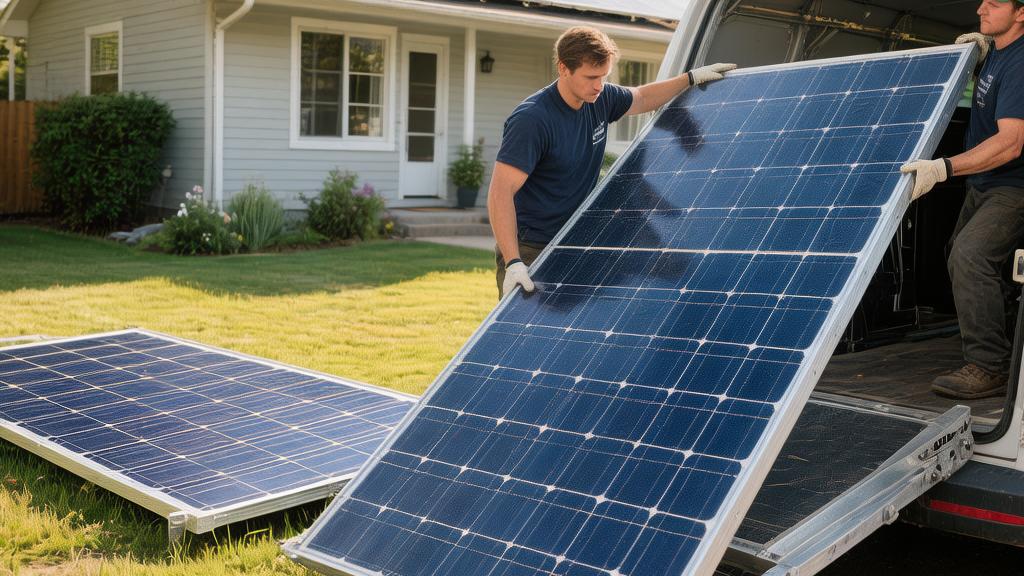
When you remove 20 solar panels with a total weight of about 400 kg from an old site and transport them to a new home, the original building permits and electrical permits do not migrate with them.
Every street address has an independent asset number in the government system, and the installation at the new site must start from scratch.
This involves a structural analysis report signed and stamped by a Professional Engineer (PE), with costs typically between $500 and $1,500.
The engineer needs to calculate the load-bearing capacity of the new roof to ensure it can withstand a static load of 3 to 5 pounds per square foot and handle local wind pressures that can reach 140 mph.
If the new house's roof shingles are over 15 years old, or if the wooden beam structure does not meet the latest seismic standards for buildings, the approval is likely to be rejected unless you pay for additional reinforcement costs of over $3,000.
· Building Application Fee: Charged at 1% - 2% of the project cost, approximately $150 - $600.
· Structural Audit Period: Third-party engineer reviews usually take 5 to 10 business days.
· Bill of Materials Requirements: UL certification for the old modules and tensile strength parameters for the mounting brackets must be submitted.
Regulatory Changes
The National Electrical Code (NEC) is updated every three years. If your original system was installed according to NEC 2017 standards and the new address is already enforcing NEC 2020 or 2023 standards, the old equipment may not pass inspection.
The most typical requirement is "Module-Level Rapid Shutdown."
NEC 690.12 stipulates that in an emergency, the voltage inside and outside the array boundary must drop below 30 V within 30 seconds.
If you are relocating an early string inverter system, you must purchase and install a rapid shutdown initiator for every old panel due to the lack of microinverters or power optimizers, at a unit price of approximately $40 to $60 per panel.
For a system with 30 panels, this compliance upgrade alone will add $1,200 to $1,800 in material and labor costs.
Compliance Item | NEC 2017 Requirement | NEC 2020/2023 Requirement | Estimated Upgrade Cost (USD) |
Rapid Shutdown | Voltage drop 1 foot outside array | Module-level (individual module) control | $1,200 - $1,800 |
Arc Fault Protection | Basic detection | More sensitive AFCI auto-shutdown | $300 - $500 (integrated in inverter) |
Fire Setbacks | Allows narrower channels | Requires 36-inch (approx. 0.9 m) path | Remove 2-4 panels, lose 5%-10% power |
Grounding Wire Specs | 6 AWG bare copper wire | Stricter mechanical protection requirements | $100 - $200 |
Grid Interconnection
After completing the physical installation, whether you can grid-tie and generate electricity depends entirely on the Utility's Interconnection Agreement.
This is the part of the relocation process with the highest risk of financial loss. Most power companies stipulate that once a system is removed, the "Net Metering" contract for the old site is automatically terminated.
When reapplying for interconnection at the new site, you must accept the current local electricity pricing policy.
For example, if you move from an area executing NEM 2.0 (1:1 full offset) to an area that has already implemented NEM 3.0 (where the export rate is only 25% of the retail price), your hardware remains the same, but the system's revenue per kilowatt-hour will shrink by 75%.
Additionally, the utility company will charge an application fee ranging from $150 to $500, and the PTO (Permission to Operate) approval cycle takes 15 to 45 days.
During this period, your system is strictly prohibited from being turned on, or you may face fines of over $500 or forced service disconnection.
· Application Processing Fee: Average $250, non-refundable.
· Transformer Upgrade Fee: If the new neighborhood's transformer load rate already exceeds 80%, you may be charged $1,000 or more for grid upgrades.
· Policy Revenue Changes: Switching from old policies to new ones can extend the static payback period from 6 years to 11 years.