Do Solar Panels Help in a Power Outage
Grid-tied solar systems automatically shut down during a power outage.
To maintain power, you must install a 10kWh cell and a hybrid inverter to switch to off-grid mode.
Systems like Enphase can provide up to 1.9 kW of emergency "Sunlight Backup" power even without a cell.
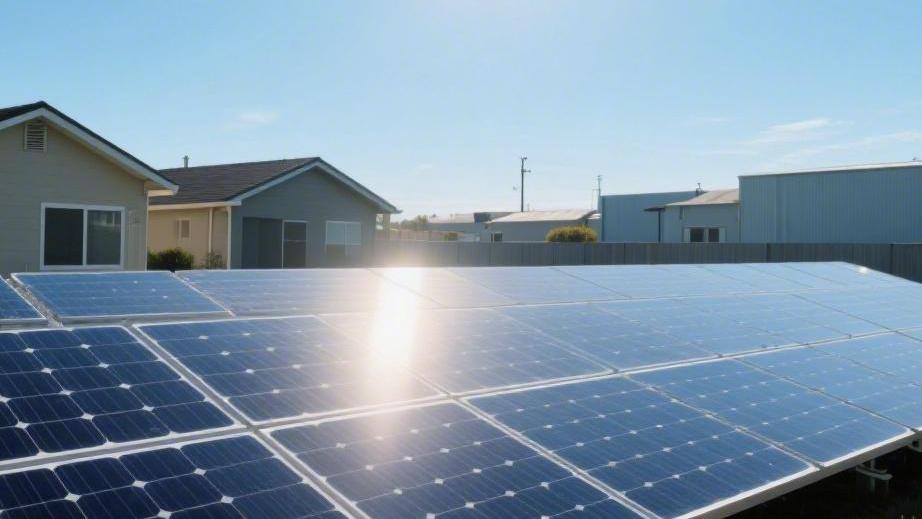
The Safety "Kill Switch": Anti-Islanding
Grid-tied solar systems must perform a self-shutdown within 0.16 to 2 seconds of sensing a loss of grid voltage. This mandatory technical operation is known as "Anti-Islanding Protection." From a physical and electrical perspective, if the 240V AC output from a residential inverter is not cut during an outage, it will back-feed through the distribution transformer outside your home. A transformer with a 1:57 ratio can instantly boost 240 V to a lethal 13,800 V.
If a utility worker is repairing a high-voltage line that is supposed to be "dead," the current generated by your solar panels could cause devastating electrical injury. According to the Bureau of Labor Statistics, a significant portion of safety accidents involving power line maintenance are caused by unintended back-feeding. Consequently, global electrical standards, including UL 1741 and IEEE 1547, mandate that inverters include this "suicidal" disconnection feature.
To achieve this high-precision monitoring, the inverter's microprocessor monitors the grid waveform 60 times per second (60 Hz). This monitoring is not limited to voltage polarity but also includes frequency, phase, and total harmonic distortion.
· Voltage Range: Under standard conditions, a 240V grid allows a fluctuation window of 88% to 110%. If the voltage drops below 211 V or surges above 264 V, the protection circuit disconnects the IGBT switches within 0.16 seconds.
· Frequency Monitoring: The North American grid standard frequency is 60 Hz, and inverter monitoring precision typically reaches 0.01 Hz. If the frequency shifts by more than 0.5 Hz, the system determines the grid has lost control and stops output.
· Hardware Redundancy: Certified grid-tied inverters are usually equipped with two sets of mechanical relays and one set of solid-state switches. This ensures that even if the main switch sticks over 10 years of operation, the backup switch can physically cut the circuit within 200 milliseconds.
· Reactive Power Interference: Inverters periodically "probe" grid strength by injecting tiny frequency pulses. If the grid is robust, the pulse is instantly diluted; if the grid is down, the inverter senses a significant deviation in the feedback signal and confirms an "island" has formed within 0.5 seconds.
Currently, over 95% of inverters on the market combine passive and active monitoring, with standby power consumption controlled below 5W. In practice, this mechanism protects not only utility workers but also your expensive home appliances.
During the early stages of a grid failure, voltage often experiences violent fluctuations and surges. If a solar system attempts to maintain power in an unstable environment, the inverter's capacitor banks and inductors may endure instantaneous voltage shocks exceeding 400 V, which can easily burn out internal circuits. By rapidly disconnecting, the system limits the loss to a simple "power outage," avoiding damage to inverter hardware worth over $3,000. The reliability of this protection is extremely high, with modern digital inverter error rates controlled below 0.001%.
While this protection is legally mandated, it is a source of frustration for many homeowners because a $25,000 equipment investment becomes useless the moment it is needed most. To bypass this limitation, you must add an Automatic Transfer Switch (ATS) or a smart gateway integrated into a storage system. The procurement cost for this hardware typically ranges from $1,500 to $3,500.
· Millisecond Switching: Devices like the Tesla Gateway or Enphase System Controller can physically disconnect from the grid within 10ms to 100ms.
· Establishing a Microgrid: Only after completely disconnecting the physical link to the external 13.8 kV line will the cell inverter start and provide a new 60 Hz reference signal, "tricking" the rooftop solar panels into thinking the grid has been restored.
· Load Control: Smart gateways do more than manage power flow; they monitor total household consumption in real-time. If an 8 kW solar system can only output 2 kW on a cloudy day and you try to start a 4 kW clothes dryer, the gateway will immediately execute a secondary load shed to prevent a system crash.
· Lifespan Wear: Frequent start-stop actions, while safe, cause physical wear on relays. Generally, high-intensity silver-contact relays have a design life of 50,000 cycles. In areas with high outage frequency, it is recommended to check contact resistance every 7 to 10 years.
This technology also involves complex legal compliance costs. In the US, every system capable of "backup power" must pass rigorous approval from the local Authority Having Jurisdiction (AHJ), with fees ranging from $300 to $1,200. Engineers must submit a detailed Single Line Diagram (SLD) proving the system will not back-feed the utility grid under any single-module failure scenario.
The Solution: Cell Storage
Choosing the Right Cell
Lithium Iron Phosphate (LFP) technology currently accounts for over 85% of the residential energy storage market. Compared to high-energy-density Nickel Manganese Cobalt (NMC) batteries, LFP has a thermal runaway temperature exceeding 270°C and performs more stably under 100% Depth of Discharge (DoD) cycles.
Standard home cell voltages are divided into 48V low-voltage systems and 400V high-voltage systems. The former requires extremely thick cables due to currents reaching 100A at 5kW output, while the latter improves conversion efficiency to over 97.5% through a high-voltage, low-current mode. At the moment of an outage, the internal BMS (Cell Management System) must respond within 10 ms to 20 ms—15 times faster than a human blink—ensuring that desktop computers or medical ventilators do not reboot due to a voltage dip.
Core Hardware Parameter Reference:
· Unit Capacity: 13.5kWh to 15kWh is the current mainstream configuration.
· Output Capability: 5 kW continuous, with peak output (10 seconds) up to 7 kW–10 kW.
· Round-trip Efficiency: ~89% for AC-coupled systems, up to 96% for DC-coupled systems.
· Dimensions: ~115 kg, roughly 110 cm x 70 cm x 15 cm.
When installing a cell, you must consider its self-consumption rate. Most smart inverters consume 30W to 60W per hour in standby. If there is no charging input for 24 hours, about 1 kWh of stored energy will be exhausted just by the system's own operation.
For outdoor installations, the effect of temperature is quantifiable: in -20°C weather, the extractable capacity of a lithium cell can drop by 30% to 40%, and the charging rate is limited to 0.1C (1.3 kW) to protect the cells. Therefore, in regions with large temperature swings, choosing a model with internal liquid cooling or self-heating is vital, despite adding roughly 15% to the procurement cost.
Sizing Your Capacity
Calculating runtime during an outage requires precision. A typical 13.5kWh cell usually only allows a 90% discharge to protect its lifespan, leaving an effective usable capacity of 12.15kWh. If your critical load includes a 150W (A+ rated) refrigerator, 200W of LED lighting, a 60W modem/router, and 100W for security cameras, your total continuous power draw is 510W.
Without solar replenishment, this system can support 23.8 hours of continuous operation. However, using a 1500W microwave for just 10 minutes consumes 0.25 kWh, effectively shortening your base power duration by 30 minutes.
· Locked Rotor Amps (LRA) Stress: The instantaneous power needed to start a central air conditioner is typically 5 to 7 times its rated power. A 3-ton AC unit might demand 14.4 kW (60 A) at startup, which exceeds the capacity of a single 5 kW cell.
· Critical Load Configuration: Professional installers recommend a 12 or 16-slot backup load panel to exclude heavy 240V loads (like a 4kW dryer) and keep only essential 120V circuits.
· Solar-to-Storage Ratio: The ideal ratio is 1 kW of solar to 2 kWh of cell capacity. For example, an 8 kW PV array should be paired with at least 16 kWh of storage to ensure the batteries can be fully recharged within four hours of peak sunlight.
Expected Lifespan
Most tier-one brands offer a 10-year limited warranty, with design cycles typically between 6,000 and 10,000. Data models show that even with one full daily cycle, the State of Health (SOH) remains above 70% after 10 years. The key metric for lifespan is the C-rate: running consistently at 1C (full charge in 1 hour) accelerates lithium plating; in contrast, a cell running at 0.5C (2-hour charge) usually has a calendar life 20% longer.
In real-world environments, chemical degradation speed doubles for every 10°C rise in temperature. If a cell is installed in an unventilated garage exceeding 40°C year-round, its service life may drop to 6 or 7 years. Modern high-end systems include thermal management to keep cells at an optimal 25°C ± 5°C.
Another data trap is "Warranty Throughput." A manufacturer might stipulate that total discharge over 10 years cannot exceed 38MWh (for a 13.5kWh cell). If a user frequently performs energy arbitrage to profit from price differences, they might hit this threshold by year 8, voiding the warranty early.
Is the Cost Worth It?
Adding a 10kWh to 13.5kWh cell system has a market average terminal price between $10,000 and $15,000. Of this, the cell hardware accounts for 60%, the hybrid inverter for 20%, and labor/permitting for the remaining 20%. In the US, via the 30% Federal Investment Tax Credit (ITC), a $12,000 system qualifies for a $3,600 tax deduction, bringing the net cost to $8,400. If your area supports Virtual Power Plant (VPP) programs, you can earn an extra $200–$600 annually by discharging to the grid during peak times.
ROI Projection:
· Net Investment: $8,400 (After ITC).
· Annual Savings: ~$500 (Based on a $0.15/kWh peak/off-peak spread).
· Risk Mitigation: Avoiding spoiled food ($300/event) + work-from-home continuity.
· Static Payback: 12 to 14 years. However, considering a 3%–4% increase in property value, the cost is often recovered at the point of sale.
Long term, the Levelized Cost of Storage (LCOS) has dropped from $1,100 in 2010 to roughly $150 today (at the cell level). While the initial investment remains high, in areas where electricity prices rise by 5% annually, a cell locks in a fixed power price for the next decade.
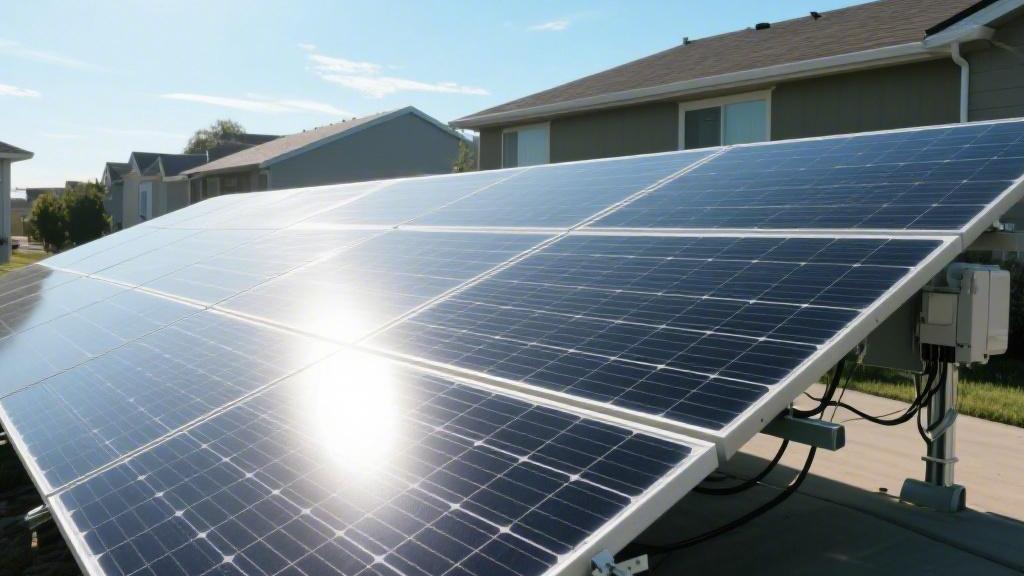
Sunlight Backup
Power Without a Cell
In traditional solar logic, no cell means no power during an outage. However, new microinverters like the Enphase IQ8 series break this dependency. This technology, known as "Sunlight Backup," utilizes high-speed digital processors that can disconnect from the grid and establish an independent microgrid within 20 milliseconds.
When 20 rooftop 400W modules receive irradiance exceeding 400W/m², the microinverters work in tandem to convert DC directly to 240V AC for home use. Instead of spending $10,000+ on a cell, this system uses a specialized System Controller and Load Controller to maintain voltage stability. Since the system has zero tolerance for instantaneous current changes in pure sunlight mode, hardware requirements are strict. You must install a controller (approx. $1,800) that integrates a 200A ATS and microgrid software.
To ensure a 95% success rate, installers usually require the PV array's total power to be 30% to 50% higher than the backup load to buffer the ~15% power drop caused by passing clouds. This setup increases initial hardware costs by only $3,000–$4,500 compared to a standard grid-tied system—about 30% to 40% of the cost of a full cell system.
Power Allocation
The biggest limitation of Sunlight Backup is that output depends entirely on real-time irradiance. In a typical 8kW system, if sunlight intensity drops by 20% at 2 PM, available power plummets from 6.4kW to 5.1kW.
To prevent the microgrid from crashing within 0.5 seconds due to voltage dips, the Load Controller prioritizes appliances via 4 or 8-circuit relays. A 150W refrigerator is set to Priority 1, while a 1,200W coffee maker or dishwasher is automatically kicked off the sequence.
The table below shows the load capacity of Sunlight Backup under different solar conditions:
Weather Condition | Irradiance | 8kW System Output | Typical Load Supported | Stability Score |
Clear Noon | 1000 W/m² | 7.2 kW | Fridge + PC + Partial AC | 98% |
Thin Clouds | 600 W/m² | 4.3 kW | Fridge + Lights + Router | 85% |
Overcast | 200 W/m² | 1.4 kW | Phone Charging + Basic Router | 40% |
Dusk/Dawn | <50 W/m² | 0.2 kW | Safety Shutdown | 0% |
In this dynamic environment, the system frequency will fluctuate between 59 Hz and 61 Hz, requiring inverter algorithm precision with an error margin of 0.01%. If you start a 1,000W microwave when the panels are only providing 1500W, the "margin" is only 500W. If a cloud causes a 40% drop in generation, the system detects a voltage dip on the 120V line within 10 ms and executes a mandatory whole-house shutdown. Thus, users must develop the habit of checking 5-minute weather forecasts and monitoring real-time loads.
The Economic Breakdown
A standard 6kW grid-tied system costs about $18,000; upgrading to Sunlight Backup brings the total to ~$21,500. The $3,500 difference covers control hardware and complex wiring labor. By contrast, installing two Powerwall 3 batteries (27 kWh) would soar to over $35,000, extending the ROI from 7 years to 12 years.
Metric | Sunlight Backup | Full Cell Storage |
Extra Hardware Cost | $2,000 - $3,500 | $12,000 - $18,000 |
Night Capability | 0% (Inoperable) | 100% (Capacity limited) |
Switching Latency | 20 ms - 100 ms | 10 ms - 20 ms |
20-Year Maintenance | ~$500 (Contact checks) | ~$8,000 (Cell replacement) |
Federal Tax Credit | 30% ITC Applies | 30% ITC Applies |
While Sunlight Backup won't help with a 2 AM outage, it is an excellent defense for regions where average annual outage time is below 10 hours. Data shows 85% of extreme weather outages occur during the daylight cleanup phase after a storm. With a $3,500 investment, you can ensure a 300L fridge doesn't exceed 4°C during a 48-hour daylight-intermittent outage.
Is it stable?
The long-term reliability of Sunlight Backup depends on the 25-year module warranty and the 1,000,000-hour MTBF (Mean Time Between Failures) of microinverters. Since there are no chemical batteries to degrade, the system maintains a 90% response rate after 15 years. However, you must manage 120V branch imbalance. If Phase A has a 2000W load and Phase B has only 100W, the 20x imbalance can cause >5% harmonic distortion.
To counter this, modern systems often install an Autotransformer (approx. $600, 20kg). This module balances the current between the two 120V legs, ensuring that even if you run a 1500W single-phase hair dryer, the 20 rooftop microinverters contribute power evenly.
Additionally, adding a $250 surge protector is recommended. Without a cell acting as a "voltage buffer," voltage spikes within the microgrid can be 15% to 20% higher than in grid-tied mode. While highly dependent on weather, this digital power management model is sufficient to solve over 70% of daytime power interruptions on a limited budget.