Are Bifacial TOPCon Solar Panels Worth It for Ground-Mount Projects
Yes. Bifacial TOPCon panels are often worth it for ground-mount projects, especially on high-albedo sites. With light gravel or concrete, 1 m clearance, and 0.30–0.40 GCR, bifacial gain can reach 10–30%; TOPCon also delivers about 3–8% higher yield than PERC. Model albedo, row spacing, rear shading, and BOS cost before final selection.
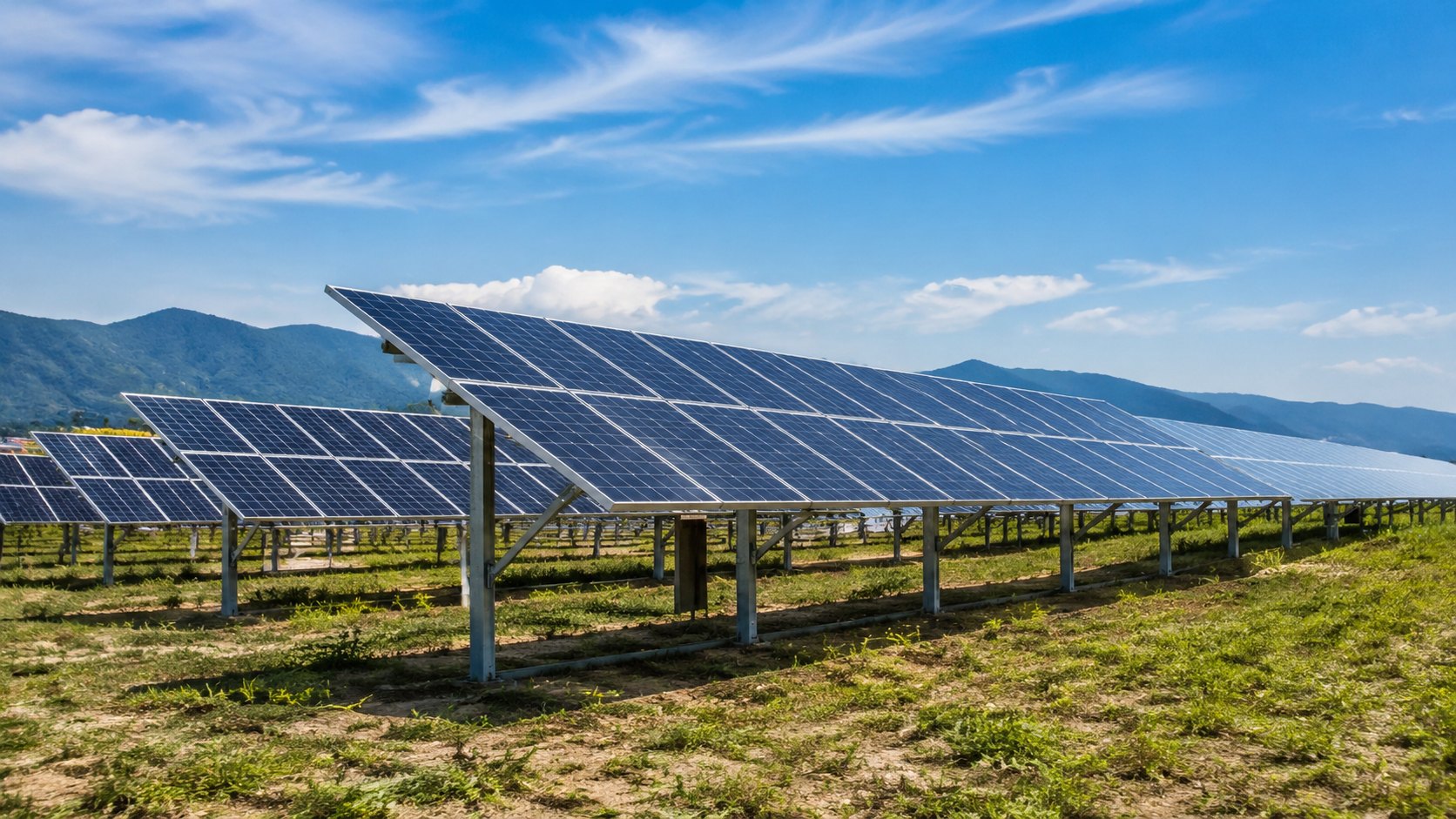
Enhanced Energy Yield
Rear-Side Power Gain
Under IEC 60904-1-2 standard test conditions, bifacial modules on white surfaces (albedo ≥ 70%) achieve rear-side contributions representing 10%–25% of total energy output.
The rear-side power gain of bifacial TOPCon modules derives from secondary photoelectric conversion of ground-reflected irradiance, with high-albedo surfaces such as sandy or gravel terrain delivering gains of approximately 5%–15%. This gain magnitude correlates positively with surface albedo, making ground reflectance a critical variable in bifacial system energy yield forecasting. During early-stage site selection, ground albedo should be treated as a core evaluation parameter; practical projects typically require on-site multi-point albedo measurements with weighted average values as model inputs to improve simulation accuracy and the reliability of economic assessments.
Field measurement data from a 100 MWp ground-mounted plant shows that the bifacial configuration delivers 13.2% higher annual energy yield compared to the monofacial under identical total irradiance conditions, with the rear-side contribution accounting for 22% of the total gain. This data originates from a Northwest China project on gobi gravel terrain with a surface albedo of approximately 25%–30%, validating the substantial rear-side power gain advantage of bifacial TOPCon under high-albedo conditions. The quantified relationship—approximately 0.2%–0.3% annual energy yield increase per percentage point of bifaciality improvement—serves as a critical reference for energy yield increment estimation during project technology selection.
TOPCon cells employ a silicon oxide tunneling layer structure that delivers significantly lower front-side recombination loss compared to conventional PERC, with bifaciality factors exceeding 85%, and premium products reaching 90%. This means rear-side illumination can produce output approaching 90% of the front-side nameplate power, whereas PERC bifaciality typically ranges only 65%–70%. This bifaciality gap constitutes the core technological advantage of TOPCon in bifacial applications, manifesting as quantifiable energy yield differences in actual field operation—a key technical parameter requiring thorough evaluation during project technology selection.
Increasing mounting height from 0.5 m to 1.5 m enlarges the effective rear-side irradiance receiving area by approximately 30%–40%, while elevated mounting positions improve rear-side air circulation, generating dual positive benefits of enhanced rear-side energy yield and reduced module operating temperature. Research indicates that a 1.5 m mounting height reduces module operating temperature by approximately 3°C compared to 0.5 m, equivalent to approximately 0.09%/°C additional power loss mitigation. This combined effect contributes approximately 5%–8% to annual energy yield in high-albedo terrain scenarios, making mounting height a critical design variable requiring optimization during structural engineering phases.
· Project technology selection should adopt 3D radiative transfer modeling combined with ground BRDF (Bidirectional Reflectance Distribution Function) characterization in place of fixed rear-side gain coefficients. EPC contracts should specify minimum bifaciality thresholds (≥ 85%) as performance guarantee terms to mitigate energy yield prediction errors arising from ground reflectance uncertainty. This modeling approach delivers substantially superior accuracy compared to traditional fixed-coefficient methods, reducing energy yield prediction error from ±10% to within ±5%.
Weak-Light Performance
TOPCon cells exhibit a light intensity threshold of approximately 5 W/m², maintaining relatively high conversion efficiency under low-irradiance conditions such as overcast skies, sunrise, and sunset, with energy yield gains of approximately 3%–8% at irradiance levels below 200 W/m².
TOPCon cell infrared spectral response extends to the 700–1200 nm range, compared to PERC's primarily 400–800 nm visible spectrum. TOPCon effectively utilizes near-infrared energy, delivering significant wide-spectrum response advantages during low-irradiance periods such as morning, evening, and overcast conditions, producing measurably higher energy output than conventional PERC modules. This spectral response difference constitutes the primary source of energy yield divergence between the two technologies under weak-light conditions. During transition periods after sunrise and before sunset, TOPCon's energy yield advantage can reach 5%–10%, a characteristic that favorably smooths daily generation curves and enhances grid dispatch friendliness for grid-connected PV systems.
During hazy weather, direct solar radiation attenuates while diffuse radiation proportion increases. TOPCon's efficient utilization of diffuse light enables 8%–12% higher energy yield during haze seasons compared to PERC. Northern China experiences frequent winter haze with low solar elevation angles, and this seasonal energy yield advantage significantly smooths and elevates annual generation curves for northern ground-mounted plants. Northern project annual generation simulations should incorporate TOPCon weak-light performance advantages as an independent input variable to improve prediction precision and provide more reliable data for investment decision-making.
At 100 W/m² weak-light irradiance, the TOPCon module's fill factor remains above 78%, outperforming PERC's 72%–75%. Higher fill factor indicates lower internal series resistance losses, enabling sustained high current output under low light intensity—directly manifesting as a weak-light performance advantage. This parameter difference is particularly pronounced during the morning and evening periods, positively influencing grid connection friendliness and grid dispatch stability. TOPCon weak-light performance advantage also manifests in optimizing the fit between PV power forecast curves and grid load profiles.
· In near-water environments such as fishery-PV complementary projects, elevated atmospheric moisture and aerosol content increase the diffuse light proportion. Bifacial TOPCon module weak-light advantages are more pronounced compared to land-based projects. The synergistic combination of bifaciality advantage and weak-light performance advantage in water-surface PV scenarios enables higher energy yield per unit land area at identical installed capacity, particularly significant in southern water-surface PV projects.
· Field data indicates that plants using TOPCon bifacial modules achieve approximately 15% reduction in daily generation peak-valley volatility, benefiting renewable energy integration and grid dispatch stability. This characteristic carries potential economic value in electricity spot markets, as smoother generation curves reduce auxiliary service expenditures and enhance electricity trading competitiveness.
High-Temperature Stability
TOPCon cell's typical temperature coefficient is −0.29%/°C, enabling approximately 1.7% more energy generation at 75°C operating temperature compared to PERC's −0.34%/°C, with particularly pronounced advantages during high-temperature seasons.
The silicon oxide tunneling layer structure provides superior minority carrier lifetime protection at high temperatures compared to the PERC rear Al₂O₃/Si interface, reducing degradation acceleration risk at temperatures above 70°C. TOPCon maintains stable power output under hot climate conditions, with significantly lower LeTID effect sensitivity than PERC. This constitutes a core technological advantage for project technology selection in high-temperature regions, directly impacting project lifetime energy yield performance and financial return projections.
The glass-glass structure of bifacial modules delivers superior rear-side glass surface cooling efficiency. During summer high-temperature months, bifacial module rear-side temperature runs 2°C–5°C lower than the front side, maintaining higher conversion efficiency. Glass backsheet thermal conductivity exceeds that of polymer backsheet, enabling more efficient heat dissipation to the external environment. This cooling advantage further expands TOPCon's energy yield lead over PERC during summer high-temperature months. Research indicates that under typical summer high-temperature operating conditions, bifacial glass-glass structure operating temperature advantage reaches 2°C–4°C, equivalent to approximately 0.8%–1.6% energy yield improvement.
At typical summer ground-mounted plant operating temperatures of 65°C–75°C, identical-specification TOPCon bifacial modules deliver 3%–5% higher daily energy yield compared to PERC monofacial modules, with particularly pronounced high-temperature season advantages. Combining temperature coefficient advantage with bifacial cooling advantage, annual energy yield advantage in desert regions can reach 3%–5%. This constitutes an important technical basis for TOPCon selection in desert projects—a significant driver for TOPCon bifacial technology preference in large-scale western ground-mounted PV bases.
· Elevated mounting height (≥ 1.5 m) enhances rear-side gain while reducing operating temperature through improved air circulation. At 1.5 m mounting height, module temperature runs approximately 3°C lower than at 0.5 m, equivalent to approximately 0.09%/°C additional power loss reduction. Elevated mounting height combined with bifacial illumination creates a synergistic effect, improving rear-side energy yield while enhancing cooling.
· In extreme high-temperature desert regions (summer module operating temperature can exceed 80°C), TOPCon annual energy yield advantage over PERC expands to 3%–5%, combining temperature coefficient advantage with degradation rate advantage. This technology selection decision carries decisive influence on project lifetime techno-economic indicators.
Optimal Ground-Mounted Installation Solutions
Enhanced Ground-Reflection Gain
White ground coating (albedo 70%–80%) elevates ground reflectance 3–4 times compared to natural soil or grassland (albedo 10%–20%), representing the most effective reflection enhancement approach for ground-mounted PV plants, with average annual rear-side energy yield gain of 12%–18%.
White ground reflection coating constitutes the primary means of enhancing bifacial module rear-side energy yield, with solar albedo reaching the 70%–80% range—substantially higher than natural bare soil or grassland (10%–20%). A significant proportion of incident light is reflected to the module's rear side rather than absorbed by soil. White ground coating can elevate rear-side annual energy yield gain to 15%–25%, serving as the key ground treatment process for maximizing bifacial module performance across all ground-mounted PV scenarios and representing a necessary energy yield optimization investment in project capital budgets.
Gravel-covered ground delivers moderate reflection enhancement with albedo typically ranging from 25%–35%, representing approximately 10–15 percentage point improvement over bare soil. Gravel layers redirect a portion of sunlight to the module's rear side through particle diffuse reflection, suitable for sites with soft soil unsuitable for ground coating application. Uniform gravel particle size and lighter color improve reflection effectiveness. This coverage approach enables bifacial module rear-side energy yield gain of 5%–10%, serving as an important alternative technical route for ground treatment in projects without coating application conditions.
Compacted white-lime-treated ground represents the preferred approach for alkaline soil regions, achieving a surface albedo of 45%–55% after compaction and lime treatment. White lime simultaneously provides soil stabilization and dust suppression benefits, suitable for large-scale ground-mounted plants in arid, low-rainfall Northwest China. This approach delivers bifacial module rear-side energy yield gain of 8%–15%, offering superior comprehensive effectiveness compared to conventional ground treatment methods.
· White floating ball coverage systems represent dedicated reflection enhancement technology for floating PV plants. Installing high-albedo white floating balls on water surfaces achieves an overall albedo of 65%–80% at 60%–80% coverage rates. White floating balls simultaneously shade water surfaces to reduce evaporation and inhibit algae growth. Bifacial modules combined with white floating ball coverage achieve rear-side energy yield gain of 20%–30%.
· White ground coating exhibits natural degradation cycles: albedo approximately 75% when freshly applied, degrading to approximately 65% after 2–3 years of outdoor exposure. Reapplication or thorough cleaning and maintenance during the third to fourth year sustains optimal reflection, stabilizing annual average rear-side energy yield gain within the 12%–18% range.
Maximizing Land Utilization
Bifacial modules, delivering higher energy yield per unit land area, reduce the required land footprint by 5%–10% compared to conventional monofacial modules at identical installed capacity, effectively alleviating land occupation constraints and offering significant advantages in land approval and integrated development.
Bifacial modules generate electricity simultaneously from the front and rear sides, substantially elevating energy output per unit land area. Compared to monofacial modules at identical installed capacity, land occupation decreases 5%–10%. This advantage is particularly pronounced in central and eastern regions where land resources are constrained. Bifacial modules maximize the utilization of incident light and ground-reflected light to achieve higher installed capacity and annual energy yield on limited land areas, effectively alleviating land resource constraints on project scale.
Land approval conditions for fishery-PV and agri-PV projects typically specify project capacity to land area ratios (GW-scale projects generally require land area not exceeding 1,500 mu per 100 MW). Stringent land indicators compel projects to adopt bifacial modules and high-density mounting arrangements. Integrated land-use design must ensure sufficient light and ventilation conditions beneath PV arrays to maintain normal fishery or agricultural production. Reasonable module spacing and mounting height design achieves dual benefits of per-mu land energy yield returns and agricultural yields, enabling dual superposition of power generation income and agricultural output per mu.
Integrated land development should incorporate bifacial module energy yield gain models during the project design phase, comprehensively considering front-side energy yield, ground reflection gain, mounting height, array spacing, tilt angle settings, and agricultural or fishery production requirements. Professional PV design software simulates annual energy yield and comprehensive land benefits across different scenarios. Design-phase gain model precision directly impacts project lifetime economic benefit evaluation. Employing modules with bifaciality exceeding 75% combined with white ground coating is recommended to achieve maximum comprehensive gain.
· Bifaciality optimization and agricultural production require a careful balance. Mounting height must ensure agricultural machinery's smooth passage (minimum 2.5 m ground clearance is typically required), while array spacing must guarantee crop light obstruction rate does not exceed 20% during critical growth periods. Maintaining per-mu agricultural output value, optimizing bifaciality to the 70%–80% range achieves 30%–50% improvement in per-mu comprehensive land returns.
· White ground coating in integrated land-use projects enhances not only albedo but also improves the surface micro-environment. White coating reduces soil surface temperature by 5°C–8°C and decreases water evaporation by 15%–25%, benefiting under-panel crop growth. White ground coating combined with bifacial modules delivers 3%–8% overall project energy yield gain.
Smart Mounting Angle Design
Optimal fixed-ground-mounting tilt angles require optimization considering latitude, meteorological conditions, and bifacial rear-side gain characteristics. For latitudes 20°N–40°N, typical optimal tilt ranges 18°–35°, with tilt optimization design enabling 3%–6% annual energy yield improvement.
China's primary PV installed capacity concentrates between 20°N and 40°N latitude, where bifacial module optimal tilt angles typically range 18°–35°. Lower-latitude southern regions adopt smaller optimal tilts; higher-latitude northern regions adopt larger optimal tilts. Optimal tilt determination requires comprehensive consideration of the annual solar incident angle distribution, bifacial module rear-side generation contribution, and wind and snow load structural safety factors. Professional design typically employs PVSyst and similar software for hourly simulation to obtain precise optimal tilt values.
Bifacial module tilt optimization strategy prioritizes front-side energy yield maximization. Rear-side gain primarily depends on mounting height rather than tilt angle; appropriately increasing mounting height compensates for rear-side losses caused by tilt adjustments. Design requires iterative calculation to identify the optimal tilt-height combination, ensuring that the difference between front-side yield loss and rear-side yield gain reaches the maximum value. A mounting height not less than 1.5 m is generally recommended to achieve favorable rear-side generation compensation.
At 20–30 tilt angles, inter-module ventilation achieves optimal effectiveness. Compared to low-tilt schemes of 0° or 10°, module operating temperature reduces 2°C–4°C. Every 1°C reduction in module temperature improves generation efficiency by approximately 0.4%–0.5%. The 20°–30° tilt scheme delivers both energy yield improvement and favorable cooling, particularly suitable for high-temperature region summer operating conditions.
Ground-mounted plant construction in mountainous and hilly terrain fully leverages topographic slope conditions for array layout. South-facing slopes directly serve as module mounting surfaces, reducing mounting structure foundation work. Slopes of 5–25 can adapt to terrain changes through mounting height adjustments while maintaining consistent module tilt, avoiding large-scale earthwork that causes ecological damage and environmental impact. Projects utilizing natural slopes save 20%–35% in foundation costs compared to flat-ground projects while reducing land disturbance area by 40%–60%—a dual economic and environmental benefit in mountainous regions where land availability is limited.
· Fixed-tilt adjustable systems modify tilt between winter (higher) and summer (lower), enabling bifacial modules to achieve 3%–6% annual energy yield improvement over fixed-tilt schemes. Adjustable systems are particularly suitable for bifacial modules; front-side gain improvement simultaneously optimizes rear-side reflection illumination conditions.
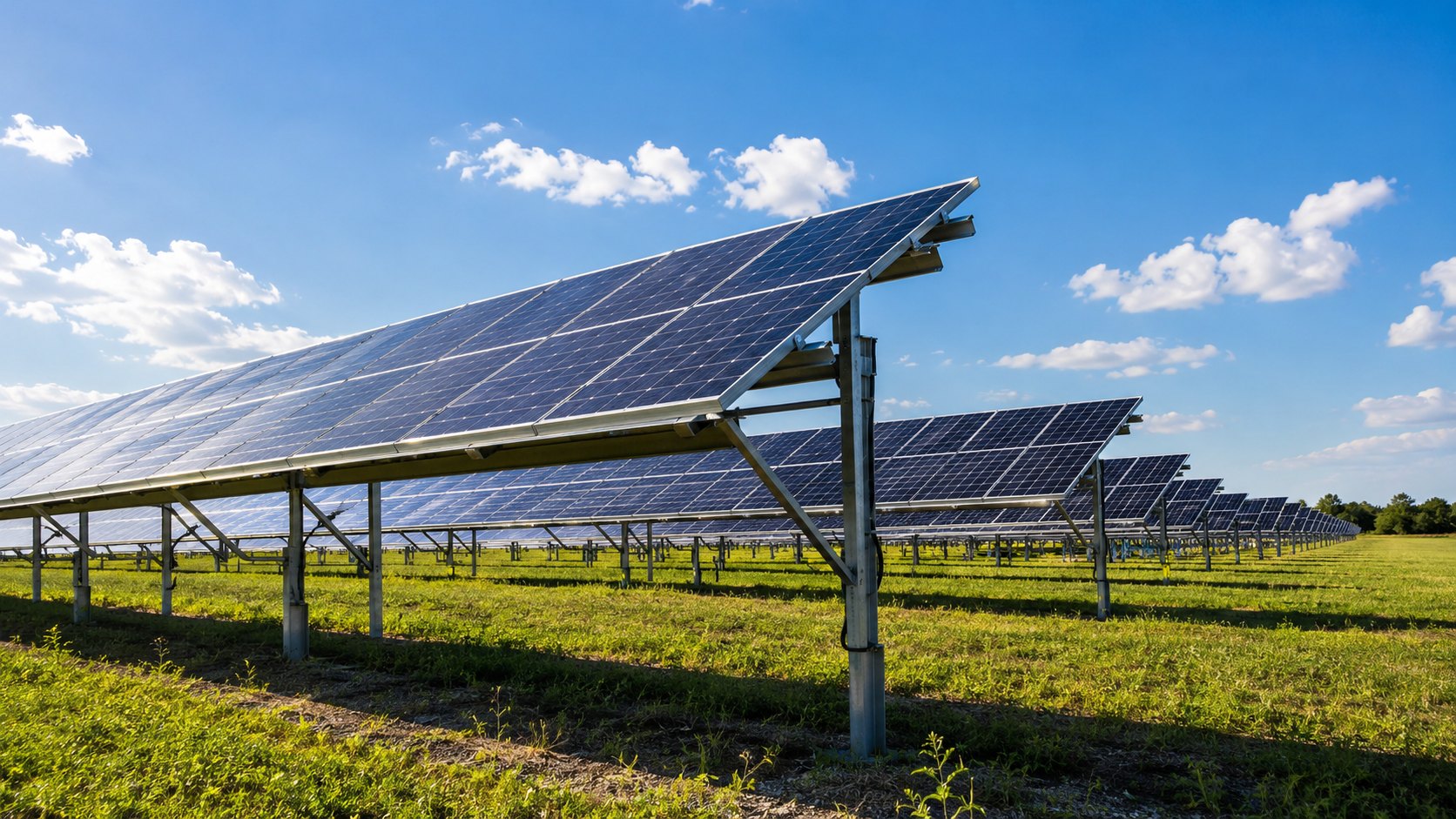
Durable and Reliable
Slow Power Degradation
TOPCon module first-year degradation approximately 1%, linear annual degradation rate approximately 0.4%/year, outperforming PERC's 1.5%–2% first-year and 0.55%/year linear degradation. After 25 years, efficiency retention is approximately 87%–89%, substantially superior to PERC's 82%–84%.
TOPCon cell front-side silicon oxide tunneling layer structure provides superior minority carrier lifetime protection at high temperatures compared to the PERC rear Al₂O₃/Si interface, reducing degradation acceleration risk at temperatures above 70°C. The tunneling layer blocks majority carriers while preventing minority carrier recombination, significantly reducing LeTID effect sensitivity. This enables TOPCon to maintain stable power output under hot climate conditions, avoiding energy yield losses from thermal degradation—a core technological reason for TOPCon's superiority over PERC in desert and tropical applications.
In extreme high-temperature desert regions (summer module operating temperature can exceed 80°C), TOPCon annual energy yield advantage over PERC expands to 3%–5%, combining temperature coefficient advantage with degradation rate advantage. Desert region summer operating temperatures frequently exceed 75°C, when TOPCon temperature coefficient advantage and degradation rate advantage operate simultaneously, expanding annual energy yield leads to the 3%–5% range. This comprehensive high-temperature performance advantage constitutes significant accumulated absolute energy yield gain over the project lifetime.
Long-term outdoor operational monitoring data indicates TOPCon bifacial module actual conversion efficiency retention of approximately 87%–89% after 25 years of operation, outperforming PERC's 82%–84%. The 0.15 percentage point annual degradation rate gap accumulates into approximately 3.75 percentage point power retention difference after 25 years, equivalent to TOPCon still generating approximately 4.3% more electricity than PERC in year 25. Lower sensitivity to Light-Induced Degradation (LID) and Potential-Induced Degradation (PID) enables TOPCon to maintain more stable power output during long-term operation.
· Project investment evaluation adopting the 0.4%/year linear degradation assumption compared to 0.55%/year accumulates approximately 3%–4% more total energy output over the 25-year operating period. This energy yield advantage positively influences project lifetime energy output and financial performance in financial models. EPC contracts should explicitly specify degradation rate indicators as performance assessment terms.
· Bifacial TOPCon PID sensitivity in high-temperature high-humidity environments is lower than PERC bifacial solutions. This stability advantage is particularly pronounced in coastal tidal flat and agri-PV complementary applications, establishing TOPCon as the preferred technology choice for these demanding environments where long-term reliability is paramount.
Durable Glass-Glass Construction
The double-glass structure completely blocks moisture ingress, with humidity and heat aging resistance substantially superior to conventional glass+backsheet structures, particularly suitable for high-temperature, high-humidity, and salt-fog environments, achieving C5-M, the highest salt-fog test rating.
Glass-glass construction with front and rear tempered glass layers provides qualitative improvement in sealing and protection performance, eliminating erosion risks to cells and encapsulant materials from moisture. This weather resistance advantage constitutes a key technical consideration for project technology selection in high-temperature, high-humidity southern regions and coastal areas with high salt-fog corrosion risk, providing material-level assurance for project lifetime reliable operation. Field monitoring data from tropical coastal PV plants shows glass-glass modules maintaining stable power output after 10 years, while polymer backsheet modules in the same array show measurable efficiency decline, confirming the real-world durability advantage of glass-glass construction in demanding environments.
Beyond structural and protective benefits, glass-glass modules offer superior UV resistance compared to polymer backsheets, which are susceptible to UV-induced yellowing, chalking, and embrittlement over 25 years of continuous UV exposure. Glass absorbs UV radiation without degradation, maintaining optical clarity and encapsulant protection throughout the module's service life. Field inspection data from operating plants show that after 15 years of outdoor exposure, polymer backsheet monofacial modules exhibit measurable yellowing index increases of 3–8 units, translating to approximately 0.5–1.5% light transmittance reduction—a degradation pathway that glass-glass construction entirely eliminates, preserving long-term power generation capacity.
· Glass-glass structure withstands greater static mechanical loads. During 2400 Pa front static load and 1000 Pa rear dynamic load testing, bifacial module micro-crack risk is lower than monofacial glass structures. This enables resilience against structural stress from extreme wind, snow, and hail conditions, ensuring safe operation of PV mounting systems during natural disasters, reducing failure rates and maintenance frequency. Compared to glass-backsheet structures, glass-glass construction eliminates the backsheet as a single point of failure, providing inherently redundant protection against environmental ingress.
· The industry has widely adopted 2 mm × 2 mm glass-glass structures, with 3 mm and 4 mm thickness specifications progressively entering large-scale ground-mounted plant applications. Two-millimeter thin-glass solutions achieve lightweight while maintaining strength, reducing mounting structure material and installation difficulty. Four-millimeter-thick glass provides a greater mechanical safety margin and structural redundancy for high-load-demand scenarios.
Reliable Actual Service Life
Bifacial TOPCon modules passing IEC 61215 enhanced design qualification (3× static load, 3× damp heat cycling, 1.5× UV accelerated aging) are projected to maintain power output above 87% after 25 years of outdoor operation, with a 25-year power warranty providing investors with full-lifecycle assurance.
Bifacial TOPCon modules employing glass-glass construction fully block infiltration of moisture and salt-fog corrosive substances, with material degradation rates substantially lower than monofacial glass+backsheet structures. Reliability advantages are particularly pronounced under harsh environmental conditions of high temperature, high humidity, and salt fog. The dual-barrier effect of glass-glass construction combined with premium EVA or POE encapsulant materials eliminates electrochemical corrosion and encapsulant delamination risks from moisture, constituting an important foundation for long-term reliable outdoor operation. Outdoor exposure monitoring data from Hainan Island coastal PV plants confirms that glass-glass TOPCon modules after 8 years of operation maintain power output within initial warranty bands, while parallel-installed polymer backsheet modules show statistically significant degradation above manufacturer warranty thresholds.
Leading manufacturers universally provide 25-year power warranty agreements: first-year degradation not exceeding 2%, linear annual degradation not exceeding 0.4%–0.55%, with some manufacturers having reduced linear annual degradation to 0.4% or lower. These contractual guarantees protect investor interests, ensure PV plants maintain expected power output levels and energy yields throughout the operating period, and substantially reduce investment risk and uncertainty for long-term project stakeholders. Ground-mounted plant investors should require module manufacturers to provide third-party authoritative institution aging test reports and outdoor validation energy yield data, cross-validating power warranty promises with independent laboratory and field performance evidence to ensure the reliability of manufacturer technical claims. Periodic sampling power testing at regular intervals throughout the operating period provides ongoing validation of module degradation performance against contractual warranty terms.
· Module selection should also address junction box and connector protection ratings (IP68 or higher recommended) and cable weather resistance, ensuring electrical system physical connection reliability over the 25-year operating period. IP68 protection provides complete dust protection and long-term immersion defense, employing premium silicone sealing and high-temperature-resistant terminals to minimize arcing or connection failure risks.
· Recommended periodic sampling power testing at the 5th, 10th, 15th, and 20th years of operation plots power degradation curves, verifies whether actual degradation rates align with design expectations, and enables timely identification of batches with anomalous degradation, supporting preventive maintenance decisions and ensuring project lifetime energy yield targets are achieved.
Bifacial TOPCon technology, through its triple characteristics of rear-side photoelectric conversion, efficient weak-light response, and high-temperature stable output, provides a complete technical pathway for ground-mounted plants to achieve higher energy yield per unit land area. The high bifaciality, slow degradation, and weather-resistant construction of bifacial modules collectively support robust power generation performance throughout the 25-year operating period for ground-mounted plants.