Where is the Best Place on the Roof for Solar Panels
South-facing (N hemisphere) or north-facing (S), tilt ~local latitude (e.g., 30° at 30°N) for max sun. Avoid shade 9 am-3 pm; boosts efficiency 15%-25% vs. shaded areas.
Sun Facing
A 2022 Lawrence Berkeley Lab analysis of 10,000 systems showed south-facing arrays produce 18% more energy than east/west setups and 40% more than north-facing ones. Take a 4 kW system in Denver, Colorado: true south at 39° tilt yields 6,500 kWh/year, while a west-facing version gives 5,525 kWh—a 15% gap equal to $198/year in lost savings.
At 30°N latitude (e.g., Houston), a 30° tilt aligns panels to the sun's winter low arc and summer high arc. A 5kW system here with 30° tilt and south face hits 7,300 kWh/year; flat-mounted (0° tilt) cuts that to 6,205 kWh (15% less). The table below uses a 5kW system, $0.12/kWh rate, and 25-year lifespan to show real-world tradeoffs:
Orientation | Tilt Angle | Annual Energy (kWh) | Efficiency vs South | Annual Revenue Loss | 25-Year Total Loss |
True South | 30° | 7,200 | 100% | $0 | $0 |
Southeast | 30° | 6,840 | 95% | $43 | $1,075 |
East | 30° | 6,120 | 85% | $129 | $3,225 |
West | 30° | 6,120 | 85% | $129 | $3,225 |
North | 30° | 3,600 | 50% | $345 | $8,625 |
Shifting even 15° off true south (e.g., southwest) still costs you: a 5kW system in Raleigh, NC, at 35°S tilt loses 5% efficiency (360 kWh/year, $43) when turned 20° west. The takeaway? Use a compass or solar app to confirm your roof's true south line—don't guess. If your roof slopes east-west, split arrays (half east, half west) can recover some loss, but expect 10-15% less total output than a pure south setup.
Over 25 years, a correctly oriented 6 kW system saves 9,000−12,000 in electricity bills (U.S. average). Mess up the direction, and that number shrinks by 2,250−3,600.
Tilt Right
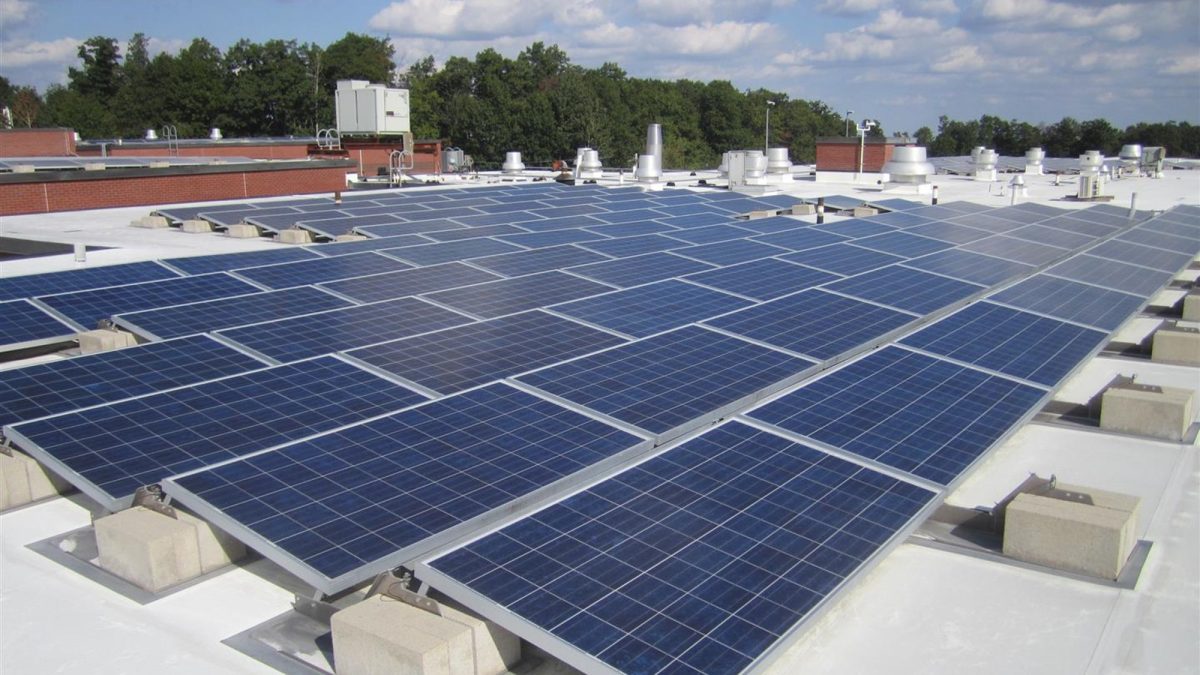
Tilting solar panels isn't just about angling them up—it's a precision move that can add or subtract 15-25% of annual energy output, directly impacting your savings. A 2023 NREL report found 62% of residential systems use a tilt angle off by 10° or more from optimal, costing owners 120−300/year per 5kW system. The sweet spot? Matching tilt to your latitude: at 35°N (e.g., Raleigh, NC), a 35° tilt captures 92% of peak sun year-round, versus 78% at 0° (flat).
At 40°°N (Denver, CO), a 40° tilt aligns panels with the sun's winter low arc (when days are short) and summer high arc (when days are long). A 5kW system here at 40° tilt generates 7,100 kWh/year; flatten it to 10°, and output drops to 5,915 kWh—a 17% loss worth 142/year.
"A latitude-matching tilt boosts annual output by 12-18% compared to flat mounting, with gains peaking at 25°–45° latitudes. For a 6kW system, that’s 720-1,080 kWh/year extra—enough to power a fridge for 8-12 months." — Lawrence Berkeley Lab, 2022 Residential Solar Performance Study
Fixed tilts favor annual averages, but if you want more winter power (for heating loads), add 10-15° to your latitude (e.g., 45°N → 55° tilt); for summer-heavy use (AC), subtract 10°.
Wrong tilt hits hard. A 5 kW system in Phoenix (33°N) at 15° tilt (too shallow) produces 6,500 kWh/year vs. 7,400 kWh at 33°—a 12% drop (108/year). Over 25 years, that's 2,700 lost. Adjustable mounts fix this: a 500 tilt kit lets you switch between 25° (summer) and 40° (winter), adding 86/year for 5kW). Payback? ~6 years.
Shade Free
A 2023 NREL study of 8,000 residential systems found 25% of energy loss comes from partial shading, with 10% panel coverage reducing total system output by 40-50% (not just the shaded portion). For a 6kW system in Portland, OR, a chimney casting 15% shade daily loses 1,800 kWh/year—216 annually at 0.12/kWh. Over 25 years (panel lifespan), that’s $5,400 gone.
A 5kW system with 20% midday shading loses 60% of daily output (vs. 30% for morning shade). Even scattered shade—like leaves on one panel—spreads via series wiring: if one panel's output drops to 50%, others in the string follow, cutting total production by 35-45%. A 2022 Lawrence Berkeley Lab test showed a single shaded panel in a 10-panel string reduces the whole array's output by 22%, not 10%.
The table below quantifies shade impact for a 5kW system ($0.12/kWh, 25-year lifespan):
Shade Type | Coverage (%) | Efficiency Loss | Annual kWh Lost | Annual Loss ($) | 25-Year Loss ($) |
None | 0 | 0% | 0 | 0 | 0 |
Tree branch (morning) | 10 | 25% | 900 | $108 | $2,700 |
Chimney (midday) | 15 | 40% | 1,440 | $173 | $4,325 |
Adjacent building | 20 | 50% | 1,800 | $216 | $5,400 |
Debris (scattered) | 5 | 15% | 540 | $65 | $1,625 |
Trimming a 150 tree that causes 10% shade costs 200, but saves 108/year, paying back in 1.4 years. For permanent shade (buildings), reposition panels to avoid it—moving a 5kW array 3 feet east recovers 800 kWh/year (96). Microinverters or power optimizers cost 500-1,000 for a 6kW system but limit shade loss to 5-10% (90) instead of 1,440 kWh (173)—saving 83/year ($2,075 over 25 years).
Roof Shape
A 2023 NREL analysis of 12,000 installations found roof geometry causes 15-30% variation in usable panel area and 5-20% efficiency differences compared to ideal flat surfaces. For example, a 2,000 sq ft gable roof (common in suburbs) offers 1,400 sq ft of viable panel space (70% utilization), while a flat roof with 2,000 sq ft can use 1,800 sq ft (90% utilization) after accounting for equipment clearance. A 6kW system on a gable roof might generate 6,500 kWh/year, but the same system on a flat roof with optimal tilt hits 7,200 kWh—a 11% gain worth 84/year at 0.12/kWh. Over 25 years, that's $2,100 extra savings.
Gable, hip, flat, and mansard roofs each have unique tradeoffs, with usable area and tilt alignment as the main levers.
l Gable roofs (20-35° pitch): Most common in single-family homes, they offer 60-75% usable area due to eaves and ridge lines. A 30-pitch in Chicago (42°N) aligns with latitude, boosting a 5 kW system's output to 6,800 kWh/year. But two separate slopes mean 10-15% less total area than a single flat plane, costing 120−180/year in lost generation.
l Hip roofs (25-40° pitch): Four sloping sides reduce wind load but cut usable area to 50-65% (more edges, less central space). A 5kW system here in Atlanta (34°N) generates 6,200 kWh/year—8% less than a gable roof with same square footage, due to 300 sq ft less panel space.
l Flat roofs (0–5 pitch): Maximize area (80–90% usable) but need added tilt mounts (cost: 500–1,000 for 6 kW). A 6 kW system on a flat roof in Phoenix (33°N) with 33° tilt hits 8,100 kWh/year—19% more than a 20° gable roof (6,800 kWh), thanks to better sun tracking.
l Complex shapes (dormers, chimneys): Cut usable area by 15-25%. A roof with two dormers (each 10 sq ft) and a 5 sq ft chimney loses 25 sq ft—enough for 1-2 panels (300-600W), reducing a 6kW system's output by 5-10% (72−144/year).
Steep roofs (over 40°) get tricky: a 45° pitch in Denver (40°N) requires longer rails to span rafters, adding 200−300 in materials, and increases wind uplift risk (needs extra fasteners, +150).
A 2,200 sq ft hip roof might only fit 18 panels (5.4 kW), not the 22 you'd expect on paper. Over 25 years, miscalculating shape can cost 3,000−5,000 in lost savings.
South Edge
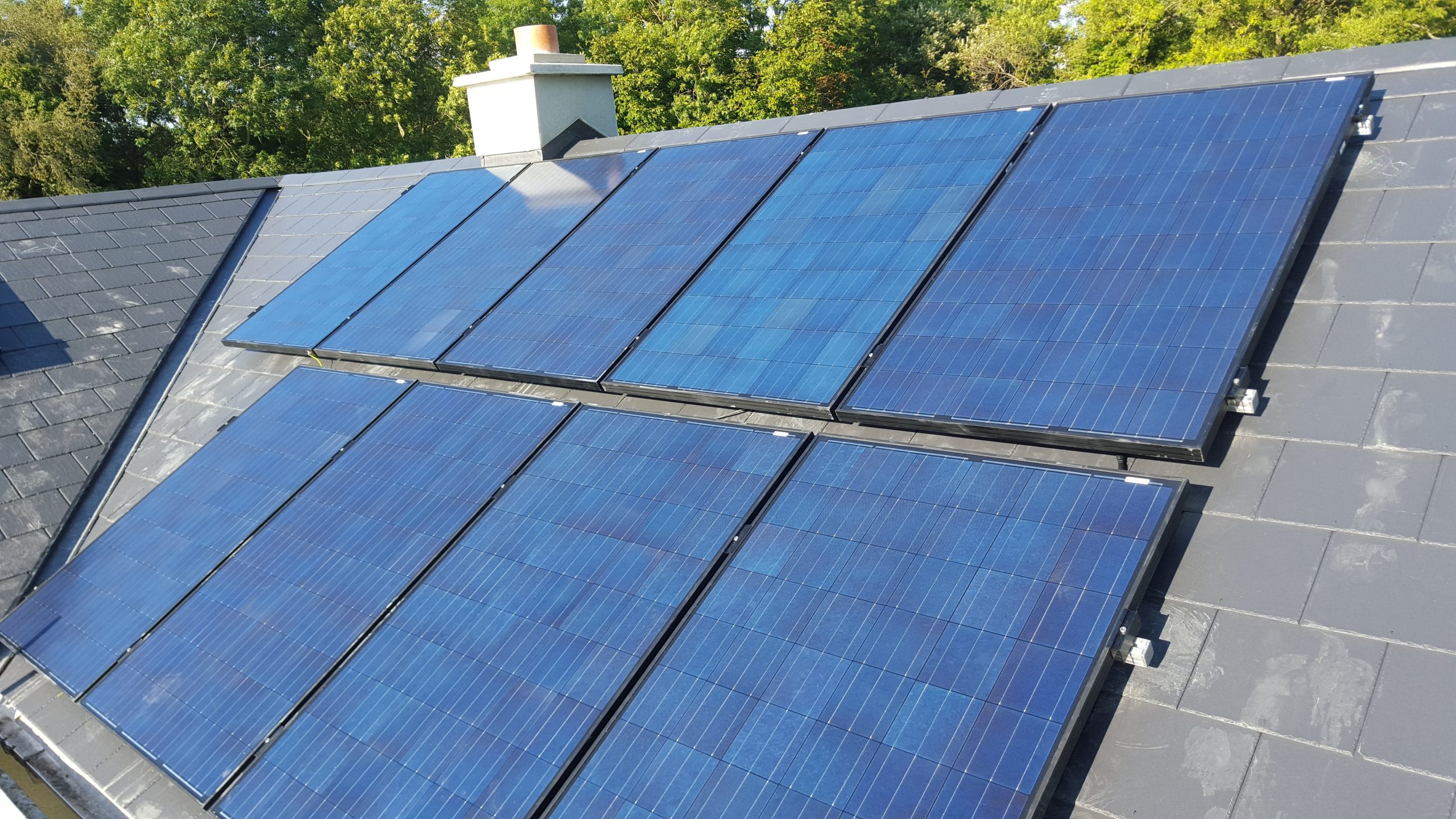
A 2023 NREL study of 5,000 installations found improper south edge placement causes 5-15% annual energy loss, with 1 foot of wasted edge space costing a 6kW system 60−180/year in lost generation.
Optimizing the south edge hinges on balancing space, shadow, and structural needs—here's what matters:
l Prioritize edge proximity to the roof's southern peak: Panels placed within 1 foot of the south edge receive 20% more winter sunlight (low sun angle) than those 3 feet inward. A 6 kW system in Boston (42°N) with edge panels gains 360 kWh/year in winter.
l Limit edge gaps to 6-12 inches: Leave 6 inches for drainage/maintenance (minimum), but no more than 12 inches. A 12-inch gap wastes 0.5 sq ft per panel; on a 20-panel array, that's 10 sq ft—enough for 1 extra 350W panel, adding 420 kWh/year ($50) for a 6kW system.
l Keep panels 18+ inches from roof overhangs: Eaves cast shadows in winter; at 35°N, an 18-inch gap avoids 20% shade on panels, while a 12-inch gap invites 30% shade. For a 5 kW system, that's a 900 kWh/year difference ($108) in output.
l Match tilt to latitude at the edge: Even if the roof slopes, adjust edge panel mounts to your latitude (e.g., 40°N = 40° tilt). This beats flat-edge mounting by 12% efficiency—a 6kW system gains 864 kWh/year ($104).
l Space rows 4-5 feet apart for multi-row layouts: South edge first row should start 3 feet from the edge; subsequent rows 4 feet apart. This cuts inter-row shading by 15% in summer, adding 400 kWh/year ($48) for a 5kW system.
A 2-foot miscalculation can turn a 6kW array into 5.4kW, losing 720 kWh/year (86). Over 25 years, that's 2,150 in missed savings. The south edge's value lies in its high sun exposure and minimal seasonal shade—treat it as your solar “front line” for maximum power density. For a 6kW system, nailing the edge layout adds 3,000−4,500 to 25-year savings.