Will Solar Panels Get Cheaper in 2026
In 2025, panel prices are expected to fluctuate at a low level of around 0.8 yuan per watt, with significant drops unlikely due to overcapacity.
It is recommended that users take advantage of the off-season to lock in high-efficiency TOPCon modules, using their high conversion rates to effectively reduce the levelized cost of energy (LCOE) for the overall system.
Current Prices
Cash is King
Currently, the cash transaction price for residential photovoltaic systems in the US market is stable in the range of $2.60 to $3.10 per watt.
If you plan to install a standard 6 kW system, the cash cost will be approximately between $15,600 and $18,600.
For households with higher electricity consumption, choosing a 10 kW system usually secures a lower unit price, with the total cost hovering around $26,000 to $30,000.
The federal Investment Tax Credit (ITC) allows you to deduct 30% of the cost when filing taxes the following year, which can bring the net cost of a 6kW system down to between $10,920 and $13,020.
Market data shows that from the first quarter to the fourth quarter of 2024, cash quotes dropped by only $0.10 per watt, a decline of less than 4%.
The bottom line price for most installers holds firm at $2.50 per watt because even if hardware prices drop, labor and operational costs still account for rigid expenditures of over $1.60 per watt.
If you see a quote lower than $2.30 per watt, it usually involves the use of old inventory panels with conversion efficiency below 19.5%, or centralized string solutions that do not include microinverters.
The Loan Trap
Once you choose a loan, the unit price per watt will instantly skyrocket to $3.80 or even $4.50.
Interest rates for solar loans in the US are currently floating generally between 7.99% and 11.99%, more than triple the 2.99% of two years ago.
To keep monthly payments under $100, financial institutions charge "dealer fees" as high as 30% to 35% of the total loan amount.
For a system with a cash price of $30,000, the principal on the loan contract will turn into around $42,000.
Although the monthly payment looks like only $120, if you count the 25-year repayment cycle, the total interest and principal you end up paying will exceed $75,000.
This extra dealer fee alone is equivalent to paying a premium of $1.00 to $1.20 per watt.
Now, over 65% of solar orders are closed through these high-fee loans, leading many users to mistakenly believe that solar panels have become more expensive, when in fact the money is being made by the banks.
If you have a Home Equity Line of Credit (HELOC), current rates are around 8.5% to 9.5%, and there is no 30% dealer fee.
Hardware Breakdown
If we break down the price of $2.80 per watt, the hardware cost of the photovoltaic panels themselves actually only accounts for $0.30 to $0.45 per watt.
Currently, the wholesale price of mainstream 400W to 425W all-black modules on the market has fallen to $0.15 to $0.20 per watt, but the retail price sold to you by installers will still be marked up by more than 100%.
Inverters are another big chunk. Enphase IQ8 series microinverters sell for $140 to $160 each. Including accessories, this part of the cost is about $0.35 to $0.45 per watt.
BOS materials such as brackets, rails, cables, and combiner boxes eat up another $0.20 to $0.30 per watt.
Adding all this hardware together, the pure physical cost of equipment is roughly between $0.90 and $1.10 per watt, accounting for only about 35% of the total money you pay.
If you also need to install an energy storage system, such as a Tesla Powerwall 3, a single 13.5 kWh cell including installation fees is about $11,500 to $14,000, which will extend the payback period of the entire system from 7 years to more than 11 years.
Soft Cost Dominance
What really keeps prices high are non-hardware expenditures known as "soft costs," which account for 60% to 65% of the total quote.
The most exaggerated is the Customer Acquisition Cost (CAC). The average marketing expense for each closed customer is as high as $2,500 to $4,000, which breaks down to $0.50 to $0.70 per watt.
Sales commissions are usually drawn at $0.30 to $0.60 per watt. For a 10 kW system, the salesperson can take away $3,000 to $6,000.
The average expenditure for project permits, grid connection applications, and interconnection fees is between $500 and $1,000, depending on the approval speed of the local city hall.
In some places, approval delays of three months lead to a capital occupation cost increase of $200.
Installers' wages are also rising. The hourly wage for skilled roof installers has reached $35 to $50.
The labor cost for a 3-person team to install for one day is $1,000 to $1,500, equivalent to $0.15 to $0.25 per watt.
Plus the company's insurance, vehicle depreciation, office rent, and other operating expenses, another $0.30 per watt needs to be added.
Regional Variations
Where you install can make a difference of $1.00 per watt.
Because California implemented the NEM 3.0 policy, which mandates cell pairing, the average system quote (including batteries) there has soared to over $4.20 per watt.
In contrast, in Texas and Florida, due to relatively cheap labor and fierce competition, quotes for pure photovoltaic systems can often be seen as low as $2.35 to $2.50 per watt.
Although Massachusetts and New York have additional local rebates, due to many old houses and complex roof structures making installation difficult, the average price remains high at $3.20 to $3.60 per watt.
If you live in Arizona, $2.40 per watt is the norm because roofs there are flat and sunshine is excellent, resulting in high installation efficiency.
Different electricity buyback rates in each state also affect quoting strategies.
In states with high buyback rates, installers tend to quote high prices because users have a fast payback period and are insensitive to price.
Remote areas more than 50 miles from the warehouse are usually charged a remote service fee of $2 to $3 per mile, which will increase the total price by another $500 to $1,000.
Technology Advances
New Panels, High Efficiency
Currently, the P-type PERC cell technology, which occupies 90% of the market share, has stuck at an average mass production conversion efficiency of around 21.5%, with a physical limit that is hard to break past 22%.
Replacing it is the N-type TOPCon technology, whose mass production efficiency has stabilized between 22.8% and 23.5%.
With the same standard module size of 1.7m x 1.1m, older models can only achieve 400 watts, while new models can easily reach 430 watts or even 440 watts.
For an ordinary family with limited roof area, if only 20 panels can be installed, choosing the new model can install an additional 0.8 kW of total power, generating 1,200 more kWh of electricity a year.
More importantly, the bifaciality (ability to generate power from the back) of N-type modules has increased from 70% to 85%.
If your panels are installed on a light-colored roof or concrete ground, the additional gain from back-reflected light can increase from 5% to over 8%.
Besides TOPCon, Heterojunction (HJT) technology is also grabbing the high-end market, with efficiency rushing to over 24.2%.
Although HJT currently costs $0.03 to $0.05 more per watt than TOPCon, its manufacturing process is simplified from 10 steps to 6, indicating huge potential for cost reduction in the future.
There is also a technology called IBC (Interdigitated Back Contact), which moves all the front metal grid lines to the back, leaving the light-receiving surface completely unobstructed.
Efficiency can reach 24.5%, and it presents a pure black appearance, which fits luxury home users with extremely high esthetic requirements, despite its premium of up to 30%.
Let's compare the key parameters of the three mainstream technologies so you can see more clearly:
Technology Type | Avg. Mass Production Efficiency | 25-Year Degradation Rate | Temp Coefficient (per °C) | Low Light Response | Est. Market Share (2025) |
P-type PERC | 21.0% - 21.5% | 15.0% - 17.0% | -0.34% | Average | < 15% |
N-type TOPCon | 22.5% - 23.5% | 11.0% - 12.0% | -0.29% | Excellent | 65% - 70% |
HJT Heterojunction | 23.5% - 24.5% | 8.0% - 10.0% | -0.24% | Superb | 10% - 15% |
Longer Lifespan
All solar panels experience Light Induced Degradation (LID) in the first year.
Old P-type modules typically lose 2.0% to 2.5% of their power in the first year, and then degrade linearly at a rate of 0.55% annually thereafter.
By the 25th year, your system can only output 84.8% of its initial power.
The new N-type TOPCon modules are doped with phosphorus, completely eliminating the light degradation problem caused by boron-oxygen recombination.
First-year degradation is controlled within 1.0%, and the subsequent annual linear degradation is only 0.4%.
Calculated out, by the same 25th year, N-type modules can still maintain 89.4% power output.
Don't look down on this gap of less than 5 percentage points. For a system that can generate 300,000 kWh over its full life cycle, this extra 5% is equivalent to 15,000 kWh.
Calculated at $0.15 per kWh, that's an extra earning of $2,250, completely offsetting the few hundred dollars price difference spent on buying new panels initially.
HJT modules perform even more exaggeratedly. Their annual degradation rate is as low as 0.35%, and the power retention rate after 30 years can still be above 90%.
This directly stretches the expected service life of photovoltaic systems from 25 years to 30 or even 35 years.
Not Afraid of Heat
The temperature coefficient of older modules is about -0.34%/°C, meaning that for every 1 degree Celsius increase in temperature (based on 25°C), power generation decreases by 0.34%.
When the roof temperature reaches 65°C (which is common in summer, much higher than air temperature), power loss is 13.6%.
The temperature coefficient of newer TOPCon modules has been optimized to -0.29%/°C. Under the same conditions, the loss is only 11.6%, recovering 2% of power generation.
HJT modules are kings in this regard, with a temperature coefficient of only -0.24%/°C, keeping high-temperature loss under 10%.
Generates on Cloudy Days Too
New generation N-type cells have stronger absorption capabilities for short-wavelength light.
During periods when sunlight is oblique and the spectrum is blue-shifted, such as 6 am to 8 am and 5 pm to 7 pm, they can work one hour longer than older models.
Measured data shows that in low-light environments where irradiance is below 400 W/m², the output power of N-type modules is 5% to 10% higher than that of P-type.
If you live in cloudy and rainy areas like Seattle or Portland, this low-light advantage is amplified.
Accumulated over a year, relying on this extra electricity generated in the morning and evening and the gain on cloudy days, the overall annual power generation can increase by about 3%.
Combined with microinverter technology (like Enphase IQ8), the system can maintain basic household load operation even when the grid is out and light is extremely weak, which is completely impossible with old technology.
Easier Installation
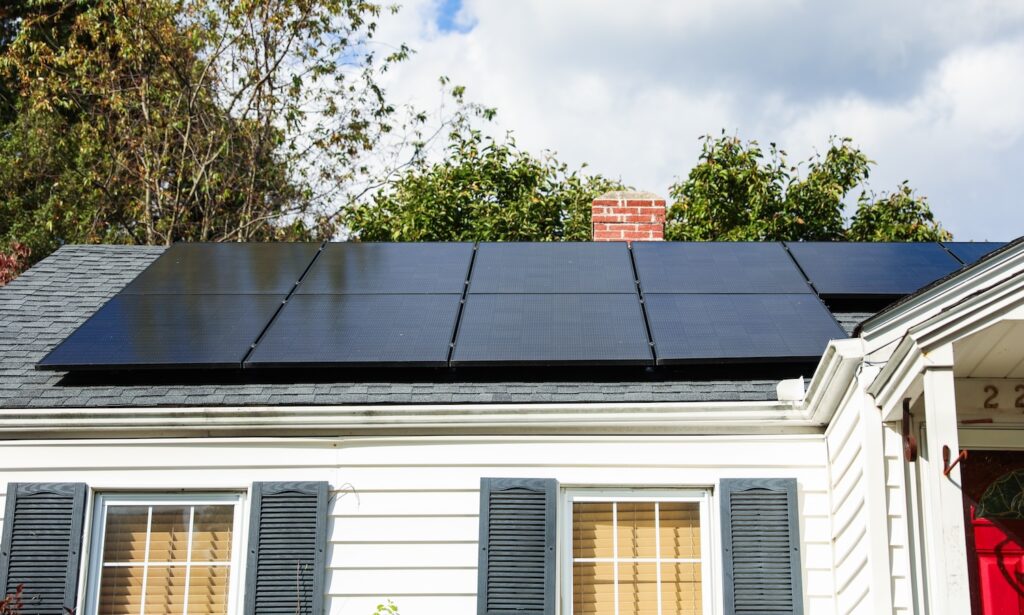
Many new modules now use double-glass encapsulation (dual-glass) instead of traditional backsheets.
Dual-glass modules have higher strength, can withstand snow loads of 5400 Pascals and wind loads of 2400 Pascals, and their fire rating directly reaches Class A.
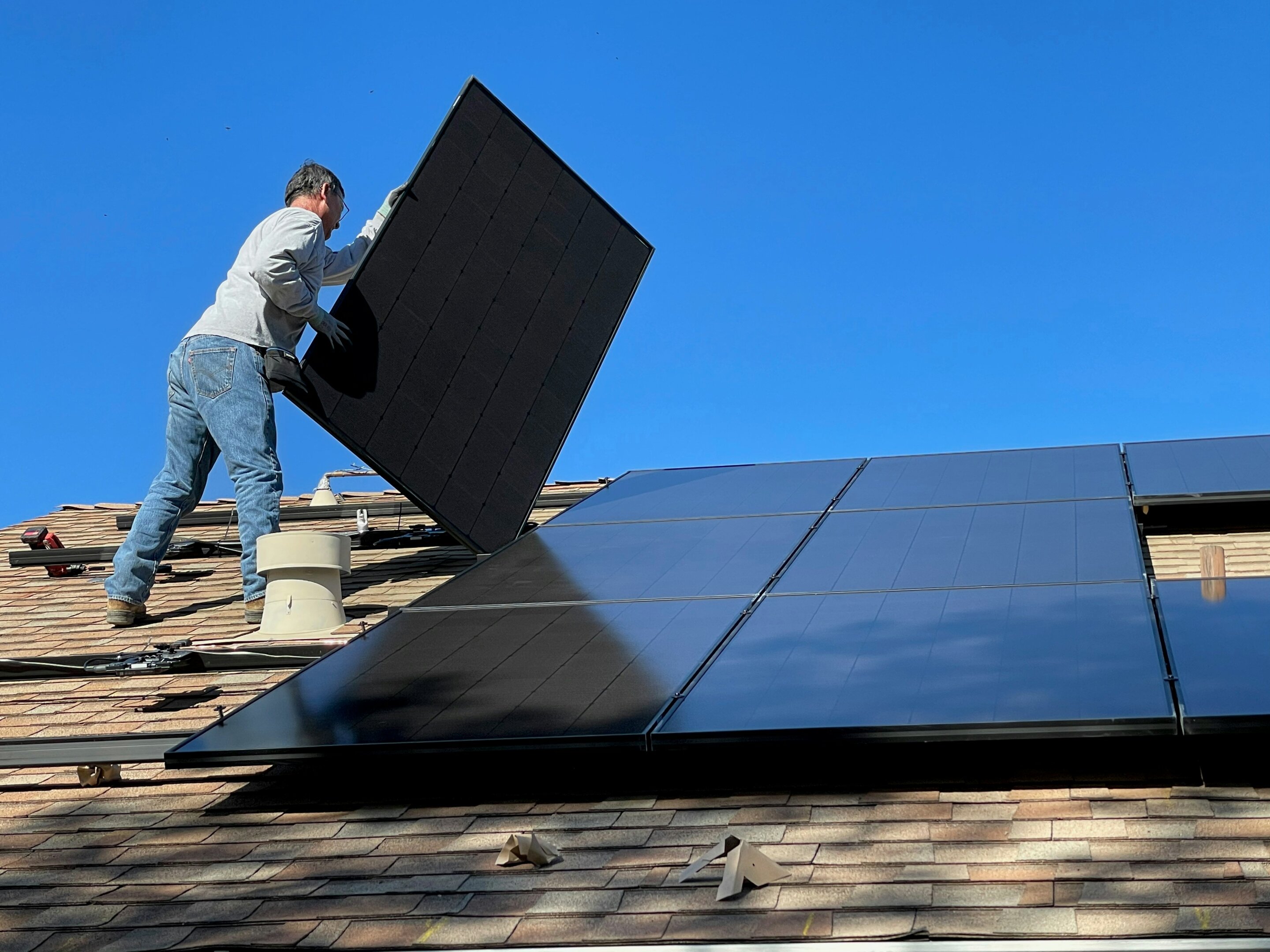
Although dual-glass increases the weight of a single panel by 3 kg to 5 kg, reaching about 23 kg, current frame designs are thinner, making it convenient for installers to grip with one hand.
In addition, junction boxes now generally adopt a three-split design for better heat dissipation and have built-in diodes to prevent hot spot effects.
This design allows current to bypass shaded areas in cases of partial shading, rather than zeroing out the power of the entire panel as before.
This optimization of electrical architecture reduces power generation loss in complex shading environments by more than 20%.
For installers, the standardization of connectors and pre-optimization of cable lengths shorten the wiring time for each panel by 30 seconds.
Market Demand
Electricity Bills Force Action
In 2024, the average residential electricity price in the US has climbed to $0.17 per kWh, an 18% increase from two years ago.
In high-price areas like California, Hawaii, or Massachusetts, residential electricity prices have broken through $0.35 or even $0.45 per kWh.
If an ordinary American family consumes 900 kWh per month, the current monthly bill can easily exceed $160.
Forecasts show that utility companies' transmission and distribution costs will increase by another 5% to 8% in 2025, directly stimulating the demand for user-built photovoltaics.
Data indicates that when household electricity expenditure exceeds 3% of monthly income, the probability of homeowners inquiring about solar installation increases by 40%.
For high-energy-consuming families with swimming pools, two electric vehicles (EVs), or central air conditioning on all day, monthly electricity consumption often reaches over 1,500 kWh, and annual electricity expenses are as high as $3,000 to $4,500.
Key Data Breakdown:
· Price Hikes: Average electricity prices across the US grow by 4.5% annually, with some areas like California's PG&E seeing hikes of up to 12%.
· Payback Psychology: Only when electricity savings can cover more than 110% of the monthly loan payment will 60% of users place an order.
· Necessity Threshold: Families with monthly electricity bills over $200 have a conversion rate of 15%, while those under $100 have a conversion rate of only 2%.
EVs Drive Popularity
In 2024, electric vehicle sales in the US accounted for nearly 10% of the total, with the number of vehicles on the road breaking 4.5 million.
A standard Tesla Model Y consumes about 0.3 kWh per mile. If driven 12,000 miles a year, it consumes 3,600 kWh.
If relying entirely on grid charging, this adds $600 to $1,000 in extra annual electricity bills for the family.
In contrast, if charging using rooftop solar, the cost is only the Levelized Cost of Energy (LCOE) of the photovoltaic system, about $0.06 to $0.08 per kWh.
Using solar energy to charge EVs can save $400 to $700 in fuel costs annually.
Surveys show that owners who have purchased EVs inquire about installing solar within 6 months of buying the car at a rate 5 times that of ordinary car owners.
To meet this additional 3,600 kWh demand, owners usually need to install an extra 8 to 10 modules of 400 watts, which directly pulls up the average installed capacity per household system from the original 6 kW to 9 kW or even 10 kW.
EV Owner Demand Details:
· Expansion Needs: 35% of existing PV users apply for system expansion because they bought an EV.
· Charger Bundling: The bundling rate of Level 2 chargers with PV systems has reached 45%, allowing installers to earn an extra $800 to $1,200 per order.
· Bi-directional Charging: Demand for chargers supporting V2H (Vehicle to Home) functions has grown by 200%. Although the hardware cost is as high as $4,000, users value its backup power function.
Storage is Hotter
In 2024, the attachment rate of solar-plus-storage systems has risen from 10% two years ago to 25%.
In California, because NEM 3.0 cut the feed-in tariff for surplus electricity by 75%, making PV cost-effective only when paired with batteries for self-consumption, the storage attachment rate for new signed orders is as high as 85%.
A standard 10 kWh to 13 kWh energy storage system, although increasing the total budget by $12,000 to $15,000, provides nighttime power and blackout protection.
For installers, the profit margin of adding batteries is 15% higher than just installing panels, so they are also pushing sales vigorously.