What Are the Benefits of Vertical Solar Panels | Space Use, Installation Scenarios
According to research, vertical installation can increase about 10%-20% of power generation, especially suitable for urban rooftops or limited spaces.
Vertical panels can effectively utilize low-angle sunlight, reduce dust accumulation, and reduce maintenance frequency.
When installing, tilt angle and shading need to be considered, optimizing light reception.
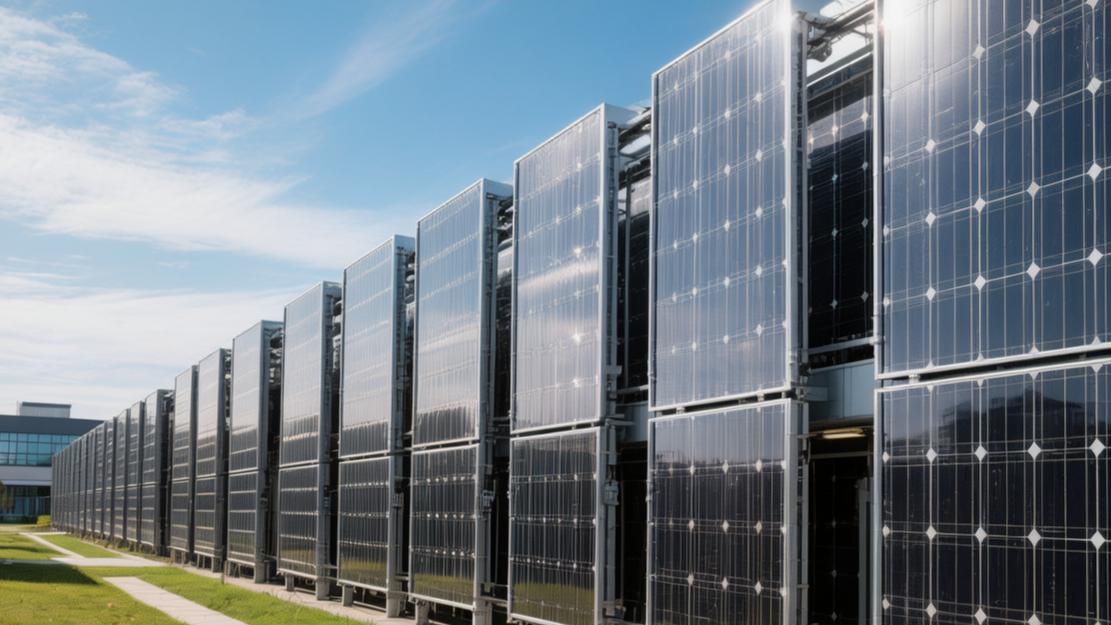
Space Use
Saving open space
Traditional ground power stations need about 1.5-2 hectares of land per 1 MW installed, while vertical schemes only need 0.8-1.2 hectares, space saving efficiency reaching more than 40%. This layout allows modules to operate with an extremely narrow footprint width; the base width of single-row vertical modules is usually only 0.5-0.8 meters, in contrast, the projection width of tilted fixed racks often reaches 3-4 meters. In regions with sufficient light resources, by setting module spacing at 8-12 meters, a land secondary utilization rate of more than 90% can be realized, and large agricultural machinery equipment (width 3-5 meters) or storage channels can normally pass between solar panels.
· Occupancy comparison: 1 kW system projection area reduced from 18 square meters to 4 square meters, land utilization rate improved 4.5 times.
· Installation density: Installed capacity per hectare increased from 500 kW to 850 kW, an increase of about 70%.
· Spacing parameters: When row spacing is shortened to 3.5 meters, the shadow shading loss rate is controlled within 3%.
Hanging on the wall
For a commercial building with a height of 50 meters (about 15 floors), its facade usable area is usually 3-5 times the rooftop area. For example, a rooftop area of 500 square meters can only install an 80 kW system, while the two facades with better light among the four sides (about 1500 square meters) can install 200 kW-250 kW.
The brackets used in vertical systems are usually made of aluminum alloy or stainless steel materials, with self-weight per square meter controlled at 15-25 kg, far lower than the 50-80 kg of traditional stone curtain walls. This weight advantage can reduce the load design cost of the building structure by 5%-10%. Under a power density of 150-300W/m², vertical exterior wall systems can contribute 120-180kWh of electricity per square meter annually, directly offsetting more than 30% of the public lighting and elevator energy consumption of office buildings.
· Area ratio: The ratio of exterior wall to rooftop area is usually 3:1 to 5:1, potential installed capacity expanded by 300%.
· Load specifications: System self-weight reduced by 60%, support module costs reduced by about $15/m².
· Energy saving benefits: Annual power generation income per square meter of exterior wall is about $12-$20, and cumulative income over a 25-year operating life can reach $300-$500.
Both sides can be used
When installed on the ground with high reflectivity (such as light-colored concrete reflectivity 30%-40%, snow reflectivity 60%-80%), the backside gain can reach 15%-25%. Data shows that vertical bifacial systems will have two power generation peaks around 10 AM and 3 PM; this "double peak" characteristic has a matching degree with power grid electricity load that is 20% higher than traditional noon-afternoon single peak systems. In regions above latitude 45°, the total annual power generation of vertical modules can even reach more than 95% of tilted installation systems, while maintenance costs are 25% lower because the vertical angle almost produces no snow accumulation (thickness reduced to 0 mm).
· Backside gain: Cement ground reflection gain 12%-15%, grass gain 8%-10%, snow gain 25%-35%.
· Power generation curve: Double peak power distribution makes the self-consumption ratio rise from 50% to 65%.
· Temperature performance: Natural air convection effect improved, module working temperature is 5-8°C lower than horizontal installation, and temperature attenuation loss reduced by about 2.5%.
Settling in narrow aisles
Taking a 1-kilometer highway sound barrier as an example, a vertical photovoltaic wall with a height of 3 meters can install about 400 kW-600 kW of installed capacity. The width limit for such scenarios is usually within 1.5 meters, where traditional tilted brackets completely cannot unfold, while the installation thickness of vertical modules only needs 0.2-0.4 meters (including brackets). This "gap-based" deployment does not consume any extra land budget and can utilize the high reflectivity of the road surface (asphalt road surface reflects about 10%-15%) to improve power generation efficiency. For this type of system, the impact protection grade needs to reach IK10 (20 joules impact energy), and modules use a 2.0 mm + 2.0 mm double-glass structure to ensure 25-year resistance to wind pressure and gravel impact.
· Space span: 1 kilometer of fence can deploy 600-1000 modules (550W/piece).
· Reflection contribution: Road surface reflection makes the overall system efficiency improve by 5%-7%.
· Protection indicators: Wind load bearing capacity reaches 2400-5400Pa, seismic fortification intensity set at 8 degrees.
Can also be plugged into the ground
Traditional solar panels shade 60%-80% of the sunlight below, leading to a yield reduction of more than 30% for most crops. Vertical photovoltaic arrays (row spacing 10-15 meters) only produce moving narrow-band shadows; ground crops can obtain 85%-90% of natural light, basically not affecting the yield of crops such as wheat and corn (yield fluctuation controlled within ±3%). In addition, the microclimate formed by vertical panels can reduce wind speed by about 20%-40% and reduce soil water evaporation by about 15%-20%, saving about 500-800 cubic meters of irrigation water per hectare in arid areas.
· Light rate: Crop light reception recovers to more than 90% of the natural state.
· Water saving efficiency: Reduces water evaporation by 15%, annual irrigation cost saving of $100-$200/hectare.
· Land Equivalent Ratio (LER): The LER value of vertical agrivoltaics is usually between 1.4-1.6, meaning 1 hectare of land realizes an output value of 1.5 hectares.
Can hang on balconies
A common balcony system contains 2 pieces of 400W vertical modules, with an installation area of only 3.5 square meters of guardrail or wall surface. On a south-facing balcony, this system's average daily power generation is about 2.5-3.5 kWh, which can cover the power consumption of a 1.5 HP air conditioner (running 4-5 hours) or a double-door refrigerator (running 24 hours). Due to the use of plug-in grid connection (Plug & Play), installation costs drop to $50-$100, and total system investment is usually between $600-$1,000. According to the tiered electricity prices in some parts of Europe ($0.3/kWh), annual electricity bill savings are about $250-$350, with a static payback period of only 3-4 years.
· System capacity: Standard single-household installation 800W, footprint area close to 0.
· Electricity bill savings: Household monthly electricity expenditure reduced by 15%-25%.
· Installation parameters: Clip-style bracket fixation, no drilling required, compatible with various guardrails of thickness 10mm-50mm.
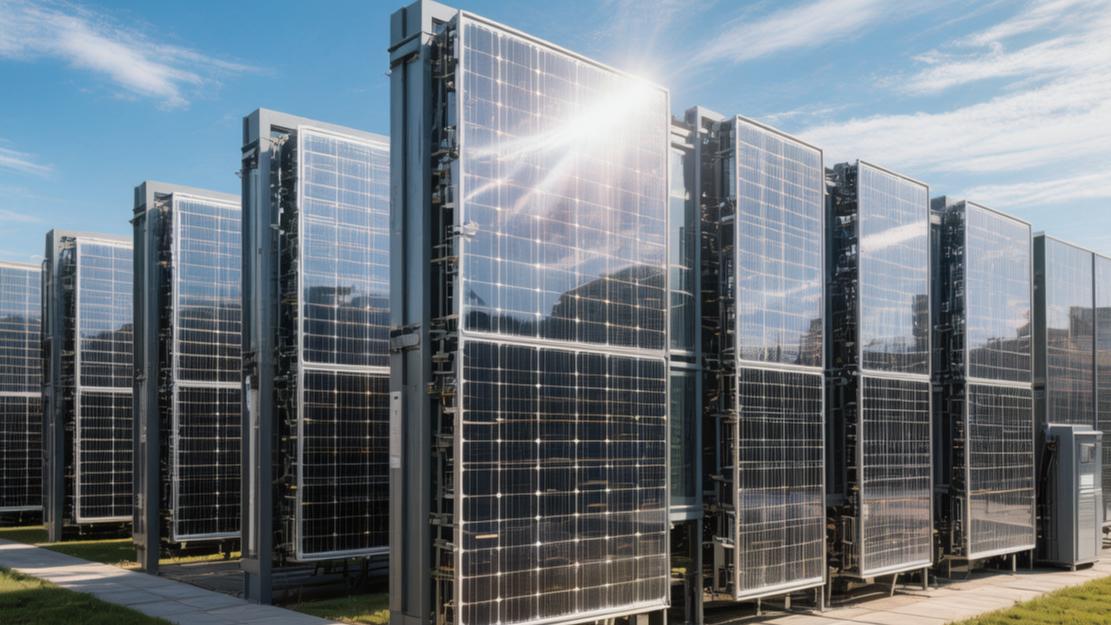
Installation Scenarios
Sound insulation wall panels
Taking a section of traffic sound insulation wall with a total length of 10 kilometers and a height of 4 meters as an example, the area for laying bifacial double-glass vertical modules reaches 40,000 square meters. Beside such traffic arteries, modules need to withstand high-frequency vibrations of 15 Hz to 45 Hz generated by passing heavy trucks, as well as instantaneous wind loads as high as 5400 Pa. When installing, flexible rubber gaskets are usually used matching with 12mm thickness aluminum alloy fixtures, controlling the hardware fatigue loss rate below 0.5% within 10 years. PM10 particles caused by traffic dust will make tilted panels lose 2%-3% of light transmittance weekly, while 90° vertical surfaces combined with anti-fouling coatings (contact angle greater than 110°) can let rainwater naturally wash away 85% of surface attachments.
A 10-kilometer-long system's installed capacity can reach 8 MW, delivering about 9,500,000 kWh of electricity to the surrounding grid annually. Installation cost is about $1.2/W, and replacing original sound insulation materials saved a building material budget of $80-$120 per square meter, with actual net investment reduced by 25%. Sound insulation tests show that the composite wall fitted with photovoltaic panels can attenuate 110 decibels of traffic noise to below 65 decibels, with the Noise Reduction Coefficient (NRC) maintained between 0.75 and 0.85.
· The long-strip layout compresses the cable routing cost of single-point grid-connected equipment by 15%, and inverter node spacing can be extended to 800 meters.
· Adopts anti-glare etched glass surface, light reflectivity lower than 4%, avoiding visual residuals of more than 0.1 seconds for drivers on two-way lanes.
· Bifacial power generation modules absorb 10%-12% of reflected light from asphalt roads, and the output power increase during 14:00 to 16:00 in the afternoon reaches 11% of peak parameters.
Farm boundaries
A rectangular farm covering 500 acres has a boundary perimeter of about 5.6 kilometers, using a vertical photovoltaic column spacing layout with a height of 2.2 meters; a single column has an underground burial depth of 0.8 meters, and the above-ground part maintains a ground clearance of 0.5 meters to 0.6 meters to prevent physical collisions from large livestock such as cattle and sheep as well as mud splashes. This system needs to withstand lateral impact forces of about 400 kg to 600 kg from adult cattle; the yield strength of the bracket steel is set above 355 MPa.
Bifacial modules can capture 18%-22% of diffuse reflection radiation from the broad grassland on the backward side under low solar altitude angles (15-25) in the morning and evening. In the dry season, wind speed on the leeward side of the modules within a 2-meter range drops from an average of 6 m/s to 3.5 m/s; the decline rate of soil moisture within a 7-day rainless period slows down by 20%, and local ambient temperature decreases by 2.5°C to 3.8°C during the noon period, providing a shade area for livestock. The annual photovoltaic fence maintenance fee the farmer needs to pay is only $150/kilometer, while the 1MW installed capacity per kilometer can generate about $90,000 in electricity income annually, shortening the static ROI period to 5.5 years.
Environment Parameters | Traditional Wire Mesh Fence | Vertical PV Fence System | Data Difference Calculation |
Extra land occupancy rate | 0% | 1.5% | +1.5% |
Average windproof speed reduction ratio | 2% | 35% | +33% |
Soil moisture evaporation rate | 8.5 mm/day | 6.8 mm/day | -20% |
Shadow shading coverage range | 0.2 meters | 1.8 meters - 2.5 meters | Expanded more than 10 times |
Expected material lifespan | 10-15 years | 25-30 years | Extended 15 years |
High-rise outer skin
An office building with a height of 150 meters and 40 floors has a total south-facing and west-facing facade area close to 25,000 square meters. Adopting cadmium telluride thin-film vertical photovoltaic modules with a light transmittance of 20%-30%, the standard size is usually 1200 mm × 600 mm, with a weight of 14 kg/m². The system has a rated power generation of 150 W/m², and its heat transfer coefficient (U-value) is as low as 0.8-1.2 W/(m²·K), reducing the heat exchange rate by 45% compared to ordinary single-layer insulating glass.
When the outdoor temperature reaches 38°C in summer, the photovoltaic curtain wall can block about 65% of the solar radiation heat entering the room, making the cooling load power of HVAC equipment on that floor drop from 120 W per square meter to 85 W, with annual air conditioning electricity bill savings for the entire building as high as $180,000.
In exterior wall renovation projects, the construction period for old curtain wall removal and new photovoltaic module installation is about 45-60 days, with the total budget including labor and materials per square meter controlled between $250-$380. Commercial electricity peak periods (9:00 AM to 5:00 PM) overlap highly with the photovoltaic power generation curve; more than 98% of the electrical energy generated by the facade system is consumed instantly by the building's internal microgrid, reducing the high peak-time electricity price costs of purchasing from the external grid (about $0.22/kWh).
· Low-light response performance enables thin-film modules to still maintain 18% of rated power electrical energy output in cloudy days or environments with light intensity of only 200 W/m².
· The 8mm-12mm structural glue gaps reserved between each module adapt to the 1/100 inter-story displacement angle deformation generated by the building under a level 6 earthquake.
· The color saturation of the photovoltaic curtain wall can be adjusted according to architectural design needs; photoelectric conversion efficiency loss of black or dark gray panels is controlled within a 1.5% range.
Snowy plains
In high-latitude regions of North America, annual snowfall often exceeds 120 cm, and the ground is covered by snow for 4 to 5 months year-round in winter. Conventional solar panels with a tilt of 30°-40° will accumulate snow layers with thickness reaching 5 cm to 15 cm after each snowfall, leading to light transmittance instantly returning to zero; the snow melting and cleaning cycle often requires 3-7 days, during which power generation loss is as high as 100%.
Surfaces with 90° vertical installation cannot be attached by snowflakes, with snow accumulation thickness remaining at 0 mm year-round, ensuring equipment starts at full power immediately on sunny days after snowfall. The high-latitude winter solar altitude angle is usually lower than 25°, with light illuminating nearly parallel to the ground; the light-receiving area of vertical arrays reaches the theoretical maximum.
The surrounding vast snowfields have extremely high albedo, reflecting 75%-85% of solar radiation to the back side of bifacial modules. Module back-field gain can soar to 35%-45% in December and January. Silicon-based solar cells have negative temperature coefficient characteristics (about -0.35%/°C); in the extreme cold of -15°C, their actual working efficiency is 14% higher than the nominal efficiency under 25°C standard test conditions.
A 5MW polar vertical power station, during the winter life cycle from November to March of the following year, has a total output electricity of 1,200,000 kWh higher than a tilted power station of the same scale, with snow removal labor costs and machinery fuel budgets saved by $45,000 annually.
· Continuous freezing environments below zero will not cause frame ice expansion extrusion; aluminum alloy frame wall thickness is increased to 2.5 mm to resist material contraction triggered by extreme temperature differences.
· Inverters are configured in IP66 grade constant temperature boxes equipped with heating modules, with internal temperature maintained above 5°C to prevent capacity decay and internal resistance increase of electrolytic capacitors at extremely low temperatures.
· A clearance height of at least 40 cm is reserved between the lower edge of the module and the maximum expected snow depth, avoiding the bottom cell slices being buried by gradually accumulating hard snow to generate local hot spot effects.