How long can a solar cell power a house at a time
A single solar cell (producing only 1-2 watts) cannot power a house; households rely on complete solar panels and energy storage cell systems.
An average household consumes about 30 units (kWh) of electricity daily.
If equipped with a fully charged home energy storage cell with a capacity of about 13.5 units (such as a Tesla Powerwall), it is enough to keep basic appliances like refrigerators, lighting, and Wi-Fi running continuously for 10 to 12 hours during the night or a power outage.
If high-energy-consuming equipment like air conditioners are turned off to maximize power savings, it can even last for 24 hours. The actual power supply duration depends entirely on your total storage capacity and real-time power consumption.
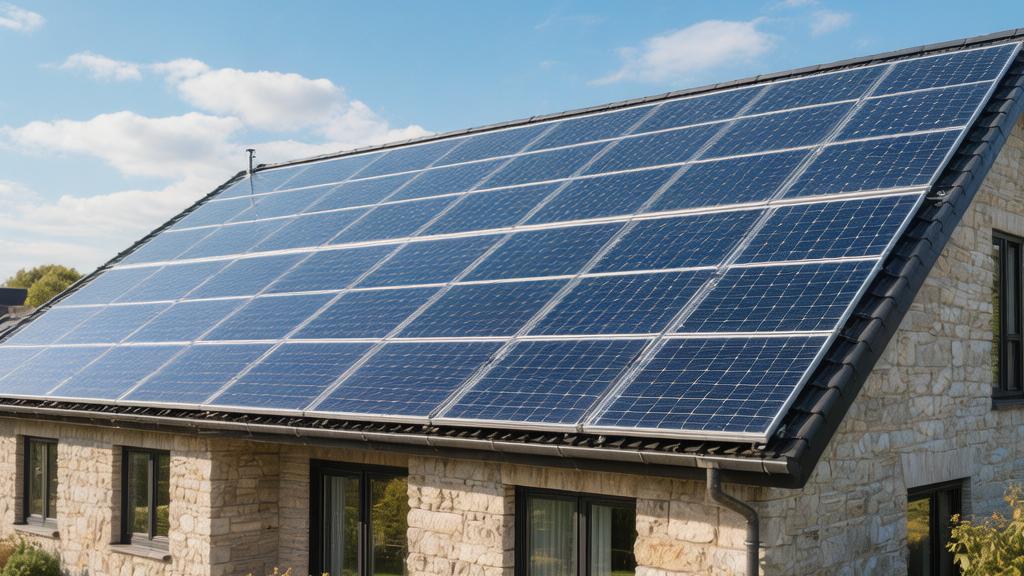
Cell Capacity vs. Nighttime Needs
According to sampling statistics from the U.S. Energy Information Administration, a standard American household consumes an average of 877 units of electricity per month, which translates to about 29.2 units per day.
The nighttime power consumption period is usually calculated from 6 PM to 6 AM the next morning. The 12-hour power consumption often accounts for about 60% of the total daily usage, which is 17.5 units of electricity.
The nominal capacity of common single-wall-mounted home solar batteries on the market is between 10 and 13.5 units.
For equipment using Nickel Manganese Cobalt (NMC) ternary lithium cells, to maintain a cycle life of 4000 times, manufacturers will lock the depth of discharge (DOD) at 80%, meaning a 13.5-unit cell can only release 10.8 units of electricity.
For equipment using Lithium Iron Phosphate (LFP) cells, the depth of discharge can be relaxed to 95%, so a 16-unit cell can provide 15.2 units of actual usable power.
Installing energy storage equipment in a garage or basement, changes in ambient temperature will significantly alter the output parameters.
When the room temperature is maintained at 25 degrees Celsius, the discharge efficiency of the cell can reach 98%. If the room temperature drops to 5 degrees Celsius, the internal resistance of the cells will increase by 15%, and the discharge efficiency will subsequently drop to 85%. The original 15.2 units of usable power will shrink to 12.9 units, leaving a gap of 4.6 units from the 17.5-unit regular nighttime demand.
Calculate Electricity Consumption
A household refrigerator with a volume of 22 cubic feet has a compressor rated power of about 150 watts.
Limited by the start-stop mechanism of the temperature sensor, its actual power consumption over 12 hours is approximately 1.8 units.
A central air conditioner with a cooling capacity of 3 tons has an operating power as high as 3500 watts. Assuming it runs at a 50% load factor for 8 hours, a single air conditioner will consume 14 units of electricity.
The power of an electric water heater's heating rod is usually 4500 watts, and taking a 30-minute bath requires 2.25 units of electricity.
Standby loads inside the house are often ignored, such as a 15-watt Wi-Fi router, a 3-watt microwave clock, a 5-watt TV standby module, plus 10 LED bulbs of 9 watts each. Added together, the constant load reaches 250 watts, silently consuming 3 units of electricity overnight.
Adding up the values of the above appliances, the total nighttime power consumption has climbed to 21.05 units.
If an electric vehicle is also parked in the garage, charging for four hours at 7.6 kilowatts using a 240V Level 2 charging pile will consume an additional 30.4 units, and the total load for the entire night will soar to 51.45 units.
Capacity Decay Rate
For a brand-new cell pack with a nominal 20 units, the annual capacity decay rate is about 2% per year. In the first year of use, combined with the 90% depth of discharge limit, the power you can call upon is 18 units.
By the 10th year of operation, the total physical capacity of the cell has dropped to 16 units. After multiplying by the 90% limit, the usable power left is only 14.4 units.
The discharge rate (C-rate) parameter also interferes with the actual output energy. Discharging at a low rate of 0.1C (equivalent to a 2-kilowatt load), the cell can release 96% of its stored energy.
If you simultaneously turn on the air conditioner, electric oven, and clothes dryer, pushing the load instantly to 10 kilowatts, the discharge rate soars to 0.5C, and the coulombic efficiency will rapidly decline to 88%.
The remaining 12% of the energy will be dissipated in the form of heat energy, forcing the two cooling fans inside the system to start at a speed of 3000 revolutions per minute, consuming an additional 50 watts of electricity per hour.
Inverter Loss
The cell stores 48V direct current (DC), which needs to be converted into 120V or 240V alternating current (AC) used by household appliances via an inverter.
A high-frequency hybrid inverter with a rated power of 10 kilowatts can only achieve its maximum conversion efficiency of 96% when the load reaches 50% (5 kilowatts) of its full capacity.
Late at night, when only the refrigerator and router are running in the whole house and the total load drops to 500 watts, the conversion efficiency of the inverter will plunge to 82%.
Continuing for 12 hours in the low-load range, appliances that originally only needed to consume 6 units of electricity will waste 1.08 units of electricity for nothing due to conversion losses.
The physical impedance of cables also consumes energy. A 20-foot long, 4 AWG pure copper wire will generate a 1.5% voltage drop when carrying 100 amperes of current from the cell to the inverter.
Translated into loss power, it's about 72 watts, with 0.86 units of electricity lost over the course of a night.
DC-coupled solar charge controllers use Maximum Power Point Tracking (MPPT) algorithms, and there will be a 2% to 3% efficiency deviation when handling voltage fluctuations caused by shadow occlusion.
· For every additional 10 feet in distance from the cell to the inverter, line loss increases by an extra 0.5%.
· When ambient humidity exceeds 85%, the oxidation speed of exposed terminals accelerates, which could lead to a doubling of contact resistance within three years.
Instant Start
A 0.5 HP deep well water pump has a load of 800 watts when running smoothly, but in the first 200 milliseconds of motor startup, the Locked Rotor Amps (LRA) will generate an instantaneous power demand of 4000 watts.
The cell management system (BMS) of an energy storage system usually sets an output upper limit, such as 5 kilowatts for continuous discharge and a 7-kilowatt instantaneous peak maintained for 10 seconds.
If the deep well water pump suddenly starts while a 3500-watt air conditioner compressor is running, the combined peak of the two reaches 7500 watts.
The BMS will trigger the overcurrent protection mechanism within 50 milliseconds, cutting off power to the entire house.
To prevent a whole-house power outage, two batteries with an output power of 5 kilowatts are generally connected in parallel to push the system's continuous output to 10 kilowatts and increase the peak capacity to 14 kilowatts, compressing the probability of overload shutdown to below 0.1%.
Energy Consumption Management
A standard 200-ampere household distribution box usually connects 40 to 60 independent circuit branches. Without intervention, the entire load of the house will be placed on the storage cell.
Upgrading a traditional distribution box to a smart distribution panel with relay control modules, the upfront hardware and installation costs fluctuate between approximately 3500 USD and 5000 USD.
The system's built-in current transformers will sample current data for each circuit at a frequency of 100 times per second. When a power failure in the external grid is detected, the smart distribution panel will cut off all high-power 240-volt load circuits within 100 milliseconds.
Electric water heaters with a rated power of 4500 watts, Level 2 car charging piles with a power consumption of 9600 watts, and 3000-watt dryers will be immediately and forcibly powered off.
The entire system will only retain the 120-volt basic lighting circuits, the 150-watt refrigerator, and the 20-watt home router.
When the remaining power is at 15%, the system will also activate a secondary contingency plan, turning off all power except for security cameras and master bedroom outlets.
Through physical cutting, precise to individual circuit breakers, the actual power supply endurance of a nominal 13.5-unit Lithium Iron Phosphate cell can be significantly extended from 3.5 hours under full load to 18.5 hours.
The energy efficiency statistics database of the Lawrence Berkeley National Laboratory shows that a typical American household equipped with 40 plug-in devices will generate a continuous base load of 130 to 200 watts from appliances in standby mode, with a cumulative annual power loss as high as 1752 units, accounting for about 10% of the total annual household power consumption.
Unplug
Even in standby mode, the set-top box's internal decoding chip and network module will still operate at a power of 35 watts. A smart TV connected to Wi-Fi consumes between 5 and 15 watts in standby, and the background update programs of game consoles will also occupy a 10-watt load for a long time.
Adding up various electronic devices plugged in 24 hours a day, the whole house will lose about 200 watts of power per hour.
After entering the nighttime power outage mode, the 12-hour standby load will secretly eat up 2.4 units of electricity.
For a cell pack with an actual usable capacity of only 10 units, 24% of the power is completely wasted on standby equipment that produces no actual benefit.
Smart outlet modules with a unit price of 15 USD on the market can effectively block standby current. The operating power consumption of a single outlet itself is only 0.5 watts. After the device has been in standby for five minutes, a miniature relay inside the outlet will physically disconnect the AC connection.
Deploying 10 similar smart outlets throughout the house, the implicit power loss per night can be reduced to within 0.2 units. The 2.2 units of electricity released are enough to run a variable frequency refrigerator for an additional 14 hours.
Shift Usage Time
An 8-kilowatt rooftop solar PV array can output a continuous DC current of 6.5 kilowatts during the peak hours from 10 AM to 2 PM.
Starting a dishwasher rated at 1200 watts, a washing machine at 500 watts, plus heating an electric water heater with a power of 4.5 kilowatts during this time window, the total instantaneous load of 6.2 kilowatts can be completely covered by the real-time power generation of the solar panels.
The entire process does not require using a single bit of power from the cell. If the same household chores are shifted to 8 PM, the cell needs to output at a discharge rate of 6.2 kilowatts for more than one hour.
For a fully charged 13.5-unit cell, through this single operation, the state of charge (SOC) will drop sharply to below 54%.
Combined with the Time-of-Use (TOU) pricing policy provided by local utility companies, electricity prices from 4 PM to 9 PM often soar to 0.48 USD per unit, while the rate during the day is only 0.15 USD per unit.
By adjusting the usage time of 30% of high-power appliances, the self-consumption rate of the solar system can climb from 45% to 82%, and the annual bill savings can increase by 400 USD to 600 USD.
The physical thermal capacity properties of the building itself can be used as an invisible energy storage medium. Pre-cooling the house during the day when solar power generation overflows can reduce the air conditioning power load during the peak evening hours by more than 40%, significantly alleviating the discharge pressure on the physical cell.
Set the Temperature
An air conditioner with a cooling capacity of 3 tons has a full-load power of 3500 watts.
At 2 PM, when the sun is most abundant, let the air conditioner lower the indoor temperature to 68 degrees Fahrenheit (about 20 degrees Celsius) in one go; at this time, what is consumed is the excess power generated by the solar panels.
By 5 PM, when the sun goes down and the cell starts to take over the house's power supply, adjust the thermostat's target temperature up to 74 degrees Fahrenheit (about 23.3 degrees Celsius).
Relying on the cooling capacity pre-stored in the building's walls, floors, and furniture, the indoor temperature will slowly rise over the next 4 to 5 hours.
During this golden time slot, the air conditioner compressor can remain completely turned off, relying only on an internal 150-watt circulation fan to maintain airflow.
Until the outdoor temperature drops to 10 PM, the air conditioner only needs to restart in low-frequency mode.
Replacing old AC motors with a variable frequency air conditioning system that has a seasonal energy efficiency ratio (SEER2) of 20 or more, the compressor can run smoothly in a low-load range of 300 to 800 watts, and the total nighttime cooling power consumption over 12 hours can be reduced from 14 units to 5.5 units.
Grid-Tied vs. Off-Grid Living
According to data from the National Renewable Energy Laboratory (NREL), 96% of residential solar installations in the United States choose to operate grid-tied with the public power grid.
A standard grid-tied home equipped with an 8-kilowatt rooftop PV array and a single nominal 13.5-unit lithium cell can provide continuous power for 11 hours with an average load of 1.2 kilowatts during an external power outage.
In an off-grid scenario completely disconnected from the grid, the house loses the buffer pool of 24-hour unlimited power supplied by the public grid.
To maintain a regular daily power consumption of 29 units without any external power line support, an off-grid cabin's cell system needs to store enough power for at least 3 consecutive rainy days.
Hardware configuration requirements will force the total capacity of the cell pack up from 13.5 units in a grid-tied state to 45 units.
Taking into account the 20% low-temperature capacity decay of the cell on winter nights at -5 degrees Celsius, the actual installation scale of the off-grid cell pack will expand to 54 units.
Calculated at the current average retail price of 600 USD per unit of electricity, the hardware procurement cost for a 54-unit cell alone is as high as 32,400 USD.
The physical specifications of the inverter will also undergo drastic changes. Grid-tied systems usually rely on a transformerless high-frequency inverter weighing about 30 pounds with a power of 5 kilowatts.
A purely off-grid house needing to independently start a 240V, 3-ton central air conditioner requires the installation of a 12-kilowatt low-frequency split-phase inverter with a built-in 150-pound pure copper coil transformer, with single unit prices exceeding 4500 USD.
Connected to the Grid
Under California's NEM 3.0 net metering billing policy, for sending 1 unit of excess solar power back to the public network at 12 PM, the utility company only pays a compensation of 0.05 USD.
Buying back one unit of electricity during the peak usage hour at 7 PM, the electricity price will soar to 0.48 USD.
After a networked 10-unit energy storage cell is set to self-consumption mode, it will use 100% free solar power to charge the remaining capacity to 100% before 2 PM.
During the five hours from 4 PM to 9 PM, the cell discharges at a constant rate of 2 kilowatts, perfectly covering the high billing period of 0.48 USD per unit, saving the homeowner 2.40 USD in electricity bills daily.
When the cell's state of charge (SOC) drops to the preset 20% baseline at 10 PM, the distribution panel will automatically switch back to the public line within 50 milliseconds to purchase the 1.2 units of electricity needed for the remaining 8 hours at an off-peak price of 0.15 USD per unit.
· In a grid-tied state, the energy storage pack completes an average of 300 deep charge-discharge cycles per year, with an annualized physical decay rate maintained at 1.5%, still maintaining 85% of its available capacity after 10 years of operation.
· Grid connection permit fees paid to local utility companies fluctuate between 150 USD and 500 USD, and the bidirectional testing and approval process for smart meters usually takes 3 to 6 weeks.
· To comply with the IEEE 1547 anti-islanding safety standard, grid-tied inverters will forcibly cut off external output within 20 milliseconds of detecting an external power outage to avoid back-feeding 240 V AC onto 12 kV high-voltage lines where maintenance workers may be located.
Completely Disconnected
In remote areas 10 miles away from the nearest public utility pole, pulling a new high-voltage transmission line costs 10,000 USD per mile in construction fees; a connection quote as high as 100,000 USD makes independent power generation the only financially feasible option.
The installed capacity of off-grid solar arrays must be oversized by 150%, expanding a standard house's 6-kilowatt system to 15 kilowatts to capture weak scattered light during four consecutive days of winter snowstorms.
When light intensity in December drops to 20% of the summer peak, a 15-kilowatt rooftop array can only barely produce 12 units of electricity per day.
The house maintains a constant background load of 800 watts for 24 hours, consuming 19.2 units of electricity throughout the day.
A daily deficit of 7.2 units of electricity will drain a 40-unit cell pack to below 15% by the 3rd day.
To prevent the terminal voltage of the Lithium Iron Phosphate cells from falling below the 44-volt protection red line, a propane generator with a rated output of 10 kilowatts must automatically ignite and start within 30 seconds.
· A 10-kilowatt backup generator running at a 50% load factor will burn 1.5 gallons of liquid propane fuel per hour.
· Letting the generator roar for 5 hours to recharge 20 units of electricity back into the cell system, at a propane price of 2.40 USD per gallon, results in a single-charge fuel cost as high as 18 USD.
· In an off-grid environment, chemical cells need to endure 3 to 4 irregular micro-cycle charges and discharges daily. High-frequency electrochemical reactions will shorten the 15-year warranty life claimed by manufacturers to 8 years.
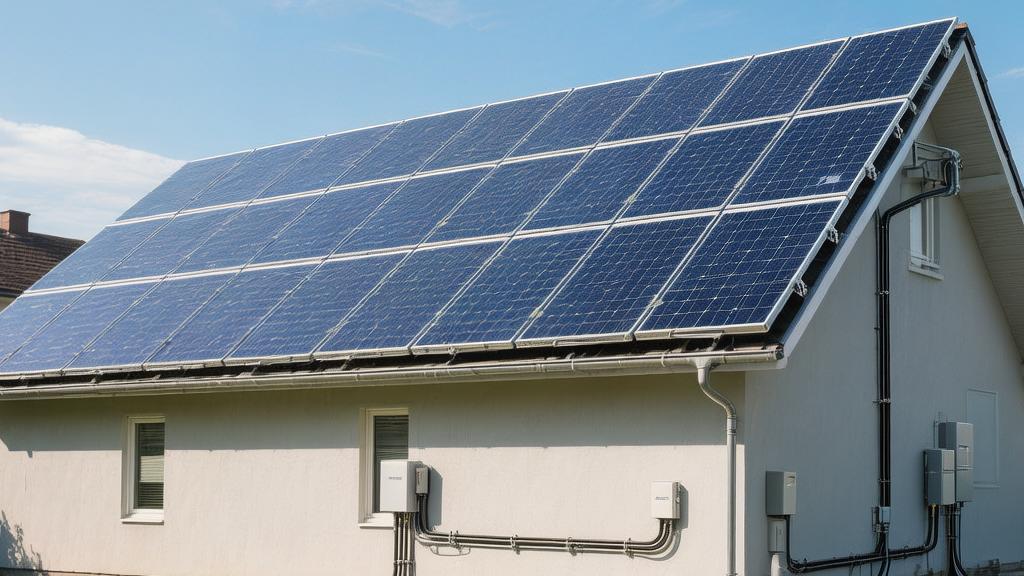
Maintenance Costs
A 12-unit grid-tied lithium cell system hanging on a garage wall has no mechanical moving parts, and the annual maintenance budget for the first 10 years is 0 USD.
The aging and renewal of external transmission lines up to 50 miles long and the routine maintenance costs of 12 kV community transformers are all factored into the 15 USD basic service fee charged monthly by the utility company.
A pure off-grid system requires the homeowner to conduct a 4-hour physical inspection every 6 months.
For every 100 hours of generator operation, it is necessary to drain and replace 1.5 quarts of 5W-30 full synthetic motor oil and replace a 12 USD air filter.
If using deep-cycle lead-acid equipment with a purchase unit price of only 150 USD per unit of electricity in an independent system, the homeowner needs to manually add 2 gallons of distilled water to the cells every 30 days to precisely maintain the electrolyte specific gravity at 1.265.
Once the external ambient temperature drops sharply from 77 degrees Fahrenheit (about 25 degrees Celsius) to 32 degrees Fahrenheit (0 degrees Celsius) in winter, the internal chemical reaction rate will drop significantly, and the usable capacity under the 20-hour discharge rate (C20) indicator will directly evaporate by 20%, resulting in the 8 units of originally stored electricity being completely frozen and unable to be output.