Are Photovoltaic Cells AC or DC | Efficiency, Performance
Photovoltaic cell output is direct current (DC), single piece voltage about 0.5 V, needs to be converted through an inverter into alternating current (AC) grid-connection;
Module efficiency about 18%–23%, affected by temperature, irradiance, when installing, should optimize tilt angle and heat dissipation to lift power generation performance.
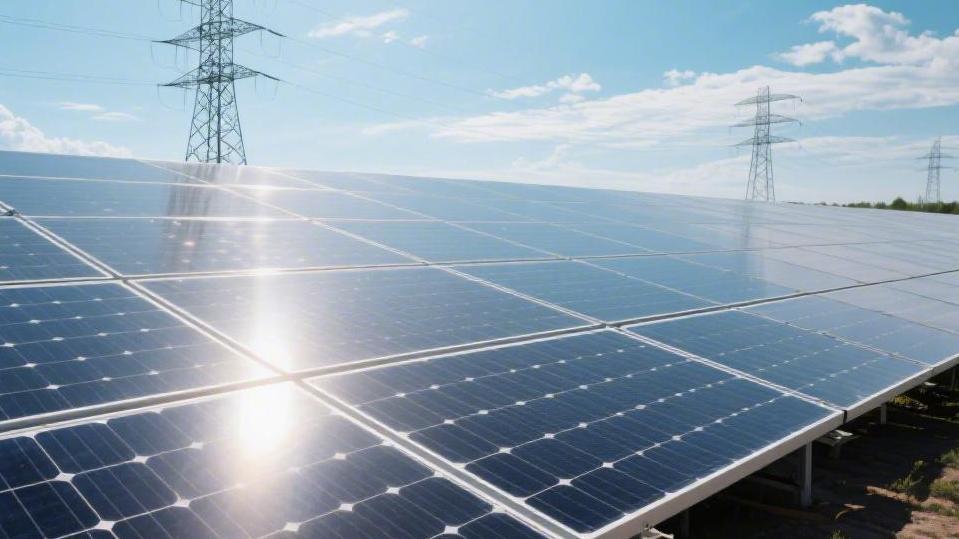
Efficiency
Testing cell pieces
According to set indicators testing, currently mass-produced N-type TOPCon silicon-based cell photoelectric conversion rate generally reaches between 25.4% to 25.8%. HJT heterojunction cell in mass production line average yield reaches 98.5%, single piece highest testing conversion rate climbed to 26.1%. At the laboratory stage, perovskite and crystalline silicon tandem cell highest conversion rate reading already broke through 33.9%. Every lifting 1% of absolute conversion rate, photovoltaic system 25 years life cycle inside levelized cost of energy (LCOE) will decline 4.3% to 5.2%.
The side length is 182 mm, the square monocrystalline silicon wafer surface area is $0.033 m^$2, and under 25.5% efficiency, a single piece can output about 8.41 W of rated power. Reducing crystalline silicon thickness from 150 microns to 130 microns can make per watt silicon material production cost decrease 0.012 USD, at the same time, maintain photon capture rate decline range lower than 0.1%.
Assembly drops efficiency
Putting 72 pieces single batteries encapsulated into module time, inevitably will produce encapsulation loss (CTM Loss), causing module overall conversion efficiency compared to single cell piece lower 1.5% to 2.2%. Two pieces adjacent cell cells need to reserve 1.2 mm to 2 mm physical gap, one piece containing 144 half-cell batteries module, internal invalid blank area ratio is about 2.5% to 3.1%. Light penetrating 3.2 mm thick photovoltaic grade tempered glass, light transmittance is usually only 91.5%, and the remaining 8.5% energy will be reflected or absorbed.
On the glass surface, adding one layer 120 nanometer thick anti-reflection coating (ARC), can make the wide spectrum range inside light transmittance rise 2.3%, reaching 93.8%. Thickness of 0.45 mm to 0.6 mm between EVA or POE film will similarly cause 0.4% to 0.6% photon transmittance degradation.
Calculating system loss
· Module output direct current needs through up to dozens of meters of cable transmission, selecting cross-sectional area as $4mm^$2 pure copper special cable, under 50 meters length carrying 13A working current, cable two ends voltage drop will reach 1.45V.
· At working voltage 42V, single piece module circuit on, 1.45V voltage drop represents 3.4% line loss rate, putting wire diameter thickened to $6mm^$2 can this loss be reduced to 2.1%.
· Inverter internal IGBT module during performing DC-AC conversion time, the highest conversion efficiency reading can reach 98.8%, considering multiple load status European weighted efficiency indicator usually maintains at 98.2% around.
· Inverter running time internal temperature every rising 10°C, electronic modules switching loss will increase 0.15%, overall conversion efficiency will drop 0.2%.
· Alternating current merging into grid before needs through step-up transformer, iron loss and copper loss will extra consume 1.1% to 1.5% electrical energy.
· Putting all physical degradation factors into the model, one 100 kW commercial roof power station, the final system performance ratio (PR value) generally falls in the 81% to 85.5% interval.
Floating with light
Monocrystalline silicon material bandgap width fixed at 1.12 eV, can only capture wavelength range between 300 nm and 1100 nm between visible light and part of near-infrared light. Exceeding 1100 nm wavelength infrared rays occupy the solar spectrum's total energy of 25%, because exceeding the absorption range, produced electrical power is 0 W, 100% converted into panel heat energy.
When outdoor air temperature reaches 35°C and wind speed is lower than 1 m/s, the module backsheet actual working temperature will climb to 65°C around. According to the power temperature coefficient -0.32%/C formula deduction, 65°C and 25°C produced a 40°C temperature difference, which will cause panel real-time output power to appear a 12.8% decline.
Dust thickness
· Panel surface dust accumulation thickness reaching 1.5 mm, light transmittance will drop 4.5% to 7.2%.
· Every square meter of glass attached 5 grams of industrial dust particles will cause a single point area short circuit current (Isc) plummet 8.4%.
· One piece area as $15cm^$2 bird droppings if blocking on cell cell surface, will immediately trigger bypass diode conduction mechanism, causing single piece 144 half-cell module output power loss 33.3%.
· Up to 12 months operation and maintenance data statistics variance shows, cleaning frequency as every 30 days once array, compared to every 180 days cleaning once array, annualized total power generation amount extra 5.7%.
· Single time manual cleaning labor cost about 0.05 USD/watt, according to one set of 500 kW system calculation, single time cleaning budget expenditure is 250 USD.
· Finishing water washing after the first 168 hours inside, brought extra electricity output revenue of about 380 USD. This item maintenance expenditure single time return on investment (ROI) reaches 52%.
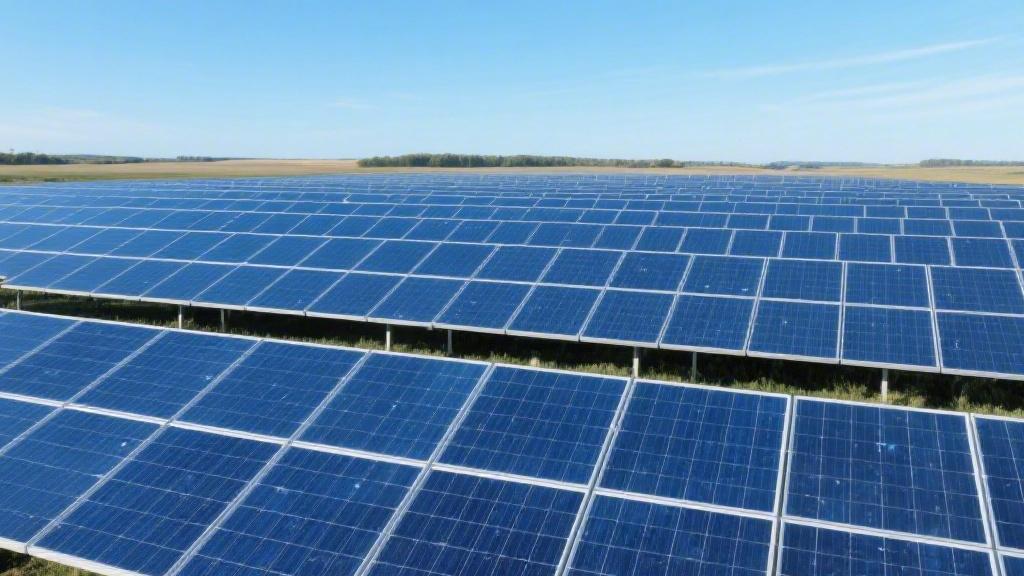
Performance
How many drops per year
Photovoltaic modules once exposed to sunlight, boron-oxygen complexes will rapidly form, triggering the light-induced degradation (LID) effect. P-type PERC module in grid-connection operation initial 170 hours inside, output power will appear 1.2% to 1.8% irreversible decline. N-type TOPCon silicon wafer used phosphorus element replaced doped boron element, removed producing LID chemical reaction condition, first year degradation rate controlled in 0.8% to 1.0% interval.
Aiming at long-term operation inside potential induced degradation (PID) phenomenon, testing shows that, when the system stays in a 1500V bias voltage and the relative humidity is high as 85%, continuing running 192 hours after, single-glass module power loss will reach 3.5% to 5.2%, double-glass coordinating with POE film module can degradation value suppressed at 0.8% around. Entering the linear life cycle stage, the manufacturer gives a 25-year warranty agreement requiring P-type panels every year, natural degradation not allowed exceeding 0.55%, N-type double-glass panel annual degradation standard strict to 0.40%.
· One unit 50kW commercial inverter recorded 30 years life cycle data shows, year 15 time N-type array retained 92.6% of initial power rating.
· Reaching the year 30 grid-connection contract period expired time, N-type panel remaining absolute power output maintains at 87.4%, compared to same cycle P-type panel higher 3.2%.
· Micro-cracks after undergoing 200 times thermal cycles (-40°C to 85°C) will expand, causing damaged area current passing rate decline 11%, making whole year total power generation decrease 0.6% to 1.2%.
Afraid of heat, not afraid of cold
Taking the rated voltage 38.5 V module for example, when the ambient temperature drops to -15°C, based on its 0.26%/°C voltage temperature coefficient, the single board open circuit voltage will soar 10.4% to 42.5 V. One string connected 22 pieces of this model panel string, the total voltage will climb from 847 V to 935 V. Inverter maximum DC input voltage is usually set at 1000 V or 1500 V, designing string capacity time reserving 10% to 15% voltage redundancy space is guarantee equipment not being overloaded breakdown premise.
When the outdoor temperature climbs to 42°C, the module glass surface infrared absorption rate reaches a peak, and the internal silicon wafer working temperature will soar to 72°C. Short circuit current (Isc) although has 0.045%/°C slight growth, but output power is constrained by -0.29%/°C power temperature coefficient, overall electrical energy output compared to 25°C standard testing condition will plummet 13.6%.
Cell technology route | Standard test power (STC) | Power temperature coefficient (Pmax) | Voltage temperature coefficient (Voc) | 70°C Actual output power estimation |
P-type PERC | 550W | -0.34% / °C | -0.26% / °C | 465.8W (Down 15.3%) |
N-type TOPCon | 575W | -0.29% / °C | -0.25% / °C | 500.0W (Down 13.0%) |
Heterojunction HJT | 600W | -0.24% / °C | -0.22% / °C | 535.2W (Down 10.8%) |
Bearing pressure preventing ice snow
Panel frame adopts 6005-T6 specification anodic oxidation aluminum alloy manufacturing, thickness as 30mm frame tensile strength reaches 260 MPa. In static mechanical load testing, the panel front side is applied 5400 Pa pressure, equivalent to per square meter bearing 550 kilograms of uniform snow weight continuing 24 hours, glass surface maximum deformation deflection limited within 35 mm and cannot appear naked eye visible cracks.
The back side wind load testing standard is set at 2400 Pa, simulating wind speeds as high as 130 km/h, 12-level hurricane front hit. In order to resist hail impact, double-glass module outer layer 2.0mm semi-tempered glass must pass kinetic energy impact testing. A testing device with a 23 m/s physical initial speed launches a 25-millimeter diameter, 7.5-gram solid ice ball, impact kinetic energy reaches 1.98 Joules. At 11 different positions, performing continuous impacts after, module leakage current reading cannot exceed 50 microamps, insulation resistance needs to maintain above 400 megohms.
· Putting aluminum frame thickness from 30mm increased to 35mm, single module anti-twisting strain capability improved 18%, but total weight will increase 0.85 kilograms.
· Adopting thickness 3.2 mm single-sided tempered glass module after bearing 5400 Pa pressure unloading, internal cell cell micro-crack new-added ratio average is 2.4%.
· Putting fastening clamp installation interval from 400 mm reduced to 300 mm, can make whole array anti-wind plucking force limit value lift 2200 Pa.