Do Solar Panels Power Your Home Directly | Grid, Cell, Flow
Photovoltaic board power generation priority supplies family load, excess connects to grid or stores into cell.
Daytime peak about 3-5 kW, inverter turns direct current to alternating current, when power outage needs energy storage or off-grid mode switch to supply power.
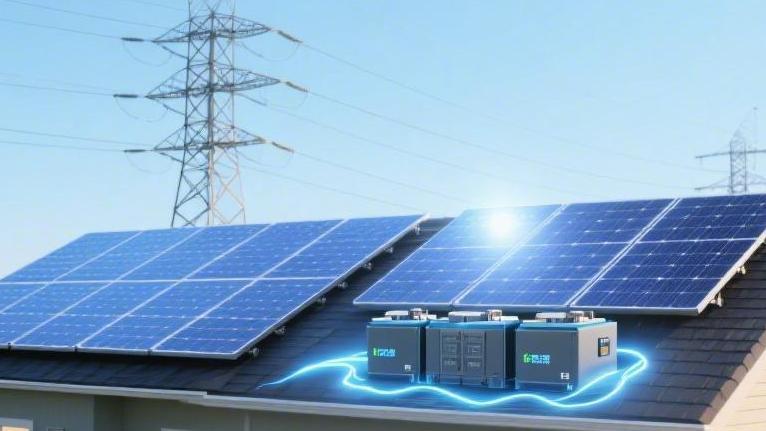
Grid
Hang to big power grid
In order to be able to send this electricity into the power grid or supply home use, the inverter must real-time monitor the power grid's frequency, which is usually 50 Hz or 60 Hz, and control the error within ±0.1 Hz. The inverter will automatically raise the voltage to about 3V to 5V higher than the power grid voltage level. For example, the power grid is currently 235 V, the inverter will output 238 V. Using this potential difference, current smoothly flows out. In this process, total harmonic distortion (THD) must be lower than 3%, otherwise it will interfere with home precision appliances' electronic module lifespan.
Modern string-type inverter at full load's conversion efficiency can reach 98.4%, only less than 1.6% energy dissipates in heat energy form. If the power grid voltage because of load fluctuation fluctuates to 260V above, the inverter will trigger over-voltage protection mechanism, within 100 milliseconds automatically offline, preventing burning home's circuit boards or power grid facilities.
Excess electricity runs outward
When the sunshine is sufficient at noon 12:00, your 6.6 kW system may be fully outputting power, but the home only has one 0.2 kW refrigerator and 0.5 kW central air conditioning standby, and the remaining 5.9 kW power will instantly through the home distribution box's 32 A or 40 A circuit breaker rush toward the street's public power grid. This flow direction is decided by physical laws, current will automatically find the lowest resistance path. You will see two-way smart meter's "Export" indicator light flash, record down every 15 minutes or 30 minutes as one cycle's feed-in quantity.
In North America or Australia's part areas, this outward flowing electricity quantity per degree electricity (kWh) can for you exchange back 0.05 to 0.12 dollars' deduction, although this is usually only your electricity price's 25% to 40%. In order to reduce about 2% line loss, inverter installation position usually distance main distribution box not exceeds 10 meters. If your street has more than 30% residents with similar scale systems, the noontime transformer's voltage might rise 5% above, which will cause some old inverters to frequently trip protect.
Power grid acts as spare tire
Arrived at 18:30, after the sun's radiation intensity drops to 100 W/m², the photovoltaic system's output power will linearly drop to 0.1 kW even return to zero. At this time, your home's electricity use load because of the dishwasher, electric water heater (usually power is 2.4 kW to 3.6 kW) turning on and sharply increases to 5 kW above. Due to no sunlight, the power grid will automatically take over supplying power, and the current direction will flip 180 degrees, from the street transformer through your entry wire flows in. This switch process is 0 milliseconds delayed, because your home was originally always and power grid physically connected together.
If your home's monthly electricity use quantity is 600 kWh, and the system can generate 450 kWh, among which 200 kWh is directly consumed, 250 kWh is sold to the power grid, then you actually still need from the power grid buy 400kWh. Through this kind of "cloud storage cell" mode, even if you do not buy expensive lithium cells, you can still lower your monthly expense by about 50% to 70% through electricity bill's deduction quota.
Power outage then cut off
If the power company cuts off the area's power supply because of line maintenance or transformer fault, your inverter must within 2 seconds (usually actually only needs 10-50 milliseconds) stop sending electricity outward. This is to prevent your roof generated 240V high voltage electricity along with electricity pole reversely transmit, mistakenly injure currently maintaining line's working personnel.
If you have not configured the possessing "black start" function's energy storage cell, even if it is a big noon sun hot spicy, as long as the power grid power outage, your home will have no electricity to use. In this kind of state, the inverter's output power is forcedly dropped to 0W, and the internal mechanical relay will issue a crisp disconnect sound. Only when the power grid recovers power supply and maintains voltage fluctuation within 10% continuous 60 seconds after, the inverter will then re-try to connect to the grid.
Meter staring look
This set's core brain actually is a precision level Class 1.0 two-way smart meter. Inside, it has two independent registers, respectively, to store "Import" (import) and "Export" (export) data. It can sense 0.1A above current change, and with per second multiple times frequency collect current and voltage phase angle.
Through the monitor App, you can see a 24-hour power curve graph: the wave peak usually appears at 13:00, at this time, the current flow amount is largest; the wave trough then at early morning 03:00, only has basic appliances' weak load. If your 10 mm² entry wire ages, contact resistance increases 0.5 ohms, at big power exporting electric energy time will produce obvious heating and about 1% electricity quantity calculation error.
Selling electricity cost-effective?
If adopt 1:1 net metering (Net Metering), your return capital cycle maybe only needs 4 to 5 years, because every degree sent out electricity all deducted full amount retail electricity price. But if it is only in the net billing (Net Billing) area, the power grid recycle price is only 5-8 cents, and the return capital cycle will lengthen to 8 to 10 years. One set standard 6.6 kW system, including installation, bracket, cable, and manual labor, current cost is about 5,000 to 8,000 dollars.
Assume its 25-year attenuation rate controlled within 20% (that is, 25 years after, it can still output 80% of the initial power), this machine is a "money printing machine" in its life cycle, inside it can produce about 150,000 kWh of electricity. According to comprehensive electricity price difference value calculation, its internal rate of return (IRR) usually can maintain at 12% to 18%, which is far higher than the bank's 3% around deposit interest rate. The premise is you need to ensure every year's module wash times are not less than 2 times, to reduce 5% to 10% dust shading loss.
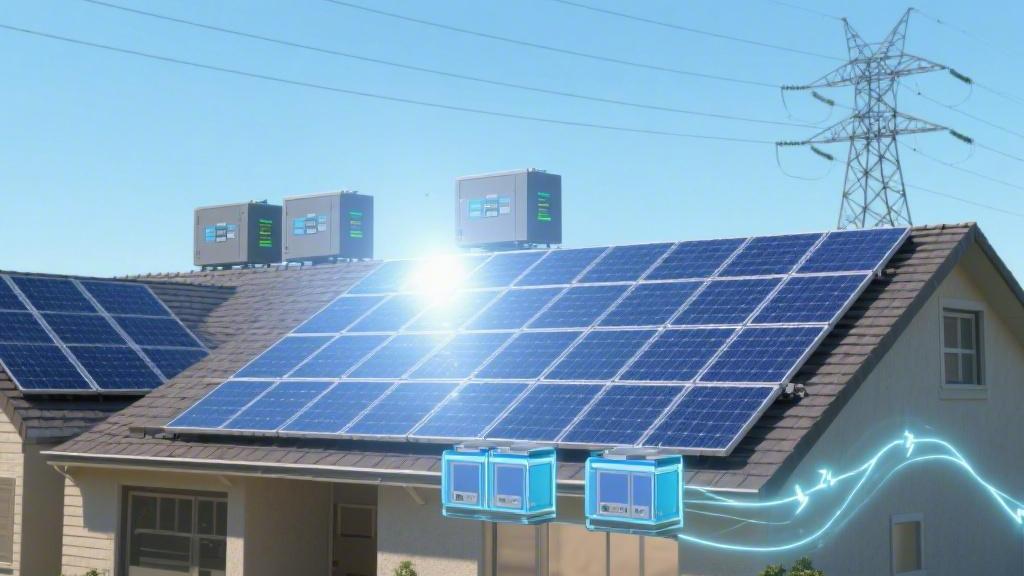
Cell
Store electricity big jar
When the roof's 15 pieces of 410W monocrystalline silicon modules produce exceeding 6 kW power in the afternoon, and the home only has a 0.6 kW load, this extra 5.4 kW current then needs a place to go. The current market for mainstream family energy storage systems, for example, 13.5kWh lithium cell box, in essence, is to turn electric energy into chemical energy. This kind of equipment usually adopts lithium iron phosphate (LiFePO4) module, because its thermal runaway temperature is as high as 270°C above, which is more stable than common ternary lithium cells. One set nominal 10kWh cell system, its actual usable depth of discharge (DoD) usually set at 90% to 95%, you can solid solid ground extract out 9kWh to 9.5kWh electricity quantity.
The cell inside is by hundreds of 3.2V cell cells through series-parallel composition, working voltage usually between 48V and 51.2V in the low voltage system, or between 300V and 450V in the high voltage system. The voltage system conversion efficiency is usually higher than the low voltage system, high out 2% to 3%, because the current is smaller, and the cable's heating loss is lower. If you install a 5 kW output power inverter, it can every hour extract out 5 degrees of electricity from the cell inside the home's electric oven or dishwasher.
Efficiency run where?
For most AC coupled systems (like Tesla Powerwall), electric energy needs to experience "photovoltaic direct current—inverter alternating current—cell direct current—output alternating current" three times conversion, total efficiency about 89% to 92% between. You every store 10kWh electricity, finally can use only has about 9kWh, the remaining 1kWh will dissipate as heat in the heat sink.
In order to maintain this set system's normal operation, the cell management system (BMS) will 24 hours monitor every cell's voltage deviation, usually requiring an error smaller than 0.02 V. If the environment temperature from ideal 25°C rises to 45°C, the cell's internal resistance will increase, charge discharge efficiency will drop about 1.5%, and long-term electrochemical attenuation speed will speed up. In order to control heat amount, a high performance energy storage box will be built-in with a liquid cooling system or variable frequency fan, locking the working temperature strictly in the 15°C to 30°C range inside.
Lifespan count cycles
The industry standard usually stipulates that when a cell's remaining capacity drops to initial nominal capacity's 70% or 80%, namely viewed as reaching usage lifespan upper limit. For cycle lifespan is 6000 times lithium iron phosphate cell, if you conduct one complete charge discharge every day (that is 1 cycle), theoretically it can serve 16.4 years. But actual usage in depth of discharge to lifespan impact extremely big. If you only use 50% of the electricity remaining then recharge, the cell's cycle times can extend to 10,000 times. Below table shows different configurations under energy storage system's technical parameters comparison:
Parameter category | Entry level (stacked type) | High-end level (all-integrated) | Industrial level (micro-grid use) |
Nominal capacity (kWh) | 5.12 | 13.5 | 30.0 |
Rated output power (kW) | 3.0 | 5.0 | 10.0 |
Peak output (10 seconds) | 5.0kW | 7.0kW | 15.0kW |
Depth of discharge (DoD) | 90% | 100% | 95% |
Charge discharge efficiency | 88% | 90% | 94% |
Cycle lifespan (times) | 4000 | 6000 | 8000 |
Warranty years (years) | 5 | 10 | 15 |
Per kWh cost (USD) | $450 - $600 | $700 - $900 | $400 - $550 |
Calculate account surface money
Assume your area's electricity price from 18:00 to 21:00 is the peak electricity price. Every degree of electricity charges $0.45, while the noon's electricity price or selling electricity to the power grid's price is only $0.08. If you don't install a cell, your noon-generated electricity every degree is only worth $0.08; installed 10kWh cell after, this 10 degrees electricity can keep you using it in the evening, and every degree of electricity's value then became $0.45. Remove 10% charge discharge loss, this 10kWh electricity every day can save you $0.45 × 9 - $0.08 × 10 = $3.25.
Power outage can withstand
When the power grid voltage disappears instantly, the system's built-in automatic transfer switch (ATS) will in 10 to 20 milliseconds disconnect from the external power grid's physical connection, and convert the cell's direct current to 240V alternating current toward the home's specific lines supply power. This 20 milliseconds switch speed your desktop computer, and a Wi-Fi router will usually not reboot. In this kind of mode, you need to plan load according to the cell's continuous output power.
For example, your cell rated power is 5 kW, you cannot simultaneously turn on a 3 kW induction furnace, a 2.4 kW electric water heater, and a 1.5 kW air conditioner, because the instantaneous total power of 6.9 kW will trigger the cell's overload protection and shut down. Smart systems usually allow you to set a "reserve electricity quantity". For example, set the cell to reserve 20% (about 2.7 kWh) of electricity quantity to prevent sudden power outages at late night from home falling into complete black.
Flow
Current how goes
When the roof's 14 pieces of 440W monocrystalline silicon modules at 1,000W/m² irradiance under full amount of work time, every piece of board produced about 41V voltage will through series superposition, in the direct current cable inside form one close to 574V high voltage direct current flow direction. In order to reduce online produced heat loss, the system usually adopts 4mm² or 6mm² photovoltaic special copper core wire, control line loss at 1% below. These direct currents enter the inverter after, internal insulated gate bipolar transistor (IGBT) with per second tens of thousands times frequency conducts switch action, modulating direct current into 240V, 50Hz or 60Hz sine wave alternating current.
Inverter inside's MPPT (Maximum Power Point Tracking) algorithm every 1 to 3 seconds, then will scan one voltage current curve, ensuring even if it has 5% shadow shading, the system can squeeze out 98% above potential energy. Converted alternating current through main gate circuit breaker, with millisecond level speed toward indoor distribution box, this is the starting point of all electric energy flow.
"The inverter output's voltage must be slightly higher than the power grid voltage (usually high out 2V to 5V), using this kind of physical potential difference, current then can flow like water toward a low place, priority pour into home's appliances, rather than shrink in wire inside cannot move."
Distribution box shunt
If you are currently using one machine with a power of 2.2 kW dishwasher and one machine with a power of 1.5 kW air-conditioning, the family's total instantaneous load is just 3.7 kW. If at this time the inverter outputs 5 kW, then among it, 3.7 kW will immediately be consumed by these appliances. This process happens at a distance, usually only 2 to 5 meters, and almost has no transmission loss. Electric energy flow's priority level is: local load > energy storage cell > public power grid.
For this kind of "self-generate self-use" electricity quantity, you saved is the full amount of retail electricity price (assume as per degree electricity 0.35 dollars). System through installed on entry wire's CT (Current Transformer) clamp meter, with per second 10 times sampling frequency monitors current's direction and size. As long as CT finds current attempts from power grid flow in, it then will notify the inverter to increase output; conversely, if it finds current toward outside flow, it then records as feed-in.
Cell stores remaining amount
In a 5kW output greater than 3.7kW load's situation, extra out 1.3kW power will not immediately be wasted. If you configured a 10kWh lithium cell system, the inverter's controller will change the current flow direction, leading it to the cell charge/discharge module. For direct current coupled (DC-Coupled) systems, electric energy directly at the direct current end with 95% above efficiency charges into the cell; if it is an alternating current coupled (AC-Coupled) system, electric energy needs to experience one time alternating current turn direct current process, efficiency is about 90% to 93%.
Cell management system (BMS) will strictly monitor current intensity, usually control charge rate at 0.5C below (that is 10kWh cell with 5kW power charge), to extend cell cell 6000 times cycle's usage lifespan. When the cell's state of charge (SOC) reaches 100%, this stream of 1.3 kW current will continuously flow in, until chemical energy fills every one cell unit.
"Cell charge discharge process inside's round-trip efficiency loss usually in 8% to 12% between, every store 10 degrees electricity, finally only about 8.8 degrees to 9.2 degrees can be taken out, this disappeared electric energy converted into cell pack heat sink's heat amount."
Excess electricity enters grid
Once the cell is already charged to 100% and all home appliances are turned off, the remaining current will then surge toward the two-way smart meter and enter the public power grid. At this time, the meter's electronic sensor will detect the current phase and voltage phase's relationship, which happens 180 degrees reversal, thereby starting to increase the "Export (export)" register's value.
At noon, 13:00, one 6.6 kW system might have 20 A to 25 A current intensity toward the power grid feed in. This kind of flow is restricted by the power grid's carrying capacity. If your whole street's feed-in quantity is too big, the power grid voltage from 240V rises to 258V above, the inverter will according to AS4777.2 etc safety standards automatically downward adjust output power (Volt-Watt mode), with every rise of 1V reducing 20% power's speed to maintain voltage stable. This part sold to the power grid's electricity, its settlement price often only has a buy price of 15% to 30%, therefore electric energy flows toward the power grid in economic revenue is usually the bottom option.
Evening reverse flow
Arrived at 19:00, the sun set down after, photovoltaic array's output power returned to zero, current flow direction again changed by giant change. At this time, the home's 2 kW load will change by cell provide. The cell inside's direct current passes through the inverter, which becomes 240V alternating current, and is reversely supplied back to the distribution box.
If a cell's output power upper limit is 5 kW, and you simultaneously turn on total power 7 kW appliances (like water heater + induction furnace + hair dryer), then the cell will output 5 kW of power, and the remaining 2 kW gap will instantly flow from the power grid in supplement. This kind of mixed supply power mode ensured voltage's extreme stability, fluctuation range usually will not exceed ±2%. The two-way meter will very accurately only record from the power grid entered that 2kW electricity quantity. Through this kind of smart allocation, you can every day at the peak electricity price period (usually 16:00 to 21:00) power grid dependence degree can be from 100% lower to 5% below.
Data stares at flow direction
Modern monitor system through Wi-Fi or 4G signal, every separate 1 to 5 minutes will these current flow direction's data upload to the cloud server. You can see one piece dynamic energy flow transfer map on the mobile app: circles represent family, power grid, cell, and solar panel, lines' flow speed represents power's size. If the power curve within 15 minutes is abnormal, for example, the noon sun is big but the exported electricity quantity is 0 kW, that maybe the CT clamp meter is installed reversed or the limit generation setting is wrong.
High precision system error can be controlled within 1.0% and can even distinguish out 10W level's tiny standby power consumption. Through analyzing these 24-hour flow amount distribution, you can quantify the system's self-sufficiency rate (Self-sufficiency), one optimized good system, this value should usually maintain between 70% and 90%, you one year 365 days inside most part time all no longer receive energy price fluctuations' interference.
"Through monitor software, analyze 15-minute interval load curve, move 2.4 kW power water heater work time from early morning 2 o'clock to noon 12 o'clock, can directly will every year's electricity bill revenue again squeeze out 150 to 300 dollars."