Why Choose Off-Grid Solar Systems | Independence, Reliability, Sustainability
Off-grid solar systems can achieve 100% electricity self-sufficiency; a typical family configures 5 kW PV + 10 kWh energy storage, with an average daily power generation of 20 degrees;
Combined with MPPT controllers and inverters, it provides a stable power supply, reducing electricity bills and carbon emissions.
Independence
Electricity is decided by yourself
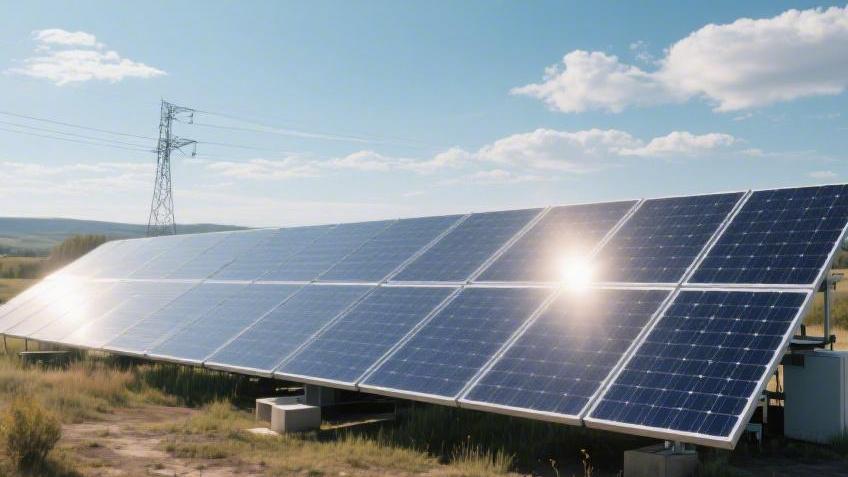
Configuring a set of 10 kW off-grid solar system, you own a 24-hour operating private power plant. This system is usually composed of 18 pieces of 550W monocrystalline silicon photovoltaic modules, with a total power reaching 9.9 kW; in areas with 4.5 hours of daily effective sunshine, it can produce 44.5 degrees of DC electricity every day.
Through an 8 kW off-grid inverter with a conversion efficiency of 96%, this amount of electricity is enough to support 100% of the energy needs of a family of five, including a 1500 W electric water heater running for 2 hours, a 1200 W air conditioner running for 10 hours, and a 300 W refrigerator operating for 24 hours. This independence completely cuts your connection with the public power grid; from then on, you are no longer affected by the approximately 3.5% annual electricity price increase fluctuations, nor do you need to pay fixed monthly transformer maintenance fees or extra 20% expenditures generated by tiered electricity prices.
In hardware configuration, the key to achieving power autonomy lies in the 48V energy storage system. A standard 20kWh lithium iron phosphate (LiFePO4) cell pack is composed of 4 modules of 51.2V 100Ah in parallel, with a total energy storage of 20.48kWh. Considering that the cycle life exceeds 6000 times when the depth of discharge (DOD) is 80%, even under extreme weather with no sunlight at all, this system can provide the family with 36 to 48 hours of basic power guarantee. The DC bus voltage of the entire system is maintained between 48V and 58V, and coordinated with an MPPT controller with a maximum charging current of 100A, it can charge a depleted cell to over 90% state within 4 hours, ensuring the closed loop of energy circulation does not depend on any external input.
Key Parameter Item | 5 kW Standard System Data | 10 kW Enhanced System Data | Independence Indicator |
Total PV Modules | 10 pieces (550 W/piece) | 20 pieces (550 W/piece) | Production Capacity Ceiling |
Daily Average Generation | 22.5 kWh (4.5 h sunshine) | Forty-five kWh (4.5 h sunshine) | Self-sufficiency Capability |
Storage Capacity Config | 10.24 kWh (48V 200Ah) | 20.48 kWh (48V 400Ah) | Endurance Duration |
Inverter Output Power | 5,000W continuous load | 10,000W continuous load | Load Ceiling |
System Peak Efficiency | 93.5% (Full link loss) | 94.2% (High voltage parallel) | Energy Utilization Rate |
Expected Service Life | Modules 25 years / Cell 10 years | Modules 25 years / Cell 12 years | Long-term Guarantee |
For a farm or cabin operating off the grid, summer peak loads often appear between 11 AM and 3 PM, at which time the output voltage of the PV array is about 37 V to 42 V (single piece), and the string voltage after series connection can reach around 400 V. High voltage input can effectively reduce the resistance loss on the cables, improving power transmission efficiency by 2% to 3%.
Because the off-grid system does not have the power grid as an "infinite reservoir," the overload capability of the inverter is crucial. A high-quality 5 kW off-grid inverter usually possesses 10 kW of instantaneous peak power, lasting about 5 to 10 seconds, which is enough to handle the 5 times rated current impact generated when a 1.5 HP water pump starts, ensuring the system will not trip due to the current surge at the moment of motor starting.
Assuming the total cost of installing a 10 kW system is 12,000 USD, in an area where the electricity price is 0.15 USD/degree, if 15,000 degrees of electricity are consumed every year, the saved electricity bill expenditure every year is 2,250 USD. Removing about 1% annual maintenance cost (mainly cleaning the dust on the PV panel surface to avoid 5% to 10% shading loss), this system can achieve positive cash flow in the 6th year. In the subsequent 15 to 20 years, the Levelized Cost of Energy (LCOE) per degree is only about 0.04 to 0.06 USD, far lower than the cost of grid power supply. This financial autonomy eliminates the uncertainty of energy expenditures caused by fossil energy shortages or carbon tax increases in the next 25 years.
In order to maintain 100% independent operation, the system also needs refined monitoring management. Through an intelligent monitoring terminal connected via an RS485 interface, users can monitor in real time whether the single cell voltage deviation of each set of batteries exceeds 0.05 V. Modern energy management systems (EMS) will adjust load priority according to weather forecast data; when it is predicted that the precipitation probability in the next 48 hours exceeds 80%, the system will automatically limit the use of high-power appliances (such as dryers, dishwashers), giving priority to ensuring the operation of 50W LED lighting systems, 60W satellite internet equipment, and 100W basic security monitoring.
A 9.9 kW PV array requires about 50 to 60 square meters of installation area, usually arranged on a roof or ground bracket tilted 30 degrees to 45 degrees facing south, to obtain 100% solar radial irradiance. The floor area of the energy storage cell cabinet is less than 1 square meter, the height is about 1.2 meters, and the weight is about 240 kg; this high-integration design, whether in remote mountainous areas or private land with limited area, can quickly build a set of solid energy closed loop. In this mode, what you own is a stable sine wave AC power source of 220 V 50 Hz/60 Hz that does not produce carbon emissions, does not produce noise, and is completely controlled by the individual, thoroughly getting rid of the interference of public facility fluctuations.
Reliability
Truly No Power Cut
One industrial-grade 8kW off-grid inverter runs continuously 24 hours a day with 95.5% conversion efficiency; two internal 120mm frequency conversion cooling fans strictly control the motherboard temperature below 45°C. The Mean Time Between Failures (MTBF) reaches 60,000 hours, equivalent to being able to run continuously for 6.8 years without hardware failure under 80% full load state.
The MPPT charge controller can handle DC current up to 100A, receive a wide voltage input from 150V to 450V, and tolerate ±15% voltage fluctuations without triggering machine protection tripping. Pure sine wave output technology suppresses Total Harmonic Distortion (THD) to within 3%; the output 120V/240V AC power is 5 times higher in power quality than the public power grid, effectively extending the lifespan of a 1,000W refrigerator compressor by 30% to 40%.
Super Durable
The external physical modules of the off-grid system are designed to deal with various extreme meteorological conditions, with very high hardware protection parameters:
· The surface of the 550W N-type monocrystalline silicon PV panel is covered with a layer of 3.2 mm thick AR-coated tempered glass, which passed IEC 61,215 standard testing and can withstand the vertical impact of 25 mm diameter hail at a speed of 23 m/s (about 82.8 km/h).
· Adopting an anodized aluminum frame and IP68 waterproof rating junction box, the panel can withstand 5400 Pa of frontal snow load (equivalent to 1.5 meters thick snow) and 2400 Pa of back wind load (can resist 130 km/h gale).
· The working temperature range of the equipment spans -40°C to +85°C; on the basis of 25°C Standard Test Conditions (STC), for every 1°C the temperature rises, the power generation decay rate is only 0.35%, ensuring that it can still output more than 94% of the nominal power in a high-temperature environment of 40°C.
Cell Stable
The 48V 300Ah lithium iron phosphate (LiFePO4) energy storage system has a built-in high-frequency cell management system (BMS), which reads the cell voltage every 10 milliseconds and balances the voltage difference of 16 strings of internal cells within 0.02V. The LFP chemical architecture reduces the probability of thermal runaway to 0.0001%, and supports 0.5C (150A) high-current charging and discharging in ambient temperatures from -20°C to 55°C.
The 14.4kWh actual usable capacity can output 4,800W of continuous power, easily pulling a 2000W deep well pump and a 1500W electric heater to work simultaneously for 3.5 hours. The system adopts a physical architecture of 4 groups in parallel; when the state of charge (SOC) of one cell module drops to 0% or a deviation occurs, the remaining 3 modules will take over 100% of the 3,600W load output within 5 milliseconds, avoiding the entire set of equipment going down and losing power.
Lifespan Long
Steady operation for decades is reflected in the extremely low annualized decay curve:
· The first-year power decay rate of N-type PV panels is controlled below 1%, and the average annual linear decay rate from the 2nd to the 25th year is only 0.4%.
· After running for 25 years, the 10 kW solar array still retains 87.4% of the original production capacity; under 4.5 hours of standard daily light, it stably produces 39.3 degrees of DC electricity every day.
· Grade A lithium iron phosphate batteries have more than 8000 cycles at 80% depth of discharge (DOD); calculated by 1 cycle of charging and discharging per day, it takes 21.9 years for the total capacity to drop below 70% of the nominal 20 kWh.
· The 4 AWG cross-linked polyethylene (XLPE) pure copper cables used in the entire system control the voltage drop within 2% within a transmission distance of 30 meters, ensuring that the 48V current maintains extremely low line loss over a span of 30 years.
Failures Few
When encountering a 10,000V lightning surge, combined with a Type 2 Surge Protective Device (SPD), the overvoltage protection circuit will cut off input within 0.1 seconds, limiting the DC bus voltage below 60V to protect motherboard microelectronic modules. The short-circuit protection mechanism possesses a 10kA fault current clearing capability, physically isolating the damaged branch through a 15A plug-in MC4 fuse, while the remaining 9 parallel strings still maintain 90% of the power generation. The daily maintenance frequency of the system is as low as once a year, only requiring 2 hours to use a torque wrench to check whether 40 bracket bolts maintain a tightening force of 45 N·m, and using an infrared thermal imager for 10 minutes to confirm there are no abnormal hot spots exceeding 65°C on the panel surface.
Combining a 12kW hybrid inverter with a 30kWh cell pack, the entire 9.5kW PV system achieved a 99.9% equipment online rate within 365 days. The 5,000W backup propane generator set with automatic start-stop intervenes when the cell SOC drops to 20%, consuming 1.2 gallons of fuel per hour, and charges the cell to 80% with 80A current within 3.5 hours, enough to handle 7 consecutive days of blizzard weather without light. The fan noise when the inverter runs at 50% load is only 45 decibels (measured at a 1-meter distance), which when installed in a 5 square meter equipment room completely complies with the 50 decibel noise control standard for residential areas.
Sustainability
Emission Reduction can be Seen
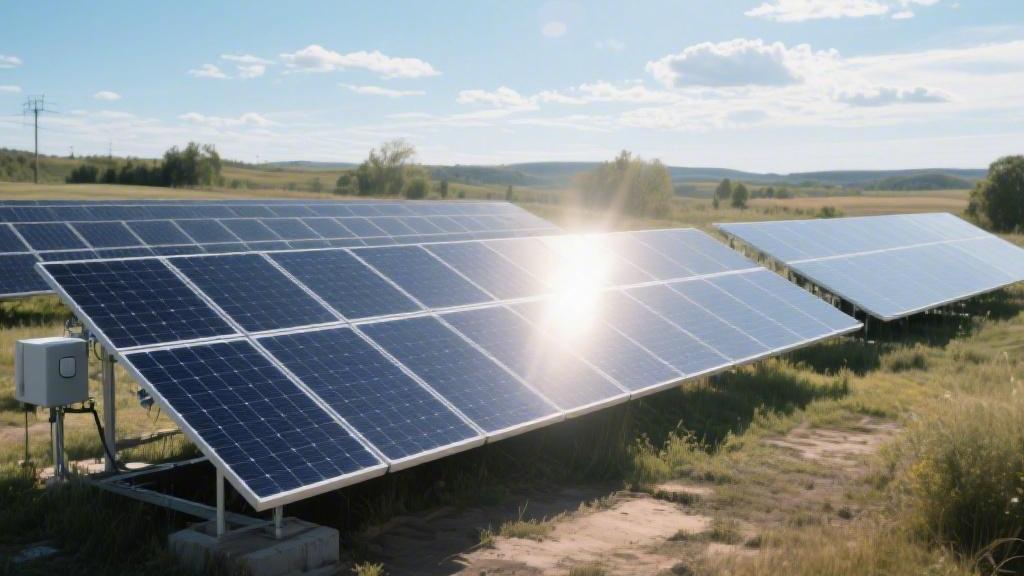
A standard 10 kW residential solar system can generate approximately 12,000 degrees of electricity every year; calculated according to the average intensity of Alberta's power grid producing 0.58 kg of CO2 per degree, this is equivalent to reducing 7 tons of greenhouse gas emissions every year. Within the 25 to 30-year physical life cycle of the entire system, the cumulative emission reduction will break through 200 tons, which is numerically equivalent to planting about 4800 adult spruce trees on a piece of land covering 2 acres.
Even in Quebec, where hydropower is the mainstay and the grid itself is already very clean, PV systems can still achieve an extra emission reduction contribution of about 0.5 tons per year by reducing dependence on imported thermal power generation during peak load periods.
According to data from Environment Canada, the federal carbon tax is expected to reach 170 CAD per ton in 2030; the 200 tons of emission reduction achieved through the solar system can implicitly save the family more than 34,000 CAD in social carbon cost expenditures over the next 30 years, while reducing the annual carbon emission intensity of the residence from an average of 45 kg per square meter to below 12 kg, a decrease as high as 73%.
Panels can be recycled
Currently, mainstream monocrystalline silicon panels on the market are mainly composed of 76% glass, 10% polymer, 8% aluminum frame, 5% silicon wafer, and 1% metal (copper, silver, tin). Among them, the recycling rate of the aluminum frame and high-transmittance cover glass has reached over 95%.
A professional recycling plant located in Ontario can extract silicon material with a purity of 99.9% from retired panels, re-investing it into semiconductor or next-generation solar cell production. This material cycle mechanism ensures that for every 1 kW of modules produced, its Energy Payback Time (EPBT) is only 1.2 to 1.5 years; the system can "repay" all the energy consumed when manufacturing it within the first 18 months of operation, and provide 100% net positive energy output in the remaining 28 years.
· Module Degradation Rate: only 0.4% to 0.5% annually for the first 10 years, ensuring 85.4% initial power after 25 years.
· Material Recycling Amount: every ton of waste panels can recycle about 700 kg of glass and 180 kg of aluminum material.
· Energy Output Ratio: the energy produced over the entire life cycle is 20 to 25 times the energy consumed for its manufacturing.
· Waste Proportion: through standardized dismantling, the landfill disposal rate after the system is scrapped can be reduced to below 3% of the total weight.
House More Value-Retaining
Joint research by Zillow and multiple Canadian real estate databases shows that residences with PV systems installed have an average premium of about 4.1% when changing hands; for a detached house located in Toronto with a market value of 1.1 million CAD, this is an immediate value increment of 45,000 CAD. In addition to the price increase on the books, solar houses can usually increase their score in EnerGuide assessments from an average of 65 points to over 85 points; this high score can directly unlock the Eco Plus plan provided by the Canada Mortgage and Housing Corporation (CMHC), obtaining a premium refund of up to 25%.
For buyers, purchasing a house that is already equipped with a 25-year lifespan guarantee and has an annual operating cost 1800 CAD lower than an ordinary residence saves more than 40,000 CAD in combined interest and electricity expenditures during a 20-year mortgage cycle.
In real estate transaction records over the past 36 months, houses equipped with solar systems have an average listing time shortened by 15% to 20% compared to ordinary residences; the core logic behind this lies in the buyer's psychological hedge against future energy inflation. This assettization conversion transforms what originally belonged to consumption expenditure on electricity into a long-term real estate investment with an annualized yield of around 8%.
Helping the Community Save Electricity
On afternoons when the summer high temperature reaches above 30°C and home air conditioning loads surge, it is also the moment when solar panels generate power most strongly; distributed PV can offset more than 60% of the community's new load in real time, reducing the probability of grid tripping due to overheating. This localized power production and consumption reduces the Ohmic loss (line loss) of about 5% to 7% during long-distance power transmission.
As Canadian electric vehicle ownership grows at an annual rate of 30%, if every family can cover its annual charging demand of about 3,500 degrees through a rooftop system, it will be able to release huge capacity reserves for the municipal power system, equivalent to every 100 solar families being able to save the power grid an upgrade budget expenditure for a medium-sized substation.
· Line Loss Reduction Rate: through local spontaneous self-use, 6 degrees of extra loss generated for every 100 degrees transmitted can be avoided.
· Peak Offset Contribution: during peak electricity use from 1 PM to 4 PM, the PV system can share 80% of the family's instantaneous load.
· Charging Cost Optimization: using solar energy to charge an EV with a range of 400 kilometers, the cost per hundred kilometers is only 0.8 CAD, saving 92% compared to an oil car.
· Grid Support Frequency: by participating in frequency regulation through smart inverters, local grid voltage fluctuations can be controlled within a range of plus or minus 2%.