What Are Common Solar Energy Myths | Efficiency, Durability, Misconceptions
Common misconceptions: photovoltaic cloudy day invalid (still can generate electricity 10–25%), life short (actual 25 years above), efficiency low (mainstream module efficiency 20%+).
Optimization: reasonable tilt angle, regular cleaning, inverter matching can improve power generation.
Efficiency
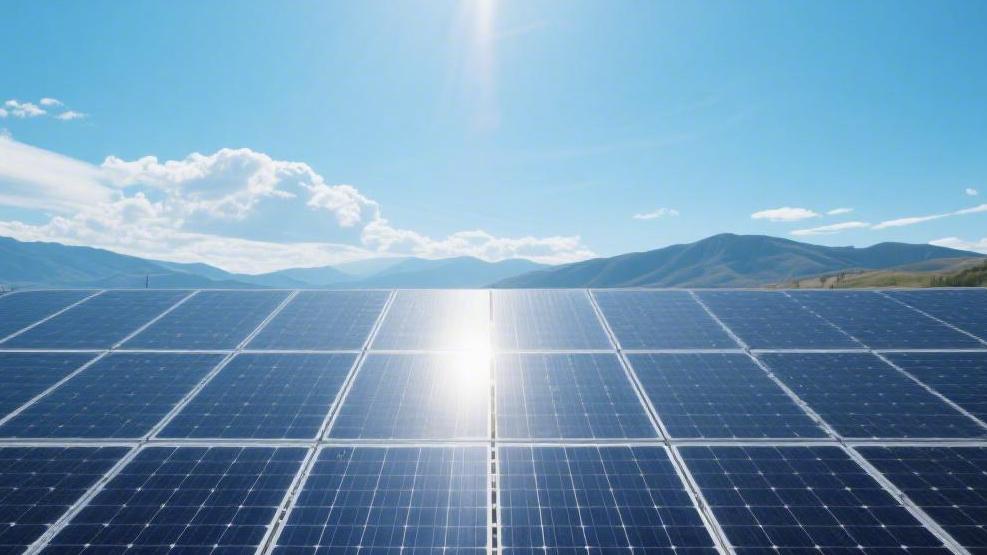
Commercialized monocrystalline silicon solar panel under standard test conditions photoelectric conversion efficiency maintains between 21.5% to 23.8%. Physics in the Shockley-Queisser limit value will single-junction silicon-based solar cell's theoretical highest conversion efficiency lock at 33.7%. The market for mass-produced N-type TOPCon module panels front power is usually 570 watts to 590 watts, module physical size approximately is 2,278 mm by 1,134 mm, corresponding to every 1 square meter surface area can produce 220 watts to 230 watts of electrical energy.
Over 76% of solar radiation energy due to light wavelength range not matching or in thermal energy form dissipates, leading to panel surface at noon 12 o'clock time absorbing about 800 watts/square meter physical thermal energy. Back contact (IBC) technology's panel through will front metal grid lines transfer to back, reduced surface about 2.5% to 3.0% optical shading area, thereby will single module's absolute conversion efficiency parameter promoted 0.8% to 1.2%.
Afraid of heat?
Environment natural temperature every rise 1.0 degree Celsius, photovoltaic module surface's actual working physical temperature will synchronously rise 1.2 to 1.5 degrees Celsius. Mainstream P-type PERC module's temperature coefficient marked parameter is -0.34%/℃, when panel surface temperature reaches 65 degrees Celsius (higher than 25 degrees Celsius standard test temperature 40 degrees Celsius), its instantaneous output power will present a 13.6% numerical drop.
HJT heterojunction panel's temperature coefficient indicator control at -0.26%/℃, under the same 65 degrees Celsius working environment, power loss amount is 10.4%, than conventional module more retained 3.2% actual power generation. In order to maintain natural convection ventilation heat dissipation, the engineering installation manual requires panel aluminum alloy frame bottom and roof surface maintain 15.0 to 20.0 centimeters air gap. This move can make the panel daytime average working temperature drop 3.0 to 5.0 degrees Celsius, retrieve 1.5% to 2.0% power loss ratio.
A little shading
A piece of surface area only occupies the whole panel 2.0% fallen leaf or bird droppings shadow, if 100% completely blocks a single independent cell's light, will trigger an internal hot spot physical effect, leading to the whole 550 watts panel's overall power instantly sliding 33.3%. Modern rectangular panel internal through series circuit welded 144 pieces half-cells, and evenly divided into 3 routes independent voltage distribute to 3 bypass diodes to conduct overload protection. When among them 1 working area suffers 100% opaque shading time, the corresponding area's diode will in 0.01 seconds time physically turn on, cut off this area's 183.3 watts direct current output power, and guarantee the remaining 366.6 watts are able to maintain 30.0 volts above the grid-connected voltage transmission.
In 30 degrees tilt angle's actual roof array middle, if adopt input voltage range at 16.0 volts to 60.0 volts micro inverter replace 800.0 volts centralized string inverter, whole set 6.0 kilowatts system's shading electricity loss will from 15.5% reduce to 2.8%, making 25.0 years life cycle inside total cumulative power generation increase 24,500 kilowatt-hours.
· Panel surface accumulated thickness is 0.5 millimeters. A dust particle layer will block visible light spectrum penetration rate, making single month total power generation in 0 rainfall's 30-day cycle inside lose 4.2% to 8.5%.
· Module produced 600.0 volts direct current needs through inverter hardware convert to 110.0 volts or 240.0 volts alternating current, first-tier brand inverter's highest conversion efficiency test nominal is 98.2%, European weighted average efficiency maintain at 97.5%.
· From the roof DC end connect to the garage inverter, then to the main distribution box AC end, total length 50.0 meters 4.0 square millimeters cross-sectional area pure copper metal cable, according to Ohm's law and 0.0175 ohm·square millimeters/meter resistivity, will produce 1.5% to 2.7% voltage line loss rate.
Panel technical specification | Initial photoelectric conversion efficiency | Power temperature coefficient | First year light-induced degradation rate | After 24 years average annual degradation rate | 250 months later remaining power ratio |
P-type PERC multi-busbar | 21.2% - 21.6% | -0.34% / ℃ | 2.0% | 0.55% | 86.8% |
N-type TOPCon dual-glass | 22.3% - 22.8% | -0.30% / ℃ | 1.0% | 0.40% | 89.4% |
HJT heterojunction thin film | 23.0% - 23.5% | -0.26% / ℃ | 1.0% | 0.35% | 90.6% |
Really degrade?
Light-induced degradation physical phenomenon happens on panels exposed to solar radiation irradiation after first 200.0 hours inside, will lead to monocrystalline silicon internal boron-oxygen complex produce chemical reaction, making the initial ex-factory rated power absolute value drop 1.5% to 2.0%. International Electrotechnical Commission IEC 61,215 standard's 800.0 hours high temperature high humidity aging cycle test shows, silicon wafer lattice aging brought linear degradation rate in subsequent 24.0 complete natural years inside, average every 12.0 months, 0.45% to 0.55% percentage drop magnitude.
A set initial peak nominal power is 10.5 kilowatts family grid-connected power generation system, in continuous operation 120.0 months after, its actual DC end standard output power will decline to 9.55 kilowatts to 9.65 kilowatts interval. Panel front 3.2 millimeters thickness high-transmittance tempered glass cover plate, its optical transmittance in experience 25.0 years outdoor wind sand particle friction after, will from initial 98.5% drop to 94.2%, lead to long-term power generation efficiency data indicator year by year downward adjust 0.12% to 0.18%. Will system performance ratio (PR value) calculation formula incorporate above 7 items hardware loss variable factors, a 30.0 degrees standard tilt angle designed 7.2 kilowatts roof power station, its actual output to AC electric meter electrical energy indicator is theoretical DC peak power's 78.5% to 82.4%.
Durability
Afraid of hail smash?
Standard photovoltaic module front covered low-iron high-transmittance tempered glass thickness is usually 3.2 millimeters, dual-glass module's front and back then each adopt 2.0 millimeters thickness semi-tempered heat-strengthened glass. The International Electrotechnical Commission formulated IEC 61,215 mandatory physical test standard requires qualified panels must be able to bear a diameter of 25.0 millimeters, mass 7.53 grams artificial ice ball with 23.0 meters/second (equivalent to 82.8 kilometers/hour) physical speed vertical impact, and glass surface 100% no shatter, internal cell micro-crack rate lower than 0.5%.
Part adopt strengthened frame and thickened 3.2 millimeters double-sided glass high-load specification panel, passed diameter tightened to 35.0 millimeters, impact speed promoted to 27.2 meters/second level-four hail anti-strike test, impact instant produced kinetic energy up to 12.2 joules.
In order to prevent glass from suffering impact, the time of deformation is 2.0 millimeters above and the squeeze thickness is only 130.0 micrometers to 150.0 micrometers monocrystalline silicon wafer, panel surroundings use cross-sectional area is 30.0 millimeters by 30.0 millimeters or 35.0 millimeters by 35.0 millimeters anodized aluminum alloy frame to conduct physical fixation, frame inner side injected has width is 4.0 millimeters to 6.0 millimeters silicone sealant, provide 0.5 megapascal above anti-stretch bonding strength.
Wind blow how fierce?
Installed on a tilted roof array, must cope with aerodynamic forces produced by upward physical pull force and downward pressure. Standard module's mechanical load parameter marked wind pressure resistance is 2400.0 pascals. This value is equivalent to the can bear per second 36.0 meters (namely 130.0 kilometers/hour level-12 hurricane) continuous wind speed brought physical wind pressure. Fix module's L-type aluminum metal hook thickness reach 5.0 millimeters to 6.0 millimeters, use diameter 8.0 millimeters, length 80.0 millimeters stainless steel hexagonal wood screw penetrate roof tiles, deep into bottom wooden truss at least 50.0 millimeters.
In coastal high wind speed zones, engineering design middle, every piece area is 2.58 square meters single panel back add 2 strips thickness 2.5 millimeters aluminum alloy reinforcing ribs, and through 4 stainless steel mid-clamps and 2 end-clamps will single panel fix on guide rail, will its anti-wind pressure physical limit value promote to 3800.0 pascals, deformation deflection control at length's 1/100 within.
· Snowing weather to module caused downward physical static load pressure standard test value is 5400.0 pascals, this equals to panel surface every 1.0 square meter able to evenly bear 550.0 kilograms of solid snow weight.
· Temperature from minus 40.0 degrees Celsius to sudden rise to plus 85.0 degrees Celsius high low temperature alternating thermal cycle test (TC200) needs to repeat 200.0 complete cycles, single time rise drop temperature rate control at per minute 1.0 to 2.0 degrees Celsius, test after requires total power degradation magnitude strictly control at 5.0% value inside.
· Ultraviolet accelerated aging test (UV15) requires a module under wavelength 280.0 nanometers to 400.0 nanometers to receive 15.0 kilowatt-hours/square meter radiation total dose, panel backsheet's yellowing index (YI value) increase amount must not exceed 3.0, physical stretch retention rate must be greater than 85.0%.
Will rust?
Photovoltaic panels as long as 25.0 years to 30.0 years outdoor physical service cycle needs to resist water vapor, salt spray, and ammonia gas triggered electrochemical corrosion phenomenon. Mainstream panel back installed junction box protection level nominally is IP68 level, its internal poured thickness reaches 15.0 millimeters flame-retardant two-module thermally conductive silicone, can in water depth 1.5 meters liquid environment continuous soak 30.0 minutes and maintain internal insulation resistance greater than 400.0 megaohms.
Module back's conductive lead wire adopts cross-sectional area 4.0 square millimeters tin-plated copper core wire, external wrapped temperature-resistant 120.0 degrees Celsius cross-linked polyolefin (XLPO) insulation layer, prevent long-term wavelength is 300.0 nanometers around ultraviolet irradiation lead to plastic outer skin happen embrittlement fracture.
In a salt content of 5.0% sodium chloride water solution, the environment temperature is set at 35.0 degrees Celsius, and the salt spray environment inside continuous spray exposes 96.0 hours (IEC 61,701 standard test), the aluminum alloy frame surface's 15.0 micrometers thickness anodized film layer mass loss less than 0.5 milligrams/square decimeter, contact resistance increase value lower than 0.1 ohms.
Not leak electricity?
Water vapor molecules if penetrate a thickness of 0.35 millimeters of fluoropolymer (like PVDF or PVF) backsheet, enter encapsulate cell's ethylene-vinyl acetate copolymer (EVA) film internally, will with residual free acetic acid happen chemical reaction produce hydrogen ions. System under DC 1000.0 volts or 1500.0 volts bias voltage physical pressure, hydrogen ions will migrate to the surface glass trigger potential induced degradation (PID) effect, in 85.0 degrees Celsius, 85.0% relative humidity double 85 test environment under continuous 96.0 hours, not done anti-PID treatment panel power drop magnitude will high up to 20.0% to 30.0%.
Modern factory through cell surface deposit a layer thickness of 75.0 nanometers to 85.0 nanometers silicon nitride (SiNx) anti-reflection film, and will its density refractive index adjust to 2.1 around, cut off leakage current's physical channel. Cross-linking degree reach 75.0% to 85.0% polyolefin elastomer (POE) encapsulate film's water vapor transmission rate is only 2.0 grams/square meter·day, which is lower than traditional EVA material near 10.0 times, from the physical material level will 192.0 hours double 85 environment test after absolute power degradation rate suppress at 1.5% parameter threshold below.
Misconceptions
Manufacture pollute?
Polysilicon raw material in the smelting process needs to use an electric arc furnace at 1900.0 degrees Celsius to reduce quartz sand to purity of 99.9999% solar-grade silicon material, and the whole extraction processing link every produces 1.0 kilogram of high-purity silicon needs to consume 60.0 to 80.0 kilowatt-hours of electrical energy. A set installed capacity is 8.0 kilowatts standard family photovoltaic array, its panel in manufacture, transport and install life cycle will produce about 4500.0 kilograms of carbon dioxide equivalent emissions.
According to a National Renewable Energy Laboratory (NREL) released life cycle assessment report, in lighting conditions medium (annual average sunshine 4.5 hours) region, photovoltaic system's energy payback time (EPBT) is between 1.2 years and 1.5 years. System in remaining 23.5 years to 28.5 years operation life cycle inside, every produces 1.0 kilowatt-hour electrical energy, its amortized carbon emission amount is 41.0 grams to 48.0 grams carbon dioxide equivalent. Burn anthracite or natural gas power station every output 1.0 kilowatt-hour electrical energy average carbon emission amount respectively high up to 1000.0 grams and 400.0 grams. A piece rated power is 400.0 watts panel in its 30.0 years design life inside, average can offset exceed 3600.0 kilograms greenhouse gas emissions, its produced clean electrical energy total amount is manufacture it consumed physical energy's 18.0 to 25.0 times.
Nighttime electricity
Lack physical energy storage cell pure grid-connected photovoltaic system in after sunset irradiance lower than 50.0 watts/square meter time, panel's DC output voltage will drop to inverter's 160.0 volts start voltage threshold below, system automatic stop physical power generation action. Users in this period consumed 100% electrical energy, all relying on the municipal power network with 120.0 volts or 240.0 volts alternating current input. Daytime noon time, a set of 7.5 kilowatts arrays every hour can produce about 6.0 kilowatt-hours of electricity, while residence in this time period average base load maybe only is 1.5 kilowatt-hours. Extra 4.5 kilowatt-hours of electrical energy will be through a bidirectional electric meter with physical current reverse feed into the local distribution network.
The net energy metering (NEM) mechanism allows users to transport daytime electricity to the grid every degree with a 1:1 ratio convert to electricity use credits. At nighttime or winter months, when power generation is insufficient, users can consume bill on accumulated kilowatt-hours credits to deduct from grid draw electricity's fee.
In an implement time-of-use (TOU) pricing region, the afternoon 16:00 to evening 21:00 peak electricity price may be high, up to per kilowatt-hour 0.45 dollars, while the morning valley time period electricity price is only 0.15 dollars. Will panel orientation set as west-southwest 255.0 degrees angle, can make power generation peak period backward delay 1.5 to 2.0 hours, will afternoon 16:00 after peak output power promote 20.0% to 35.0%, utilize high electricity price time period billing multiplier realize 2.5 times electricity bill deduction revenue, in 24.0 months settlement cycle inside make overall bill return rate extra increase 12.4%.
House appreciate?
Real estate appraisal data show, possess independent property rights solar array residence, its listing sell price will premium 4.1% to 4.5%. Take a building market benchmark valuation of 500,000.0 dollars for a single-family house as an example, install a 6.0 kilowatt solar system, and its appraised value can increase 20,500.0 dollars to 22,500.0 dollars. Second-hand house buyer willing to pay every 1.0 watt installed photovoltaic capacity extra 3.0 dollars to 4.0 dollars house buying budget. House transaction cycle statistical sample shows, equipped photovoltaic system and attach 10.0 years above valid inverter warranty real estate, in open market average listing stay time than not installed system similar real estate short 15.0% to 20.0%.
If photovoltaic panels are through term 20.0 years third-party power purchase agreement (PPA) or long-term lease contract installed, and remaining contract term exceeds 120.0 months, at house ownership transfer time, buyer must pass credit score review (usually requires FICO score higher than 650.0 points) and bear per month 85.0 dollars to 120.0 dollars fixed rent.
Leased system not belong to house fixed physical asset, appraiser in calculating mortgage loan limit time will will future 15.0 years lease liability from house total value middle deduct, this kind of physical property rights ownership difference will lead to 18.5% potential buyers because unwilling to undertake monthly liability contract and give up purchase intention. Full payment buy or already settled loan system, contains completely handed over 25.0 years panel power degradation warranty document as well as 15.0 years roof penetration parts anti-leakage construction warranty contract, can act as an independent value-added asset merge into real estate appraisal model middle, will asset internal rate of return (IRR) maintain at 8.5% to 11.2% interval.