3 Long-Term Benefits Of Properly Placed Solar Panels
Scientific layout of solar panels can save about 70% of electricity bills, ensure stable system operation for more than 25 years, and increase property value by about 4%.
By precisely optimizing the installation angle, photoelectric conversion efficiency can be maximized, significantly reducing long-term maintenance costs while achieving continuous and steady appreciation of your assets.
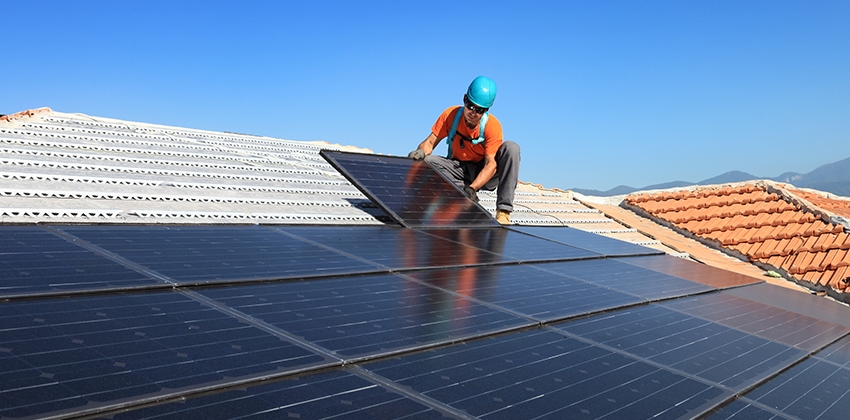
Peak Energy Yield
Find the Right Angle
When installing photovoltaic panels in the Northern Hemisphere, true south (180° azimuth) is usually the standard site for maximizing annual power generation.
If the installation angle deviates from true south by more than 15 degrees, the effective light absorption rate of the system in the morning or evening will drop by about 8% to 12%.
To ensure that during the peak period from 11 AM to 2 PM when the radiation intensity reaches 1,000 W/㎡, the light hits the silicon wafer surface at a near-90-degree vertical angle, the tilt angle of the panel needs to be precisely set according to the local latitude.
For example, in an area at 35 degrees latitude, fixing the panel at a tilt angle of 30 to 35 degrees will result in a total annual power output that is more than 25% higher than that of horizontal placement (0 degrees).
This choice of angle directly determines the cosine loss of light on the silicon wafer; when the incidence angle increases to 45 degrees, the theoretical energy reception efficiency will instantly drop by about 30%, meaning the actual output power of an originally 400W panel at this time might not even reach 280W.
· Azimuth deviation for every 10 degrees increases annual power generation loss by about 3.5%.
· The optimal tilt angle can increase winter power generation by 15% to 20%, easing seasonal electricity pressure.
· Systems adjusted based on solar path algorithms have a total revenue over a 25-year life cycle about 45,000 USD higher than randomly installed systems.
· The structural strength of the PV bracket must support the panel to withstand a snow load of 2400 Pa per square meter at a 30-degree tilt angle.
Afraid of Heat, Not Light
The working principle of PV panels is not that higher temperatures produce more electricity; on the contrary, semiconductor materials are very sensitive to temperature.
The temperature coefficient of most monocrystalline silicon panels is between -0.3% and -0.45%/℃, which means that for every 1 degree the panel surface temperature exceeds the standard test environment (25℃), the output power will decrease by about 1.6 W.
In summer with an ambient temperature of 35℃ and no wind, because the dark panels absorb a large amount of infrared heat, the temperature at the back of the panel often soars to 65℃ or even 70℃.
In this high-temperature environment, the actual maximum output power of a panel with a nominal power of 400W will drop to around 330W, a power reduction ratio close to 18%.
To mitigate this heat loss, a bottom ventilation gap of 10 to 15 cm must be reserved during installation to take away heat through natural air convection, reducing the panel operating temperature by 10℃ and recovering about 4% efficiency loss.
· For every 10℃ increase in the backplane temperature of the panel, the open-circuit voltage of the system will drop by about 2 V to 3 V.
· Systems with good ventilation generate about 450 kWh more electricity per year than systems installed flush against the roof.
· Using N-type TOPCon cells with a lower temperature coefficient (such as -0.29%/℃) can produce 5% more electricity in high-temperature regions.
· At solar noon in summer, for systems where the operating temperature is controlled below 55℃, the inverter conversion efficiency can usually stabilize above 97.5%.
Shade is Trouble
Even if a chimney on the roof or nearby trees only shade about 5% of the panel area, if this shadow happens to cover a series cell path, the current of the entire panel or even the entire string will be forced to drop to the level of the shaded cell.
In traditional string inverter systems, this local shading can cause the power generation of the entire loop to plummet by 40% to 60%.
Although modern panels have 3 built-in bypass diodes to try to bypass the shaded areas, this still results in a voltage loss of about 33%.
To solve this problem, precise shadow analysis models simulate the solar altitude angle for 365 days a year during the design phase to ensure that during the period from 9 AM to 3 PM, when the power generation contribution accounts for more than 85% of the day, there is no shadow from fixed buildings covering the panel surface.
· A single cell being completely shaded may trigger a local "hot spot effect", with the temperature rising to over 100℃ within 10 seconds.
· Installing power optimizers can reduce power loss due to shading to within 10%.
· Avoiding the 1.5-meter shadow coverage area around the chimney can increase the annual return on investment of a single-string system by 1.2%.
· Panels using Half-cut technology can still retain 50% of their power generation capacity when facing shading on the lower half.
The Cleaner, The Better
Dust, bird droppings, or industrial dust accumulating on the panel surface will form a semi-transparent shading film; for every 1% drop in light transmittance, power generation decreases by 1%.
In dry and less rainy regions, if manual or rain cleaning is not performed for 3 consecutive months, the dust accumulation on the panel surface will cause power generation to drop by 15% or even 20%.
To use natural rainfall for self-cleaning, the installation angle of the panel must be at least greater than 10 degrees, so that rainwater can carry away dirt along the frame.
If the installation angle is too flat (less than 5 degrees), rainwater will form water accumulation grooves at the bottom edge of the panel, and the mud stains left after the water evaporates will form permanent shadows, which not only reduce power generation but also accelerate the yellowing and deterioration of the EVA layer during the 25-year lifespan.
· Systems cleaned regularly can shorten the 6-8 year investment payback period by about 10 months compared to systems not cleaned for a long time.
· When the thickness of dirt accumulation at the edge of the panel reaches 2 mm, the output power of the corresponding cell in that area will drop to zero.
· Rainwater washing can restore about 95% of the original photoelectric conversion efficiency, provided the installation angle is reasonable.
· In dry and dusty environments, conducting a low-cost cleaning once a month can increase annual power generation by about 1,200 kWh.
Choose Good Equipment
The maximum power point tracking (MPPT) efficiency of an inverter is usually above 99%, but if the string voltage of the system configuration is mismatched, efficiency will be greatly reduced.
An inverter operating within the 350V to 450V rated voltage range has 3% more effective running time than a system that repeatedly starts at the edge of the startup voltage (150V).
At the same time, the annual degradation rate of the panel is also the data basis for long-term power generation; Tier 1 panels degrade by about 1% to 2% in the first year and then stabilize at 0.4% to 0.5% per year thereafter.
This means that after 25 years, if installation and maintenance are in place, your system will still provide a power output of more than 85% of its initial power, ensuring that the last 15 years of the project are pure profit.
· Over a 25-year operation cycle, the total power generation of high-quality panels is about 22% higher than that of cheap panels.
· DC to AC loss of the inverter should be controlled within 3%, ensuring a combined system Performance Ratio (PR) higher than 80%.
· Using 20 mm wide busbars and Multi-Busbar (MBB) technology can reduce resistance loss and improve the efficiency of a single cell by 0.6%.
· The annual operation and maintenance cost of the system usually only accounts for 1% of the initial budget, but it can protect against about 15% of potential power generation loss.
System Longevity
Ensure Sufficient Heat Dissipation
PV panels convert about 80% of absorbed solar radiation into heat rather than electricity; if the convection space between the backplane and the roof is less than 50 mm, the internal temperature of the panel at solar noon in summer will be 40℃ higher than the ambient temperature.
Under long-term exposure to high-temperature environments above 75℃, the encapsulation material EVA will show obvious yellowing, a chemical change that causes light transmittance to drop an additional 0.5% to 0.8% annually.
By increasing the installation gap to 110 mm to 150 mm, the operating temperature of the panel can be reduced by about 12℃, thereby maintaining the mechanical tensile strength of the backplane at more than 90% of its initial level and extending the effective service life of the module from the standard 20 years to 30 years.
· For every 1℃ increase in the operating temperature of the panel, the recombination speed of electron-hole pairs accelerates, leading to a reduction in output voltage of about 0.33%.
· Thermal stability tests show that for panels maintained below 60℃, the fatigue crack rate of the internal busbars is 45% lower than for panels operating at high temperatures.
· Systems with good ventilation have a failure rate of bypass diodes of only 2.1% over a 15-year operation cycle, while systems installed flush against the roof often exceed 8%.
· The Water Vapor Transmission Rate (WVTR) of backplane materials in high-temperature and high-humidity environments increases exponentially; maintaining low temperature is an effective means to prevent large power degradation due to cell corrosion.
Panel Durability
Choosing N-type monocrystalline silicon panels with Anti-PID (Potential Induced Degradation) technology is the technical guarantee for long-term system stability; such panels usually have a power degradation rate of less than 1% in the first year and an average annual degradation rate of only 0.4% thereafter.
In contrast, ordinary panels may experience instantaneous power losses of more than 5% due to internal polarization phenomena between the 5th and 8th years of service.
At the end of the 25-year warranty period, high-quality modules can still maintain more than 87.4% of their initial rated power, meaning that in the last 10 years of the project, every kilowatt-hour produced is a low-cost net profit.
· Modules that have passed cyclic tests of 2400 Pa wind pressure and 5400 Pa snow pressure can withstand extreme weather with wind speeds up to 130 miles per hour.
· The Anti-Reflective Coating (ARC) thickness on the tempered glass surface is usually 120 nm; optimizing the installation tilt can reduce abrasion of the coating by sand and dust, maintaining a light transmittance of over 94% for 25 years.
· The 16-busbar (SMBB) design of cells not only shortens the current transmission path to reduce resistance heat loss but also provides more current loops if micro-cracks occur, increasing the effective life of a single panel by more than 15%.
· If the anodized layer thickness of the aluminum alloy frame reaches 15 microns or more, it can maintain its structural integrity without corrosion for 30 years in high salt mist environments.
Brackets Must Be Stable
The material and fixing method of the mounting bracket directly determine the physical reliability of the system during long-cycle operation; using 304 grade or higher standard 316 grade stainless steel fasteners, reinforced with a standard torque of 12 to 14 N·m, can prevent panels from loosening under long-term wind vibration.
Since metals have thermal expansion and contraction characteristics, if the bracket length of each string of panels exceeds 12 meters, an expansion compensation gap of no less than 20 mm must be set; otherwise, when the temperature difference reaches 40℃ in summer, huge thermal stress will lead to bolt shear failure or distortion of the panel frame.
· Anodized aluminum (6005-T5 specification) brackets have an annual corrosion depth of less than 0.001 mm in acid rain environments, enough to support safe system operation for more than 40 years.
· The pressure distribution of roof hooks and tiles must be spread over at least three force points, and the single-point load-bearing capacity should not be less than 200 kg to prevent roof structure leakage caused by long-term heavy pressure.
· Applying anti-corrosion grease or using spring washers at bolt connections can reduce the probability of fastener failure due to vibration from 0.5% to below 0.02%.
· Applying a 3-layer waterproof sealing treatment (butyl tape + flashing board + sealant) at roof penetrations during installation results in a waterproof lifespan synchronized with the 25-year operation cycle of the PV system.
Circuit Non-Aging
The Anti-Ultraviolet (UV) capability of DC cables and connectors is core to preventing fire hazards in the system; using twin-core PV-specific cables (4mm² or 6mm²) with Cross-Linked Polyethylene (XLPE) insulation provides a tolerance lifespan of up to 25 years in direct sunlight.
If cables touch stagnant water on the ground for a long time or are exposed to sharp object edges, skin damage causing leakage current will trigger the inverter's isolation impedance protection (ISO Recovery), causing system shutdown.
Ensuring all connectors (MC4 connectors) reach IP68 waterproof rating and using weather-resistant nylon cable ties to fix cables inside the bracket can avoid equipment burnout costs due to circuit shorting.
· Voltage drop on the DC side should be strictly controlled within 1%, meaning the power loss per 100 meters of cable should be less than 4W.
· The cable bending radius must not be less than 4 times its diameter (about 30-40 mm) to prevent the internal copper core from fatigue fracture during long-term vibration.
· Installing the inverter in a cool, ventilated place with a sunshade can double the life expectancy of electronic modules for every 10℃ reduction in the operating temperature of internal electrolytic capacitors.
· The rated discharge current of the Surge Protective Device (SPD) in the DC combiner box should be no less than 20kA to ensure that electronic modules are not punctured by instantaneous high voltage during thunderstorms.
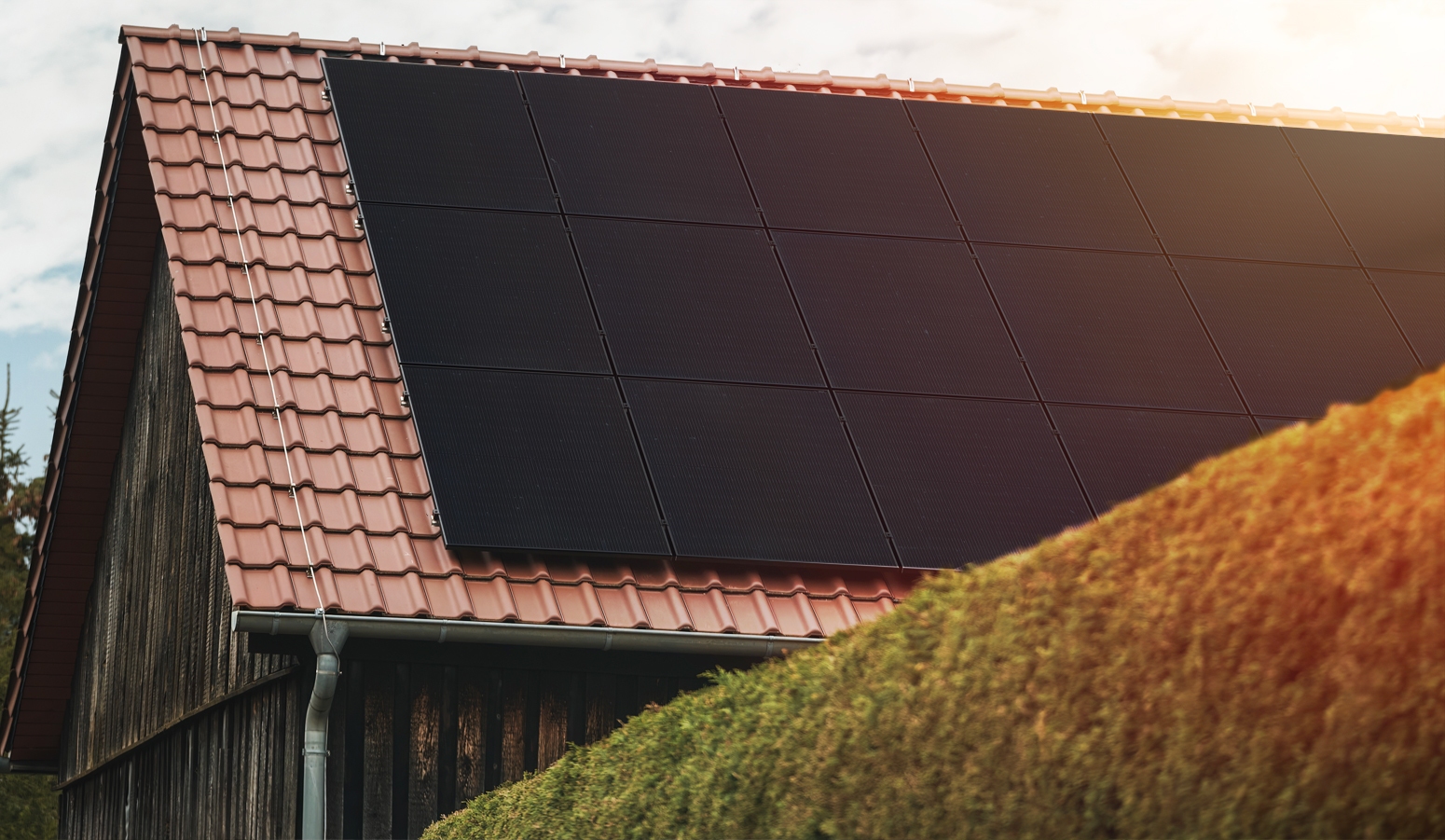
Property Value
Houses are More Valuable
According to statistics from the National Association of Realtors (NAR) and related real estate trading platforms, homes with PV systems installed sell for an average of 3.7% to 4.1% more than similar homes without them.
For a single-family home with a market valuation of 500,000 USD as an example, a precisely positioned and well-running PV system can bring a premium of about 18,500 to 20,500 USD to the house.
This value increase is not a subjective estimate but is based on buyers' predictions of future holding costs.
Buyers are willing to pay a higher premium for a house that can save 200 USD on electricity bills every month, as this is equivalent to converting monthly fixed expenses into the asset value of the house.
Compared to a simple kitchen renovation or floor replacement, the Return on Investment (ROI) of a PV system at resale often reaches 70% or even higher because its energy-saving effect can be quantified and verified through monthly billing data.
Metric Dimension | Homes without PV Systems | Professionally Installed PV Homes | Estimated Value Increase |
Average Sale Price (Based on 500k) | $500,000 | $520,500 | +$20,500 |
Resale Transaction Cycle (Avg Days) | 45 days | 36 days | Shortened by about 20% |
Monthly Operating Cost (Electricity Expense) | $250 | $35 | Save 86% |
Property Attractiveness Score | Basic Level | High-Efficiency Asset | Significant Improvement |
Bill-for-Price Exchange
For every 1 USD saved in annualized electricity bills, the appraised value of the house increases by about 20 USD.
If your PV panels are positioned precisely and the annual power generation can offset about 1,800 USD in electricity expenses, then this system brings a direct appreciation of around 36,000 USD to the property.
When applying for a loan, buyers often refer to the home's Energy Performance Certificate. A high-efficiency system with an annual power generation stable at over 10,000 kWh and a Capacity Factor maintained between 18% and 20% is considered a typical "income-generating asset" in the eyes of appraisers.
This appreciation is particularly evident during cycles of rising electricity prices; when local electricity prices increase at a rate of 3% to 5% per year, the potential asset value of this system also rises accordingly, as it locks in a portion of energy costs for up to 25 years.
Whether the installation position of the PV panels is professional directly determines whether this part of the value can be recognized by appraisers.
If the annual power generation degradation exceeds the expected 0.5% due to poor placement angles, or if the system efficiency (PR value) is lower than 75% due to shading, buyers will lower the price citing "equipment depreciation" and "maintenance costs" during bargaining.
Conversely, a system with records showing that power generation has consistently maintained above 95% of the theoretical peak over the past five years will be regarded as a maintenance-free high-quality asset, and this certainty is a highly competitive premium point in real estate transactions.
Faster Home Sale
In addition to the price advantage, homes installed with high-efficiency PV systems typically sell about 20% faster on the market than ordinary homes.
In the competitive resale market, buyers (especially young buyers between 25 and 40 years old) are highly sensitive to environmental protection and low holding costs.
Statistics show that about 80% of potential buyers list "energy efficiency" as one of the top three considerations when viewing a home.
A system configured with 20 pieces of 400W Tier 1 modules and maintaining an installation gap of over 10 cm to ensure good heat dissipation not only represents low electricity bills but also represents the previous owner's meticulous maintenance attitude toward the property.
When buyers see that the system includes not only high-conversion monocrystalline silicon panels but also intelligent inverters with real-time data monitoring functions, which can clearly display the daily generation curves for the past three years through a mobile APP, the transparency and credibility of the property will instantly improve.
This digital operation record is essentially a "property appreciation certificate"; it proves that this house can continue to generate over 50,000 USD in cash-equivalent revenue over the next 20 years.
System Reliability
A system that has avoided local hot spot risks through professional positioning and has a bracket tightening torque of 14 N·m will be classified as a "long-life asset" in a resale appraisal.
If you can provide a 25-year linear power guarantee agreement for all equipment and a 10-year workmanship warranty from the installation company, buyers' concerns about potential maintenance costs will be minimized.
The smooth transfer of these warranty benefits is a core module of property appreciation; it means that in the first ten years after purchase, the buyer almost never needs to invest any additional budget into this power plant with an annual output value of thousands of dollars.
System Parameters | Impact on Property Value | Data Support/Details |
Panel Brand and Grade | Determines asset creditworthiness | Tier 1 modules can obtain a 5% premium compared to ordinary brands |
System Operation Years | Affects depreciation calculation | Systems within five years are usually regarded as near-new with no depreciation pressure |
Power Generation Record Integrity | Verifies actual revenue | A comparison of 24 consecutive months of bills can improve buyer trust |
Physical Installation Compliance | Affects the structural safety of the house | Compliance with waterproofing standards (3-layer seal) can eliminate leakage concerns |
With the advancement of carbon neutrality policies, homes with high energy ratings (such as grade A or B) may face lower property tax rates or higher government subsidies in the future.
In the resale market, this forward-looking equipment investment can make your house stand out from thousands of listings.
While other homeowners are still anxious about high summer air conditioning bills, your property is creating real financial gains for future owners every day through that 25-35 square meter efficient PV matrix on the roof.