How Does Solar Support Sustainable Cities | Clean Power, Buildings, Transit
Urban promoting BIPV improves building 20% energy efficiency, using solar charging piles drive green buses, rooftop PV covers 40% electricity use, realizing energy self-sufficiency and low-carbon transit integration.
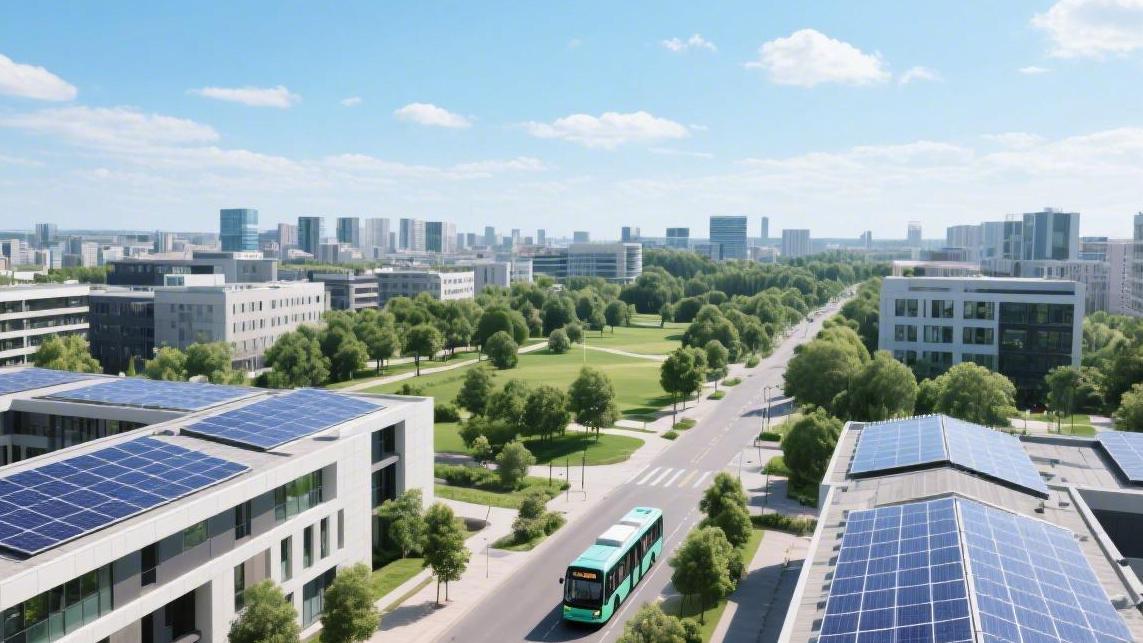
Clean Power
Into Grid
Urban laid photovoltaic equipment produces electric energy of 1000 Volts to 1500 Volts DC, needs through string inverters convert it to 800 Volts AC then can enter the urban power grid. Currently using Silicon Carbide modules, commercial inverters conversion efficiency can stabilize at 98.8% around. Conversion completed 800 Volts AC subsequently enters step-up transformers, is lifted to 10 kV or 33 kV, enters urban medium-voltage distribution network for dispatching.
Traditional thermal or hydropower plants are usually located at distances from cities hundreds of kilometers away, and electric energy in long-distance transmission line grids will produce 5% to 8% line loss. Photovoltaic equipment installed in electricity demand extremely high commercial areas or industrial parks internal, power generation position and electricity use position physical distance usually not reaching 5 kilometers, line loss rate is drastically pressed low to 1.5% below.
In a 50 MVA capacity substation community, summer afternoon at 2 o'clock, air conditioning high-frequency operation will let the substation load reach 45 MVA (90% full load state). If this area is configured with an installation capacity of 15 MW distributed photovoltaic network, the afternoon at 2 o'clock exactly is the photovoltaic output power reaching the peak time period.
Photovoltaic sent out electric energy will prioritize supply to surrounding buildings, substation bears actual net load will immediately drop to 30 MVA. Internal coils' operating temperature following this reduces 10 degrees Celsius to 15 degrees Celsius, cost high as 2 million dollars substation transformer physical aging speed slows, service life average extended 7 to 10 years.
Calculate Cost
In city constructing Megawatt-level commercial clean power network, current initial capital expenditure (CAPEX) per Watt is 0.85 dollars to 1.10 dollars. Planning construction of a 5 Megawatt (MW) scale photovoltaic power generation zone, early hardware and engineering total budget about 4.5 million dollars. Specific budget breakdown distribution has strict industry proportion allocation:
· Photovoltaic panel procurement occupies a total budget of 40% to 45%, N-type silicon wafer module procurement unit price per Watt 0.18 dollars to 0.22 dollars.
· Inverters, combiner boxes, and related electrical equipment cost 15%, converted unit price about per Watt 0.06 dollars.
· Galvanized steel or aluminum alloy bracket systems and cable routing occupy 10%, per Watt material fee about 0.04 dollars.
· Labor installation fee occupies 15% to 20%, possessing high-voltage electrician operation qualification workers hourly wage according to 45 dollars to 60 dollars.
· Project early stage 3D shadow engineering design, grid-connection approval permit, and rooftop load reinforcement occupy the remaining 10% budget.
Equipment grid-connected operating after annual operation and maintenance (O&M) fee according to per kilowatt per year 12 dollars to 15 dollars listed. According to a 25-year equipment life cycle and a 6% discount rate, calculate the Levelized Cost of Energy (LCOE), the whole set system producing 1 degree (kWh) clean electricity comprehensive cost between 0.035 dollars and 0.05 dollars. Comparing municipal grid 0.12 dollars to 0.18 dollars commercial electricity billing standard, investor not calculating any government subsidies situation, can obtain 11% to 14% internal rate of return (IRR).
Choosing Modules
Urban building rooftops and parking lots idle area is very limited, toward unit area within power generation power density requirement extremely high. Large urban photovoltaic projects mainly adopt N-type TOPCon (Tunnel Oxide Passivated Contact) or Heterojunction (HJT) bifacial power generation silicon-based modules. One industrial standard size is 2,278 mm by 1,134 mm panel, under Standard Test Conditions, peak output power reaches 570 Watt to 600 Watt, photoelectric conversion efficiency at 22.5% to 23.2% interval.
Panel manufacturers provided a 30-year linear power warranty agreement stipulates, modules put into use first year power attenuation rate upper limit is 1%, subsequently 29 years every year attenuation rate not exceeding 0.4%. Running for 30th year, the panel can still maintain 87.4% above rated output power. Panel maximum power temperature coefficient is -0.29%/℃, in hot urban summer, panel operating temperature every exceeding 25 degrees Celsius 1 degree, output power will only drop 0.29%. The equipment outer frame adopts 35 mm thick anodized aluminum alloy material, and through wind tunnel testing can bear 2400 Pascals (Pa) positive wind load, and 5400 Pascals mechanical snow load.
Adjusting Peaks and Valleys
The solar power generation curve presents obvious normal distribution characteristics, with morning 6 o'clock starting with weak current produced, afternoon 1 o'clock around reaching the output highest value, and evening 7 o'clock after the sun setting, the power generation amount returns to zero. The urban overall electricity use curve at 9 o'clock in the morning and 6 o'clock in the evening will appear two obvious load peaks, power generation and electricity use on the time axis exist displacement difference. Ten-million population level cities through Virtual Power Plant (VPP) software platform to dispatch massive scattered clean energy.
Virtual Power Plant platform utilizes 4G/5G Internet of Things remote transmission terminals, takes distributed in city various corners 5,000 to 10,000 independent photovoltaic arrays' data converge on the same control panel. The system reads every 200 milliseconds once every node's output current, voltage, and power factor.
When electricity wholesale market per degree price in the afternoon from 5 o'clock to 6 o'clock period from 40 dollars/MWh surges to 150 dollars/MWh, Virtual Power Plant will all networked smart inverters send high-frequency instructions, full power toward the grid transmit active power. Inverters possess reactive power compensation function, cooperating with the grid dispatch center, take the whole area power factor controlled in the 0.95 to 1.0 interval, guaranteeing end users' voltage fluctuation rate not exceeding ±5% legal tolerance limit.
Buildings
Calculate Weight Bearing
One standard size is 2,278 mm by 1,134 mm, area about 2.58 square meters monocrystalline silicon bifacial glass photovoltaic panel, factory weight is usually 27.5 kg, spread to rooftop physical weight about per square meter 10.6 kg. In order not to destroy the original SBS modified asphalt waterproof layer, the construction team will give up the hole-drilling bolt fixing method and change to use self-weight larger concrete ballast blocks to press down the tilt angle of 15 degrees aluminum alloy brackets.
Adding brackets and cable trough weight, the whole photovoltaic system giving rooftop added extra dead load is controlled at per square meter 25 kg to 32 kg, far lower than the 200 kg safety upper limit. Toward bearing capacity weaker storage logistics center color steel tile rooftop, live load upper limit usually only has per square meter 30 kg.
The engineering scheme will switch to using specialized aluminum alloy clamps, directly snapped on color steel tile crest gaps, not using any concrete ballast, system total weight plummeted to per square meter 12 kg. Considering meteorological data within every year, possibly encounter maximum wind force, clamps must use torque wrench tighten to 15 Newton-meters rated value, ensuring at per hour 120 kilometers gust sweeping across the rooftop, panel can bear about 1200 Pascals upward wind uplift force without happening even 1 mm physical displacement.
Stick on Glass
Regular light-shading solar panels unable used for having daylighting demand windows, building facades will change to Cadmium Telluride (CdTe) thin-film photovoltaic glass. This kind of power generation glass transmittance can be customized according to the floor sun-facing angle, parameters between 10% and 50% free floating. Transmittance set as 30% Cadmium Telluride glass, per square meter rated power generation power about 90 Watt.
Installing standard double-layer building heat-insulation hollow glass market average price is per square meter 80 dollars, while replacing with the same size thin-film power generation glass, material unit price will rise to per square meter 160 dollars to 180 dollars. In a 10,000 square meter south-facing outer wall 50-story office building project, all replacing with power generation glass can bring 900 kW installation capacity.
In an annual vertical sunshine time reaching 1,000 hours latitude area, this piece of wall can output 900,000 degrees DC electricity every year. According to per degree electricity 0.15 dollars commercial billing standard, the whole building saves 135,000 dollars electricity fee every year. Regarding that per square meter extra spent 80 to 100 dollars, the financial calculation static investment payback period is about locked at 7.5 years around.
Building Installation Position | Suited Panel Type | System Weight Load | Suggested Installation Tilt | Per Square Meter Power | Per Watt Hardware Cost | Expected Investment Return Period |
Concrete Flat Roof | N-type Double-glass Module | 25-32 kg/m² | 10° - 15° | 210 - 220 W | $0.85 - $0.95 | 4.5 - 5.5 Years |
Color Steel Tile Metal Top | Regular Single-glass Module | 10-15 kg/m² | Flat or 5° | 190 - 200 W | $0.75 - $0.85 | 4.0 - 5.0 Years |
Building Daylighting Top | Cadmium Telluride Thin-film | 20-25 kg/m² | By building shape | 80 - 100 W | $1.50 - $1.80 | 6.5 - 7.5 Years |
Vertical Outer Facade Wall | Crystalline Silicon Laminated Glass | 30-40 kg/m² | 90° (Vertical) | 120-140 W | $2.00 - $2.40 | 8.0 - 9.5 Years |
Sun Shading
Covered on rooftop surface photovoltaic arrays act as one layer huge physical heat insulation shield, can absorb, convert, or reflect away as much as 80% solar radiation heat. Photovoltaic panels and building original rooftop usually leave 15 cm to 20 cm physical gap, outdoor air in this narrow channel flows internally, taking away panel back side dissipated heat, forming one natural air-cooled convection layer.
In July, the air temperature reached 35 degrees Celsius, and the cloudless afternoon, exposed to direct sunshine, asphalt rooftop surface temperature will surge to 65 degrees Celsius, while installed photovoltaic network coverage same material rooftop, surface temperature will be forced pressed low to 40 degrees Celsius below. Heat conduction entering indoor heat is shaved, occupying an area of 5,000 square meters. The large shopping mall's top floor indoor ceiling temperature drops 3 to 5 degrees Celsius.
Mall central air conditioning system cooling load pressure will immediately lighten 15% to 20%. One cooling capacity as 500 refrigeration tons (per ton electricity consumption about 0.6 kW) commercial chiller unit, every day can reduce 1.5 hours high-frequency operation time, single day saving 450 degrees air conditioning electricity. In the period of 120 days, only air conditioning consumption reduction this one item, then can for mall property account book cross out 54,000 extra electricity expenditure, according to summer peak electricity price 0.20 dollars calculate, this sum hidden gain reached 10,800 dollars.
Robot Wash
When the panel surface dust accumulation thickness reaches 1 mm, light transmittance will drop 15%, and the whole set system's annual power generation gain will follow this evaporate 3% to 7%. Height exceeding 15 meters commercial buildings extremely rarely hire labor holding high-pressure water guns to flush, high-altitude operation hourly cost high as per hour 35 dollars, and per square meter panel needs consume 1.5 liters of tap water. Building management system will access crawler-type waterless cleaning robot.
One length 1.2 meters, weight 12 kg aluminum alloy robot, relies on bottom crawler at 15 degrees tilt angle array at every minute 12 meters speed automatically crawl. Equipment front end high molecular ultra-fine fiber roller brush at every minute 150 rotations (RPM) rate high speed rotates, utilizing airflow and electrostatic adsorption sweeps down dust. Built-in lithium cell capacity is 24 Ah, full power state under can continuously operate 4 hours, coverage area about 3,000 square meters.
At 20% of electricity remaining time, the robot will utilize infrared navigation automatically return to the located at rooftop edge exclusive wireless charging dock, using 2 hours to re-fill electricity. The system background usually takes cleaning program set at every month first week and third week dawn 2 o'clock execute, completely avoiding daytime power generation time period, one marked price 6,000 dollars robot through winning back power generation loss and saving high-altitude cleaning labor fee, only needs 14 to 16 months then can on financial account book wipe flat its own procurement cost.
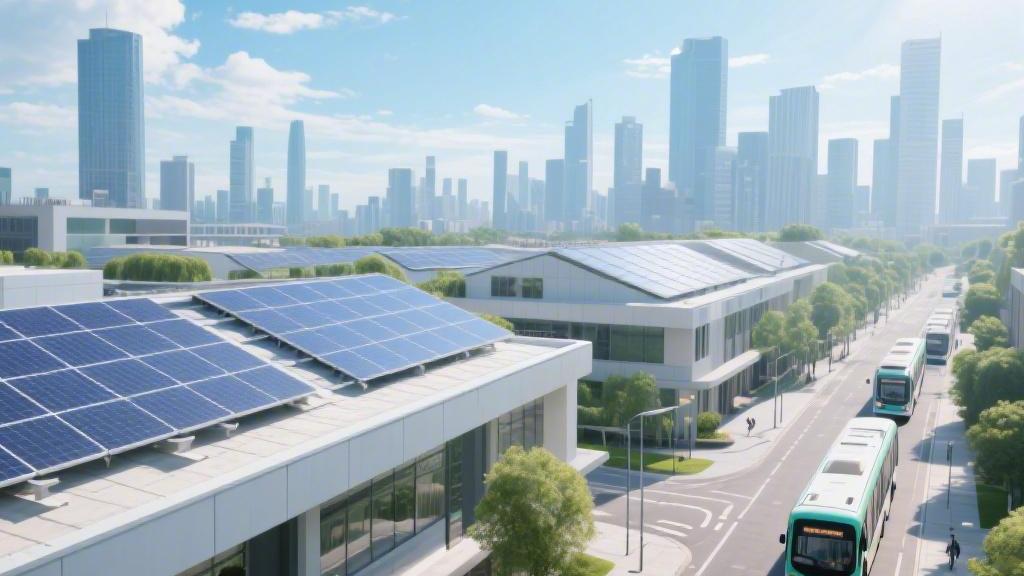
Transit
Plug Gun Charge Bus
One standard 12-meter pure electric urban bus chassis usually carries a capacity of 350 kWh Lithium Iron Phosphate cell pack, and the hundred-kilometer electricity consumption average is stable at 85 kWh to 95 kWh. According to single vehicle daily driving 250 kilometers operation intensity calculation, every vehicle every day needs to consume about 225 degrees of electricity. The station roof every day produced 13,500 degrees of photovoltaic green electricity, exactly able to satisfy 60 pure electric buses' single-day full-attendance energy consumption index.
In order to match the bus brief day-shift handover rest window, the station will install output power high as 360 kW split-type DC super charging piles. Charging cable internal wraps liquid cooling circulation pipes, can take continuously passing 500 Ampere high-voltage current produced heat in 20 seconds, quickly take away, letting cable outer surface temperature strictly maintain 40 degrees Celsius below.
When one electricity remains 15% bus at noon 12 o'clock drives into parking space and plugs into charging gun after, photovoltaic system sends out electric energy skips municipal grid's transformer, is sent into charging pile's rectifier cabinet. Under 800 volts high-voltage platform, only needs short 45 minutes, then can take bus electricity forcibly pull up to 85%.
Rail Trains
Urban subway networks and elevated light rail systems are typical electricity consumption big users. One train formation, as 8 carriages on a subway train on track at a speed of 80 kilometers per hour, cruise time, every driving 1 kilometer will consume about 15 degrees of electricity. The train pantograph from the contact net obtains traction power from the original 750 Volts or 1500 Volts DC electricity. This then creates an excellent physical interface for photovoltaic power supply. Urban suburban subway depots often have areas as high as 50,000 square meters. On its maintenance workshop, a color steel tile rooftop can easily arrange one 10 MW level distributed photovoltaic power plant.
Regular photovoltaic power generation needs inverters to take DC electricity and turn it into AC electricity, then grid-connect. The conversion process will lose 2% electric energy; the subway photovoltaic project then adopts specialized DC micro-grid technology, takes photovoltaic output 1500 Volts DC electricity, not through any inversion process, through DC bus sent into the subway's traction step-down hybrid substation.
Station Self-lighting
One carrying an electronic ink screen bus information board, two 50 Watt LED high-light advertisement light boxes, and one 24-hour operating security camera smart station, every day electricity consumption is between 3.5 degrees and 4 degrees. Traditional practice needs municipal engineering team to excavate sidewalk depth as 0.6 meters, length reaching tens of meters, trench, laying PVC threading pipes and access street lamp grid, single just trench-digging line-laying civil construction cost high as per meter 100 dollars.
The current design scheme is a bus shelter rainproof roof above fitting two pieces of thickness only 2.5 mm Cadmium Telluride flexible thin-film solar modules, total power is 600 Watt. Because thin-film batteries possess excellent weak light response characteristics, even in continuous rainy days or by street tree canopy partially shaded diffuse reflection light environment, every day still can produce 1.5 degrees to 2 degrees of electric energy. Matching 5 kWh gel maintenance-free storage cell is buried in the station below a waterproof well, according to every day cycle charge-discharge depth 30%, service life is long as 8 years.
One whole set of off-grid photovoltaic bus shelter hardware costs 1800 dollars, but dispensed with mobilizing an excavator breaking asphalt road surface 5,000 dollars civil construction fee, and as long as 20 years design life period within dispensed with pulling wires produced billing bills.