What Are Common Solar Panel Myths | Efficiency, Maintenance
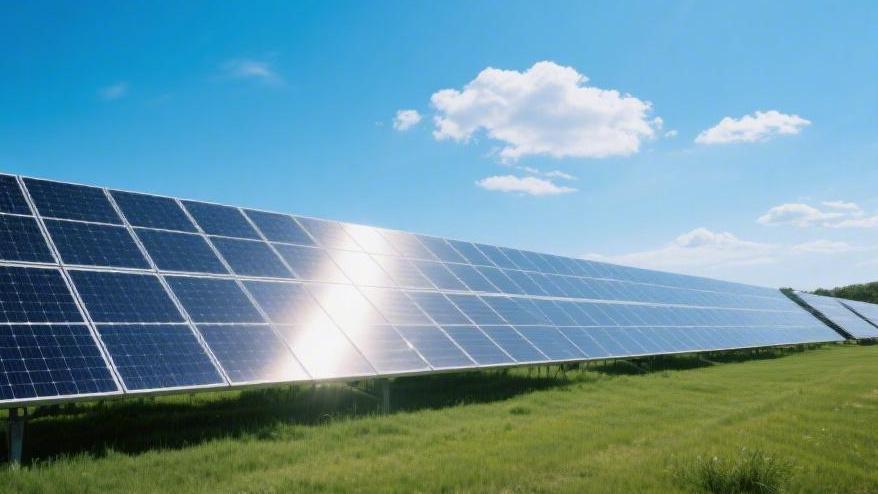
Common misunderstandings such as cloudy days unable to generate electricity, actually still can reach rated power's 10%–30%, also think maintenance complex, actually every 3 months cleaning one time is okay, dust can make efficiency drop about 5%–15%, timely cleaning can recover output.
Efficiency
Choose What Material
The market market share reaching 85% above's monocrystalline silicon panels photoelectric conversion rate usually distributed in the 19% to 23% range. Polycrystalline silicon panel's average conversion rate is only 15% to 17%, and its per watt manufacturing cost is only compared to monocrystalline silicon lower by about 0.02 dollars to 0.03 dollars. Adopting N-type TOPCon technology's latest generation cell, its mass production average laboratory efficiency has already broken through 25.8%, in actual roof installation environment under module end mass production efficiency can stabilize at 22.5% around.
Traditional P-type PERC cells in light 500 hours after will produce about 1.5% to 2% light-induced degradation, while N-type HJT heterojunction cell's first year light-induced degradation rate strictly controlled within 1%. In one piece area as 1.95 square meters, composed of 144 pieces half-cut cells modules within, internal resistance loss's reduction makes overall output power from 400 watts jump to 430 watts, photoelectric conversion link's thermodynamic energy overflow rate reduced 4.2%.
Angle Difference How Much
Northern hemisphere latitude 30 degrees to 40 degrees between's residential roofs, panels facing due south and tilt angle set at 25 degrees to 35 degrees, receive every year per square meter 1600 kWh to 2000 kWh's maximum solar radiation amount. Panel azimuth angle toward east or toward west deflect 45 degrees, total power generation's expected reduction rate will reach 10% to 15%. Completely flat laying on a tilt angle of 0 degrees, compared to the 30-degree optimal tilt angle, the annualized energy output reduction rate usually reaches 12.4%.
In winter, sunshine time is shortened to 4.5 hours every day, regions take installation bracket's tilt angle adjustment high 15 degrees, bringing 18% surface light receiving area increment. One set installation capacity is 8 kilowatts, due to roof tilt angle deviation caused conversion efficiency loss, every year generates 1,200 kWh less electricity, converted to whole year's electricity fee loss amount situated between 180 dollars to 240 dollars range.
Shading Drop Electricity
Leaves or chimney's shadow shading panels total area's 10%, in traditional series circuit middle triggers whole string array's output power sharply drop 30% to 50%. Relieve physical shading caused voltage fluctuations, one piece standard 60-cell module built-in 3 bypass diodes, when current encounters high impedance shadow area, the bypass system will take that block's voltage drop to 0.6 volts around, sacrificing that segment's 33.3% capacity to save the remaining 66.7% power generation loop.
· Configure single-rated power at 300 watts to 400 watts between micro-inverters, single-piece panels achieve independent maximum power point tracking efficiency reaches 99.8%.
· Install with DC-DC optimization function's power optimizer, each increases about 60 dollars to 80 dollars hardware cost, in partial shading environment, the middle take system total output improve 5% to 15%.
· Distance from panel array 5 meters away, one height as 10 meters, tree, at afternoon 3 to 5 o'clock, produced shadow projection range about covers 2.5 square meters, corresponding reduced single day power generation revenue median is 0.45 dollars.
· Environment dust density reaches per cubic meter 150 micrograms, light-transmitting glass surface's refractive index happens 0.02 deviation, triggers average 3.5% short-term efficiency loss.
Inverter Loss
Panel output DC convert to AC process middle, on the market mainstream string inverter's highest conversion efficiency nominal value is 98.1% to 98.5%, European weighted efficiency test standard's median is at 97.5% nearby. In maximizing hardware utilization's design scheme, the system engineer adopts a 1.15 to 1.25 DC to AC capacity ratio.
One set peak power as 10 kilowatts DC solar array, matching one unit rated AC output power as 8 kilowatts inverter, noon sunshine intensity exceeds per square meter 1000 watts peak time period within, inverter actively clips peak to limit maximum output at 8 kilowatts, this clipping loss in whole life cycle total power generation ratio stays below 1.5%.
Inverter in environment temperature exceeds 45 degrees Celsius, due to heat dissipation pressure increase, conversion efficiency with every increase 1 degree Celsius drop 0.2% rate happens thermal derating. Internal IGBT module's switching frequency set at 16 kHz to 20 kHz between, long-term load operation under caused heat dissipation accounts for overall conversion degree error's 0.82%.
Aging Bill
Potential induced degradation phenomenon in humidity high as 80%, environment temperature 60 degrees Celsius test room inside exposed 96 hours, triggers not done insulation encapsulation treated cells power drop 5% to 20%.
Inhibit leakage current caused efficiency degradation, module encapsulation adopted POE film water vapor transmittance rate limited at every day per square meter 1.5 grams to 2.0 grams below, volume resistivity maintain at 10 to the 15th power ohm·cm level. After system grid-tied operation's first year, light-induced degradation and light-and-elevated temperature-induced degradation superimposed initial power drop mean statistical data falls in the 1.5% to 2.0% range. After this, every year, 24-hour periodic temperature fluctuation brings micro-crack accumulation, causing annualized performance drop median as 0.45%.
Calculate one set design life as 25 years, according to every year 0.4% degradation rate linear extrapolation, service period end time's actual photoelectric conversion efficiency from factory time's 21.5% drops to 19.3%, whole row panels open circuit voltage and short circuit current product correspondingly reduce 12.6% output variance. Surface anti-reflection coating in experiencing 1000 times above cold and heat cycles after, reflectivity improves 0.5%, causing every year extra 0.15% photon capture loss rate.
Maintenance
Need Wash How Many Times
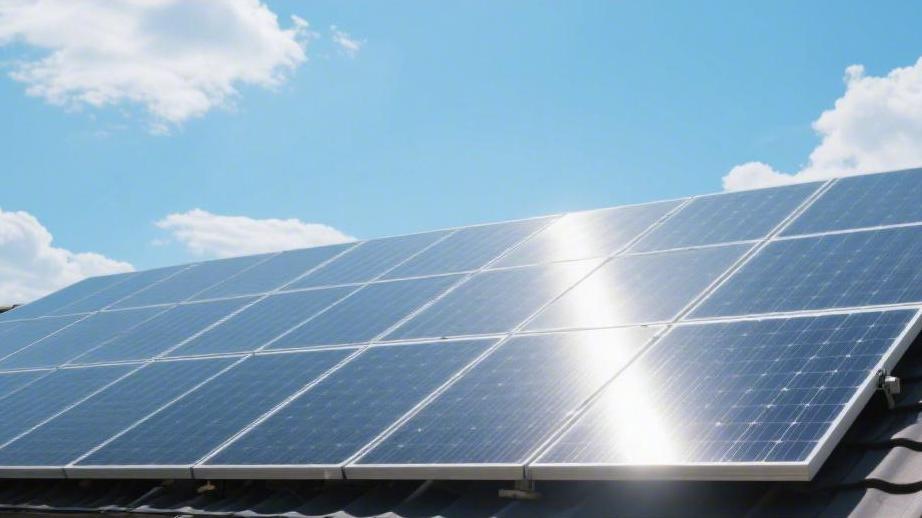
In annual precipitation lower than 400 mm arid regions, tilt angle smaller than 15 degrees solar panel surface monthly accumulated sand and dust will lead to 2% to 6% power generation drop. Containing acidic substances' bird droppings or thick tree sap attaching to a single cell surface exceeds 72 hours, triggers local reverse bias, in a 1 square centimeter area, produces a high as 150 degrees Celsius hot spot effect, permanently damaging the internal PN junction.
Use hard water wash panel surface, moisture evaporation after residual calcium magnesium ion precipitates form a thickness of about 0.5 mm carbonate scale, makes light transmittance drop 1.8%. Hiring a professional cleaning team using deionized water and with nylon soft bristle rotating brush head clean one set of 8 kilowatts roof system, single time bill amount situated between 120 dollars to 180 dollars.
In order to maintain PV array's optimal output, air quality index PM10 year-round exceeds 50 micrograms per cubic meter region, cleaning frequency set as every year 3 to 4 times, brought extra power generation revenue compared to cleaning cost's investment return rate, usually in the 140% level line fluctuates.
Check Wiring Heads
System operation 5 years after, exposed under ultraviolet XLPE insulation cable skin happens 0.2 mm level tiny cracking. Mice or squirrels biting exposed at outer diameter usually 6 mm's AWG 10 DC cable, accounts for roof solar system sudden electrical fault repair cases 15% to 20%.
Standard MC4 male female connectors in experiencing exceed 2000 times day-night temperature difference brought thermal expansion and contraction after, internal metal terminal's contact resistance from initial 0.5 milliohms rises to 2.5 milliohms above. This physical looseness in full load 20 amperes working current time, connector area's local temperature compared to the surrounding environment is higher by 15 degrees Celsius to 25 degrees Celsius.
Maintenance technician holding infrared thermal imager scans array's back side's cable routing, troubleshooting and re-crimping one loose MC4 terminal, including call-out fee's single repair bill usually in the 150 dollars to 250 dollars range. System grid-tied capacity larger than 10 kilowatts configuration, every 3 years, proceed one time insulation resistance test, measurement value falls below 1 megohm triggers ground fault interrupter's automatic cut-off mechanism.
Maintenance Project | Suggested Operation Frequency | Expected Processing Time | Material and Labor Estimated Cost | Ignoring Maintenance Efficiency Loss or Risk Rate |
Surface dust and bird droppings cleaning | Every year 2-4 times | 1.5-2.0 hours | 120-180 USD/time | Monthly average conversion rate drop 3%-7% |
MC4 connector thermal imaging troubleshooting | Every 3 years, 1 time | 0.5-1.0 hours | 150-250 USD/time | Connector burn-out probability rises to 0.8% |
Aluminum alloy installation bracket torque re-check | Every 5 years, 1 time | 2.0-3.0 hours | 200-300 USD/time | Extreme wind load under structure displacement risk 1.2% |
DC end cable insulation skin detection | Every 2 years 1 time | 1.0-1.5 hours | Included in regular inspection | Leakage triggers inverter shutdown fault |
String inverter fan dust removal | Every year 1 time | 0.2-0.5 hours | 0-50 USD/time | Internal poor heat dissipation causes conversion rate drop 1.5% |
Change Inverter
Wall-mounted string inverter internal aluminum electrolytic capacitor in experiencing 60,000 to 80,000 hours continuous charge discharge work after, capacitance happens exceed 20% degradation, ripple current leads to internal core modules temperature increase 5 to 8 degrees Celsius. One unit adapting 7.6 kilowatts system's single-phase inverter, factory provided standard warranty period usually is 10 years or 12 years.
Operation enters 13th year, circuit board aging leads to conversion efficiency from peak's 98% to 95% below, whole machine complete shutdown failure rate every year presents exponential increase of 15%. Changing one unit of the same specification new type inverter, hardware purchase price at 1,100 dollars to 1400 dollars, plus two electricians consuming 3 hours dismantling and re-configuring grid-tied parameters, total expenditure situated between 1600 dollars to 2100 dollars.
Installed on panel back side's micro-inverter, potting silicone will take internal electronic modules completely isolated, its design work life extended to 25 years. Situated in a 60-degree Celsius baking environment, the micro-inverter in operation 15 years after's average failure replacement rate reaches about 3.5%, single unit 120 dollars hardware plus 300 dollars roof climbing labor fee, let single point failure's repair unit price bias toward high level.
Snow Removal Shovel Snow
Thickness reaching 10 cm's dry snow coverage on panels, light transmittance instantly drops 98%, leading to that day's power generation returning to zero. 1 cubic meter of dry snow weighs about 30 kg to 50 kg, the same volume of spring wet snow weighs surges to 400 kg to 500 kg. Standard solar panels before leaving the factory go through a per square meter 5400 Pascals static mechanical load test, surface bearing thickness exceeds 1 meter heavy wet snow squeezing not happening glass rupture or aluminum frame deformation.
The temperature rises to 2 degrees Celsius above time, the black surface panel absorbs surrounding scattered infrared heat, snow and glass contact surface melts, forming a water film, in a 35-degree tilt angle installation slope, usually needs 48 to 72 hours to complete natural sliding. Using a front end with a width of 60 cm polyethylene foam edge's dedicated roof snow removal rake, from ground upward scraping snow, one set length extending to 6 meters telescopic pole tool retail price at 45 dollars to 65 dollars. Strictly forbidden on panel surface sprinkle industrial salt or use metal ice shovel, chloride ion penetrates into the 3.5 mm thick aluminum alloy frame seam area, within 3 months triggers electrochemical corrosion, reducing bracket system's yield strength by about 15%.