How to Understanding Solar Panel Warranties | 3 Key Points
Product warranties typically cover material and workmanship defects for 10–15 years, while performance warranties usually span 25 years, promising ≥98% output in the first year with an annual degradation of about 0.5%.
The credibility of these claims depends on the manufacturer's qualifications and historical shipments, such as GW-level scale.
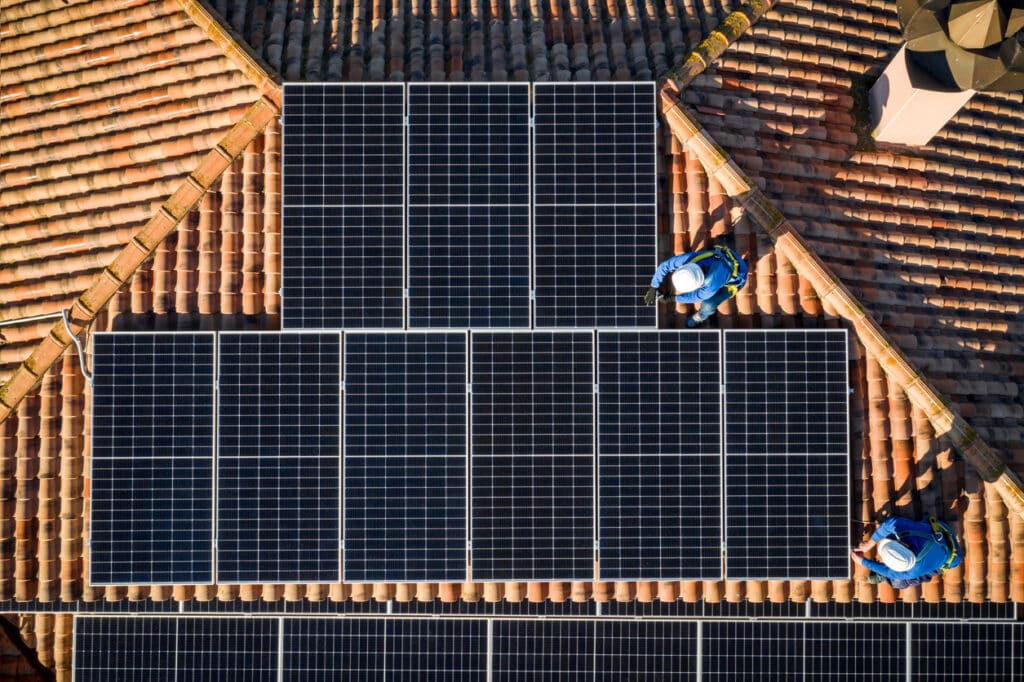
Product vs. Performance
The Two Types of Protection
When purchasing a 6.6 kW residential solar system, the 25-year contract you sign actually contains two completely different protection logics.
The Product Warranty primarily targets physical damage, such as the spontaneous explosion of 3.2 mm tempered glass due to quality issues, severe corrosion of the 40 mm anodized aluminum frame within 10 years, or the failure of the three internal bypass diodes.
The current industry benchmark is 12 to 15 years, but top-tier brands have pushed this figure to 25 or even 40 years.
If you discover in the 14th year that the panel's backsheet has blistering or peeling exceeding 5 mm, the manufacturer must provide a new panel of the same specification (e.g., 400 Watts) free of charge.
The Performance Warranty, on the other hand, is a 25- to 30-year "betting agreement" that doesn't care if the panel is physically broken, only about its work output ratio.
A standard N-type monocrystalline silicon warranty will state: the power loss in the first year cannot exceed 1%, and from the 2nd to the 25th year, the annual degradation must be controlled within 0.4%.
If you find in the 20th year that a 440W panel outputs less than 400W (approx. 91% of initial efficiency) at 12:00 PM under Standard Test Conditions (STC) of 1,000 W/m² irradiance, the manufacturer must compensate according to the contract.
Hardware Longevity
The duration of the product warranty directly determines the safety of the payback period for your $8,000 system.
Most second-tier manufacturers offer a 12-year warranty, which just covers the 6 to 8-year system payback period plus a 4 to 6-year profit period.
In contrast, modules that dare to offer a 25-year product warranty usually use 0.5 mm thick POE encapsulant, which has anti-aging performance typically 30% higher than standard EVA film.
This high-quality encapsulation effectively isolates over 90% of water vapor in the air, preventing "snail trails" or discoloration in the 60 to 72 cells after 15 years.
Hardware Detail Parameters | Standard Level | Premium Level | Potential Repair Cost (Per Unit) |
Product Warranty Period | 12 Years | 25 - 40 Years | $150 - $250 |
Tempered Glass Thickness | 3.2 mm | 2.0 mm (Double Glass) | $80 (Material) |
Frame Pressure Resistance | 5400 Pa | 6000 Pa | $40 (Labor) |
Operating Temp Range | -40 to 85°C | -40 to 90°C | $20 (Connector replacement) |
Remaining Power Generation
The data density of the performance warranty is extremely high; it concerns not just a nominal percentage, but the actual revenue from a cumulative 150,000 kWh over 25 years.
Mainstream P-type PERC modules usually have a guaranteed power of 84.8% after 25 years, while panels using TOPCon technology, due to lower Light Induced Degradation (LID), can maintain 87.4% to 89.4%.
Don't overlook this 3% to 5% gap; over a 300-month operating cycle, this equates to an extra 4,500 kWh of electricity.
Calculated at $0.3 per kWh, the performance difference of a single panel can bring $1,350 in additional economic value, which is more than six times the purchase price of the panel itself.
If you purchase 600W high-power modules, the manufacturer's promised linear degradation curve is usually as follows: an initial 1.5% drop in the first year due to light induction, followed by a steady 0.5% reduction each year.
By the 25th year, this panel should theoretically still output around 520 Watts.
If actual measurements find only 480 Watts, it indicates the conversion efficiency has dropped from 21% to below 18%, triggering the performance claim clause.
Manufacturers usually choose to reissue a new panel or compensate with cash based on the power deficit.
The Nature of Degradation
A professional warranty report will detail three types of degradation: Light Induced Degradation (LID), Light and elevated Temperature Induced Degradation (LeTID), and Potential Induced Degradation (PID).
In regions like Australia or Arizona, where solar intensity exceeds 1,100 W/m², the PID effect can cause leakage current when system voltage is at 1000 V or 1500 V, causing the total power of a 6.6 kW system to plummet by 20% within five years.
High-quality manufacturers will explicitly promise in their warranty that their modules have passed the "Double 85" test under IEC 61,215 standards—meaning running at 85°C and 85% relative humidity for 1,000 hours with power degradation less than 5%.
For systems installed within 500 meters of the sea, warranty terms will additionally require passing Level 6 salt spray tests to ensure that resistance increase due to corrosion does not exceed 1 Ohm over 25 years.
These numerical indicators directly determine whether your PV plant can continuously generate an Internal Rate of Return (IRR) of over 5% within 25 years or if it will start showing negative returns by the 10th year.
Who Pays for the Replacement?
Although manufacturers promise to replace faulty modules for free, the labor cost to remove a 22 kg panel from a roof usually ranges between $150 and $300.
Most 12-year product warranties only cover the price of the module itself (approx. $180) and do not include this expensive labor fee or the shipping cost of around $50.
If your system experiences a performance drop in the 13th year, you might have to pay $250 out of your own pocket to replace a panel worth $180, which is completely uneconomical.
Expense Category | Basic Coverage (12 yrs) | Premium Coverage (25 yrs) | 25-Year Estimated Spend |
Defective Panel Freight | Not Covered | Fully Covered | $150 |
Rooftop Labor Cost | Not Covered | Covered (with Cap) | $400 - $800 |
System Testing Fee | Paid by User | Fully Covered | $200 |
Disposal/Recycling Fee | Not Covered | Partially Covered | $50 |
How to Measure Data
To trigger a performance warranty claim, you cannot simply rely on a low-cell screenshot from a mobile app.
Manufacturers typically require a third-party test report based on STC (Standard Test Conditions).
You need to find a professional engineer to perform on-site measurements using an IV curve tracer worth over $3,000 during periods when light intensity is higher than 700 W/m².
If the test results show that a 450W panel, after temperature correction (usually a 0.3% power reduction for every 1°C increase), still outputs less than the 90% promised in the warranty, the claim will be accepted.
If one of the 120 half-cut cells has a hotspot temperature 20°C higher than the ambient temperature, this is usually considered a manufacturing defect covered by the Product Warranty rather than the Performance Warranty.
When reviewing claims, manufacturers will retrieve monitoring data from the past 12 months to check 240V voltage fluctuations at the transformer end.
If the inverter frequently disconnects because your local grid voltage is consistently higher than 255 V, the manufacturer will reject the claim on the grounds of non-product defects.
The Hidden Costs
Who Pays the Freight?
When you discover that a solar panel on your roof (approx. 1.72 m x 1.13 m, weighing 22 kg) has a 30% drop in output due to internal busbar welding defects. The manufacturer promises a replacement, but the logistics costs are often borne by the user.
Transporting a single panel from an interstate warehouse 200 km away to a residential area typically incurs a base logistics fee between $80 and $150.
If your system is in a remote area, the additional mileage fee could reach $1.5 per kilometer.
Freight only covers delivery to the curb.
Moving it to the roof is not included.
Reissue for multinational brands takes 30 days.
Many 10-year or 12-year product warranty contracts specify "FOB (Free On Board)" or "Ex-works" claims in clauses found on page 15 or later.
The manufacturer is only responsible for placing the panel at their warehouse door; all remaining customs fees, port handling fees, and inland transit fees are paid by you.
For a 6.6 kW system, if 10 panels need to be replaced in batches, logistics alone could consume 3 to 5 months of electricity revenue, often exceeding $1,000 in total.
Logistics Item | Estimated Amount (Single) | Billing Logic | Remarks |
Base Freight | $80 - $150 | By Volume & Weight | +10% if insured |
Remote Area Fee | $50 - $200 | By Postcode | Fluctuates by distance |
Packaging Materials | $20 - $40 | Pallets & Edge Protectors | Prevents glass breakage |
Unloading/Forklift | $50 - $100 | Special Residential Service | Varies by truck specs |
Roof Climbing Fees
Replacing solar panels involves working at heights and handling high-voltage DC electricity, which requires two electricians holding CEC or equivalent licenses to operate on-site.
In Australia or the United States, the hourly wage for a licensed electrician is between $90 and $140.
Replacing a faulty panel—from setting up ladders, checking DC voltage, and removing clamps to installing the new panel and testing the circuit—takes an average of 2.5 hours.
The base starting price for a single on-site labor visit is between $300 and $500.
Double-story buildings require scaffolding.
Steep roofs add a difficulty fee.
Travel expenses are charged hourly.
If your home is a two- or three-story structure, to comply with Occupational Safety and Health (OSHA) standards, the crew must rent and set up temporary safety barriers or scaffolding, which typically costs between $400 and $800.
Even if the panel itself is free, you might need to pay $700 in construction fees just to replace a $180 panel.
Currently, only a few top-tier brands cover this "removal and installation labor fee" during the first 5 to 10 years of their warranty, and usually with a cap of $50 to $100 per panel.
Diagnosing the Problem
A manufacturer will not ship new goods just because of a mobile screenshot showing low power generation.
You usually need to hire a third-party testing agency for on-site data collection; a standard IV Curve Trace costs between $150 and $250.
This test requires professional equipment and must be performed under conditions where light intensity exceeds 800 W/m² to exclude errors brought by cloud shading.
Infrared thermal imaging for hotspots.
Insulation resistance for leakage.
Report review takes 7 business days.
If internal micro-cracks are suspected, electroluminescence (EL) testing is required; the cost for off-line EL detection for a single panel can be as high as $100.
Furthermore, if the manufacturer believes the problem lies in the inverter or aging lines, they will reject the claim.
To prove that grid voltage has remained within the normal 240V range for a long time, you may also need to pay around $100 for monitoring data extraction.
These diagnostic fees, added together, can total $300 to $500 before the claim process even begins, and only a very few manufacturers will reimburse this money even if it eventually proves to be a product quality issue.
Testing Project | Tools & Equipment | Market Price Reference | Purpose |
IV Curve Test | IV Curve Scanner | $150 - $250 | Verify actual power output |
Thermal Scan | Industrial IR Camera | $80 - $120 | Find burnt cell cells |
Insulation Test | Megohmmeter | $50 - $100 | Check 1000V system leakage |
Data Log Analysis | Remote Monitoring SW | $50 - $80 | Exclude environmental noise |
Downtime Losses
There is often a 14 to 45-day time gap between discovering a system anomaly and completing the installation of new panels.
During this period, your PV system may be partially paralyzed or completely shut down.
For a residential system producing 30 kWh per day with a retail electricity price of $0.35 per kWh, a 30-day shutdown means you lose the benefit of 900 kWh, a direct economic loss of $315.
Most manufacturers' warranty terms explicitly state: "Do not bear any consequential loss or loss of revenue due to downtime."
No subsidy revenue during downtime.
The inverter may fail due to open circuits.
Monitoring software cannot generate reports.
This means that even if the manufacturer compensates you with a new panel after three months, there is no compensation for the $900+ paid to the grid company during those 90 days.
If the system fails because a single panel's junction box short-circuited, causing an entire string to fail, 10 or even 12 panels might be affected.
Over a 25-year operating period, if two such failures occur, the cumulative hidden cost loss will exceed $2,000, which is almost 25% of the system's original investment.
Hardware Replacement Expenses
Solar panel thickness specifications have reduced from 40 mm to 30 mm over the past five years.
Your old 40 mm mid-clamps or end-clamps will not be able to secure the new, thinner panels.
Buying a set of compatible aluminum clamps and stainless steel screws costs about $20 to $40.
Additionally, MC4 connectors become very brittle after 10 years of exposure to high rooftop temperatures and can easily shatter during unplugging.
Connectors: $5 each.
Rail clamps need re-fitting.
Cable ties must be UV-resistant.
To ensure the waterproof performance of the circuit, electricians usually recommend replacing DC cables and sealed joints, which adds another $30 to $60 in parts expenses.
If your roof rails require local rust removal or replacement due to long-term salt spray corrosion, additional material costs will further push up the maintenance budget.
These seemingly insignificant $10 and $20 items eventually converge into an extra materials bill of around $150.
Bankability
Manufacturer Longevity
Over the past 15-year cycle in the PV industry, more than 70% of brands have disappeared or been merged.
For a small manufacturer with an annual production capacity below 5 Gigawatts (GW), maintaining a 25-year after-sales service system requires extremely high capital reserves.
If a company's debt-to-asset ratio remains consistently above 80%, or its current ratio is below 1.2, the probability of it going bankrupt in the next industry downturn surges.
This means that when those 20+ panels on your roof fail in the 15th year, you may not find anyone to fulfill the maintenance obligations.
Large manufacturers set aside 1% to 2% of sales revenue each year as a warranty reserve, kept in a dedicated account.
If you choose a brand among the top five global shippers, their cumulative installed capacity usually exceeds 100 GW; this scale effect ensures that even if management changes, the brand value and after-sales responsibilities will continue to be carried by the successor.
Business Indicator | Safe Level | Risk Level | Remarks |
Annual Shipments | > 20 GW | < 5 GW | Scale determines risk resistance |
Asset-Liability Ratio | 60% to 70% | > 85% | High leverage easily breaks |
Years in Business | > 15 Years | < 5 Years | Experienced full industry cycles |
R&D Investment Ratio | 3% to 5% | < 1% | Determines if a product becomes obsolete |
Bank Recognition
Bloomberg New Energy Finance (BNEF) Tier 1 list is updated quarterly, and its selection criteria are very direct: in the past two years, at least six different commercial projects (larger than 1.5 MW) must have obtained non-recourse financing from six different commercial banks.
If a manufacturer is not on this list, it means banks consider the risk of using their products too high and may refuse to issue loans for your PV project.
For large ground-mounted power stations or commercial rooftop projects, using non-Tier 1 brand panels leads to an increase in loan interest rates by 1% to 2%.
In a $1 million loan with a 10-year term, this 2% interest rate difference means you pay an extra $120,000 in interest, which is enough to consume 20% of the entire system's expected net profit.
Banks will hire third-party agencies like PVEL or DNV to conduct rigorous testing on panels at 3 to 4 times the intensity of IEC standards.
Only products that pass 600 thermal cycles with power degradation less than 2% can enter the bank's whitelist.
What if They Go Bankrupt?
To deal with the risk of warranty failure due to manufacturer bankruptcy, top-tier brands purchase third-party insurance, such as Munich Re or Ariel Re.
This insurance mechanism acts as an additional layer of protection for the warranty. If the manufacturer goes bankrupt within 25 years, the insurance company takes over the claim responsibilities for the remaining years.
The premium for this type of insurance usually accounts for 0.5% to 1% of the panel price, and insurance companies are only willing to underwrite factories with extremely stable financial conditions and standardized production processes.
If you see "Third-party Endorsement" or "Reinsurance Coverage" in your contract, that brand's viability has passed the rigorous audit of top global actuaries.
For small brands without such insurance, once the parent company enters bankruptcy liquidation, the warranty obligation ranks last in the order of debt settlement since solar panels are non-standard assets.
As a consumer, the possibility of getting your compensation back is almost zero.
Insurance Details | With 3rd-Party Insurance | Without 3rd-Party Insurance | 25-Year Risk Assessment |
Bankruptcy Payout | Directly by insurer | Contract automatically void | Gap of approx. $5,000 |
Claim Lead Time | 30 to 60 Days | Cannot apply | Affects downtime loss |
Global Service | Multinational network | Manufacturer location only | Guaranteed in remote areas |
Coverage Scope | Includes labor & materials | Theoretically included | Execution is extremely difficult |
Financial Scores
Professional investors use the Altman Z-Score to assess the bankruptcy risk of PV companies.
This score synthesizes a company's working capital, retained earnings, EBIT, market value, and total asset turnover.
If a manufacturer's Z-Score is consistently below 1.8, it means it is in the "Grey Zone" or even the "Danger Zone," with a probability of financial crisis exceeding 70% in the next two years.
Currently, several leading global PV giants maintain a Z-Score above 2.5.
A healthy enterprise must have enough Free Cash Flow to support spare parts inventory for up to 25 years.
Imagine if a panel you installed 20 years ago fails; the manufacturer must have old-specification products in their warehouse that match the electrical parameters, or provide an alternative compatible with the existing inverter voltage.
Maintaining such a long-cycle supply chain capability costs tens of millions of dollars in storage and management costs annually.
Higher Interest Rates
If a brand's bankability score drops from 90 to 70, investment institutions in secondary markets will raise the discount rate for that project by 150 basis points.
For a small commercial system with an estimated life of 25 years and an annual output of 10,000 kWh, this financial change will cause the cost per kWh to increase by about $0.015.
Over a 300-month operating period, this seemingly tiny cost increase accumulates into a huge economic loss.
High-bankability brands not only mean panels are less likely to break, but also mean that when you want to sell the property or factory with the PV system, the buyer's appraisal bank can give a higher valuation.
A warranty from a well-known brand can typically increase the appraised value of the entire system by 15% to 20% in the residual value assessment of the secondary market.