Why Choose Monocrystalline Solar Panels | Efficiency, Durability, Space Saving
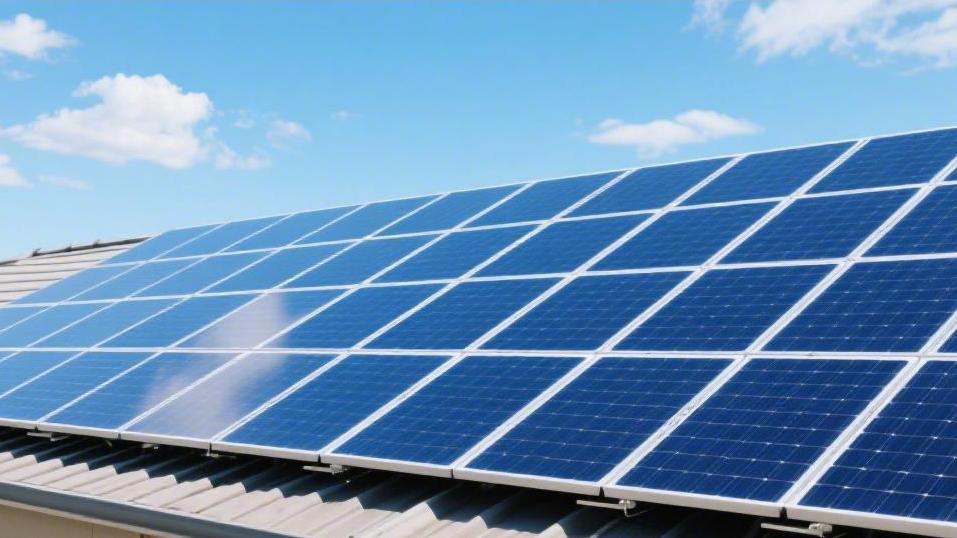
Monocrystalline silicon panel conversion rate reaches up to 22%, under the same power, it can be compared to polycrystalline silicon and save about 20% of roof space.
It possesses 25 to 30 years of ultra-long warranty life, in actual installation, only need to lay fewer pure black panels to meet the whole family's power supply demand, is pursuing high efficiency and durability's first choice.
Efficiency
Purity extremely high
In the manufacturing link, through the Czochralski process, silicon ingot purity must reach 99.9999% to 99.999999% between. This kind of single and continuous crystal lattice structure thoroughly eliminated polycrystalline silicon in common grain boundary defects.
Under standard test conditions (STC: light intensity 1000 watts/square meter, air mass AM 1.5, cell working temperature 25°C), without grain boundary obstruction's free electrons in the semiconductor layer's mobility rate can reach 1,350 square centimeters/volt·second (cm²/V·s). When the wavelength is in the 400 nanometers to 1100 nanometers range, photons strike the PN junction, and monocrystalline structure can make electron-hole pair recombination rate reduce at least 40%.
Currently on the market, adopting PERC technology's monocrystalline mass production modules, photoelectric conversion rate stabilizes at 21.5% to 22.8% range; while adopting N-type TOPCon or heterojunction (HJT) technology's monocrystalline products, laboratory conversion rate has broken through the 26.8% physical limit expectation, mass production module conversion rate then stabilizes at 22.5% to 23.5% above, every square meter area can stably output 220 watts to 235 watts of direct current electricity quantity.
Slicing technology
In single-piece cell size from 156.75 millimeters gradually upgrading to 182 millimeters and 210 millimeters large silicon wafers' process, module's internal resistance loss becomes a restricting efficiency variable. In order to reduce this kind of thermal effect, 144-piece or 156-piece structure's half-piece monocrystalline modules have become the market mainstream configuration. Through laser making standard cell piece one divided into two, through internal circuit's series-parallel design, single piece cell's working current from standard's 13 amperes descends to 6.5 amperes.
According to P = I²R formula calculation, current halved leads to internal resistance produced's thermal power loss directly reduce 75%. This kind of loss reduction makes the module's under 1000 watts/square meter's high radiation intensity, and the overall output power can additionally increase 15 watts to 25 watts. At the same time, half-piece design makes module's working temperature averaged reduced 2°C to 3°C.
Because monocrystalline silicon material's forbidden band width is 1.12 electron volts (eV), lower running temperature can maintain PN junction both ends' open-circuit voltage, usually single piece 550 watts monocrystalline module's open-circuit voltage can maintain at 49.8 volts around, short-circuit current reaches 14.05 amperes, ensuring inverter at starting time earlier reaches 200 volts to 250 volts' maximum power point tracking (MPPT) starting voltage range.
Temperature impact
Monocrystalline module at actual outdoor working time's efficiency performance, needs to refer to nominal operating cell temperature (NOCT) data. This test condition is an environment temperature of 20°C, light intensity of 800 watts/square meter, and wind speed of 1 meter/second.
Usually, monocrystalline module's NOCT temperature maintains at 43°C to 45°C. In a high temperature environment, monocrystalline silicon's power temperature coefficient is usually strictly controlled in the -0.28%/°C to -0.34%/°C range. When the summer roof surface temperature reaches 65°C, the monocrystalline module's actual working temperature may soar to 70°C, compared to STC standard's 25°C higher by 45°C. Using -0.30%/°C's temperature coefficient calculation, its power output will drop 13.5%.
If it is a 500-watt panel rated power, the actual output under this extreme high temperature is approximately 432.5 watts. Compare this with the old style material's temperature coefficient, which is often as high as -0.40%/°C above, same condition under's power loss will reach 18%, actual output only 410 watts. This kind of temperature coefficient on 0.1 percentage point's difference, in whole year thousands of hours' sunshine time inside, will produce hundreds of kilowatt-hours' electricity quantity difference value.
Light ray absorption
In the optical loss control aspect, monocrystalline module front end usually covers a layer thickness of 3.2 millimeters' single glass or 2.0 millimeters' double glass ultra-white embossed tempered glass. This layer glass surface plated has a nanometer-level anti-reflection coating (ARC), making visible light and near-infrared spectrum's transmittance reach 94.5% above, at the same time, making light ray reflectivity suppressed low to insufficient 4%. Dark color to pure black color's monocrystalline surface towards photons' capture probability compared to light color panel higher by 2% to 3%.
· In the morning from 7 o'clock to 8 o'clock, light intensity is only 150 watts to 300 watts/square meter's low irradiance under, monocrystalline modules can maintain 96% above's relative conversion efficiency.
· Cooperating with back surface plated film's aluminum back surface field or transparent back sheet, double-sided monocrystalline module can absorb ground reflected's scattered light, on grass or light color roof surface, provide extra 5% to 15% back surface power generation gain.
· In having cloud layer blocking or existing partial shadow (tree branch blocking 20% area)'s situation under, bypass diode will with 0.5 seconds below's response speed conduct, cut off blocked's 33.3% cell string, ensure remaining 66.6% panel area continue with highest efficiency operate, avoid local temperature exceeding 150°C damaging silicon crystal structure.
System matching
Monocrystalline panel outputted's direct current (DC) needs through inverter to convert into alternating current (AC) and merge into the power grid. Monocrystalline module's voltage-current curve expresses an extremely high fill factor (Fill Factor), usually maintained at 78% to 82% between, cell's actual maximum output power very close to theoretical open-circuit voltage and short-circuit current's product.
· Matching peak conversion efficiency as high as 98.5% string inverter or power optimizer, the whole photovoltaic system's AC-DC conversion loss is compressed to 1.5% to 2.5% between.
· System design time, in order to maximize the inverter's load rate, usually will monocrystalline module's DC installed capacity and inverter's AC rated power ratio set at 1.2 to 1.3 between.
· In every day, sunshine radiation peaks at 4 to 5 hours inside, this kind of over-allocation design lets the inverter run at full load for a long time, elevates full life cycle inside 3% to 4.5% of the overall power generation total amount.
Durability
Can carry pressure
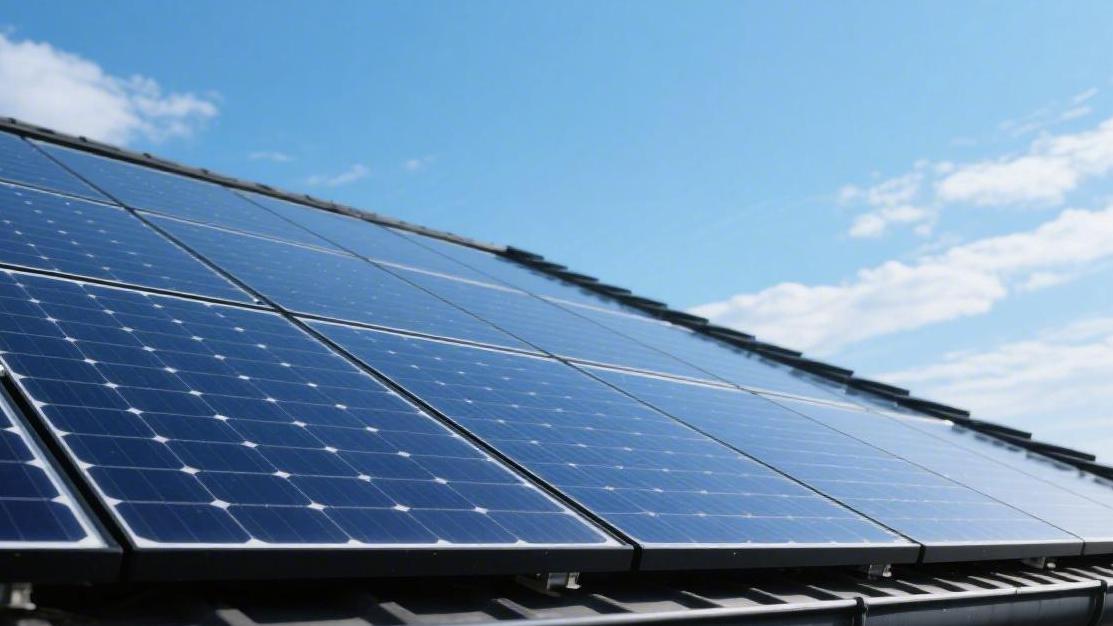
The silicon cell piece itself's thickness is only 130 to 150 micrometers , equivalent to one root of hair thread's diameter, and physical structure abnormally fragile. In order to survive in an outdoor environment for as long as 30 years, monocrystalline modules equipped with a thickness of 30 millimeters to 35 millimeters ' anodized aluminum alloy frame. Used's 6005-T6 aluminum alloy material yield strength reaches 260 megapascals (MPa) , tensile strength exceeds 310 megapascals , for internal fragile crystal structure provides stable mechanical support.
Under the International Electrotechnical Commission (IEC) released's 61,215 static mechanical load test standard, passed strict encapsulation's panel front side able to bear 5400 pascals (Pa) 's pressure, converted down equivalent to every square meter bearing 550 kilograms ' static weight, ensuring in Northern Europe or Canada region encountering continuous blizzard weather will not happen deformation or hidden cracks. The panel back side can bear 2400 pascals ' wind load, in a wind speed reaching per second 60 meters ' category three hurricane environment, still can firmly lock tight on the installation bracket, displacement amplitude is limited to 5 millimeters within.
In order to prevent wind snow produced's mechanical stress transmitting to internal cell pieces causing micro cracks, module frame inside injected having extremely high bonding strength's silicone sealant, after curing's breaking elongation rate maintains at 400% above, in below zero 40°C to above zero 85°C 's extreme temperature difference under still maintains elasticity, effectively absorbs external deformation brought's instant impact force.
Smash not shatter
In extreme convective weather, hail towards a roof photovoltaic system constitutes a huge threat. Monocrystalline module's front side armor is a piece thickness being 3.2 millimeters 's ultra-white embossed tempered glass.
After passing 520°C to 700°C high temperature tempering treatment, surface compressive stress elevated to 90 megapascals above. In IEC test laboratory's impact simulation inside, a mass of 7.53 grams ' 25 millimeters diameter ice ball with per second 23 meters (approximately equal to per hour 82.8 kilometers )'s kinetic energy vertically impacts panel surface 11 different positions, test results show glass panel has no any rupture traces, internal monocrystalline silicon piece's electroluminescence (EL) image imaging has no newly added dark pieces.
Partial adopting double glass encapsulation's N-type monocrystalline panel, front and back surfaces each cover a layer 2.0 millimeters thick semi-tempered glass, overall anti-impact ability further elevates 40% , even can resist diameter 35 millimeters hail with per second 27.2 meters speed brought's kinetic energy impact. Double glass structure makes water vapor transmission rate drop to every day every square meter 0.001 grams , blocked off moisture infiltration induced's internal metal grid line corrosion.
Encountering high-speed hail impact, glass below's cross-linked ethylene-vinyl acetate copolymer (EVA) or polyolefin elastomer (POE) adhesive film played a second path buffer role. Thickness at 0.45 millimeters to 0.60 millimeters ' adhesive film makes kinetic energy rapidly towards surrounding disperse, makes arriving silicon piece surface's force receiving peak value reduced 75% .
Attenuation very slow
Light illumination environment inside silicon piece's boron-oxygen complex will capture photo-generated electrons, leading to output power in initial's 100 to 200 hours rapidly drop. Modern monocrystalline panel adopts gallium doping process substituted traditional boron doping process, utilizing gallium element in silicon crystal lattice inside's extremely low diffusion coefficient, makes first year power attenuation rate forcibly compressed in 1.5% to 2.0% range within.
After finishing first year running, the material's crystal lattice state enters a long-term stable period. According to as long as 10,000 hours ' indoor accelerated aging test data conversion, monocrystalline panel in number 2 year to number 30 year period, annual average power attenuation rate strictly controlled at 0.4% to 0.45% .
According to 0.4% 's linear attenuation calculation, a piece of brand new state under output power being 500 watts ' panel, after passing 25 years , every year sunshine 1500 hours ' continuous operation later, output power can still maintain at 428 watts above, remaining production capacity reaches initial nominal power's 85.6% .
Targeting high temperature, high humidity environment under peculiar's potential induced degradation (PID) problem, manufacturer on cell piece surface deposited a layer thickness being 75 nanometers to 90 nanometers ' silicon nitride (SiNx) passivation anti-reflection film, largely elevated module under 1000 volts or 1500 volts high system voltage's insulation impedance, makes PID induced's power loss from early period's 15% reduced to 1% below.
Not fear corrosion
Monocrystalline module before leaving the factory must pass IEC 61701 's level six salt mist corrosion test. In the test box inside, the panel exposed to a temperature set at 40°C , relative humidity maintained at 93% , and sodium chloride concentration being 5% 's salt mist environment inside for as long as 112 days ( 2,688 hours ). The test finished after, anodic oxidation film thickness reaching 15 micrometers. The aluminum frame did not appear any pitting or peeling, and the junction box inside IP68 level's silicone sealing ring still maintains a completely waterproof state.
For installed on livestock poultry breeding farm roof's system, environment air inside free's ammonia gas easily with water molecules combines forming weak alkaline solution. Panel passed IEC 62716 ammonia gas corrosion standard test, in concentration being millionths of 137 ( 137 ppm) ammonia gas mixing box inside cyclic processing 480 hours , back sheet coating did not happen blistering, peeling or yellowing.
No matter is facing sea wind inside every cubic meter containing 3 milligrams to 5 milligrams salt content's high salinity erosion, or facing farm inside PH value leaning alkaline's gas wrapping, monocrystalline module's electrical insulation impedance always maintains at 400 megaohms above, leakage current strictly lower than 10 microamperes .
Panel back part's junction box adopts polycarbonate (PC) and polyimide engineering plastics injection molding, possesses flame retardant level UL94 V-0 's standard. Internal poured's high thermal conductive silicone makes bypass diode under 15 amperes working current produced's heat rapidly exported, makes box inside temperature when environment temperature as high as 55°C time still controlled in 90°C 's safe running threshold within.
Can stand roasting
In the temperature circulation box inside, the panel from below zero 40°C rapidly rises temperature to above zero 85°C , finishing single time temperature difference reaching 125°C. The circulation needs 6 hours . After passing continuous 200 times high-low temperature alternating physical torture, the solder ribbon and main grid line between the silver tin alloy welding points cannot appear desoldering or fatigue fracture, and the maximum power drop amplitude is limited to 5% within.
In a damp heat test inside, the panel was placed in a temperature of 85°C , relative humidity 85% 's confined space inside roasted 1,000 hours , simulating tropical rain forest or equator region's extreme climate. In this period, the back sheet's fluorine film layer water vapor transmission rate cannot exceed every day every square meter 1.5 grams , guaranteeing cell front and back side's silver paste grid lines not being oxidized turning black.
Relying on excellent encapsulation process, high quality monocrystalline module passed extended to 3000 hours' damp heat test (DH3000), exceeding industry standard two times the length of time. Even if the Sahara desert surface temperature frequently breaks through 65°C, harsh conditions under, high purity silicon crystal still can maintain atomic arrangement's absolute stability, will not because of long-term thermal expansion and cold contraction and produce macroscopic cracks influencing conductive performance.
Space Saving
Occupies land particularly small
Manufacturing a piece rated power being 400 watts ' monocrystalline silicon panel, usually only needs to occupy 1.85 square meters ' physical area, makes every square meter's unit power generation ability pulled up to 216 watts ' high position. To reach equivalent's 400 watts power output, adopting conversion rate only being 17% 's old style polycrystalline silicon material, needs to consume 2.35 square meters ' physical space, invisibly more occupied 27% 's roof resources. For a usable area of only 45 square meters, a standard city single-family house roof, planning to construct an 8-kilowatt (kW) photovoltaic system, monocrystalline modules only need to be side by side to lay 20 pieces .
This 20 pieces panel's total occupied area is precisely controlled at 37 square meters around, for roof edge left out width reaching 0.8 meters to 1.2 meters' fire channel and maintenance redundant working surface. If forcibly in the same's 37 square meters range inside installing low density conversion panel, system's total installed capacity will sharply decrease 18.5% , ultimately only can reluctantly gather a complete 6.5 kilowatts ' DC output scale. Space conversion efficiency on's 18.5% difference value, in every day sunshine time reaching 4.5 hours ' normal state environment under, every day will produce 6.75 kilowatt-hours (degrees) ' electricity quantity loss.
Dimension Data
Industry mainstream's monocrystalline silicon piece side length has already been early period's 156.75 millimeters comprehensively iterated to 182 millimeters as well as larger's 210 millimeters specifications. Adopting 72 pieces half-piece encapsulation process's 182 millimeters monocrystalline module, its standard outer frame length is set at 2,278 millimeters , width fixed at 1,134 millimeters , total surface projection area precise to 2.58 square meters . This dimension design makes single piece module's rated power easily break through 540 watts, even 550 watts major mark, makes photoelectric conversion efficiency steadily locked in the 21.3% to 21.5% range.
On a commercial flat-top roof carrying out an inclined array arrangement, the front and back two rows of panels between's shadow avoidance spacing can be shortened from 2.5 meters to 1.8 meters . Spacing shortening lets every 1,000 square meters 's commercial idle space able to hold at least 85 pieces of power reaching 550 watts 's panel, overall land utilization rate climbed 12.4% . Total installed capacity from originally having's 150 kilowatts elevated to 196.7 kilowatts , asset's density and power generation frequency was large amplitude magnified.
Parameter indicator | Monocrystalline silicon module (550W) | Polycrystalline silicon module (330W) | Data difference value |
Single piece area | 2.58 square meters | 1.94 square meters | +0.64 square meters |
Per square meter power | 213.1 watts/square meter | 170.1 watts/square meter | +43 watts/square meter |
10 kW required quantity | 19 pieces | 31 pieces | -12 pieces |
10 kW total occupied land | 49.02 square meters | 60.14 square meters | -11.12 square meters |
System bracket cost | 450 dollars | 720 dollars | -270 dollars |
Calculate economic account
Roof area's saving immediately reflects on initial construction cost (CAPEX) in totally accounting for a ratio as high as 15% of installation auxiliary materials and manual expenses. Installing a piece of weight being 27.5 kilograms ' monocrystalline panel, usually needs 2 skilled workers to consume about 15 minutes to finish track fixing, alignment, and cable plugging. Constructing a 10 kilowatt ' micro power station, using 550 watts ' monocrystalline panel, only needs carrying and fixing 19 times , accumulatively consuming manual working hours about 4.75 hours .
If changed into a 330-watt low efficiency panel, reaching the same power needs to purchase and install 31 pieces , manual carrying and fastening bolts' times increased 63.1% , basic working hours extended to 7.75 hours . Using North America region certified installation workers per hour 55 dollars to 75 dollars 's hourly wage median calculation, reduced's 3 hours working hours can for owner save down at least 165 dollars to 225 dollars ' pure manual expenditure. Correspondingly, reduced's 12 aluminum alloy installation brackets and 24 stainless steel middle pressure and side pressure blocks, again makes hardware building materials' purchase budget cut off 195 dollars to 240 dollars .
Roof reduces burden
Reducing panel quantity brought a chain reaction, the roof load-bearing structure received static physical pressure large amplitude dropped 22% to 28% . Including thickness 3.2 millimeters photovoltaic glass and 35 millimeters aluminum frame's monocrystalline module, its unit area's mass distribution is approximately every square meter 10.6 kilograms . Plus matching's galvanized steel or aluminum alloy guide rail, the whole array exerted on roof tiles or waterproof coiled material's additional dead load maintains at every square meter 12.5 kilograms to 14 kilograms.
A set of 6 kilowatts' monocrystalline system total weight is only approximately 340 kilograms , evenly distributed on a 30 square meter area, completely accords with the standard wood structure frame roof every square meter 20 kilograms ' load-bearing red line. If for piecing together 6 kilowatts and laying full 39 square meters' low density panel, the total weight will break through 430 kilograms , leading to the wooden crossbeam or old cement board's center bending deformation quantity increasing 1.5 millimeters to 2.3 millimeters . Exceeding load-bearing threshold 85% 's safe warning line after, engineering calculation requires owner additionally pay 800 dollars to 1500 dollars ' special fee to hire structural engineer to carry out house beam column's physical reinforcement.
Profits become more
In every square meter, the solar radiation quantity is as high as every day 4.5 kilowatt-hours ' high light illumination region, monocrystalline module more saved out's 11 square meters space can be used to additionally install 4 pieces of power being 550 watts ' panel. Additionally, increased's 2.2 kilowatts peak installed capacity, every year can out of thin air more intercept and convert out about 3610 kilowatt-hours (degrees) alternating current.
According to commercial electricity prices, every degree of electricity is 0.25 dollars, more squeezed out's 11 square meters saving every year can bring 902.5 dollars ' extra deduction money. Placed in as long as 25 years ' life cycle financial regression model inside statistics, more out's production capacity able to create accumulatively exceeding 22,562 dollars ' total electricity fee savings. System overall's internal rate of return (IRR) from initially estimated's 11.5% leaps to 14.8% , static investment payback period also from average's 6.8 years advanced to 5.2 years ' time node.