What Can You Make with 500-Watt Solar Panels at Home | DIY Uses, Backup Power, Small Projects
It can easily power a mini fridge (about 60W), run several LED lights (10W), and provide stable power for a laptop (50W) and multiple phones every day.
As a backup power solution, pairing it with a portable power station helps keep essential communication devices online during outages. For small DIY projects, it is also well suited to independently run a garden irrigation pump or provide off-grid lighting for an outdoor tool shed.
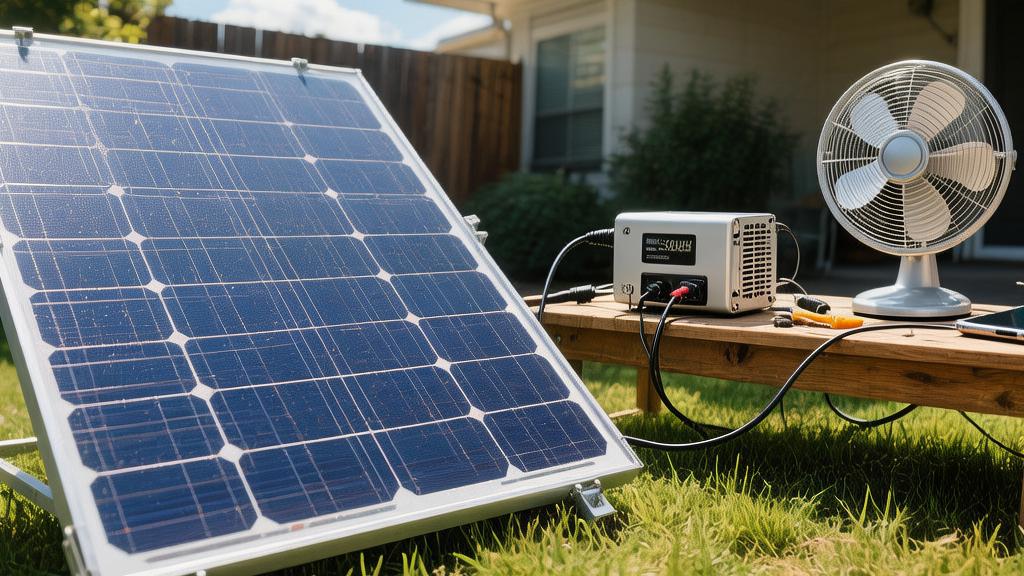
DIY Uses
Water Pumping
If you are planning a backyard rainwater recirculation system or a fish pond filtration setup, a 500W solar panel can provide more than enough power.
A 12V DC brushless submersible pump typically runs at around 120W, with an operating current of 10A.
Placed in a 1.5-meter-deep water tank and connected to a rigid PVC pipe with an inner diameter of 19 mm (about 0.75 inches), it can deliver an actual flow rate of 5,000 liters per hour.
At a head height of 4.5 meters, the pump can still maintain a mechanical efficiency of over 75%.
If the system starts at 8:00 a.m. and stops at 4:00 p.m., running continuously for 8 hours, the total power consumption will be 960 Wh.
Given that a 500W panel can generate 2,500Wh over 5 peak sun hours, the pump uses only 38.4% of the system's daily solar output. During purchasing and installation, the following three specifications must be matched precisely:
· The power cable should be marine-grade tinned copper wire with a cross-sectional area of 5.26 mm².
· The outer insulation layer must be rated IP68 for waterproof and dustproof protection.
· Burying the cable in a 20 cm-deep trench and routing it through flame-retardant corrugated conduit with an outer diameter of 25 mm can delay physical cable aging by more than 15 years.
Greenhouse Ventilation Fans
Inside a wooden tool shed or glass greenhouse, temperatures can quickly climb to 45°C at around 12:00 noon in summer, with humidity reaching 85%, so forced ventilation is needed to bring the temperature down.
With a 500W panel, you can cut openings in the wall and install two 14-inch DC axial fans.
Each fan draws 60W at 24V under full load, with an operating current of 2.5A and a speed of 1,800 rpm.
Running together, the two fans can extract 2,400 cubic feet of hot, stagnant air per minute, allowing a sealed space measuring 12 square meters with a height of 2.5 meters to complete 48 full air exchanges per hour.
By wiring a mechanical temperature sensor into the system and setting it to close the circuit when the ambient temperature exceeds 30°C, the fans can switch on automatically.
During the hottest part of the day, from 11:00 a.m. to 5:00 p.m., the fans run at full speed for 6 hours, consuming a total of 720 Wh.
With a 500W panel and an MPPT solar charge controller rated at 98% conversion efficiency, the system can deliver peak input of 420W per hour during the high-heat window from 12:00 noon to 2:00 p.m., fully replenishing 100% of the energy used by the fans. During installation, pay close attention to these two dimensional and mechanical requirements:
· The four mounting screws around each fan should be tightened to 4.5 N·m of torque.
· Apply a continuous bead of weather-resistant silicone sealant rated for 20 years around the edges to prevent rain from being forced indoors by wind speeds of 8 meters per second.
Charging Power Drills
In a woodworking shop that is not connected to the utility grid, a standalone charging station for power tools can be fully supported by the daily output of a 500W solar panel.
A heavy-duty 18V brushless impact drill with a 5.0Ah lithium cell stores 90Wh of energy.
Using a fast charger rated at 120W, it takes about 50 minutes to charge from 0% to 100%.
A 1,000W pure sine wave inverter can step 12V DC up to 110V or 220V AC, and its conversion efficiency is rated at 88%.
After accounting for roughly 12% heat loss during each charging cycle, the panel's daily output of 2.5 kWh (2,500 Wh) is enough to fully charge 24 18 V batteries.
The inverter's own standby draw is another figure that cannot be ignored. A 1,000W inverter consumes about 0.8A at idle when switched on with no load, which equals 9.6Wh wasted every hour.
Without adding a manual circuit breaker switch, leaving it powered 24 hours a day would drain 230.4Wh of stored energy. To reduce transmission losses by 20%, follow these three wiring standards:
· The two short DC cables running from the cell bank to the inverter input must be kept under 1 meter in length.
· Use pure copper flexible silicone cable with a cross-sectional area of 21 mm² (4 AWG).
· Make sure that when the inverter draws a startup surge current of 80 A, the cable surface temperature rise stays below 15°C.
Backup Power
Keeping a Router Running
A standard dual-band gigabit router typically runs at 15W on 12V, with a steady operating current of 1.25A.
Paired with an optical modem drawing 10W, the entire networking system consumes 25Wh per hour. Over a 24-hour outage, the two devices together use 600Wh.
Under 4 standard sun hours, a 500W solar module can generate 2,000Wh per day. When paired with a 12V 100Ah LiFePO4 cell, the usable cell capacity is 1,280Wh.
Even with the network running nonstop around the clock, the equipment would consume only 46.8% of the cell bank's capacity.
To reduce the physical losses involved in converting DC to AC, you can bypass the 110V or 220V inverter entirely.
Use a step-down cable fitted with a 5.5 mm × 2.1 mm DC male plug to connect the router directly to the 12V DC load terminal on the solar charge controller.
This setup eliminates the 15% conversion loss of the inverter. For the wiring, use pure copper cable with a cross-sectional area of 0.82 mm² (18 AWG) and keep the length within 3 meters, so that voltage drop across the line stays below 0.2 V.
Keeping a Refrigerator Running
A full-size 18-cubic-foot household inverter refrigerator operates with intermittent compressor cycling, and its average daily energy consumption typically falls between 1.2 and 1.5 kWh (1,200 to 1,500Wh) every 24 hours.
While the compressor runs steadily at 150W, its surge power can spike to 1,200W for 0.5 seconds at startup.
A 500W solar panel paired with a 2,000W pure sine wave inverter can handle the compressor's startup current, but after three consecutive cloudy or rainy days with little solar input, a 1,280Wh cell bank would hit its low-voltage cutoff threshold within 20 hours.
Switching instead to a 45-liter DC compressor car refrigerator cuts the energy burden during an outage by 80%.
This portable refrigerator is rated at 45W on 12V, and in an indoor environment at 20°C, the compressor duty cycle is about 30% per day.
Its total 24-hour consumption is only 324Wh. Under peak sunlight between 12:00 noon and 1:00 p.m., a 500W panel can feed as much as 400W per hour into the storage system, meaning it takes only 48.6 minutes to fully replace the refrigerator's entire daily energy use.
Medical Equipment
For people with sleep apnea, a CPAP machine is a load that must be protected without fail during a power outage.
With the heated tubing and heated humidifier turned off, its base operating power at 24 V is 15 W.
Based on an 8-hour sleep cycle, that works out to 120 Wh per night.
Once humidification is turned on, the heating plate begins operating and total power consumption rises to 90W, increasing the energy used over a single 8-hour cycle to 720Wh.
A backup system built around a 500W solar array and a 12V 100Ah cell can support the machine for 1.7 nights in humidification mode, or for 10.6 nights continuously in basic mode, assuming there is no PV input.
If you use the CPAP machine's original AC power adapter, the inverter first steps 12V DC up to 110V or 220V AC, and the adapter then converts it back down to 24V DC, with those two conversion stages wasting 22% of the energy.
By purchasing a 12V-to-24V DC-DC boost cable with 95% efficiency and connecting the machine directly to the cell output, you can save an additional 158Wh of usable energy reserve every night.
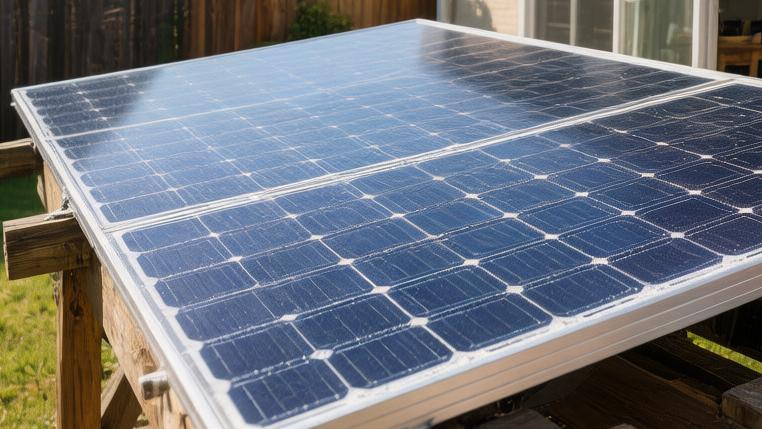
Small Projects
Automatic Chicken Coop
If you are building an off-grid poultry enclosure, a 500W solar panel can power all of the automation equipment.
Because light duration affects laying performance, you can install three 9W 12V DC full-spectrum LED bulbs and use a photocell switch to provide supplemental lighting from 4:00 a.m. to sunrise, and again from sunset to 8:00 p.m.
That gives a total of 6 hours of lighting per day, using 162Wh. The coop door can be fitted with a 12V linear actuator with a 30 cm stroke, delivering 1,500N of thrust. Each open-close cycle takes 45 seconds, with an operating current of 3A.
The two daily opening cycles together consume only 0.9Wh. In winter, when ambient temperatures fall to -2°C, a 50W PTC ceramic heating base can be placed under the water tray to prevent the drinking water from freezing.
Paired with a temperature probe, the heater can be set to switch on when the water temperature drops below 5°C and turn off when it rises above 10°C. If the heater runs for a cumulative 8 hours overnight, it consumes 400 Wh. On cold days, the entire system uses 562.9Wh per day.
Given that a 500W panel may receive only 3 effective sun hours in winter, its reduced daily output of 1,500Wh still leaves 62.4% of its energy available to recharge the LiFePO4 cell bank for the deficit accumulated over the previous two days after covering the system's 562.9Wh daily load.
Powering an RV
Mounting two 250W monocrystalline panels in parallel on the roof of a towable camper is a practical standalone power solution for weekend trips.
Inside the RV, one of the major 12V loads is a bidirectional ventilation fan rated at 36W. At maximum speed, it runs at 2,500 rpm with a working current of 3A.
Running continuously for 6 hours on a summer afternoon, it uses 216Wh. The water system relies on a diaphragm pump rated at 45 PSI, with a flow rate of 11.3 liters per minute and a peak power draw of 84 W under full load.
Assuming 100 liters of water are used each day for washing and dish cleaning, the pump runs for about 9 minutes in total and consumes only 12.6 Wh.
The RV ceiling can also be fitted with six 3W recessed LED spotlights, which use 72Wh when all are on for 4 hours at night.
With the 500W panel array laid flat on the RV roof, real-world output is typically reduced by about 15% because the angle of sunlight cannot remain at a perfect 90-degree incidence. In summer, with an average of 5 sun hours per day, the system can still produce around 2,125 Wh daily, which is more than enough to cover the RV's basic daily load of 300.6 Wh.
Timed Vegetable Garden Irrigation
For a self-contained 50-square-meter planting area, a 500W solar array can automate drip irrigation with zero manual intervention.
At the water source, install a 24V brushless DC submersible pump with a maximum head of 8 meters, a theoretical flow rate of 3,500 liters per hour, and a rated power of 90W.
Using a main pipe with an inner diameter of 25 mm connected to drip tape laid across the soil surface, 100 emitters can each be restricted to a flow rate of 2 liters per hour.
At 6:00 a.m. and 6:00 p.m. every day, the solenoid valve opens on schedule and the pump runs continuously for 45 minutes each time, bringing total daily energy consumption to 135 Wh.
The soil moisture sensor wired into the system operates at 5V and draws only 20mA in standby mode.
Use a 12 AWG outdoor-grade waterproof two-core cable with a cross-sectional area of 3.3 mm² to connect the pump to the controller. Keeping the transmission distance within 15 meters limits voltage drop during 24V DC transmission to under 0.6V, allowing the pump motor to stay in an operating range where mechanical efficiency remains above 85%.