What Benefits Do Solar Panels Bring to Your Roof | Energy Savings, Home Value, Long-Term Efficiency
Installing rooftop solar can save about 50% of electricity bills and make property value increase 4%.
Photovoltaic panels can physically block ultraviolet rays, protect roof waterproof layer and reduce indoor temperature.
Adopting the "self-generation for self-use, surplus electricity to grid" mode and regularly cleaning module dust, can guarantee 25 years above stable income, realize green asset high-efficiency value appreciation.
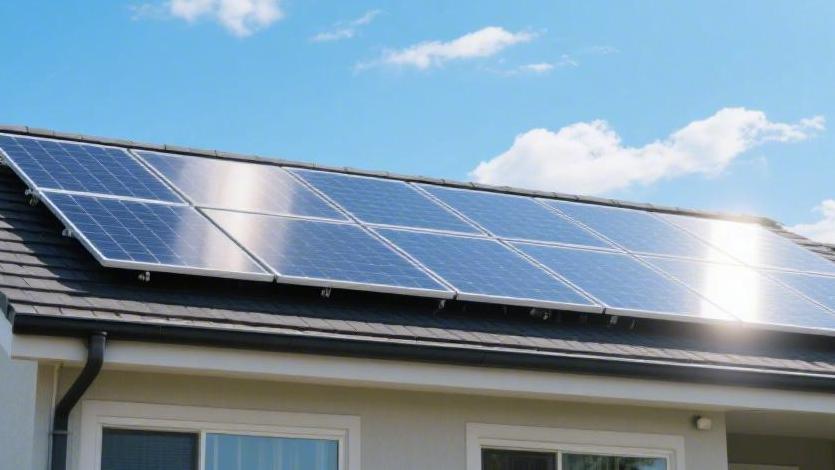
Energy Savings
Save electricity bills
Installing one typical 8 kW direct current photovoltaic system (DC), under Standard Test Conditions (STC, namely 1000 W/㎡ irradiance, 25℃ cell temperature), its module conversion efficiency is generally between 21.5% to 22.8%. Per square meter monocrystalline silicon panel, every hour can produce about 220Wh of electric energy. If your house is located in a region with an annual average sunshine of 4.5 hours, this system's daily theoretical power generation is 36 kWh, deducting inverter DC to AC process about 3% to 5% power loss, as well as cable resistance caused 1% voltage drop, actual daily can input to home load about 33 kWh of alternating current. Calculating by 30 days per month, monthly output is close to 1000 kWh. For high energy consumption households with monthly average electricity consumption around 1,200 kWh (including central air conditioning, heat pump water heaters, and electric vehicle charging piles), the photovoltaic system can directly cover about 83% of electricity demand, significantly cutting the bills that were originally in high-tier electricity price brackets.
Self-generation for self-use
Photovoltaic power generation's economic benefit mainly depends on the "self-generation for self-use ratio". When solar panels reach peak power (Pmax) at noon, household basic load (such as refrigerators, routers, monitoring) usually only occupies 10% to 15% of total output. To maximize saving expenditures, it is suggested to set high-power appliances (such as dishwashers, dryers, pool filter pumps) operation time through timers between 11:00 AM and 3:00 PM, during this time, solar radiation intensity (Irradiance) is highest, and system output current is most stable.
l Instant offset rate: Improving self-use rate can avoid selling surplus electricity to the grid at a lower price, then buying it back at a higher price. This kind of price difference is often between 0.2 and 0.4 currency units per degree of electricity.
l Load matching: Through intelligent Energy Management System (EMS), heat pump's startup frequency can be subjected to correlation regression analysis with photovoltaic array's output curve, making energy utilization precision lift to 95% above.
l Power fluctuation processing: Inverter's MPPT (Maximum Power Point Tracking) efficiency is usually higher than 99%, can real-time adjust input voltage (Vmp) to adapt to 10%-30% power fluctuation brought by cloud shading.
Not afraid of price hikes
Energy inflation is a long-term existing financial pressure. In the past 10 years, the global average retail electricity price's Compound Annual Growth Rate (CAGR) has maintained between 2.5% and 4.1%. Installing a photovoltaic system is equivalent to prepaying future 25 years' electricity bills in advance, locking the Levelized Cost of Electricity (LCOE). Currently, residential photovoltaic's LCOE has dropped to 0.06 to 0.08 currency units per degree, far lower than the utility grid's average retail price.
l Hedging inflation: Assuming electricity prices rise 3% every year, after 25 years, your electricity unit price will be 2.1 times of now, while photovoltaic system's power generation cost is fixed from the moment initial investment is completed.
l Asset stability: This kind of financial saving possesses extremely low dispersion, not affected by international fossil fuel price fluctuations or grid transmission and distribution commission hikes.
l Long-term return: Within 25 years warranty cycle, a single module with a power of 550W can totally produce about 14,000 degrees of electricity, generated cash flow savings are enough to cover 3 times inverter replacement budget and regular system maintenance expenditures.
Cell ledger
To further press down nighttime electricity bill expenditures, adding one set capacity 10kWh to 15kWh Lithium Iron Phosphate (LFP) cell system is becoming mainstream. This type of cell's Depth of Discharge (DoD) usually can reach 90% to 95%, cycle life exceeds 6000 times. In regions where the electricity price peak-valley difference is obvious, through the "shaving peaks and filling valleys" strategy, batteries can store surplus photovoltaic electricity during the day, and release it during the 18:00 to 22:00 electricity consumption peak period at night.
l Charge-discharge efficiency: Cell pack's Round-trip Efficiency usually is between 88% to 92%, for every 10 degrees of electricity stored, actual can extract about 9 degrees for use.
l Backup power capacity: When the grid power goes off, the cell system can automatically switch within 10 to 20 milliseconds, maintaining refrigerators, lighting etc. about 1.5 kW critical loads running for over 8 hours.
l Investment recovery acceleration: Although batteries increased about 30% of the initial budget, through improving the self-use ratio from 20% to 40% in high electricity price regions, the overall system's Internal Rate of Return (IRR) will instead lift 1.5 percentage points.
Surplus electricity for money
According to various places' Net Metering or Feed-in Tariff policies, grid companies will monthly statistics these electricity amounts and give compensation.
l Selling electricity income: If monthly grid-connected electricity is 400 kWh, calculating according to the local benchmark feed-in tariff, this part of income can offset remaining fixed monthly fees or taxes in the bill.
l Meter reading: Intelligent bidirectional meter's precision error is usually controlled within 0.5%, can precisely record every 0.01 degree of electricity flowing in and out.
l Commission and settlement: Some regions support rolling generated credit quotas across months, namely summer's extra generated electricity can offset degrees consumed for winter heating, thereby realizing a whole year electricity bill returning to zero.
Calculate the total account
Taking one set installation cost 15,000 currency units 10 kW system for example, after considering module every year about 0.5% linear Degradation Rate, after 25 years, the system's output power can still maintain at around 84.8% of the initial rated power.
l Cumulative savings: 25 years total power generation is expected between 280,000 to 320,000 degrees, calculating by average electricity price, cumulative saved fund total amount is usually 3.5 to 5 times of initial investment amount.
l Payback speed: Static Payback Period according to sunshine intensity and local electricity price, usually distributed between 4.8 years and 7.2 years.
l Maintenance density: Except for every 5 to 8 years performing one time bracket connection point torque detection (ensure screws are not loose) as well as every 10 to 12 years replacing one time string inverter, basically no extra large amount expenditures. This extremely high Return on Investment (ROI) makes it currently one of the most stable asset appreciation means in the residential field.
Home Value
Get more money when selling
According to the National Association of Realtors (NAR) and relevant energy laboratories' large sample random sampling survey, residences with photovoltaic panels added compared to the same area, same house type, same building area (such as 2000 square feet) ordinary residences, their transaction premium rate is usually stable between 3.8% to 4.1%. If one house's market benchmark price is 500,000 dollars, installing one set of power 8 kW, module efficiency 22% monocrystalline silicon system, can often contribute about 20,000 dollars to the final transaction price. This kind of asset premium is not emotional valuation, but based on future 20 years electricity cost savings' Discounted Cash Flow (DCF) model. Buyers when paying down payment, actually are buying into a long-term locked low-price energy contract, survey shows, about 67% of homebuyers list "energy efficiency" as the top three consideration indicators in home buying decisions.
l Average premium: For every 1 kW of photovoltaic capacity installed, property valuation average lifts about 3,000 to 4,000 currency units.
l Market recognition: Houses with energy certification (such as LEED or similar energy efficiency ratings), click rate within the first 14 days after listing is about 25% higher than ordinary houses.
l Investment recovery ratio: Homeowners when selling a house, usually can recover 90% to 110% of the photovoltaic initial installation cost. This makes it one of the very few options in house renovation projects that can realize close to 100% value recovery (ROI).
Houses sell faster
In regions where electricity prices are expensive or summer high temperature duration exceeds 120 days, properties equipped with 10 kW and above photovoltaic systems have a transaction speed that is 20% to 30% faster than ordinary properties. If ordinary houses need 60 days to sell, photovoltaic properties might be able to sign purchase contracts within 42 to 48 days. Buyers show extremely high interest in existing houses that can immediately move in and enjoy a "zero electricity bill", especially during mortgage interest rate fluctuation periods, monthly electricity expenditure savings (about 150 to 300 currency units) can effectively offset buyers' part of monthly payment pressure. For residences equipped with 15kWh cell storage systems, due to possessing "off-grid survival" capacity to maintain 72 hours of basic lighting and refrigerator operation during grid failure, their listing attractiveness will further increase.
High appraisal grade
One set of Tier 1 level photovoltaic modules with a service life design of 30 years and linear power guarantee still having 84% output after 25 years, within the first 10 years after installation, its physical depreciation's influence on house prices is minimal. During the appraisal process, appraisers will check the inverter's operation records to see if annual power generation reaches the expected 12,000 kWh. If the system is equipped with an intelligent monitoring app, and can present a bill proof of the past 24 months' electricity bill drop reaching 90%, the Energy Performance Certificate grade will usually directly jump from C grade to A grade or B grade. This kind of grade improvement is not only for looking good. In many regions' financial policies, houses with high energy efficiency ratings can apply for lower interest rate "green mortgages". This invisibly expanded the potential buyers' group base.
Buyers want it more
One set of transparent, data-driven photovoltaic operation system is the best selling point. When buyers see a roof installed with a total weight of about 500 kg (distributed load about 15 kg/㎡, completely within the roof structure load-bearing range), blue or pure black silicon wafer array, what they perceive is one kind of "high-tech, low-maintenance" modern lifestyle. This kind of psychological hint can significantly reduce buyers' bargaining frequency in price negotiations. Data shows that houses with photovoltaic systems have a 15% higher probability of entering the Multiple Offers stage than ordinary houses.
Bill confidence
If bills show in the hottest July, indoor temperature maintains at 22℃ and air conditioning runs 24 hours, electricity expenditure is still close to zero or even has a selling electricity surplus, this kind of visual impact will directly transform into purchase intention. Photovoltaic system transforms property from a "continuously consuming cash flow" liability into a "continuously generating energy income" micro power plant. This role change makes property possess extremely strong anti-risk capability when facing energy inflation risk (such as expectation of electricity price rising 15% every 5 years). When calculating Total Cost of Ownership, photovoltaic systems can reduce per square meter operation costs by about 20% to 30%. This is a detail that cannot be refused by buyers pursuing long-term financial stability.
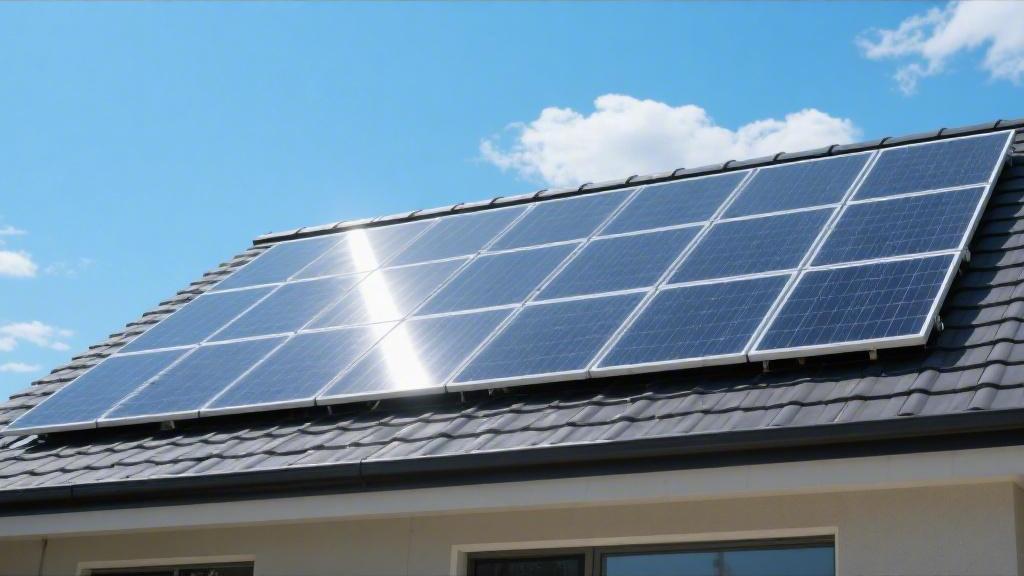
Long-Term Efficiency
Use for a long time
Currently, mainstream modules on the market adopt 3.2mm thick ultra-white cloth-pattern tempered glass. This material can bear a diameter of 25 mm, and speed reaching 23 m/s hailstone frontal impact without producing cracks. Module frames are usually made of 6063-T5 anodized aluminum alloy, frame thickness is between 30mm to 40mm, oxide film thickness not lower than 15μm, ensuring maintaining structural integrity for over 30 years in outdoor high humidity, high salt spray environment. Internal encapsulation materials such as EVA or POE film, their light transmittance is higher than 91%, and possess extremely strong anti-PID (Potential Induced Degradation) performance.
In as long as 300 months of open-air operation, photovoltaic panels need to experience extreme temperature cycles from -40℃ to +85℃. Excellent module physical design can ensure under wind load reaching 2400Pa, snow load reaching 5400Pa pressure, internal cell cells do not produce micro-cracks. Interconnection strips between cells adopt high-purity tin-coated copper strips, welding pull standard is usually higher than 2N/mm, this guarantees that during frequent thermal expansion and contraction process, circuit connection's resistance value fluctuation maintains at an extremely low level, thereby avoiding fire hazards formed by local overheating.
Module name | Material/Specification | Design life | Key parameters |
Photovoltaic cells | N-type TOPCon/HJT | 25-30 years | Conversion efficiency 22.5% - 25% |
Tempered glass | 3.2mm single glass/double glass | 30 years | Light transmittance >92% |
Aluminum alloy frame | 6063-T5 Anodized | 30 years | Oxide film thickness >15μm |
Junction box | IP68 protection grade | 25 years | Bypass diodes 3 units |
Inverter | String/Micro | 10-25 years | Max conversion efficiency >98% |
Slow degradation
N-type monocrystalline cells (such as TOPCon technology) first year power degradation rate is usually controlled within 1.0%, subsequently annual linear degradation rate is about 0.4% to 0.55%. When the system runs for 25th year, its actual output power can still maintain at around 87.4% to 89.4% of initial rated power. This kind of slow performance sliding ensures long-term stability of energy output, will not have cliff-like drop.
Monocrystalline silicon module's power temperature coefficient is usually between -0.29%/℃ to -0.35%/℃. When the roof environment temperature rises by 1℃, module power will correspondingly drop about 0.3%. Through pre-reserving 10 cm to 15 cm ventilation gap during installation, air convection can be effectively utilized to take away heat, reducing cell working temperature by 5℃ to 10℃, thereby lifting instantaneous power generation efficiency by about 3% to 5% during summer high temperature periods.
Operation year | Remaining power percentage (N-type) | Remaining power percentage (P-type) | Cumulative power generation impact |
Year 1 | 99.0% | 98.0% | Initial high production period |
Year 10 | 95.5% | 93.5% | Performance watershed |
Year 20 | 91.5% | 88.5% | Continuous benefit period |
Year 25 | 89.4% | 84.8% | Warranty end point value |
Year 30 | 87.4% | 81.0% | Extended service value |
Easy to maintain
In regions with sufficient rainfall, self-cleaning coating (usually hydrophilic nano-coating) on the module surface can utilize rainwater to wash away most floating dust. While in arid or large dust regions, it is suggested to perform manual or semi-automatic cleaning every quarter. Data shows, if surface dust accumulation blocks 5% of light area, power generation efficiency will drop about 8% to 12%. Regular cleaning can make the investment recovery period shorten by about 0.5 years to 1.2 years.
Inverter as the system "heart", its life is usually shorter than photovoltaic panels. String inverter's design life generally is 12 years to 15 years, within the whole photovoltaic system's 30-year life cycle, you might need to reserve a sum of funds (occupying about 10% to 15% of the initial investment) to replace the inverter once around the 12th year. While Micro-inverters, due to adopting parallel design and small single unit power, their warranty period usually can reach 25 years, although the initial per watt cost is about 0.2 to 0.4 currency units higher than string type, from the whole life cycle maintenance cost perspective, its comprehensive LCOE (Levelized Cost of Electricity) is often more competitive.
Wind and rain resistant
Besides basic electrical requirements of lightning protection grounding resistance needing to be less than 4Ω, bracket system's pull-out resistance and shear resistance are the focus of long-term operation. Bracket connection bolts should adopt stainless steel A2-70 or A4-80 grade, torque value must be strictly controlled within the standard range (such as M8 bolts need to reach 15-20 N·m), to prevent wind vibration effects during 25 years leading to fastener loosening.
Direct current end should use photovoltaic dedicated cables (such as PV1-F specification), cross-sectional area usually is 4mm² or 6mm², its insulation layer possesses anti-ultraviolet, anti-ozone and weather-aging resistance characteristics, continuous service life exceeds 25 years under +90℃ environment. If using ordinary household wires instead, under outdoor ultraviolet irradiation, insulation skin might appear cracking within 3 to 5 years, leading to increased leakage risk, and line loss will also increase by 2% to 5% due to resistivity rising, seriously affecting long-term system efficiency performance.
Calculate for the long term
Taking one set of 10 kW system for example, within the 25-year warranty period, its total power generation usually distributes between 280,000kWh and 330,000kWh. Even considering module power degradation of 0.5% per year, this asset's power generation capability in the latter 15 years is still extremely strong. This kind of long-term high-efficiency output capability makes it the best tool against electricity price rising, because no matter how much one degree of utility electricity rises after 20 years, your electricity cost generated on the roof has already solidified at about 0.15 to 0.25 currency units (amortized by investment amount) when installation ended on the first day.
After recovering the initial investment in the 6th to 8th year, in the remaining 17 to 22 years, every degree of electricity you produce is almost pure profit with zero cost. Through monitoring software on the mobile phone end, you can clearly see every string of module's real-time voltage (V) and current (A), if a certain module appears abnormal (such as a local hot spot due to tree shading), the system will automatically push an alarm.