How Can Solar Aquaculture Reduce Operating Costs More Effectively | 3 Fanors
First, cut energy costs: a PV system can directly power high-energy-demand equipment such as aerators and pumps, helping fish farms reduce conventional electricity or diesel expenses by 30% to 50%.
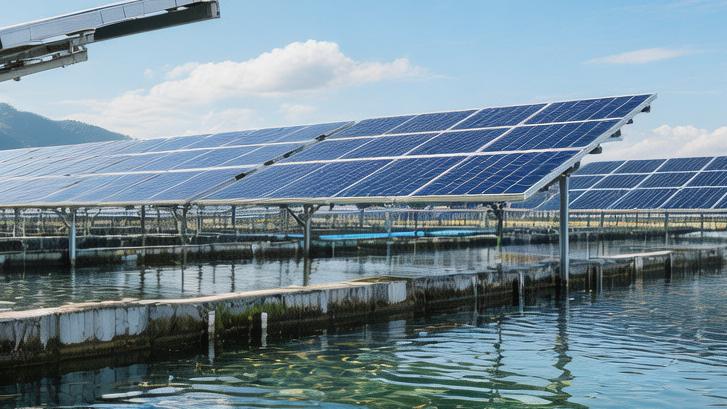
Second, improve the aquaculture environment: solar panels installed over the water can effectively block direct sunlight, reducing water evaporation by about 20%, stabilizing water temperature, and suppressing harmful algal blooms. That, in turn, significantly lowers the cost of water treatment, disease control, and water replenishment.
Third, reuse space and monetize surplus power: the system delivers dual land use—solar generation above, fish farming below—while any unused green electricity can be exported to the grid, creating an additional cash-flow stream for the farm.
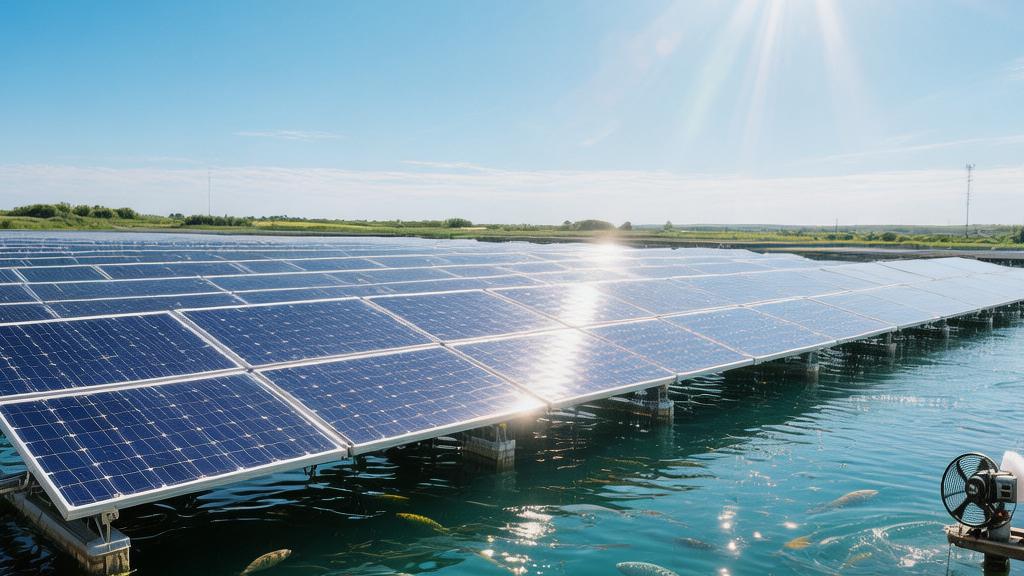
Energy Savings
Aeration Systems
In summer, when water temperature reaches 28°C, dissolved oxygen at the bottom of a pond often falls below 3 mg/L.
Each hectare of water surface is typically equipped with four aerators powered by 380 V three-phase asynchronous motors. Under full load, each motor draws 4.8 A, with rotational speed held at 1,440 rpm.
After passing through MPPT-optimized inversion, the DC output from the PV array reaches an AC conversion efficiency of 98.5%.
When solar irradiance reaches 800 W/m², inverter output frequency remains stable at 50 Hz.
With variable-frequency control, the aerator's startup current drops from an instantaneous peak of 30 A to just 6 A.
Soft-start mode reduces the physical wear rate of motor bearings by 40%.
Each unit generates 45 kWh of self-produced green power per day at effectively zero marginal energy cost.
Over a 100-day aquaculture cycle, a single aerator can save as much as $675 in electricity costs.
When wind speed over the water exceeds 5 m/s, aeration load is automatically reduced by 15%.
Operating profile: average daily runtime per unit is compressed to 11 hours, with nighttime peak load accounting for 65% of total energy use.
Maintenance budget: bearing replacement frequency is extended from once every 12 months to once every 24 months, reducing each repair bill by $85.
Pumping Costs
When ammonia nitrogen concentration exceeds 0.5 mg/L, the pond starts a pump rated at 200 m³/h to carry out water exchange.
A submersible pump with a 15-meter head, running 4 hours per day, consumes 44 kWh.
With the help of water-level sensors, the PV system shifts 80% of pumping work into the peak solar output window between 11:00 a.m. and 2:00 p.m.
The pump-cable cross-section is upgraded from 6 mm² to 10 mm², reducing line loss over 100 meters by 1.5%.
Inside a 200 mm PVC pipeline, water velocity is maintained at 1.5 m/s, cutting energy loss caused by internal wall friction by 12%.
The pump uses an impeller with a diameter of 250 mm, and under VFD control, deviation between actual and rated operating power is kept within ±5%.
Electricity cost: the power cost of completing a 30% water exchange for a 1-hectare pond drops from $18 to $3.5.
Annual return: with 150 water exchanges per year, a single pump can generate $2,100 in economic benefit.
Feeders
The farm operates 80 automatic broadcasting feeders, each serving a feed line 50 meters long.
Each machine is equipped with a 120 kg feed hopper and has a throwing radius of 15 meters.
The motor is rated at 150 W and performs up to 24 timed feeding cycles per day.
Each feeding cycle lasts 3 minutes, with a broadcast speed set at 0.5 kg/s.
The scattered 150 W electricity demand of each feeder is supplied locally by a 500 W monocrystalline flexible module installed along the pond embankment.
The module has an open-circuit voltage of 45 V and a short-circuit current of 11.5 A.
A dedicated small charge controller improves charging conversion efficiency by 18%.
Cable-laying distance is shortened by 60 meters per unit, reducing material and construction cost by $85.
Cost ratio: for every $1 spent on feed, the corresponding electricity cost drops from $0.02 to $0.003.
Feeding accuracy: the feed-broadcast uniformity error stays below 5%, and the feed conversion ratio improves from 1.6 to 1.45.
Pump Efficiency
Large-Scale Pumping
In a 200-hectare saltwater aquaculture park, 150 axial-flow pumps handle 45,000 m³ of seawater circulation every day.
Each unit is rated at 22 kW, and under a 5-meter head, water velocity is maintained at 2.5 m/s.
After being connected to a 3 MW solar DC microgrid, pump startup voltage rises smoothly from 380 V, while peak current is limited by the VFD to 45 A instead of 120 A.
From 10:00 a.m. to 3:00 p.m., during high-irradiance hours, the average conversion efficiency of the solar modules remains at 21.5%.
Within this 5-hour operating period, each pump consumes 18.5 kWh per hour while moving 800 m³ of water.
Compared with grid electricity priced at $0.18/kWh, direct PV supply reduces water-transfer cost per cubic meter from $0.004 to $0.0012.
At the end of a 120-day production cycle, the accumulated 3,500 hours of pumping operation saves $48,500 in electricity costs.
The pump impeller runs at 960 rpm at 50 Hz, with measured mechanical transmission efficiency of 89%.
Once paired with solar MPPT tracking, motor shutdown probability under weak-light conditions falls by 35%.
An extra 1.5 hours of effective pumping per day reduces hydrogen sulfide concentration at the pond bottom by 0.2 mg/L.
Overall water-quality variance is kept within a statistical range of 0.05, and white shrimp survival rate improves by 12 percentage points.
Pipeline Losses
Within a PVC water-distribution network spanning 15 kilometers, the main pipeline with a diameter of 300 mm is subjected to a static water pressure of 0.6 MPa.
At the pump outlet, the Reynolds number reaches 50,000, which is clearly within the turbulent-flow regime.
The solar VFD system reduces water-hammer amplitude inside the pipe network by 60%, lowering peak pressure from 0.8 MPa to 0.65 MPa.
The internal friction factor of the pipeline is calibrated at 0.013, and head loss is kept below 1.2 meters per 100 meters of pipe.
When PV output voltage fluctuates between 600 V and 850 V DC, inverter response time is only 2 milliseconds.
With that 2 ms frequency adjustment, the deviation between actual and target pump flow remains within ±3%.
Median outlet velocity at the end of the network is 1.8 m/s, while dissolved-oxygen loss during transport stays below 5%.
When the pump-room temperature reaches 35°C, the VFD cooling fan automatically accelerates to 2,500 rpm.
Annual equipment downtime falls from 45 hours to 12 hours, and the replacement-parts budget is reduced by $2,400.
After optimizing the fluid-dynamic design, the extra energy consumed by local resistance at pipe elbows drops by 18%.
For every 10,000 m³ of water delivered, total system energy use is reduced by 45 kWh.
Variable-Frequency Control
To handle a daily tidal water-level variation of 0.5 meters, 50 submersible pumps are equipped with pressure-type level sensors accurate to 0.01 meters.
When the sensor detects a water-level drop rate exceeding 0.1 meters per hour, the control system sends a 4–20 mA analog signal to the inverter.
The inverter then raises output frequency from 45 Hz to 50 Hz at full load, increasing the flow rate of a single pump from 400 m³/h to 500 m³/h.
This dynamic one-to-one load-matching mechanism lifts PV energy utilization from 72% to 91%.
Under cloudy conditions, when solar irradiance fluctuates sharply between 200 W/m² and 600 W/m², the algorithm limits frequency dispersion to within 5 Hz.
The maximum operating temperature of the motor stator winding is held below 85°C, slowing insulation aging by 40%.
Over a 5-year operating cycle, the average frequency of stator rewinding repairs per pump drops from 2 times to 0.5 times.
As a result, each unit's service life is extended by 3.5 years, and annualized asset depreciation declines by 15%.
Bearing vibration amplitude is kept within a tolerance of 0.2 mm, and running noise measured at 1 meter from the unit remains at 65 dB.
These physical improvements reduce the standard deviation of the system's overall efficiency index from 0.12 to 0.04.
Storage Strategy
Profiting From Price Gaps
From 10:00 a.m. to 2:00 p.m., when solar irradiance exceeds 900 W/m², the system charges in 0.5 C constant-current mode, with charging current held at 140 A.
As the cell state of charge rises from 15% to 95%, a single charging session can absorb 4,800 kWh of solar electricity.
From 8:00 p.m. to 10:00 p.m., the grid enters a peak-price window, and electricity prices surge to $0.32/kWh.
During this period, the storage system discharges at a full-load power of 1 MW, sending 2,000 kWh to 250 aeration units rated at 4 kW each.
Every 1 kWh of self-stored electricity used at that moment avoids $0.32 in high-cost power purchases, producing an absolute cost reduction of $640 over those 2 hours.
During the off-peak period from 1:00 a.m. to 5:00 a.m., grid electricity prices fall to $0.04/kWh.
The cell cabinets absorb 2,500 kWh of low-cost grid power to fill the remaining 30% capacity shortfall left by insufficient daytime sunlight.
The energy management system samples three-phase voltage and current every 50 milliseconds, keeping system error in charging and discharging efficiency within a narrow ±0.5% range.
With two full cycles per day, the system completes about 60 charge-discharge cycles per month, and cumulative arbitrage income exceeds $18,500.
After deducting $150 in monthly standby energy costs, net profit margin still reaches 98.5%.
After 1,000 cycles, the internal resistance of each individual cell has increased by only 0.2 milliohms, while system capacity retention remains as high as 97.8%.
Temperature and Humidity Stress Control
Temperature and humidity inside the container can influence the electrochemical reaction rate of lithium batteries by as much as 35%.
Each cell cluster with a capacity of 300 kWh is equipped with an industrial variable-frequency air conditioner rated at 12.5 kW of cooling capacity.
With a COP of 3.5, the air-conditioning system consumes 45 kWh per day to offset the 2.8 kW thermal load generated during cell charging and discharging.
A total of 120 NTC temperature sensors mounted on cell surfaces send thermal data to the main control board 4 times per minute.
The physical separation of hot and cold aisles reduces internal temperature-gradient variance inside the container to within 1.5°C.
Relative humidity is held steadily between 45% and 55% by the dehumidification module, effectively eliminating the 0.01% risk of electrical short circuits caused by moisture condensation.
The heat-spreading plate inside the cell pack is 2.5 mm thick, with thermal conductivity reaching 237 W/m·K.
The glycol-water solution inside the liquid-cooling loop flows at 1.2 m/s, keeping the highest cell temperature under 34.5°C during full-load discharge.
When the local temperature rises above 32°C, the air-conditioner fan speeds up from 1,200 rpm to 2,800 rpm within 3 seconds, and airflow doubles from 800 m³/h to 1,600 m³/h.
This precise temperature management lowers the cell's annual calendar-aging rate by 1.2 percentage points.
Annual maintenance cost for the HVAC equipment is only $800, accounting for less than 2.5% of the entire storage plant's annual operating cost.
The working pressure of refrigerant R410A fluctuates between 1.2 MPa and 2.5 MPa, and the compressor is expected to remain in service for more than 10 years.
Holding Through Outages
When the farm experiences a sudden grid failure, the storage system takes over 100% of the backup supply for oxygenation and water-circulation equipment.
Once the system detects a grid-voltage drop greater than 15%, the internal static transfer switch disconnects from the external grid in under 10 milliseconds.
Islanded microgrid mode is activated immediately, and the inverter restores AC output to the nominal 380 V within 3 sine-wave cycles.
The cell bank then delivers 350 kW to 150 underwater aeration disc units, each rated at 2.2 kW, providing stable power input.
In recorded outage events lasting 4 hours, the median dissolved-oxygen concentration in the ponds fell only slightly, from 6.5 mg/L to 5.8 mg/L.
The probability of fish surfacing from oxygen stress was reduced to 0%, and the biological mortality loss from a single outage event dropped from a historical average of $12,000 to $0.
The inverter has an overload capacity of 1.5 times nominal power, allowing it to withstand motor-start surge current up to 525 kW for 60 seconds.
Frequency fluctuation is held tightly within 49.8 Hz to 50.2 Hz, while total harmonic distortion of voltage remains below 3%.
The circuit breakers in the distribution cabinet are rated at 1,250 A, with a short-circuit breaking capacity of 65 kA.
When the grid is restored, the system performs 5 minutes of phase-synchronization detection before reconnecting smoothly, with voltage difference between both sides kept within 5 V.
With this backup power system in place, the survival rate in high-density shrimp farming rises steadily from 82% to 95%.