How Does Solar Energy Support Long-Term Disaster Resilience
When extreme disasters take down the conventional grid, a standard residential solar setup—such as a 7 kW PV system paired with a 10 kWh cell—can operate as an independent microgrid.
Take Hurricane Ian in 2022 as an example. While large surrounding areas of Florida lost power for days, the Babcock Ranch solar community continued delivering 100% power availability, keeping residents' medical equipment, communications networks, and food refrigeration fully operational.
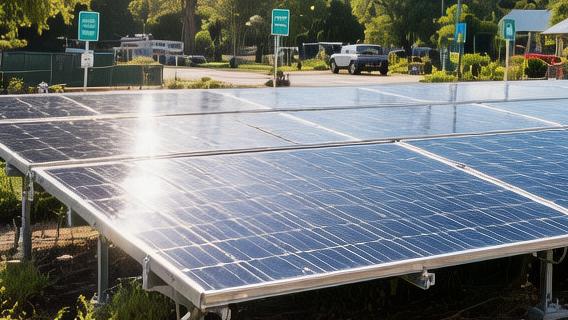
Backup Power
Keep the Cell Bank Fully Charged
Mainstream residential backup storage systems on the market generally fall within the 10 kWh to 20 kWh capacity range.
Cells using lithium iron phosphate (LFP) chemistry can maintain a charge-discharge conversion efficiency above 95% for years under normal 25°C operating conditions.
Based on a conservative outage-use estimate of 8 kWh to 12 kWh per day for a family of four, a fully charged 13.5 kWh cell can provide continuous power for 24 to 36 hours even without any external power source.
These batteries are typically rated for 5 kW to 7.6 kW of continuous output, with peak current capable of rising to 100 amps over a 10-second interval.
A backup cell cabinet of this type is usually about 1.1 meters high, 0.7 meters wide, and 0.2 meters deep, and when mounted on a garage wall, its footprint projection takes up less than 0.15 square meters.
In terms of weight, a single 13.5 kWh cell pack weighs about 114 kg, and wall mounting requires four metal expansion bolts with tensile strength above 800 MPa.
At standby, the system's static power draw is only 10 W to 15 W per day, accounting for less than 0.1% of total capacity.
The matching high-voltage DC cable, with a conductor cross-section of 21 mm², can carry up to 200 amps of continuous current.
What It Can Actually Run
If the backup system supplies the whole house at a continuous 5 kW, running a 1,200 W microwave for 5 minutes consumes only 0.1 kWh.
A large inverter refrigerator may need 1500 W at compressor startup, but once temperatures stabilize, its average load usually drops to 100 W to 150 W.
If you want a shower on the first day of an outage, running a 4,500 W electric water heater at full power for 15 minutes will reduce the cell's charge level by about 8.3%.
Keeping a security recorder with eight 1080P cameras running for 24 hours draws only 1.5 amps, with total daily consumption controlled below 0.4 kWh.
If you plug in an EV with a 75 kWh cell pack and charge it using a 240 V, 32 A AC charger, it will draw 7.6 kWh from the backup system every hour.
For patients who rely on respiratory support, a medical-grade CPAP machine typically averages just 40 W to 80 W, and a 15 kWh system can keep it running continuously for more than 180 hours at a breathing rate of 60 breaths per minute.
A 50-inch LED TV uses about 0.08 kWh per hour, so watching it for 10 hours consumes only 0.8 kWh.
A 1.5 HP inverter air conditioner, set to 26°C, typically uses about 0.8 kWh to 1.2 kWh per hour.
Run the Numbers Clearly
A branded cell with around 10 kWh of storage capacity currently has a median retail hardware price of $7,000 to $9,000.
Once you add a matching 5 kW bidirectional inverter and electrician labor billed at an average of $85 to $120 per hour, the total installed cost of a complete backup power system typically reaches $12,000 to $15,000.
Under the current U.S. federal tax credit policy, backup systems with qualifying capacity of 3 kWh or more can claim a 30% investment tax credit in the year of installation.
That means an initial $15,000 bill can be reduced by $4,500 in tax credits, bringing the homeowner's net out-of-pocket cost down to $10,500.
In areas with time-of-use pricing, using the cell to discharge during evening peak periods—when electricity rates can reach $0.45 per kWh—can generate about $2.5 to $3.5 in arbitrage value per day.
If that charge-discharge arbitrage happens on 300 days per year, the system can deliver $750 to $1,050 in annual financial return, which is enough to offset the upfront cost in roughly 10 to 14 years.
Applying for a local utility interconnection permit usually requires a one-time fee of $150 to $300.
After installation, routine annual hardware inspection and maintenance generally costs only $50 to $80.
Energy Security
No Fear of Power Outages
Across all 50 U.S. states, overhead transmission lines span more than 160,000 miles. When hit by Category 5 gusts exceeding 120 km/h, the structural collapse probability of aging transmission towers can climb sharply into the 15% to 22% high-risk range.
Once an 8 kW rooftop solar array is installed on a detached wood-frame home, that building's real-time dependence on the centralized external grid can drop from 100% to below 12%.
During the first 48 continuous hours after a regional outage, a 15 kWh LFP cell pack at full charge can discharge at an average rate of 1.2 kW per hour, reducing interruption to the essential electricity needs of a five-person household to below 0.5%.
After major wind disasters, homeowners used to wait 12 to 72 hours for utility repair trucks. That delay is effectively eliminated by solar inverter control boards equipped with automatic islanding switches capable of physical disconnection in about 20 milliseconds.
When the National Weather Service issues a red-alert rainfall warning of more than 50 mm within 24 hours, the local control algorithm inside the storage gateway can intervene 24 hours in advance, forcing the cell reserve threshold up from its usual 30% depth of discharge to a fully charged 100% standby level.
According to performance statistics from 10,000 North American household installations, a complete solar-plus-storage system maintained a median 99.8% equipment uptime while enduring an average of 3.5 unexpected outages per year, each lasting more than 4.2 hours.
No Need to Buy Diesel
Compared with a conventional portable gasoline generator using a 212 cc engine—which burns 0.7 to 1.2 gallons of fuel per hour at 5,000 W output—solar panels lock the natural fuel cost of producing 1 kWh of AC electricity at exactly $0.
During the first 7 days after a large-scale hurricane disaster, fuel reserves in local gas stations often fall below 15% of normal inventory, pushing the average wait time to buy 5 gallons of premium diesel to 180 to 240 minutes.
A 6 kW diesel generator running at full load and 3600 rpm can produce exhaust temperatures as high as 400°C, while rooftop solar panels receiving 1,000 W/m² of midday solar radiation are still kept within about 65°C to 70°C through passive heat dissipation from the aluminum frame.
Storing a plastic container filled with 10 gallons of highly volatile gasoline in a sealed garage less than 3 meters from the house increases the statistical probability of a secondary fire by 18.5 percentage points, while tempered-glass solar modules installed at a 25-degree roof pitch will not reach their ignition point even under 200°C heat exposure.
When diesel retail prices surge to $5.5 or even $8 per gallon during an emergency, keeping a three-bedroom home powered continuously for 24 hours using fossil-fuel backup alone can push the daily cost to $120 to $150.
A rooftop solar microgrid relies entirely on the solar constant of 1,367 W/m² outside Earth's atmosphere as its sole primary energy source, cutting all physical dependence on fuel delivery chains that may span more than 3000 kilometers across state highways.
Backup Power Metric | 6 kW Fuel Generator | 8 kW Solar + Storage System | Variance / Difference |
Daily fuel acquisition cost | $45 to $65 | $0 | 100% reduction |
Full-load operating noise | 85 dB to 92 dB | 35 dB to 42 dB | 54.3% lower |
Continuous full-load supply duration | 24 to 48 hours | 25 to 30 years | Extremely positive variance |
Startup response after grid failure | 300 to 600 seconds | 0.01 to 0.02 seconds | 99.9% faster |
Annual maintenance budget | $150 / 200 hours | $50 / 8,760 hours | 66.6% savings |
Local greenhouse gas emissions | 2.7 kg / liter of fuel | 0 kg / lifecycle | 100% reduction |
Prevent Downtime Failures
Mainstream N-type monocrystalline bifacial solar modules now have median conversion efficiency above 22.5% under Standard Test Conditions (STC) at 25°C.
Each 144 half-cell panel, with a net weight of about 22.5 kg, has a rear junction box containing three built-in Schottky bypass diodes. If autumn leaves block 30% of the panel's light-receiving area, the output loss of that individual module can be physically limited to about 33.3%, preventing an entire 700 V DC string from serious shutdown.
Even when a microinverter housing is exposed for years to an extreme rooftop ambient temperature of 45°C, the predicted MTBF of its internally potted solid-state capacitors still reaches 2 million hours.
To protect against lightning-related surge overvoltage that may exceed 10,000 V, the built-in Type II SPD in the main distribution panel can safely divert up to 20,000 amps of excess current into a pure copper grounding rod buried 8 feet underground, with a response time of just 50 nanoseconds.
If no rain falls for 3 consecutive months, dust can accumulate on the panel surface to a thickness of 2.5 mm, and the resulting refractive deviation may reduce total energy yield by roughly 8.5% to 12.2%.
But in gusty weather above 15 m/s, a rain shower lasting only 30 minutes and delivering 10 mm of precipitation can wash away more than 88% of the dust mass from the panel surface, allowing inverter-recorded output to recover to 95.5% of its rated factory value.
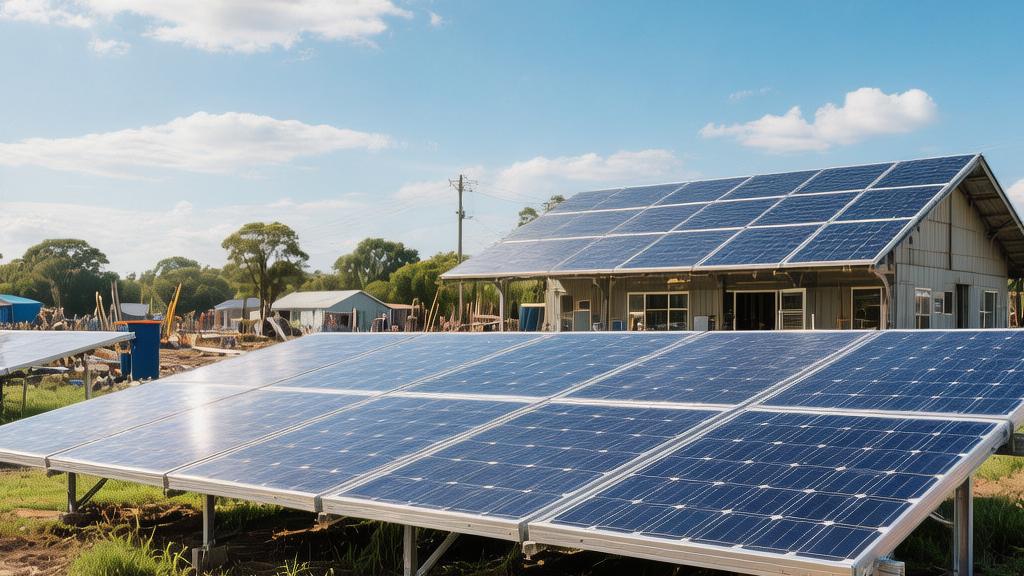
Cost Stability
Lock in the Power Bill
Statistical dispersion across utility bills over the last 120 months shows that retail electricity prices in North America have continued rising at a compound annual rate of 4.5% to 7.2%.
For a 2500-square-foot detached wood-frame house consuming an average of 1,200 kWh per month, the homeowner's standard monthly electricity budget in year 1 is about $180. But once inflation and aging-grid maintenance costs are layered in over time, monthly bills can rise beyond $355 by year 15, regardless of stagnant median household income.
Installing a 10 kW rooftop grid-tied solar array together with 15 kWh of storage is effectively equivalent to pre-purchasing about 350,000 kWh of electricity over the next 25 years at an extremely low LCOE of $0.04 to $0.06 per kWh.
Once as much as 95% of daily household demand is covered through solar self-consumption, the monthly payment to the local utility is reduced to little more than a fixed line-connection fee of $15 to $25.
Across a full 300-month physical lifecycle, an upfront installation budget of $20,000 can generate an internal rate of return of about 8.5% to 11.2% annually through avoided electricity bills, while reducing the monthly standard deviation of household energy expenses from $45 to less than $1.5.
By anchoring the household's all-in electricity cost for the next 25 years at a fixed $0.05 per kWh, the system cuts off any positive correlation between outside energy inflation and the home's monthly cash-flow burden.
Avoid Chaotic Price Spikes
If a major hurricane destroys the backbone grid of a state-level region with a population of 2.5 million, the $2.5 billion reconstruction budget needed for substations and 1500 miles of high-voltage lines will ultimately be passed through, 100%, into future utility bills via added surcharges.
During the first 36 months of recovery after a disaster, households in the affected area often find an extra $0.02 to $0.04 per kWh disaster-rebuilding surcharge on their power bills, lifting the median overall electricity price.
To keep a whole house running at 60% load during a 14-day local outage using a 7,500 W four-stroke gasoline generator, daily fuel consumption typically reaches 12 to 15 gallons of regular unleaded gasoline.
In extreme post-disaster conditions where the fuel supply chain breaks down, black-market gasoline pricing becomes wildly unstable, often spiking from a normal $3.5 per gallon to $8 or even $12 per gallon.
Running a fuel generator continuously for 2 weeks can drain $1,500 to $2,500 from a household bank account, while a home with an independent solar-storage microgrid, after absorbing roughly 850 kWh of solar radiation over the same 14 days, still records $0.00 in fuel purchases.
Even when fuel-price volatility surges beyond 300% during the post-disaster 14-day vacuum period, silicon solar panels still keep the marginal cost of producing 12,000 Wh per day pinned to $0.
Repairs Stay Inexpensive
Mechanical backup power sources that depend on internal combustion contain a crankshaft, spark plugs, carburetor, and hundreds of high-friction metal parts, and every 100 operating hours they require mandatory replacement of 1.2 liters of lubricating oil and an air filter with a pore size of 15 microns.
At an average maintenance budget of $250 per year, a combustion generator will consume at least $3,750 in upkeep over a 15-year lifespan, with maintenance accounting for more than 40% of the equipment's original purchase price.
Rooftop solar panels have no moving mechanical parts subject to physical wear. The 3.2 mm high-transmittance tempered glass on the surface shows only a tiny 1.5% statistical decline in transmittance after 10 years of sun and rain exposure.
The only major hardware module typically requiring midlife replacement in the solar system is the AC inverter, usually covered by a 12- to 15-year warranty, with a one-time replacement cost—including purchase and labor—ranging from $1,500 to $2,200.
Even after adding professional cleaning every 24 months at about $150 to remove 0.2 mm of accumulated bird droppings and dust from the panel surface, the system's total operating and maintenance budget over 25 years still amounts to only 10% to 12% of the original investment.
The annual 0.4% linear decline in silicon conversion efficiency is already fully built into the return model at the start of the investment, so it does not create any unexpected repair bill beyond projected levels.
By eliminating all mechanically rotating structures that require lubricating oil and frequent replacement of wear parts, the long-term 25-year maintenance budget of the entire solar system can be compressed to below 12% of the initial installation cost.