What Are the Top Uses of Solar Energy in Remote Areas | 3 Major Benefits
In remote areas, solar energy is primarily used for off-grid home lighting, agricultural pumping and irrigation, and power supply for communication base stations.
Its three core benefits are: first, achieving energy independence, directly solving the electricity challenges for approximately 730 million people worldwide without grid coverage;
Second, significantly reducing costs by replacing expensive traditional diesel power generation, saving over 40% in energy expenditures over the system's life cycle;
Third, green and environmental protection, with zero carbon emissions effectively protecting the local ecological environment.
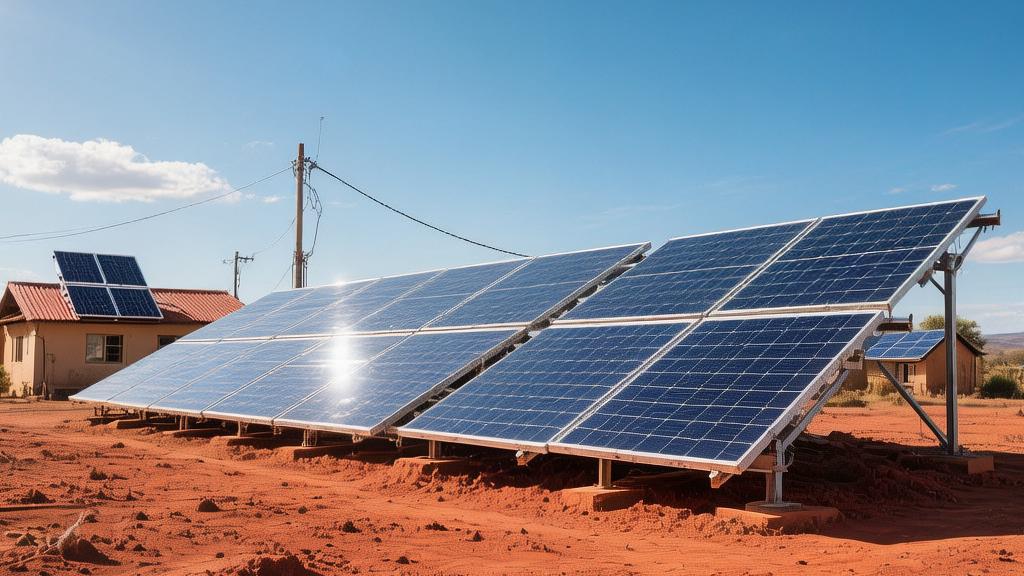
Household Electrification and Lighting
Selecting Photovoltaic Panels
The usable roof area of a single-family house in remote areas without electricity usually ranges from 40 to 60 square meters, with a static building load capacity of approximately 25 to 30 kg per square meter.
Laying 4 monocrystalline silicon photovoltaic panels with physical dimensions of 1722 mm by 1,134 mm and a peak power of 410 W per panel results in a total installed capacity of 1.64 kW. The total equipment weight is only 86 kg, which is well below 0.2% of the roof's pressure limit.
· In tropical and subtropical arid climate zones within 15 degrees of north and south latitude, the average daily peak effective sunshine duration is as long as 5.5 to 6 hours. The theoretical daily DC power generation of the 4 panels fluctuates between 8.5 and 9.2 kWh.
· The outermost layer of the panel is covered with 3.2 mm high-transmittance low-iron tempered glass, which reduces the physical refractive index of sunlight to below 1.52. This ensures the equipment can still output a weak current of 12% to 15% of the rated power during 10 consecutive days of rainy or overcast conditions with diffuse reflection.
· The MC4 industrial-grade waterproof connectors on the back of the panels can withstand a DC high voltage of up to 1000 V, with a protection level reaching the IP68 standard. In the tropical rainy season with a relative air humidity of 95%, the leakage probability is only one in one hundred thousand.
Cell Capacity
The electricity obtained during the day must be stored in chemical cell packs to fill the 10 to 12 hour energy vacuum period at night when there is no light.
Installing a Lithium Iron Phosphate (LiFePO4) energy storage module with a nominal voltage of 48 V and a rated current of 100 Ah provides a physical capacity of 4.8 kWh. The weight fluctuates between 45 and 50 kg, and it occupies less than 0.06 cubic meters of indoor space.
· When the system threshold for Depth of Discharge (DOD) is limited to 80%, the usable power per cycle is 3.84 kWh. A single discharge supports a 50 W DC frequency conversion refrigerator for 24 hours of continuous cooling (consuming 1.2 kWh per 24 hours), plus 3 AC fans running continuously for 8 hours (cumulative consumption of 1.44 kWh).
· In a constant temperature test environment of 25 degrees Celsius, the physical charge-discharge cycle limit of LiFePO4 material exceeds 6000 times. Calculated at a fixed frequency of 1 deep cycle per day, the designed service life reaches 16.4 years.
· Compared to old-style maintenance-free lead-acid batteries, the internal resistance of the new material is reduced to 3 to 5 milliohms. The energy conversion rate for a single charge-discharge cycle remains at a high range of 95% to 98%, and the natural capacity decay rate caused by the material's own heat is only 0.2% per year.
Powering Appliances
A pure sine wave high-frequency inverter with a rated power of 3,000 W handles the conversion task between DC and AC currents. Its no-load power loss is lower than 15 W. On a test bench running at 100% full load power, the conversion efficiency can soar to 93.5%.
The AC parameters at the output end are constant at 230 V voltage and 50 Hz frequency. The voltage fluctuation range is locked within plus or minus 5% by the BMS chip, and the Total Harmonic Distortion (THD) is suppressed below 3%.
· For indoor basic lighting, all fixtures are replaced with 6 LED ceiling lamps with a color temperature of 4000 K and a power of 12 W. The luminous efficiency is as high as 120 lumens per watt, resulting in a total room luminous flux of 8640 lumens.
· Compared horizontally with old 60 W tungsten incandescent bulbs, LED chips reduce lighting power consumption by 80%. During the high-frequency lighting period from 18:00 to 22:00 every evening, the total power consumption of the 6 lamps is 0.28 kWh.
· Facing the instantaneous high-voltage startup of inductive loads, the peak impact resistance power of the inverter reaches 6,000 W. It can withstand instantaneous high-frequency inrush currents for up to 20 milliseconds, ensuring that an 800 W microwave oven or a 600 W drum washing machine can be powered on within 0.1 seconds without the bus voltage dropping and triggering power-off protection.
Wiring and Piping
The DC transmission cables leading from the outdoor PV array to the indoor combiner box use 4 square millimeter tinned copper core specialized photovoltaic wires. When outdoor temperatures rise to 70 degrees Celsius, the maximum current-carrying capacity of the cables remains stable at 35 Amps.
To control the energy transmission loss rate generated by the 15-meter outdoor wiring within the 2% engineering red line, the DC input voltage is increased to a high level of 120 V to 150 V through series connection.
· The indoor AC distribution network is uniformly laid with flame-retardant Polyvinyl Chloride (PVC) insulated multi-strand copper wires with a cross-sectional area of 2.5 square millimeters. A single circuit wire can withstand a maximum continuous AC current of 16 Amps.
· On the rail of the main indoor distribution box, a Residual Current Device (RCD) with a rated leakage operating current of 30 mA is connected in series. The physical response time for the device to disconnect upon detecting an abnormality is less than 0.1 seconds, reducing the fatality rate of electric shock from accidental contact with live conductors to 0%.
· The overall physical grounding resistance of the distribution network tests at less than 4 ohms. During construction, a galvanized angle steel with a length of 1.5 meters and a diameter of 16 mm is driven vertically into soil with moisture greater than 20%, allowing a 10 kA lightning surge high-voltage current to be completely discharged into the ground within 0.02 seconds.
Solar Agriculture
Pumping Groundwater
In remote arid agricultural areas, the groundwater level usually fluctuates within the range of 40 to 60 meters vertically downward.
A DC brushless deep-well submersible pump with a rated power of 1.5 kW (approx. 2 HP) is configured, paired with a monocrystalline silicon PV array with a total installed capacity of 2.2 kW.
When the solar radiation peaks at 1,000 W per square meter between 12:00 and 14:00, the pump speed climbs to 2850 rpm.
The inner diameter of the water pipe is set to 50 mm, and the physical flow at the outlet remains stable at 8.5 to 9.2 cubic meters per hour.
If the vertical head is stretched to a limit of 80 meters, the internal MPPT (Maximum Power Point Tracking) controller will automatically increase the DC voltage to 110 V, maintaining the pump's mechanical work efficiency above 78%.
Pumping groundwater continuously for 6 hours yields a total output of 45 cubic meters, which is sufficient to cover the single irrigation needs of 2.5 hectares of cash crops.
The acoustic noise of the pumping process is buried deep underground, with the measured decibel level at the wellhead ground not exceeding 45 dB.
Drip Irrigation and Fertilization
The extracted groundwater is directed into a 10-cubic-meter black High-Density Polyethylene (HDPE) water tank. The tank is mounted on a 3-meter-high steel structure stand, utilizing the physical height difference to generate 0.3 MPa of natural hydrostatic pressure.
Anti-UV drip irrigation tapes with an outer diameter of 16 mm and a wall thickness of 0.2 mm are laid in the field, with a labyrinth emitter embedded every 30 cm.
Under an operating pressure of 0.15 MPa, the rated flow of a single emitter is precisely controlled at 2 liters per hour, with the error range narrowed to plus or minus 5%.
A 120 W solar DC fertilization pump is connected in parallel next to the water tank to inject water-soluble NPK compound fertilizer into the main pipe at a volume concentration ratio of 1 to 200.
The pH value of the liquid fertilizer after mixing remains stable in the slightly acidic range of 6.2 to 6.5.
Water and nutrients flow through the pipes to the soil within 15 to 20 cm around the crop roots. The surface water evaporation rate drops sharply from 45% in flood irrigation mode to below 5%.
When the soil moisture sensor monitors the volumetric water content of the 0 to 30 cm soil layer, reaching the optimal median value of 25%, the solenoid valve will cut off the water flow within 0.5 seconds, and the comprehensive water and fertilizer utilization efficiency soars to a peak of 92%.
Greenhouse Cooling
A standard plastic film greenhouse measuring 50 meters long, 8 meters wide, and with a ridge height of 3.5 meters has an internal enclosed air volume of approximately 1100 cubic meters.
When the outdoor ambient temperature climbs to 38 degrees Celsius in summer, heat accumulation easily occurs inside the greenhouse, with local maximum temperatures reaching up to 50 degrees Celsius.
Four solar DC negative pressure fans with a single-unit power of 400 W and a blade diameter of 1,380 mm are installed symmetrically on the side walls of the greenhouse.
When the built-in NTC thermistor sensor (with a temperature measurement accuracy of plus or minus 0.5 degrees Celsius) detects that the temperature has crossed the preset upper limit of 32 degrees Celsius, the fan array starts at full load within 3 seconds.
The exhaust volume generated by the 4 devices running simultaneously reaches 160,000 cubic meters per hour, and the air exchange frequency inside the greenhouse reaches 2.4 times per minute.
Fresh outdoor air enters through the wet curtain wall on the other side, where water molecules evaporate to absorb a large amount of sensible heat, forcibly reducing the temperature of the airflow entering the room by 5 to 8 degrees Celsius.
After 45 minutes of operation, the statistical variance of the ambient temperature in the greenhouse converges from 6.5 to 1.2. The spatial temperature gradient distribution becomes uniform, and the average temperature steadily drops and locks at 28 degrees Celsius.
The 1.6 kWh of electricity consumed by the fans comes 100% from flexible thin-film photovoltaic modules with an area of only 12 square meters on the greenhouse roof.
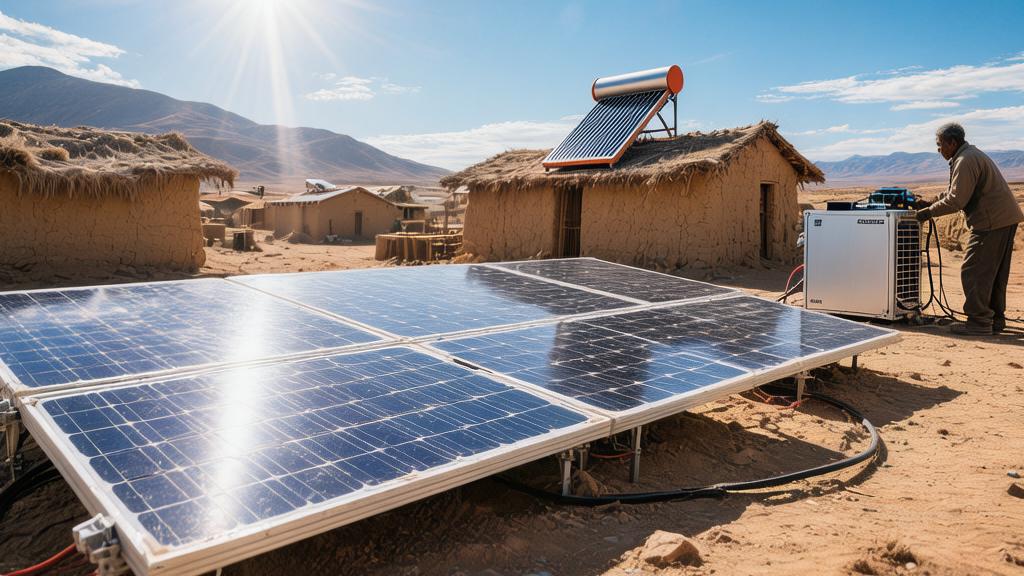
Internet Access
Connecting to Satellite Networks
Low Earth Orbit (LEO) satellite broadband receiving terminals in remote areas have phased array antennas whose peak power climbs to 100 W during the initial satellite acquisition stage. After entering a stable state of tracking orbital satellites, the continuous operating power stays within the 50 W to 75 W range.
Under the working condition of providing network signals 24 hours a day, the daily physical power consumption of the entire satellite receiving equipment fluctuates between 1.2 and 1.8 kWh.
By configuring 3 monocrystalline silicon photovoltaic panels with a peak power of 250 W, the system's open-circuit voltage after series connection reaches 112 V. Installed with a fixed bracket at an elevation angle of 35 degrees at 45 degrees north latitude, it can receive 4.5 hours of effective sunshine daily.
When the outdoor temperature drops suddenly to minus 5 degrees Celsius, the antenna's built-in snow-melting heating resistor will automatically power on, and the overall load power will instantly soar to 150 W. At this time, the MPPT controller will automatically adjust the output current of the PV panels to a maximum of 8 Amps, ensuring the power supply bus voltage does not experience a dip below 22 V.
The panel conversion efficiency remains at the industry average of 21.5%, delivering 2.8 to 3.1 kWh of DC power to the storage end daily. The system's wind and snow-resistant aluminum alloy brackets, fixed to a concrete base with 4 stainless steel expansion bolts of 12 mm diameter, can withstand gusts of 35 meters per second (equivalent to a Category 12 hurricane) without mechanical deformation exceeding 2 mm.
Router Power Consumption
The indoor dual-band Wi-Fi 6 (802.11ax) wireless router, responsible for distributing wireless signals, supports wide-voltage DC power supply from 12 V to 24 V, eliminating the 15% energy loss caused by AC power adapter conversion.
In the full-load state of 2.4 GHz and 5 GHz dual-band concurrency, the true power of the router is only 15 W.
Four omnidirectional antennas with a gain of 5 dBi can cover a clear spherical space with a radius of 30 meters. Behind a brick-concrete wall 15 meters away from the router, the measured Received Signal Strength Indicator (RSSI) can still be maintained above the usable threshold of minus 65 dBm.
To meet the internet needs of another village without electricity 5 kilometers away, a pair of point-to-point (PtP) microwave bridges with a transmission frequency of 5.8 GHz is added to the roof. The directional antenna of the bridge has a transmission power of 27 dBm, and the additional power consumption during operation is precisely controlled at 10 W.
The data throughput between the bridges remains stable at 300 Mbps, with a Bit Error Rate (BER) of less than one in one hundred thousand.
The total 25 W DC load generated by the two network devices is connected to the PV cell via a 3-meter pure copper dual-core cable with a cross-sectional area of 1.5 square millimeters. The full-load current of the cable section is only 1.04 Amps, and the temperature rise on the conductor surface is below 0.5 degrees Celsius, eliminating any physical risk of short circuits caused by overheating of the insulation layer.
Online During Rainy Days
To support the satellite antenna and router during the night and consecutive rainy days without going offline, the system is equipped with a Lithium Iron Phosphate (LiFePO4) energy storage cell pack with a nominal voltage of 24 V and a capacity of 100 Ah.
The physical total storage of the cell pack reaches 2.4 kWh, with a weight of 26 kg. It is composed of 8 cells in series with a single unit capacity of 100 Ah, connected via laser-welded copper bars.
The factory-preset Cell Management System (BMS) strictly limits the Depth of Discharge (DOD) to 80%, locking the actual callable effective power at 1.92 kWh.
In extreme weather conditions with 3 consecutive days of no effective light, a total continuous discharge load of 75 W consumes 0.075 kWh per hour. The 1.92 kWh of usable power can support the entire network communication equipment running continuously for 25.6 hours, ensuring that the emergency external communication channel in remote areas remains unobstructed.
The cell pack integrates 3 NTC temperature sensors. When it detects the ambient temperature dropping to 0 degrees Celsius, the BMS will forcibly shut down the charging circuit to prevent lithium ions from precipitating as metallic lithium dendrites on the surface of the graphite negative electrode, which could pierce the polyethylene separator with a thickness of only 16 micrometers.
In a dry indoor environment with an average annual temperature of 20 degrees Celsius, discharging at a small current of 0.2 C (i.e., 20 Amps), the physical cycle life of the cell can reach 5500 times. This translates to a service life of 15 years, during which the natural power decay rate does not exceed 1.5% per year.