How to Optimize Your Home for Solar Panel Installation | 3 Steps
First, evaluate the condition of the roof. Solar systems have a lifespan of up to 25 years; refurbishing an aging roof in advance can eliminate high disassembly and reinstallation fees in the future.
Second, reduce household energy consumption. By upgrading to LED lights or thickening insulation layers to reduce daily electricity consumption by about 15%, you will only need to purchase a smaller, lower-cost solar system.
Finally, clear obstructions. Trim tree branches around south-facing roofs to ensure at least 5 hours of direct sunlight per day to maximize power generation efficiency and return on investment.
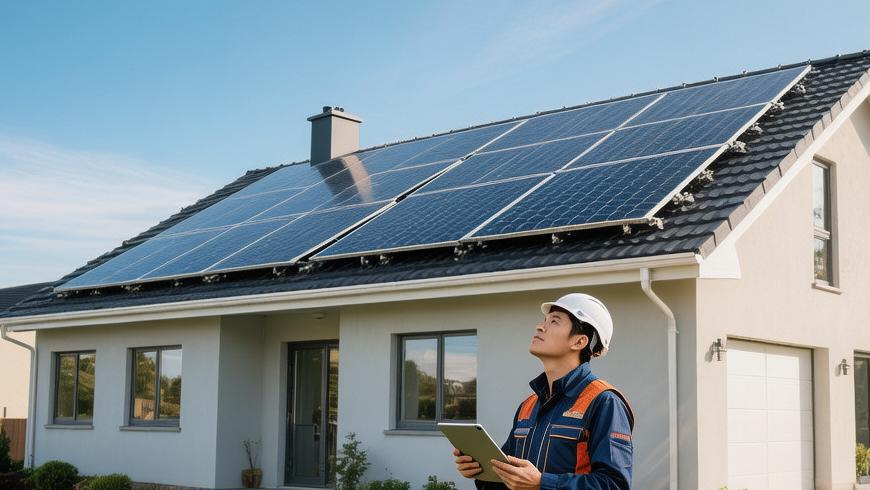
Evaluate and Prepare Your Roof
Check Shingle Lifespan
The average physical lifespan of a set of monocrystalline silicon photovoltaic modules is typically as long as 25 to 30 years.
Traditional asphalt shingles laid on the surface of the vast majority of single-family wood-structure houses in the United States mostly have a factory-rated usage cycle between 15 and 20 years.
When climbing an aluminum alloy folding ladder for field measurements, if it is discovered that more than 15% of the shingle surfaces have reticulated cracks wider than 2 mm.
Or if the mass of mineral granules shed per square foot on the roof slope exceeds 50 g, it means all roofing materials must be replaced at a full cost of 8,000 to 12,000 dollars before construction begins.
Assuming that to save this initial budget, holes are forcibly drilled in an old roof to fix brackets, the probability of roof leakage after 6 to 8 years will climb exponentially to over 85%.
By then, hiring a professional electrician team to dismantle and reinstall a 20-panel system would cost up to 3,500 dollars for a single instance of labor hourly wages plus material loss costs.
This is 28% higher in total long-term maintenance costs compared to synchronizing the roof and panel lifespans to a 25-year baseline from the start.
Calculate Load-Bearing Capacity
A standard-sized 60-cell photovoltaic module, measuring 65 inches long and 39 inches wide, typically has a net weight of around 40 to 45 lbs.
Including the bottom 6061-T6 specification aluminum alloy rails and stainless steel fasteners, the average dead load pressure exerted by the entire array on the roof structure is approximately 3 to 4 lbs per square foot.
For old residences that obtained building permits before 1980, the cross-sectional dimensions of the wooden trusses supporting the roof inside the attic are often only 2 inches by 4 inches.
The tensile strength of such old timber, after more than 40 years of alternating dry and humid cycles, usually decays by about 12% to 18%.
When reviewing 10-page engineering drawings, local building safety compliance officers will require the center-to-center spacing between trusses to strictly maintain a standard value of 16 inches or 24 inches.
If the moisture content of the wood is measured by professional instruments to exceed 19%, or if the local vertical deflection exceeds 1.5 inches, you will need to spend 1,200 to 2,500 dollars to hire a carpenter for structural reinforcement.
They need to use yellow pine timber with a larger cross-section of 2 inches by 6 inches, nailed into the original rafters every 8 inches with 3.5-inch galvanized steel nails, to ensure the static load limit is increased to over 10 lbs per square foot.
Check Leakage Rate
When constructing on a roof slope of 18 degrees to 30 degrees, installation workers need to drill an average of 40 to 60 penetrating installation holes with a depth of 3 inches.
To prevent rainwater leakage in areas where average annual precipitation reaches 20 inches, the bottom of each 5/16-inch stainless steel lag bolt must be coated with approximately 0.5 cubic inches of polyurethane sealant.
The perimeter of the bolt must also be covered with an 8-inch by 12-inch anodized aluminum flashing, ensuring its overlap ratio with the upper and lower layers of asphalt shingles reaches 60%.
If the 15-lb or 30-lb synthetic asphalt waterproof underlayment beneath the roof has a tensile breaking strength lower than 40 lbs per inch, rainwater will seep into the insulation through gaps of 0.1 inches.
Once the relative humidity in the attic exceeds 70% for 14 consecutive days, the probability of black mold growth on the wood surface will soar to 90%.
Hiring a professional company to clear a mold infection covering 200 square feet fluctuates at an average quote between 1,500 dollars and 3,000 dollars.
Spending 400 dollars in advance to hire a certified inspector to scan the inside of the roof with an infrared thermal imager to find abnormal cold spots with a temperature difference greater than 3 degrees Celsius can reduce the probability of such unknown financial losses by 95%.
Maximize Home Energy Efficiency
Fill Insulation
In North American single-family wood-structure houses built before 1990, the thickness of fiberglass insulation at the top of the attic is usually only 3 to 4 inches, with the corresponding thermal resistance value remaining in the inefficient range of R-11 to R-15.
When outdoor temperatures climb to 100 degrees Fahrenheit in summer, the lack of a standard R-38 level insulation layer with a thickness of 12 to 14 inches will accelerate the loss rate of indoor cool air by 35%, significantly increasing the dispersion of heat conduction.
Hiring 2 professional workers for 1,200 to 1,800 dollars to cover a 1,500-square-foot attic space with cellulose insulation material at a density of 1.5 lbs per cubic foot.
Regression analysis evaluating data from 20,000 residential renovation projects over the past 10 years shows a strong negative correlation of -0.85 between insulation thickness and air conditioning cooling load.
Over a 15-year cycle, the absolute value of the house's overall heating and cooling load drops by 20% to 25%, and the variance of indoor temperature distribution shrinks by 40%.
When solar installers input a house's historical energy consumption data model, an average monthly reduction of 150 to 200 kWh in electricity consumption can reduce the design capacity of the photovoltaic system by 1.5 kW to 2 kW.
Calculated at a system unit price of 3.2 dollars per watt, the total investment budget is reduced by 4,800 to 6,400 dollars.
Replace Thermostat
For a 2,000-square-foot two-story residence, the central air conditioning system consumes 30 to 45 kWh of AC electricity daily during the 4-month peak cooling period in summer.
Spend 150 to 250 dollars to purchase a smart thermostat with a Wi-Fi module and machine learning algorithms to precisely track the temperature fluctuation range and relative humidity distribution in 8 different zones indoors.
When the internal humidity sensors of the house detect a 15% reduction in absolute humidity, the device control panel automatically adjusts the set target room temperature from 72 degrees Fahrenheit to 76 degrees Fahrenheit.
For every 1 degree Fahrenheit of positive temperature deviation, the startup frequency of the air conditioning compressor drops by 4% to 6%.
Over a 3-to-5-year usage cycle, through a user behavior statistical model recording over 5,000 sample data points, the median of the HVAC system energy consumption curve is lowered by 12% to 18%, and the average error and dispersion of the temperature prediction model are both less than 0.5%.
When the local grid company's time-of-use electricity price reaches 0.45 dollars per kWh during the peak period from 4 PM to 9 PM, the device's peak-avoiding pre-cooling function saves 300 to 450 dollars in bill expenses within 12 months.
Statistical data from 10,000 American households indicates that the energy consumption prediction accuracy after replacing the device reached 94%, saving 2 to 3 kWh daily, which allows for one fewer 400 W module in the solar panel array.
Check High Energy Consuming Appliances
Old electric water heaters and pool pumps over 15 years old are the two high-power electrical devices with the highest share of home energy efficiency erosion.
A traditional resistance wire heating electric water heater with a capacity of 50 gallons has a rated operating power fluctuating between 4,500 W and 5,500 W, with total annual electricity consumption approaching 3,000 to 3,500 kWh.
Upgrading it to an air-source heat pump water heater with an energy efficiency coefficient above 3.5 reduces electricity consumption by 60% to 70% as the machine absorbs heat from the surrounding air to heat water.
Paying 1,800 to 2,200 dollars for a heat pump water heater with an 80-gallon storage tank, considering a compressor warranty life of 10 years, keeps the return on investment stable in the 20% to 25% range.
For a 15,000-gallon backyard swimming pool, using an old-fashioned single-speed pump running 8 hours a day at a flow rate of 60 gallons per minute consumes at least 2,500 kWh a year.
Spending 800 to 1,200 dollars to switch to a variable-speed pump with a variable frequency drive allows for circulating and filtering water quality at a low-speed gear of 30 gallons per minute during off-peak electricity price periods at night; the operating power consumption is only one-eighth of the full-speed mode, and the standard deviation of the current load subsequently drops by 60%.
Equipment Type | Average Lifespan | Rated Power | Median Annual Consumption | Upgrade Budget | Est. Annual Power Return | Sample Failure Prob. |
Traditional Single-speed Pool Pump | 8 to 10 years | 1,500 W | 2,800 kWh | $900 - $1,200 | 65% - 75% | 15.2% |
Resistance Wire Water Heater | 10 to 15 years | 4,500 W | 3,200 kWh | $1,800 - $2,500 | 60% - 70% | 12.8% |
Old-fashioned Air-cooled Fridge | 12 to 18 years | 600 W | 800 kWh | $800 - $1,500 | 30% - 40% | 8.5% |
Halogen Incandescent Bulb Set | 1 to 2 years | 60 W | 350 kWh | $150 - $300 | 75% - 85% | 85.0% |
After reducing the peak of the whole house's basic power load by 30% through replacing the four types of equipment in the table, the solar inverter's capacity specification is downgraded from the designed 8.5 kW to 6.0 kW.
For every 1 kW reduction in system installed capacity, 1,000 to 1,200 dollars in hardware costs are saved, and the queue time for processing grid interconnection agreements is shortened by about 7 to 10 working days.
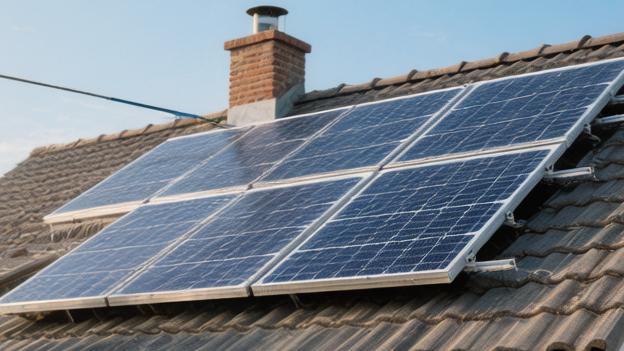
Upgrade Your Electrical Panel
Check Amperage
For single-story wood-frame bungalows built in North America before 1980, the rated capacity of old main distribution boxes hanging on exterior walls often remains in the low parameter range of 60 to 100 Amps.
An old panel used for 40 years can carry a maximum total continuous power input of 12,000 to 24,000 W, failing to meet the peak demand of 19,000 W when a modern home simultaneously turns on two 2,000 W air conditioners and one 5,000 W dryer.
Hiring an electrician with a C-10 state license for 1,500 to 3,000 dollars to upgrade the old box to a modern distribution panel with a capacity of 200 Amps instantly increases the theoretical maximum power throughput of the whole house to a 48,000 W limit.
The entire physical upgrade process requires applying to the local grid company to disconnect the 240-volt overhead main service line, and the power outage construction cycle needs to last for 6 to 8 hours during the day shift.
By connecting an 8 kW rooftop solar system to a brand-new 200 Amp copper busbar, the 33.3 Amp AC power output from the inverter flows steadily into the main grid, and the standard deviation of current fluctuations is strictly compressed to within 0.5 Amps.
According to the strict parameter indicators of Article 705 of the National Electrical Code, a 200 Amp main breaker provides safe current redundancy for over 3 hours of continuous operation at an 80% load rate (160 Amps), reducing the probability of fire caused by circuit overload from 2.3% in old electrical boxes to an extremely low error range of 0.01%.
Calculate Overload Rate
The solar grid connection audit phase sets a mandatory mathematical threshold called the "120% rule," which dictates that the sum of the main busbar's rated amperage and the solar breaker's amperage must absolutely not exceed 1.2 times the busbar's own rated parameters.
Assuming a house's existing electrical box busbar capacity is 100 Amps and the main breaker's nominal value is also 100 Amps, the calculation from the formula shows that a maximum of only one 20 Amp dedicated solar switch can be added.
Limited by the 80% continuous load safety ratio, a 20 Amp switch only allows a maximum of 16 Amps of solar current to pass, restricting the roof to installing at most a micro-generation system with a rated power of 3,840 W.
When the system scale expands to 30 panels with a rated output power of 400 W each, the total AC output power soars to 12,000 W, and the grid-tied inverter will generate a continuous backflow current of up to 50 Amps.
Spending 800 to 1,200 dollars to downgrade and replace the main breaker from 200 Amps to 175 Amps provides 45 Amps of redundant space according to the mathematical formula, enough to safely integrate a 12 kW full-load current into the grid.
The action of downgrading the breaker saves at least 2,000 dollars in the overall electrical box replacement budget, allowing the daily power generation metrics of the solar assets to stay steadily within the peak range of 50 to 60 kWh.
Replace with Thicker Copper Wire
The AC transmission line connecting from the rooftop solar inverter terminals all the way to the garage main distribution box typically fluctuates within a physical wiring length of 30 to 50 feet.
If a contractor uses thin 12-gauge copper wire to save a meager material cost of 0.5 dollars per foot, the temperature on the surface of the cable insulation will soar to over 167 degrees Fahrenheit within 30 minutes when transmitting 40 Amps of solar current.
High line internal resistance parameters cause the voltage drop ratio on the entire circuit to exceed the 3% limit prescribed by national standards; the 240-volt voltage loses at least 7.2 volts of potential difference before reaching the main smart meter.
Paying 300 to 500 dollars in extra material fees to mandate that the installation team purchase 8-gauge or 6-gauge AWG pure copper cross-linked polyethylene (XLPE) insulated wires with a cross-sectional area of 13.3 square mm.
An 8-gauge pure copper conductor can still carry a safe current of 55 Amps to 65 Amps even when the ambient temperature reaches 194 degrees Fahrenheit, and the resistance value of the entire 30-foot line is controlled within an extremely low variance range of 0.019 ohms.
After switching to 8-gauge copper wire, during the peak power generation period from 10 AM to 2 PM daily, the line transmission loss rate of the solar system drops from the original 3.5% to 0.8%, recovering a total of about 15,000 kWh of energy loss over a 25-year operational life cycle.