3 Tips To Improve The Efficiency Of Your Solar System
First, cleaning dust and bird droppings from the panel surface once or twice a year can usually directly increase the actual power generation by 5% to 10%.
Second, be sure to trim branches that shade the panels. Since photovoltaic panels are mostly connected in series, even 10% shading can cause the overall power to plummet by more than 30%.
Finally, it is recommended to check the inverter operation data on the monitoring APP once a week. This can help you detect abnormalities early and contact professional maintenance, avoiding serious power loss caused by long-term downtime.
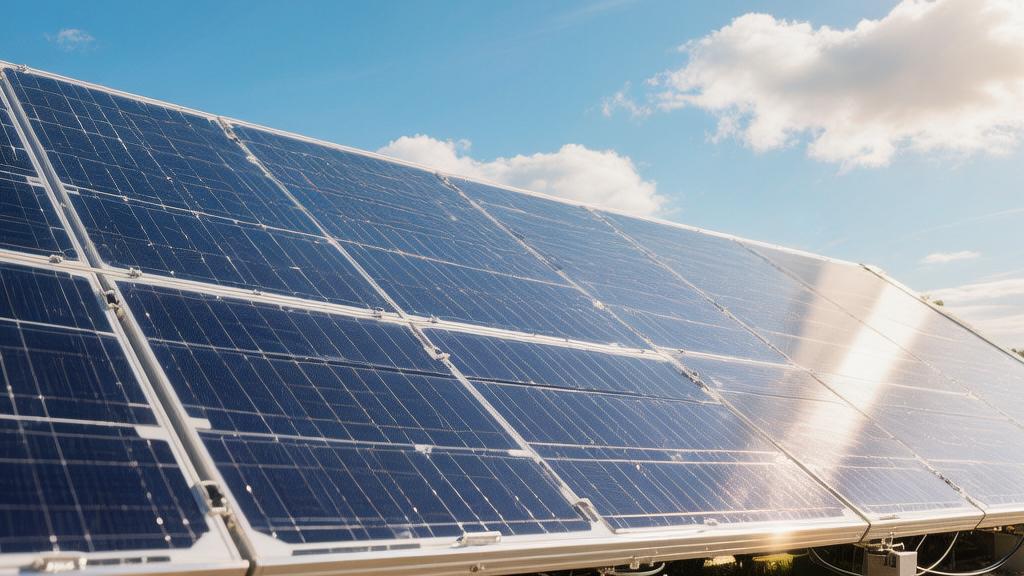
Keep Your Panels Clean
Dust Thickness
A standard-sized monocrystalline silicon solar panel measuring 1.6 meters by 1 meter, after being placed outdoors for 30 consecutive days, typically accumulates a layer of fine airborne particulate matter about 0.2 mm to 0.5 mm thick.
A mixed dust layer with a thickness of only 0.3 mm will reduce the transmittance of effective solar short-wave radiation penetrating the tempered glass by 8% to 12%.
Based on an effective sunshine duration of 5.5 hours per day, the actual daily power generation of a module with a rated power of 400 W will plummet from the theoretical 2.2 kWh to around 1.9 kWh.
If the accumulated dust thickness reaches the heavy pollution standard of 1.5 mm, the local thermal resistance of the PV panel will increase by 25%, causing the operating temperature of the internal semiconductor PN junction to soar above 65°C.
Operating continuously for more than 200 hours at a high heat state of 65°C, the overall photoelectric conversion efficiency degradation rate of the panel's silicon wafers will accelerate by 1.5 times compared to the normal rate at 25°C.
Removing Dried Bird Droppings
Dried bird droppings with a diameter of 5 cm, occupying only 0.5% of the total surface area of a single panel, can trigger severe local hot spot effects.
A shaded area of 5 square centimeters will cause the reverse leakage current to instantaneously increase by 300 mA, generating an abnormal high-temperature zone of up to 85°C.
To dissolve highly corrosive excrement with a pH value between 3.5 and 4.5, you need to prepare a bucket with a capacity of 10 liters of warm water, and the water temperature should be strictly controlled between 30 and 40°C.
Adding approximately 15 ml of neutral non-abrasive dish soap to 10 liters of warm water can reduce the surface tension of the water by about 40%, allowing it to penetrate more quickly into the interior of hardened bird droppings up to 2 mm thick.
After soaking for about 180 seconds, use a cleaning brush with nylon bristles and apply a vertical pressing force of about 1.5 kg, gently wiping back and forth 3 to 5 times to completely peel off the attachments.
Water Filtration
Ordinary municipal tap water containing more than 200 ppm (parts per million) of Total Dissolved Solids (TDS) will leave behind white scale crystals of calcium carbonate and magnesium sulfate about 0.01 mm thick after air-drying on the panel glass surface.
Microscopic white crystals of 0.01 mm will cause diffuse reflection, changing the refractive index of incident light hitting the glass surface by about 1.2%, leading to an irreversible reduction in total power generation efficiency of 2% to 4%.
· It is recommended that you spend about 150 USD to purchase a portable Reverse Osmosis (RO) deionized water filtration system, which can force the TDS value in the raw water down to below 5 ppm.
· Using pure water with a TDS value below 5 ppm requires approximately 150 liters of water for every 100 square meters of panel matrix cleaned, ensuring 99.9% residue-free light transmittance after the water droplets on the glass surface evaporate.
· If the local water pressure can reach 0.3 MPa, you can connect a hose with an internal diameter of 15 mm and a length of 20 meters to perform rinsing at a flow rate of 8 liters per minute, which is 3 times faster than manual wiping with a cloth.
Wash in the Morning or Evening
Between 12 PM and 2 PM in summer, dark panels exposed to intense solar radiation of 1,000 W/m² will typically see their surface temperatures soar to 70°C to 80°C.
If 20°C cold water is sprayed onto an 80°C panel at this time, the massive instantaneous temperature difference of up to 60°C will generate thermal stress exceeding 50 MPa.
Intense contraction stress of up to 50 MPa has a very high probability of causing hidden micro-cracks with lengths of 0.1 mm to 0.5 mm on the surface of the 3.2 mm thick high-transmittance tempered glass.
Between 6 AM and 8 AM, or 5 PM and 7 PM, the physical temperature of the panel surface usually stabilizes between 25°C and 35°C.
Performing washing operations during these 4-hour golden temperature windows can significantly reduce the occurrence probability of glass micro-cracks from 15% to below 0.1%.
Choosing a Long-Pole Brush
An aluminum alloy telescopic washing brush weighing 1.2 kg with an adjustable pole length between 1.5 meters and 4 meters typically has a retail price between 45 USD and 85 USD.
The bristles must be made of soft polyurethane fiber material with a diameter of less than 0.2 mm to ensure their hardness is lower than the Mohs hardness level of 5.5 of the panel glass, avoiding permanent physical scratches with a depth of 0.005 mm.
· A brush head with 2 or 4 brass water outlets and a width of 40 cm can uniformly cover an entire 1-meter-wide panel with a constant flow rate of 3 to 5 liters per minute.
· Standing in a safe position 1 meter away from the roof edge and holding a 4-meter aluminum alloy telescopic pole at an inclination angle of about 60 degrees, you can reach a rooftop PV array with an area of up to 30 square meters.
· Maintain a steady rhythm of moving the brush head at 0.3 meters per second during operation; cleaning an 8 kW system consisting of 20 modules only takes about 45 minutes of manual operation time in total.
Manage Shading Proactively
Shading Cuts Power by Half
10 monocrystalline silicon PV modules with a rated power of 400 W are connected in series via 4 mm² DC cables with a length of 1.5 meters, forming a power generation array with a total output voltage of 400 V and an operating current of 10 A.
A single autumn leaf with an area of only 0.02 square meters covers the bottom-left corner edge of one of the panels, shading 1.2% of the total light-transmitting area.
The physical area shading of 1.2% will force the internal resistance of that single cell to instantaneously soar from 0.1 ohms to 50 ohms, causing the operating current of the entire string of 10 panels to plummet from 10 A to 2.5 A in a cliff-like drop.
The physical characteristics of a series circuit limit the output bottleneck of the entire line. Even if only 0.02 square meters of a 16 square meter array is in shadow, the actual hourly power generation of the entire system will plummet from the theoretical 4 kWh to 1 kWh, causing an immediate power loss of up to 75%.
Based on 5.5 hours of effective daily sunshine, the power loss caused by a single leaf within 24 hours reaches 16.5 kWh. Calculated at a local retail grid unit price of 0.18 USD, this equals an evaporated electricity benefit of 2.97 USD per day.
Calculating the Time
On the winter solstice (December 21) in the mid-latitudes of the Northern Hemisphere, the sun's maximum operating elevation angle is only 23.5 degrees, a drop of a full 47 degrees compared to the 70.5 degree maximum elevation on the summer solstice (June 21).
A 47-degree change in the solar altitude angle means that an oak tree with a height of 12 meters located 15 meters south of the house will see its shadow cast onto the roof stretch significantly from 4.2 meters to 27.6 meters within six months.
A winter shadow exceeding 25 meters in length will sweep across the entire PV array surface from east to west at a speed of 1.5 meters per hour during the 5-hour high-intensity lighting cycle from 9:30 AM to 2:30 PM daily.
By recording the specific shading coordinates of the shadow at 10:45 AM and 1:15 PM daily using a rangefinder, you will need to reduce the height of all obstacles within this 150-minute time slot by at least 3.5 meters to restore an effective solar radiation intensity of 800 W/m² in that area.
If an 8 kW system loses 150 minutes of sunlight daily during this specific period, its annual average total power generation index will show a regular negative fluctuation of 18.5%.
Trimming Branches
The crown of a common North American conifer tree expands horizontally by an average of 0.4 meters per year, accompanied by a vertical height growth rate of 0.6 meters.
A pine tree located 4.5 meters horizontally from the eaves will see its side branches advance 1.2 meters toward the panels after 36 months of natural growth, adding an extra 45 minutes of local shading time daily.
Using a high-reach pole saw with a length of 3.5 meters to cut extending branches with a diameter exceeding 5 cm at a downward 45-degree angle, you must ensure that the edge of the tree crown maintains an absolute physical clearance of at least 2.5 meters from the nearest solar panel frame.
A buffer space of 2.5 meters can offset the natural growth margin of the tree for the next 48 months, forcing the annual power generation degradation rate due to new shading to stay within a tolerance range of 0.5%.
A single trimming operation generates approximately 1.5 cubic meters of waste wood with a total weight of 45 kg, requiring a 25 USD waste removal fee to be transported to an organic fertilizer processing plant 8 km away from the residence.
Avoiding High Vents
A PVC sewage vent pipe on the roof with a height of 0.8 meters and a diameter of 0.15 meters produces a columnar shadow about 1.2 meters long at 3 PM, covering 20 independent semiconductor silicon cells of connected modules daily.
After measuring the vent pipe shadow trajectory, a safety isolation zone with a radius of 1.8 meters needs to be reserved around any fixed obstacle higher than 0.5 meters above the roof surface.
For a brick fireplace chimney reaching a height of 2.5 meters, its shadow cast area at 4 PM in winter is as high as 4.5 square meters, causing at least 3 panels in the array with nominal dimensions of 1.7 meters by 1.1 meters to be in a zero-ampere output state.
Shifting a 400 W panel 1.5 meters north to avoid the 4.5 square meter fixed chimney shadow requires laying an additional 3 meters of dedicated PV cable and adding approximately 45 USD in galvanized steel mounting rail hardware costs.
Spending 45 USD on the retrofit budget can recover 210 kWh of power originally lost each year over the 25-year system operating lifespan, cumulatively reclaiming a difference of more than 945 USD in electricity bills.
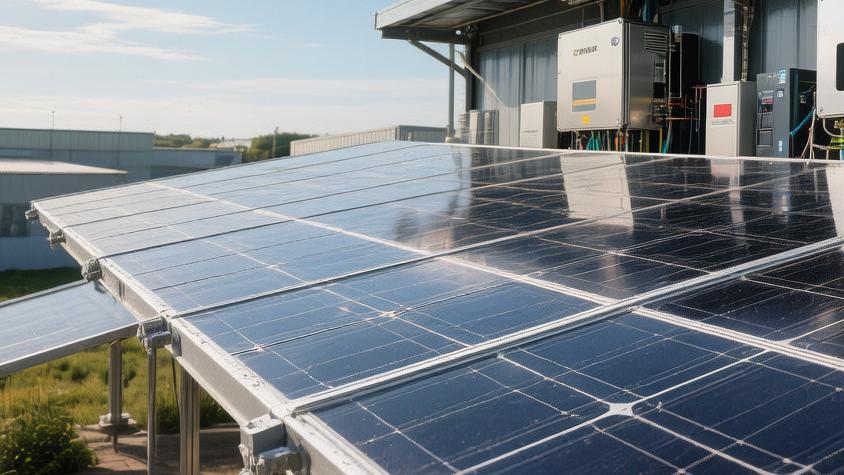
Upgrade Aging Inverters
Lifespan Difference of Ten Years
For a 5 kW string PV system installed on the exterior wall of a North American single-family residence, the 20 polycrystalline silicon solar panels on the roof with a rated power of 250 W have a physical design operating lifespan of up to 25 years.
In the first 10 years, the output power of the panels usually declines very slowly at a linear degradation rate of 0.5% per year, and by the 11th year, they can still maintain approximately 95% of their original photoelectric conversion capability.
The string inverter, responsible for converting the 300 V to 500 V high-voltage direct current (DC) generated by the panels into standard household alternating current (AC) of 120 V or 240 V at a frequency of 60 Hz, has an internal electronic module Mean Time Between Failures (MTBF) calibrated between 10 and 12 years.
When the entire PV system has run continuously for more than 35,000 hours, the switching loss of the Power Semiconductor Insulated Gate Bipolar Transistors (IGBT) inside the inverter will show a non-linear accelerated upward trend.
A traditional inverter with a rated output power of 5,000 W has a peak conversion efficiency as high as 97.5% in its first year from the factory.
After 10 years of continuous full-load operation, the silicon-based semiconductor materials, under the daily alternating effects of thermal expansion and contraction cycles of 45°C (from 20°C in the morning to 65°C at noon), see their internal Equivalent Series Resistance (ESR) of the PN junction generally increase by 15% to 25%.
A 15% increase in internal resistance means that about 0.8 kWh of available energy is meaninglessly converted into waste heat dissipated into the air every day.
Based on 300 effective sunny days per year, a single piece of aging equipment will burn through 240 kWh of power generation annually for nothing, resulting in an unprovoked loss of 48 USD in available cash value per year under a local grid retail billing standard of 0.20 USD per kWh.
Dried Out Capacitors
A high-voltage electrolytic capacitor with a nominal capacity of 1000 μF and a rated temperature of 105°C will see a natural loss of about 30% of its liquid electrolyte volume after working continuously for more than 20,000 hours in an internal environment maintained at a high temperature of 85°C.
A 30% loss of electrolyte will cause the electrostatic capacity parameter of the capacitor to drop significantly to below 70% of its original nominal value, accompanied by an ESR value soaring to more than 2.5 times the original factory test standard.
Serious degradation of capacitor performance will cause the DC voltage fluctuation range input to the inverter to expand sharply from the normal ±2% to ±8% or even 15%.
Intense voltage ripples will seriously interfere with the calculation accuracy and response speed of the Maximum Power Point Tracking (MPPT) algorithm executed by the microcontrollers inside the inverter.
When the sunlight intensity on the roof suddenly drops from 800 W/m² to 300 W/m² in just 3 seconds due to a moving cloud with an area of 2 square meters, the microcontroller bogged down by aging capacitors needs as long as 12 seconds to recalculate a new optimal output operating point.
During the long 12-second algorithm lag, the actual output power of the inverter will be forced into a very low non-optimal value, and a single short-term shading event can cause an instantaneous power deviation loss of up to 20%.
Heat Dissipation Holding Back Performance
The high thermal conductivity silicone grease coating applied between the aluminum extrusion-molded heat sink fins on the back of the inverter and the internal power electronics modules will undergo severe physical hardening and cracking after 10 cycles of the four seasons.
Silicone grease with an original thermal conductivity as high as 5.0 W/m·K will see its conductivity plummet to less than 1.2 W/m·K after completely drying and powdering, causing the physical heat transfer efficiency from the IGBT module to the external aluminum heat sink to drop by more than 75%.
A 75% attenuation in heat transfer efficiency will cause the local maximum operating temperature of the inverter's internal circuit board to rise abnormally by 15°C to 20°C compared to when it was newly installed.
To prevent hardware damage at the red line of 85°C internal temperature, the built-in overload protection program of the aging inverter will be forced to intervene early.
When the outdoor ambient temperature reaches only 35°C, the power derating protection algorithm that should have started at 45°C will be triggered incorrectly.
An inverter that should have an output of 5,000 W at full load is forced by the system firmware into a derated output state of 3,500 W, resulting in a peak clipping energy loss of up to 30%.
During the 4-month hot cycle in summer, in the high-temperature periods from 1 PM to 3 PM daily, 30% derating operation erases about 3 kWh of peak power generation daily, cumulatively erasing 360 kWh of potential system output over 120 consecutive days.