Differences Between Photovoltaic Power Generation And Traditional Power Generation
The core difference between photovoltaic power generation and traditional thermal power lies in the energy type and carbon emissions.
Traditional power generation mainly relies on burning fossil fuels such as coal to generate electricity through thermal energy conversion, emitting approximately 800 grams of carbon dioxide for every kilowatt-hour (1 kWh) generated, and the resources are non-renewable.
In contrast, photovoltaic power generation uses silicon-based semiconductors to directly convert sunlight into electricity, achieving zero carbon emissions during operation.
Currently, the photoelectric conversion efficiency of mainstream photovoltaic modules has increased to around 20%-25%.
With the popularization of technology, the levelized cost of energy (LCOE) for solar power in many regions is already lower than that of traditional thermal power.
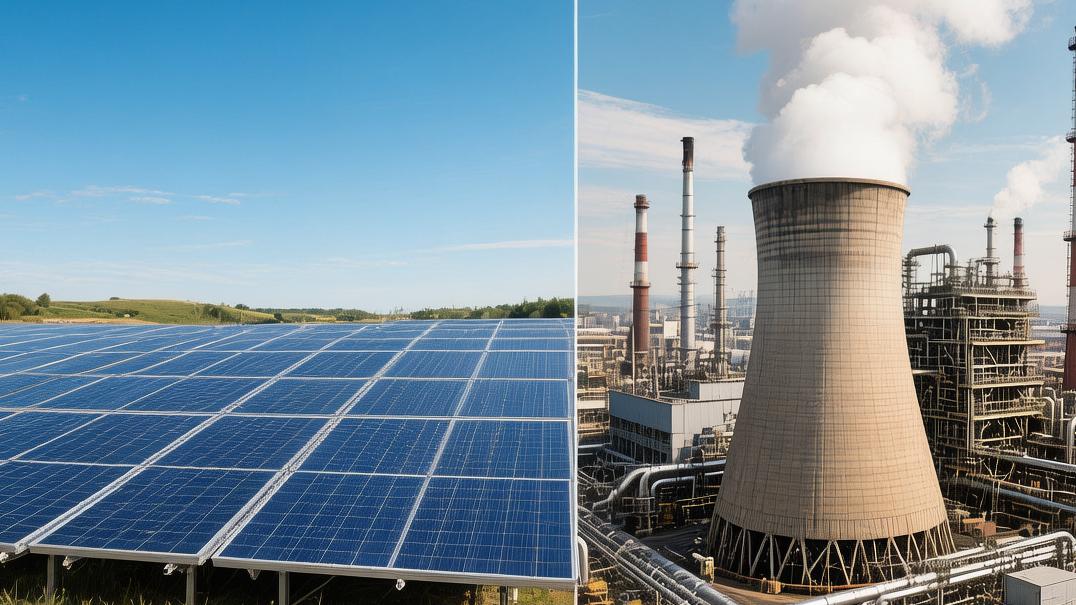
Stability and Reliability
A large combined cycle gas turbine with a nominal power of 800 MW typically has a total rotor weight exceeding 400 tons, continuously rotating at a fixed speed of 3600 rpm inside a large plant.
The massive mechanical rotational inertia can provide a natural physical buffer period of 5 to 10 seconds for the 50 Hz or 60 Hz AC main power grid.
When the grid frequency deviates from the standard baseline by a tiny error of 0.05 Hz, the hydraulic governor of the gas turbine will increase the valve opening within 2 seconds, injecting an additional 15 cubic meters of natural gas into the combustion chamber per second, allowing the output power to quickly ramp up by 30 MW within 10 seconds.
Relatively speaking, a 500 MW solar power plant assembled from 2 million polycrystalline silicon modules has no rotating metal parts at all.
The grid-tied inverters that convert DC to AC rely solely on internal Insulated Gate Bipolar Transistors (IGBT) to perform high-frequency switching operations more than 20,000 times per second to forcibly simulate the voltage phase of the backbone power grid.
Once a short circuit occurs on the main grid for more than 100 ms or the voltage dips by more than 20%, the islanding protection program built into the PV inverter will quickly cut off the circuit within 20 ms, causing the 500 MW output power to instantly drop to 0 MW.
Is it stable?
The average annual equipment utilization hours of traditional coal-fired power units are usually stable between 6500 and 7,500 hours, with an Equivalent Availability Factor (EAF) as high as 92% to 95% within the 8,760 hours of the year.
A 1000 MW pressurized water reactor nuclear power plant, after replacing uranium-235 fuel assemblies with a purity of 3% to 5%, can maintain 100% full-load continuous operation for as long as 18 to 24 months, with output power fluctuations strictly controlled within a range of 0.5%.
· The actual power output of a PV array exhibits characteristics of an extreme normal distribution curve. In an open plain area at about 30 degrees north latitude, the output power of a 100 MW PV array between 6:00 AM and 8:00 AM only accounts for 10% to 25% of the rated nominal capacity.
· When time advances from 12:00 PM to 1:30 PM, if the local atmospheric transparency exceeds 85% and there is no cloud cover, the instantaneous output peak of the PV system can soar to 85 MW to 92 MW.
· Whenever the solar altitude angle drops below 15 degrees after 5:00 PM, the photoelectric conversion efficiency on the surface of the PV panels will plummet from the standard 20% to less than 2% within just 30 minutes. By nightfall, the output power returns to zero, forcing the annual effective equivalent full-load hours of the PV plant to hover between 1200 and 1800 hours.
Depending on the Weather
The power generation efficiency of photovoltaic semiconductor silicon wafers is highly sensitive to meteorological parameters. For every 1 degree Celsius increase from the Standard Test Condition of 25°C, the peak output power of conventional monocrystalline silicon P-type modules decreases linearly at a degradation rate of 0.35% to 0.4%.
In the hot summer when the surface temperature reaches 45°C, the actual working temperature on the back of the PV panel often soars to 65 to 70°C.
A module with a nominal rated power of 400 W will have its actual maximum output power forced down to 330 to 340 W, with a power loss rate exceeding 15%.
· The moving speed and coverage area of thick cloud layers can completely change the surface irradiance at the millisecond level. When a cumulonimbus cloud with an area of 2.5 square kilometers passes over a 100 MW PV array at a speed of 15 meters per second, the solar shortwave radiation received by the ground will plummet from 900 W/m² to 150 W/m² in just 45 seconds.
· Sudden extreme weather shading can cause the grid-tied output power of a PV plant to drop vertically from 80 MW to 12 MW within 1 minute, an instantaneous drop of over 85%.
· To fill a power gap of tens of megawatts per minute, the backbone grid dispatch center must command nearby pumped-storage power stations to open 3-meter diameter guide vanes. Using water pressure with a head drop of 300 meters, the output of the hydro-generator units can be ramped from a no-load 0 MW to a rated power of 250 MW within 90 seconds.
Hardware Lifespan Calculation
High-temperature and high-pressure steam main pipes of traditional thermal power units are usually forged from P91 alloy steel. Under harsh working conditions with temperatures up to 600°C and internal pressures of 28 MPa, the physical creep fatigue life is designed for safe operation for at least 100,000 to 150,000 hours.
After every 24,000 equivalent operating hours, the internal metal turbine blades of a 50 million USD gas turbine only require 3 million USD to replace a 0.2 mm thick yttria-stabilized zirconia ceramic thermal barrier coating to restore the initial combustion thermal efficiency to over 99.5%.
· Encapsulation materials for solar panels (EVA film and special ultra-white glass), after long-term exposure to more than 2000 hours of strong UV radiation annually and thermal expansion and contraction with day-night temperature differences exceeding 40°C, will suffer an initial Light-Induced Degradation (LID) of 2% to 2.5% in the first year.
· Starting from the 2nd year, the module output power will continue to slide at a linear rate of 0.45% to 0.55% per year. By the 25th year of operation, even if the silicone panel surface remains absolutely clean, the maximum output power will permanently drop to the edge of 80% to 82% of the factory nominal value.
· Inverters responsible for current conversion in PV strings are filled with tens of thousands of electronic modules. The electrolyte in electrolytic capacitors, in desert environments where internal operating temperatures are maintained above 50°C for long periods, has a design life physically limited to 10 to 12 years.
· In the 25-year lifecycle of a 50 MW PV plant, developers must reserve an additional 8% to 10% of the total construction cost (approximately 0.05 to 0.07 USD per watt) for a complete large-scale mandatory hardware replacement of all grid-tied inverters around the 12th year.
Environmental Impact and Sustainability
Calculating Emissions
Although a pressurized water reactor nuclear unit with a rated thermal power of 3000 MW does not produce carbon emissions during the fission stage, the implicit carbon emissions per megawatt-hour of electricity usually remain in the 12 kg to 15 kg range throughout the long industrial chain of uranium mining, uranium hexafluoride conversion, gas centrifuge enrichment, and spent fuel reprocessing.
The carbon reduction potential of the PV industry is limited by the high energy consumption of the silicon purification stage at the current phase.
In a modified Siemens process reactor for producing high-purity polycrystalline silicon, reducing trichlorosilane into solar-grade silicon chunks with a purity of 99.9999% requires approximately 50 to 60 kWh of electricity for every 1 kg produced.
If the regional grid where the smelter is located is mostly powered by fossil fuels, manufacturing a 2.2 square meter PV panel will pre-overdraw a carbon emission quota of about 250 kg to 300 kg of CO2.
With the popularization of ultra-thin large-size silicon wafers (such as M10 and G12 specifications) of 150 microns or even 130 microns, the silicon consumption per watt has dropped significantly from the original 4.5 grams to about 2.6 grams, resulting in a significant decrease of over 40% in the manufacturing carbon footprint of a single PV panel over the past 10 years.
Assuming a family installs an 8 kW rooftop PV system, based on an annual average equivalent full-load time of 1400 hours, the 11,200 kWh of clean electricity produced annually can replace the combustion of about 4.5 tons of standard coal, equivalent to planting about 250 adult broadleaf trees every year to absorb the same amount of CO2.
Water Consumption
A 1000 MW coal-fired power plant using an open-cycle cooling system needs to extract as much as 100,000 to 120,000 cubic meters of cooling water per hour from nearby rivers or lakes to condense the 500°C high-temperature steam in the condenser back into liquid water.
Even if a closed-cycle cooling tower is used to reduce water intake, for every 1 MWh of electricity delivered to the grid, 1500 to 2000 liters of fresh water are still permanently consumed in the form of water vapor evaporation.
When cooling water is discharged back into rivers at temperatures 10°C to 15°C higher than natural water bodies, thermal pollution causes dissolved oxygen concentrations to drop rapidly from 8 mg/L to below 4 mg/L, causing irreversible damage to the biodiversity of aquatic ecosystems.
A standard-sized 2,278 mm by 1,134 mm PV module consumes water only during physical cleaning and maintenance of its surface.
In arid desert climates, operation and maintenance teams usually use semi-automatic crawler cleaning robots equipped with nylon bristles for dry sweeping.
If high-pressure water guns are used for deep cleaning twice a year, the water consumption corresponding to 1 MWh of PV electricity is only 10 to 20 liters.
Looking at the data models of large-scale plants at the hundred-megawatt level, the unit water footprint of PV power generation is less than one-hundredth of that of traditional thermal power. In arid and semi-arid regions with annual rainfall below 200 mm, deploying solar arrays is highly commercially feasible and will not trigger regional water depletion crises.
Land Use Accounting
In solar radiation zones around 35 to 45 degrees north latitude, constructing a 100 MW centralized solar farm requires row spacing of 5 to 7 meters to avoid mutual shading between front and back modules when the winter sun altitude angle drops to 20 degrees. The total physical footprint of the facility often expands to 400 to 600 acres (about 1.6 to 2.4 square kilometers).
In contrast, a modern 1000 MW natural gas combined cycle power plant, including the plant building and high-voltage switchyard, can be compressed into an area of 50 to 80 acres.
If the land occupied by mining subsidence areas, open-pit mines, and hundreds of kilometers of natural gas pipelines for traditional energy are included in the lifecycle space measurement model, an open-pit mine producing 5 million tons of thermal coal per year typically occupies thousands of acres of land for topsoil stripping and waste dumps. Furthermore, heavy metal exceedances in mine soil and damage to groundwater systems often require ecological restoration periods of more than 50 years.
Agrivoltaics and floating PV arrays provide feasible paths for space multiplexing. Installing modules on steel supports more than 2.5 meters above the ground allows more than 70% light transmittance below the panels, permitting the cultivation of shade-tolerant economic crops or using the shading effect of the panels to reduce soil moisture evaporation by 30% to 40%.
Where Does the Waste Go
Coal-fired power plants produce hundreds of thousands of tons of fly ash and slag annually, and large amounts of solid waste are rich in highly toxic heavy metals such as arsenic, lead, and mercury.
If the 2 mm thick high-density polyethylene geomembrane at the bottom of a leak-proof landfill is damaged, high concentrations of heavy metal leachate will penetrate downward into groundwater aquifers at a rate of several centimeters per day.
Although nuclear waste is small in volume, a 4-meter-long spent fuel rod exiting a reactor still releases a gamma radiation dose rate as high as tens of thousands of Sieverts per hour. It must be immersed in a 10-meter deep boric acid pool for cooling for 5 to 10 years, and then sealed in a 30 cm thick ductile iron dry storage cask for geological deep burial isolation for thousands of years.
As large quantities of first-generation PV panels enter the decommissioning phase after reaching their 25-year design life, the material recycling industry faces complex physical separation challenges.
A conventional monocrystalline silicon double-glass module weighing about 24 kg has a mass distribution of 75% ultra-white embossed glass, 10% polymer backsheet and encapsulation film, 8% anodized aluminum alloy frame, 5% silicon cells, and less than 1% copper ribbons and silver paste.
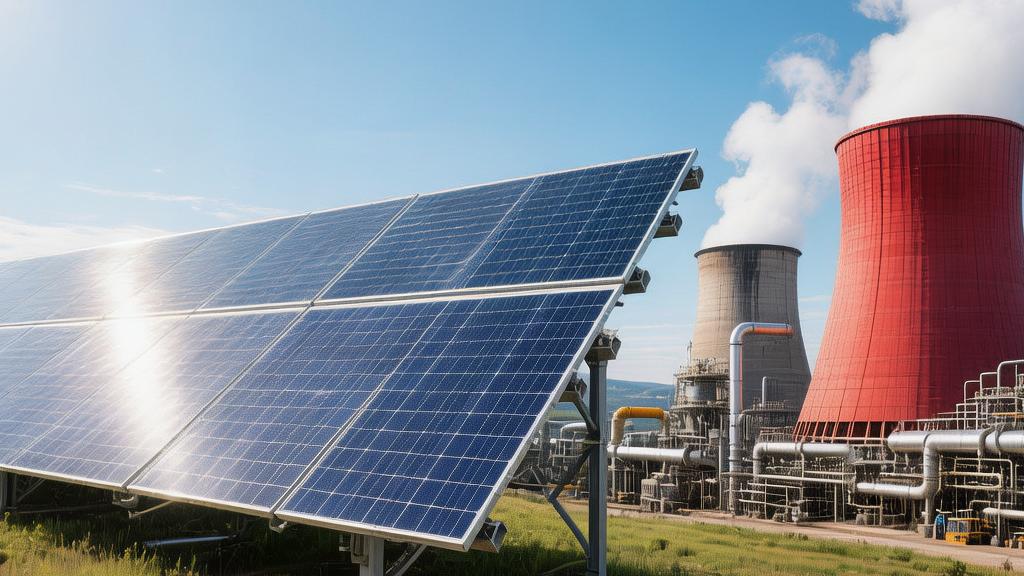
Maintenance and Lifespan
Bearings and Diodes
Compared to traditional steam turbine units that rely on mechanical movement at 3000 rpm to generate 50 Hz AC electricity, PV power plants essentially shift daily operation and maintenance to static measurement of large-area semiconductor silicon wafers and power electronic modules because all mechanical rotating parts are completely removed.
A 100 MW centralized PV array covering 600 acres contains approximately 250,000 solar panels with a rated power of 400 W, connected in series on brackets using 1200 kilometers of UV-resistant DC cables.
In a summer wilderness where the ambient temperature exceeds 40°C, when a solar cell is shaded by bird droppings or thick leaves for a long time, the electrical energy in that area cannot be transmitted normally and will be converted into thermal energy within 0.5 seconds, forming a micro hot spot with temperatures as high as 120°C to 150°C.
A bypass diode needs to be turned on within 10 ms to guide the DC current of as much as 10 A to 12 A away from the damaged cell.
Once a diode suffers thermal breakdown and short circuits under the daily stress of more than 50 high-frequency conductions and ambient heat of 85°C, the output power of the entire panel will instantly drop by 33%.
PV maintenance teams usually use industrial drones equipped with high-resolution infrared thermal imaging cameras to perform matrix scanning of 250,000 panels at a cruising speed of 8 meters per second during the early morning hours every year.
Once an abnormal heating point is found with a temperature more than 15°C higher than surrounding normal panels, the system automatically records GPS coordinates with a positioning error of no more than 0.5 meters, and subsequently dispatches technicians to perform physical replacement at a labor cost of 50 USD per panel.
The Limits of Lifespan
The legal decommissioning age for conventional fossil fuel power units is usually set between 40 and 50 years.
A 500 MW coal-fired power plant using a subcritical boiler has internal superheater and reheater serpentine tubes totaling 80 km in length. Under long-term roasting of 16.5 MPa internal steam pressure and 540°C external furnace flame, the tube wall thickness will oxidize and thin at a rate of 0.05 mm to 0.1 mm per year.
When cumulative operation exceeds 200,000 hours and the creep damage rate of the alloy steel material reaches the 80% warning line, the power plant needs to spend more than 15 million USD for large-scale tube replacement, otherwise, the probability of boiler tube explosion will rise exponentially.
The factory physical design life of a standard P-type monocrystalline silicon PV panel is 25 years, and the theoretical life of bifacial double-glass modules can extend to 30 years.
Its aging does not stem from mechanical wear but from irreversible light-induced degradation and potential induced degradation at the material science level.
When ultraviolet rays with wavelengths between 300 nm and 400 nm continuously irradiate the ethylene-vinyl acetate (EVA) copolymer film on the panel surface for more than 15,000 hours, the molecular chains inside the transparent film will break and release acetic acid molecules, leading to a decrease in light transmittance and causing surface yellowing.
Under a system DC high voltage as high as 1000 V or 1500 V, sodium ions on the glass surface will penetrate the encapsulation material and undergo electrochemical migration toward the P-N junction inside the cell, resulting in increased leakage current.
After the first year of operation, the maximum output power of the panel will inevitably be reduced by 2% to 2.5%.
In the subsequent 24 years, the performance degradation curve will extend downward at a fixed slope of 0.45% to 0.5% per year.
When reaching the service end at the 25th year, even if there is no physical cracking of the external glass, the significant shortening of the minority carrier lifetime of the internal silicon wafer will rigidly lock the photoelectric conversion efficiency at about 80% of the initial nameplate rating.
Asset Replacement Accounting
Metric Parameter | Large Combined Cycle Gas Turbine (CCGT) | Centralized Photovoltaic Plant (PV) |
System Rated Total Power | 800 MW | 100 MW |
Design Physical Lifespan | 40 years | 25 - 30 years |
Annual Routine Maintenance Budget | Approx. 15,000 - 20,000 USD per MW | Approx. 6,000 - 8,000 USD per MW |
Main Consumables and Parts | Lubricating oil (5,000 gal per unit), air filters, cooling water chemicals | Fuses, surge protectors, MC4 DC connectors, bypass diodes |
Major Asset Replacement Nodes | Replace hot path turbine blades every 3 to 5 years (4 - 6 million USD) | Complete replacement of grid-tied inverters in years 10 to 15 (approx. 0.05-0.07 USD per watt) |
Downtime Impact During Overhaul | Planned shutdown for 15 to 45 days; zero plant output during this period | No full station shutdown required; uses string-level decentralized hot-swappable replacement |
In a PV plant, the grid-tied inverter responsible for converting DC power into the 50/60 Hz sine wave required by the AC main grid is the hardware with the shortest lifespan in the entire system.
A string inverter with a nominal power of 250 kW integrates thousands of Insulated Gate Bipolar Transistors (IGBTs), film capacitors, and cooling fans.
In Nevada or the Middle East desert, the ambient temperature in the shade outdoors can reach 45°C in summer, and the working temperature inside the aluminum alloy casing of the inverter often breaks 75°C.
The IGBT module is connected between the silicon chip and the copper base plate by solder, undergoing intense thermal expansion and contraction cycles from 15°C in the morning to 75°C in the afternoon daily.
After 10 years and about 3,600 high-intensity thermodynamic cycles, micro-fatigue cracks will appear in the solder layer, causing the internal thermal resistance to rise by 30%, eventually triggering chip thermal breakdown failure.
When building financial models, developers must set 8% to 10% of the initial total investment as a special depreciation reserve for a complete mandatory hardware replacement of all inverter equipment between the 10th and 15th year of plant operation.
Panel Washing and Ash Removal
An electrostatic precipitator for a 1000 MW unit contains tens of thousands of cathode wires and anode plates as long as 15 meters, which need to adsorb thousands of tons of extremely fine fly ash particles in a high-voltage DC electric field.
Maintenance workers need to periodically use high-pressure water guns or sonic soot blowers to clean accumulated ash inside the electric field. Once the dust thickness on the anode plate surface exceeds 5 mm, the dust removal efficiency will drop sharply from 99.8% to below 90%, leading to high environmental non-compliance fines.
Inside the absorption tower of a flue gas desulfurization system, the calcium sulfate dihydrate (desulfurization gypsum) produced by the reaction of limestone slurry and sulfur dioxide has an output of 50 to 70 tons per hour, requiring heavy truck fleets to transport it outward for industrial byproduct disposal year-round.
In arid regions such as the Mojave Desert or the edge of the Sahara with annual rainfall below 150 mm, suspended dust in the air will deposit on the surface of PV glass at a rate of 0.1 to 0.2 grams per square meter per day.
When the accumulated ash thickness obstructs 15% of the solar shortwave radiation, a 100 MW PV plant will lose approximately 90,000 kWh of output per day.
To recover this portion of electricity revenue measured in megawatt-hours, O&M operators must deploy professional semi-automatic tractors equipped with rotating nylon bristles to perform dry sweeping of the modules row by row at a speed of 2 MW per hour.
If stubborn mud spots formed by night dew condensation appear on the module surface, a water tank truck loaded with 5000 liters of reverse osmosis pure water (conductivity below 10 μS/cm to prevent water stains) is needed for high-pressure washing.
Based on a frequency of two thorough water washes per year, the average annual cleaning cost per megawatt of modules is controlled within the 400 to 600 USD range. Usually, on the first day after cleaning, the photoelectric conversion performance of the entire array can instantly increase by 10% to 12% and restore to over 98% of the factory nameplate efficiency.