Why are monocrystalline solar panels considered a premium option?
Monocrystalline silicon panels are cut from a single, high-purity silicon crystal, giving them a highly textured, pure black appearance.
Their standard conversion efficiency reaches up to 20%-22%, generating significantly more power than polycrystalline silicon under the same roof area, thus positioning them in the high-end market.
During installation, it is recommended to use an inclinometer to precisely align them due south and adjust to the optimal local elevation angle to maximize their high-efficiency performance.

Maximum Efficiency
High Conversion Rate
Monocrystalline silicon wafers using the PERC architecture currently on the market generally achieve a photoelectric conversion baseline of 22.5%; after factory production lines are upgraded to TOPCon bifacial power generation technology, the mass production average peak on testing instruments increases to 24.8%; laboratory samples using the HJT heterojunction process have even shattered the record with a peak of 26.1%.
Compared to the roughly 17% conversion ceiling of traditional materials, monocrystalline silicon, relying on its highly uniform lattice arrangement, eliminates material impurities that hinder electron movement. The overall silicon wafer size is currently standardized to M10 (182 mm) or G12 (210 mm) specifications, substantially expanding the physical cross-sectional area for capturing photons and exciting electrons within a thickness of only 130 micrometers.
l Under Standard Test Conditions (STC), the light intensity the panel receives is set at a standard value of 1000 watts per square meter.
l The constant temperature of the testing environment is strictly controlled at 25 degrees Celsius.
l The solar spectrum Air Mass (AM) parameter is fixed at a standard distribution state of 1.5.
l The fluctuation error value above and below the factory nominal power is compressed to a minimal range of plus or minus 3%.
Fear of Heat?
The maximum power temperature coefficient of N-type monocrystalline TOPCon modules is typically maintained at -0.29%/°C. Assuming the outdoor temperature in a windless summer environment reaches 40 degrees Celsius, the glass surface temperature after sun exposure will rise to 65 degrees Celsius. Compared to the 25 degrees Celsius baseline test value, an absolute deviation of 40 degrees Celsius occurs on the panel surface.
l Multiplying the 40-degree Celsius temperature difference by -0.29% yields a reduction rate of 11.6% in the output power of the monocrystalline panel.
l For a panel with a rated parameter of 400 watts, its actual output drops to 353.6 watts under high-temperature, full-load conditions.
l If the temperature coefficient of an ordinary polycrystalline panel is -0.40%/°C, the power reduction rate under the same heat will reach 16%, with the output rapidly dropping to 336 watts.
l The resulting output gap between the two single panels is 17.6 watts. In a series array consisting of 20 panels, monocrystalline panels can recover 352 watts of high-temperature power loss.
Fine on Cloudy Days
At sunrise or sunset every day, the solar radiation intensity reaching the roof plummets from 1000 watts per square meter at noon to 200 watts per square meter. The extremely high parallel resistance and extremely low series resistance inside monocrystalline silicon endow the module with an exceptionally broad spectral response range. The module can acutely capture available light waves in the 300 nm to 1100 nm wavelength range, converting faint, diffuse reflection photons into milliampere-level usable current output.
l In a low-illumination test sample of 200 watts per square meter, the relative conversion of the monocrystalline panel remains above 97% of its initial nominal parameters.
l The system startup voltage required by the inverter can reach the set threshold about 30 minutes earlier every morning.
l The shutdown and current-cut action when the light dims in the evening is delayed by 30 minutes of operation time.
l Over the entire system operation cycle, this cumulatively adds about 1 hour of grid-tied power generation frequency for the equipment every day.
How Big is Light-Induced Degradation
To measure the true output efficiency of photovoltaic equipment, the average absolute value over a long 300-month cycle must be calculated. When an untreated silicon wafer is first exposed to strong ultraviolet light for 100 hours, the oxygen and boron elements inside will undergo a recombination reaction, triggering initial Light-Induced Degradation (LID). High-specification N-type monocrystalline modules replace boron with phosphorus doping during the smelting stage, physically cutting off the reaction path and forcibly suppressing the first-year power drop ratio to an extremely low level.
l Within the initial 100 hours of the equipment's grid-tied operation, the light-induced degradation amplitude is limited to below 1.0%.
l From the 2nd calendar year extending to the 30th calendar year, the linear degradation rate every 12 months is strictly maintained at a constant standard of 0.40%.
l After the system has operated continuously for a full 360 months, the minimum panel output value is still locked at 87.4% of the initial nameplate maximum power.
l The statistical Mean Time Between Failures (MTBF) metric easily surpasses the rigorous 50,000-hour testing threshold.
What if Blocked?
Modern monocrystalline modules come standard with a half-cut cell process, where the factory uses lasers to cut standard square solar cells in half and connects 3 bypass diodes in series within the junction box on the back. Once the voltage in a certain section drops abnormally, the diode instantly conducts, bypassing the shaded one-third area to ensure the remaining 66.6% of the area continues operating at full load.
l The half-cut technology halves the internal current flowing through a single ribbon, proportionally reducing the module's internal resistance heat loss by 75%.
l Three independent bypass diodes forcibly divide a complete panel into three mutually non-interfering, independent power generation blocks.
l The array mismatch loss triggered by partial shading is precisely controlled within a 2% error margin.
l The maximum surface temperature of hotspot areas is forcefully restricted to below 85 degrees Celsius, preventing irreversible physical yellowing of the ethylene-vinyl acetate (EVA) encapsulant film.
Superior Aesthetics
Pure Black
Manufacturing 156 mm or 182 mm monocrystalline silicon wafers requires slicing a single type of crystal ingot into 130-micrometer-thick slices under a high-temperature thermal field environment of 1400 degrees Celsius. The pure lattice physical structure pushes the probability of absorbing photons in the visible light band on the surface past the statistical average of 95%, presenting the entire panel in an absolute deep black distribution state with RGB values of 0,0,0 under natural light.
Polycrystalline panels typically have 30% to 40% of their surface area scattered with random blue crystal fragments, and their chromaticity deviation value far exceeds the 15% standard deviation limit recognizable by the naked eye. The color block variance of monocrystalline panels upon leaving the factory is strictly inspected and controlled within an error rate of 0.5%. Even if 50 modules are assembled simultaneously on a 100-square-meter roof, they can maintain 100% consistent color density within a 360-degree viewing angle.
The 99.999% purity of the single atomic arrangement direction inside the monocrystalline silicon wafer lowers the light refractive index to an extremely low median, compressing the optical fluctuation range caused by surface diffuse reflection below the physical limit of 2%.
Invisible Lines
Advanced manufacturing processes like zero busbar (0BB) or interdigitated back contact (IBC) completely transfer the 0.3 mm to 1 mm wide silver conductive grid lines from the front to hidden positions on the back of the cell. Consequently, the front of each module with 2 square meters of light-receiving area reduces the metal weight of silver paste by about 150 grams, increasing the effective physical penetration volume for photon impact by 2.5%.
The frame surrounding the module uses high-strength anodized aluminum covered with a 15- to 25-micrometer-thick black oxide layer, with a rated lifecycle passing anti-corrosion salt spray tests reaching over 240 months. The underlying supporting backsheet material is replaced with a Polyethylene Terephthalate (PET) polymer containing a high concentration of carbon black particles, forcefully reducing the residual natural light transmittance to a minimum value of 0.01%.
All-black modules, within a budget that increases the initial manufacturing cost by $0.02 to $0.05 per square meter, forcefully shrink the physical gap between the 60 or 72 internal cells from 2 mm down to an extremely high installation density of 0.5 mm.
Non-Reflective
The surface of the 3.2 mm thick, high-transmittance tempered glass covering the outermost layer of the panel is coated with a 100 nm to 120 nm thick silicon dioxide anti-reflective film via plasma technology. This dense thin film forcefully pulls the reflectance of specific solar wavelengths in the 400 nm to 1100 nm range down to an absolute lower limit of 2.5%.
Strict urban planning and building codes generally require that during the peak hours from 12:00 PM to 2:00 PM, the light pollution intensity generated by roof appurtenances must not exceed a brightness peak of 50 candelas per square meter. The actual outdoor measured reflection peak of the pure black monocrystalline surface is only 15 candelas per square meter, more than a full order of magnitude lower than the 30% reflection probability of conventional transparent building glass.
After undergoing a hail simulation impact test at a speed of 25 meters per second, the microscopic change standard deviation of the coated glass surface roughness is less than 0.01 micrometers, continuously maintaining a high-frequency light penetration rate of over 97.5%.
Increases House Value
A sample of 50,000 independent pre-owned home sales transactions extracted from real estate databases shows that homes installed with an 8-kilowatt (kW) all-black monocrystalline system spent an average of 12 fewer days on the circulating market. Potential buyers are willing to pay an additional 4.1% housing budget premium for properties with this highly visually consistent roof, which instantly translates into an actual monetary gain of $16,400 on a property with a market valuation of $400,000.
Compared to traditional silver-framed polycrystalline systems that can only generate a 2.7% premium ratio, the extra net profit brought by monocrystalline aesthetics exceeds an absolute monetary value of $5,600. Calculated on a total investment of $18,000, the home appreciation return rate brought by monocrystalline panels can cash in on 91% of the initial installation cost in the very first month after the real estate transaction is completed.
Within a billing cycle where the electricity price is $0.15 per kilowatt-hour (kWh), the $1,500 annual electricity bill reduction generated by the monocrystalline system demonstrates an extremely high positive correlation regression distribution with the 4.1% property value appreciation ratio.
Seamless Fit
Fully automated assembly lines precisely cut the physical frame dimensions of monocrystalline silicon modules to standard specifications of 1722 mm by 1,134 mm, with the diagonal error controlled by CNC machine tools within a minimal tolerance range of plus or minus 2 mm. When installers lay out 20 continuous panels on a roof with a 30-degree tilt angle, they can compress the mechanical gap limit between two adjacent panels to a physical distance of merely 20 mm.
The concealed black rail mounting system reduces the installation height, which originally protruded 150 mm above the roof tile surface, down to a median value of 50 mm, creating a nearly parallel 0-degree tilt deviation between the module surface and the roof plane. Compared to early polycrystalline products with a dimensional error rate as high as 1.5%, the new generation of high-density monocrystalline arrays achieves over 98% spatial footprint coverage within a 50-square-meter usable area.
The low-elevation installation parameters sitting close to the roof reduce the air circulation resistance at the bottom by 40%, bringing the overall wind load pressure of a 10-kilowatt (kW) system down from 2400 Pascals per square meter to the testing safety baseline of 1800 Pascals.
Stain Resistant
The nano-scale hydrophilic coating on the dark glass surface reduces the contact angle of raindrops on the panel surface from an original 90-degree vertical state to an extremely small angle range below 15 degrees. A brief shower with 5 mm of rainfall can rely on water flow velocity to wash away over 85% of the accumulated dust particles and bird droppings on the surface.
During the maintenance-free cycle where the frequency of manual cleaning is slashed to just once a year, the transmittance reduction rate caused by dust thickness is perennially suppressed within a median boundary of 3%. The dark appearance, which continuously maintains a high degree of cleanliness, allows an old photovoltaic system operating outdoors for 120 months to still retain 95% of a new product's visual gloss.
Relying on the gravity of water droplets to automatically carry away 5 to 10 grams of fine dust weight per square meter, the module avoids an abnormal temperature fluctuation of 0.5 degrees Celsius caused by dirt accumulation blocking light during an annual operating cycle of up to 8,760 hours.
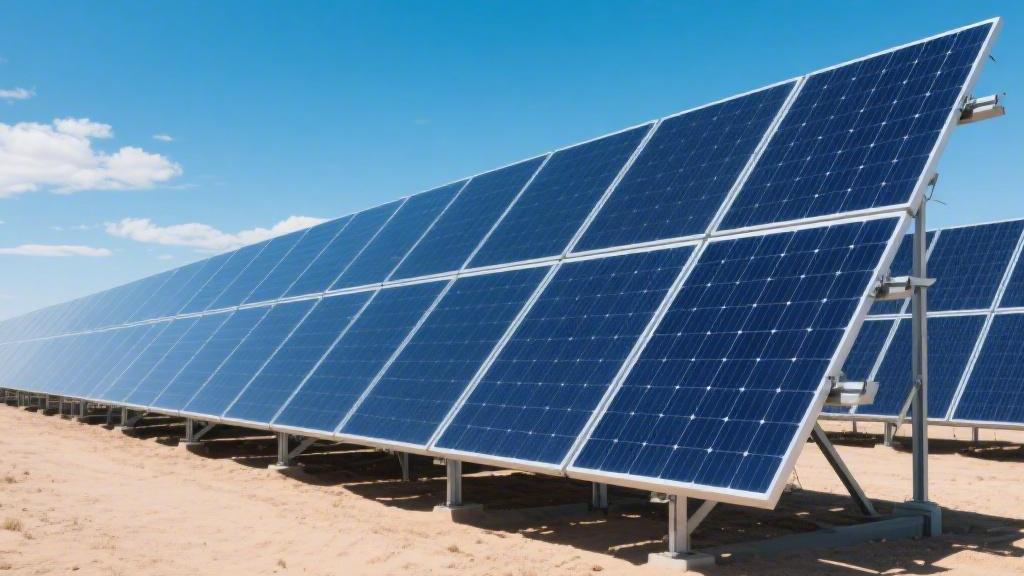
Better Performance in High Heat
Stable on Hot Days
Assume the roof surface temperature reaches a peak of 65 degrees Celsius during the average testing period in July. Compared to the Standard Test Conditions (STC) of 25 degrees Celsius, the panel endures an absolute temperature deviation quantity of 40 degrees Celsius.
Multiplying this 40-degree Celsius temperature difference by the -0.29% degradation ratio will cause a monocrystalline module rated at 450 watts to proportionally reduce its electrical capacity by 11.6% at full load output at 12:00 PM. The minimum value of the output power can still be maintained within the range of 397.8 watts, guaranteeing the power load supply during the midday period.
The maximum power temperature coefficient of a 450-watt polycrystalline silicon module of the same area is typically fixed in the deviation range of -0.40%/°C. Under the pressure load of a 40-degree Celsius temperature difference, the power reduction rate of the polycrystalline panel immediately climbs to a percentage value of 16%. Its maximum output power is forcefully compressed to an operating range of 378 watts, and the system's power generation efficiency shows a clear downward fluctuation. An absolute power gap of 19.8 watts emerges between the two.
In a residential photovoltaic system with a capacity of 13.5 kilowatts (kW) consisting of 30 series-connected panels, monocrystalline silicon can recover 594 watts of total power loss during the 3 months with the highest high-temperature frequency. The daily cumulative addition of 2.5 kilowatt-hours (kWh) of usable electricity significantly reduces the frequency of purchasing high-priced electricity from the public grid.
Cools Down Fast
The highly uniform crystal arrangement structure inside the monocrystalline silicon wafer possesses a thermal conductivity value as high as 150 W/(m·K). The absorbed solar radiant heat can penetrate the 130-micrometer-thick silicon wafer at a rate of 0.5 degrees Celsius per second. The 3.2 mm thick high-transmittance tempered glass covering the surface locks the specific heat capacity parameter of the overall module into the distribution range of 0.84 kJ/(kg·K).
The surrounding 35 mm thick anodized aluminum alloy frame expands the surrounding heat dissipation area by an order of magnitude of about 1.5 square meters, increasing the physical probability of heat dissipation. When the environmental wind speed reaches the statistical average of 2 meters per second, the heat exchange rate of the entire module surface can increase by a percentage of 30%. The median operating temperature of the panel will drop from 65 degrees Celsius to the 55-degree Celsius range within a 15-minute time cycle.
For every 10 degrees Celsius drop in operating temperature, the overall system's photoelectric conversion efficiency rebounds by a return rate figure of 2.9%. During the high-temperature sunshine cycle lasting up to 8 hours daily, the physical property of rapid cooling adds about 0.8 kilowatt-hours (kWh) of extra power generation flow to the system. Combined with approximately 120 statistical high-temperature days annually, relying solely on physical heat dissipation capabilities, monocrystalline panels can generate an additional 96 kilowatt-hours (kWh) of high-quality electricity within a 12-month operational span.
Normal Voltage
The maximum open-circuit voltage value of a monocrystalline module utilizing a 144 half-cut design under the 25-degree Celsius baseline test conditions is 49.5 volts. The variance of its open-circuit voltage temperature coefficient is set within an extremely precise range of -0.25%/°C.
When the operating temperature breaks through the high-pressure frequency of 70 degrees Celsius, the panel withstands a temperature difference fluctuation pressure of 45 degrees Celsius. The open-circuit voltage reduction rate is accurately calculated as a proportional value of 11.25%. The lower limit of the panel's output voltage drops above the safe threshold of 43.9 volts, ensuring the stability of current transmission.
A single DC circuit connecting 20 modules in series can still provide a total system voltage quantity of 878 volts. The 878-volt total voltage figure substantially exceeds the minimum startup operating voltage parameter requirement of 200 volts for mainstream string inverters. The Maximum Power Point Tracking (MPPT) conversion efficiency of the inverter can still stabilize in the highest value range of 98.5%. A short-circuit current (Isc) of up to 45 amps paired with a stable operating voltage output allows the system to maintain a smooth power output waveform amplitude even at peak load moments on hot summer afternoons.
Calculating Costs
Through a set of sample statistical data targeting a desert climate region running over a long time of 60 months, the parameter dispersion comparison of two different silicon material modules under extreme high-temperature states is displayed.
Comparison Dimension Parameter | N-type Monocrystalline Silicon Panel | Ordinary Polycrystalline Silicon Panel | Data Deviation Percentage |
Maximum Power Temperature Coefficient Reduction Rate | -0.29%/°C | -0.40%/°C | 27.5% |
Median Output Power Ratio in 65°C Environment | 88.4% | 84.0% | 4.4% |
Nominal Operating Cell Temperature (NOCT) Value | 43°C ± 2°C | 45°C ± 2°C | 4.6% |
5-Year Cycle Summer Power Generation Increase Revenue | $1250 | $980 | 27.5% |
Based on the sample dispersion calculations in the table, installing a 15-kilowatt (kW) capacity monocrystalline system requires an initial procurement cost budget of $18,000. The unit price of procurement is $0.08 higher per watt than polycrystalline panels, but the actual living benefits generated far cover the upfront investment. During the hot period from June to September, the monocrystalline system can stably output 2,100 kilowatt-hours (kWh) of electrical flow per month. Calculated at an electricity price of $0.25 per kWh, the system generates a monetary savings amount of $525 in electricity bills per month.
The extra power generation revenue brought by high temperatures advances the predicted time of the overall payback cycle by an order of magnitude of at least 14 months. Over the rated lifespan of 25 years, the average Internal Rate of Return (IRR) of the system stabilizes at a high return rate distribution of 13.8%. If the 5% ratio of home value appreciation is also factored into the comprehensive profit statistics, the long-term net wealth appreciation generated by this system exceeds a monetary scale of $25,000.
Preventing Breakdowns
The thickness of the silicon nitride anti-reflective coating on the monocrystalline silicon surface is usually maintained at an average size specification of 80 nanometers. The dense molecular arrangement inside the coating cuts off the penetration path distance of sodium ions under conditions of 85 degrees Celsius and 85% relative humidity. In a 192-hour extreme pressure test, applying a negative 1500-volt DC bias, the monocrystalline module demonstrated an absolute advantage over aging.
The output power degradation ratio of the monocrystalline module is strictly limited to within a marginal error figure of 1.5%. For polycrystalline modules without special preventive treatment under the same temperature and humidity load, their power loss probability will soar to a severe distribution range of over 30%. High-quality encapsulation processes suppress the frequency of hotspot generation by a percentage of 80%, substantially extending the service life of photovoltaic glass.
Rigorous data regression testing shows that its Levelized Cost of Energy (LCOE) over a 360-month operating cycle has successfully dropped to a minimum target value of $0.04 per kilowatt-hour. Monetary maintenance expense expenditures arising from unexpected system breakdown repairs remain almost within a $0 figure range during the first 120 months of the lifecycle.