How much does it cost to put solar panels on your house in Florida
In Florida, the average cost of installing a residential solar system typically ranges between $12,000 to $20,000 (after deducting federal subsidies).
Taking a common 10 kW system as an example, the average market price is approximately $2.50 to $3.30 per watt.
Thanks to the 30% Federal Investment Tax Credit (ITC), as well as Florida's unique sales tax and property tax exemption policies, the upfront investment can be significantly reduced.
Since Florida is sunny and supports net metering, homeowners typically recoup their investment within 7 to 10 years, saving tens of thousands of dollars in electricity bills over the system's 25-year lifespan.
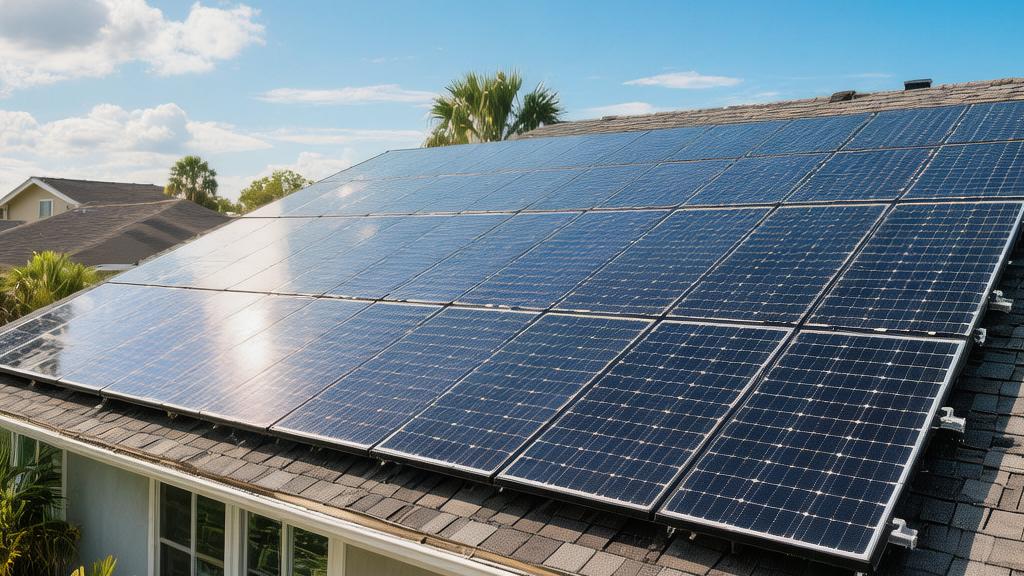
Average Pricing
How much does hardware account for?
Hardware costs account for about 40% to 45% of the total budget in the entire system.
The solar panels themselves (usually N-type monocrystalline modules with efficiencies between 21.5% and 22.8%) have market retail prices between $250 and $450 per panel.
Using a 400W panel as an example, a 10kW system requires 25 panels.
Microinverters (such as the Enphase IQ8 series) are priced at approximately $170 to $210 each, with one required for each panel, totaling about $4,500.
The cost of aluminum racking systems and roof fasteners is approximately $0.15 per watt, totaling about $1,500 for a 10 kW system.
In addition, consumables such as AC/DC combiner boxes, circuit breakers, and 2/0 AWG copper wire will incur extra costs of $800 to $1,200.
Hardware Modules | Estimated Amount | Percentage of Total Price |
25 pieces of 400W panels | $8,750 | 34.3% |
25 microinverters | $4,750 | 18.6% |
Racking and rail systems | $1,500 | 5.9% |
Cables and accessories | $1,000 | 3.9% |
Total Hardware Amount | $16,000 | Approx 63% (including channel margin) |
Soft costs are very diverse
In addition to visible hardware, about 55% of the expenditure flows into soft costs, which include permit applications, engineering design, and installation labor.
In the Miami-Dade or Orlando areas of Florida, structural engineer signature review fees are typically between $500 and $800.
Municipal building permit and electrical permit application fees range from $300 to $1,200.
Labor costs for a professional installation team (usually 3-4 people, for a 1.5-day cycle) are about $0.60 per watt, meaning the labor expenditure for a 10 kW system is $6,000.
In addition, to maintain operations, installation companies allocate about $3,000 in marketing acquisition costs.
If your home's main panel is only 100 Amps and cannot handle the feedback current of a 10 kW system, you must pay $2,000 to $3,500 for a main panel upgrade.
Soft Cost Items | Average Fee | Frequency/Probability |
Permit and application fees | $750 | 100% Necessary |
Structural engineering audit | $600 | 100% Necessary |
On-site installation labor | $6,000 | 100% Necessary |
Main panel upgrade (200A) | $2,800 | Approx 35% of homes need |
Interconnection agreement application fee | $100 | 100% Necessary |
Prices for various specifications
The unit price for a small 5kW system can be as high as $3.20/watt, while for large systems over 15kW, the unit price can be pushed down to $2.25/watt.
Most Florida households choose a range between 8 kW and 12 kW.
The table below shows estimated market prices for different power levels, excluding the federal 30% tax credit (ITC).
System Power (kW) | Number of Panels (based on 400W) | Estimated Total Price (including labor) | Net Price after 30% ITC Deduction |
6 kW | 15 units | $16,800 | $11,760 |
8 kW | 20 units | $20,800 | $14,560 |
10 kW | 25 units | $25,500 | $17,850 |
12 kW | 30 units | $29,400 | $20,580 |
15 kW | 38 units | $34,500 | $24,150 |
Loan or Cash
In Florida, over 60% of users choose financing through solar loans.
Current loan annual percentage rates (APR) range between 4.99% and 8.99%, with loan terms typically being 10, 15, or 25 years.
When choosing a loan, installers often charge a 20% to 30% dealer fee, which can cause the total contract price to soar from $25,500 to over $32,000, but monthly payments are usually lower than your original electricity bill.
For example, a monthly payment for a 10 kW system might be around $130, while the system can offset electricity worth $160 per month.
If you choose to pay in full cash, the system can recoup its cost in about 7.5 years, and for the following 17.5 years, you will receive a net electricity benefit of approximately $1,900 per year.
Financial Incentives & Savings
Calculating bill offsets
Florida has some of the friendliest Net Metering policies in the nation, mandated by the Florida Public Service Commission (PSC) for large utilities like FPL, Duke Energy, and TECO.
This policy allows homeowners to send excess daytime solar power back to the grid at a 1:1 ratio.
When your system generates 8 kWh at 12 PM but you only use 2 kWh, the remaining 6 kWh is sent back to the grid through a bi-directional meter, and the meter counts in reverse.
At the end of the month, the utility company only charges for your "net consumption" (the electricity bought from the grid minus the electricity sold to the grid).
The average residential electricity price in Florida is currently about $0.149/kWh. Since fuel adjustment charges have caused electricity prices to rise by about 18% over the past 24 months, the value of every saved unit of electricity is constantly increasing.
A 10 kW system generates approximately 15,500 kWh per year, which, at current electricity prices, produces about $2,310 in direct annual cash savings.
Electricity Settlement Details:
· Feedback Ratio: 1:1 equivalent offset (1 kWh sent in = 1 kWh extracted)
· Annual Settlement: At the end of each year, excess power is paid in cash at the wholesale rate (approx $0.03/kWh).
· Average Monthly Savings: $140 - $220 (depending on system capacity and usage habits)
· Electricity Inflation Rate: Expected annual increase of 4.5% - 6.2%
Property tax exemption
According to Florida Statute 193.624, the increased assessed value of a home due to the installation of renewable energy equipment is completely tax-exempt when calculating property taxes.
According to Zillow research data, homes with solar systems installed sell for an average of about 4% more on the Florida market than comparable homes.
For an Orlando home valued at $450,000, after installing a 10 kW system (costing approx $25,000), the market appraisal value might increase to $468,000, but the homeowner will still pay property tax based on the $450,000 baseline.
This means you gain approximately $18,000 in asset appreciation without paying annual holding costs for it.
Additionally, Florida exempts the Sales Tax on solar equipment, which saves you 6% to 7% in initial expenditure at the time of purchase, equivalent to directly saving about $1,100 per 10 kW system.
Asset Financial Indicators:
· Sales Tax Exemption: 6% (Florida Sales Tax Exemption)
· Property Tax Value Exemption: 100% Exemption (Statute 193.624)
· Home Premium Rate: 4.1% (based on statewide average transaction data)
· Resale Speed: 15% - 20% faster than homes without systems
How many years to recoup?
Combining the federal tax credit, exemptions, and monthly electricity savings, the payback period for Florida families is currently at a historic low.
Taking a 10.5 kW system with a total installation price of $26,000 as an example, after deducting the 30% ITC ($7,800), the actual net expenditure is $18,200.
Considering the system can offset about $2,400 in electricity bills annually (assuming a 5% annual increase in electricity prices), the system will reach the break-even point in year 7.1.
Over the 25-year system lifespan, the total cash benefit will reach $68,000 to $75,000.
If purchased with cash, the Internal Rate of Return (IRR) is typically between 11.5% and 14%, which is much higher than the long-term average return of the S&P 500 index.
Even if choosing a 20-year solar loan, as long as the APR is below 7%, the monthly electricity savings can usually fully cover the loan principal and interest, achieving "positive cash flow" from the first month.
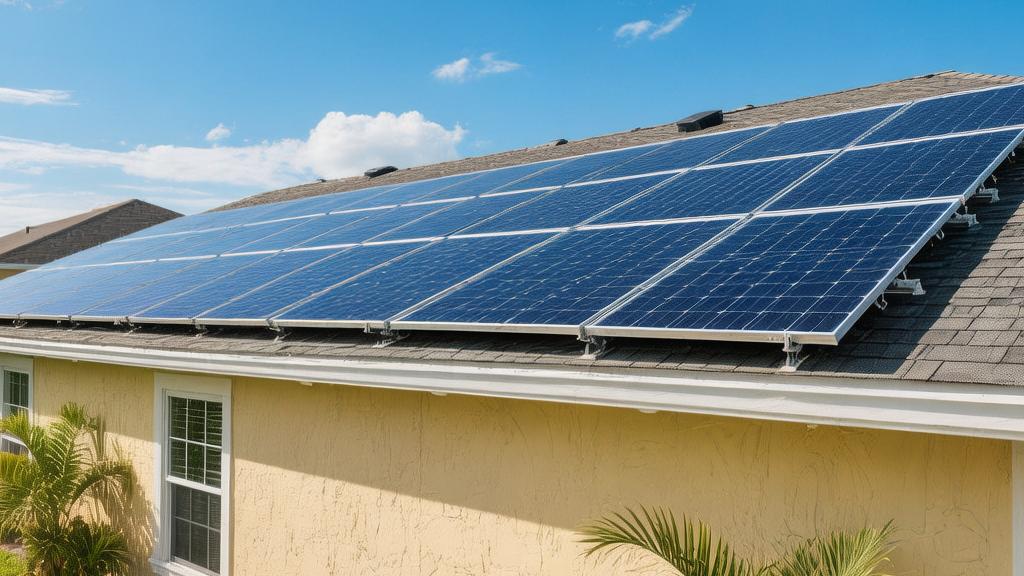
Subsequent Maintenance
Washing the panels
High humidity and frequent short-term thunderstorms in Florida cannot completely replace manual cleaning, as the high salt content of 0.8% in the air (especially for homes within 5 miles of the coastline) forms a layer of translucent salt scale on the panel surface.
According to measured data, if not cleaned for 6 consecutive months, the power generation efficiency of the solar panels will degrade by 10% to 15%, meaning a 10kW system will produce 5 units less electricity per day.
In Orlando or Miami, the cost of hiring a professional company for a full-system cleaning is usually between $150 and $300, including chemical wiping and frame descaling for 25 to 30 panels.
Homeowners can also choose to rinse panels themselves quarterly using fresh water with a pressure below 1,500 PSI to maintain a light transmittance of over 98%.
For homes with a roof pitch exceeding 30 degrees, it is recommended to spend $400 every two years for deep bird droppings and mold removal, as Florida's humid environment leads to a 5% probability of biofilm growth on module edges.
Maintenance Project | Suggested Frequency | Estimated Per-time Cost | Efficiency Gain / Loss |
Salt scale/dust rinsing | Every 6 months | $180 - $250 | +12% Power Generation |
Deep mold/bacteria removal | Every 24 months | $350 - $450 | Prevents 5.5% local hotspot failure |
Frame drainage gutter cleaning | Once a year | $100 - $150 | Extends module life by 3 years |
Replacing the inverter
The inverter is the part of the system most prone to electronic fatigue, with an average lifespan between 12 and 15 years.
In Florida's hot summers above 35 degrees Celsius, the internal capacitor failure rate of wall-mounted string inverters is 18% higher than in cold regions.
Replacing a 10 kW string inverter (such as the SolarEdge series) costs about $1,800 to $2,600 for hardware, plus $400 for licensed electrician labor, totaling nearly $3,000.
If the system uses Enphase microinverters, the replacement cost per unit is only $150 to $220, and they have an ultra-long 25-year warranty covering 95% of lifecycle failures.
For systems that have been running for more than 10 years, it is recommended to set aside $2,500 as an inverter replacement fund to address conversion efficiency declines occurring around year 12.5.
Inverter Type | Expected Lifespan | Replacement Cost (10 kW system) | Warranty Period |
String Inverter | 10 - 15 years | $2,200 - $3,200 | 12 years standard |
Microinverter | 25 years | $180 / unit | 25 years standard |
Power Optimizer | 20 - 25 years | $80 - $120 / unit | 25 years standard |
Checking the circuits
Due to Florida's rich ecology, cases of squirrels and raccoons gnawing through DC cables account for over 15% of total after-sales repair requests.
A comprehensive electrical safety inspection costs between $200 and $450, including scanning 25 junction boxes with a thermal imager for abnormal temperatures exceeding 60 degrees Celsius.
If damaged wire insulation is found, the material and labor cost to replace 50 feet of 10 AWG solar-rated wire is approximately $350.
To mitigate such risks, about 40% of Florida homeowners choose to pay an extra $800 to install a "Critter Guard," a 1/2-inch aperture galvanized mesh that reduces the probability of cable damage by more than 90%.
In addition, surge protectors in the distribution box should be checked every five years, as Florida experiences an average of 80 lightning strikes per square mile annually, and a failed surge protector can result in 100% of expensive modules being fried.
Potential Hazard Check Item | Inspection Cycle | Repair/Installation Fee | Risk Reduction Rate |
Thermal imaging circuit scanning | Every 3-5 years | $250 - $400 | Finds 98% of potential fire risks |
Critter guard | One-time installation | $600 - $1,100 | Reduces 92% of cable gnawing faults |
Surge protector replacement | After lightning damage | $200 - $350 | Protects 100% of core hardware |
Hurricane protection
In Florida, solar racking systems must comply with wind pressure design standards of 160 miles per hour (160 mph).
Before the annual hurricane season (June to November), it is essential to spend $200 to hire a technician to check if the torque of the roof L-Foot fasteners reaches 15 pound-feet (lb-ft).
If solar panels need to be temporarily removed due to a roof leak or shingle replacement, the current Florida market price for removal and reinstallation is $125 to $175 per panel, meaning the overall cost for a 10 kW system (25 panels) is approximately $3,125 to $4,375.
To hedge against such risks, it is recommended to include the solar system in the home's primary insurance, which usually increases the annual premium by $50 to $120 but provides 100% natural disaster coverage for $25,000 worth of hardware.