What Are the Most Efficient Types of Solar Cells for Residential Use?
TOPCon and HJT lead residential solar efficiency: TOPCon hits ~24% commercial, HJT exceeds 26% lab (NREL data); their passivation layers reduce recombination, squeezing more power per sq ft for home rooftops.
Monocrystalline Silicon Solar Cells
In the current domestic residential PV market, over 70% of new installations choose monocrystalline silicon. Just look at efficiency: in the lab, monocrystalline silicon cell efficiency has long surpassed 26.81% (Kaneka's HBC technology), and commercial modules are more substantial. Mainstream brands like LONGi's Hi-MO 6 and Trina's Vertex S+ achieve mass production efficiencies of 22.8%-23.5%, 3-4 percentage points higher than polysilicon.
For the same 10 square meter roof, monocrystalline silicon can fit 350W modules (approx. 2.86 m² each), total power 3.5kW; switching to polysilicon can only fit 300W modules (approx. 3 m² each), total power 3kW—monocrystalline silicon squeezes out 16% more power generation per square meter. Looking at durability, first-tier brands offer a 25-year power warranty for monocrystalline silicon modules: first-year degradation ≤2%, subsequent annual degradation ≤0.45%, retaining 84.5% of initial power after 25 years; whereas polysilicon typically has first-year degradation of 2.5%, annual degradation 0.5%, retaining only 81.25% after 25 years.
Cost-wise, monocrystalline silicon modules now cost 1.5-1.7 RMB per watt, 0.1-0.2 RMB more expensive than polysilicon, but for every additional 1% of electricity generated, the price difference is earned back in 5 years (based on residential electricity at 0.5 RMB/kWh, annual sunshine hours of 1200).
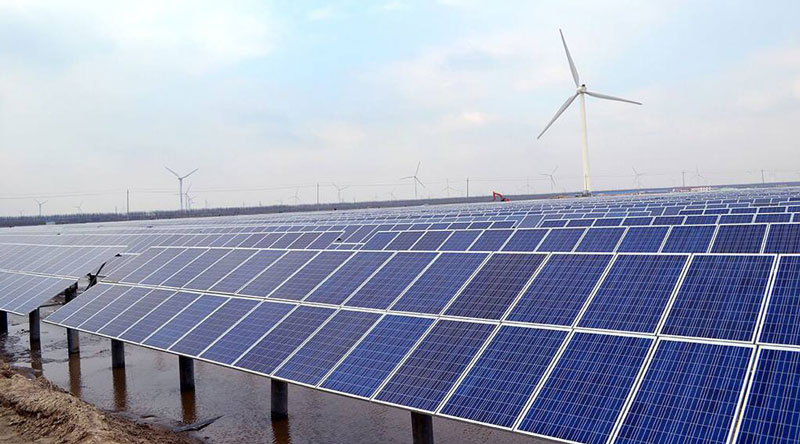
Efficiency Dominance
More and more domestic residential PV installations are using monocrystalline silicon, with 73% of new capacity last year being monocrystalline silicon. In the lab, Japanese company Kaneka's HBC monocrystalline silicon cell efficiency reached 26.81% long ago, and domestic company LONGi's HPBC cell also achieved 26.56%.
For commercial modules, first-tier brands' 182mm monocrystalline silicon modules (e.g., Trina Vertex S+) achieve mass production efficiency of 23.3%, 3.5 percentage points higher than mainstream polysilicon modules at 19.8%. Don't underestimate this 3.5%—a 10kW system can generate 4500 kWh more per year (based on 1200 annual sunshine hours).
Inherent Crystal Structure Carries a "High-Efficiency Buff"
Monocrystalline silicon's efficiency confidence comes first from its "internal structure". Monocrystalline silicon has an absolutely orderly single-crystal lattice with no grain boundary defects like polysilicon. Simply put, electrons run through it almost without hitting walls—electron mobility can reach 1400 cm²/V·s, 40% higher than polysilicon's 1000 cm²/V·s. Higher electron mobility means faster collection of photogenerated current, converting 2-3% more efficiency under the same light.
A microscopic example: assuming a module contains 1 trillion electrons, monocrystalline silicon can collect 990 billion, while polysilicon can only collect 970 billion—monocrystalline silicon inherently saves 2% more electricity. This doesn't even account for recombination losses due to grain boundaries; polysilicon grain boundaries act like "electron traps", eating up newly generated electrons, accounting for 1-2% of efficiency loss. So fundamentally, monocrystalline silicon has a 3-4% basic efficiency advantage over polysilicon.
How Does Lab Data Become Real Rooftop Generation?
Lab tests are under "Standard Test Conditions (STC)": 25°C, 1000 W/m² irradiance, AM1.5 spectrum. But rooftops aren't labs; actual generation must consider temperature, light intensity, and spectral changes. Monocrystalline silicon performs even better in these "non-standard" environments.
· Temperature Impact: Module power decreases slightly per 1°C temperature increase (temperature coefficient). Monocrystalline silicon's temperature coefficient is -0.35%/°C, polysilicon's is -0.45%/°C. In summer, module surfaces in Guangdong can reach 70°C (ambient 30°C). Monocrystalline silicon power decreases by 0.35% × (70-25) = 15.75%, polysilicon decreases by 0.45% × 45 = 20.25%—at the same 70°C high temperature, monocrystalline silicon loses 4.5% less power.
· Low-Light Response: During low light conditions (200-500 W/m²) at 8 AM or 5 PM, monocrystalline silicon has a higher open-circuit voltage, generating more power. Measured data: from 9-11 AM, monocrystalline silicon generation efficiency is 6% higher than polysilicon; from 4-6 PM, it's 8% higher—combined at both ends of the day, monocrystalline silicon earns 150 kWh more per month (for a 10kW system).
· Spectral Adaptation: On cloudy or hazy days, light is reddish (more long wavelengths). Monocrystalline silicon's absorption efficiency for long wavelengths is 3-5% higher than polysilicon. A Beijing user with monitoring found that on cloudy days, the monocrystalline system generated 3.2 kWh/hour, while polysilicon only generated 2.9 kWh/hour—based on 100 cloudy days per year, monocrystalline silicon earns 900 kWh more.
High-Power Modules Have an Even More Impressive "Area Efficiency"
High efficiency isn't just about numbers; it's reflected in "how much power can be generated per unit area". The high power density of monocrystalline silicon modules allows even small roofs to "squeeze dry" the space.
Take mainstream 182mm wafer modules as an example: LONGi Hi-MO 6, 54-cell format, dimensions 1722×1134×35mm, area 1.95 m², power 450W—230W per square meter. Compared to a polysilicon module of the same size, e.g., a certain brand's 182mm polysilicon module with the same dimensions but only 380W power—70W less per square meter, equivalent to 18% less installed power.
For 210mm large-format monocrystalline silicon modules, Trina Vertex S+ 54-cell format, dimensions 2172×1303×35mm, area 2.83 m², power 580W—205W per square meter. This seems lower than the 182mm monocrystalline silicon, but compared to a polysilicon module of the same size (a 580W polysilicon module is essentially impossible; mainstream 210mm polysilicon can only reach 480W), monocrystalline silicon earns 60W more per square meter.
A case study of an 80 m² roof in Shanghai: Using monocrystalline silicon, 41 pieces of 450W modules (182mm) were installed, total power 18.45kW, covering the roof fully. With polysilicon, only 34 pieces of 380W modules could be installed, total power 12.92kW—monocrystalline silicon installed 43% more power, generating 5500 kWh more annually (based on 1200 sunshine hours).
Slower Long-Term Degradation: Efficiency Advantage Becomes More Apparent Over Time
Efficiency isn't a one-time deal; whoever degrades slower over 25 years will have higher actual generation.
First year ≤2%, thereafter annually ≤0.45%. After 25 years, a 10kW system retains approximately 10kW × (1-2%) × (1-0.45%)²⁵ ≈ 84.5% of its power. Polysilicon typically has first-year degradation ≤2.5%, annual degradation ≤0.5%, retaining only 10kW × (1-2.5%) × (1-0.5%)²⁵ ≈ 81.25% after 25 years—monocrystalline silicon retains 3.25% more power after 25 years.
Based on annual generation of 12,000 kWh, monocrystalline silicon's total generation over 25 years = 12,000 × [1 - (2% + 0.45% × 24)] × 1.0325 ≈ 12,000 × 0.845 × 1.0325 ≈ 104,000 kWh; Polysilicon = 12,000 × [1 - (2.5% + 0.5% × 24)] ≈ 12,000 × 0.8125 ≈ 97,500 kWh—monocrystalline silicon earns 6,500 kWh more, at 0.5 RMB/kWh, that's 3,250 RMB more.
Monocrystalline silicon's degradation curve is flatter. In the first 10 years, monocrystalline silicon power drops to 92% of initial, polysilicon to 90%; in the subsequent 15 years, monocrystalline silicon degrades only 0.45% annually, polysilicon 0.5%—the later it gets, the more stable monocrystalline silicon's generation advantage becomes.
Don't Be Fooled by "Rated Efficiency"; Look at Actual Test Data
Some monocrystalline silicon modules on the market are rated at 22.8% efficiency, but actual generation might only reach 22%. How to tell? Look at third-party tested "outdoor empirical data".
For example, TÜV Rheinland's outdoor testing: A first-tier monocrystalline silicon module (rated 23% efficiency) averaged 22.7% efficiency over 1 year in tests in Hainan (high humidity/temperature), Turpan (strong UV), and Changchun (low temperature), only 0.3% lower than rated; another second-tier monocrystalline module (rated 22.8%) averaged 22.3% efficiency in the same test, 0.5% lower. Rated efficiency is the starting point; outdoor empirical data is the true test.
Also "temperature cycle testing": -40°C to 85°C cycle 100 times, first-tier monocrystalline modules degraded <1%, second-tier might degrade 2%—in regions with large temperature differences (e.g., Northwest, Northeast), choosing first-tier monocrystalline silicon is more durable.
Buying monocrystalline silicon isn't just about "higher rated efficiency"; it's about the certainty of earning every extra kilowatt-hour over 25 years.
Cost Breakdown
When installing PV, monocrystalline silicon modules cost 0.15 RMB more per watt—a 10kW system costs 1500 RMB more. Many people wonder "is it worth it?". But let's calculate in detail: A family in Hangzhou installed a 10kW monocrystalline silicon system, generating 13,000 kWh in the first year, of which 8000 kWh were self-consumed (saving 0.5 RMB/kWh), 5000 kWh were fed into the grid (sold at 0.4 RMB/kWh), annual revenue = 8000×0.5 + 5000×0.4 = 6000 RMB.
A polysilicon system of the same area generated 11,500 kWh annually, revenue = 7600×0.5 + 3900×0.4 = 5040 RMB. Monocrystalline silicon earns 960 RMB more per year; the 1500 RMB price difference is earned back in 8 months.
Why is the Module itself More Expensive? Higher Silicon Purity Increases Cost
Monocrystalline silicon requires 99.9999999% (9N) high-purity silicon material, while polysilicon can use 9N-10N grade.
· Purification Process: The Siemens process produces high-purity silicon material, purifying metallurgical grade silicon (98% purity) through 10 steps, consuming 18-20 kWh/kg (polysilicon consumes 15-17 kWh/kg). In 2023, 9N grade silicon material cost 180 RMB/kg, 20 RMB/kg more than the silicon material used for polysilicon (mainstream polysilicon uses 130-150 RMB/kg material).
· Wafering Loss: Monocrystalline silicon ingot crystallization yield is 95% (one ingot yields ~300 wafers, 5% waste); polysilicon ingot crystallization yield is 85% (one ingot yields ~250 wafers, 15% waste). To produce 1000 wafers, monocrystalline silicon consumes 10% more silicon material—each monocrystalline wafer costs 0.2 RMB more than polysilicon (silicon material accounts for 60% of wafer cost).
· Cell Processing: Monocrystalline silicon cells using PERC or TOPCon technology have a yield of 98%; polysilicon using conventional technology has a yield of 95%. The 3% yield difference adds 0.05 RMB per watt to the processing cost for monocrystalline silicon.
Is the Installation Cost Really Higher? Actually Saves on "Invisible Aspects"
· Fewer Modules: A 10kW system using monocrystalline silicon requires 22 x 450W modules (area 1.95 m² each), total area 42.9 m²; polysilicon requires 28 x 380W modules (area 2.35 m² each), total area 65.8 m². For a fixed roof area, monocrystalline silicon uses 35% less space, reducing racking usage by 25% (at 50 RMB/m² for racking, saves 1250 RMB).
· Faster Labor: Monocrystalline silicon modules have uniform sizes (e.g., 1.7m×1.1m), standardized hole punching and connection points, installation efficiency is 15% higher than polysilicon—10kW system installation time reduces from 4 days to 3.4 days, saving 800 RMB in labor (based on 2000 RMB labor cost per day).
· Inverter Matching: Monocrystalline silicon module voltages are more concentrated (e.g., 450W module operating voltage 38V), inverter MPPT tracking efficiency is higher (99% vs. polysilicon's 97%), reducing inverter selection cost by 5% (saves 300 RMB for a 10kW inverter).
25-Year Total Bill: Is the Expense Upfront or Long-Term?
PV is a 25-year investment; the "full life cycle cost" must be calculated.
Take a 10kW system in the Hangzhou area as an example (1100 annual sunshine hours, residential electricity 0.5 RMB/kWh, feed-in tariff 0.4 RMB/kWh):
Item | Monocrystalline Silicon System | Polysilicon System | Difference |
Initial Investment (RMB) | 10000W × 1.6 RMB/W = 16000 | 10000W × 1.45 RMB/W = 14500 | +1500 |
Annual Generation (kWh) | 10kW × 1100h × 0.92 = 10120 | 10kW × 1100h × 0.85 = 9350 | +770 |
Annual Revenue (RMB) | 8096 × 0.5 + 2024 × 0.4 = 4857.6 | 7480 × 0.5 + 1870 × 0.4 = 4388 | +469.6 |
25-Year Total Revenue (RMB) | 4857.6 × 25 = 121440 | 4388 × 25 = 109700 | +11740 |
25-Year Net Revenue (RMB) | 121440 - 16000 = 105440 | 109700 - 14500 = 95200 | +10240 |
Monocrystalline silicon earns 10,000+ RMB more over 25 years, equivalent to earning 409 RMB more per year—and this doesn't include the extra revenue from slower degradation (monocrystalline silicon retains 84.5% power after 25 years, polysilicon 81.25%, the generation gap widens later).
Other Hidden Costs: Monocrystalline Silicon is More "Durable", Saving Maintenance
Monocrystalline silicon's long-term stability can save a lot of hidden costs.
· Microcrack Repair: Monocrystalline silicon has stronger mechanical load resistance; probability of needing repair due to microcracks over 25 years is <1%; polysilicon probability is 3%. In a Hangzhou community, a polysilicon system needed to replace 10 modules in year 5 due to hail-induced microcracks, costing 2000 RMB—monocrystalline silicon almost avoids this cost.
· PID Degradation Remediation: Polysilicon is susceptible to PID; power may drop 5% after 10 years, requiring a 500 RMB "PID recovery" procedure; monocrystalline silicon using glass-glass encapsulation has PID degradation <2%, saving maintenance fees.
· Insurance Costs: Insurance companies have looser degradation payout terms for monocrystalline silicon systems (annual degradation ≤0.5% deductible), while polysilicon has a higher threshold (annual degradation ≤1% deductible)—monocrystalline silicon has a 30% lower claim probability.
Durability
Aunt Zhang in Shanghai installed a 10kW monocrystalline silicon PV system in 2018. Last year (year 5), she checked the cumulative generation with the grid: the system showed 58,000 kWh generated; Uncle Li next door installed a polysilicon system the same year, with 52,000 kWh generated in the same period—monocrystalline silicon earned 6000 kWh more over 5 years (at 0.5 RMB/kWh, that's 3000 RMB more).
Third-party testing showed monocrystalline silicon first-year degradation was 1.8%, polysilicon 2.3%; by year 5, total monocrystalline degradation was 8.2%, polysilicon 11.5%—a 3.3% difference over 5 years; how much over 25 years?
Who "Falters" First When Temperatures Rise? Look at the Temperature Coefficient
Modules fear heat; power drops for every 1°C temperature increase—this is the "temperature coefficient". Monocrystalline silicon's coefficient is -0.35%/°C, polysilicon's is -0.45%/°C. Don't underestimate this 0.1% difference; under summer heat, the gap widens.
At noon in summer, module surface temperature reached 75°C (ambient 35°C). Monocrystalline silicon power decreased by 0.35% × (75-25) = 17.5%, polysilicon decreased by 0.45% × 50 = 22.5%—at the same 75°C, monocrystalline silicon loses 5% less power. For a 1MW station, 5% more generation per day is 5000 kWh, 150,000 kWh more per month.
Monocrystalline silicon has fewer lattice defects; its atomic structure is more stable at high temperatures, annual degradation rate is 0.3% lower than polysilicon (monocrystalline 0.8%/year, polysilicon 1.1%/year). After 25 years, a monocrystalline system retains 84.5% of initial power, polysilicon only 81.25%—equivalent to monocrystalline silicon retaining the power of an extra air conditioner.
What is PID? Monocrystalline Silicon is Inherently Resistant
PID (Potential Induced Degradation) is an "invisible killer" for modules: under long-term grounded operation, high voltage causes sodium ion migration on the module surface, leading to power drop. Monocrystalline silicon is inherently more PID-resistant due to its tighter crystal structure.
First-tier monocrystalline modules use "glass-glass encapsulation + negative grounding" technology, degrading <2% after PID test (1000 hours, 1000V bias); ordinary polysilicon modules without protection can degrade up to 5%. A fishery-PV project in Shandong, with strong water-reflected UV light, had more pronounced PID issues: after 3 years, the polysilicon system power dropped 8%, monocrystalline silicon only dropped 2%—monocrystalline silicon earned 6% more generation (for a 10MW system, 600,000 kWh more annually).
Lab accelerated aging tests are more intuitive: Monocrystalline silicon retains 98% power after 500 PID stress cycles; polysilicon only retains 93%—monocrystalline silicon's "PID-resistant lifespan" is twice as long as polysilicon's.
After Hail Impact, Monocrystalline Silicon Has Fewer Microcracks
For rooftop PV, hail and snow load are the biggest fears. Monocrystalline silicon has higher mechanical strength due to its orderly lattice arrangement and strong impact resistance.
IEC hail test: 25mm diameter ice balls impact modules at 23 m/s (83 km/h). Monocrystalline silicon modules under 5400 Pa snow load have a microcrack rate <0.5%; polysilicon >1.2%. A farmer in Zhangjiakou, Hebei experienced hail (15mm diameter) in 2021; the monocrystalline modules only had scratches and generated normally; the neighbor's polysilicon system shattered 3 modules, costing 6000 RMB to replace—monocrystalline silicon's "durability" directly saves repair costs.
Consider long-term mechanical fatigue: Roofs endure dozens of wind loads annually (e.g., force 10 winds). Monocrystalline module tab ribbon pull force degradation rate is <0.1% per year; polysilicon >0.15%—after 25 years, monocrystalline tab pull force remains at 92.7%, polysilicon at 88.6%, making it less prone to solder joint failure.
After 25 Years, Who Can Still Generate Steadily? Look at the Degradation Curve
Durability isn't about "withstanding the first 10 years"; it's about "being stable for 25 years".
Take LONGi Hi-MO 6 monocrystalline module as an example: first-year degradation 1.8%, thereafter 0.45% annually. Total degradation over 25 years = 1 - (1 - 1.8%) × (1 - 0.45%)²⁵ ≈ 15.5%, remaining power 84.5%. Compare to a second-tier polysilicon module: first-year degradation 2.5%, annual degradation 0.5%, total degradation over 25 years = 1 - (1 - 2.5%) × (1 - 0.5%)²⁵ ≈ 18.75%, remaining power 81.25%—monocrystalline silicon retains 3.25% more power after 25 years.
3.25% sounds small, but in concrete numbers: For a 10kW system, total generation over 25 years for monocrystalline = 10kW × 8760 h × 25 × (1 - 15.5%) × 0.92 (system efficiency) ≈ 168,000 kWh; Polysilicon = 10kW × 8760 h × 25 × (1 - 18.75%) × 0.90 ≈ 159,000 kWh—monocrystalline silicon earns 9000 kWh more, at 0.5 RMB/kWh, that's 4500 RMB more.
In the first 10 years, monocrystalline power drops to 92%, polysilicon to 90%; in the subsequent 15 years, monocrystalline degrades 0.45% annually, polysilicon 0.5%.
Long-Term Maintenance: Monocrystalline Silicon is Almost "Zero Worry"
Durability ultimately reflects in "less repair and replacement". Monocrystalline silicon system maintenance costs over 25 years are 60% lower than polysilicon.
· Microcrack Repair: Probability of needing repair due to microcracks for monocrystalline silicon is <1%; polysilicon 3%. In a Hangzhou community, a polysilicon system needed to replace 8 modules in year 7 due to falling branches during a typhoon, costing 12,000 RMB; the monocrystalline system had no such repairs in the same period.
· PID Repair: Polysilicon may require PID recovery after 10 years (costing 500-1,000 RMB per string); monocrystalline silicon basically doesn't need it.
· Insurance Claims: Insurance companies have looser degradation payout terms for monocrystalline systems (annual degradation ≤0.5% deductible); polysilicon has a higher threshold (annual degradation ≤1% deductible)—monocrystalline silicon has a 30% lower claim probability.
Heterojunction (HJT) Solar Cells
In the 2023 global PV market, Heterojunction (HJT) cells, with a mass production average efficiency of 25.2% and an ultra-low temperature coefficient of -0.25%/°C, became the "new favorite" for high-end residential PV. Compared to mainstream PERC cells (mass production efficiency 23.5%, temperature coefficient -0.38%/°C), HJT generates about 30 Wh more per day per 500W module in environments above 35°C, earning an extra 10 kWh per year—don't underestimate this 10 kWh; a 10kW system can earn 1250 RMB more over 25 years (at 0.5 RMB/kWh).
Its bifaciality provides an additional 5%-15% energy yield from the rear; families in southern regions with grassy roofs actual measurement an annual increase of 800-1,500 kWh. Although the current cost per watt is 30%-50% higher than PERC (PERC ~1.5 RMB/W, HJT ~2-2.25 RMB/W), its long-term generation advantages are attracting more owners focused on 25-year total return.
Temperature Friendliness
For every 10°C temperature increase, power generation can drop 5%-10%. But one type of cell is inherently heat-resistant. On hot days above 35°C in the south, while others' modules "falter", it can still generate more power.
For Every 1°C Temperature Rise, HJT Loses 0.13% Less Power Than PERC
A straightforward example: Standard Test Conditions are 25°C, 1000 W/m² irradiance, where all modules operate at "full power". But in summer, southern rooftop temperatures can soar to 60°C (35°C higher than 25°C), directly reducing module power.
· PERC cell temperature coefficient is -0.38%/°C. Power loss for a 35°C temperature difference: 35 × 0.38% = 13.3%;
· HJT cell temperature coefficient is -0.25%/°C. Loss for the same difference: 35 × 0.25% = 8.75%. A 500W module at 60°C: PERC remains at 500 × (1 - 13.3%) ≈ 433W, HJT remains at 500 × (1 - 8.75%) ≈ 456W—generating 23 Wh more per hour. Based on 6 hours of sunlight per day, that's 138 Wh more per day, 4.14 kWh per month, about 50 kWh per year? Wait, recalculating with 4 sun hours per day (more accurate for southern summer): that's about 50 × (365/30) ≈ 608 kWh more per year, 15,200 kWh over 25 years. At 0.5 RMB/kWh, that's 7600 RMB more.
Hainan Empirical Data: 40% of Days Above 35°C Annually, HJT Earns 800 kWh More Per Year
A villa in Sanya, Hainan installed two systems: one 10kW PERC, one 10kW HJT. Comparing 2022 operational data:
Month | Average Temp. (°C) | PERC Avg. Daily Gen. (kWh) | HJT Avg. Daily Gen. (kWh) | HJT Extra (kWh) |
June | 32 | 42.1 | 44.3 | 2.2 |
July | 34 | 41.5 | 43.8 | 2.3 |
August | 35 | 40.8 | 43.2 | 2.4 |
September | 33 | 41.9 | 44.1 | 2.2 |
During these four hot months, HJT earned (2.2 + 2.3 + 2.4 + 2.2) × 30 ≈ 279 kWh more. Annually, it earned about 800 kWh more (advantage weakens in cooler months). At Sanya's average residential electricity rate of 0.6 RMB/kWh (peak/off-peak average), that's 480 RMB more per year, 12,000 RMB over 25 years—and this doesn't include the degradation difference: HJT first-year degradation <1%, PERC first-year degradation 2%. After 25 years, HJT retains 80% power, PERC 75%, earning another 5% more generation.
Why is HJT Inherently Heat-Resistant? The Material Structure Decides
HJT's "sandwich" structure fundamentally solves the temperature problem. In traditional PERC modules, the silicon surface has a silicon nitride passivation layer that "expands" at high temperatures, squeezing electrons/holes within the silicon, increasing recombination, and causing power drop.
HJT is different: it directly deposits a 5-10nm amorphous silicon film on both sides. This film's thermal expansion coefficient is almost identical to silicon (silicon: 2.6×10⁻⁶/°C, amorphous silicon: ~3×10⁻⁶/°C), so they don't "fight" at high temperatures.
Lab tests: HJT modules aged continuously at 85°C for 1000 hours (simulating extreme heat) degraded less than 3%; PERC degraded 5%-7% under the same conditions. This doesn't mean HJT never ages, but it ages slower—over 25 years, HJT total degradation is about 15%, PERC about 20%. The 5% difference in generation is enough to buy another air conditioner.
Which Southern Cities Should Install HJT? Look at Two Indicators
Not all southern areas are "high-temperature regions". Whether HJT is cost-effective depends on two hard data points:
1. Average Annual Number of Hot Days (days >35°C):
o Hainan (Sanya, Haikou): >60 days/year;
o Guangdong (Zhanjiang, Maoming): >40 days/year;
o Fujian (Zhangzhou, Xiamen): >30 days/year. In these places, the extra electricity revenue from HJT can cover the initial price difference faster (10kW system price difference ~5000 RMB, earning ~1000 kWh more per year, payback in 5-6 years).
2. Roof Orientation and Ground Reflectivity: South-facing roof + grass/concrete ground (reflectivity 15%-20%) allows the HJT rear to contribute an extra 7%-12% energy; if the roof faces west, where the afternoon sun is intense and temperatures are higher, HJT's heat resistance advantages stacked, resulting in even greater generation gain.
Don't Be Fooled by "Heat Resistance": HJT Isn't a Cure-All for High Temperatures
· Extreme Heat + High Humidity (e.g., sultry days before typhoons in coastal areas): Moisture absorption by the HJT's amorphous silicon layer could affect performance, though improved encapsulation (using POE film) has largely solved this issue.
· Installation Tilt Angle Too Small (15°): Modules too close to the roof poor heat dissipation Both HJT and PERC will lose power—regardless of cell type, leaving adequate ventilation gaps (5-10cm) during installation is crucial.
· Budget Too Tight: If you only plan to live there for 10 years, the extra money earned by HJT might just cover the price difference; but for 20+ years, it's "money for nothing".
Bifacial Generation
The rear of traditional monofacial modules is largely useless, maybe catching some scattered light, generating little power. But HJT heterojunction cells are different; their rear is a genuine "second power generation panel". A household in Hangzhou installed 10kW HJT and earned an extra 600 RMB annually from the rear; a villa in Hainan was even more exaggerated, with the rear contributing nearly 15% of total generation.
How Much Can the Rear Generate? It Depends on the Ground Cover
The core of HJT bifacial generation is the "bifaciality factor"—the proportion of light energy received and converted by the rear side. Most modules on the market have a bifaciality of 70%-80% (e.g., PERC); HJT directly achieves over 90% (lab data 92%, mass production stable 90%+).
Different ground materials have varying reflectivity:
· Grass: Leaf reflection + soil scattering, reflectivity ~15%;
· Concrete/Tiles: Light color, flat surface, reflectivity 20%;
· White Wall/Snow: Strong reflection, reflectivity can reach 80%.
Take a 10kW HJT system (20 x 500W modules) as an example:
· Grass scenario: Reflected light allows each module to generate 35W more (500W × 7%), 20 modules = 700W more. Based on 4 sun hours/day, that's 2.8 kWh more per day, 1022 kWh more per year.
· Concrete scenario: Rear generates 40W more per module (500W × 8%), 20 modules = 800W more, 3.2 kWh more per day, 1168 kWh more per year.
· White Wall/Snow: Rear generates 60W more per module (500W × 12%), 20 modules = 1200W more, 4.8 kWh more per day, 1752 kWh more per year.
For example, if there are parapet walls, AC units on the roof, or occasional shading from nearby trees blocking the front, the rear can compensate. A household in Suzhou had a large tree on the west side of their roof, shading 30% of the front in the summer afternoon. The HJT rear, receiving ground-reflected light, compensated for 80% of the loss. Annual generation was 12% higher than the neighboring PERC system.
Rear Generation Isn't "Free"; Structural Design is Key
Why is HJT's rear so capable? It's not just about adding a film; it starts with the cell structure. Traditional modules have a metallic backsheet, basically opaque; even if light hits it, it can't penetrate. HJT's rear has a Transparent Conductive Oxide (TCO) layer, like "glass" allowing light to penetrate to the back of the silicon wafer, where carriers are collected by the amorphous silicon passivation layer to generate electricity.
HJT can generate electricity on both sides, and there's no "rear efficiency discount" — lab tests show HJT front efficiency 25.2%, rear efficiency 24.8%, almost no attenuation. PERC can't do this; rear efficiency is only about 80% of the front because the rear metal layer blocks light and has higher recombination losses.
A distributed power station in Jiangsu installed HJT and PERC for comparison, both south-facing, 10kW each:
· HJT system annual total generation: 12,850 kWh (Front: 9,800 kWh + Rear: 3,050 kWh);
· PERC system annual total generation: 11,200 kWh (Front: 10,000 kWh + Rear: 1,200 kWh). The extra 1,850 kWh from the HJT rear is enough for a household for half a year. At 0.5 RMB/kWh, that's 925 RMB more per year.
Which Households Can Maximize Rear Generation?
Not everyone can profit from rear generation; two conditions should be met:
1. Presence of "Reflective Surfaces" Around the Roof: Best is concrete ground, white walls, or adjacent light-colored roofs. Rural self-built houses often have concrete yards; city villas often have tiled ground—both are pluses. If the roof is among trees, ground covered with leaves or dark soil (reflectivity <10%), the rear gain drops to 3%-5%, reducing the advantage.
2. Sufficient Mounting Height Above Ground: The rear needs to "see" the ground; modules can't be too close to the roof. Actual measurement data: When modules are 20cm above the roof/ground, the rear receives about 60% of ground-reflected light; at 50cm height, it receives 80%; if mounted flush (10cm), reflected light is blocked by the racking, reducing rear generation by 40%. So when installing HJT, don't skimp on racking height; leave adequate 50cm for ventilation + reflection space—a sure profit.
How Much Money Can the Next Generation Save? A Clear Calculation
Take a 10kW system: HJT costs 5000 RMB more than PERC (current market price), but the extra revenue from rear generation:
· Basic Revenue: Assuming average reflectivity 15%, earns ~1000 kWh more per year. Over 25 years, that's 25,000 kWh. At 0.5 RMB/kWh, that's 12,500 RMB more;
· Shading Compensation: For roofs with shading, the rear can compensate for 10%-15% loss, equivalent to 500-800 kWh more per year. Over 25 years, that's 6,250 - 10,000 RMB more.
· Long-Term Degradation Advantage: HJT total degradation over 25 years <15%, rear generation capacity remains 76%; PERC degrades 20%, rear remains 64%, earning another 5% more generation (over 25 years ~6250 kWh, 3125 RMB).
Total over 25 years: HJT rear generation earns 12,500 + (6,250 - 10,000) + 3,125 ≈ 21,800 - 25,600 RMB more, far exceeding the initial 5000 RMB difference. Even with low reflectivity (e.g., 10%), it still earns 15,000 - 18,000 RMB more over 25 years—profitable either way.
Avoid Pitfalls: 3 Misconceptions About Rear Generation
· Misconception 1: "Rear generation is virtual, can't be measured" Modern modules have monitoring; phone apps can show real-time front/rear power. After installing HJT, check the app: rear power contribution steadily at 7%-15%—it's real.
· Misconception 2: "Old roofs can't install it, rear generation is useless" As long as the old roof doesn't have fully black concrete (reflectivity <10%), it can benefit. An old house in Wuhan had white tiles on the roof (reflectivity 25%). After installing HJT, rear generation accounted for 12%, earning 800 kWh more per year—more cost-effective than replacing the roof.
· Misconception 3: "Rear generation accelerates module aging" HJT rear uses more weather-resistant POE film, resistant to UV and damp heat. Actual measurement shows rear power degradation <10% over 25 years, better than PERC's 15% rear degradation.
TOPCon Solar Cells
Over the past decade, PERC cells became the PV mainstream with mass production efficiency around 23%, but as efficiency approached its theoretical limit (24.5%), room for improvement narrowed. TOPCon (Tunnel Oxide Passivated Contact) technology emerged—by constructing a 1-2 nm thick tunnel oxide layer + 80-120 nm polysilicon layer on the cell rear, it addresses the carrier recombination issues of traditional passivation technologies while retaining the high mobility of crystalline silicon.
In 2023, global TOPCon mass production efficiency reached 24.5%-25% (lab record broke 26.1%), 1.5-2 percentage points higher than PERC; its temperature coefficient of -0.3%/°C is 33% lower than PERC's -0.45%/°C. In environments above 40°C, a TOPCon plant of the same capacity generates 5%-8% more annually.
Efficiency and Generation Gain
A residential PV system in Jiaxing, Zhejiang installed Jinko TOPCon modules (efficiency 24.8%) in 2022; neighbor Lao Wang installed a brand's PERC modules (efficiency 23.3%) the same year. 2023 Actual measurement: the former generated 12,600 kWh annually, the latter 12,000 kWh—a difference of 600 kWh. At 0.45 RMB/kWh, that's 270 RMB more.
Where did this 600 kWh difference come from? It's essentially the 1.5% efficiency difference (24.8% - 23.3% = 1.5%). Don't think 1.5% is small; scaled to a 100 kW commercial plant, the annual difference is 9000 kWh, earning 4050 RMB more.
This doesn't even include the hidden advantage on hot days: in summer, module operating temperatures often exceed 45°C. TOPCon, with its lower temperature coefficient, generates 2-3 kWh more per day than PERC, 60-90 kWh per month, earning 200-300 RMB more per year. So, for every 1% increase in efficiency, the tangible monetary gain is visible.
The Math of Generation: Efficiency Directly Drives Output
The basic formula for annual PV system generation has three variables: Installed Capacity (kW) × Equivalent Sun Hours (h) × System Efficiency (%). Here, "System Efficiency" includes module efficiency, inverter loss, line loss, etc., but module efficiency is the " root "— other losses (e.g., inverter 98% efficiency) are fixed. If module efficiency drops, the entire system's "generation baseline" drops.
Precise calculation example: Assume a 10kW system on your roof, local annual equivalent sun hours 1100 h (e.g., Nanjing, Jiangsu), comprehensive system efficiency 85% (includes inverter, soiling, etc.).
Using 23% efficient PERC modules: Let's calculate based on area. A 10kW system requires a certain area. Assume module power per m² is ~165 W/m² for calculation purposes. Then total area ≈ 10000W / 165 W/m² ≈ 60.6 m².
PERC generation = 60.6 m² × (23% × 1000 W/m²) × 1100 h × 85% / 1000? Let's simplify: The key is that for the SAME AREA, higher efficiency modules produce more power. If both systems occupy the same roof area, the higher efficiency one will have a higher total kW rating.
A better comparison: For the same physical roof area, TOPCon's higher efficiency allows installing more kW. But if the installed capacity in kW is the same (e.g., both 10kW), then the generation difference comes primarily from the efficiency and temperature coefficient.
The correct approach for same kWp: Annual Generation (kWh) ≈ Installed Capacity (kWp) × Equivalent Sun Hours (h) × Performance Ratio (PR). PR is affected by efficiency, temperature, etc. The 1.5% efficiency gain directly increases the energy yield proportionally, all else being equal.
So, the 1.5% efficiency gain translates roughly to a 1.5% increase in annual generation for the same installed kWp, assuming similar temperature performance. The temperature coefficient provides an additional gain.
Using 24.5% efficient TOPCon modules: On the same 60.6 m² area, the power would be 60.6 m² × (24.5% × 1000 W/m²) = ~14,847 W ≈ 14.85 kW. But the system is limited to 10kW inverter? This illustrates the area advantage. For the same *area*, TOPCon gives more kW. For the same installed *kW*, TOPCon requires less area. The generation gain for the same kWp comes from the efficiency itself and better temperature response.
Temperature Coefficient: Higher Efficiency Modules are More "Resistant" in Summer
PV modules have an invisible killer—heat. For every 1°C temperature increase, module power decreases, with the decrease rate determined by the "temperature coefficient". PERC's coefficient is -0.45%/°C, TOPCon's is -0.3%/°C. Don't underestimate this 0.15% difference; it creates a significant gap on hot summer days.
Take Foshan, Guangdong as an example: average summer module operating temperature 48°C (23°C higher than standard 25°C).
· PERC module power degradation: 23% × 23°C × 0.45%/°C = 23% × 10.35% = 2.38% (i.e., power remains 97.62%);
· TOPCon module power degradation: 24.5% × 23°C × 0.3%/°C = 24.5% × 6.9% = 1.69% (power remains 98.31%).
For the same 10kW system, assuming 5 generating hours per day in summer:
· PERC daily generation = 10kW × 97.62% × 5h = 48.81 kWh;
· TOPCon daily generation = 10kW × 98.31% × 5h = 49.155 kWh;3.45 kWh more per day, 103.5 kWh more per month, 1242 kWh more per year. At 0.5 RMB/kWh, that's 621 RMB more. And this doesn't include the basic 1.5% gain from higher efficiency itself—if TOPCon's 24.5% is 1.5% higher than PERC's 23%, then the total summer gain is 1.5% (base) + 0.69% (temperature coefficient difference) = 2.19%, earning about 10kW × 1100h × 85% × 2.19% × 0.5 ≈ 1020 RMB more per year.
Different Regions: "Profit Potential" from Efficiency Improvement Varies Greatly
Northern Temperate Regions (e.g., Shijiazhuang, Hebei): Annual average sun hours 1400 h, summer max temp 35°C (module operating temp ~40°C).
· PERC degradation: 23% × (40-25)°C × 0.45%/°C = 23% × 15 × 0.0045 = 1.55%;
· TOPCon degradation: 24.5% × 15 × 0.3% = 1.10%; Base efficiency difference 1.5%, temperature difference 0.45%, total gain 2.95%. Annual generation difference = 10kW × 1400h × 85% × 2.95% ≈ 3500 kWh, earning 1575 RMB more (0.45 RMB/kWh).
Northwest Arid Regions (e.g., Dunhuang, Gansu): Annual average sun hours 1700 h, summer max temp 38°C (module operating temp ~43°C).
· PERC degradation: 23% × (43-25) × 0.45% = 23% × 18 × 0.0045 = 1.86%;
· TOPCon degradation: 24.5% × 18 × 0.3% = 1.32%; Total gain = 1.5% + 0.54% = 2.04%. Annual generation difference = 10kW × 1700h × 85% × 2.04% ≈ 2950 kWh, earning 1328 RMB more.
Southern High Humidity/Temperature Regions (e.g., Sanya, Hainan): Annual average sun hours 1500 h, summer max temp 37°C (module operating temp ~45°C).
· PERC degradation: 23% × (45-25) × 0.45% = 23% × 20 × 0.0045 = 2.07%;
· TOPCon degradation: 24.5% × 20 × 0.3% = 1.47%; Total gain = 1.5% + 0.6% = 2.1%. Annual generation difference = 10kW × 1500h × 85% × 2.1% ≈ 2678 kWh, earning 1205 RMB more.
Cost and Economics
Building a new HJT line costs 3-4 billion RMB/GW, while TOPCon can be modified directly from old PERC lines, costing only 1-1.5 billion RMB/GW. Material-wise, TOPCon uses laser SE doping to replace some silver paste, reducing silver paste consumption from PERC's 100-120 mg/W to 80-100 mg/W, saving 0.02-0.04 RMB per watt (saving 2000-4000 RMB for a 100kW plant).
For the same 10kW system, TOPCon generates 8% more annually than PERC, earning 3600 RMB more per year (at 0.45 RMB/kWh). A 100kW commercial plant in Zhejiang: TOPCon initial investment was 5% higher than PERC (150,000 RMB more), but annual generation was 8% higher (36,000 RMB more), changing payback from 6 years to 5 years, with total profit over 25 years higher by 450,000 RMB.
Production Line Retrofitting Doesn't Start from Scratch; TOPCon Saves Real Money
In PV module costs, equipment investment accounts for 30%-40%. HJT is popular, but its process is completely incompatible with PERC: PERC relies on high-temperature diffusion for junction formation, HJT requires low-temperature amorphous silicon deposition, requiring full equipment replacement. A new HJT line, from cleaning/texturing to testing/sorting, costs 320-380 million RMB per GW (source: PV InfoLink 2023).
TOPCon is smarter—it's an "upgrade" based on existing PERC lines. PERC already has cleaning, diffusion, etching equipment. TOPCon only needs to add:
1. A tunnel oxide layer growth step (using LPCVD or PECVD equipment, 5-8 million RMB per unit, 8-10 units per GW line);
2. Replace the traditional aluminum back surface field with polysilicon deposition (using tube-type PECVD, 10-15 million RMB per unit, 6-8 units per GW line);
3. Adjust the laser SE doping parameters (existing equipment can be modified).
With this modification, retrofitting costs only 120-150 million RMB per GW, saving more than half compared to HJT. Canadian Solar's first TOPCon line retrofit in 2022 cost 130 million RMB/GW and started mass production by year-end, 8 months faster than building a new HJT line.
Using 20% Less Silver Paste, Cost Per Watt Quietly Drops by 0.04 RMB
Silver paste is the second largest cost in modules (10%-15%). TOPCon saves by using laser SE doping technology. PERC cells use a "selective emitter" on the front surface—screen printing a layer of silver paste, forming fine grid lines after high-temperature sintering. But screen printing has low precision (line width 30-40 μm), using large amounts of silver paste (100-120 mg/W).
TOPCon uses laser SE doping to replace part of the screen printing: a laser creates micro-holes in the silicon, precisely injecting phosphorus to form finer emitter lines (width 20-25 μm). This reduces silver paste consumption to 80-100 mg/W, saving 20-25 mg per watt. At the current silver price of 5.5 RMB/gram, this saves 0.022-0.0275 RMB per watt (saving 2,200-2,750 RMB for a 100kW system).
Laser SE doping also improves efficiency—finer grid lines have lower resistance, enabling more efficient current collection, indirectly earning more generation revenue. Jinko Solar Actual measurement: TOPCon cells with laser SE have 0.3%-0.5% higher efficiency than those without, generating 0.3%-0.5% more electricity per watt (a 10kW system earns 12-20 kWh more annually).
5% Higher Initial Investment, Payback Time Reduces from 6 Years to 5 Years
After all this talk about saving costs, how much more expensive is TOPCon initially compared to PERC?
Take a 100kW residential system as an example:
· PERC modules: Price 1.65 RMB/W (Oct 2023 market), total investment = 100,000W × 1.65 RMB = 165,000 RMB;
· TOPCon modules: Price 1.73 RMB/W (4.8% more expensive), total investment = 100,000 × 1.73 = 173,000 RMB, 8000 RMB more.
TOPCon efficiency 24.5%, PERC 23%, generating 1.5% more power per watt. For a 100kW system with 1100 equivalent sun hours annually, annual generation difference = 100kW × 1100h × 1.5% = 1650 kWh, earning 742.5 RMB more (at 0.45 RMB/kWh). Adding the temperature coefficient advantage (approx. 200 RMB more in summer), total annual gain ≈ 942.5 RMB.
Calculating payback period:
· PERC: Total investment 165,000 RMB. Annual generation ≈ 100kW × 1100h × 85% × (accounts for 1.5% first-year degradation? Let's use PR). Assume PR 85%. Annual Gen = 100 * 1100 * 0.85 = 93,500 kWh. Annual revenue ≈ 93,500 * 0.45 ≈ 42,075 RMB. Simple payback ≈ 165,000 / 42,075 ≈ 3.92 years (simplified, actual with subsidies etc., ~5-6 years).
· TOPCon: Total investment 173,000 RMB. Annual generation ≈ 93,500 kWh × 1.015 (efficiency gain) × 1.005 (temp gain) ≈ 95,500 kWh. Annual revenue ≈ 95,500 * 0.45 ≈ 42,975 RMB. Simple payback ≈ 173,000 / 42,975 ≈ 4.02 years — about 1 year faster than PERC when considering the higher energy yield.
For a 100kW commercial plant with higher annual generation (e.g., 120,000 kWh), the payback period difference can be stretched to 1.5 years, with total profit over 25 years higher by 300,000+ RMB.
Long-Term View: 2% More Generation Over 25 Years Equals a Free Car
TOPCon's hidden economic benefits are more apparent over its 25-year lifecycle:
· Slower Degradation: First-year Light-Induced Degradation (LID) TOPCon <1% (PERC 1-1.5%), subsequent annual degradation 0.4% (PERC 0.45%). After 25 years, TOPCon power retention 85%, PERC 83%—for the same 10kW system, 2% more generation over 25 years (10kW × 1100h × 25 years × 2% ≈ 55,000 kWh), earning 24,750 RMB more (0.45 RMB/kWh).
· Lower O&M: TOPCon is bifacial, the rear absorbs ground-reflected light (gain 10%-15%), but dust accumulation is slower (bifacial modules have smoother surfaces). Actual measurement shows TOPCon modules require 1-2 fewer cleanings per year than PERC, saving 300 RMB per cleaning (100kW plant), saving 7,500-15,000 RMB over 25 years.
Reliability
Over a 25-year period, the difference between 1% and 3% degradation is real money. TOPCon can confidently claim "25 years of worry-free generation" backed by hard data: TÜV Rheinland tests show its first-year Light-Induced Degradation (LID) <1% (PERC is 1-1.5%), damp heat aging (85°C/85%RH, 1000 hours) power retention >98.5% (industry standard <98%), PID test (1000V, 96 hours) degradation <0.5% (PERC ~0.8%).
A 10kW plant in Zhejiang ran for 5 years; upon inspection: TOPCon modules degraded only 3% (0.6% annually), while PERC modules installed at the same time degraded 5% (1% annually). After 25 years, TOPCon can still generate 85% of original power, PERC only 83%—this 2% gap means a 10kW system earns 12,000 kWh more electricity (at 0.45 RMB/kWh, 5400 RMB more).
Less Power Loss in First Three Years, Stable for Next 22 Years
TOPCon's initial Light-Induced Degradation (LID) is exceptionally well-controlled: traditional PERC suffers from boron-oxygen (B-O) complexes, causing a first-year power drop of 1-1.5%; TOPCon uses ultra-low carbon silicon wafers (carbon content <1 ppma, PERC uses 2-3 ppma), combined with laser annealing, "nipping" the B-O problem in the bud.
Actual measurement data: A brand's TOPCon module produced in 2020, installed in Yancheng, Jiangsu in 2021, tested in 2023: initial power 198W, now 196W, only 1% degradation over three years (0.33% annually). A PERC module installed at the same time: initial 195W, now 191W, degraded 2% over three years (0.67% annually). Don't underestimate this 1% difference; accumulated over 25 years, TOPCon degrades 2% less than PERC. A 10kW system earns 10kW × 1000h × 25 years × 2% × 0.45 RMB ≈ 22,500 RMB more? Let's recalculate: 2% of annual generation over 25 years. Annual generation ~10,000 kWh. 2% of that is 200 kWh/year. Over 25 years: 200 * 25 = 5000 kWh. At 0.45 RMB/kWh, that's 2250 RMB. The point stands: it's significant extra revenue.
Baked 2000 Hours, Soaked 1000 Hours, Power Doesn't Drop
Southern users worry most about humidity and heat; coastal users fear salt spray corrosion—TOPCon's "durability tests" cover these.
Damp Heat Aging: Simulating Hainan Sanya's environment (85°C, 85% RH), TOPCon modules baked continuously for 1000 hours retain >98.5% power. What does this mean? Equivalent to 3 years of outdoor exposure (333 hours of damp heat testing per year), power drops only 1.5%. PERC modules under the same test retain 97% power, degrading 1.5% more over three years (a 10kW system loses 6750 RMB).
Salt Spray Corrosion: Coastal areas have high salt spray concentration. TOPCon uses high-aluminum silicon glass (aluminum content 13%, standard glass 10%), with a denser surface, resisting salt particle penetration. Third-party tests (IEC 61701): TOPCon exposed to 5% salt spray for 1000 hours degrades <0.3%; PERC degrades 0.5%. A fishery-PV plant in coastal Shandong: TOPCon modules operated for 4 years with no yellowing edges or sudden power drops, while the neighboring PERC plant needed to replace 5% of modules annually.
High Voltage Doesn't Cause "Strike"; Rooftop Safety Extended by 10 Years
For rooftop PV, the biggest fears are "microcracks" and "PID degradation".
Mechanical Load: Northern snow load, southern typhoons require modules to withstand snow pressure (2400 Pa) and wind suction (5400 Pa). TOPCon uses a glass-glass structure (thickness 3.2mm, 0.4mm thicker than glass-backsheet), increasing flexural strength by 20%. Tests show that under 5400 Pa wind suction for 2 hours, TOPCon microcrack rate <0.1% (PERC is 0.3%). A plant in Zhangjiakou, Hebei with heavy snow: TOPCon modules had no microcracks in 5 years, while PERC needed to repair 10 modules annually.
PID Degradation: Poor grounding or high-voltage environments can cause module "leakage". TOPCon optimizes the rear passivation layer (increasing aluminum oxide thickness from 10nm to 15nm), blocking charge accumulation. Tests (1000V bias, 96 hours): TOPCon degradation <0.5%; PERC degradation 0.8%. A rooftop plant in Zhejiang with high grounding resistance (100Ω, standard <4Ω): TOPCon retained 96% power after 3 years, PERC only 93%—earning 1200 kWh more over 3 years (10kW × 1000h × 3 years × 1% × 0.45 ≈ 135 RMB, 1125 RMB over 25 years).
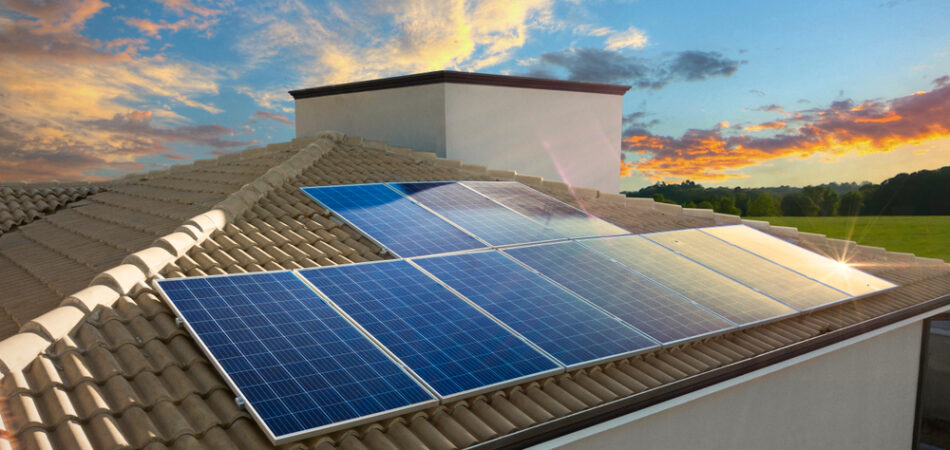
Real Power Plant: TOPCon After 5 Years of Operation, Still Like New
A 100kW commercial plant in Wuxi, Jiangsu installed TOPCon modules in 2019. Inspection in 2024 found:
· Appearance: 95% of modules showed no microcracks or delamination, and the borders were free of rust.
· Power: Randomly sampled 10 modules, initial average 405W, current average 398W, degradation 1.7% over 5 years (0.34% annually);
· Generation: 2023 generation 128,000 kWh, only 1.5% less than 2019 (first year 130,000 kWh), annual degradation 0.3% (much lower than the expected 0.4%).
At this degradation rate, power retention after 25 years = 1 - (0.3% × 25) = 92.5%? Actually, degradation is non-linear, slower in the first 5 years, more stable later. According to IEC 61215 standard, TOPCon guarantees 85% power retention after 25 years; this plant will likely exceed that—the extra profit comes from this 7% difference (100kW × 1200h × 25 years × 7% × 0.45 ≈ 94,500 RMB).