Do I Need Planning Permission for Ground Mounted Solar Panels
In the UK, ground-mounted solar panels are typically protected under "Permitted Development Rights," meaning they do not require planning permission. However, this is only applicable if the height does not exceed 4 meters, the total area is less than 9 square meters, and the installation is at least 5 meters away from the property boundary.
If the property is a listed building or located within a National Park, a formal application must be submitted to the Local Planning Authority (LPA). It is highly recommended to check the official council website before commencing any work.
Size and Height
Dimensions and Area
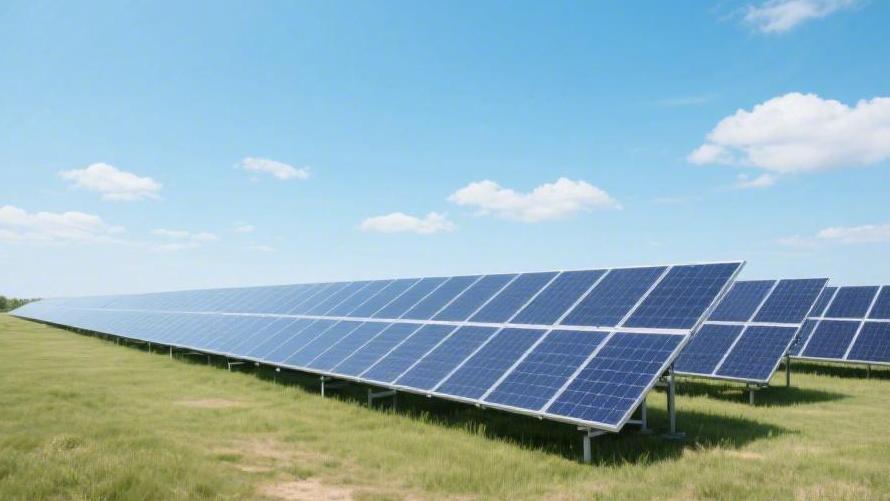
UK law imposes strict quantitative limits on "Permitted Development" (PD) for ground-mounted photovoltaic systems. The two most critical figures are 9 square meters and 4 meters. If your array's projected area exceeds 9 square meters (equivalent to approximately 4 to 5 standard 400W–450W modules), or if the highest point of the mounting system exceeds 4 meters from the ground, you must submit a formal planning application to your local council. The logic behind these rules is to prevent large-scale industrial-looking installations from disrupting the visual balance of residential areas.
Typically, a 4 kW system capable of meeting over 60% of the electricity needs for a family of three requires about 10 modules. A single panel measures roughly 1.72m x 1.13m, covering an area of about 1.95 square meters. A 10-panel array would total 19.5 square meters, far exceeding the 9-square-meter PD limit. In this scenario, you should prepare for application fees ranging from £200 to £450 and an approval cycle of 8 to 12 weeks. Installing without permission risks an enforcement notice following a neighbor's complaint, which could lead to mandatory removal and losses in equipment and labor exceeding £3,000.
Calculating Height, Width, and Length
To achieve an additional 5% to 8% annual yield, many installers recommend a tilt angle between 30 and 35 degrees. If using a two-tier landscape orientation, the total height of the array is usually kept between 2.5m and 3.2m, staying safely under the 4-meter legal limit. However, if you use adjustable high mounts to clear shadows from a northern wall or hedges, and the peak height exceeds 4 meters, even a 5-square-meter array will trigger a mandatory planning application.
Regarding spacing, the law requires a buffer of at least 5 meters between the edge of the array and the property boundary. If you are installing in a small garden of only 150 square meters, once you subtract this 5-meter boundary restriction, the remaining usable space often struggles to accommodate more than six panels. For projects that must apply for permission due to insufficient spacing, councils often require a Shading Impact Assessment report, which typically costs around £300 in consultancy fees.
Land Footprint
When assessing land capacity, you must consider the wind load. A 20-square-meter array can generate massive uplift during 30 mph gusts. Consequently, ground systems usually require concrete ballast or screw piles. Concrete foundations typically occupy an additional 10% of the surface area. If you plan to install a 6 kW system (approx. 15 panels), the total footprint will approach 30 square meters, more than triple the PD standard.
For such large systems, the approval process includes a "Ground Permeability" assessment. If the entire area beneath the array is paved with concrete, preventing rainwater infiltration, you may be required to install a drainage system to prevent flooding on neighboring land, adding about £500 to the infrastructure budget. Users hoping to bypass complex approvals by splitting the system into two separate plots should note that the law allows only one PD installation per curtilage; thus, this "divide and conquer" strategy is generally legally unviable.
Distance from Walls
If your ground system is installed more than 20 meters away from the main house, planning officers may argue that the land use has changed from "residential accessory" to "energy production." In Areas of Outstanding Natural Beauty (AONB), the success rate for such long-distance installations drops by 25%. Furthermore, cable transmission loss is a critical factor: if the distance exceeds 30 meters, you must increase the DC cable cross-section from 4mm² to 6mm² or even 10mm² to keep the Voltage Drop below 3%, increasing cable costs by £2–£4 per meter.
In practice, choosing a location within 10 meters of the house not only reduces planning resistance but also saves approximately £300–£600 in trenching and wiring labor. For large estates, an installation area exceeding 50 square meters is viewed as a semi-industrial facility. In such cases, beyond planning permission, archaeological surveys or ecological assessments may be required, extending the preparation period to over six months and incurring at least £1,000 in additional consultant fees.
Quantity Limits
Limit of One System
If you have already installed a solar thermal collector of less than 2 square meters in your garden, and you wish to install a 7-square-meter PV system alongside it, the second system will require full planning permission as it breaks the "limit of one" rule. Many homeowners overlook this exclusivity during initial planning. If your first system is only 1.5 kW and you later realize you still have a 50% electricity deficit, adding a second array—even if the combined area is only 8.5 square meters—will likely be viewed as a second facility by the Council, requiring a planning fee of roughly £206.
The term "one system" in legal text usually refers to a continuous array sharing the same support structure or cable trunking path. If you plan to install in phases, it is recommended to reserve all mounting space and cable capacity during the first installation to achieve 100% physical compliance at once. Otherwise, the secondary construction will trigger an 8-to-12-week approval cycle, with a 15%–20% chance of rejection due to "cumulative visual impact."
In a real-world scenario, if your current annual consumption is 4,500 kWh, a 4 kW system (approx. 10 panels at 400 W) will cover 19–20 square meters. Since this exceeds the 9-square-meter PD limit anyway, you shouldn't worry about phased installation; instead, apply for full planning permission from the start. Applying for an 8kW or even 12kW system costs virtually the same in fees (approx. £400) as a 5kW system. From an ROI perspective, scaling up once can reduce installation costs per watt by 10%–15%, as the £1,000–£1,500 labor cost for trenching only needs to be paid once.
Strict Area Limits
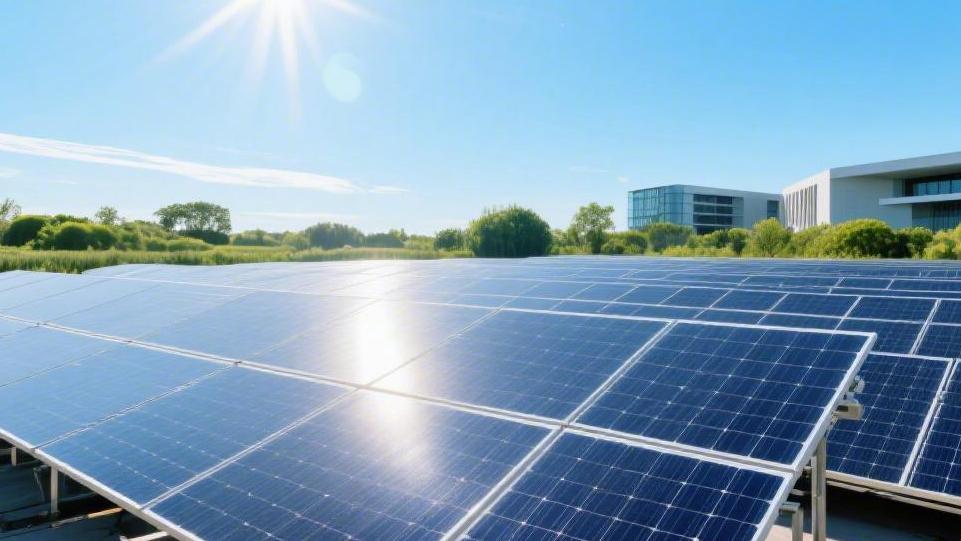
Even if you only install "one" system, you will likely hit the 9-square-meter red line if you install more than 4 or 5 panels. Modern monocrystalline modules are about 1.95 square meters (approx. 1.72m x 1.13m). Four panels total 7.8 square meters (within PD); five panels reach 9.75 square meters. That extra 0.75 square meters moves you from "exempt" to "mandatory planning." If those five panels produce 1,800 kWh annually (only 350 kWh more than four panels), at 28p per kWh, you earn an extra £98 a year, but you'll spend over £200 on fees and wait months for approval.
When planning quantities, you must include the projected area of the mounting brackets. If your brackets extend 20 cm outward for structural stability, the calculated area increases by 5%–8%. For designs sitting right at the 8.8-square-meter margin, always leave a 10% safety buffer to prevent minor installation errors from being classified as unauthorized developments.
If your garden is only 100 square meters, there is an additional legal constraint: all ground facilities (solar, garages, sheds) must not exceed 50% of the total garden area (excluding the house footprint). If you already have a 40-square-meter garage, the remaining legal space for solar is very tight. In high-density areas, roughly 30% of ground-mount applications are requested to be scaled down by councils because they "excessively occupy outdoor amenity space."
Scaling Up Together
If you want to avoid all paperwork and fees, your limit is 9 square meters. For a family of three, this micro-system only covers about 40% of the base load. If your future plans include an EV (needing ~2,500 kWh/year) or a heat pump, a 1.8 kW PD system is a drop in the ocean. In this case, it is better to pay the £462 fee to install a 6.6 kW or 8 kW system. Large systems can cover 80% of household use, and surplus electricity can be sold back via the Smart Export Guarantee (SEG), with rates between 5p and 15p per kWh. An 8kW system can generate about £300 in extra annual income just from exports.
For high-quantity arrays, grid capacity must be considered. If the system power exceeds 3.68 kW (the limit for single-phase), you must submit a G99 application to the District Network Operator (DNO) in addition to planning. This takes 4 to 6 weeks and may cost around £300 for the assessment. If the DNO determines the local transformer is at 95% capacity, they may charge you for a transformer upgrade, which can cost over £2,000, significantly extending the payback period.
While cell storage is usually indoor, if you build a dedicated weatherproof cabinet next to the ground array due to indoor space constraints, this cabinet counts toward your "outbuilding" allowance. If this cabinet is over 2.5 meters high or within 2 meters of a boundary, it may require separate planning permission. Approximately 5% of ground projects face enforcement investigations because they ignored the physical dimensions of these support cabinets.
Exceeding Limits Requires Approval
When your plan exceeds 20 square meters or 4 meters in height, you enter the full planning application phase. Here, officers look beyond the numbers to the impact on neighbors. They assess "glint and glare" or visual obstruction. If the array edge is less than 5 meters from a neighbor's fence, the approval probability drops by 25%. Including a professional shading analysis can increase approval chances by 15%, costing around £300.
For large estates or farms installing over 100 panels (approx. 50 kW), the project status shifts to "energy production." This requires archaeological and ecological assessments, with a 6-month lead time. As land use might shift from agricultural to commercial, suggest budgeting at least £1,500 for professional consultancy.
With large quantities, if the distance to the transformer exceeds 30 meters, the DC cable must be upgraded from 4 mm² to 10 mm² to keep the voltage drop under 1.5%, increasing material costs by £3 per meter. For a 50-meter run, the cabling alone adds £150. Maintenance for large arrays also carries a cost: professional cleaning twice a year costs £100–£200. Without it, dust buildup can reduce efficiency by 5% annually.
Distance Requirements
Distance from the Boundary
Per PD rights, any part of the array must be at least 5 meters from the property boundary. This is to minimize visual intrusion and potential reflection issues for neighbors. If your garden is only 15 meters wide, removing two 5-meter buffers leaves only a 5-meter legal installation width. This restriction directly limits capacity; if you planned 8 panels wide (9 meters), you'd be forced to scale down to 4 panels, cutting annual yield from 3,200 kWh to 1,600 kWh.
Installing two meters from a neighbor's fence carries a 20%–25% risk of complaint. Once in the planning process, you may be required to pay £300 for a shading impact report. If the array is three meters high and too close to the boundary, the resulting shadow could cover 30% of the neighbor's garden, usually resulting in a rejection. From a construction standpoint, the 5-meter gap allows for maintenance access. Installing flush to the boundary may require renting mobile scaffolding (£150/day) just to clean the panels or replace a failed inverter (costing £800–£1,200).
Boundary Distance and Planning Category Comparison
Boundary Distance | Planning Category | Estimated Fees | Approval Cycle | Risk Assessment |
> 5 Meters | Permitted Development (PD) | £0 | No wait | Extremely Low (Legal Right) |
1.5 - 5 Meters | Full Planning Required | £206 - £462 | 8 - 12 Weeks | Medium (Neighbor input needed) |
< 1.5 Meters | High Rejection Risk | £462 + Consultancy | 12+ Weeks | High (Prone to legal disputes) |
Distance from the House
Ground systems must be within the "Domestic Curtilage." If the installation is more than 20 meters from the main house, planners may question the residential nature of the project. In AONBs, exceeding this distance reduces approval rates by about 30%. You may need to pay £1,000+ in consultancy fees to prove the land use hasn't changed.
To maintain a 1.5% voltage drop, every 10 meters of distance requires a cable specification review. Within 15 meters, standard 4mm² DC cable (£1.5/m) suffices. At 40 meters, you must switch to 10 mm² Steel Wire Armoured (SWA) cable, costing £5–£8/m, with higher labor costs due to bending radius limits.
If the distance exceeds 50 meters, consider micro-inverters. While this increases initial equipment cost by 15%, it converts DC to AC at the array, reducing power loss by 3%–5% over long distances. Over 25 years, this recovered energy can be worth over £1,500. Long-distance runs also require DC isolators at both the array and the building (approx. £60 each) for maintenance safety.
Transmission Distance vs. Cable Costs and Efficiency
Transmission Distance | Suggested Cable Spec | Material Unit Price | Estimated Voltage Drop | Trenching/Wiring Budget |
10 Meters | 4mm² SWA | £2.5/m | < 1.0% | £200 - £400 |
30 Meters | 6mm² SWA | £4.0/m | 1.8% | £600 - £900 |
50 Meters | 10mm² SWA | £6.5/m | 2.5% | £1,200+ |
Distance from the Road
In planning law, a "highway" includes not just busy roads but also public footpaths. It is strictly forbidden to install a PD ground-mounted system on the side of the house facing a highway (usually the front garden). If you plan to install it in the front, regardless of whether it's one meter or 10 meters from the road, you must apply for full planning. Statistics show the approval rate for front garden installations is below 12% due to "significant visual harm" to the streetscape.
For side or rear gardens bordering public paths, a 3-meter buffer is recommended. Proximity to public areas increases the risk of damage or panel breakage from balls/vandalism. Replacing a 450W panel costs about £350 (including labor). Adding 3 meters of space and a 2-meter hedge can reduce visual interference by 60% and improve planning impressions.
In specific areas (like corner plots), if the array obstructs sight lines for drivers, the Highways Department will be involved. Usually, a 10-meter clearance from junctions is required. Installing without permission can lead to a 7-day mandatory removal order if safety is compromised, with relocation costs (trenching, re-wiring, structure) often exceeding £2,000.
Correct Trench Depth
According to Building Regulations, all outdoor underground cables must be buried at least 600 mm deep and covered with warning tape. Manual trenching and backfilling costs £20–£35 per meter. If the installation is 30 meters from the meter box, budget £750–£1,050 for the trench. If crossing a concrete driveway, cutting and repair costs soar to over £80/m.
If a 6 kW system uses thin cabling over 50 meters, internal cable temperatures can exceed 60°C in peak summer. This triggers the inverter's over-voltage protection, causing the system to shut down during the sunniest hours. This fault can cause a 5%–10% loss in annual generation. For an annual yield of 6,500 kWh, this is a £180 yearly loss. To solve signal attenuation for smart monitoring, you must use shielded signal cables (£2.2/m), or electromagnetic interference from power cables will cause data deviations exceeding 15%.