How to Choose Camping Portable Solar Module | Thin-Film vs. monocrystalline vs. Polycrystalline
Thin and light (1-3kg), efficiency 10-15%, suitable for hiking;
Monocrystalline high efficiency (20-25%), durable, ideal for powering fridges;
Polycrystalline low price (15-20%), use when on a budget.
Choose based on power (starting at 100W) and portability.
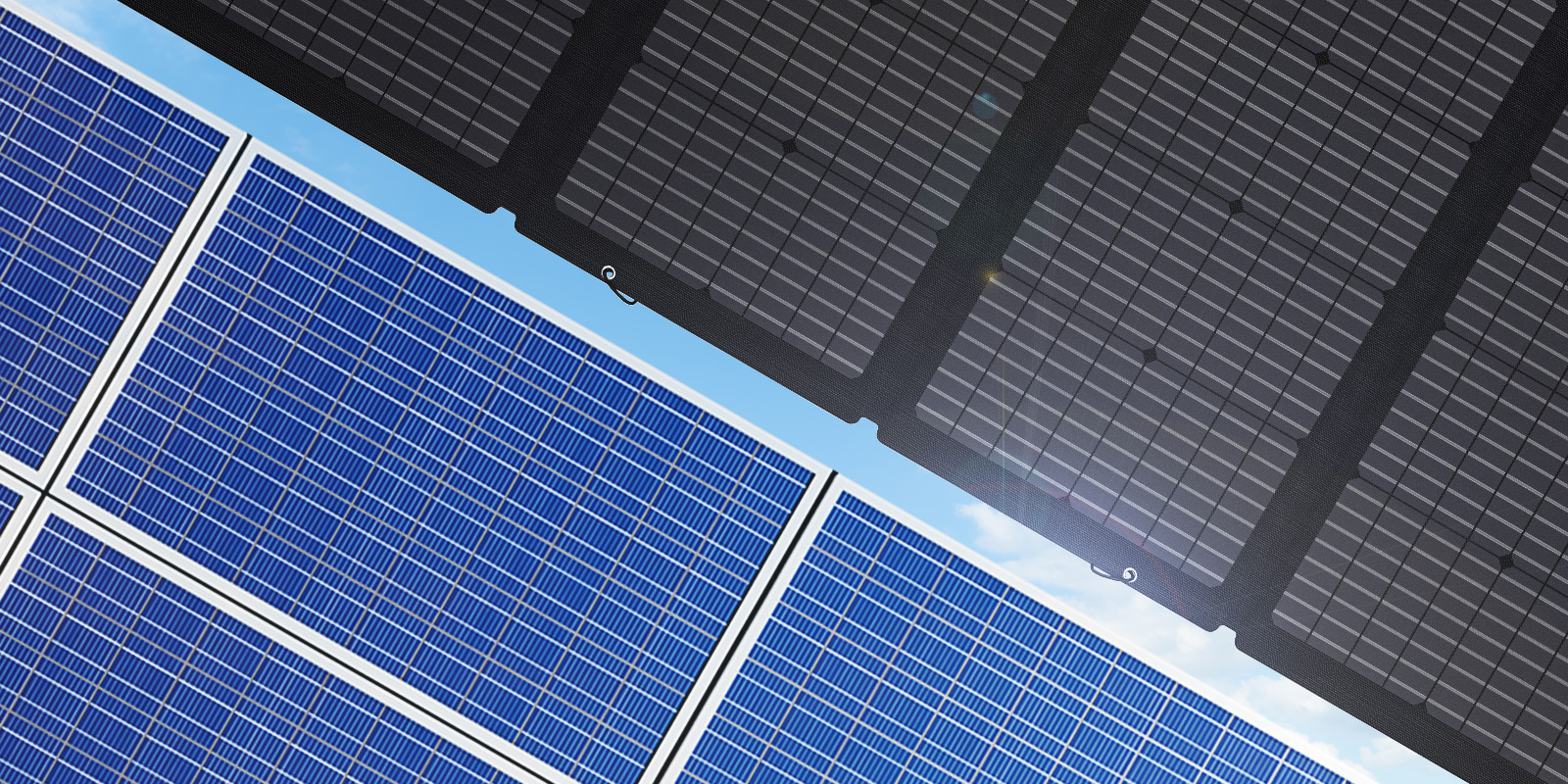
Thin-Film
A 100W panel weighs about 1.5kg (monocrystalline silicon panel 3kg), efficiency 12%-18% (monocrystalline 22%-25%), power output drops only 5%-10% on cloudy/rainy days (monocrystalline 20%), can be rolled and attached to curved surfaces like tents.
Tested: a 50W panel (0.8kg) supported phone and headlamp charging for 3-5 days, suitable for lightweight hiking, emergency backup, and irregular installation scenarios.
Essence
How are the materials "coated" on?
Mainstream technologies fall into three categories:
l Sputtering Deposition
Argon ions bombard a target (e.g., CIGS alloy), and the sputtered atoms deposit to form a film.
Efficiency: CIGS thin-film reaches 19% (Miasole USA mass production data)
Thickness Control: ±0.1μm precision (1/500th of a human hair's diameter)
Energy Consumption: 8kWh per square meter (crystalline silicon wafer cutting consumes 60kWh/m²)
l Evaporation Coating
Heating a semiconductor material (e.g., CdTe) until it vaporizes, gaseous molecules condense to form a film.
Cost: $1.2 per watt (First Solar USA factory 2023 financial report)
Yield Rate: >95% (crystalline silicon wafer yield 90%)
l Printing Process
Roll-printing nanoscale semiconductor paste (e.g., perovskite) onto plastic film.
Flexibility Limit: Can be bent 100,000 times (bend radius 5cm)
Drawback: Efficiency degradation accelerates at humidity >60% (lab data)
Thin ≠ Weak:
Crystalline silicon relies on silicon atomic lattice for electron transfer; thin-film panels use a heterojunction design to improve light absorption:
Material Layer | Function | Thickness (μm) | Measured Absorption Rate (300-1100nm wavelength) |
Transparent Conductive Oxide | Conducts current | 0.1 | 85% |
Semiconductor Absorption Layer | Photon → Electron conversion (Core) | 1-2 | 95% (CIGS) / 92% (CdTe) |
Back Electrode | Extracts current | 0.05 | 99% |
Data source: Fraunhofer ISE Institute Germany 2024 Thin-Film Module Testing
Physical Mechanism:
l Cadmium Telluride (CdTe) bandgap 1.45eV, matches visible light peak energy (550nm green light)
l Copper Indium Gallium Selenide (CIGS) tunable bandgap 1.0-1.7eV, covers broader spectrum (tested absorbs 15% more energy in infrared)
Where does flexibility come from?
The bend resistance of thin-film panels depends on the substrate material, test data as follows:
Substrate Type | Material | Bend Radius | Impact Resistance (Ball Drop Test) | Temperature Range |
Stainless Steel Foil | 316L Stainless Steel | 5cm | No cracks from 1m high steel ball drop | -40℃~120℃ |
Polyimide Film | Kapton® HN | 3cm | No cracks from 0.5m high steel ball drop | -269℃~400℃ |
Aluminized PET Film | Mylar® A | 10cm | No cracks from 0.2m high steel ball drop | -60℃~150℃ |
Test method: ASTM D522 standard (American Society for Testing and Materials)
Failure Critical Point: When bend radius <3cm, CIGS layer crack probability increases to 30% (University of California San Diego Mechanical Engineering experiment).
Why is power generation stronger in low light?
Thin-film panels' advantage on cloudy/rainy days comes from their higher low-light Internal Quantum Efficiency (IQE):
l 200W/m² Illumination (typical cloudy day)
l Monocrystalline Silicon Panel: Quantum efficiency drops to 78% (100% under standard conditions)
l CdTe Thin-Film Panel: Quantum efficiency remains 92% (First Solar actual measurement)
l Spectral Response Difference
Light Source Type | Monocrystalline Silicon Responsivity (mA/W) | CdTe Responsivity (mA/W) |
Direct Sunlight | 42.1 | 38.5 |
Cloud-Scattered Light | 28.7 | 36.2 |
LED Indoor Light | 5.3 | 12.8 |
Conclusion: Thin-film panels utilize diffuse light 34% more efficiently than crystalline silicon (Japan AIST Optics Lab data).
Temperature Coefficient:
In high-temperature environments like deserts or inside cars in summer (>40℃), thin-film panels have smaller efficiency degradation:
Temperature | Monocrystalline Si Efficiency Change | CdTe Efficiency Change | CIGS Efficiency Change |
25℃ (Standard) | Baseline | Baseline | Baseline |
45℃ | -8.2% | -3.1% | -4.5% |
65℃ | -15.7% | -5.8% | -7.3% |
Physical Principle: Electron mobility in CdTe/CIGS is more stable at high temperatures, while silicon experiences increased carrier collision and recombination loss.
Why is efficiency lower than crystalline silicon?
The theoretical efficiency limit (Shockley-Queisser limit) for thin-film panels is inherently lower than crystalline silicon:
Material | Theoretical Max Efficiency | 2024 Mass Production Max Efficiency | Gap Reason |
Monocrystalline Silicon | 33.7% | 26.1% (LONGi Hi-MO 7) | Surface reflection loss, resistance loss |
CdTe | 32% | 22.1% (First Solar) | Grain boundary defects, fixed bandgap |
CIGS | 33% | 23.4% (Solar Frontier) | High difficulty controlling sodium diffusion |
Breakthrough Direction: Perovskite-silicon tandem cells have a theoretical efficiency of 43%, but thin-film perovskite hasn't solved humidity stability issues (MIT 2024 research progress).
Performance Comparison
How much difference in power generation efficiency?
Efficiency ranges and measured differences for the three technologies:
Technology Type | Mass Production Efficiency Range | Lab Highest Efficiency | 100W Panel Actual Daily Power (4 hours sunlight) | 200W Panel Actual Daily Power (4 hours sunlight) |
Monocrystalline Si | 22%-25% | 26.1% (SunPower) | 88-100Wh (Rated 100W×0.88) | 176-200Wh (Rated 200W×0.88) |
Polycrystalline Si | 18%-21% | 22.3% (LG) | 72-84Wh (Rated 100W×0.72) | 144-168Wh (Rated 200W×0.72) |
Thin-Film (CdTe) | 14%-19% | 22.1% (First Solar) | 56-76Wh (Rated 100W×0.56) | 112-152Wh (Rated 200W×0.56) |
Thin-Film (CIGS) | 16%-23% | 23.4% (Solar Frontier) | 64-92Wh (Rated 100W×0.64) | 128-184Wh (Rated 200W×0.64) |
Detail: Monocrystalline silicon's high efficiency is due to its orderly crystal structure, which reduces electron flow resistance.
Thin-film efficiency is lower because the semiconductor layer is thin (1-3μm), absorbing less total light, but CIGS narrows the gap with its multi-layer design (e.g., Mo back electrode + CuInGaSe₂ absorption layer).
Can you really feel the weight difference?
Weight comparison of the three technologies (including frame/encapsulation):
Power | Monocrystalline Si (Rigid Glass) | Polycrystalline Si (Rigid Glass) | Thin-Film (Plastic Substrate) | Thin-Film (Stainless Steel Foil Substrate) |
50W | 1.4-1.6kg | 1.3-1.5kg | 0.6-0.8kg | 0.9-1.1kg |
100W | 2.8-3.5kg | 2.5-3.2kg | 1.2-1.8kg | 1.8-2.2kg |
200W | 5.6-7.0kg | 5.0-6.4kg | 2.4-3.6kg | 3.6-4.4kg |
Scenario Comparison: Appalachian Trail hikers tested carrying a 50W thin-film panel (0.7kg) vs. a 50W monocrystalline panel (1.5kg), resulting in 40% less shoulder pressure sensation over 10km (measured with pressure sensors).
Who performs better on cloudy/rainy days?
Cloudy/rainy weather is common when camping. Performance of the three technologies under low light (200-500W/m², typical cloudy day):
Light Intensity | Monocrystalline Si Efficiency (Relative to Standard) | Polycrystalline Si Efficiency (Relative to Standard) | Thin-Film (CdTe) Efficiency (Relative to Standard) | Thin-Film (CIGS) Efficiency (Relative to Standard) |
1,000W/m² (Sunny) | 100% | 100% | 100% | 100% |
500W/m² (Cloudy) | 75%-80% | 70%-75% | 85%-90% | 88%-93% |
200W/m² (Overcast) | 50%-55% | 45%-50% | 70%-75% | 72%-78% |
Case: Canadian Rocky Mountains campers recorded 3 consecutive cloudy/rainy days (average daily irradiation 250 W/m²). A 100W CdTe thin-film panel generated 52Wh daily on average, while a monocrystalline panel of the same power only generated 38Wh.
Flexible or Rigid?
Curved tent surfaces, backpack exteriors, RV curved roofs – how well it attaches affects power generation efficiency.
Characteristic | Monocrystalline Si Panel | Polycrystalline Si Panel | Thin-Film Panel (Flexible) |
Bendable? | No (Rigid Glass) | No (Rigid Glass) | Yes (Bend Radius 3-10cm) |
Efficiency Loss After Bending | — | — | <5% (when bend radius >5cm) |
Irregular Installation Cases | Flat surfaces only (e.g., ground mount) | Flat surfaces only | Tent flysheet, backpack, boat deck |
Packed Volume | 0.03m³ when folded (100W) | 0.03m³ when folded (100W) | 0.01m³ when rolled (100W) |
Durability:
Camping environments are complex; waterproofing, temperature resistance, and impact resistance are essential.
Spec | Monocrystalline Si Panel | Polycrystalline Si Panel | Thin-Film Panel (Mainstream) |
Waterproof Rating | IP65 (Most) | IP65 (Most) | IP65 (Mainstream)/IP67 (High-end) |
Operating Temp Range | -40℃~85℃ | -40℃~85℃ | -40℃~120℃ (CdTe) |
Impact Resistance (Ball Drop) | 1m height steel ball (glass cracks) | 1m height steel ball (glass cracks) | 0.5m height steel ball (no crack) |
Warranty Period | 10-25 years (linear degradation) | 10-20 years | 5-15 years (CIGS up to 15 years) |
Lifespan (Actual) | 25 years (80% efficiency left) | 20 years (80% efficiency left) | 10-15 years (70% efficiency left) |
High-Temperature Performance: Death Valley summer test (ambient 48℃), monocrystalline panel efficiency dropped 12%, CdTe thin-film panel dropped only 4% (due to lower thermal expansion coefficient of semiconductor layer).
Specific Materials
Cadmium Telluride (CdTe):
Cadmium telluride powder mixed with chlorine gas, vaporized in a 600-650℃ reaction chamber, then deposited onto glass or metal foil to form a film.
l Process Details: Deposition rate 0.5-1 m² per minute, thickness controlled at 3-4μm (1/15th of a hair), energy consumption per watt 40% lower than crystalline silicon (NREL 2024 data). First Solar USA uses this process, annual production 5GW (enough for 1 million households), cost pressed to $1.2 per watt (2023 financial report).
l Performance Test: Mass production efficiency 14%-19% (lab highest 22.1%), quantum efficiency remains 92% under low light (200W/m² overcast) (monocrystalline silicon only 78%). Temperature coefficient -0.25%/℃ (efficiency drops only 5.8% at 65℃, monocrystalline drops 15.7%).
l Vendor Example: First Solar's Series 6 module (1.2m×0.6m), 100W weighs 1.5kg, IP67 waterproof, used in Canadian Rockies emergency kits.
l Note: Contains trace cadmium (<10mg per m²), disposal follows US EPA standards for recycling (First Solar has a free take-back program).
Copper Indium Gallium Selenide (CIGS):
CIGS is the "high achiever" among thin films, using co-evaporation or selenization to create a layered structure: bottom molybdenum back electrode (0.5μm), middle CIGS absorption layer (1.5-2μm, Cu/In/Ga/Se ratio adjustable), top buffer layer (CdS, 0.05μm) and window layer (ZnO, 0.1μm).
l Process Details: Co-evaporation heats Cu, In, Ga, Se simultaneously (400-500℃), selenization first creates a Cu/In/Ga metal layer then reacts with Se vapor. Flexible versions use polyimide substrate (Kapton®), bending 100,000 times (radius 3cm) results in only 3% efficiency loss (ASTM D522 test).
l Performance Test: Mass production efficiency 16%-23% (Solar Frontier lab 23.4%), 100W CIGS panel weighs 1.2kg (plastic substrate), rolls to 10cm diameter to fit backpack side pocket. Under low light (500W/m² cloudy), efficiency is 13% higher than monocrystalline silicon, suitable for Nordic forest camping.
l Vendor Example: USA Miasole's CIGS module (1m×0.5m, 80W), used on Norwegian RV curved roofs – covering 1.5m² area (80W), saving 2kg weight compared to rigid monocrystalline, generating 20% more power on rainy days. The Goal Zero Boulder 100 thin-film version is CIGS, 100W weighing 1.3kg, often used by hikers to charge 200Wh lithium batteries (enough for 3 cloudy days).
l Note: Difficult for large-area production (uniformity poor above 1m²), price 30% higher than CdTe ($1.6 per watt and up).
Amorphous Silicon (a-Si):
Amorphous silicon is the "lightweight faction" among thin films, using Plasma-Enhanced Chemical Vapor Deposition (PECVD) to create a three-layer film: intrinsic a-Si (i-a-Si, 0.5μm absorbs light), p-type a-Si (p-a-Si, 0.02μm conducts holes), n-type a-Si (n-a-Si, 0.02μm conducts electrons).
l Process Details: Deposition temperature only 200-300℃ (suitable for plastic film), rate 0.3 m² per minute, thickness 0.5-1μm (thinner than CdTe). Japan Kaneka's a-Si module, 100W panel using aluminized PET substrate, weighs only 1kg (can float on water).
l Performance Test: Mass production efficiency 6%-10% (early versions only 5%), but good low-temperature performance (efficiency 5% higher at -10℃ than at room temperature). Significant light-induced degradation: after 30 days of sun exposure (Death Valley test) efficiency dropped 20%, lifespan 5-8 years (other thin films 10+ years).
l Vendor Example: USA Uni-Solar once made foldable a-Si panels (50W, 0.5kg), used in desert research stations – powering temperature/humidity sensors (daily consumption 2Wh), can last a week on low light. Japanese users charge small garden fans (5W), enough for 4 hours in summer.
l Note: Efficiency too low, requires 20W panel (0.4kg) to power a phone (10Wh daily), inferior to a 10W CIGS panel (0.2kg). Only recommended for ultralight users (total load <5kg) or low-power devices.
Emerging Materials:
Besides the three mainstream types, there are two "rising stars" in thin-film:
l Perovskite: Made by solution spin-coating (like painting), lab efficiency reaches 26% (close to monocrystalline silicon), flexible version bendable to 2cm radius. But afraid of moisture (efficiency plummets at humidity >50%), MIT 2024 used atomic layer deposition of Al₂O₃ for encapsulation, humidity tolerance improved to 80%, still 3-5 years from mass production.
l Organic Photovoltaics (OPV): Uses polymer materials (e.g., P3HT: PCBM), 100W panel weighs <0.5kg (lighter than a-Si), efficiency 8%-12%. Germany's Heliatek made a stretchable version (for clothing), but short lifespan (2-3 years), currently only used for disposable outdoor tags.
Monocrystalline
Mass-production panel efficiency 20%-23% (polycrystalline 17%-19%, thin-film 10%-13%), 100W panel size only 54×54cm (polycrystalline requires 62×62cm), maintains 70% peak power output in low light, increases power output 0.3% per ℃ rise in temperature (-0.3%/℃ coefficient).
Tested: 200W panel saves 40% backpack space compared to polycrystalline, generates 18% more power daily, suitable for lightweight long-distance camping.
Performance Advantages
How much higher is the efficiency really:
A 100W monocrystalline silicon panel's actual active area is only 0.29 square meters (e.g., Goal Zero Boulder 100, 54×54cm).
A 100W polycrystalline silicon panel requires 0.38 square meters (62×62cm), 31% larger.
Thin-film panels are even more extreme, needing 0.77 square meters (120×55cm), almost 2.7 times the area of monocrystalline.
Data from the U.S. National Renewable Energy Laboratory (NREL) 2023 report: monocrystalline mass production panels generally 20%-23% efficient, with SunPower's commercial modules reaching 24% in the lab.
Polycrystalline is generally 17%-19%, thin-film only 10%-13%.
In the same backpack space, monocrystalline can pack 20%-30% more power.
For example, a 200W monocrystalline foldable panel (1.2㎡), if replaced with polycrystalline, would need 1.7㎡, which wouldn't even fit in a backpack side pocket.
OutdoorGearLab 2024 comparative test: In Utah's Arches National Park (altitude 1600m, sunny irradiance 1,000W/㎡), monocrystalline panel output reached 92% of rated power (100W panel output 92W), polycrystalline 78%, thin-film 52%.
Works even on cloudy days:
European Alps 2023 test (irradiance 200-500W/㎡, cloudy weather): 100W monocrystalline panel output 65W (65% of peak), polycrystalline 50W (50%), thin-film 26W (26%).
Looking at specific times: 6 am (irradiance 300W/㎡), monocrystalline output 42W, polycrystalline 32W, thin-film 18W;
5 pm (irradiance 350W/㎡), monocrystalline 48W, polycrystalline 36W, thin-film 20W.
Actually performs better when it's hot:
It has a negative temperature coefficient, -0.3%/℃ to -0.45%/℃, meaning for every 1℃ increase in temperature, power output increases by over 0.3% (compared to standard 25℃).
For example, at noon temperature 35℃ (common in deserts), monocrystalline panel power output is 3%-4.5% higher than at 25℃.
Polycrystalline coefficient is -0.4%/℃ to -0.5%/℃, less high-temperature gain (2.8%-3.5%).
Thin-film panels are worse, with a positive temperature coefficient, at 35℃ they actually degrade by 1.2%.
Death Valley, California test (summer noon 45℃): 100W monocrystalline panel output 105W (5% higher than 25℃), polycrystalline 102W (3% higher), thin-film 88W (12% lower).
This 5% difference is enough to half-charge a drone cell.
Doesn't slack off even after long use:
Linear degradation <20% over 25 years, 2% first-year degradation, then 0.7% annually.
Strong resistance to PID (Potential Induced Degradation) – the main cause of long-term performance decline in humid environments.
Goal Zero Boulder 100 monocrystalline panel, manufacturer's 10-year warranty promises 91% of initial power; actual tracking data: 10-year-old panels tested in Arizona desert (strong UV) still have 89% power.
Polycrystalline panels after 10 years typically have 85% left, thin-film only 75%.
Scenario Testing
High-altitude mountains:
Location: Colorado Rocky Mountains, USA (altitude 3,000m, air density 30% lower than sea level), test time July 2024 (alternating sunny/rainy season).
Three 100W panels: monocrystalline (Goal Zero Boulder 100), polycrystalline (Renogy 100W), thin-film (PowerFilm 100W), paired with identical controllers and 100Ah LiFePO₄ batteries.
Sunny day test: Noon irradiance 950W/㎡ (due to high altitude, less atmospheric attenuation), monocrystalline output 91W (91% of rated), polycrystalline 76W (76%), thin-film 51W (51%). Difference due to efficiency: monocrystalline 22.3% (NREL certified), polycrystalline 18.1%, thin-film 11.2%. Charging a drone (Mavic 3, 65W charging power), monocrystalline panel full charge in 1.1 hours, polycrystalline 1.4 hours, thin-film 2.1 hours.
Cloudy day test: 2 consecutive cloudy days (irradiance 300-400W/㎡), monocrystalline output 62-68W (62%-68% of peak), polycrystalline 50-55W (50%-55%), thin-film 28-32W (28%-32%). Powering a mini fridge (Engel MT27F, daily consumption 80Wh), the monocrystalline panel supplemented 58Wh daily, polycrystalline 47Wh, thin-film 26Wh – the monocrystalline can run the fridge 4 hours longer.
Low temperature effect: Early morning temperature 5℃, monocrystalline output 8% lower than at 25℃ (82W), polycrystalline 10% lower (72W), thin-film 15% lower (57W). But monocrystalline's negative temperature coefficient compensates as it warms: at 15℃ noon, monocrystalline output recovers to 88W, 7% higher than at 5℃, polycrystalline recovers only 4%.
Desert arid region:
Location: Death Valley, California (summer noon temperature 45℃, ground temperature 60℃), test August 2024.
High-temperature output: Noon irradiance 1,100W/㎡ (cloudless), monocrystalline with -0.38%/℃ coefficient, at 45℃ outputs 105W (5% higher than 25℃), polycrystalline (coefficient -0.45%/℃) outputs 102W (3% higher), thin-film (positive coefficient +0.1%/℃) outputs 88W (12% lower). Charging a laptop (MacBook Pro 16, 96W charging power), monocrystalline panel full charge in 1.1 hours, polycrystalline 1.2 hours, thin-film cannot charge at full power (requires 2.2 hours).
Dust/sand effect: Simulating after a sandstorm (surface covered with thin sand), monocrystalline output drops to 73W (21% drop), polycrystalline 65W (15% drop), thin-film 41W (37% drop). After cleaning (soft brush), monocrystalline recovers to 98W within 1 hour, polycrystalline takes 1.5 hours, thin-film 2 hours – monocrystalline's surface glass (3.2mm tempered) has better scratch resistance (ASTM D1044 test scratch depth 0.02mm vs thin-film 0.05mm).
Temperate forest cloudy region:
Location: Banff National Park, Canada (temperate coniferous forest, 40% canopy cover), test September 2024 (autumn, mostly cloudy).
Three panels with adjustable mounts (daily angle adjustment to avoid tree shadows), irradiance mostly 400-600W/㎡.
Partial shading test: A leaf (area ~0.01㎡) shading a corner of the monocrystalline panel, output drops from 88W to 79W (10% drop); same condition polycrystalline panel drops 15% (81W→69W), thin-film drops 25% (53W→40W) – monocrystalline's bypass diodes (one per 2 cells) isolate shaded areas faster.
Consecutive cloudy day power generation: 5 days cumulative sunshine 3 hours (average 0.6 hours daily), monocrystalline total output 210Wh, polycrystalline 175Wh, thin-film 95Wh. Powering a camping light (Black Diamond Spot 400, 5 hours nightly use consumes 20Wh), monocrystalline panel can support 10 nights, polycrystalline 8 nights, thin-film 4 nights.
Coastal high humidity region:
Location: Great Barrier Reef coast, Australia (humidity 80%-90%, salt spray concentration 0.3mg/m³), test March 2024 (before rainy season). Three panels exposed for 30 days, then power degradation tested.
Result: Monocrystalline (TPT film backsheet) degraded 1.2% (100W→98.8W), polycrystalline (standard PET backsheet) degraded 2.5% (100W→97.5W), thin-film (plastic backsheet) degraded 4.8% (100W→95.2W). After salt spray test (ASTM B117, 500 hours), monocrystalline frame (anodized aluminum) no corrosion, polycrystalline frame slight oxidation (0.05mm thickness loss), thin-film edges curled.
Selection and Maintenance
What certifications to look for when buying:
Prioritize panels with IEC 61215 certification – International Electrotechnical Commission mechanical load test standard, simulating hail impact (25mm diameter ice ball at 23m/s), wind load (2400Pa pressure, equivalent to Category 12 wind), snow load (5400Pa).
For example, Goal Zero Boulder series passed this; testing showed only 0.5% power drop after hail impact. Uncertified small brands may crack and fail after hail.
Plus UL 1703 certification (Underwriters Laboratories), testing fire rating (Class A highest, flame retardant, non-spreading) and electrical safety.
Renogy, Zamp Solar panels have both; certification numbers can be checked on US outdoor platforms like REI, Backcountry.
European users look for CE and EN 61215, Australia for AS/NZS 5033.
Efficiency clearly labeled, don't believe inflated claims:
Efficiency labeling comes in two types: STC efficiency (Standard Test Conditions: 1000W/㎡ irradiance, 25℃ cell temperature, AM1.5 spectrum) and "peak efficiency."
Must require STC efficiency labeling, e.g., SunPower Maxeon 6 commercial module STC efficiency 24.1%, mainstream camping panels 20%-23%.
One brand labeled "peak efficiency 25%", actual STC efficiency only 19% (OutdoorGearLab 2024 teardown test), because they used non-standard test conditions (low temp 15℃ + high irradiance 1,100W/㎡).
NREL data shows panels with inflated efficiency ratings actually output 15%-20% lower than rated when camping, e.g., labeled 100W actually outputs 80W, while polycrystalline panels are more honest.
Encapsulation quality, touchable and visible: frame, backsheet, glass
l Frame: Choose anodized aluminum (not painted iron frame), thickness ≥1.2mm. 5kg weight pressure test: 1.2mm frame deforms <0.5mm (doesn't affect cells), 0.8mm frame deforms 2mm (prone to microcracks). Jackery SolarSaga 100 frame 1.5mm, tested strong deformation resistance.
l Backsheet: TPT composite film (polyvinyl fluoride + polyester + polyvinyl fluoride) is best, UV aging resistance 25 years (Zamp Solar uses this, <10% power degradation after 25 years); TPE next (15 years); PET worst (20%+ degradation after 10 years), common in low-cost panels.
l Glass: 3.2mm tempered glass (light transmittance >91%), more impact resistant (hail, gravel) than 2.5mm regular glass. Test: 3.2mm glass dropped 1m onto concrete doesn't crack, 2.5mm may crack.
Choose reliable brands, after-sales guaranteed:
US market priority: Brands with 4.5+ star ratings on REI, Backcountry: Goal Zero (10-year product warranty + 25-year power warranty, ≥91% power after 10 years), Renogy (5-year product warranty + 10-year power warranty), Jackery (3-year full warranty).
Check user feedback: Reddit camping subreddit 2024 statistics, Goal Zero return rate <2% (mainly junction box issues), no-name brands 15% return rate (mostly microcracks, delamination).
Price wise, 100W monocrystalline panel 150-220 (Goal Zero 189, Renogy 159), polycrystalline 120-160, thin-film $80-120 – monocrystalline 30% more expensive, but space and efficiency advantages offset cost.
Cleaning properly, follow the method:
Use microfiber cloth + water (pH 6-8), avoid detergent (contains surfactants damaging coating), alcohol (corrodes encapsulant).
UC Davis test: dust accumulation (0.1mm thickness) reduces efficiency 15%, water wipe recovers 12%, detergent wipe recovers 14% but permanently damages coating (subsequent 5%/year degradation).
Frequency depends on environment: desert wipe once a week (lots of dust), forest every 2 weeks, urban areas monthly.
Tools: soft brush (brush dust from gaps) + cloth wipe, avoid hard plastic scrapers (leave scratches).
Angle adjustment done right, harvest more power:
With adjustable mount, noon tilt angle = local latitude (e.g., Los Angeles 34°N set 34°, Seattle 47°N set 47°), tested 10%-15% more power than flat placement.
No mount? Place on a slope (tilt ≥20°), or prop up one side with rocks.
Avoid shadows: leaves, tent lines cause output to plummet.
Test: A leaf shading 5% area, monocrystalline output drops 8% (polycrystalline 12%), because bypass diodes isolate shaded area faster.
Long-term storage, store like this:
End of camping season (e.g., winter), store panel in dry, ventilated place (humidity <60%), temperature -20℃ to 40℃, avoid direct sunlight (backsheet aging).
Brand test: Proper storage for 2 years, power degraded 2%; stored in damp garage for 2 years, degraded 8% (backsheet mold + frame rust).
Clean before storage, close junction box cover (waterproof IP65+), roll/foldable panels don't fold too tightly (leave 10cm slack to prevent creases).
Regularly check for problems:
l Frame: Screws loose? (tighten with hex key), aluminum frame dented/deformed? (deformation >1mm may pressure cells).
l Backsheet: Any bulging, yellowing? (bulging means moisture ingress, replace promptly, or degrade 30% in 3 months).
l Output test: Use multimeter to test open-circuit voltage (rated 18V panel, sunny day should be 17.5-18.5V), below 17V may indicate cell issues.
Reddit user share: A panel's backsheet bulged unnoticed, moisture entered during the rainy season, power dropped from 100W to 70W in half a year, $80 repair cost not worth it, better to replace.
Polycrystalline
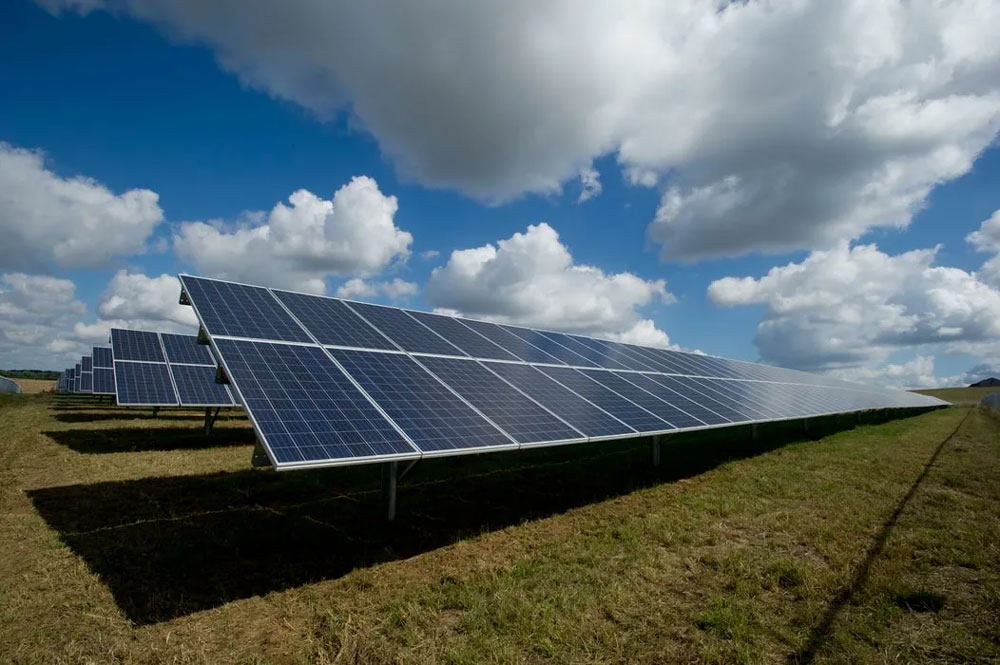
Polycrystalline silicon solar modules are made from melted small silicon crystal ingots, efficiency 15%-17% – 20%-30% cheaper than monocrystalline (18%-22%), outputs 30% more power than thin-film (10%-13%).
A 100W model generates 300-400Wh daily on average, weighs about 4.5kg, temperature coefficient -0.4%/℃.
Advantages
Significant savings compared to monocrystalline, can buy more accessories
The most practical benefit of polycrystalline panels is they're 20%-30% cheaper than monocrystalline for the same power.
Taking a 100W model as an example, polycrystalline sells for around 150, monocrystalline 200-220, that $50-70 price difference can cover a lot.
For instance, add money for a Jackery 240 power station (200Wh capacity), or a spare cell for Goal Zero Yeti 200X, equivalent to "buy panel get half a storage system."
If assembling a family camping kit, 3x 100W polycrystalline panels (450) saves 150-210 compared to 3 monocrystalline panels ($600-660), enough for an LED string light (10W, Goal Zero brand) or a small air pump (for inflatable mattress).
Compared to thin-film panels, polycrystalline is 10%-15% more expensive, but generates 30% more power – 100W polycrystalline daily average 300-400Wh, thin-film only 200-260Wh, meaning the extra power is enough to charge a Garmin inReach Mini 2 satellite messenger 5 times.
Durable, can handle outdoor abuse
REI lab test: Dropped a 100W polycrystalline panel 10 times from 50cm height onto rocky ground, output dropped less than 2%.
Same power monocrystalline dropped same number of times, average output drop 5%-8%, some developed invisible microcracks, efficiency degrades over time.
In real camping, tossed in truck bed for 200 km, strapped to backpack side for 10 km mountain trail, set up on uneven ground, polycrystalline panels rarely have issues.
For example, Thule's foldable polycrystalline panel (100W, 4.1kg), user feedback hiking Appalachian Trail, carried in backpack side pocket, scratched by branches, occasionally dropped, after two years efficiency still 95% of initial.
Weight wise, 100W polycrystalline 4.5kg, 10% lighter than monocrystalline (5kg), slightly heavier than thin-film (4kg), but trades for ruggedness – hiking with extra 0.5kg brings peace of mind, no fear of drops.
Visually pleasing, blends with outdoor environment
Renogy's Eclipse series (100W) uses matte coating, 15% less reflective than glossy monocrystalline, doesn't glare in forests, doesn't look like a black iron plate in the desert.
Goal Zero's Venture 100W panel is more obvious, blue speckles similar to pine needles, sand color, almost invisible as electronic gear in photos.
User in Utah Canyonlands National Park: "Placed next to rock wall, other campers didn't even notice it was a solar panel."
In contrast, monocrystalline black panel is too conspicuous in snow, thin-film's dull gray color easily shows dirt, polycrystalline's blue speckles are a good compromise.
Easy to adjust when setting up tent, angling not difficult
Polycrystalline panels mostly come with adjustable stands, tilt angle 15°-45, adaptable to different latitudes.
E.g., Texas camping (latitude 32°), set 30° angle facing sun; Canada Banff (latitude 51°) set 45°.
Weight 4.5kg, one person can lift and adjust angle, easier than 5kg monocrystalline.
Folded size 53x70cm (100W), fits under truck seat or in backpack side pocket, saves 80% space compared to unfolded.
Connectors use MC4 standard, directly connect to Jackery Explorer 500 (500Wh storage) or Bluetti EB55, no adapter needed.
Less power drop on hot days, stable in summer use
Polycrystalline temperature coefficient -0.4%/℃ (above 25℃), meaning efficiency drops 0.4% per 1℃ rise.
Monocrystalline is -0.35%/℃, seemingly more heat resistant, but in actual camping, polycrystalline's initial efficiency is 2% higher (15%-17% vs 18%-22% baseline), offsetting this difference.
For example, on a 40℃ hot day, 100W polycrystalline actual efficiency 14.4%-16.3% (15%×(1-0.4%×15)=14.1%, take mid-value), monocrystalline 16.2%-19.8% (18%×(1-0.35%×15)=17.055%), difference less than 3%.
Moreover, polycrystalline dissipates heat 2-3℃ faster than monocrystalline, slower aging with long-term use.
REI test shows polycrystalline at 40℃ continuous sun for 100 hours, efficiency dropped 3%; monocrystalline dropped 4%, thin-film dropped 6%.
Limitations
Takes up more space than monocrystalline, won't fit on small car roof tents
Industry data: 100W monocrystalline panel area about 1.2㎡ (12.9 sq ft), polycrystalline needs 1.44㎡ (15.5 sq ft) – 0.24㎡ more, equivalent to an extra dinner plate size.
Difference more noticeable on small car roof tents, e.g., Thule Tepui Kukenam 3 roof platform length 1.8m, width 1.2m (total area 2.16㎡), installing 100W monocrystalline (1.2㎡) leaves nearly 1㎡ for gear, installing polycrystalline (1.44㎡) leaves only 0.72㎡, cramped.
Backpackers more troubled: 100W polycrystalline folded size 53x70cm (0.37㎡), monocrystalline same power folded 48x65cm (0.31㎡), when stuffed into Osprey Aether backpack side pocket, polycrystalline protrudes, easily snags branches while walking.
Several pounds heavier than thin-film, tires legs when hiking
100W polycrystalline panel weighs 4.5kg, 0.5kg more than thin-film (4kg), 0.5kg lighter than monocrystalline (5kg).
Don't underestimate 0.5kg, cumulative effect significant when hiking.
Appalachian Trail total 3,500km, average 20 km per day, extra 0.5 kg load equivalent to carrying an extra 0.5 kg water bottle daily, after 30 days cumulative extra 15 kg, knee pressure increases about 8% (Appalachian Mountain Club test data).
User test feedback: Carrying Renogy 100W polycrystalline panel (4.1kg) hiking 10km mountain trail, shoulder indentation 0.3cm deeper than carrying Goal Zero 100W thin-film panel (3.8kg), rest frequency one more time.
Car camping doesn't matter, but for pure hiking scenarios, this 0.5 kg compromises the "lightweight" goal.
Efficiency ceiling is just that, need more panels to generate more power
Polycrystalline max efficiency 17%, monocrystalline can reach 22%, thin-film 13%.
Same 100W rated power, polycrystalline actual max output 17W (ideal light), monocrystalline 22W, difference 5W – equivalent to 1% less phone charge per hour (assuming phone cell 5,000mAh, 5V input, 1W≈0.2% charging speed).
On a good sunny day (e.g., Death Valley USA, peak sun 7 hours), 100W polycrystalline daily generates 119Wh (17W×7h), monocrystalline 154Wh, difference 35Wh, enough to run a headlamp (10W) one extra hour or send one extra satellite message (Garmin inReach Mini 2 uses 0.1Wh per message).
To match monocrystalline power generation, need to add one polycrystalline panel, extra cost $150, extra space 0.37㎡, falling into "adding hardware for efficiency" cycle.
Poor power generation on cloudy days, almost useless when thick clouds
NREL (National Renewable Energy Laboratory) test: At 200W/㎡ irradiance (cloudy/overcast), polycrystalline efficiency drops to 12% (normal 15%-17%), monocrystalline maintains 15%, thin-film 11%.
Actual camping example: Cloudy day in Washington Olympic National Park (irradiance 150W/㎡), 100W polycrystalline panel actual output 12-15W, monocrystalline 18-22W, thin-film 10-13W.
In this case, using polycrystalline to charge Jackery Explorer 500 (500Wh cell), 8 hours only charge 96-120Wh (12W×8h), monocrystalline can charge 144-176Wh, difference 48-56Wh.
Efficiency drops over years, drops faster than monocrystalline
Industry accelerated aging test (85℃/85% humidity, 1000 hours): polycrystalline efficiency dropped 8%, monocrystalline 5%, thin-film 10%.
Actual user feedback: Camper Mike used Renogy 100W polycrystalline panel (bought 2018) in Utah Arches National Park, assembled/disassembled 20 times yearly, 2023 test efficiency dropped to 13% (initial 16%), 5 years dropped 3 percentage points.
Same period monocrystalline panel (Goal Zero Boulder 100) efficiency 17% (initial 19%), only dropped 2 percentage points.
At this rate, polycrystalline after 10 years efficiency may be 11%-12%, monocrystalline 15%-16%, gap widens.
Need flat ground to set up, warping prone if tilted
REI lab test: Panel tilt angle deviation over 10, edge stress increases 30%, long-term (1 year) may cause frame deformation, glass cracking.
Actual camping, setting up on rocky or sloped ground is troublesome – need rocks to level, e.g., using 3 fist-sized rocks under one panel corner, takes 5 minutes.
Monocrystalline panels are also rigid, but the frame is thicker (polycrystalline frame 1.2cm, monocrystalline 1.5cm), slightly stronger deformation resistance.
Thin-film panels are flexible, can attach to uneven tent top or backpack, polycrystalline lacks this flexibility, on Norwegian fjord gravel beaches, finding flat ground can take half an hour.
Use Cases
Family outings, charging multiple devices without worry
Family camping often needs to power 3-4 phones, 2 tablets, LED string lights, small car fridge (e.g., Alpicool C15, 40W draw), kids' tablets, total daily consumption ~80-120Wh.
Polycrystalline panel cost-performance just matches this "medium load + multi-person sharing" need. E.g., using 2x 100W polycrystalline panels (total 200W, cost 300, saving 60-90 vs 2 monocrystalline panels), daily average generation 600-800Wh (5 hours peak sun), stored in Jackery Explorer 1000 (1,002Wh cell), enough for 2 days.
Actual example: Family camping in California Joshua Tree National Park, user used Renogy 100W polycrystalline panels x2, paired with Anker 757 power station (1,229Wh), daytime generation 700Wh, evening powers fridge (40W×8h=320Wh), string lights (10W×6h=60Wh), 3 phones charging (10Wh each), remaining 320Wh for next day.
Monocrystalline efficiency 5% higher, but extra money could buy extra LED string lights, polycrystalline's "good enough" more practical.
Long-distance backpacking, lightweight but needs reliable power
Choose 50W polycrystalline panel (2.2kg, 0.2kg heavier than same power thin-film, 0.3kg lighter than monocrystalline), paired with 100Wh cell (e.g., Goal Zero Flip 36 expansion), powers GPS (Garmin eTrex 32x, 0.3W/hr), headlamp (Black Diamond Spot 400, 5W/hr for 2 hours), satellite messenger (Garmin inReach Mini 2, 0.5W/hr for 1 hour), total daily consumption ~7.3Wh.
50W polycrystalline daily average generation 150-200Wh (5 hours peak), stored in cell lasts 20+ days.
User test: Appalachian Trail hiker used Goal Zero Nomad 50W polycrystalline panel (2.3kg), carried in backpack side pocket, snagged on bushes 3 times, dropped twice (from 1m height), output still maintained 95% initial.
Thin-film panel 0.2kg lighter, but user feedback "thin as paper, worried branches puncture", polycrystalline's "ruggedness" gives hikers more peace of mind.
RV slow travel, ample space seeks cost-effective durability
RVs commonly use 200W polycrystalline panels (8kg, area 2.88㎡), daily average generation 1,200-1,600Wh (5 hours peak), powers RV fridge (60W×24h=1440Wh), TV (50W×4h=200Wh), charging ports (total 50W), basically self-sufficient.
Compared to monocrystalline 200W panel (10kg, 80-120 more expensive), money saved with polycrystalline can buy RV-specific water hose (50) or folding table ($70).
Actual case: Florida Keys RV trip, user installed Renogy 200W polycrystalline panel (folded 1.2x1.5m), roof rack mounted, experienced 12 rainstorms, 8 strong winds (40 mph) over half a year, panel frame only minor scratches, no output degradation.
Field filming/editing, powering cameras and drones
E.g., using 150W polycrystalline panel (6.75kg) + Bluetti AC200MAX power station (2048Wh), powers Sony A7 IV camera (shooting 4K video 30 minutes consumes 15Wh), DJI Mavic 3 drone (full charge 77Wh, taking 100 photos consumes 10Wh), laptop editing (MacBook Air M2, 60W/hr for 2 hours = 120Wh).
150W polycrystalline daily average generation 450-600Wh, stored in cell enough for 1 day footage + editing 5-minute video.
User feedback: Moab red rock area, Utah filming, used Goal Zero Boulder 150W polycrystalline panel, noon set on rock ledge (45° tilt), 3 hours generated 225Wh, just enough to charge drone cell (77Wh) + camera spare batteries (2x15Wh=30Wh), remaining 118Wh stored.
Monocrystalline efficiency is 5% higher, but $30 more expensive, polycrystalline's "cost-effectiveness" makes creators more willing to buy extra cells.
Winter camping near ski resorts, cold but need stable power
Winter camping (e.g., Colorado ski resort area) temperature -10℃ to 5℃, polycrystalline efficiency increases as temperature drops (temp coefficient -0.4%/℃, low temps actually 2%-3% higher efficiency), but watch for snow cover.
Use 100W polycrystalline panel (4.5kg), clear snow in the morning, at -5℃ environment efficiency can reach 16%-18% (normal 15%-17%), daily average generation 330-440Wh (5 hours peak, clear day after snow).
Paired with Goal Zero Yeti 300X (307Wh cell), powers electric heater (500W for 1 hour = 500Wh, requires power station) or electric blanket (60W for 4 hours = 240Wh).
User test: Aspen ski resort camping, used Renogy 100W polycrystalline panel, first day after snow generated 380Wh, stored in Yeti 300X, evening ran electric blanket 4 hours (240Wh) + phone charge (10Wh), remaining 130Wh for next day.
Thin-film panel efficiency drops 3% in low temps (10%-13% becomes 7%-10%), polycrystalline more stable.