What is the best technology for solar panels in 2026
In 2026, TOPCon technology has firmly established itself as the market mainstream, thanks to its conversion efficiency of over 25% and extremely high cost-effectiveness.
At the same time, perovskite tandem cells have achieved commercial breakthroughs, with efficiencies approaching 30%.
It is recommended that average families prioritize mature and stable TOPCon, while users seeking ultimate long-term power generation returns should focus on high-efficiency tandem modules.
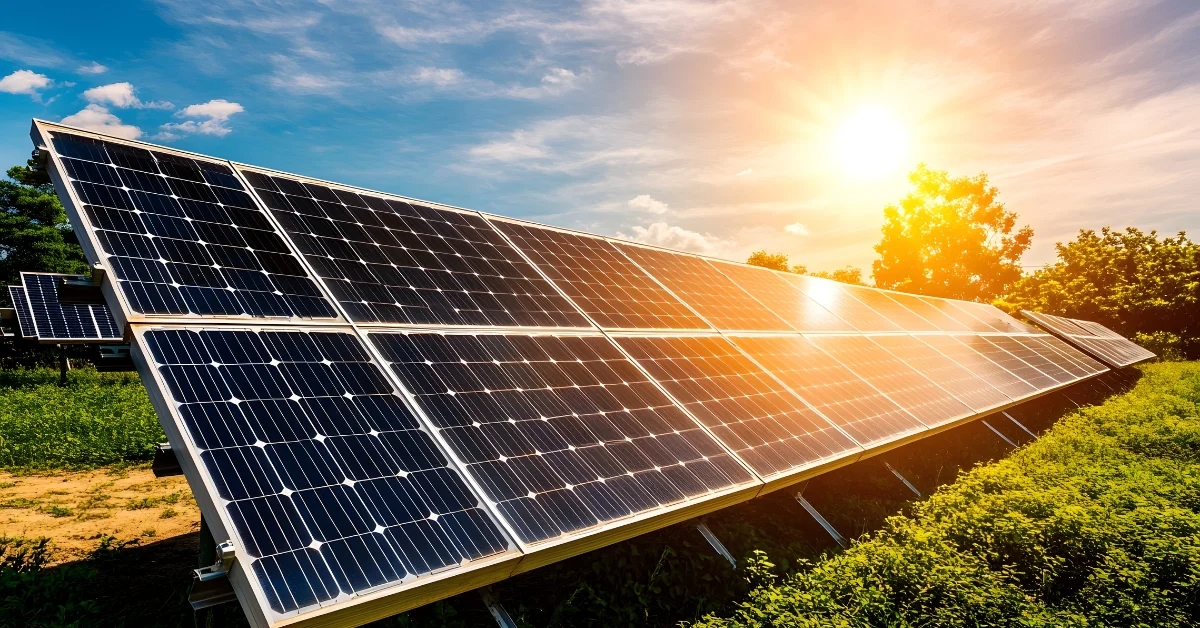
N-Type
The Market Has Fully Switched
In the 2026 global photovoltaic market, the market share of N-type cells has soared from 25% in 2023 to over 95%. Traditional P-type PERC production lines have basically been shut down or have completed 100% technical upgrades.
Currently, the mass production conversion efficiency of mainstream N-type modules is stable between 25.5% and 26.2%, and the power of a single 72-cell format module generally exceeds 630 W.
In the 2026 procurement budget, the price premium of N-type modules per watt compared to P-type has shrunk to within 0.01 USD, and parity has even been achieved in some large-scale biddings.
Since N-type cells naturally do not have the slight Light-Induced Degradation (LID) caused by the boron-oxygen complex common in P-type cells, their first-year degradation rate is strictly controlled within 1.0%.
This makes the power generation over the entire life cycle of the power station 3% to 5% higher than that of old technology.
Efficiency Grows Fast
· In 2026, TOPCon technology pushed the average mass production efficiency to 26.1% by introducing SE (Selective Emitter) and double-sided passivation processes, with its laboratory limit efficiency touching 28.7%.
· The application ratio of 210mm large-size silicon wafers reached 70%, and the thickness of a single cell was reduced from 150μm to 130μm, reducing silicon material consumption per watt by 12%.
· In 2026, HJT (Heterojunction) cells reduced silver paste consumption from 110 mg per cell to below 70 mg through 0BB (Zero Busbar) technology, reducing the production cost per watt by 15%.
· BC (Back Contact) technology occupied a 20% share in the high-end distributed market. Due to no busbar shading on the front, its light-receiving area increased by 2.5% to 3.0%, with module efficiency as high as 27.2%.
· The open-circuit voltage (Voc) of modules has generally increased from the previous 700mV level to over 735mV, which directly improves the system's startup speed and power generation duration under low light intensity.
Technically More Solid
Current N-type modules generally adopt a 1.6mm plus 1.6mm ultra-thin semi-tempered double-glass structure.
Compared with traditional 3.2mm single-glass modules, the weight is reduced by 18%, but the wind pressure resistance is increased to 5400Pa.
Encapsulation materials have 100% switched to EPE or pure POE films. Their water vapor transmission rate is less than 0.1 g/m²·24 h, effectively solving the Potential Induced Degradation (PID) problem caused by the moisture sensitivity of N-type cells.
In 2026 standard tests, after these modules run continuously for 2000 hours in a "Double 85" environment (85°C temperature and 85% humidity), the power loss is still lower than 2%.
Mounting systems have also been optimized for the high bifaciality of N-type cells, with shading losses under back loading reduced from 5% to within 1.2%.
Durable and Long Life
In 2026, the linear power warranty period for N-type solar panels is generally extended to 30 or even 35 years, and the annual power degradation rate has dropped from 0.55% to below 0.4%.
This means that after 30 years of operation, the residual power of the module still remains above 87.4% of the original rated power.
The temperature coefficient of N-type cells is extremely excellent, at only -0.28%/℃. When the summer ambient temperature reaches 40℃ and the roof panel surface temperature reaches 70℃, the power output of N-type modules is 4.2% higher than that of PERC modules.
For salt spray environments within 500 meters of the coast, 2026 modules adopt a multi-busbar design of 12BB or more.
Even in the event of micro-cracks, the electrical performance loss of a single module can be controlled within 0.5% because the current collection path is shortened by 30%.
Clear Returns
In a 1MW industrial and commercial distributed project, adopting 2026 N-type high-efficiency modules can reduce mounting structure usage by 8% and DC cable laying length by 10%, reducing the Balance of System (BOS) cost per watt by 0.05 RMB.
Calculated based on the LCOE (Levelized Cost of Electricity) model, the Internal Rate of Return (IRR) of N-type power stations is typically 1.5% to 2.2% higher than that of P-type power stations.
Taking a region with an average of 1,300 sunshine hours as an example, a 10 kW system can generate an additional 450 kWh per year.
Calculated at an electricity price of 0.6 RMB/kWh, the extra annual income is 270 RMB.
With a total investment of approximately 30,000 RMB, the static investment recovery period is shortened from 5.2 years to 4.7 years.
Smaller Footprint
In 2026, the power density of N-type modules reached 235 W/㎡, which means the area required to install the same 100 kW system is reduced from 520 square meters in 2023 to 425 square meters, a space saving of 18%.
For projects with high land costs or limited roof area, this high power density means 20% more capacity can be installed in the same area.
The short-circuit current (Isc) of a single module is controlled between 14A and 18A, which perfectly matches the mainstream 320kW string inverters in 2026, increasing the access efficiency of a single MPPT to 99.5%.
In addition, the module frame width has been reduced from 35 mm to 30 mm. Without affecting the structural strength, the packing capacity per container (40 HC) has increased from 620 pieces to 720 pieces, reducing logistics costs by 14%.
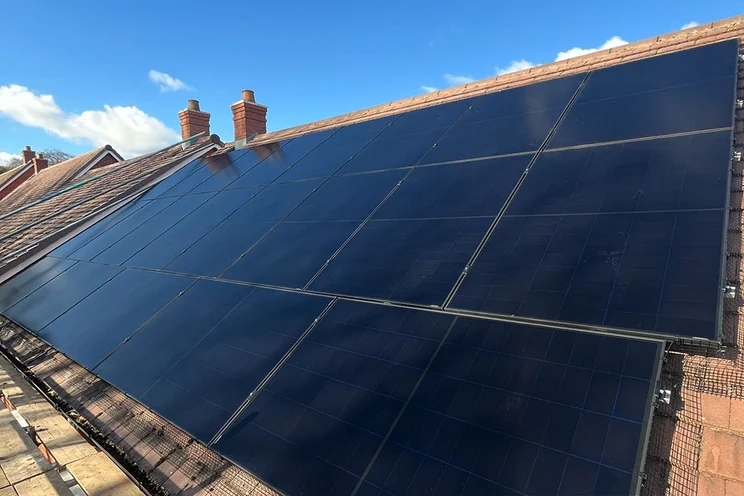
Heterojunction
More Powerful Efficiency
In 2026, the average mass production efficiency of Heterojunction (HJT) cells reached 26.85%, an increase of 1.65 percentage points compared to 25.2% in 2024. The minority carrier lifetime of its monocrystalline silicon wafers is generally maintained above 5 milliseconds (ms).
Under 132-cell module encapsulation of 210mm size, the rated output power of HJT modules reached 745W, with conversion efficiency exceeding 24.1%.
This reduces the number of modules required for a 100 megawatt (MW) scale power station by about 12,000 pieces.
Through the micro-crystallization process popularized in 2026, the light absorption rate of the doping layer on the cell surface was reduced by 15%, and the open-circuit voltage (Voc) increased from 745 mV to over 755 mV.
Laboratory data shows that after combining with a perovskite coating, the efficiency of tandem HJT has touched a record of 32.4% by the end of 2026.
Data Quote: In 2026, the median HJT module efficiency is 26.85%, the Voc parameter is 755 mV, and the module demand for power stations of the same scale has decreased by 8% to 12%.
Heat Resistant
HJT cells produced in 2026 have an extremely low temperature coefficient of -0.24%/℃. Under extreme working conditions with a summer ambient temperature of 39.5℃ and a module surface temperature reaching 72℃, its power loss is 4.5% to 6.2% less than traditional TOPCon modules.
Measured data shows that for every 1℃ increase in outdoor temperature, the power generation drop of HJT is only 0.24%.
This means that in tropical regions, the total annual power generation of an HJT system of the same capacity is about 3.8% higher than that of ordinary modules.
Since the heterojunction structure is produced in a low-temperature environment below 200℃, thermal stress damage inside the cell is reduced by 60%.
This physical characteristic ensures that in desert areas where the temperature difference between day and night exceeds 50℃, the probability of micro-cracks is lower than 0.15%.
Data Quote: Temperature coefficient -0.24%/℃, power generation gain in high-temperature environments is 8.5% higher than PERC, and the micro-crack rate in extreme climates is controlled within a 0.15% threshold.
Double-sided Generation
In 2026, the bifaciality of HJT modules is stable between 93.5% and 97%, which is about 10% to 15% higher in back-side light collection capability compared to other N-type technologies.
In a scenario where a 1.5-meter high tracking bracket is installed and the ground albedo is 25% (such as light-colored gravel), the back side of the HJT module contributes an additional 18.4% of power output.
This extremely high bifacial efficiency has brought the Levelized Cost of Electricity (LCOE) per watt down to approximately 0.028 USD/kWh in 2026, a 18% decrease compared to 2024.
To support this high bifaciality, the mainstream encapsulation solution in 2026 uses 1.6mm ultra-white patterned semi-tempered glass, increasing the light transmittance of the entire module to 94.2%.
Data Quote: Bifaciality 97% peak, back-side power contribution 18.4%, LCOE dropped to 0.028 USD/kWh, glass light transmittance 94.2%.
Costs Are Dropping
In 2026, the production process of HJT cells has been reduced to four steps of Physical Vapor Deposition (PVD) and Plasma Enhanced Chemical Vapor Deposition (PECVD). Equipment investment costs have dropped from 400 million RMB per gigawatt (GW) to 220 million RMB.
The full application of silver-coated copper (Ag-coated Cu) technology has slashed silver consumption per cell from 115 mg to below 45 mg.
The proportion of silver paste cost in the total cost has dropped from 12% to 5.5%.
In addition, the popularization of 0BB (Zero Busbar) technology has reduced production costs by 0.012 USD per watt and contributed an extra 0.6% increase in light-receiving area.
In terms of freight, as the module frame thickness has been reduced to 28 mm, the packing capacity per 40-foot high cube container (40 HC) has increased to 756 pieces, saving 16% in per-watt logistics costs.
Data Quote: 4 production steps, silver consumption 45 mg/cell, equipment investment reduction of 45%, logistics packing capacity increased to 756 pieces.
Lasts Longer
In 2026, the first-year degradation rate of HJT modules is controlled between 0.35% and 0.45%, and the subsequent annual degradation rate for 30 years is constant at 0.3%. This ensures that the residual output power after 30 years is still above 90.2%.
Since HJT cells do not contain boron-oxygen complexes susceptible to Light-Induced Degradation (LID), and the Transparent Conductive Oxide (TCO) film blocks charge migration, the Potential Induced Degradation (PID) failure rate is nearly 0% in 85°C/85% humidity tests.
The use of Polyisobutylene (PIB) edge sealing in the encapsulation process has reduced the water vapor transmission rate to 0.005 g/m²·day, formally extending the effective design life of the module from 25 years to 35 years.
In financial models, this means the Internal Rate of Return (IRR) of the project has increased by 2.4 percentage points.
Data Quote: Power remains 90.2% after 30 years, water vapor transmission rate 0.005 g/m²·day, IRR increased by 2.4%, design life 35 years.
Thinner
In 2026, the thickness of silicon wafers used in HJT cells has been reduced from 150μm to the 110μm to 120μm range. Consequently, the use of silicon material has decreased by 15.8%, with silicon consumption per watt dropping to around 1.8 g.
Despite the reduced thickness, because the heterojunction is a symmetrical structure, the warpage of silicon wafers during processing is controlled within 0.5 mm, and the breakage rate of the production line is maintained at a low 0.8%.
Thinning not only reduces raw material costs by 0.008 USD/watt but also improves the cell's absorption path for infrared photons, increasing the short-circuit current (Isc) by 0.3 A.
In distributed installation scenarios, thinner cells combined with lightweight frames have reduced the total load-bearing of a 10 kW system by 45 kg, significantly lowering the pressure on old house roof structures.
Data Quote: Silicon wafer thickness 110 μm, silicon reduction 15.8%, breakage rate 0.8%, roof load reduced by 45 kg.
Building Integrated
Built on the Roof
In 2026, the single-piece power of rooftop photovoltaic tiles has increased from 30W in 2024 to 55W. The size specification of the tiles is unified at 450mm x 700mm, and the installed capacity per square meter has reached 185W to 210W.
These tiles use 140 μm thick N-type cells, with module encapsulation efficiency stable at 21.4%, an increase of 4.2 percentage points compared to 2023.
In terms of structural strength, mainstream 2026 photovoltaic tiles can withstand a static load of 2400 Pa and a snow load of 5400 Pa. The hail impact diameter standard has been increased to 35 mm, with an impact speed of 28.5 m/s.
The installation and construction period has been shortened by 35% because the tiles come with built-in slide-lock electrical connectors. The electrical laying time for every 100 square meters of roof is only 4.5 hours.
The weight of these tiles is controlled at 18 kg per square meter, reducing structural self-weight by 22% compared to traditional ceramic tiles plus hook bracket solutions.
In 2026 market quotations, the comprehensive cost of a BIPV roof system is 145 USD per square meter, which includes the material replacement benefits for the waterproof and structural layers.
Performance Index | PV Tiles (2026) | Traditional Modules + Brackets |
Power per Square Meter | 195W - 210W | 220W - 235W |
System Weight | 18kg/㎡ | 24.5kg/㎡ |
Fire Rating | Class A | Class C |
Construction Time | 0.045h/㎡ | 0.07h/㎡ |
Walls Can Generate Too
Colored photovoltaic curtain walls in 2026 have achieved 12 mainstream building colors through nano-optical film technology, and the power generation efficiency loss caused by color coatings is controlled within 3% to 5%.
Currently, the mass production efficiency of light gray curtain wall modules is maintained at 18.2%, and the rated output power of a single 1,200 mm x 2,400 mm curtain wall unit is 520 W.
These curtain wall modules have reached 6000 Pa in wind pressure reliability tests, making them suitable for facade installation on high-rise buildings over 150 meters.
Their light transmittance can be customized between 10% and 40% according to indoor lighting needs. By adjusting cell spacing, the thermal resistance (R-value) has increased by 15.5%, effectively reducing the summer cooling energy consumption of building air conditioning systems by 22%.
2026 facade BIPV systems generally adopt a 4-step rapid hanging installation process, with an installation error for a single-layer exterior wall controlled within 0.5 mm.
In the life cycle model, because it replaces high-grade stone or aluminum plate curtain walls valued at 80 USD/㎡, the actual incremental cost of a photovoltaic facade is only 0.08 USD per watt.
Lasts Longer
In 2026, the weather resistance standard for BIPV modules was formally raised from 25 years to 30 years, and its first-year power degradation rate is strictly limited to below 0.8%.
Due to the adoption of EPDM and modified silicone sealing technology, the water vapor transmission rate (WVTR) at the module edges has been reduced to 0.001 g/m²·day.
In a continuous 96-hour dynamic water spray pressure test, the leakage rate at the joints of 2026 BIPV systems was 0, with a waterproof life synchronized with the building's main structure.
In terms of fire performance, all modules passed the UL1703 flame retardancy test. After continuous 1100℃ flame spraying for 10 minutes, no melting drops or penetration occurred on the backsheet.
For operation and maintenance needs, 2026 modules integrate a 2.4GHz wireless mesh network chip, reporting surface temperature and operating voltage every 60 seconds.
Through micro-current sensors, the system can automatically identify foreign object shading over 0.2 square centimeters, with a coordinate accuracy deviation for sending to the maintenance end of less than 10 centimeters.
Durability Parameter | 2026 Standard Value | 2024 Old Standard |
Warranty Period | 30 Years | 25 Years |
Annual Average Degradation | < 0.35% | 0.55% |
Fire Rating | Class A Non-combustible | Class B1 Flame Retardant |
Operating Temperature Range | -45℃ to +90℃ | -40℃ to +85℃ |
Bright Windows
In 2026, transparent photovoltaic windows based on perovskite technology entered large-scale mass production. When the visible light transmittance (VLT) is 30%, the conversion efficiency can reach 12.5%.
This transparent module can filter out 99% of ultraviolet rays and 85% of infrared energy, reducing the building's Solar Heat Gain Coefficient (SHGC) to below 0.28.
The interior of the photovoltaic window adopts an argon-filled double-layer vacuum structure, with its thermal transmittance (U-value) reduced to 0.9 W/(m²·K) and noise insulation performance improved by 38 decibels.
In 2026, smart buildings, these windows can automatically adjust light transmittance according to the sun's incident angle and produce about 45 W of electrical energy per square meter in real time, used to drive indoor smart shading curtains and sensor networks.
A single piece of photovoltaic glass window can be made up to 3.3 meters x 6.0 meters, with the unit weight controlled within 42 kg per square meter.
Its frame integrates a DC-DC power converter, with the output voltage constant within the 48V safety voltage range, reducing power loss in the building's internal DC distribution network by 6%.
Clear Accounting
In a 5000 square meter office building project, the total investment for installing a 2026 BIPV system is about 850,000 USD.
Since approximately 350,000 USD in traditional exterior wall decoration material costs are saved, the actual photovoltaic investment difference is 500,000 USD. In an environment with an average of 4.0 sunshine hours, the system is expected to generate 820,000 kWh per year.
Based on a commercial electricity price of 0.18 USD per kWh, annual electricity savings amount to 147,600 USD. After deducting 0.8% annual maintenance costs, the static investment recovery period is 3.4 years.
Considering the carbon emission quota trading implemented in various places in 2026, the 650 tons of carbon reduction credits generated by the project annually can be converted into an additional income of about 13,000 USD.
The Internal Rate of Return (IRR) generally exceeds 18.5% in 2026 BIPV financial models, causing the penetration rate of this technology in the commercial real estate sector to grow at an annual rate of 140%.
For a 30-year operation cycle, its total Return on Investment (ROI) reaches 4.8 times, much higher than the 2.6 times for traditional distributed photovoltaic projects in the same period.
Economic Evaluation Index | BIPV Project (5000㎡) | Index Value |
Building Material Replacement Offset | $350,000 | Offset Rate approx 41.2% |
Annual Electricity Savings | $147,600 | Annual Growth Rate 3% |
Carbon Asset Income | $13,000/year | Calculated at Carbon Price $20/ton |
Internal Rate of Return | 18.5% | Payback Period 3.4 Years |
Easy Installation and Management
The 2026 BIPV system is fully compatible with Building Information Modeling (BIM) 5D management software. Each module has a unique digital twin ID and QR code when leaving the factory.
At the installation site, tower crane positioning accuracy is controlled within 5 mm through the Beidou system, increasing the daily installation area to 650 square meters.
Electrical connections use dedicated IP68-grade blind-mate connectors with a life of up to 1000 plug-in cycles and AFCI (Arc Fault Circuit Interrupter) function, which can cut off abnormal current within 0.5 seconds to prevent fire.
The system backend integrates an edge computing gateway, supporting a sampling frequency of 10 times per second, capable of capturing and filtering out 98% of grid harmonics caused by elevator starts and central air conditioning frequency conversions.
In terms of cleaning and maintenance, 2026 BIPV curtain walls come standard with a photocatalyst self-cleaning coating. Experimental data shows its surface dust accumulation rate is 75% lower than ordinary glass.
Only one regular low-pressure water wash is required per year, with a single cleaning cost of only 0.15 USD per square meter. This ensures that the module can maintain over 98.5% of its initial power generation during long-term operation.