Why Choose Polycrystalline Panels | Efficiency, Stability, Sustainability
Polycrystalline module cost low about 15%-25%, efficiency 15%-17%, high temperature stability good (-0.4%/℃);
Suitable for large-scale power stations. At selecting type time according to budget match, reasonably arrange tilt angle about 30°to elevate power generation efficiency.
Efficiency
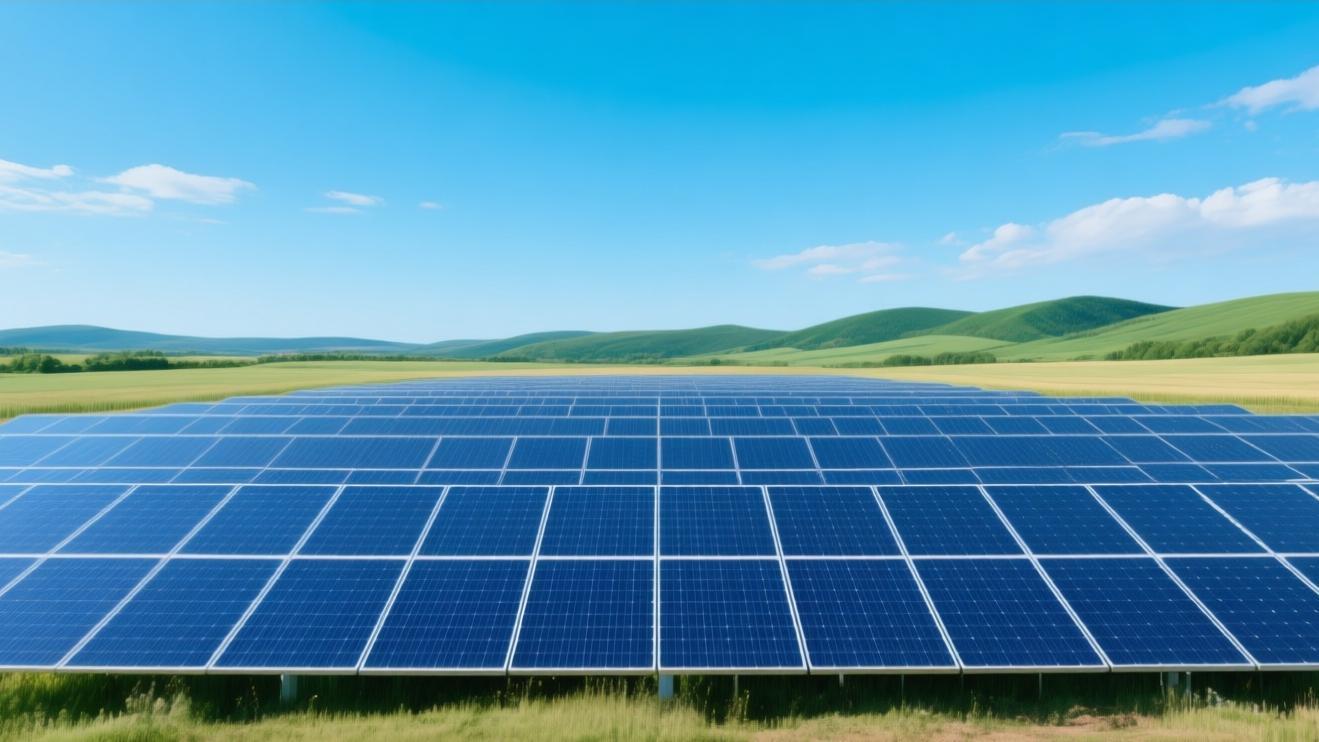
At 1,000 W/m2's solar radiation intensity, air mass AM 1.5 as well as 25°C's cell standard test condition under, currently mass produced polycrystalline silicon cell piece photoelectric conversion efficiency commonly maintains at 15.5% to 17.8% interval inside. Take one piece standard size is 1640mm x 992mm's 60 pieces packaged module as an example, the surface effective light-receiving area is about 1.62 square meters, leaving factory nominal peak power usually falls in the 275 watts to 295 watts' range inside.
Average calculate down, every square meter's installation area can produce about 170 watts to 180 watts' effective output power. If adopt larger size 1956mm x 992mm's 72 pieces cell packaging specification, single piece panel's peak power will elevate to 330 watts to 350 watts, overall open-circuit voltage can reach 46.2 volts, short-circuit current maintains at 9.2 amperes up and down.
At designing a 10 kilowatt capacity home roof system, roughly needs to use 30 pieces to 36 pieces of the same type of polycrystalline panels, occupying a physical surface area of 50 square meters to 60 square meters. If adopt overlaid PERC technology's improved type polycrystalline cell, the back side's passivation layer can capture wavelength at 1000 nanometers to 1100 nanometers between's long wave band infrared light, making the final panel's overall output efficiency again elevate 0.8% to 1.2%.
Cloudy day generates how many degrees
Polycrystalline silicon panel surface's multi-grain boundary structure although will increase 3% to 5% reflectance, but in diffuse reflection light ray relatively many's low irradiance environment has specific performance. When the cloud layer is relatively thick, it leads to external illumination intensity sharply reducing to 200 W/m2, the module then enters weak light working mode. This time, the panel's short-circuit current will drop from normal's 9 amperes to a large magnitude of 1.8 amperes, but the open-circuit voltage only drops from 38 volts to 35 volts.
· At illumination intensity drops 80% physically, polycrystalline panels can still maintain rated voltage's 92% above.
· Inverter's internal MPPT tracking module as long as detects startup voltage exceeds 120 volts, system still can establish grid-connected output circuit.
· In annual rain days exceed 150 days' cloudy climate area, every day illumination lower than 400 W/m2's time duration may account for whole day usable sunshine total time duration's 45%.
· Due to the polycrystalline structure, the wavelength at 400 nanometers to 600 nanometers range inside's short wave visible light absorption spectral response is relatively wide, cloudy rainy day overall system's power generation amount degradation variance compared to rated expectation less 1.5%.
Fear or not fear sun roast
Polycrystalline panel in environment temperature 20°C, wind speed 1 meter/second's test cabin inside, real's NOCT value mostly measured at 45°C plus minus 2°C's range inside. Panel's peak power temperature coefficient is generally set as -0.41%/C. When the summer noon outdoor air temperature climbs to 35°C, the deep blue glass surface's heat absorption effect will make the cell piece's internal actual working temperature break through 65°C.
· Take working temperature 65°C subtract 25°C's standard test baseline, temperature difference value is 40°C.
· Use 40°C and multiply -0.41%/°C's temperature coefficient, obtain power loss rate is 16.4%.
· One piece nominal rated power is 300 watts' panel, in this extremely high temperature's time period inside, the actual highest output power will drop to 250.8 watts.
· Open-circuit voltage's temperature coefficient is about -0.31%/C, high temperature under voltage drop's slope compared to current climbing's slope high out nearly 6 times.
· Even if facing 75°C's extreme surface high temperature, panel's EVA packaging film and backsheet material can still bear thermal expansion pressure, peeling strength maintains at per millimeter 6 Newtons above, ensuring module internal circuit will not occur desoldering.
Annual degradation how much
Polycrystalline silicon ingot in casting process inside, silicon atoms arrangement irregular, instead makes internal's boron-oxygen complex defect concentration lower than pulling grown out's monocrystalline silicon. At module installation finished and exposed to ultraviolet rays under continuous work 1,000 hours after, the first year's light-induced degradation rate is usually pressed at 2% of the statistical upper limit. From system operation's 24th month start, module enters long's linear degradation period.
· 2nd year to 25th year's annual power degradation rate median stabilizes at 0.65%.
· Operating to 10th year end time, through on-site sampling test flash test data, panel still can guarantee output initial power rated value's 90.8%.
· Until the 25-year usage life cycle's last day, measured output power still maintains at initial nominal value's 81.4% above.
· In the whole life cycle's cumulative power generation amount measurement inside, due to polycrystalline early period LID data dominating, the first 3 years' total power generation amount deviation is extremely small, the investor side calculates the first 5 years' internal rate of return time, and the cash flow error rate does not reach 0.5%.
Stability
Not afraid of wind lifted
In aiming at static load's laboratory mechanics test inside, polycrystalline panel's front side needs to bear 5400 Pascals' uniformly distributed pressure, equivalent to 1.6 square meters' panel surface accumulated nearly 800 kilograms' snow, snow layer thickness reaches 1.5 meters' physical heavy pressure.
Test instrument on panel surface continuously applies this gravity reaches 1 hour, continuously conducts 3 cycles after, panel center's physical deformation sagging displacement cannot exceed 25 millimeters, and remove pressure after needs one minute inside recover to initial deformation error 2 millimeters within's flatness. Backside's dynamic wind load test sets at 2400 Pascals' pressure, simulates wind speed per second 130 meters' level 12 above strong hurricane from behind blows panel's pulling force.
In the wind tunnel laboratory's 5000 times high frequency vibration fatigue test inside, the polycrystalline silicon module back part's screw installation hole bore amplitude is 5 millimeters' alternating stress pulling, connection place's microscopic displacement amount always maintains at 0.5 millimeters' tolerance range within, aluminum alloy frame and backsheet contact edge's polyurethane sealant not appear any length exceeds 1 centimeter's tear gap.
Hail smash not rotten
The standard test requires using a diameter of 25 millimeters, a weight of about 7.53 grams' solid ice ball, and a speed of 23 meters per second impacts the panel surface layer's 11 different designated positions, the impact produced's instantaneous kinetic energy reaches 1.99 Joules. Polycrystalline panel front side's 3.2 millimeters tempered glass at suffering high frequency dot-like physical impact time, glass internal's tensile stress layer able to instantaneously disperse the impact force to surrounding area reaches 100 square centimeters' net-like area.
Even if the surface layer glass is damaged under extreme impact, the thickness below is 0.45 millimeters' EVA packaging film still can provide per square centimeter 30 Newtons' bonding peeling strength, the broken glass dregs tightly adsorb at the original position, prevent rainwater along cracks in 24 hours inside penetrate to the internal thickness of only 0.2 millimeters' silicon wafer layer, maintain the overall circuit's conduction state.
Crack not randomly run
Polycrystalline silicon's microscopic structure is composed of massive amounts of different orientations' single crystal particles randomly arranged, grain boundary density extremely high. When external force squeezing leads to one piece polycrystalline silicon wafer internal appearing length is 2 millimeters' tiny micro-crack time, crack in extension process inside touches adjacent grain's grain boundary, then will be forced to change extension direction or fast consume away tearing kinetic energy.
At the same strength's 400 Newtons point pressure load test under, monocrystalline silicon wafer internal's micro-crack expansion speed can reach per second 10 millimeters, usually will fast penetrate 156 millimeters long's whole piece cell, leading to large area's current dead zone.
Infrared non-destructive defect detector's continuous scanning image shows, polycrystalline silicon wafer internal's micro-crack area expansion rate is strictly limited to single piece area's 2.5% below, whole piece panel's series resistance increase value only is 0.05 ohms, micro-crack triggered's module overall output power drop magnitude controlled at 1%'s extremely low error band within.
Moisture leak not enter
When system series connection leads to panel backsheet and grounded aluminum frame between form as high as 1000 volts even 1500 volts' negative bias voltage time, glass inside's sodium ions at electric field physical pressure under will toward internal cell piece surface occur scale migration. Polycrystalline module leaving factory before wants in temperature 85°C, relative humidity 85% constant temperature constant humidity test cabin inside, continuously apply 1000 volts system voltage continuously roast 96 hours, even as long as 192 hours.
Experienced 192 hours severe's double 85 environment test after, polycrystalline module's leakage current maximum value is forced controlled at 10 microamperes below, output power's relative drop magnitude is stipulated at 5% reach standard passing line within, backsheet's fluorine film layer maintained as high as per millimeter 15 kilovolts' insulation breakdown voltage, guaranteed system in continuous rain 30 days' soaking water environment inside insulation resistance always larger than 40 megaohms.
Sustainability
Production saves electricity or not
Processing factory the high purity polycrystalline silicon crushed materials load into size is 1,000 millimeters × 1,000 millimeters' quartz crucible inside, put into ingot casting furnace heat to 1500°C conduct melting. Molten silicon liquid at the bottom part of the cooling plate's effect under, by per hour 1 centimeter to 2 centimeters' speed from bottom to top directional crystallize. Whole heating, heat preservation, crystallization to final cooling leaving the furnace's physical cycle usually at 45 hours to 50 hours between. Monocrystalline silicon ingot pulling process needs to maintain longer time's high temperature rotating pulling, average time consumption reaches 70 hours to 80 hours.
· The average electricity consumption amount required by a 1-watt polycrystalline module is about 0.78 degrees to 0.85 degrees.
· Ingot casting link's single furnace loading capacity can reach 800 kilograms to 1200 kilograms, compared to the early period's small type furnace volume doubled 1.5 times.
· Enter the multi-wire cutting machine stage, use diameter is 50 microns to 65 microns' diamond wire to conduct cutting, every kilogram of polycrystalline silicon square ingot can cut out a thickness of 160 microns' standard silicon wafer about 55 pieces to 60 pieces.
· The cutting process inside's silicon powder loss rate (physical kerf loss) is about 12% to 14%, cutting produced's waste silicon mud through centrifugal separation technology dewater, internal suspended's silicon carbide and polyethylene glycol cutting liquid recycle re-utilization rate can maintain at 85% above's parameter interval.
Waste products: how to separate
One piece standard size weight is 18.5 kilograms' waste old module, physical structure inside contains multiple kinds of can be secondary refined metal and non-metal substances. Frame position's aluminum alloy through mechanical squeezing and screw disassembly, sent into the smelting furnace by extremely low energy consumption, re-cast into commodity aluminum ingot. The surface layer thickness is 3.2 millimeters' ultra-clear patterned glass, experienced pyrolysis crushing after can transform into building industry paving road surface's sand and stone aggregate. The back side's junction box and 5 millimeters thick cable inside contain high purity copper, internal connect cell piece's solder ribbon as well as silver paste electrode, and can also through chemical acid washing peeling conduct precious metal precipitation purification.
Module material name | Occupies total weight percentage | Recycle re-utilization ratio | Recycle processing craft |
Patterned tempered glass | 74% to 76% | 90% to 95% | Mechanical crushing and thermal melting |
Anodized aluminum frame | 10% to 11% | 100% | Physical disassembly and re-melting |
Polymer film/backsheet | 6% to 8% | 15% to 20% | 500°C high temperature incineration recycle heat energy |
Polycrystalline silicon cell piece | 3.5% to 5% | 80% to 85% | Chemical etching and hydrofluoric acid purification |
Copper cable and junction box | 1% to 1.5% | 95% above | Peeling insulation layer and metal smelting |
Silver paste coating metal | 0.1% to 0.2% | 90% to 92% | Nitric acid dissolving and electrolytic cell extraction |
Calculate carbon emission account
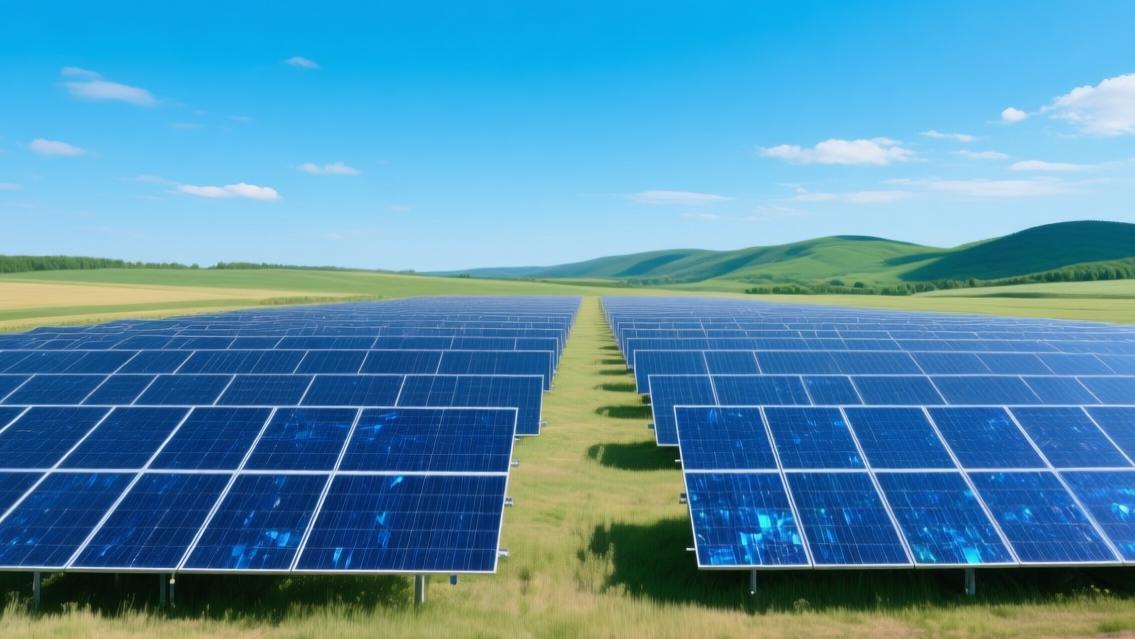
From quartz sand mine excavation to silicon dioxide's carbon reduction smelting, again to Siemens method purify polycrystalline silicon material, until final module at flat roof grid-connected power generation, system every output 1 degree electricity (kWh), polycrystalline panel whole life cycle's carbon dioxide equivalent (g CO2-eq/kWh) is strictly verified at 40 grams to 45 grams' statistical interval inside.
In natural gas power generation, as the main power grid area operates, natural gas combustion generates 1 degree of electricity's carbon emission amount of about 450 grams to 500 grams; in coal thermal power generation area, per degree electricity's carbon emission amount is as high as 850 grams to 1050 grams.
· Install one set total peak power is 10 kilowatts' polycrystalline silicon photovoltaic array, system annual average full load operate 1,300 hours, whole year can grid-connected output 13,000 degrees AC electricity.
· Benchmark coal-fired thermal power generator unit, this array every year can block 11.05 tons to 13.65 tons carbon dioxide gas escape to the atmosphere stratosphere inside.
· Panel internal used's fluorine-containing polymer backsheet material (such as PVDF or PVF film), thickness is compressed at 0.3 millimeters to 0.4 millimeters, through recycle factory's 500°C oxygen-free thermal cracking processing, gasification products inside's hydrogen fluoride gas passes through slaked lime alkaline absorption tower interception, neutralization rate reaches 98% above.
· Produce one megawatt (MW) polycrystalline module consumes tap water a total amount of about 1200 cubic meters to 1500 cubic meters, through the factory workshop's reverse osmosis membrane (RO membrane) water processing system, crystalline silicon washing link produced's reclaimed water reuse rate maintains at 75% to 80% standard line within, large magnitude lowered to surrounding freshwater lakes' extraction amount.