How Much Power Does a Small Solar Panel Produce | Output Capacity, Conditions
Small solar panel power generally 10–100W, under standard light 1,000W/m² output stable;
Actually by weather, angle influence relatively large.
When installing should tilt toward south 30–40 and maintain clean to increase power generation efficiency.
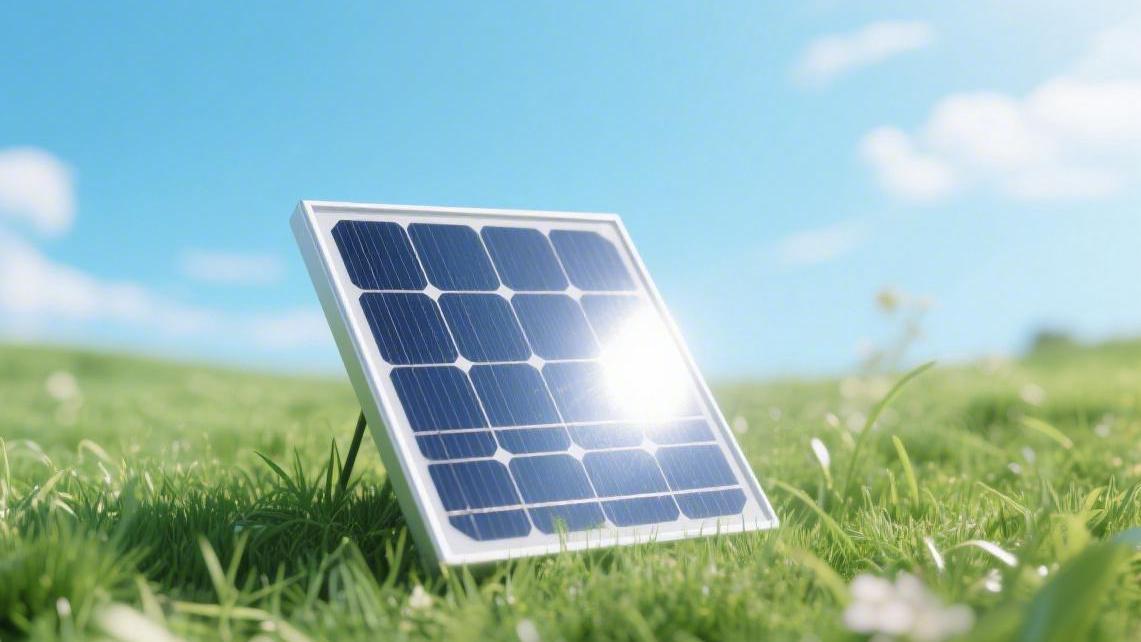
Output Capacity
Exactly how much can generate
In actual outdoor exposure, because of sunlight penetrating the atmosphere, your 100W panel's real-time output power usually swings between 75W and 85W, able to reach nominal value 90% above only in situations where whole day sunshine time occupies 15% around. If you are using a 12V system, the panel working voltage (Vmp) is generally at 18V, the working current (Imp) is then at 5.5A up and down, these two values multiplied give 99W, which is the ideal status under peak, but actually limited by the controller's PWM or MPPT conversion mechanism, you finally charge into the cell power usually will exist 5% to 20% conversion loss.
When evaluating output capacity, must consider photoelectric conversion efficiency this core value. Currently, the market mainstream small monocrystalline silicon panel efficiency is generally between 20.5% and 23.2%. For even smaller 50W panel, every day in effective sunshine 4.5 hours region, it can steadily produce 225Wh energy, deducting system self-consumption and 3% line pressure drop, the actual available electricity is about 200Wh, which is enough to let one 10W LED monitoring camera work continuously for 20 hours.
Conversion rate high or low
Monocrystalline silicon panel conversion rate than polycrystalline silicon high about 3% to 5%, in producing the same power premise, monocrystalline panel laying area can shrink 15%. One piece 100W monocrystalline panel produces electricity every day than the same specification polycrystalline panel more about 30Wh to 50Wh. We need to pay attention to the cell cell busbar quantity, 9 busbar (9BB) cell cell than 5 busbar (5BB) resistance loss reduced by about 1.5%, able to lift about 2W rated output. Encapsulation layer used low iron tempered glass possesses 91.5% above light transmittance. If the glass surface has 1 mm of accumulated dust, it will lead to an instantaneous power drop of 7% to 12%. Therefore, regular cleaning can let your investment return rate lift about 10%.
When the panel surface temperature from 25°C rises to summer rooftop common 65°C time, panel's actual output power will directly shrink 15.6%. One 100W panel in extreme heat at noon can probably only run at 84W level. In order to deal with this heat loss, when installing, you must reserve 5 cm to 10 cm back ventilation gap. This can help the panel cool down 5°C to 10°C, thereby finding back 2% to 4% power loss. In high altitude regions, although air temperature low helps maintain a 23% high conversion rate, but ultraviolet intensity increase 10% will also accelerate encapsulation materials (such as EVA film) aging, leading to 20 years later power degradation rate reaching 20% around.
Size and current
For 10W to 30W micro panels, its output current is usually only 0.5A to 1.6A. This magnitude level panel is mainly used for 12V storage cell float charge maintenance, preventing cells from self-discharge because of monthly 3% to 5% and loss power damage. If you want to drive 5V USB equipment, you must go through a DC-DC buck module, the conversion process inside efficiency is about 88% to 92%. A 30W panel under ideal light can provide about 1.66A current, full charging a 10,000mAh (about 37Wh) power bank theoretically needs 2.5 hours, but considering the power bank's internal protection circuit current limit, actual time consumption is usually around 4 hours.
In 100W panel applications, the open circuit voltage (Voc) is usually set at 21V to 24V, this is in order to ensure that even in light relatively weak early morning or evening, the voltage is still higher than the 12V storage cell charging threshold (about 13.8V). This voltage margin design guarantees that the panel has 80% sunshine time periods inside all can perform effective charging. The connecting wire wire diameter specification is also extremely important. Using 14 AWG copper wire when transmitting 5 A current, every 10 meters loss about 0.26 V, occupying system voltage 2%, if you are greedy for cheap, change to 18 AWG thin wire, loss will soar to 6% above, this is equivalent to throwing away 6 W of power generation.
Cell store how much
100W panel in sunshine can produce about 400Wh of energy in one day, if matched with one 12V 40Ah (capacity is 480Wh) lithium cell, charging depth (DOD) reaching 80% needs about 4.5 to 5 hours. Lithium cell charging efficiency is high at 98%, while traditional lead-acid cell is only 80% around, using lead-acid cell time, your panel output will have 20% wasted on cell internal heating reaction.
Using a 30 RMB around PWM controller, the panel voltage will be forcibly pulled down to cell voltage, leading to 30% around power loss. While using a 150 RMB above MPPT controller, it can through buck-boost current technology, transform 18V working voltage into the most suitable for cell charging current, power generation utilization rate lift 25% to 30%. In high latitude regions, the winter sun's height angle is low, and light intensity weakens 40% above. At this time, the MPPT controller's optimization algorithm can help you extra squeeze out 15W to 20W power. This in daily only 3 hours of effective sunshine appears especially precious.
Degradation slow or not
First year degradation rate (LID, Light Induced Degradation) is usually around 2% to 3%, this is mainly silicon wafer internal impurities under light chemical reaction caused. After that 24 years inside, linear degradation rate roughly controlled at every year at 0.45% to 0.55%. 10 years later, your 100W panel capacity can still maintain at 94W around, to year 25, output power still has a nominal value of 80% above.
High quality small panels will adopt anti-PID cell cells and high insulation performance encapsulation backsheet, controlling leakage current in microampere level. If the backsheet appears 0.5 mm scratch, moisture penetration will lead to internal circuit corrosion, making power in just 2 years inside drop 30% above in just two years. In addition, the bypass diode configuration is also extremely key. A 100W panel usually has 2 diodes. When 50% of the panel's area is shaded by tree shade, the diode can guide current bypass the shaded region, preventing the "hot spot effect" produced by local 100°C above high temperature burning cells, and ensuring that the remaining 50% area can still stable output 40W to 45W electricity.
Angle's influence
In the northern hemisphere, toward panel toward true south and set 35 degrees tilt, than flat installation whole year total output needs high 15% to 20%. If using manual adjustment bracket, according to season, adjust the angle every 3 months (summer latitude minus 15 degrees, winter plus 15 degrees), can extra obtain 5% energy gain. For mobile camping users, tracking the sun angle can let a 100W panel daily total power generation from 350Wh lift to 500Wh, efficiency lift close to 40%.
ly need to calculate is system comprehensive efficiency (PR value), usually between 70% to 80%. This includes shading loss (3%), dust loss (5%), cable loss (2%), controller loss (5%), and cell chemical efficiency loss. When you plan an off-grid system, you must have power equipment on a power basis inside reserve 25% to 30% redundancy. If you need 300Wh of electricity every day, configuring one 100W panel in most sunshine conditions is barely enough, but considering a 20% rainy day probability, suggest lifting panel power capacity to 150W or increasing one piece 50Ah spare cell, so as to ensure system 365 days continuous power supply reliability.
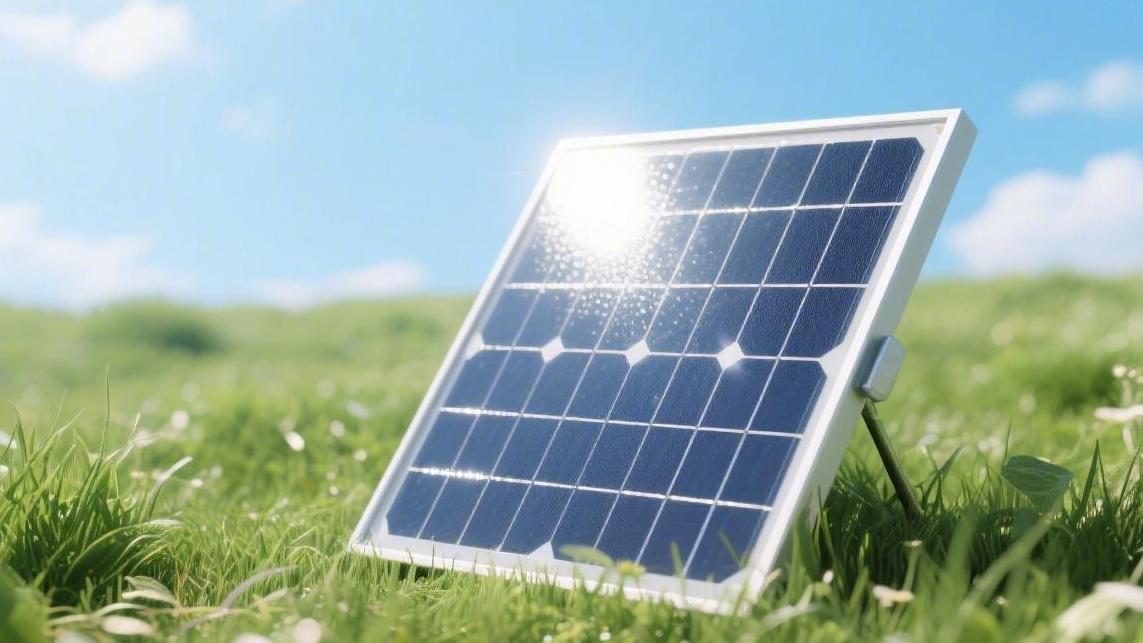
Conditions
Encountering bad weather
Solar panels' output capability completely relies on light irradiance, manufacturer-calibrated 100W rated power is per square meter 1,000W standard light intensity under measured. In reality, even if it is thousands of miles away without clouds, on a sunny day, the panel's real-time output power usually stays in the 80W to 95W interval. Once the sky inside appears cloud layer, light from direct light becomes scattered light, irradiance will happen a violent cliff-style drop.
· Thin cloud weather: One piece 100W panel working current (Imp) will drop from ideal 5.5A to 2.5A to 3.5A, real-time output power hovering between 45W and 60W, basically can maintain small electronic equipment continuous charging.
· Medium cloudy: Monocrystalline silicon panel output power usually only remains nominal value 20% to 25%. At this time, a 100W panel can only provide 20Wh to 25Wh of energy, filling one 5,000mAh power bank needs to consume 8 hours above.
· Heavy rain: Photon energy even cannot penetrate panel surface low iron tempered glass excites enough electrons, output current weak to only have 0.2 A to 0.5 A. Most panels at this time open circuit voltage (Voc) will drop below 15V, completely unable to trigger the 12V storage cell charging controller starting threshold, system power generation amount tends to 0.
Light environment status | Surface light irradiance ($W/m^$2) | 100W panel predicted output (W) | Predicted working current (A) |
Standard Test Condition (STC) | 1000 | 100 | 5.5 |
Sunny without clouds (Noon) | 850 - 950 | 85 - 95 | 4.8 - 5.3 |
Thin cloud / Light haze | 450 - 600 | 45 - 60 | 2.5 - 3.4 |
Thick cloudy | 200 - 300 | 20 - 28 | 1.1 - 1.6 |
Heavy rain / Extreme dark cloudy day | 50 - 100 | 0 - 5 | 0.1 - 0.4 |
Trouble caused by temperature
Factory parameter card on data established on 25°C cell cell temperature benchmark. The panel absorbing light energy at the same time will also absorb huge heat energy, in ambient air temperature reaching 35°C in a hot summer, the panel surface temperature will soar to 65°C to 75°C.
When the ambient temperature drops to -10°C, the panel temperature is lower than the benchmark 35°C, its open circuit voltage will accordingly climb 10.5%. One piece regular Voc as 22V 100W panel, in ice sky snow ground inside probably will output 24.3V high voltage. If combining multiple small panels in series for use, accumulated abnormal high voltage has the risk of exceeding the MPPT controller's maximum input voltage threshold (for example, 50V or 100V), which is extremely easy to lead to circuit breakdown.
How much shading hurts
Small solar panels are usually made by 36 pieces or 72 pieces monocrystalline silicon cell cells through series circuit welding. Series circuit physical characteristics determined whole piece panel current output limited by performance worst that one piece cell. One piece tree leaf falls on panel, or one section utility pole shadow projected over, even if only shaded panel total area 5%, all will let whole circuit current flow receive obstruction. Shaded cells from power generating bodies instantaneously become power consuming resistors. Not only will other cells send out electric energy, transform into heat, quantity consume away, but will also let this 100W panel total output instantaneously plummet 40% to 60%.
· Local shading shadow: For example, one antenna thin long projection cut off among them one row of cells, because not triggering bypass diode (Bypass Diode), overall current greatly limited, output power probably from 80W drop to 30W.
· Hard shading objects: Such as bird droppings or non-transparent heavy dirt covering one certain piece of cell, triggering local heat quantity rapid accumulation. Local temperature probably within 10 minutes will probably break through 100°C, long-time roasting will lead to bottom EVA film yellowing and deteriorating, producing irreversible physical damage, panel service life will sharply reduce 5 to 10 years.
· Diode protection mechanism: High specification panels usually have 1 to 2 bypass diodes. When detecting large area shading, triggering high impedance time, the diode will conduct and cut off that area circuit connection. The panel will sacrifice 50% of the working area and voltage, but the remaining 50% can still maintain about 40W independent output capability, avoiding the whole piece board completely paralyzing.
Dust blocked light
Factory equipped tempered glass possesses 91% to 93% light transmittance, for photons entering silicon wafer provides excellent channel. Once outdoors, continuous placed 3 months above without adding cleaning, air inside settling dust particles will form one layer thickness of about 0.5 mm to 1 mm gray dust layer. This naked eye visible dust film will surface reflectivity lift 8% to 15%, obstruct equivalent amount light entering panel internal, leading to output power according to the same proportion shrink.
As long as the panel surface accumulated exceeding 2 mm thick snow, light penetration rate will infinitely approach zero, panel at completely stop status. Installation angle lower than 15 degrees flat installation panels especially easy to produce accumulated water and mud dirt edge, moisture after evaporation in frame and glass joint area left mud belt will form permanent bottom shading.
Every 60 days, using clean water, wipe the surface once, can let one piece used one year 100W panel continuous maintain at 90W above high efficiency working interval, every year because cleaning found back electricity amount equivalent to white prostituted 30 days effective sunshine.