What Are Common Uses of Solar Energy | Residential, Commercial, Remote Applications
Solar energy is commonly used for home rooftop power generation (3-5kW system annual power generation about 4000 units), commercial park photovoltaics (reduce electricity bills 20%+), remote area off-grid power supply (equipped with energy storage batteries to achieve 24-hour power supply), installation needs to choose south-facing roofs, inverter matching capacity.
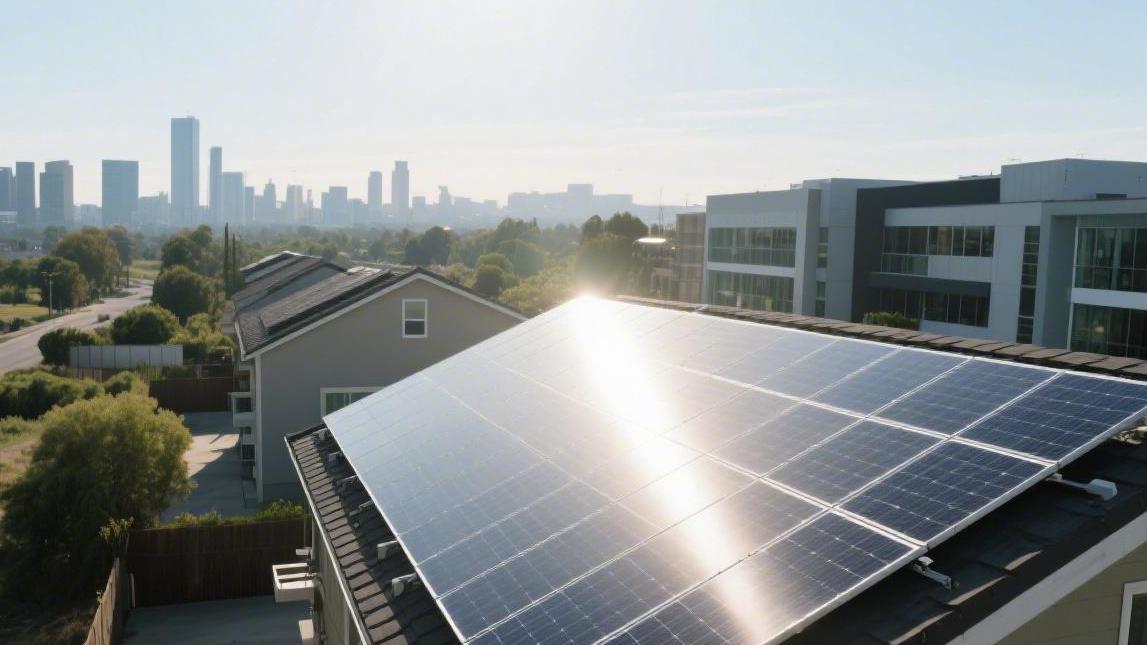
Residential
Rooftop Power Generation
Currently high-quality module attenuation rate is controlled very well, first year attenuation less than 1%, after that each year about 0.4% to 0.5% or so. This means at the 25-year warranty period end, panels still can maintain initial power's 87.4% or more. The matching grid-tied inverter, its MPPT (Maximum Power Point Tracking) efficiency is usually above 99%, able to real-time adjust voltage and current, ensuring in morning 10 o'clock or afternoon 4 o'clock this kind of oblique light, still can squeeze out the maximum electrical energy.
The tilt angle during installation is very particular, usually according to local latitude plus or minus 5 to 10 degrees, to ensure the whole year obtains the most radiation amount. In the Southern Hemisphere or Northern Hemisphere's light peak period, every square meter's instantaneous radiation intensity can reach 1000W, and high-efficiency panels can convert 230W of it into electrical energy.
The table below shows the core parameters comparison of different scale home systems:
System Capacity | Occupied Area | Annual Average Power Generation (Approximate) | Suitable House Type | Estimated Cost (USD/Including Installation) |
5kW | 25-30㎡ | 7,000 kWh | Small residence/apartment | $12,000 - $15,000 |
10kW | 50-60㎡ | 14,000 kWh | Standard detached villa | $20,000 - $25,000 |
15kW | 75-90㎡ | 21,000 kWh | Large residence/with pool | $28,000 - $35,000 |
Cell Storage
Lithium Iron Phosphate (LiFePO4) cell packs have already become the standard configuration for home energy storage. Common modular batteries, each group capacity is usually 5kWh (units), can be stacked like Lego to 30kWh or even higher. This cell's Depth of Discharge (DoD) can reach 90% to 95%, and cycle life exceeds 6000 times. If charging and discharging once every day, using for 15 years still can maintain 80% capacity. For a 4-person family, installing a 10kWh energy storage system can support 5 to 6 hours of home basic load at night, including TV, router, refrigerator, and fan. The energy storage system's switching speed is very fast, usually within 10 to 20 milliseconds can complete, when the grid loses power, the home's appliances even cannot feel the flicker.
Sun Drying Hot Water
Solar water heaters mainly have two types, one is all-glass vacuum tube type, absorption rate can reach above 93%; another is flat plate type, more suitable for integration with building aesthetics. A 150-liter water tank cooperating with a 2-square-meter collector, in air temperature 25 degrees Celsius, sunny conditions, only needs 5 hours to heat 15-degree cold water to above 60 degrees. Compared to rated power 3000W electric water heater, if taking a bath every day consumes 150 liters of hot water, solar water heater every year can save about 2500 units of electricity. Even in minus 20-degree cold areas, through adding propylene glycol antifreeze in the circulation pipeline, the system still can stably operate, heat loss per hour is only 1 to 2 degrees.
Charging the Car
Standard Level 2 home charging pile power is usually at 7kW or 11kW. If your electric car cell capacity is 75kWh, and the rooftop 10kW PV system at noon time fully operates, about 7 to 8 hours can fill the car from 20%. Compared to paying 0.3 to 0.5 USD per unit of electricity at commercial charging stations, using self-owned solar charging, the cost can almost be ignored. This "solar-storage-charging" integrated mode makes per kilometer driving cost drop to a few cents. And now smart chargers can be set to only start when solar energy is sufficient, avoiding pulling electricity from the grid, thereby achieving 100% green travel.
Commercial
Big Roof Power Consumption
A 1,000 square meter industrial color steel tile roof, deducting maintenance channels and lightning protection facilities occupied space, can install about 150kW to 180kW system. Taking 150kW as an example, this needs about 260 pieces of 580W high-power modules. In areas with average annual effective utilization hours of 1,200 hours, this set of system's annual power generation is about 180,000 units.
For a medium-sized mechanical processing factory running during the day with average hourly power consumption around 200kW, solar energy can directly offset about 70% of its daytime electricity demand. Considering commercial electricity prices are usually between 0.12 to 0.25 USD per unit, and there exist tiered electricity prices or peak-valley price differences, this self-generation self-consumption mode every year can directly save twenty or thirty thousand dollars of cash flow expenditure for the enterprise.
Currently mainstream adopted aluminum alloy brackets or hot-dip galvanized steel brackets must withstand extreme wind speeds above 200 kilometers per hour, which is equivalent to category 16 or above super typhoons. During installation, module spacing is usually maintained at about 20mm to deal with physical stress brought by thermal expansion and contraction.
Inverter selection also turned from early centralized type to string type, single unit power usually between 100kW to 250kW. This design's advantage lies in, even if one group of panels because of dust accumulation, shadow or failure leads to efficiency drop, it will not drag down the entire power station's output. String inverter's maximum efficiency already can reach about 99%, loss during power conversion process is extremely low, almost all captured sunlight becomes usable AC electricity.
Save More Electricity Bills
To solve this problem, commercial "solar-storage integration" solutions are rapidly popularizing. Through equipping a set of 500kWh (kilowatt-hour) industrial Lithium Iron Phosphate (LFP) energy storage system, enterprises can store electricity when noon sunlight is strongest and electricity price is lowest (even negative electricity price due to PV surplus), then release for use during the 4 PM to 8 PM peak period when grid electricity price is most expensive. This operation is called "peak-shaving and valley-filling". Current commercial energy storage cell cycle life is generally between 6,000 to 8,000 times, if completing two full charge-discharge cycles every day, the system can stably operate for more than 10 years, and after 10 years cell residual value still has more than 70% of initial capacity.
Measured data shows, under summer high-temperature weather, after rooftop is covered with PV panels, the workshop internal top layer temperature can be reduced by 3 to 5 degrees Celsius. For factories owning thousands of square meters of air conditioning cooling areas, this not only reduces rooftop aging speed, but also lets central air conditioning compressor load reduce by 10% to 15%, indirectly saving a large amount of electrical energy and equipment maintenance costs.
Equipment Must Be Durable
Although PV modules have no moving parts, long-term exposure to industrial dust, salt spray (coastal areas) or bird droppings, their power generation efficiency will attenuate at a speed of 2% to 5% per month. Therefore, large power stations usually deploy automatic cleaning robots, whose cleaning frequency is set according to rainfall, usually twice a month. To real-time monitor power station health status, operation and maintenance personnel will use drones with infrared thermal imaging functions for inspection. Drones flying at 50 meters height can clearly capture "hot spots" with temperatures exceeding 70 degrees Celsius, these hot spots are usually caused by cell cell micro-cracks or diode failure, if not replaced in time, may lead to single module local burning, even triggering fire hazards.
A complete commercial monitoring system will real-time collect every string's current, voltage and power factor (Power Factor). Modern commercial systems' power factor is usually required to maintain above 0.9 to avoid reactive power fines from grid companies. Through AI algorithm analyzing deviation between historical power generation curves and real-time weather data, the system can early warn inverter capacitor's life end, or leakage risk caused by cable insulation aging. Currently, high-standard commercial PV system design lives are all starting from 25 years or even 30 years, which requires DC cables must adopt 4mm² or 6mm² cross-section dedicated PV cables, and must possess extremely strong anti-UV aging performance.
Calculate Detailed Accounts for Return
Currently, in most areas with medium sunshine, commercial PV's EPC (Engineering Procurement Construction) cost has already dropped to between 0.6 to 1.0 USD per watt. This means a 1MW project, initial investment is about 800,000 to 1,000,000 USD. Considering 25 years total power generation, its LCOE can be as low as 0.035 USD per unit. Without considering policy subsidies, this type of project's static investment recovery period is usually between 4.5 to 6.5 years. If counting enterprise-enjoyable accelerated depreciation (Depreciation) policies, some projects can achieve net profit in the 4th year.
The table below shows typical commercial systems' key financial and technical parameters:
Parameter Index | 500kW System (Medium) | 1MW System (Large) | 2MW System (Ultra Large) |
Occupied Area | ~3,500 ㎡ | ~7,000 ㎡ | ~14,000 ㎡ |
Daily Average Generation | 2,000 - 2,500 kWh | 4,000 - 5,000 kWh | 8,000 - 10,000 kWh |
Annual Carbon Reduction | About 500 tons | About 1,000 tons | About 2,000 tons |
Number of Inverters | 5-10 units (50kW string) | 10-20 units (50kW string) | 8-10 units (250kW string) |
Annual Maintenance Fee | 1% - 1.5% of system investment | 0.8% - 1.2% of system investment | 0.6% - 1% of system investment |
Internal Rate of Return (IRR) | 12% - 14% | 14% - 16% | 15% - 18% |
With the maturity of carbon credit trading markets (Carbon Credit), many enterprises install solar energy not only to save electricity, but also to obtain carbon emission quotas. Every unit of green electricity generated is approximately equivalent to reducing 0.8 to 0.9 kilograms of carbon dioxide emission. For export-oriented manufacturing enterprises, these data are direct evidence for responding to various carbon tariffs and enhancing brand competitiveness. In the next 20 years, commercial rooftops will no longer just be building modules for sheltering wind and rain, but high-value power factories continuously generating cash inflow on the enterprise balance sheet.
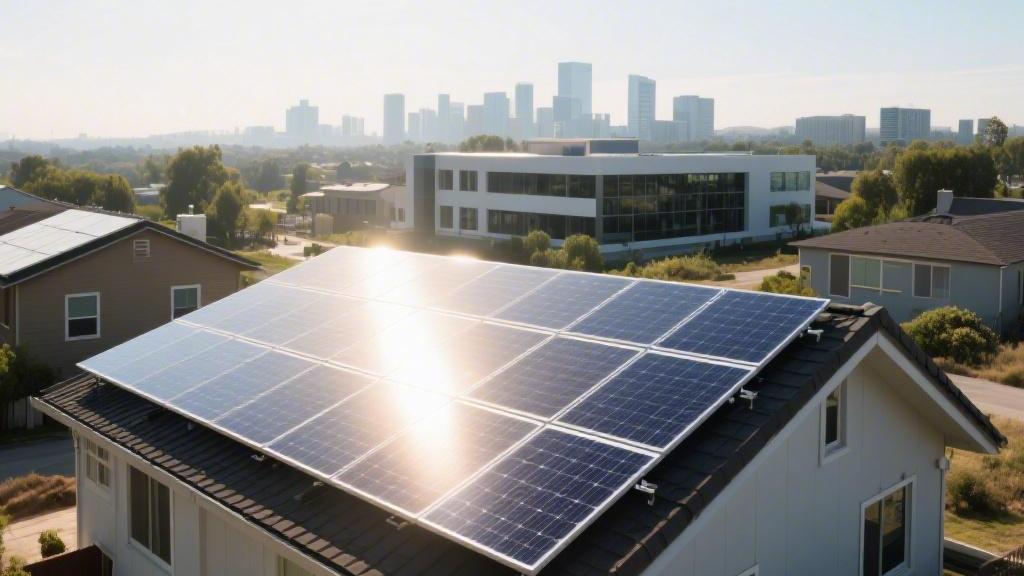
Remote Applications
Remote Mountain Stations
A standard 4G or 5G small base station, all-day power consumption usually stabilizes at 800W to 1500W. To ensure the base station can work normally even in continuous 3 to 5 rainy days, the system usually needs to configure about 10kW (kilowatt) PV array, this needs about 20 pieces of 500W monocrystalline silicon panels, total occupied area about 50 square meters. Storage batteries usually adopt 48V (Volt) system, configuration capacity about 800Ah to 1000Ah Lithium Iron Phosphate cell pack, total storage energy reaches 40kWh to 50kWh. This system in daytime through MPPT controller with above 98% efficiency stores electrical energy into cell, while directly supplying base station load.
In plateau areas above 3000 meters altitude, thin air leads to heat dissipation efficiency drop, but stronger UV radiation will let PV panel's instantaneous output increase about 10% to 15%. Therefore, the controller's rated current must leave more than 20% redundancy, preventing noon time current overload burning the circuit.
Underground Pumping
A set of 3 horsepower (about 2.2kW) DC brushless submersible pump system, cooperating with 3kW PV array, when head (pumping height) is 50 meters, daily water output can reach 30 to 40 cubic meters. This is enough to meet 50 to 80 mu of crops' daily water use. Compared to traditional diesel water pumps, although solar system's initial installation cost is about 4000 USD higher, due to saving more than 1 USD per liter fuel cost and intensive mechanical maintenance cycles, usually within 18 months can achieve cost balance.
DC pump system's conversion efficiency is very high, from light energy to water energy comprehensive system efficiency (Performance Ratio) is usually above 65%. Now variable frequency drives (VFD) can real-time adjust motor frequency according to sunlight intensity, smoothly switching from 30Hz to 60Hz, even in early morning or evening weak light can achieve small flow pumping.
Unmanned Monitoring
In application scenarios such as forest fire prevention, meteorological observation or earthquake warning, equipment power consumption is extremely low but reliability requirement is extremely high. These monitoring stations' power consumption is usually only 5W to 50W. To specifically run dozens of kilometers to change batteries for this kind of small power equipment is unrealistic, so "small board + small cell" has become the standard configuration. A 50W PV panel (size about 670mm x 450mm) cooperating with a 20Ah Lithium Iron Phosphate cell, can ensure high-definition cameras or sensors continuously operate in -20°C to 60°C extreme temperatures. This type of system's self-consumption is extremely low, usually less than 10mA, ensuring most of the captured electricity can be used for data transmission.
These monitoring equipment's brackets usually adopt hot-dip galvanized plastic spraying process, anti-corrosion life exceeds 20 years. For salt spray monitoring stations installed by the sea, also need to adopt special salt spray grade modules and C5 level anti-corrosion junction boxes. Because these places are unattended, the system usually integrates mobile network or satellite communication modules, maintenance personnel can see every cell panel's real-time voltage (usually around 18V) and charge-discharge status through mobile App from thousands of miles away, this kind of remote digital management lets maintenance cost reduce by more than 80%.
Off-grid Living
For forest cabins or herdsman settlements far from towns, a set of 3kW to 5kW off-grid small system can completely change living quality. This system's core is an "all-in-one machine" integrating inverter and controller. A 3kW system every day generates about 12 units of electricity, can simultaneously support one 150W energy-saving refrigerator, one 500W electric rice cooker, several LED lights as well as TV and satellite communication receiver. If cooperating with a set of 10kWh energy storage cell, even at night can normally use appliances like city families.
Off-grid inverter's instantaneous peak power (Surge Power) is very important, usually needs to reach 2 to 3 times of rated power (for example 3kW model needs to be able to shortly withstand 6kW to 9kW impact), this is to deal with refrigerator compressor or water pump startup when generating up to 5 to 7 times instantaneous startup current.
The table below summarizes typical technical specifications for different applications in remote areas:
Application Scenario | Typical Load Power | Suggested PV Capacity | Storage Configuration | Core Technical Point |
Communication Station | 1,200W (Constant) | 8kW - 12kW | 48V/800Ah LiFePO4 | 19-inch rack mount, high reliability |
Agricultural Irrigation | 2,200W (Daytime only) | 3kW - 4kW | None (Water tower replaces cell) | Variable Frequency Drive (VFD), Brushless motor |
Environmental Monitoring | 20W (Intermittent) | 50W - 100W | 12V/40Ah LiFePO4 | Extremely low self-consumption, anti-extreme temp diff |
Remote Residence | 3,000W (Peak) | 3kW - 5kW | 15kWh Lithium or Gel | Off-grid inverter, anti-surge capability |
In these remote applications, every watt of electrical energy's value is amplified. For example, in remote farms in Africa or Australia, every 1kW of solar system installed can reduce about 1.2 tons of carbon dioxide emission per year, while saving about 500 USD of fossil fuel expenditure for the farm owner. As module efficiency moves from 20% towards 25%, and energy storage costs drop at a rate of 15% per year, those lands that once were "sleeping" due to power scarcity are being reactivated through sunlight.