Why Does Solar Power Work Year-Round | Sunlight Availability, System Design
Photovoltaic rely on light, not high temperature. Winter still has irradiation (about summer's 30–60%); module efficiency under low temperature raises about 5–10%. Through optimize tilt angle (winter increase 5–15°) and MPPT control, whole year stable generate electricity.
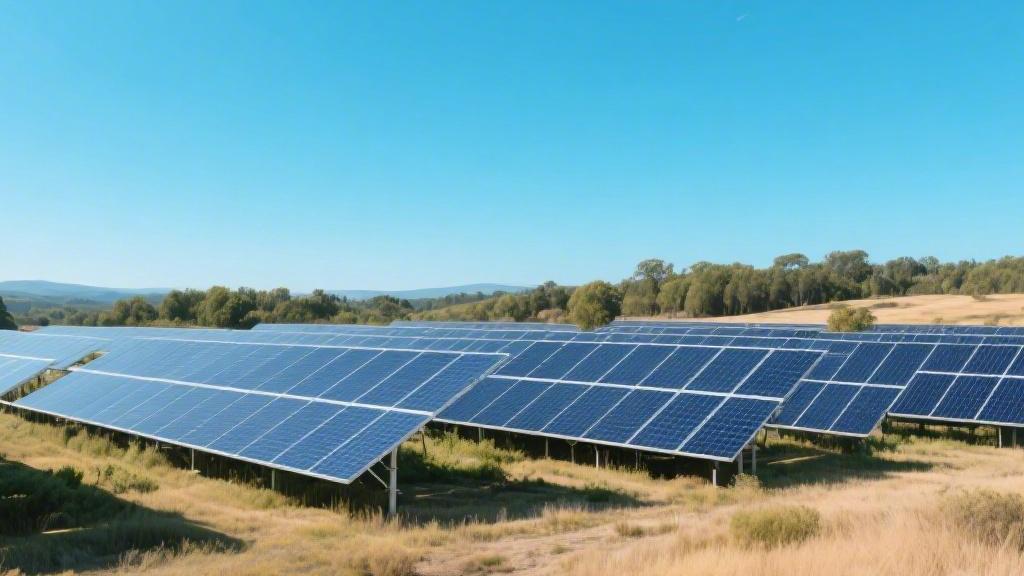
Sunlight Availability
Whole year's light
Earth receives solar shortwave radiation every year, the total amount is about 1.6 multiply 10's 18th power kilowatt-hours, even in north latitude 48 degrees's Munich, every 1 square meter horizontal surface on every year can still receive about 1200 kilowatt-hours's total radiation amount. Solar energy module's output relies on 100% cover global horizontal irradiance (GHI), this indicator by direct normal irradiance (DNI) and exceeds 30% proportion's diffuse horizontal irradiance (DHI) superimposed formed.
In north latitude 33 degrees's Arizona, July sunny day's peak irradiance is high up to 1050 watts per square meter, 1 piece of 400-watt monocrystalline silicon panel every day produces 2.2 kilowatt-hours of electricity. Arrived 12th month, along with solar elevation angle from summer's 79 degrees drop to 32 degrees, air mass (AM) number from 1.0 increase to 2.0, penetrate atmosphere arrive ground's absolute radiation amount attenuated 40%.
North latitude area winter every day's sunshine hours from summer's 14 hours shortened to 8 hours, but as long as irradiance maintains at 200 watts per square meter's startup threshold above, 1 set of 8 kilowatts's roof system in 12th month still can maintain every day 15 kilowatt-hours of electricity to 18 kilowatt-hours of electricity's output. Panel surface's anti-reflection coating thickness is usually controlled at 100 nanometers to 120 nanometers, and can reduce wavelength from 380 nanometers to 780 nanometers between visible light reflectance to 2% below, ensuring every day morning 7 o'clock 30 minutes light intensity reaches 150 watts per square meter time, inverter then can reach 90 volts's startup voltage start work.
Cloud layer transmits light
When high altitude appears, thickness exceeds 500 meters's stratocumulus clouds, direct light penetration rate will drop 85%. At this time, the panel surface's light will convert 90% into diffuse light. Monocrystalline silicon cell piece to wavelength is 900 nanometers to 1000 nanometers's near infrared light absorption coefficient extremely high, in rainy day 50 watts per square meter to 100 watts per square meter's low illumination condition under, its short circuit current although from 9.5 amperes drop to 1.2 amperes, but open circuit voltage only from 38 volts slightly drop to 34 volts.
Aim at different 4 kinds of climate conditions under's usable light intensity and module working parameters display out 50% above's variance:
· Sunny cloudless: visibility greater than 20 kilometers, GHI reach 1000 watts per square meter, ultraviolet index reach 8, panel temperature rise to 45 degrees Celsius, photoelectric conversion efficiency is 21.5%, every 1 kilowatt system every 1 hour produces electricity 0.98 kilowatt-hours.
· Altocumulus cloud block: cloud cover rate reaches 60%, GHI at 400 watts per square meter to 600 watts per square meter fluctuates, diffuse reflection light proportion rises to 45%, panel output power maintains at rated parameter's 40% to 55%.
· Moderate rain weather: rainfall amount reaches every 1 hour 15 millimeters, visible light transmittance falls below 15%, GHI only left 120 watts per square meter, micro inverter works at maximum power point tracking (MPPT)'s lowest 1% end, this time photoelectric conversion efficiency drops to 12%, single piece 450-watt panel every 1 hour produces electricity 0.05 kilowatt-hours.
· Heavy smog: PM 2.5 concentration reaches 200 micrograms per cubic meter, aerosol optical depth (AOD) exceeds 1.0, solar radiation attenuation rate high up to 35%, wavelength smaller than 450 nanometers' blue light is largely absorbed, system overall daily power generation amount compared to clear weather reduces 28% to 32%.
Calculate accurate angle
In order to maximize the whole year's 365 days' light capture amount, the fixed bracket's tilt angle is usually set to local latitude multiplied by 0.9, then add 29 degrees. In north latitude 40 degrees's Colorado, 1 set tilt angle fixed at 35 degrees's photovoltaic array, at vernal equinox and autumnal equinox around can intercept 98% of orthogonal direct light. Arrived in 12th month's winter, the solar declination angle became negative 23.5 degrees. If through an adjustable bracket, the panel tilt angle will increase to 55 degrees, winter 3 months' cumulative receive radiation amount can compare fixed at 35 degrees time raise 18.5%.
Dual-axis tracking system's hardware purchase cost every 1 watt increase 0.45 dollars to 0.6 dollars, its servo motor every day consumes electricity 0.2 kilowatt-hours, through every 15 minutes adjust 0.5 degrees's horizontal azimuth angle and vertical elevation angle, can will panel surface's whole day incidence angle deviation control at 2 degrees within. Daily tracking mechanism let every day's effective peak sunshine time from 4.5 hours extend to 6.2 hours, the whole system's annualized power generation amount absolute value raise 25% to 35%, and the levelized cost of energy (LCOE) in a 12-year depreciation cycle can be reduced by 0.015 dollars.
Season dimension | Solar elevation angle (degrees) | Average sunshine hours (hours) | Surface effective irradiance (watts/square meter) | 400W panel daily output (kilowatt-hours) | Diffuse reflection light proportion (%) |
March to May | 45 to 60 | 6.5 | 650 to 850 | 1.6 to 1.9 | 20 to 28 |
June to August | 65 to 75 | 8.5 | 850 to 1050 | 2.4 to 2.8 | 15 to 22 |
September to November | 40 to 55 | 5.5 | 500 to 750 | 1.2 to 1.6 | 25 to 35 |
December to February | 25 to 35 | 4.0 | 300 to 450 | 0.7 to 1.0 | 40 to 60 |
Snow ground reflects light
Ground surface albedo (Albedo) brings 10% to 30% light compensation in the Arctic Circle edge or high snow area, especially prominent. Newly fallen dry snow surface to solar shortwave radiation's reflectance high up to 80% to 90%, compared to dry grass ground 15% to 20%'s albedo, can multiply increase enter module back's diffuse reflection light. Bifacial double glass photovoltaic panel's back light transmittance usually reaches 70% above, back photoelectric conversion rate is front's 75% to 85%. In snow thickness reaches 15 centimeters's 1st month, ground clearance is 0.8 meters, tilt angle is 40 degrees, bifacial module, its back can receive 250 watts per square meter's ground reflection light.
Bifacial power generation effect will system's instantaneous output power from 5000 watts raise to 5600 watts, back extra contributed's produce electricity amount account for arrived daily total power generation amount's 12% to 15%. Snowfall stops due to panel surface dark glass's heat absorption effect, in outdoor air temperature minus 5 degrees Celsius and has 500 watts per square meter sunshine's condition under, panel surface temperature in 45 minutes inside can rise to 12 degrees Celsius, thickness 5 millimeters within's snow will with every 1 minute 0.2 millimeters's speed melt slide down, equipment in sunrise after 1.5 hours inside then can recover to 95% above's light transmission area.
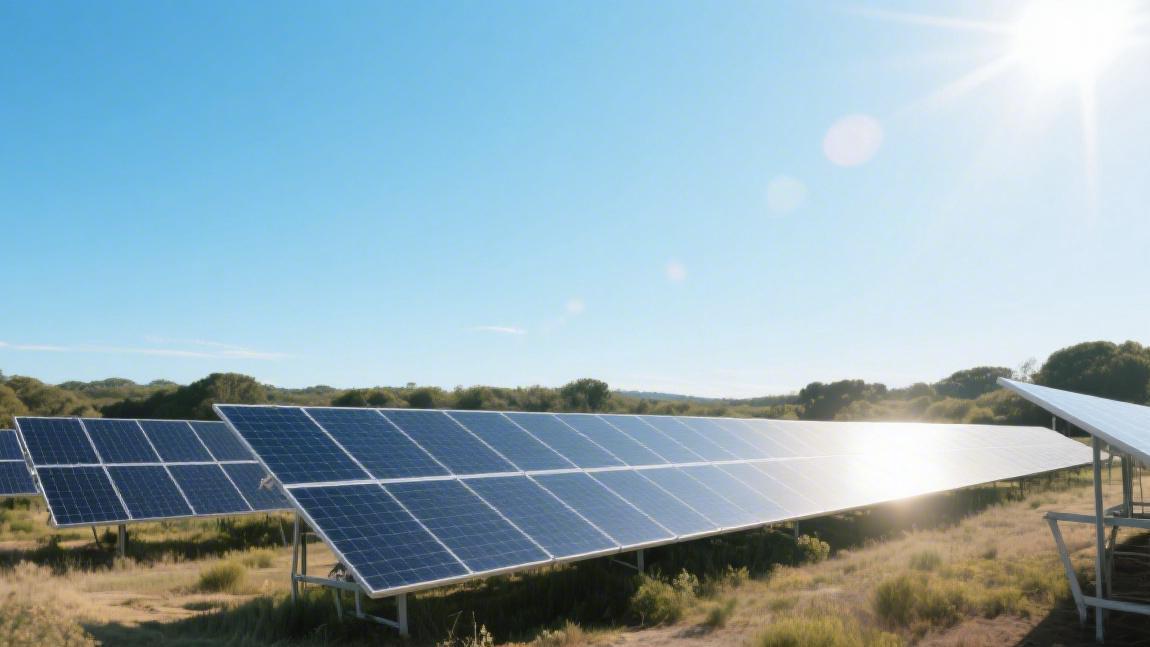
System Design
Install a few more pieces of panels
The solar energy array direct current end rated power and alternating current end inverter maximum output power's ratio usually be set at 1.2 to 1 to 1.3 to 1's interval. In the north latitude 35 degrees's California area, install 1 unit alternating current rated output is 5000 watts's string inverter, engineer will match 16 pieces single piece power is 410 watts's photovoltaic modules, total direct current input reach 6560 watts.
Due to temperature loss, line voltage drop and surface dust block, panel in actual operation middle's instantaneous highest power often can only reach laboratory nominal data (STC)'s 80% to 85%. According to 1.31's capacity match ratio design system, in summer sunny weather's noon time, the inverter will appear continuous 1.5 hours to 2 hours' peak shaving phenomenon, lose about 1.5% to 2.0% of the peak power generation amount. The sunshine intensity dropped to 400 watts per square meter's 12th month, and the 6560-watt photovoltaic array still can inverter transmit exceed 2600 watts's direct current, guarantee equipment work at best conversion efficiency interval above.
Crystalline silicon module's power attenuation rate in operation's first year is 2.0%, subsequent 24 years, every year with a 0.45% to 0.5% rate linear decrease. Overconfigure 25% of module capacity able to hedge as long as 15 years's natural light degradation, guarantee system in operation's 180th month, its alternating current end still can output enough load's voltage in early morning and late evening.
Choose the right converter
Inverter's internal maximum power point tracking (MPPT) algorithm scan frequency reaches every 1 second 30 times to 50 times, tracking precision is high up to 99.8% above. In winter, snow blocks or spring tree leaf shadow project to panel's complex working condition under, input voltage will violently fluctuate between 120 volts and 450 volts. A unit possesses dual route MPPT access function's 7.6 kilowatt string inverter, able to east side and south side two different facing's roof arrays separate route manage, avoid because series wooden barrel effect leads to overall power generation efficiency plummet 30%.
· Micro inverters are usually installed at every 1 piece or every 2 pieces of photovoltaic panel directly below, single unit equipment's alternating current output rated power is 300 watts to 350 watts between, startup voltage is suppressed low to 16 volts to 22 volts, early morning only need extremely faint light then can wake up equipment enter working state.
· Micro inverter system will overall's electrical energy conversion efficiency from centralized's 95% pull up to 97.5%, in encounter cloud layer fast move lead to's irradiance from 800 watts per square meter suddenly drop to 200 watts per square meter's scenario under, micro inverter's voltage response time will shorten to 20 milliseconds within.
· String inverter's night standby power consumption can be controlled at 3 watts to 5 watts, working environment temperature span can range from minus 25 degrees Celsius all the way up to above zero 60 degrees Celsius, its outer shell protection level generally reaches NEMA 4X or IP65, able to resist relative humidity reaching 95% coastal salt fog environment erosion for as long as 15 years.
Store electricity's jar
Energy storage cell pack's capacity configuration is usually based on family night 8 hours to 10 hours' electricity use load data to calculate. A set capacity is 13.5 kilowatt-hours's lithium iron phosphate (LiFePO4) cell pack, its energy density between 160 watt-hours per kilogram to 170 watt-hours per kilogram, depth of discharge (DOD) can safely explore down to 90%, single time cycle can provide 12.15 kilowatt-hours's usable electricity amount. In the system bottom layer logic, the cell management system (BMS) will charge and discharge at a C-rate strictly limited to 0.5C to 1C.
A unit continuous output power is 5000 watts's energy storage host, able to support 1 unit 1500 watts's cooling refrigerator, 1 unit 2000 watts's air conditioning as well as 1500 watts's lighting and entertainment equipment continuous full load operate 2.4 hours. Lithium iron phosphate cell's charge discharge cycle life is high, up to 6000 times to 8000 times, even if you conduct 1 full charge full discharge deep cycle every day, the use time duration can span 15 years to 20 years.
In the daytime, light abundant's morning 10 o'clock to afternoon 2 o'clock, photovoltaic system surplus's 4 kilowatts of power will be converted to 58.4 volts's direct current form charge into cells, whole charge cycle's Coulombic efficiency maintain at 95% to 97%. Arrived completely no light's night, cell pack through built-in hybrid inverter will direct current invert into 120 volts or 240 volts's alternating current split-phase electricity, voltage total harmonic distortion (THD) be suppressed at 2% below.
Cable thickness
Direct current transmission line's cross-sectional area selection needs to end to end's voltage drop control at 2% within. For 1 string by 10 pieces 400 watts panel series composed's photovoltaic array, maximum working voltage (Vmp) reach 380 volts, working current (Imp) about is 10.5 amperes. When the array distance inverter's physical wiring length is 30 meters, adopt American Wire Gauge 10 number (10 AWG)'s pure copper photovoltaic dedicated cable, every 1000 meters's resistance value is 3.28 ohms, in full load situation under's line voltage drop is about 2.1 volts, electrical energy loss rate is only 0.55%.
· Photovoltaic dedicated cable's insulation layer generally adopts cross-linked polyethylene (XLPE) material, able to endure minus 40 degrees Celsius to above zero 90 degrees Celsius's extreme surface working temperature, anti ultraviolet aging test cycle as long as 10,000 hours above, physical attenuation cycle completely match photovoltaic module's 25 years warranty time limit.
· In order to cope with summer roof environment temperature soaring to 70 degrees Celsius's high temperature challenge, the thread into galvanized steel pipe or PVC conduit internal's cable total quantity must comply with not exceed pipeline internal cross-sectional area 40%'s mandatory regulation, thereby obtain enough's air circulation physical cross section, prevent wire temperature exceed 90 degrees Celsius's insulator meltdown limit value.
· Alternating current ends from inverter to main distribution box's wiring. If alternating current reaches 40 amperes, installation personnel will upgrade cable specification to thicker 8 number wire gauge (8 AWG), ensure continuous transmission of 6500 watts large power current time, 10 meters line's physical heat generation power lower than 20 watts, large margin suppress low electrical fire's probability.