How Can Losses in Solar Power Systems Be Reduced | Wiring, Inverters, Maintenance
Adopting low-resistance cables can lower line loss to ≤2%; selecting an efficiency ≥98% inverter reduces conversion loss by about 2%–3%; every quarter cleaning modules and using IV test to locate faults can elevate power generation by about 3%–8%.
Wiring
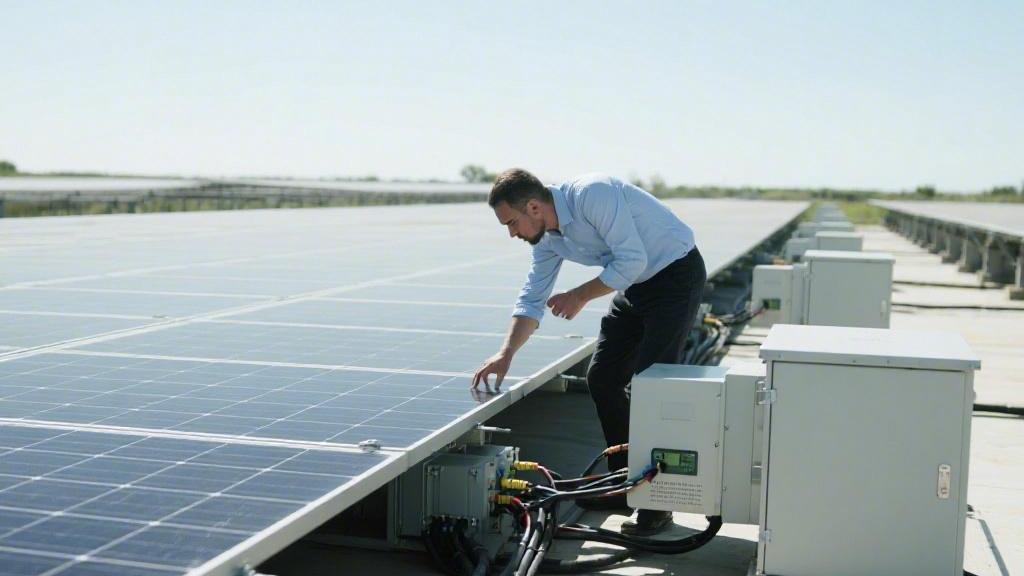
In conventional residential roof or commercial flat roof solar projects, from 18 pieces single unit output power being 400 watts photovoltaic panels connected in series to a unit inverter's physical wiring distance normally is between 25 meters to 40 meters. When the string's working voltage reaches 600 volts, the full load working current maintains at 12.5 amperes for time, the line's own physical impedance then will start with per meter about 0.005 ohms' rate to swallow electric quantity.
If at this distance, we still adopt standard's 4 square millimeters (12 AWG) single core photovoltaic cable, the entire loop's resistance value will approach 0.4 ohms, leading to the direct current side's voltage drop reaching 1.5% to 2.0%, equivalent to the entire set system every day having about 1.2 degrees electricity transformed into cable surface waste heat. Putting this segment's direct current cable's cross-sectional area increased to 6 square millimeters (10 AWG), per meter cable's procurement unit price only increased 0.8 yuan to 1.2 yuan, for a 5 kilowatt system, the total cable procurement budget's increase amplitude only has about 150 yuan.
6 square millimeters cable's direct current resistance per kilometer is only 3.39 ohms, compared to 4 square millimeters' 5.09 ohms/kilometer, dropped a whole 33%. In the system's expected 25-year full load running cycle, lowered 33% impedance can recover exceeding 2,800 degrees of electricity's loss. According to the per degree electricity 0.6 yuan's feed-in tariff calculating, this sum 150 yuan's early stage wire material upgrade input, can bring 1680 yuan's long-term revenue, overall's return on investment exceeded 1,100%.
At handling inverter to alternating current distribution box that segment distance exceeding 50 meters' alternating current output trunk line time, material electrical conductivity and cross-sectional area's mathematical game is very obvious. Pure copper's electrical resistivity is 0.0175 ohm·square millimeters/meter, while aluminum's electrical resistivity is as high as 0.0283 ohm·square millimeters/meter, at transmitting the same 40 amperes alternating current's premise under, aluminum wire's cross-sectional area must be bigger than copper wire 61% above, only then can put alternating current side's voltage drop controlled at allowed's 2% within.
Originally intended to use 16 square millimeters' cross-linked polyethylene (XLPE) insulation copper cable, changing to aluminum cable then must procure 25 square millimeters' specification. From the budget bill, it looks like the current carrying capacity of aluminum cable procurement costs compared to copper cable is cheaper by nearly 45%. In frequently needing to lay 200 meters of cable's medium-sized project inside, only the trunk line material one item can save 2,500 yuan above's fee.
· Aluminum material's thermal expansion coefficient reached 23.1 micrometers/(meter·Kelvin), compared to pure copper's 16.6 micrometers/(meter·Kelvin), higher by nearly 40%. The system experiences from early morning 15℃ to noon 55℃'s temperature intense oscillation time, aluminum wire core at wiring terminal place will happen amplitude bigger's cold contraction thermal expansion physical displacement.
· Physical displacement at experiencing about 1500 times' day and night temperature difference cycles (about 4 years time) after, extremely easily leads to originally tightened bolt connection place appearing 0.5 millimeters to 1 millimeter's physical loosening gap.
· Aluminum exposed to air oxidizes to form an aluminum oxide insulation layer. The speed of pure copper producing verdigris is 5 times faster, the thickness being only several micrometers. The oxide film will put local's contact resistance from normal's 0.1 milliohms instantly pull high to 5 milliohms above.
· In order to eat down aluminum cable brought 45% cost difference preference, installation time must be forcedly used internally filled with conductive anti-oxidation paste's copper-aluminum transition terminal, and coordinate with applied 12 newton·meters standard pressure's hydraulic pliers to conduct physical cold pressing.
The photovoltaic direct current side is composed of hundreds and thousands of male and female docking MC4 connectors forming a network, the length being only 6 centimeters, the plastic shell metal core joint bears the entire system's highest risk and most loss. A qualified's pure copper tinned inner core, after plugging together, static contact resistance must strictly keep at 0.35 milliohms below.
When applied to metal wire crimping terminal's mechanical crimping force is less than standard's 2.5 newton·meters time, internal copper wire's deformation rate cannot reach physical cold welding needed's 80% dense state, contact interface's microscopic gap will make resistance soar to 2 milliohms to 5 milliohms. Under 15 amperes' continuous direct current working current impact, only several milliohms' resistance variable, then will let length about 2 centimeters' metal contact point produce about 1.2 watts' continuous thermal power.
· The external environment temperature being 35℃ and located in a windless state, 1.2 watts' local heat accumulation will in 40 minutes inside put connector internal temperature pushed high to 85℃ above.
· The temperature every rises 10℃, the metal conductor's electrical resistivity will then increase about 4%, forming an irreversible physical temperature rising positive feedback loop.
· Polycarbonate (PC) material's connector shell at long time bearing exceeding 90℃'s high temperature baking, its insulation strength indicator will with per year 15% speed fast attenuate.
· Standard construction must use stroke locked, carrying ratchet mechanism's dedicated photovoltaic wire crimping pliers, ensuring applied on 4 square millimeters or 6 square millimeters wire core's physical biting force reaches 1500 newtons above, crimped after's finished product still must pass bearing 30 newtons static pulling force continuous 1 minute's not falling off physical pulling test.
Putting multiple bundles of cables forcedly stuffed into a narrow diameter PVC or galvanized steel pipe inside running wires will thoroughly change the cable environment's heat dissipation thermodynamic model. When 3 groups or more (totaling 6 pieces) bearing 12 amperes current photovoltaic direct current cables are threaded into an inner diameter being 20 millimeters' threading pipe inside, and the physical filling rate exceeds the pipe inside total volume's 40% time, the cable produced's Joule heat will be unable to effectively dissipate through air convection.
Summer outdoor air temperature reaching 40℃'s sun exposure environment under, pipe inside's enclosed space temperature will at afternoon 2 o'clock around climb to 65℃ to 70℃. Cable insulation layer at 70℃ environment's nominal current carrying capacity must multiply 0.58's derating coefficient conducting downgrade calculation, originally able to safely bear 41 amperes current's 6 square millimeters cable, safe current threshold will plummet to 23.7 amperes. Pipeline system internal's high temperature not only brought 0.5% extra electric quantity transmission loss, but also let cross-linked polyethylene insulation skin's aging breaking probability increased 300%.
Arranging running wire pipe time, inner diameter size needs to reserve at least 60% air circulation margin, all right-angle elbows must use curvature radius greater than pipe diameter 6 times' gentle bend accessories, both can prevent threading time scraping broken insulation outer skin leading to 500 volts high voltage insulation test failure, also can largely lower future days line troubleshooting pulling out cable time's mechanical resistance.
Inverters
Pick the right inverter
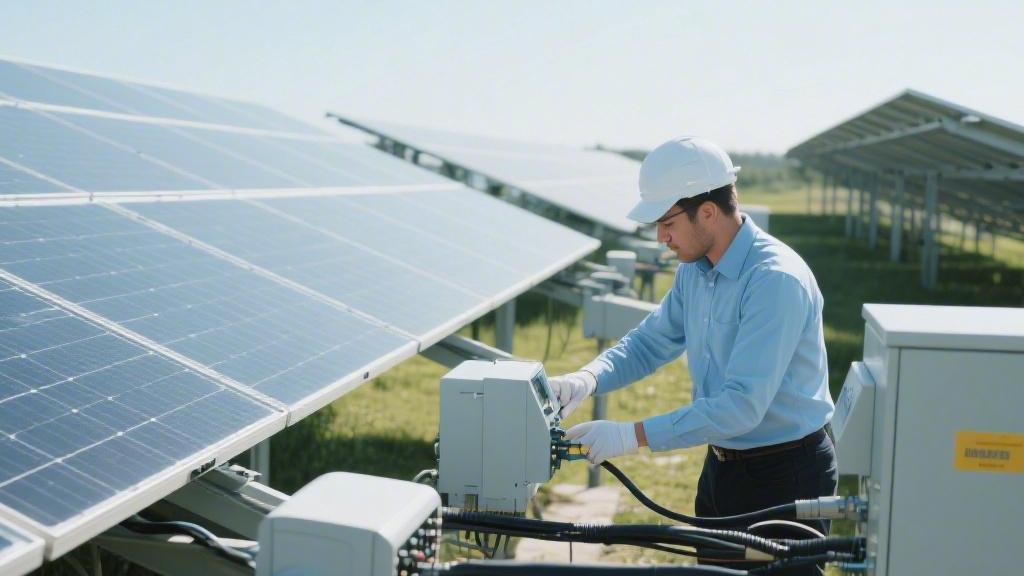
A unit nominal power being 10 kilowatts' string inverter, bears putting 600 volts direct current converted into 240 volts alternating current's physical work. In conversion's millisecond level time window inside, electricity will flow through insulated gate bipolar transistor (IGBT) or silicon carbide (SiC) switching modules. Traditional silicon-based IGBT device at conducting per second 20000 times (20 kHz) pulse width modulation (PWM) switching actions, due to the physical tail current's existence, will produce about 1.5% to 2.0% switching thermal loss and conduction voltage drop.
Putting hardware architecture upgraded to silicon carbide field effect transistor after, switching frequency can be pulled up to 100000 times (100 kHz) above, same time put switching loss forcedly pressed low 70%. Weighted conversion efficiency parameter needs to reference including 5%, 10%, 20%, 30%, 50% and 100% six different load points test weights' weighted standard.
At input voltage stabilizing at rated 600 volts, load rate reaching 60% test node on, adopting silicon carbide module's new generation inverter can put peak conversion efficiency pushed high to 98.8%. When morning or evening's illumination intensity drops to 200 watts/square meter, inverter load rate drops to 10% below time, equipment's fixed running power consumption proportion will sharply magnify, leading to actual conversion efficiency dropping below 94%.
Through comparing up to ten thousand sampling points' monthly running log records, 98.8% and 97.5% book efficiency difference, in a 10 kilowatt system inside will convert out about 210 degrees electricity's yield gap, according to per degree electricity 0.15 US dollars' retail average price converted, every year solely on hardware conversion loss then in vain evaporated 31.5 US dollars' book number.
To 5 kilowatts' alternating current inverter matching precisely to 5 kilowatts' direct current photovoltaic panels, will lead to equipment in every day 80% of the time inside all located in not eating full's low-efficiency load state. Photovoltaic panel at standard test conditions (illumination 1000 watts/square meter, temperature 25℃) under the marked's peak power, in real roof environment, limited by 60℃'s panel surface high temperature and air inside micro particulate matter's physical shading, real direct current output power normally only has nameplate nominal value's 80% to 85%. Putting system's DC/AC ratio (direct current total power divided by alternating current rated power) set between 1.2 to 1.3, equivalent to 5 kilowatts inverter mounting 6 kilowatts to 6.5 kilowatts' panel string, can forcibly change inverter's running load curve.
· At DC/AC ratio 1.25's physical configuration under, inverter every day reaching and maintaining at 98% above high conversion efficiency interval's time length, will from original's 3.5 hours forcibly lengthen to 5.5 hours.
· Noon time exceeding inverter 5 kilowatts alternating current output upper limit's extra direct current electric energy (normally occupies whole day total power generation amount's 1.5% to 2.5%) will be by equipment's hardware current limiting program cut off, forming digital on's clipping loss.
· Due to panel quantity increase, brought higher open circuit voltage, early morning putting inverter from sleep state awakened's startup voltage threshold will from morning 7:30 advance to 6:45 cross 150 volts' startup line, every day extra acquire 45 minutes' low power grid-connected power generation time.
· Whole year cumulative calculation, DC/AC ratio elevation brought's clipping cutting action approximately will swallow away 80 degrees electricity, but in morning evening weak light time period and whole day high load efficiency elevation inside grabbed back's electric quantity is as high as 350 degrees electricity, system net output presents positive's 270 degrees electricity growth.
A unit standard's outdoor string inverter at an environment temperature reaching 45℃ before, is able to maintain 100% full load alternating current output (5000 watts). When the aluminum die-cast heat sink fin surface's detected temperature breaks through 45℃'s safe line, the inverter will according to every rise 1℃ then forcibly cut 1% output power's linear slope conducting derating running. At 55℃'s outdoor sun exposure environment under running, a unit 5 kilowatts' machine's real grid-connected output upper limit will be by system dead dead locked at 4500 watts, instantly losing 10% capacity. Maximum power point tracking (MPPT) algorithm's refresh frequency and voltage scanning step size similarly dominate every one watt electric energy's conversion rate.
Built-in double routes independent MPPT controller's inverter with per second 50 times' frequency scans two groups different orientations panels' voltage current curves, tracking algorithm's precision must reach 99.9%, to prevent at cloudy weather under due to illumination irradiance happening per second 100 watts/square meter's intense peak drop time, equipment processing chip needs to consume as long as 5 seconds only then can relock new's optimal working voltage point, thereby falling into local optimal solution's output blind zone.
In addition, inverter night time's standby state also is continuously swallowing power grid reverse flowing's energy, internal's LCD display screen sleep module and maintaining Wi-Fi data uploading function's communication module, will put standby power consumption between 2 watts to 5 watts, through cutting off unnecessary night time wake-up polling, can put single machine's annual night time electricity consumption amount suppressed at 15 degrees within.
Running parameter indicator | String inverter (5 kilowatts class) | Micro inverter (500 watts class single unit) | Electric quantity loss and revenue difference value quantification |
Night standby average power consumption | 2.5 watts to 5.0 watts | 0.05 watts (single unit) | String equipment every year at night consumes electricity about 15 kilowatt-hours |
Hardware lowest startup voltage | 150 volts to 200 volts | 22 volts to 60 volts | Micro inverter every day morning evening acquires about 40 minutes' weak light grid-connected electric quantity |
MPPT circuit tracking granularity | 10 to 20 pieces panels share 1 route | Every 1 piece panel exclusively enjoys 1 route | Local shadow environment under micro inverter can reduce 15% to 25% of the entire string power drop |
Temperature curve derating threshold | 45℃ starts linear derating | 65℃ starts linear derating | Extreme high temperature under string type appears 5% to 10%'s continuous cutting loss |
Alternating current side transmission harmonic rate | Total harmonic distortion rate less than 3% | Total harmonic distortion rate less than 1.5% | Lower's harmonic rate can lower alternating current cable inside about 0.2% 's parasitic heating loss |
Maintenance
Wash panel
When the air quality index inside PM10 micro particulate matter concentration continuously 30 days exceeds 150 micrograms/cubic meter time, the photovoltaic panel's 3.2 millimeter thick tempered glass surface will accumulate a layer about 0.8 millimeters to 1.2 millimeters thick's dust. This layer physical shading object will intercept 400 nanometers to 1100 nanometers waveband's photon penetration, making the surface's light transmittance from factory nominal's 95% steep drop to 82% below.
A 10 kilowatt system in this kind of state under running, instantaneous output power will evaporate away 1.3 kilowatts. Using high pressure water gun conducting physical flushing, water pump's pressure parameter must strictly control in 0.2 megapascals to 0.4 megapascals' interval inside. Once the spray water pressure exceeds 0.6 megapascals' threshold, strong's water flow will repeatedly impact aluminum alloy frame's waterproof silicone, leading to water vapor infiltrating internal EVA encapsulation film's probability largely soaring 40%. At 2 o'clock in the afternoon, high intensity sunshine under, glass surface's real-time detected temperature can soar to 65℃ to 70℃. If at this time, toward panel spray 20℃'s tap water, 45℃'s huge temperature difference will trigger material local's intense cold contraction.
Glass surface's instant thermal stress once exceeds 45 megapascals' physical limit, will at polycrystalline silicon or monocrystalline silicon cell internal produce width only being 10 micrometers to 30 micrometers' hidden crack. This kind of tiny damage early stage unable to use naked eye perceive, but in subsequent's 6 months inside will make single piece panel's series internal resistance from about 0.8 ohms slowly climb to 1.5 ohms, ultimately transform into consuming 0.5% power generation amount's permanent physical heating internal loss.
Every year, through two times thorough wet washing operation, putting glass surface's dirt adhesion amount pressed low to per square meter 0.5 grams below, can stably recover about 8% to 12% of the power generation amount loss. In cleaning water, adding a concentration of 0.5% non-ionic surfactant, can put adhered bird droppings or oil stains thoroughly peeled off, put local shadow caused's bypass diode startup frequency lowered 70% above.
Check heating
A piece standard's photovoltaic module's internal normally by 60 pieces or 72 pieces independent silicon-based cells connected in series formed. As long as the lump diameter reaches 3 centimeters, bird droppings accurately fall on a piece of cell's exact center, shaded physical area, then will thoroughly lose photoelectric conversion capability, and in the circuit inside, forcibly become a consuming other normal cells' electric energy's load resistor. The entire string applied to its body's 10 volts to 15 volts reverse bias voltage, will on this piece less than 200 square centimeters' area produce 15 watts to 20 watts' local heat accumulation.
Selecting morning 11 o'clock to afternoon 1 o'clock's core illumination time period (illumination irradiance exceeding 800 watts/square meter), using optical resolution reaching 320x240 pixels, thermal sensitivity precisely to 0.05℃'s handheld infrared thermal imager to entire piece array conducting scanning, screen on will appear extremely easy to identify's red abnormal bright spot. This tiny spot's temperature will climb extremely fast to 85℃ to 105℃, while the surrounding normal working cell temperature normally stabilizes at 50℃ up and down.
Temperature every breaks through rated working upper limit 10℃, backplane used's polyethylene terephthalate (PET) polymer insulation material's aging speed then will speed up one time. Continuous exceeding 90℃'s local high temperature will at 2000 hours' running cycle after thoroughly burn through the backplane, triggering insulation impedance lower than 1 megaohm's safe leakage fault, leading to inverter's leakage current protection mechanism in 50 milliseconds inside forcedly cut off entire string's grid-connected output.
Besides the panel front side, the scanning panel back side's junction box similarly occupies an extremely high priority level. The junction box internal equipped has 3 pieces Schottky bypass diodes, responsible for encountering shading time guiding current detour. When 10 amperes' continuous forward current passes through the diode, the diode itself will produce 0.6 volts' voltage drop, outward dissipating 6 watts' heat. If the junction box's internal heat dissipation silicone aging cracking, the sealed cavity inside's temperature can directly approach 110℃, making the diode due to thermal runaway and happen physical breakdown short circuit's probability surge 60%. Spending 15 US dollars purchasing accessories and consuming 1 hour labor to replace a burnt-out junction box, can grab back the entire piece panel's 33.3% idle capacity, converted down every year, a single piece panel can lose about 150 degrees of electricity.
Cut branches
The system's surrounding vegetation has an average physical growth speed of 0.5 meters to 1.5 meters per year. This kind of slow biological extension will continuously rewrite projected on roof array's geometric shadow model. Taking array true south 8 meters place's a pine tree as an example, its vertical height every increases 0.8 meters, at winter solstice day, the sun elevation angle drops to 21 degrees, then will on panel surface pull out a strip as long as 2.5 meters' physical projection. Even if this path shadow only covered 15 pieces of series panels inside a certain one-piece bottom 5% area, circuit's physical laws will also give out extremely heavy punishments. The entire string's current transmission follows the wooden barrel effect, received light insufficient's cell will like pinching a water pipe alike, put originally 11 amperes' current forcedly limit at 1.5 amperes' extremely low flow rate.
Photovoltaic panel built-in's bypass diode at perceiving this kind of non-linear's current blocking after, will in 0.2 seconds conduct to cross over blocked's cell string, this action will immediately deduct this panel 33%'s output voltage (about 12 volts), causing the entire string's working voltage to depart from the inverter MPPT algorithm's originally locked optimal 550 volts working point, in re-optimizing's 5 minutes window period inside, the entire string's power generation amount will appear 15% to 25%'s sharp cliff style dropping.
At the array's physical boundary periphery delineating and maintaining a minimum 3.5 meters' barrier-free clearance zone, can ensure morning 9 o'clock to afternoon 3 o'clock's high efficiency power generation window period inside shadow shading rate is zero. Every year, inputting about 50 US dollars' garden pruning labor fee, putting a south-facing 120-degree fan-shaped range inside the tree canopy cut flat, can put a strip of 3000 watts string due to shadow dropped's 15% electric quantity entirely made up back, every year exchanging extra 450 degrees electricity's net output.
According to 0.20 US dollars/degree electricity's power grid unit price calculating, can produce 90 US dollars' book return, put physical pruning maintenance's return on investment pushed high to 180%. All physical cleaning, thermal imaging scanning, and greening pruning operations must lock dead in every 180-day cycle period inside, put various tiny mechanical and physical variables strangled at triggering systemic electrical attenuation before.