5 Environmental And Social Impacts Of Solar Energy Expansion
Solar expansion cuts CO₂ (1.5t/kW/yr), adds 260k US jobs (2022), yet strains land; agrivoltaics ease conflict, balancing green gains with community needs.
Land and Water Use
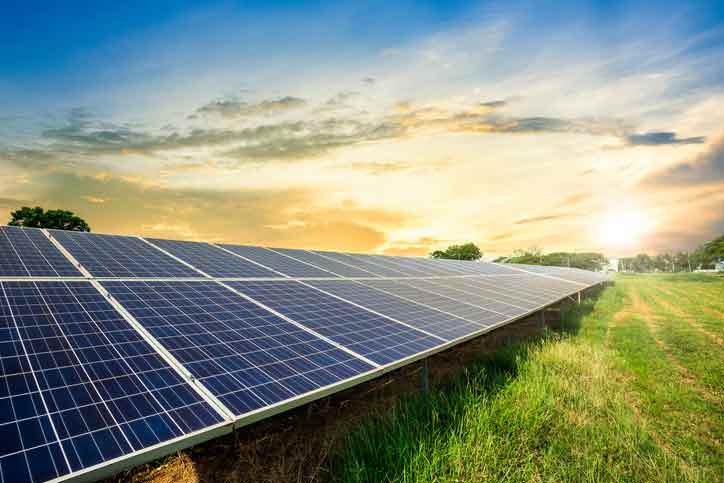
Utility-scale solar farms require significant space, typically using between 2.5 and 5 hectares (6 to 12 acres) of land per megawatt (MW) of installed capacity. A 100 MW facility, therefore, can occupy 250 to 500 hectares (600 to 1,200 acres), an area comparable to 550 to 1,100 American football fields.
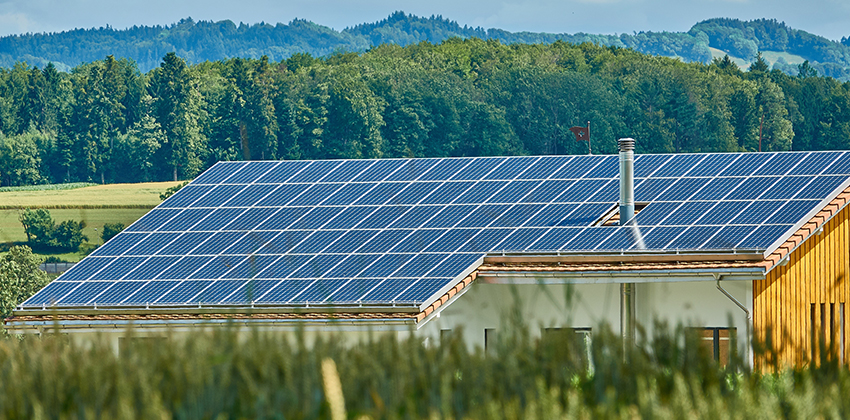
For example, the 2,200 MW Bhadla Solar Park in India spans over 5,700 hectares (14,000 acres). This dual-use approach allows for approximately 70-80% of the land underneath to still be used for certain crops or livestock grazing, potentially increasing the land's overall economic output. Rooftop solar, on the other hand, has a near-zero land-use impact, utilizing already-developed spaces. A standard 7 kW residential rooftop system might use only 40-50 square meters of panel area, adding no new pressure on land resources.
In dusty environments, panels might need cleaning every 2 to 8 weeks, consuming about 0.5 to 1.5 cubic meters of water per MW per cleaning cycle. In contrast, Concentrated Solar Power (CSP) plants, which use mirrors to heat a fluid and drive a turbine, are highly water-intensive.Their steam turbines require cooling, similar to fossil fuel or nuclear plants. A 100 MW CSP plant with a wet-cooling system can consume over 1.2 million cubic meters (320 million gallons) of water annually, a major concern in arid regions where CSP is often built. Newer CSP plants using dry-cooling technology can reduce water consumption by over 90%, but this comes with a 3-5% reduction in efficiency and a 5-10% increase in capital costs.
Technology | Primary Water Use | Estimated Water Consumption (per MWh of electricity) | Key Factors |
Solar Photovoltaic (PV) | Panel cleaning | ~0.02 - 0.15 cubic meters(20-150 liters) | Local dust/dirt levels, rainfall frequency, cleaning method (robotic vs. manual) |
Concentrating Solar Power (CSP) - Wet Cooling | Steam cycle cooling | ~2.8 - 3.2 cubic meters(2,800-3,200 liters) | Plant size, cooling technology, ambient temperature |
Concentrating Solar Power (CSP) - Dry Cooling | Minimal operational use | ~0.3 cubic meters(300 liters) | Higher cost and lower efficiency than wet-cooled systems |
Floating solar, where panels are installed on bodies of water, can reduce water evaporation from reservoirs by up to 70%, a significant co-benefit. For water use, the clear trend is toward PV technology, especially in water-stressed areas, due to its negligible operational demands. The ongoing increase in PV panel efficiency, now exceeding 23% for commercial mono-crystalline panels, means less land is required per megawatt compared to just a few years ago, gradually reducing the land footprint of new projects over time.
Community and Neighbor Relations
A utility-scale solar project is a major industrial development, often changing the character of a rural area for 25 to 30 years, the typical lifespan of the installation. Concerns frequently center on visual impact, with projects covering hundreds of acres, and potential effects on property values. For example, a 2021 study published in the journal Energy Policy found that large-scale solar facilities could have a negative impact of 1.5% to 5.8% on home values within a 0.5-mile radius, though the effect diminishes rapidly with distance. Proactive and transparent engagement from the project's inception is critical, as a 2023 study by the Lawrence Berkeley National Laboratory found that nearly 20% of all proposed wind and solar projects in the United States faced significant local opposition, leading to delays or cancellations.
Noise levels are usually regulated by local ordinances, requiring projects to maintain sound levels below 45 to 50 decibels at the project's boundary line—roughly equivalent to the noise inside a quiet library. For context, a 10 MW facility might use a dozen inverter stations, each generating around 65 decibels at close range, necessitating strategic placement and sound-barrier landscaping.
Best practices suggest setbacks of 100 to 300 feet (30 to 90 meters) from property lines, combined with vegetative buffers—such as a 20-foot (6-meter) wide strip of native trees and shrubs that can grow 15-25 feet (4.5-7.5 meters) tall with in 5-7 years. These measures can reduce visual impact by over 70%.
The single most effective strategy for positive community relations is establishing a transparent and equitable financial benefit-sharing model. This moves the conversation from a simple "yes or no" on the project to a discussion about how the community will tangibly gain. A well-structured Payment in Lieu of Taxes (PILOT) agreement or a direct community benefit fund can transform local perception.
A typical agreement might stipulate a payment of 1,000to2,000 per installed megawatt, per year. For a 50 MW project, this translates to 50,000to100,000 annually for the host community over the project's life. Another critical module is a decommissioning plan, complete with a bonded financial assurance. This legally binding plan, which must detail the budget for removing all equipment and restoring the land, addresses the fear that the site will become an eyesore after 30 years. The cost for decommissioning and site restoration is typically estimated at 200,000 to 300,000 per mega watt in today's dollars, with the developer required to secure a bond or letter of credit for that amount, ensuring the community is not left with the future financial burden.
Panel Manufacturing Footprint
The most common metric for this is the Energy Payback Time (EPBT), which is the period it takes for a panel to generate the same amount of energy that was consumed in its entire life cycle, from manufacturing to disposal. For a modern silicon panel produced today, the EPBT has decreased dramatically and now typically ranges from 6 months to 1.5 years, depending on the technology and the energy mix used in manufacturing. Given a panel's functional lifespan of 25 to 30 years, it will operate carbon-free for over 90% of its life.
The manufacturing chain begins with raw materials, primarily metallurgical-grade silicon derived from quartzite. The process is highly energy-intensive:
l Purification: Transforming quartzite into polysilicon requires heating it in an arc furnace to temperatures exceeding 1,800°C (3,272°F). This single step can account for up to 40% of the total energy costof the panel.
l Crystal Growth: For higher-efficiency monocrystalline panels, the polysilicon is melted again at around 1,400°C (2,552°F)to form a single crystal ingot. This Czochralski process is more energy-demanding than the casting method used for multicrystalline panels.
l Wafering: The silicon ingots are then sliced into ultra-thin wafers, typically 160-180 micrometers (µm) thick, a process that can result in 40-50% of the high-purity silicon being lost as kerf dust.
A panel manufactured in a region heavily reliant on coal power, such as parts of China (which dominates 80-90% of the global polysilicon supply chain), can have a carbon footprint twice as high as one made in a region with a cleaner grid. The embodied carbon of a modern PV panel is now typically between 20 and 50 grams of CO2 equivalent per kilowatt-hour (gCO2eq/kWh)of electricity it will generate over its lifetime. This is a 90-95% reduction compared to the 400-500 gCO2eq/kWh from a natural gas power plant.
The wafer cleaning and texturing process uses chemicals like hydrofluoric acid, sodium hydroxide, and nitric acid to etch and clean the surfaces. A standard PERC (Passivated Emitter and Rear Cell) production line might use several thousand liters of these chemicals per hour, though advanced filtration and closed-loop systems are increasingly used to recycle over 85% of these chemicals, reducing both consumption and waste. A significant environmental concern has been the use of nitrogen trifluoride (NF3), a potent greenhouse gas with a global warming potential 16,800 times greater than CO2over a 100-year period, used for cleaning chemical vapor deposition chambers. The industry has made substantial progress, with leading manufacturers implementing capture and destruction systems that can reduce NF3 emissions by over 98%.
End-of-Life Panel Management
The first major wave of solar installations from the early 2000s is now approaching the end of its typical 25 to 30-year lifespan, heralding a significant waste management challenge. Projections from the International Renewable Energy Agency (IRENA) estimate that global solar panel waste will reach approximately 78 million metric tons by 2050. This is not just an environmental issue but an economic one. The materials locked in these end-of-life panels, including silver, copper, and high-purity silicon, represent a recoverable value stream. For example, 1 million end-of-life solar panels can contain up to 15 metric tons of silver and 6,000 metric tons of copper.
The process of recycling a solar panel is complex because it is a laminated composite material. A standard 20-kilogram panel is roughly composed of:
l 75-80% glass (≈15-16 kg)
l 10-15% aluminum (frame, ≈2-3 kg)
l 5-10% polymer (EVA or POE encapsulation, ≈1-2 kg)
l 3-5% silicon solar cells (≈0.6-1 kg)
l <1% metals like silver and copper (traces)
The most common industrial method involves a combination of mechanical, thermal, and chemical steps. First, the aluminum frame and junction box are removed mechanically, which is straightforward and recovers 100% of these modules. The remaining laminated sheet is then processed. A key step is thermal delamination, where the panel is heated to around 450-500°C (842-932°F)in a specialized furnace to burn off the plastic ethylene-vinyl acetate (EVA) layer that binds the glass to the cells.
While the glass and aluminum frame constitute over 90% of the panel's weight, their commodity value is low. The real economic driver is the recovery of silver and high-purity silicon. A standard panel contains about 10-20 grams of silver paste. With silver prices fluctuating around 800 per kilogram ,the recoverable silver from one panel is currently worth 8-16 .
Recycling Method | Process Description | Material Recovery Rate | Primary Challenge |
Mechanical & Thermal | Removal of frame, followed by heating to burn off EVA and separate glass/cells. | Glass: ~90-95% | High energy cost for thermal treatment; silicon cells are often fractured and downgraded. |
Chemical (Advanced) | Use of chemical solvents or hot knives to dissolve EVA, preserving intact wafers. | Silicon Wafer: >90% (reusable) | Higher operational cost; handling and disposal of chemical solvents. |
The most promising advances aim to recover functional silicon wafers. New chemical processes can Layering panels at lower temperatures, preserving the silicon wafer so it can be directly reused in new panels, a process that could increase the value recovered from a panel by over 60%. As the volume of waste increases in the next 5-10 years, economies of scale and better technology are expected to cut recycling costs by 30-50%, making it a more sustainable and economically sound practice.
Balancing Grid with More Renewables
While the capacity of solar generation is soaring—with projections suggesting it could supply over 20% of U.S. electricity by 2035, up from about 4% in 2023—this success creates new instability risks. The most well-known issue is the "duck curve," a phenomenon first observed in California, where a rapid 4,000 MW to 5,000 MW surge in solar power between 8 AM and 1 PM is followed by an equally rapid 6,000 MW to 8,000 MW ramp-up requirement from natural gas plants in the evening as the sun sets and demand peaks.
The price for a utility-scale cell storage system has plummeted from over 1,200 per kilowatt−hour (kWh) in 2010 to around 150 per kWh in 2023. A typical grid cell installation might have a power capacity of 100 MW and an energy storage capacity of 400 MWh, meaning it can discharge at full power for 4 hours. This is crucial for shifting solar energy from the middle of the day to the early evening. The efficiency of a modern cell system—measuring the percentage of energy put in that can be retrieved—is now 85% to 90%, a significant improvement over older technologies.
Beyond batteries, grid operators use a portfolio of tools to maintain the precise 60 Hz frequency required for stability. When a cloud passes over a large solar farm, it can cause a 20 MW to 50 MW drop in output in under 60 seconds. To compensate, grid operators rely on frequency regulation services, which are now increasingly provided by batteries due to their millisecond-level response time. A cell can switch from charging to discharging at full power in less than 1 second, whereas a natural gas "peaker" plant can take 5 to 10 minutes to ramp up. Another critical tool is demand response, where large electricity consumers, like industrial factories or even residential water heaters, are incentivized to temporarily reduce consumption during periods of grid stress. A single aluminum smelter participating in a demand response program can shed 100 MW of load almost instantaneously, which is equivalent to bringing a small power plant online.
High-voltage direct current (HVDC) transmission lines are also vital, as they can transfer solar power from sunny regions to cloudy ones with losses of only 3-4% per 1,000 kilometers. The ultimate goal is to create a diversified and resilient system where a combination of solar, wind, other renewables, demand management, and a mix of storage technologies—from 4-hour lithium-ion batteries to 10-hour flow batteries and even seasonal hydrogen storage—work in concert to ensure reliability as we move toward a grid powered by 80% or more renewable energy.