Why Is Solar Energy Challenging in High Latitudes | Sunlight, Weather, Efficiency
At high latitudes, winter daylight often falls short of 4 hours, causing power generation efficiency to plummet by 40%.
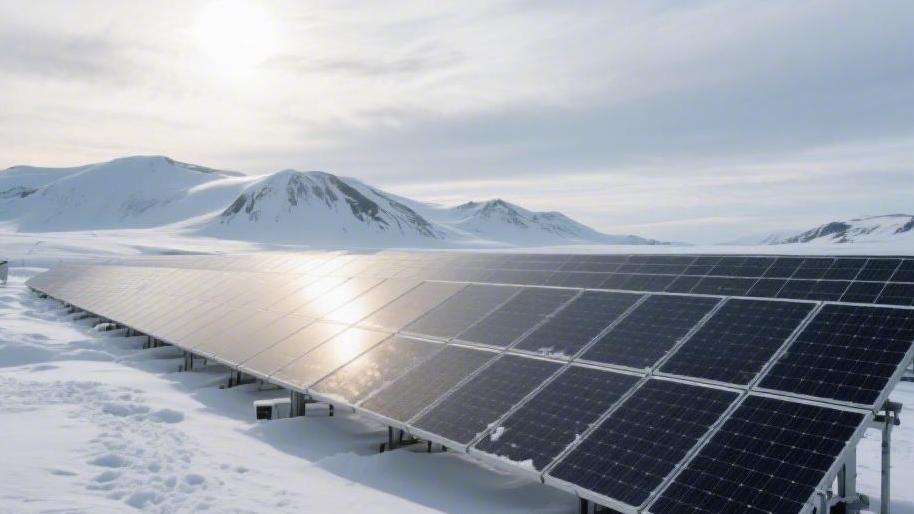
Panels must be tilted to over 60 degrees. This maximizes the capture of low-angle sunlight and allows surface snow to slide off naturally, effectively overcoming weather constraints.
Sunlight
In regions above 60 degrees north latitude, the total annual solar radiation received per square meter of surface area typically fluctuates between 750 kWh and 950 kWh.
Compared to the annual radiation of 2,200 kWh per square meter in equatorial regions, the absolute light density at high latitudes drops by 55% to 65%. When the ambient temperature falls to minus 15 degrees Celsius, photovoltaic modules rated under standard test conditions (1,000 W/m²) actually only receive an instantaneous radiation of 150 W/m² to 300 W/m².
This sharp decline in light intensity often causes the actual output power of a monocrystalline silicon panel with a rated capacity of 500 W to drop below 80 W, pulling its photoelectric conversion efficiency down from a nominal 22.3% to around 16.5%. As total power generation shrinks, the system's levelized cost of energy (LCOE) surges from $0.06 to $0.19 per kWh.
l The standard deviation of monthly power generation reaches 450 kWh, with December's total output accounting for merely 2.5% of the annual total.
l Inefficient operating time, defined as light intensity below 200 W/m², accumulates to 4,500 hours annually.
l When an inverter operates at less than 15% of its nominal input power, the conversion loss of its internal insulated-gate bipolar transistor (IGBT) modules increases by 12%.
l A 50 kW string inverter consumes 3 kWh of electricity daily for its own standby mode and low-light wake-up.
Atmospheric Penetration Challenges
The path length of sunlight passing through the Earth's atmosphere is defined as air mass (AM). When the sun's elevation angle drops to 15 degrees during high-latitude winters, the atmospheric thickness the light must penetrate reaches the AM 3.8 standard. This thousands-of-kilometers-long penetration path allows water vapor, carbon dioxide, and suspended particulates in the atmosphere to absorb or scatter 55% to 60% of the photons.
Of the light reaching the surface of solar panels, the proportion of direct sunlight plummets from 75% in summer to 25% in winter. With scattered light making up 75% of the total radiation, the focusing efficiency of traditional concentrating solar power equipment drops by 80%, almost entirely losing its ability to generate high-temperature thermal energy of 600 degrees Celsius per square meter. The performance ratio (PR) of a conventional 10 kW photovoltaic system in a scattered light environment will slide from 82% down to 68%.
l The penetration rate of ultraviolet light with wavelengths between 300 nm and 400 nm drops by 70%.
l The scattered light energy density per square meter on the panel can only be maintained at an extremely low level of 80 W to 120 W.
l The conduction probability of bypass diodes, which rely on direct sunlight for activation, decreases by 60% in a forward-biased state.
l When the incidence angle of sunlight deviates from the vertical normal by more than 60 degrees, the reflection loss rate on the photovoltaic glass surface surges from the typical 3.5% to 18%.
Spectral Shifts
The intensity of Rayleigh scattering in the atmosphere is inversely proportional to the fourth power of the wavelength. A low solar elevation angle causes the scattering of short-wave blue light (400 nm to 500 nm) to increase by 45%. In the solar spectrum reaching the ground, the energy proportion of red and near-infrared light (700 nm to 1,000 nm) decreases by 30%.
Conventional P-type PERC silicon cells have the highest photon responsivity in the 800 nm to 900 nm band, with a quantum efficiency reaching 90%. The lack of infrared spectrum causes the short-circuit current (Isc) to drop by 15% to 20%. Cadmium telluride (CdTe) thin-film cells, with a bandgap of 1.45 eV, have an absorption coefficient for short-wave blue light that is 100 times higher than that of conventional crystalline silicon.
l Under the blue-shifted spectrum of AM 3.8, the relative power generation efficiency of CdTe panels is 12% higher than that of monocrystalline silicon panels.
l Adopting thin-film cells adds $3,500 to the initial equipment procurement budget of a 100 kW commercial rooftop project.
l Thin-film panels weigh 24 kg per square meter, making them 15% heavier than conventional glass-backsheet modules.
l Under weak spectral conditions, the open-circuit voltage (Voc) decay rate of N-type TOPCon cells is only 0.25%/K, much lower than the 0.32%/K of P-type cells.
Snow Reflection
The snow accumulation period in high-latitude regions, lasting up to 120 days a year, creates extremely high surface albedo. The reflectivity of fresh snow to solar shortwave radiation reaches 80% to 90%.
Installing bifacial photovoltaic modules in snowy environments allows their rear sides to capture 100 W to 150 W of reflected light radiation per square meter. This high-albedo environment increases the actual equivalent output power of a 540 W bifacial module by 15% to 25%, reaching a peak parameter of up to 675 W.
To maximize the reception of ground diffuse reflection, the minimum ground clearance of the photovoltaic array must be elevated from the usual 0.5 meters to 1.2 to 1.5 meters. Elevating the mounting structures increases the use of galvanized steel by 15 tons per MW of power plant capacity, raising the hardware construction cost by $0.04 per watt.
l The rear-side power generation gain enables a 1 MW power plant at 65 degrees north latitude to produce an additional 85,000 kWh of electricity annually.
l The additional power generation revenue boosts the project's overall internal rate of return (IRR) from 5.5% to 7.2%.
l Elevating the mounts increases the wind load surface area by 40%, requiring the volume of the concrete foundation piers to be expanded by 0.5 cubic meters.
l The thickness of double-glass modules reaches 2.0 mm plus 2.0 mm, enhancing the panel's overall mechanical load tolerance to 5,400 Pa.
Short Daylight Hours
In Reykjavik, Iceland, located near 64 degrees north latitude, daylight on the winter solstice (December 21) lasts a mere 4 hours and 10 minutes. The effective power generation window, where light intensity exceeds 100 W/m², is severely compressed to less than 1.5 to 2 hours per day. An 8 kW residential photovoltaic system generates less than 90 kWh in total throughout December, with an average daily output of only 2.9 kWh.
A 5 kW air-source heat pump consumes 35 kWh of electricity per day at minus 10 degrees Celsius. The extremely short winter daylight can only cover 8% of the heat pump's energy load demand. Conversely, by the summer solstice in June, daylight at the same location surges to 21 hours.
l Daily power generation in summer skyrockets to 45 kWh, with the system operating at full peak power for over 6 hours.
l The photovoltaic power curtailment rate in summer reaches 65%. Calculated at a grid purchasing price of $0.04 per kWh, the equipment's return on investment is severely dragged down.
l A 15 kWh energy storage cell pack has a daily cycle depth of discharge (DoD) of only 15% in winter.
l In summer, the energy storage system requires 1.5 full 100% charge-discharge cycles daily. This high-frequency operation accelerates the aging of lithium iron phosphate (LFP) cells.
Weather
Heavy Snow Accumulation
Snowfall is the most frequent physical obstacle encountered by high-latitude solar systems in winter. In northern Canada, the median monthly snowfall in January reaches 450 mm. The density of freshly fallen dry snow is about 100 kg/m³, whereas the density of old snow and slush mixtures after multiple freeze-thaw cycles can surge to 800 kg/m³.
When 30 cm of compacted snow accumulates on the surface of a photovoltaic module tilted at 45 degrees, the static physical pressure borne per square meter of glass panel exceeds 2,400 Pa. To prevent irreversible plastic deformation of the aluminum alloy frame under this immense pressure, its cross-sectional thickness must be upgraded from the standard 1.5 mm to 2.5 mm, and the accompanying fastening bolts must be upsized from M8 to M12.
When the snow thickness on the surface of a solar panel reaches 3 cm, the transmittance of solar shortwave radiation plummets below 0.5%, dropping the entire panel's output power to zero. Even when using specialized modules equipped with electrified rear heating films that melt snow at 200 W/m² for 2.5 hours per session, a single cycle consumes 0.5 kWh of electricity. Over the entire winter, power consumption for snow melting accounts for 22% of the system's total power generation during the same period.
Continuous snow cover also triggers localized hot spot effects. When the lower half of an array is buried under snow while the upper half is exposed to sunlight, the shaded cells turn into power-consuming loads, with their internal resistance converting current into heat.
At an ambient temperature of minus 10 degrees Celsius, the localized temperature in the shaded areas can soar to 85 degrees Celsius within 15 minutes. This sharp expansion in temperature variance accelerates the aging of the EVA encapsulant, shortening the panel's theoretical lifespan from 25 years to roughly 18 years.
To mitigate snow accumulation at the bottom of the modules, the ground clearance of the mounting structures is typically set above 1.5 meters. This increases piling expenses and galvanized steel costs by approximately $12,000 per MW of the project.
Freezing Brittleness
The open-circuit voltage (Voc) of crystalline silicon solar cells features a negative temperature coefficient, generally between -0.28%/K and -0.35%/K. In extreme weather of minus 35 degrees Celsius, a module with a nominal Voc of 40 V (based on standard test conditions at 25°C) will see its actual output voltage surge beyond 46.7 V.
For an inverter input designed to withstand a maximum system voltage of 1,000 V, a standard region can connect 22 modules in a series string. However, in extremely cold high-latitude areas, strings must be limited to a maximum of 18 modules to reserve a safety margin for voltage overshoots. This reduction in string size increases the required number of combiner boxes and the total length of DC cables by about 18% for a power plant of the same scale, driving up the cable procurement budget accordingly.
The physical stress of thermal expansion and contraction at minus 30 degrees Celsius is the primary cause of micro-cracks in solar cells. Due to the massive difference in shrinkage rates between the surface tempered glass and the internal silicon wafer, the shear stress generated internally during day-night cycles with a 60-degree Celsius temperature differential can easily snap the 0.3 mm thick interconnecting ribbons. This elevates the module's annual power degradation rate from the promised 0.45% to over 0.8%.
The flexibility of conventional cross-linked polyethylene (XLPE) insulated cables significantly drops at minus 20 degrees Celsius. Constraints on the bending radius become extremely strict, and forceful installation can easily crack the insulation layer. Meanwhile, outdoor lithium iron phosphate cell cabins face immense thermal insulation pressures.
At an ambient temperature of minus 25 degrees Celsius, failing to activate the thermal management system increases the viscosity of the cell electrolyte, causing the diffusion rate of lithium ions at the graphite anode to plummet by 80%. Forcefully charging the cell at a 0.5C current under these conditions carries a high probability of triggering lithium plating and piercing the separator. To maintain a minimum operating temperature of 15 degrees Celsius inside the cabin, a 200 kWh energy storage container consumes 18 kWh to 25 kWh of electricity daily for electric heating. This hidden cost severely undermines the system's overall economic return.
Fierce Winds
High-latitude coastal zones and tundra climate regions are often accompanied by extreme wind speeds. On the west coast of Norway, the peak gust speeds brought by winter extratropical cyclones can reach 35 m/s.
Because of the extremely low sunlight incidence angle at high latitudes, the installation tilt of photovoltaic modules is frequently set between 55 and 70 degrees. Aerodynamically, this steep tilt acts like a massive sail catching the wind. When 30 m/s gale-force winds blow across the back of the panels, the Bernoulli effect generates a negative-pressure uplift force exceeding 1,800 Pa on the module surface.
To withstand extreme dynamic wind pressures of up to 2,500 Pa, the diameter of the rear support pillars of the photovoltaic mounts must be increased from the standard 60 mm to 89 mm, with wall thickness thickened from 2.0 mm to 3.0 mm. The volume of a single concrete foundation counterweight block is expanded from 0.4 cubic meters in mid-latitude regions to 0.9 cubic meters, weighing over 2.1 tons. The cost of the concrete material and its pouring and transportation alone adds $0.05 per watt to the construction cost.
Frequent high-frequency wind-induced vibrations also trigger metal fatigue at the microscopic level. Continuous exposure to moderate wind speeds of 15 to 20 m/s for 3,000 hours creates a 12% probability that the connecting threads at the aluminum alloy frame's fixing clamps will loosen.
Operation and maintenance (O&M) teams must conduct torque inspections of mechanical fasteners twice a year. The travel and labor costs for these manual inspections drive up the annual O&M budget by roughly 15%. Additionally, polar gales carrying ice crystal particles bombard the panels at 25 m/s, causing sandblasting-like physical abrasion on the 3.2 mm thick coated glass surface. This leads to a shedding rate of the anti-reflective coating (ARC) exceeding 30% within the first 5 years of operation, subsequently reducing the glass's light transmittance by 1.5% to 2%.
Persistent Fog
Frequent activity in the subpolar low-pressure belt creates prolonged rainy and foggy weather at high latitudes. In southern Finland, between November and January, the proportion of overcast days completely blanketed by heavy clouds is as high as 75%. Atmospheric relative humidity frequently hovers between 85% and 95%, while the diameter of water droplets suspended near the ground typically ranges from 10 to 50 micrometers. This highly concentrated water vapor layer exerts strong absorption and scattering effects on solar radiation, sharply reducing the median total radiation reaching the ground and heavily skewing its statistical distribution.
When the concentration of liquid water droplets in dense fog reaches 0.5 grams per cubic meter, the light intensity penetrating the atmosphere to the photovoltaic panels is often only 80 to 120 W/m². In this low-light environment, the overall efficiency (PR) of the photovoltaic system plummets below 65%. The weak DC power generated by the strings cannot even meet the inverter's 200 V startup voltage threshold, leaving the system shut down with zero output for hours during the day.
On a typical cloudy day, the output power of a photovoltaic array can plunge from 80% of its rated capacity to 15% within a single minute, with a power fluctuation rate exceeding 10 kW per second (for a 100 kW system). These high-frequency, massive power swings severely impact grid power quality. The filtering capacitors inside the inverter must charge and discharge frequently to smooth out voltage fluctuations, cutting the capacitors' expected lifespan from 12 years to about 8 years.
To cope with instantaneous power drops caused by cloud cover, grid-connected microgrid systems must be equipped with supercapacitors or high-rate flywheel energy storage devices with response times under 20 milliseconds. This adds roughly $250 per kW to the procurement cost of the overall power conditioning system.
Efficiency
Cable Line Losses
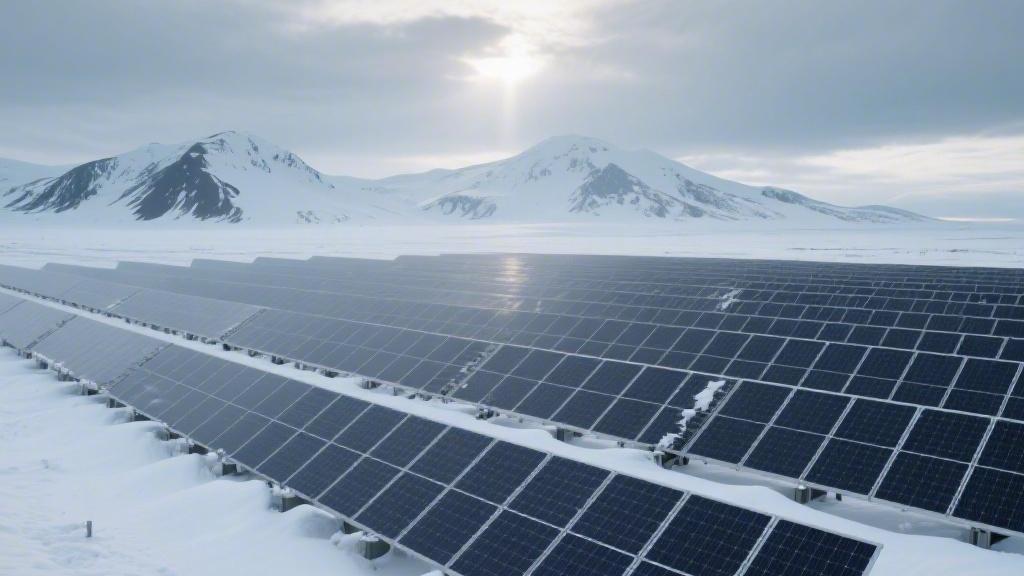
At 60 degrees north latitude, the sun's elevation angle at noon on the winter solstice is 6.5 degrees. If the front row of photovoltaic modules is 2 meters high, the safe shading distance for the rear row is stretched to a staggering 14.5 meters. These wide row spacings bloat the footprint of a standard 1 MW array from 12,000 square meters to 38,000 square meters.
The physical consequence of magnifying the array area by 3.1 times is a 240% surge in the use of 4 mm² DC cables connecting the modules to the combiner boxes. Although the resistivity of hundreds of meters of copper-core cables drops by 8% at minus 20 degrees Celsius, the multiplied absolute length still pushes the DC line loss rate from the standard 1.2% up to 3.8%.
For a 5 MW project, procuring the extra 120 km of cold-resistant XLPE cables alone consumes an additional $48,000 in the hardware budget. Moreover, nearly 180,000 kWh of electricity is wasted annually as Joule heat dissipating along the transmission lines.
Specifications and Parameters | Mid-Latitude (30°N) | High-Latitude (60°N) | Difference / Ratio |
Module installation tilt | 25° to 30° | 55° to 70° | Increase of 30° to 40° |
1 MW footprint | 12,000 m² | 38,000 m² | Expanded by 216% |
Winter shading distance | 3.5 m to 4.5 m | 12.5 m to 14.5 m | Extended by ~10 m |
Total DC cable length (per MW) | 15 km | 51 km | Increase of 36 km |
Cable resistance voltage drop (500m loop) | 2.1 V | 5.8 V | Rise of 176% |
Inverter average winter wake-up time | 7:30 AM | 10:15 AM | Delayed by 2.75 hrs |
System annual average PR | 82.5% | 71.2% | Drop of 11.3% |
Per watt hardware construction cost | $0.95 | $1.45 | Premium of $0.50 |
Shading Bottlenecks
In a standard loop consisting of twenty 540 W monocrystalline silicon modules connected in series, if snow covers just 15% of the bottom row of cells, that module's short-circuit current will plummet from a normal 13.2 A down to 1.8 A. Due to the weakest-link effect, the operating current of the entire string is forcefully dragged down, resulting in a precipitous 70% plunge in instantaneous output power.
To salvage the collapsing power, bypass diodes inside the module's junction box are forced to conduct, short-circuiting the shaded cell clusters. Over a long snowy season, these bypass diodes can conduct more than 200 times a month. Frequently subjected to a forward bias of 30 V and a 10 A bypass current, the PN junction temperature of their cores can spike to 120 degrees Celsius within 5 minutes.
The repeated accumulation of thermal stress raises the breakdown probability of the diodes by 12%. Once a diode suffers thermal runaway and fails completely, a $150 module permanently loses 33% of its generation capacity, drastically pulling down the array's total lifetime power generation.
Breaking Even
Building a 50 kW commercial rooftop solar power plant in Anchorage, Alaska—complete with reinforced steep-tilt mounts, snow-sweeping robots, and freeze-proof inverters—incurs an initial cost of $1.85 per watt, a premium of over 60% compared to typical regions. In its first year of operation, the equipment can generate about 42,000 kWh of electricity, but 75% of this output is concentrated between May and August.
Due to low grid load in the summer, excess power can only be sold to the local grid at extremely low spot market prices of $0.035 per kWh. Conversely, in January, when electricity load is exceedingly high, the system's total monthly generation is a mere 600 kWh, falling completely short of offsetting the high winter purchase cost of $0.15 per kWh. This extreme temporal mismatch between generation and consumption suppresses the project's annual internal rate of return (IRR) to around 3.8%.
Even excluding inflation and the equipment's 0.5% annual power degradation rate, the static payback period stretches out to 17.5 years, approaching the 15-year physical design lifespan of the inverter. Annual operations and maintenance (O&M) costs hit $35 per kW, with manual snow removal and the replacement of frost-cracked modules swallowing 65% of the O&M budget.